Seabuckthorn consumption in juice/ fruit/ other form
seabuckthorn health benefits consumption juice fruit forms
sea buckthorn health benefits
PMID: 36562043
PMID: 33783272
https://www.sciencedirect.com/science/article/pii/S266614972…
Seabuckthorn (Hippophae rhamnoides L.)
What Is It?
Nutritional Profile
| Nutrient | Notable Content |
|---|---|
| Vitamin C | 400-2,500 mg/100g - up to 10-15x more than oranges |
| Vitamin E (tocopherols & tocotrienols) | Very high, especially in seeds |
| Carotenoids | Beta-carotene, lycopene, zeaxanthin |
| Omega fatty acids | Omega-3, -6, -7 (palmitoleic acid), -9 |
| Polyphenols/Flavonoids | Quercetin, isorhamnetin, kaempferol |
| Phytosterols | Block dietary cholesterol absorption |
| Organic acids | Malic acid, quinic acid |
| Minerals | Potassium, calcium, magnesium, iron |
Evidence-Backed Health Benefits
1. Cardiovascular Health
- Phytosterols block dietary cholesterol absorption
- Omega-7 and omega-3 reduce LDL and triglycerides
- Flavonoids improve endothelial function and reduce platelet aggregation
- Clinical studies show improved circulation and reduced atherosclerosis risk
2. Antioxidant & Anti-inflammatory
- Exceptionally rich in antioxidants (Vitamin C, E, carotenoids, polyphenols)
- Reduces oxidative stress markers
- Inhibits pro-inflammatory cytokines (TNF-alpha, IL-6)
3. Anti-diabetic / Metabolic Syndrome
- Omega-7 improves insulin sensitivity and glucose metabolism
- Polyphenols inhibit alpha-glucosidase (slows sugar absorption)
- Reduces fasting blood glucose and HbA1c in animal models; human data still emerging
4. Liver Protection (Hepatoprotective)
- Polysaccharides shown to modulate gut-liver axis
- May help in alcoholic liver disease by promoting beneficial gut flora
- Antioxidant activity reduces hepatic oxidative stress
5. Skin Health
- Omega-7 supports skin barrier and mucosal membrane integrity
- Applied topically or consumed orally - improves dryness, elasticity, and wound healing
- Used for vaginal dryness (postmenopausal) - one of the stronger clinical areas
6. Immune Support
- High Vitamin C boosts immune defenses
- Polysaccharides have immunomodulatory activity
7. Anticancer Potential
- Quercetin and isorhamnetin induce apoptosis in cancer cell lines
- Carotenoids have chemopreventive activity
- Evidence is largely preclinical (lab/animal); clinical trials in humans are limited
8. Neuroprotective
- Antioxidant compounds reduce neuroinflammation
- Early evidence for protection against neurodegenerative damage
9. Female Reproductive Health
- A 2023 review (Mihal et al., Front. Endocrinol.) highlights potential roles in improving fertility parameters and menstrual health
Forms of Consumption
Juice
- The most popular commercial form
- Berries are pressed to extract tart, golden-orange juice
- Often blended with sweeter juices (apple, mango) due to intense tartness
- Retains most water-soluble vitamins (especially Vitamin C) and polyphenols
- Typical serving: 30-60 ml diluted in water, daily
- Popular in India (especially from Ladakh/Himachal brands), Russia, Germany, and Scandinavia
Fresh or Dried Fruit
- Raw berries are extremely tart and oily - rarely eaten plain
- Dried berries are more palatable and portable
- Used in trail mixes, herbal teas, and traditional preparations
Oil (Seed & Berry Oil)
- Cold-pressed from seeds or pulp
- Seed oil: rich in omega-3 and omega-6
- Berry/pulp oil: rich in omega-7 and carotenoids (deep orange color)
- Used internally (capsules, drops) and topically for skin
- Typical internal dose: 1-5 ml/day
Capsules / Supplements
- Standardized extracts of berry, seed oil, or powdered fruit
- Convenient for consistent dosing
- Common for cholesterol management, skin health, and immune support
Jam / Preserves / Chyawanprash-type preparations
- Cooked with sugar or honey to balance tartness
- Retains carotenoids and polyphenols, though Vitamin C is heat-sensitive
- Traditional use in Russia, Scandinavia, and the Indian Himalayas
Tea
- Dried leaves and berries brewed as tea
- Lower in Vitamin C than fresh juice but still contains polyphenols and flavonoids
Powder
- Freeze-dried berry powder added to smoothies, yogurt, or energy bars
- Freeze-drying preserves most nutrients including Vitamin C
Wine / Fermented Products
- Fermented seabuckthorn wine is produced in China, Russia, and Eastern Europe
- Contains fermented polyphenols but alcohol offsets some health benefits
How Much to Consume?
- Juice: 20-60 ml/day (diluted)
- Oil: 1-5 g/day (capsules or liquid)
- Powder: 1-2 teaspoons/day in food or drinks
Cautions & Side Effects
- Generally considered safe at food doses
- High Vitamin C content may cause digestive upset in large amounts
- The strong orange pigment (carotenoids) can temporarily color skin or stool
- May have mild blood-thinning effects - use caution with anticoagulant medications
- Seed oil should be used in moderation - calorie-dense
- Pregnant or breastfeeding women should consult a doctor before supplementing
Bottom Line
Potential adverse impact of seabuckthorn consumption
sea buckthorn adverse effects toxicity safety
seabuckthorn adverse effects side effects contraindications drug interactions evidence
https://pmc.ncbi.nlm.nih.gov/articles/PMC12500570
PMID: 30081653
Potential Adverse Effects of Seabuckthorn Consumption
Overall Safety Context
1. Skin Discoloration (Carotenodermia)
2. Gastrointestinal Symptoms
3. Drug Interactions - Anticoagulants & Antiplatelet Agents
4. Drug Interactions - Antihypertensive Medications
5. Drug Interactions - Antidiabetic / Hypoglycemic Drugs
6. Excess Vitamin C Effects
- Kidney stones - excessive Vitamin C is metabolized to oxalate, which can promote calcium oxalate stone formation in susceptible individuals
- Gastrointestinal irritation - large doses cause osmotic diarrhea and stomach cramps
- Pro-oxidant effect - at pharmacological (not dietary) doses, Vitamin C can paradoxically act as a pro-oxidant, particularly in those with iron overload
7. Effect in Bleeding Disorders
8. Low Blood Pressure (Hypotension)
9. Pregnancy and Lactation
10. Heavy Metal Contamination Risk (Context-Specific)
Summary Table
| Concern | Severity | Who Is at Risk |
|---|---|---|
| Carotenodermia (skin discoloration) | Mild, reversible | High-dose consumers |
| GI discomfort | Mild | Oil supplement users |
| Potentiated bleeding | Moderate | Those on warfarin, aspirin, antiplatelets |
| Potentiated hypotension | Moderate | Those on BP medications; low BP baseline |
| Potentiated hypoglycemia | Moderate | Those on diabetes medications |
| Kidney stones (excess Vit C) | Low-moderate | Susceptible individuals, high doses |
| Bleeding disorders | Moderate | Pre-existing coagulopathy |
| Pregnancy/lactation | Unknown risk | Pregnant/breastfeeding women |
| Heavy metal contamination | Variable | Low-quality/wild-harvested products |
Key Takeaway
Best time to consume in terms of season , daily time , meals
sea buckthorn bioavailability absorption timing fat soluble nutrients
best time to consume seabuckthorn juice morning empty stomach or with meals seasonal harvest
Best Time to Consume Seabuckthorn
Important Caveat First
- The physiology of its key nutrients (fat-soluble vs. water-soluble absorption science)
- Traditional use patterns across the Himalayas, Russia, and Scandinavia
- Practical guidance from producers and practitioners
1. Season
Fresh Berry Season: Late August to October
- Ladakh / Himachal Pradesh (India): September to mid-October
- Russia / Central Asia: August to September
- Europe / Scandinavia: August to September
- Some producers wait for the first light frost, which softens berries and slightly reduces astringency, making harvest easier. However frost also makes berries more fragile, so nutrient loss can increase.
Best Season for Supplementing (Even if Not Fresh):
| Goal | Recommended Season |
|---|---|
| Immune support / Cold & flu prevention | Autumn into winter - when immune demand is highest |
| Skin protection / UV defense | Spring into summer - carotenoids and Vitamin E provide photoprotection |
| Cardiovascular / metabolic support | Year-round, consistent daily use |
| Post-illness recovery | Whenever needed |
2. Time of Day
Morning (Most Popular and Arguably Best)
- Taking seabuckthorn in the morning aligns with the body's natural cortisol rhythm - metabolic activity and nutrient processing are highest in the early part of the day
- The high Vitamin C content is best absorbed when the gut is relatively fresh and less loaded with competing nutrients
- Provides a tonic/energizing effect throughout the day
- Traditional Himalayan use is predominantly morning
Pre/Post Exercise
- As a pre-workout, the carbohydrates and Vitamin C in juice provide a light energy boost
- As post-workout, the anti-inflammatory omega fatty acids, Vitamin E, and antioxidants help reduce exercise-induced oxidative stress and support recovery - this is a particularly well-reasoned use
Evening (Secondary Option)
- Perfectly fine, especially if morning is inconvenient
- Some people take a second dose at dinner targeting skin hydration and repair (the skin regenerates during sleep, and omega-7 supports mucosal/skin barrier function)
- Avoid very large amounts close to bedtime if you have a sensitive stomach, as the acidity could be mildly uncomfortable lying down
What to Avoid
- Very late night on empty stomach - the natural acidity of seabuckthorn can cause discomfort in acid-sensitive individuals
3. Meal Timing
For Oil / Pulp (Fat-Rich Forms) - With Meals, Always
- Best practice: Take oil or pulp with breakfast or dinner - any meal containing some fat (eggs, yogurt, nuts, cooking oil) will do
- A second dose with dinner is effective for skin and inflammatory goals overnight
For Juice (Water-Rich Form) - Flexible, but Pre-Meal or Morning Preferred
- On an empty stomach (morning): Works well for most people - Vitamin C is absorbed rapidly and efficiently when the stomach is unloaded. However, the natural acidity may cause mild nausea or heartburn in those with sensitive digestion or gastric issues (GERD, gastritis)
- Before meals (15-30 min prior): A good compromise - some stomach content buffers the acidity while absorption of Vitamin C is still excellent; the organic acids can also gently prime digestion
- After a light breakfast: Best for sensitive stomachs - only slightly reduces Vitamin C absorption speed, but not meaningfully so at food doses
For Tea (Dried Berries/Leaves) - After Meals or Afternoon
- Seabuckthorn tea is mild and well-tolerated after meals or as an afternoon drink
- Brew at 60-85°C - boiling water degrades Vitamin C significantly
- Avoid adding to very hot water if preserving antioxidant content is a priority
Practical Daily Routine Summary
| Time | Form | Rationale |
|---|---|---|
| Morning with breakfast | Juice (30-60 ml) or pulp (10 ml) | Best overall timing - Vitamin C absorption, metabolic priming, fat present for fat-soluble nutrients |
| Post-exercise | Juice or smoothie with pulp | Anti-inflammatory recovery, antioxidant replenishment |
| Afternoon | Seabuckthorn tea | Antioxidants, no caffeine, light and sustainable |
| With dinner (optional) | Oil capsule or second pulp dose | Fat-soluble nutrient absorption for skin/omega-7 goals overnight |
Key Principle: Consistency Beats Perfect Timing
A normal healthy tooth vs a tooth having RCT done on it
normal healthy tooth vs RCT treated tooth differences structure function longevity
endodontically treated teeth biomechanics fracture risk versus vital teeth
Normal Healthy Tooth vs. RCT-Treated Tooth
Part 1: Anatomy of a Normal Healthy Tooth
The Four Tissues
| Tissue | Location | Composition | Function |
|---|---|---|---|
| Enamel | Crown surface | Hydroxyapatite crystals (96% mineral), hardest tissue in the body; produced by ameloblasts - cells that die after tooth eruption, so enamel cannot regenerate | Protective outer armor against mechanical and chemical assault |
| Dentin | Under enamel and cementum | 70% mineral (hydroxyapatite), 30% organic (collagen) + water; contains microscopic dentinal tubules housing odontoblast processes | Forms the bulk of tooth; transmits sensory signals; can form secondary dentin throughout life |
| Pulp | Central core cavity | Loose connective tissue, blood vessels, lymphatics, nerve fibers (A-delta and C fibers) | Nourishes dentin; produces secondary/tertiary dentin in response to injury; provides pain sensation as early warning of disease |
| Cementum | Root surface | Bone-like, produced by cementoblasts | Anchors the periodontal ligament fibers to the tooth root |
What Makes a Healthy Tooth "Alive"
- Blood supply: Enters through the apical foramen at the root tip, supplying nutrients and immune cells to pulp tissue
- Nerve supply: A-delta fibers (sharp/acute pain) and C fibers (dull/aching) respond to temperature, pressure, and bacterial toxins - acting as an early warning system
- Odontoblasts: Line the inner wall of the pulp chamber, extending processes into dentinal tubules. They actively deposit secondary dentin throughout life, progressively narrowing the pulp chamber in response to aging and mild injury
- Immune competence: Pulp contains macrophages, lymphocytes, and dendritic cells that can mount an immune response to early bacterial invasion
Part 2: What Happens During Root Canal Treatment (RCT)
- Access the pulp chamber through the crown
- Debride - mechanically and chemically remove all pulp tissue (living or necrotic) from the pulp chamber and all root canals
- Shape the canals using files to a tapered form
- Irrigate with sodium hypochlorite and EDTA to disinfect
- Obturate - fill the now-empty canal space with gutta-percha (inert rubber-like material) and sealer, sealing the apex to prevent bacterial reentry
- Restore the crown - typically with a post-core and a dental crown to protect the structurally weakened tooth
- Harrison's Principles of Internal Medicine, 22nd Ed.
- Histology A Text and Atlas, 7th Ed.
Part 3: Head-to-Head Comparison
A. Structural Differences
| Feature | Healthy Tooth | RCT-Treated Tooth |
|---|---|---|
| Pulp tissue | Present - living, vascularized, innervated | Completely removed; replaced with gutta-percha + sealer |
| Blood supply | Intact - enters via apical foramen | Severed at root tip level; no internal circulation |
| Nerve supply | Fully functional A-delta + C fibers | Absent - all nerve tissue removed |
| Dentin hydration | Moist - dentinal tubules are fluid-filled (odontoblast processes + dentinal fluid) | Drier - no pulpal fluid pressure maintaining tubule hydration |
| Coronal tooth structure | Intact or minimally restored | Access cavity cut through crown; often significant loss of natural tooth structure (especially if there was large caries beforehand) |
| Dentinal tubules | Active - fluid-filled, connected to living pulp | Sealed/obliterated at pulp end; may become more porous over time |
| Canal space | Narrow, filled with living pulp | Enlarged (shaped), then filled with gutta-percha |
B. Biological / Physiological Differences
| Property | Healthy Tooth | RCT-Treated Tooth |
|---|---|---|
| Sensation | Responds to hot, cold, pressure, pain - protective | Non-responsive to temperature and pulpal pain; periodontal ligament still provides pressure/proprioception |
| Self-defense | Immune cells in pulp respond to infection; secondary dentin deposition seals off mild irritants | No immune activity inside tooth; no dentin repair possible |
| Dentin formation | Secondary dentin laid down throughout life | Stops permanently - no new dentin can be made |
| Proprioception | Both pulpal (pain) and PDL (pressure) intact | Only PDL-mediated proprioception remains - patient can still feel biting forces, but not pain inside the tooth |
| Thermal response | Responds to temperature changes | No thermal sensitivity inside the tooth |
C. Mechanical / Biomechanical Differences - The Most Clinically Important
- Loss of moisture: The living pulp maintains hydrostatic pressure that keeps dentinal tubules bathed in fluid. Without it, dentin gradually loses moisture content and becomes more brittle - less able to absorb and deflect stress before fracturing
- Structural tooth loss: Access cavity preparation removes the central bulk of the crown, specifically the dentinal roof of the pulp chamber. The remaining walls (cusps) become undermined and vulnerable
- No self-repair: A vital tooth responds to masticatory stress by depositing tertiary dentin. An RCT tooth has no such adaptive mechanism
- Wider canal post-shaping: The mechanical enlargement of canals during RCT removes more internal dentin, thinning the root walls
D. Longevity and Prognosis
| Aspect | Healthy Tooth | RCT-Treated Tooth |
|---|---|---|
| Expected lifespan | Lifelong with good oral hygiene | ~11 years median survival in population-wide real-world data (Regenstrief/IU study); but with proper crown and hygiene, can last decades |
| Re-infection risk | If caries-free: minimal | Possible if crown seal breaks down or canals were inadequately filled; no immune defense to fight re-entry |
| Crown requirement | Only if structurally compromised | Strongly recommended for posterior teeth; doubles survival rate |
| Fracture risk | Low | Substantially higher, especially without crown |
| Periapical health | Healthy periapex; PDL intact | Must be monitored radiographically for periapical pathology (granuloma, cyst, or abscess formation if treatment fails) |
| Color over time | Natural color maintained | May darken over years due to breakdown of residual pulp remnants and changes in dentin without blood flow |
E. What Is the Same
- Enamel - structurally unchanged (except where access cavity is made)
- Periodontal ligament - fully intact and functional
- Cementum - unchanged
- Occlusal function - maintained once properly restored
- External tooth shape - maintained once crowned
Summary Visual Analogy
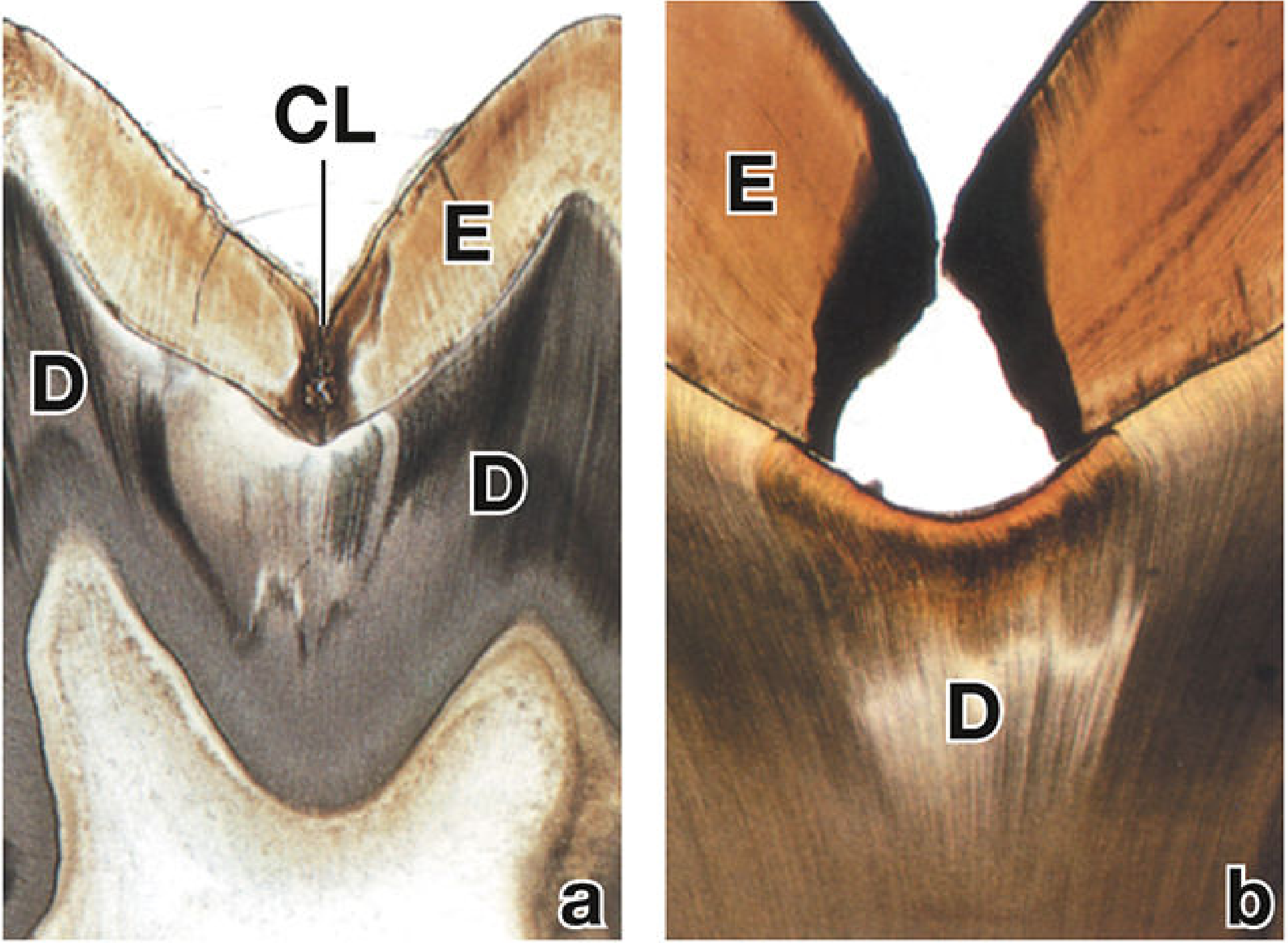
Carious Lesion Histology (Textbook Image)