
scurvy in detail for clinical
Reading File
Reading File
Finding Sources
Finding Sources
Searching PubMed
scurvy AND vitamin C
Searching the Web
scurvy clinical features diagnosis treatment vitamin C professional reference
Reading File
Finding Sources
Finding Sources
Reading Article
PMID: 39296506
Reading File
Reading File
Reading File
Finding Sources
Scurvy: clinical overview
Scurvy is the clinical syndrome caused by severe, prolonged vitamin C (ascorbic acid) deficiency. It is uncommon but remains important because it is often missed and can mimic vasculitis, bleeding disorders, infection, rheumatologic disease, or non-accidental injury in children.
Why vitamin C deficiency causes these findings
Vitamin C is required for hydroxylation of proline and lysine during collagen formation. Without it, collagen is poorly stabilized and connective tissue, capillaries, skin, gums, bone matrix, and wound tissue become fragile.
Other relevant roles include:
- Enhanced absorption of non-heme iron
- Carnitine synthesis, contributing to energy metabolism
- Conversion of dopamine to norepinephrine
- Antioxidant activity
The clinical result is capillary fragility, bleeding, impaired wound repair, gingival disease, musculoskeletal pain, and anemia.
Who is at risk?
Ask directly about dietary intake and functional barriers to eating. Important groups include:
- Restrictive diets, food selectivity, avoidant/restrictive food intake disorder, autism spectrum disorder
- Alcohol use disorder
- Older adults, poverty, homelessness, social isolation, institutionalization
- Anorexia nervosa or other eating disorders
- Infants fed unsupplemented cow's milk or diets lacking fruits and vegetables
- Malabsorption or very limited intake due to inflammatory bowel disease, chronic gastrointestinal disease, or bariatric surgery
- Dialysis patients
- Smokers, pregnancy, lactation, severe infection, trauma, and other states with increased vitamin C requirements
- Patients with multiple micronutrient deficiencies
A recent systematic review highlights the association of scurvy with anorexia nervosa and the diagnostic overlap with psychiatric, gastrointestinal, and skin manifestations. Review indexed in PubMed.
Clinical features
The classic teaching is the four H's:
- Hemorrhagic manifestations
- Follicular hyperkeratosis
- Hypochondriacal or mood symptoms such as irritability/depression
- Hematologic abnormalities, especially anemia
Early, nonspecific symptoms
- Fatigue, weakness, lethargy
- Malaise, irritability, low mood
- Myalgia and diffuse limb pain
- Poor appetite or weight loss
- Delayed wound healing
Characteristic skin and hair signs
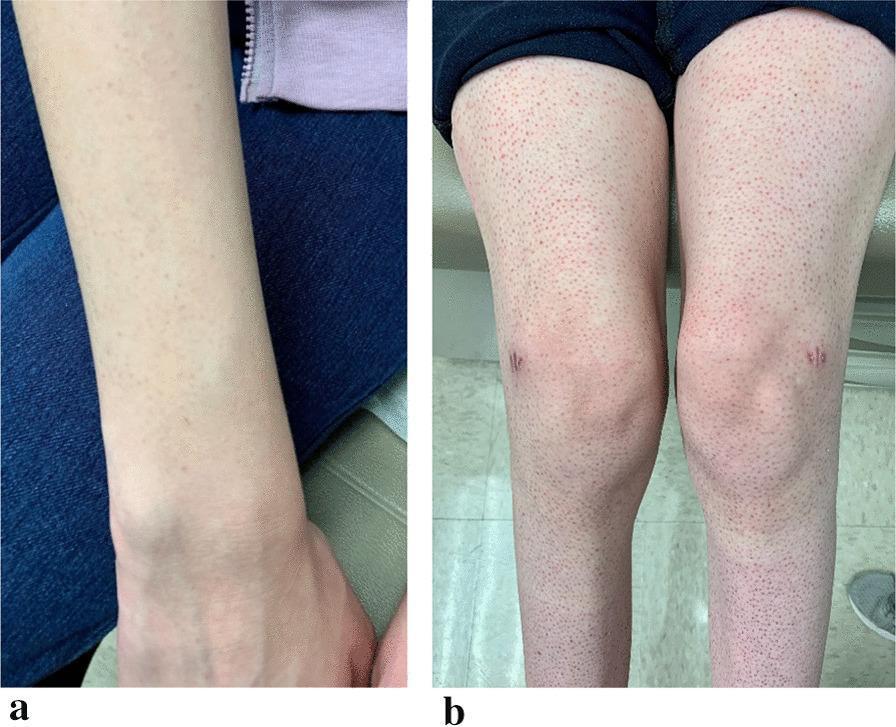
- Perifollicular petechiae or hemorrhages, especially on the legs
- Purpura and ecchymoses, often extensive over lower limbs
- Corkscrew hairs: coiled, twisted hairs caused by abnormal follicular keratinization
- Follicular hyperkeratosis or keratotic plugs
- Poor healing wounds
- Woody edema, sometimes resembling cellulitis
Oral findings
- Swollen, spongy, painful gums
- Gingival bleeding, often around teeth
- Gingival hypertrophy
- Loose teeth, halitosis, tooth loss in advanced disease
Gingivitis can be absent in people who are edentulous or have excellent oral hygiene. Andrews' Diseases of the Skin: Clinical Dermatology, p. 556.
Musculoskeletal findings
- Bone pain and tenderness
- Arthralgia, joint swelling, hemarthrosis
- Intramuscular and subperiosteal hemorrhage
- Refusal to walk or apparent pseudoparalysis in children
- Fractures may occur in severe pediatric disease
Other manifestations
- Epistaxis, subconjunctival hemorrhage, subungual hemorrhage
- Gastrointestinal, pericardial, peritoneal, adrenal, or intracranial bleeding in severe cases
- Anemia, often multifactorial: iron deficiency, blood loss, poor diet, and coexistent folate or B12 deficiency
- Increased susceptibility to infection may occur in severe malnutrition
Diagnosis
Scurvy is primarily a clinical diagnosis. The combination of dietary risk plus perifollicular hemorrhage, corkscrew hairs, gingival bleeding, bruising, bone pain, or poor wound healing should trigger suspicion.
History
Ask specifically about:
- Actual foods consumed over the previous 1 to 3 months
- Fruits, vegetables, fortified drinks, and supplements
- Food restriction, sensory aversion, dysphagia, vomiting, alcohol use, inability to shop/cook
- Renal replacement therapy, malabsorption, and other nutritional deficiencies
- Drug history and anticoagulant use
Examination
Look for:
- Perifollicular petechiae on legs, buttocks, forearms
- Corkscrew hairs and follicular keratosis
- Gum bleeding and swelling
- Bruising or deep soft-tissue hematoma
- Joint pain/swelling and reluctance to bear weight
- Signs of other nutrient deficiencies
Laboratory tests
Obtain blood before supplementation or major dietary changes, if feasible, because plasma vitamin C rises quickly after repletion.
Useful tests:
- Plasma/serum ascorbic acid: low level supports deficiency, but reflects recent intake.
- Leukocyte vitamin C: may better reflect body stores where available.
- CBC with indices and reticulocyte count
- Ferritin, iron studies
- Folate, vitamin B12, vitamin D, zinc, albumin or other nutrition-focused tests as clinically indicated
- PT/INR and aPTT if bleeding is substantial or the diagnosis remains uncertain
- CRP/ESR if vasculitis, infection, or inflammatory disease remains a concern
A prompt clinical response to vitamin C supports the diagnosis. Andrews' Diseases of the Skin: Clinical Dermatology, p. 556.
Histology
Skin biopsy is rarely needed. If done, it may show:
- Perifollicular hemorrhage
- Follicular hyperkeratosis
- Coiled hairs
- Little or no true vasculitic inflammation
This helps distinguish scurvy from leukocytoclastic vasculitis.
Imaging in children
Radiographs are useful when a child has limb pain, refusal to walk, swelling, or suspected subperiosteal bleeding.
Typical radiographic features:
- Generalized osteopenia
- Dense metaphyseal line: Frankel white line
- Metaphyseal lucent band
- Metaphyseal spurs: Pelkan spurs
- Epiphyseal ring or “pencil” outline: Wimberger sign
- Periosteal reaction from recurrent subperiosteal hemorrhage
Scurvy in infancy often presents between 6 and 9 months, with defective osteoid production and impaired endochondral ossification. Grainger & Allison's Diagnostic Radiology, p. 1466.
Differential diagnosis
| Condition | Clues favoring it over scurvy |
|---|---|
| Leukocytoclastic vasculitis / IgA vasculitis | Palpable purpura, renal or gastrointestinal involvement, inflammatory biopsy |
| Thrombocytopenia | Markedly low platelet count, widespread petechiae without corkscrew hairs |
| Coagulation disorder | Abnormal PT/INR or aPTT, hemarthrosis pattern depending on cause |
| Leukemia | Cytopenias, blasts, systemic symptoms, abnormal marrow evaluation |
| Child abuse | Inconsistent history or injury pattern, but scurvy must not be overlooked in nutritionally vulnerable children |
| Osteomyelitis / septic arthritis | Fever, focal infection signs, raised inflammatory markers, imaging/culture findings |
| Rickets | Different biochemical and radiographic pattern, though coexisting malnutrition can occur |
| Ehlers-Danlos syndrome | Lifelong hypermobility/skin hyperextensibility rather than dietary history and rapid response to vitamin C |
Treatment
1. Start vitamin C replacement promptly
In a clinically suspected case, treatment should not be delayed for laboratory confirmation if the patient is unwell.
Reasonable commonly used adult regimens include:
- Ascorbic acid 200 mg orally daily, with clinical improvement often beginning within days, or
- 1,000 mg orally daily for several days to 1 week, followed by 100 mg daily as maintenance during nutritional rehabilitation.
The exact regimen varies by reference and patient factors. The priority is reliable repletion plus correction of the dietary cause. Andrews' Diseases of the Skin: Clinical Dermatology, p. 556.
For children, dosing should be prescribed according to age, weight, severity, oral tolerance, and local pediatric guidance. In severely ill patients, those unable to take oral treatment, or those with major bleeding, seek urgent pediatric or medical specialist input.
2. Treat associated deficiencies and complications
- Evaluate and correct iron, folate, B12, vitamin D, zinc, and protein-calorie malnutrition as appropriate.
- Manage significant anemia, hematoma, hemarthrosis, or suspected occult bleeding.
- Provide analgesia and mobility support for bone/joint pain.
- Address dental disease.
- In severe malnutrition, assess risk for refeeding syndrome before rapid nutritional escalation.
3. Correct the underlying cause
- Dietitian referral
- Eating-disorder and mental-health treatment when relevant
- Social work support for food access, housing, caregiving, or substance-use treatment
- Feeding/occupational therapy for sensory food restriction or neurodevelopmental conditions
- Dialysis-specific nutritional planning where relevant
Expected response
- Constitutional symptoms may improve within days.
- Gum bleeding, petechiae, bruising, and pain usually improve over days to a few weeks.
- Hair/skin changes and anemia may take longer.
- Failure to improve should prompt reassessment for an alternative diagnosis, nonadherence, malabsorption, ongoing bleeding, or another nutritional deficit.
Prevention and dietary advice
Good vitamin C sources:
- Citrus fruits, guava, kiwi, berries
- Tomatoes, peppers
- Broccoli, cabbage, leafy vegetables
- Potatoes
The adult recommended intake is roughly 90 mg/day for men and 75 mg/day for women, with higher needs in smokers. Vitamin C is water-soluble and heat-sensitive, so prolonged storage and cooking can reduce content.
Clinical red flags requiring urgent assessment
Urgent evaluation is appropriate for:
- Major bleeding, severe anemia, syncope, dyspnea, or chest pain
- Severe limb pain, inability to walk, suspected fracture, or joint bleeding
- Fever or concern for septic arthritis/osteomyelitis
- Neurologic symptoms or concern for intracranial hemorrhage
- A malnourished child with bruising, bone pain, or refusal to bear weight
- Significant eating-disorder malnutrition or risk of refeeding syndrome
This is a shared conversation. Sign in to Orris to start your own chat.