
5 Epidemiology Definition, epidemiological triced, Application in Prevention & control of Communicable disease. 10 marks
Reading File
Now let me search the medical library for epidemiology content in parallel.
Finding Sources
Finding Sources
Park's Textbook of Preventive and Social Medicine is the key source. Let me search for more content.
Finding Sources
Reading File
Excellent content found. Now let me read the definition of epidemiology and the prevention/control section.
Reading File
Reading File
Let me get the definition of epidemiology and the prevention & control section.
Reading File
Finding Sources
Reading File
Finding Sources
Now let me get the aims and uses of epidemiology, and the agent/host/environment details for the triad.
Reading File
Reading File
Now let me get the detailed components of the epidemiological triad (agent, host, environment) and the section on uses of epidemiology continued.
Reading File
Reading File
I now have all the content needed from Park's textbook. Let me also fetch the epidemiological triad image to include in the answer.
Loading Image
Reading File
I now have comprehensive content from Park's Textbook to write a thorough 10-mark answer. Let me compile the full response.
Epidemiology: Definition, Epidemiological Triad, and Application in Prevention & Control of Communicable Disease
1. Definition of Epidemiology
The word "epidemiology" is derived from the Greek roots: epi (among), demos (people), and logos (study).
According to the International Epidemiological Association (IEA):
"The study of the occurrence and distribution of health-related events, states, and processes in specified populations, including the study of the determinants influencing such processes, and the application of this knowledge to control relevant health problems."
Key components of this definition:
- Study includes surveillance, observation, screening, hypothesis testing, analytic research, experiments, and prediction.
- Distribution refers to analysis by time, place, and population (subgroups of persons affected).
- Determinants are the geophysical, biological, behavioural, social, cultural, economic, and political factors that influence health.
- Health-related events include outbreaks, diseases, causes of death, behaviours, and use of health services.
- Application to control makes explicit the ultimate aim - to promote, protect, and restore health.
Earlier notable definitions include:
- Parkin (1873): "That branch of medical science which treats epidemics."
- Frost (1927): "The science of the mass phenomena of infectious diseases."
- Greenwood (1934): "The study of disease, any disease, as a mass phenomenon."
- MacMahon (1960): "The study of the distribution and determinants of disease frequency in man."
Three components are common to most definitions: (1) disease frequency, (2) distribution, and (3) determinants.
Epidemiology is considered the basic science of preventive and social medicine.
2. Epidemiological Triad
The epidemiological triad emerged as a broader concept of disease causation beyond the limited "germ theory of disease" (one-to-one relationship between agent and disease). It recognizes that disease depends on three interacting factors: Agent, Host, and Environment.
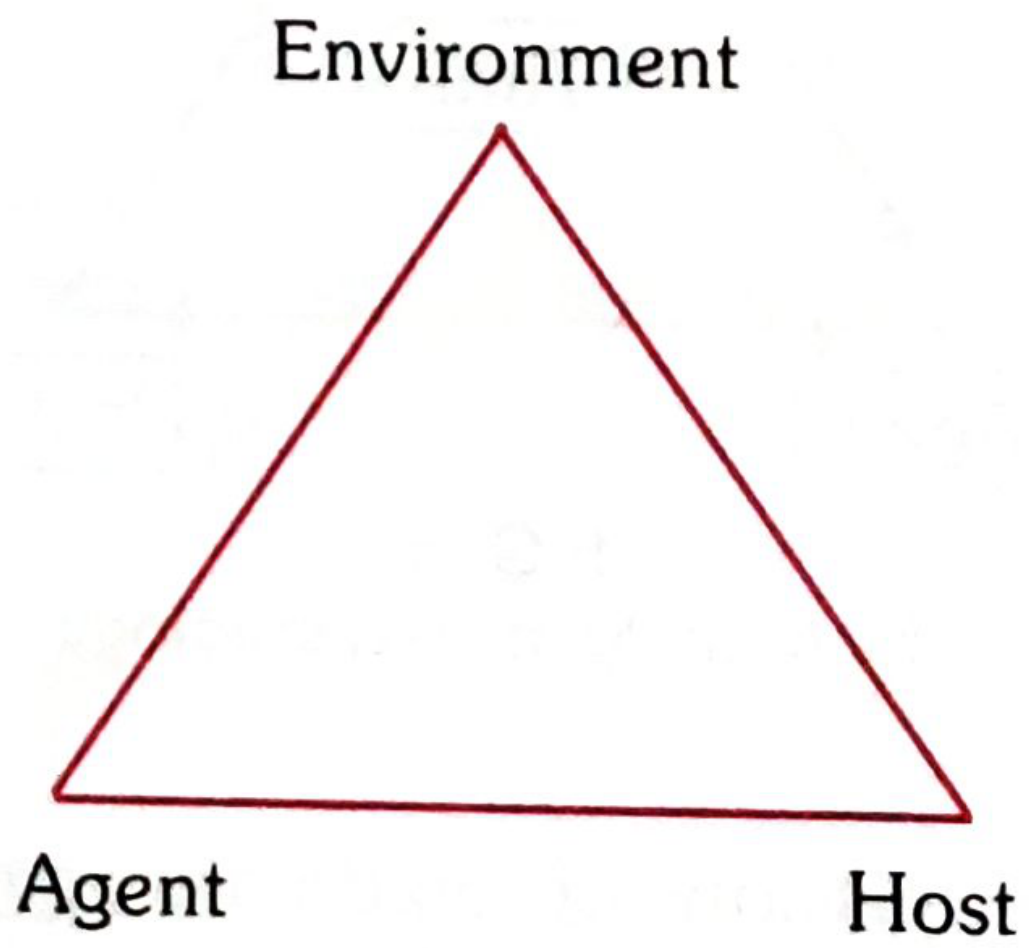
Fig. 4 - Epidemiological Triad (Park's Textbook of Preventive & Social Medicine)
The triad is based on the communicable disease model and shows the interaction and interdependence of agent, host, and environment - including the element of time.
A. Agent
The agent is the direct cause of the disease. Agents of infectious diseases include:
- Biological agents: Bacteria, viruses, parasites, fungi, molds
- Non-infectious agents: Chemicals from dietary foods, tobacco smoke, solvents, radiation, nutritional deficiencies, poison
One or several agents may contribute to an illness. Characteristics such as infectivity, pathogenicity, virulence, and antigenicity determine the agent's disease-causing potential.
B. Host
The host is an organism (usually a human or animal) that harbours the disease. The host may or may not develop disease depending on:
- Level of immunity (natural or acquired)
- Genetic makeup
- Level of exposure
- State of health and overall fitness
- Age, sex, nutritional status, and behaviour
For example, not everyone exposed to tuberculosis develops disease - a malnourished or immunocompromised person is far more susceptible.
C. Environment
Environmental factors include:
- Biological environment: Presence of vectors, reservoirs, other hosts
- Physical environment: Climate, geography, sanitation, water supply
- Social/Cultural environment: Poverty, overcrowding, cultural practices, living conditions
Environment can be within a host or external to it in the community.
D. Time
Time accounts for:
- Incubation periods
- Duration of illness or condition
- Life expectancy of host or pathogen
- Threshold of an epidemic in a population
Key principle: The primary mission of epidemiology is to provide information that results in breaking one of the legs of the triangle, thereby disrupting the connection among environment, host, and agent, and stopping the outbreak. - Park's Textbook of Preventive and Social Medicine
3. Application of Epidemiology in Prevention & Control of Communicable Diseases
Epidemiology provides the tools, methods, and knowledge that underpin the prevention and control of communicable diseases. Its applications include:
i. Community Diagnosis
Epidemiology identifies and quantifies health problems in a community in terms of mortality and morbidity rates. It identifies groups "at risk," lays down priorities in disease control, and serves as a benchmark for evaluating health services. It is described as the "diagnostic tool" of community medicine.
ii. Disease Surveillance
Epidemiology includes ongoing, systematic surveillance of communicable diseases - tracking the time trends, geographic distribution, and population groups affected. This forms the basis for early detection of outbreaks and emerging infections (e.g., COVID-19, Ebola, new strains of influenza).
iii. Investigation of Outbreaks (Epidemic Investigation)
When an outbreak of a communicable disease occurs, epidemiologists investigate the source of infection, mode of transmission, and factors responsible. This allows targeted control measures to be applied rapidly - for example, tracing the source of a cholera outbreak to a contaminated water supply.
iv. Identifying the Source and Mode of Transmission
By studying agent, host, and environmental factors, epidemiology identifies:
- Reservoir of infection (human, animal, environmental)
- Routes of transmission (droplet, fecal-oral, vector-borne, contact)
- Portal of entry and exit
This knowledge directly guides control interventions (e.g., vector control for malaria, food safety for typhoid).
v. Planning and Evaluation of Preventive Programmes
Epidemiological data on disease distribution provides the fundamental basis for planning immunization campaigns, screening programmes, and sanitary interventions. It is also used to evaluate whether control measures are actually reducing disease frequency (e.g., evaluating vaccine effectiveness through incidence rates pre- and post-vaccination).
vi. Immunization and Vaccination Programmes
Epidemiology determines which populations need vaccination, at what age, and at what coverage levels to achieve herd immunity. For example, epidemiological studies established that a coverage of >95% measles vaccination eliminates measles transmission.
vii. Identifying Risk Factors and High-Risk Groups
Epidemiology identifies the determinants of communicable disease (e.g., malnutrition increases tuberculosis risk; overcrowding facilitates respiratory disease spread). Targeted interventions can then be directed at modifiable risk factors and high-risk groups (e.g., diabetics for TB, immunosuppressed for opportunistic infections).
viii. Searching for Causes
Epidemiological studies have established causal links such as:
- Rubella causing congenital defects in the newborn
- Mosquito transmission of malaria and dengue
- Thalidomide as a teratogenic agent
These findings lead directly to preventive action (e.g., rubella vaccination in women of childbearing age).
ix. Completing the Natural History of Disease
Epidemiology studies the entire spectrum of a communicable disease - from subclinical infection to severe illness - in the general population. This broader picture (beyond hospital cases) allows more effective control strategies and understanding of herd immunity and silent transmission.
x. Formulating Health Policy
Epidemiological evidence is the scientific foundation for national and international disease control policies (e.g., WHO's Expanded Programme on Immunization, DOTS strategy for tuberculosis, malaria control programmes).
Summary Table
| Component | Role in Prevention & Control |
|---|---|
| Agent | Identify causative organism; guide antimicrobial/antiviral therapy and vaccines |
| Host | Identify susceptible groups; guide immunization and prophylaxis |
| Environment | Identify risk environments; guide sanitation, vector control, and public health measures |
| Time | Detect outbreaks early; monitor trends; evaluate programme impact |
Source: Park's Textbook of Preventive and Social Medicine - Chapter 3 (Epidemiology) and Chapter on Infectious Disease Epidemiology
This is a shared conversation. Sign in to Orris to start your own chat.