
Why antithrombolytic is used in MI where there is already a clot formed n increased risk for futher clot formation
The question contains a contradiction worth clarifying first: in MI management, thrombolytics (clot-busters like streptokinase, tPA) are used - NOT antithrombolytics. But I think you're asking: why give antithrombotics/anticoagulants when a clot already exists and there's risk of more clotting? Let me check the medical library for a thorough answer.
Searching sources...
Reading File
Now let me search the library in parallel for the relevant topics.
Finding Sources
Finding Sources
Finding Sources
Finding Sources
Finding Sources
Finding Sources
Good hits. Now let me read the key sections from Goldman-Cecil, Harrison's, and the pharmacology textbook for the mechanism and rationale.
Reading File
Reading File
Reading File
Excellent - I now have very rich, authoritative content. Let me also quickly get the pharmacology mechanism section.
Reading File
I now have all the material I need for a thorough, well-cited answer. Let me also fetch the fibrinolysis diagram which would be very helpful visually.
Loading Image
Perfect. Now I have the complete picture. Let me provide a comprehensive answer.
Why Antithrombotic Therapy Is Used Even with an Existing Clot in MI
I understand your confusion - it seems counterintuitive to add anticoagulants and antiplatelet drugs when a clot already exists. But the strategy makes sense when you understand what's happening:
The Pathology: Ongoing Thrombosis
In MI, coronary atherosclerotic plaque ruptures. This rupture exposes tissue factor and oxidized lipoproteins that actively drive continued thrombin generation and platelet aggregation. This isn't a static clot - it's an active, expanding process. The clot you see at one moment is being reinforced by fresh fibrin deposition and platelet recruitment every second.
From the textbooks: "Components of disrupted plaque, including oxidized lipoproteins and tissue factor, activate the coagulation cascade, generate thrombin, and promote platelet aggregation. Thus, antithrombotic therapy comprising both anticoagulants and platelet inhibitors is central to the management of patients during the acute phase of STEMI." - Fuster and Hurst's The Heart, 15th Edition
The Dual Goal of Antithrombotic Therapy
1. Maintain patency of the infarct-related artery - This is the primary goal. Whether you're using thrombolytics (like alteplase) to mechanically lyse the clot or PCI to mechanically open it, anticoagulants and antiplatelet agents work simultaneously to prevent the clot from reforming immediately after:
- Heparin binds antithrombin III, which inactivates thrombin and factor Xa (the enzymes actively making new clot)
- Aspirin irreversibly inhibits cyclooxygenase-1, reducing thromboxane A2 production and preventing fresh platelet aggregation
- P2Y12 inhibitors (like clopidogrel) block ADP receptors on platelets, preventing their activation
2. Reduce recurrent thrombosis - Prevent mural thrombus formation in the ventricle and deep-vein thrombosis elsewhere.
From Harrison's: "The use of antiplatelet and anticoagulant therapy during the initial phase of STEMI is based on extensive laboratory and clinical evidence that thrombosis plays an important role in the pathogenesis of this condition. The primary goal of treatment with antiplatelet and anticoagulant agents is to maintain patency of the infarct-related artery, in conjunction with reperfusion strategies."
Evidence of Benefit
The data are compelling: "Data from nearly 20,000 patients with MI enrolled in 15 randomized trials were pooled and revealed a relative reduction of 27% in the mortality rate, from 14.2% in control patients to 10.4% in patients receiving antiplatelet agents." - Harrison's Principles of Internal Medicine
How They Work Together: A Mechanism View
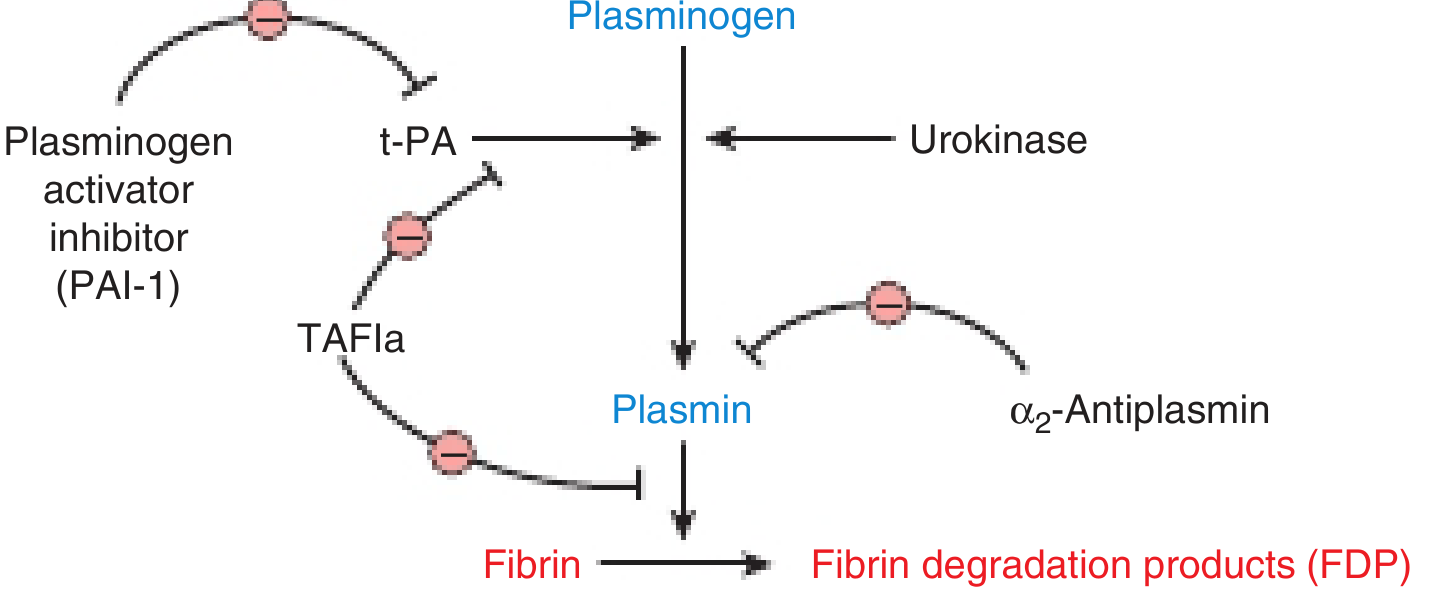
- Thrombolytics (alteplase, streptokinase) activate plasminogen to plasmin, which degrades fibrin. But this takes time and doesn't stop the underlying coagulation process.
- Anticoagulants (heparin) immediately stop thrombin from making new fibrin
- Antiplatelet agents (aspirin, clopidogrel) stop platelets from aggregating
All three working together prevent re-thrombosis after reperfusion.
Current Practice
In modern STEMI management, guidelines recommend adjunctive antithrombotic drugs "irrespective of reperfusion strategy" - whether using fibrinolysis or PCI. When fibrinolysis is used: "An accelerated regimen of tissue plasminogen activator (plus intravenous heparin) is preferred to streptokinase because the patency rate of the infarct-related artery at 90 minutes is higher and mortality is lower." - Goldman-Cecil Medicine
The strategy isn't "dissolve the clot, then stop anticoagulation." It's "actively prevent the ongoing thrombotic process while removing the existing clot," then continue anticoagulation and antiplatelet therapy long-term to prevent recurrent events.
Are antithromboLYTIC are used in mi?
Yes! Antithrombolytics (fibrinolytics/thrombolytics) ARE used in MI - specifically in STEMI when PCI is not available or will be delayed. Let me pull the full details from the textbooks.
Searching sources...
Finding Sources
Finding Sources
Finding Sources
Finding Sources
Reading File
Reading File
Reading File
Loading Image
Great material. Now here's the complete, thorough answer:
Yes - Thrombolytics ARE Used in MI (STEMI Specifically)
First, a quick terminology note: the drugs that break clots are called thrombolytics or fibrinolytics (e.g., alteplase, streptokinase, tenecteplase). "Antithrombolytics" technically means drugs that prevent fibrinolysis - so the term you're looking for is thrombolytics/fibrinolytics. This likely caused the confusion in your earlier question too.
The Core Principle
"The majority of patients who suffer an acute STEMI have thrombotic occlusion of a coronary artery. Early restoration of coronary perfusion limits infarct size, preserves LV function, and reduces mortality. All other therapies are secondary and should not delay the timely goal of achieving coronary reperfusion." - Washington Manual of Medical Therapeutics
Thrombolytics are one of two ways to achieve this reperfusion. The other is PCI (angioplasty/stenting).
STEMI Reperfusion Strategy: PCI vs Thrombolytics
Here is the decision flow used clinically:
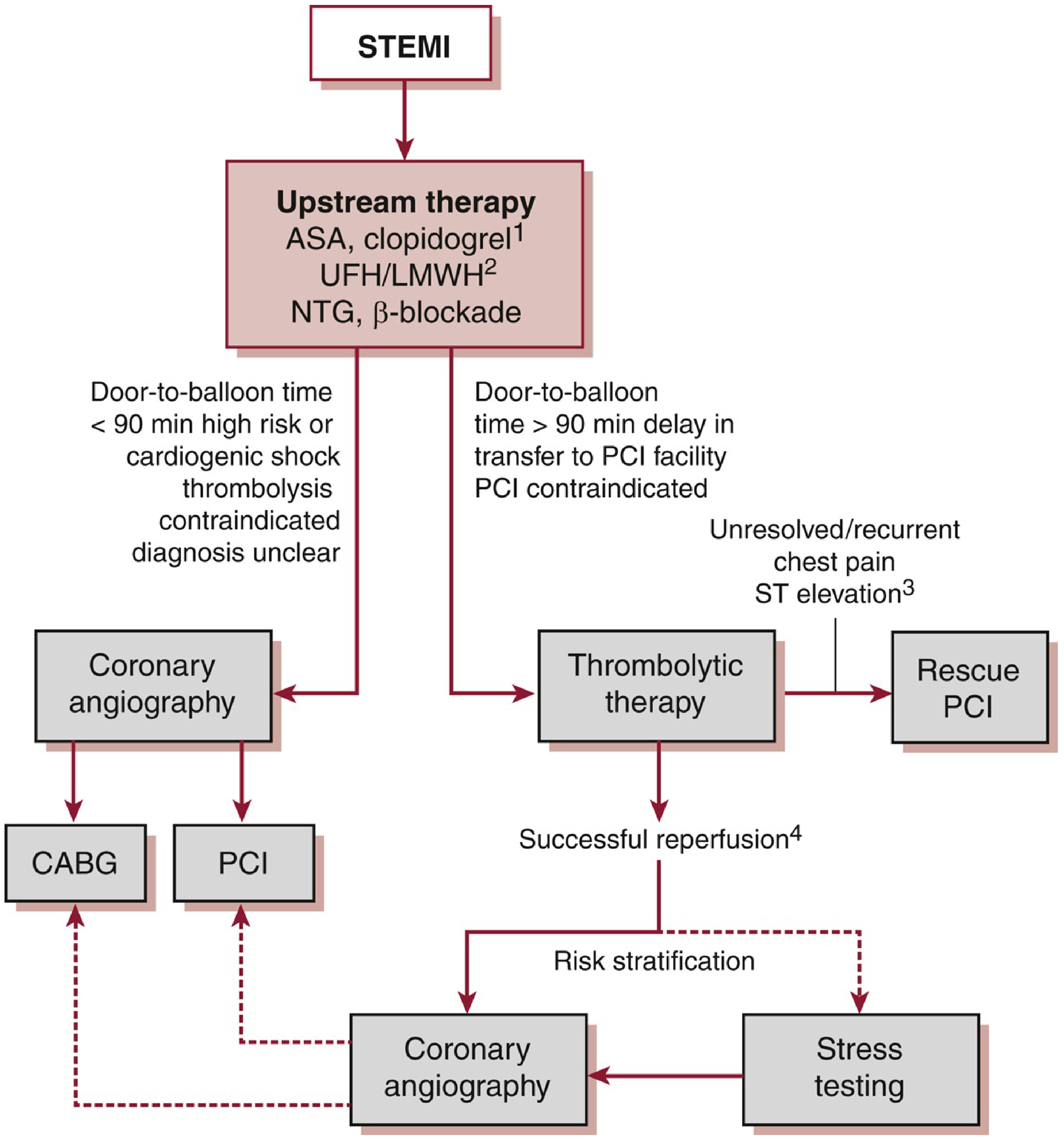
PCI is preferred when it can be done within 90 minutes (door-to-balloon). Thrombolytics are used when:
- PCI is not available (non-PCI-capable hospital)
- PCI will be delayed beyond 120 minutes
- Within 12 hours of symptom onset (ideally within 6 hours - most benefit)
Available Thrombolytic Agents
| Drug | Type | How Given |
|---|---|---|
| Alteplase (t-PA) | Fibrin-selective | IV infusion |
| Tenecteplase | Fibrin-selective | Single IV bolus (most convenient) |
| Reteplase | Fibrin-selective | Double IV bolus |
| Streptokinase | Non-selective (systemic) | IV infusion |
Fibrin-selective agents (alteplase, tenecteplase, reteplase) preferentially activate plasminogen bound to fibrin in the clot, rather than circulating plasminogen - so they lyse the thrombus with less systemic bleeding risk than streptokinase.
"When fibrinolysis is used, an accelerated regimen of a tissue plasminogen activator (plus intravenous heparin) is preferred to streptokinase because the patency rate of the infarct-related artery at 90 minutes is higher and mortality is lower." - Goldman-Cecil Medicine
Why Are They Used? (The Mechanism)
In STEMI, a ruptured coronary plaque triggers:
- Platelet activation and aggregation
- Thrombin generation via the coagulation cascade
- Fibrin deposition forming a hard, occlusive clot
Thrombolytics work by activating plasminogen to plasmin, which then digests fibrin and breaks the clot open, restoring blood flow to the ischemic myocardium - saving heart muscle from permanent death.
Timing is Everything
| Time from onset | Action |
|---|---|
| Within 2 hours | Consider immediate fibrinolysis unless PCI available within 60 min |
| 2-3 hours | Fibrinolysis or PCI (if PCI within 60-120 min) |
| 3-12 hours | PCI preferred if achievable within 120 min; else fibrinolysis |
| >12 hours | Benefit of thrombolytics greatly diminished; PCI preferred |
| Cardiogenic shock | Thrombolytics are NOT effective - PCI mandatory |
As the textbook states: "deterioration in efficacy as total infarction time increases is more pronounced with fibrinolysis than with PCI." - Rosen's Emergency Medicine
Absolute Contraindications to Thrombolytics
- Previous intracranial hemorrhage (ever)
- Active internal bleeding (not menses)
- Suspected aortic dissection
- Significant head/facial trauma within 3 months
- Intracranial or intraspinal surgery within 2 months
- Ischemic stroke within 3 months
Major Risks
The main danger is bleeding, especially intracranial hemorrhage (0.5-1% incidence). This is why PCI is always preferred when feasible - it has a higher reperfusion success rate with lower bleeding risk.
What About NSTEMI?
Thrombolytics are NOT used in NSTEMI/unstable angina. In these cases, there is no complete occlusion - the clot is partial - and thrombolytics increase bleeding risk without benefit. Only antiplatelet + anticoagulant therapy (antithrombotics) is used, along with PCI if needed.
Summary: Thrombolytics = used in STEMI only, when PCI is delayed or unavailable, within 12 hours of onset. Not used in NSTEMI. PCI is always the preferred reperfusion strategy.
I asked ANTI thrombolytic like traneximic acid n EACA
Great clarification! Tranexamic acid and EACA (epsilon-aminocaproic acid) are antifibrinolytics - they BLOCK clot breakdown. The short answer is: they are NOT routinely used in MI - in fact, they would be harmful. But let me get the full picture from the textbooks.
Searching sources...
Finding Sources
Finding Sources
Finding Sources
Finding Sources
Reading File
Reading File
Finding Sources
I have everything I need. Let me fetch the fibrinolysis/antifibrinolysis pathway diagram too.
Loading Image
Now I have a complete, thorough answer. Here it is:
Antifibrinolytics (TXA & EACA) in MI - Are They Used?
Short answer: NO - they are contraindicated/harmful in MI. Here is the full explanation of why.
First - What Are TXA and EACA?
Tranexamic acid (TXA) and epsilon-aminocaproic acid (EACA) are antifibrinolytics. They are lysine analogues that work by:
"Blocking the lysine-binding sites of plasminogen, preventing it from acting on fibrin." - Barash Clinical Anesthesia, 9th Ed.
In other words, they block plasmin formation, which means fibrin clots cannot be broken down. They stabilize and preserve existing clots.
The diagram below shows exactly where EACA and TXA act:
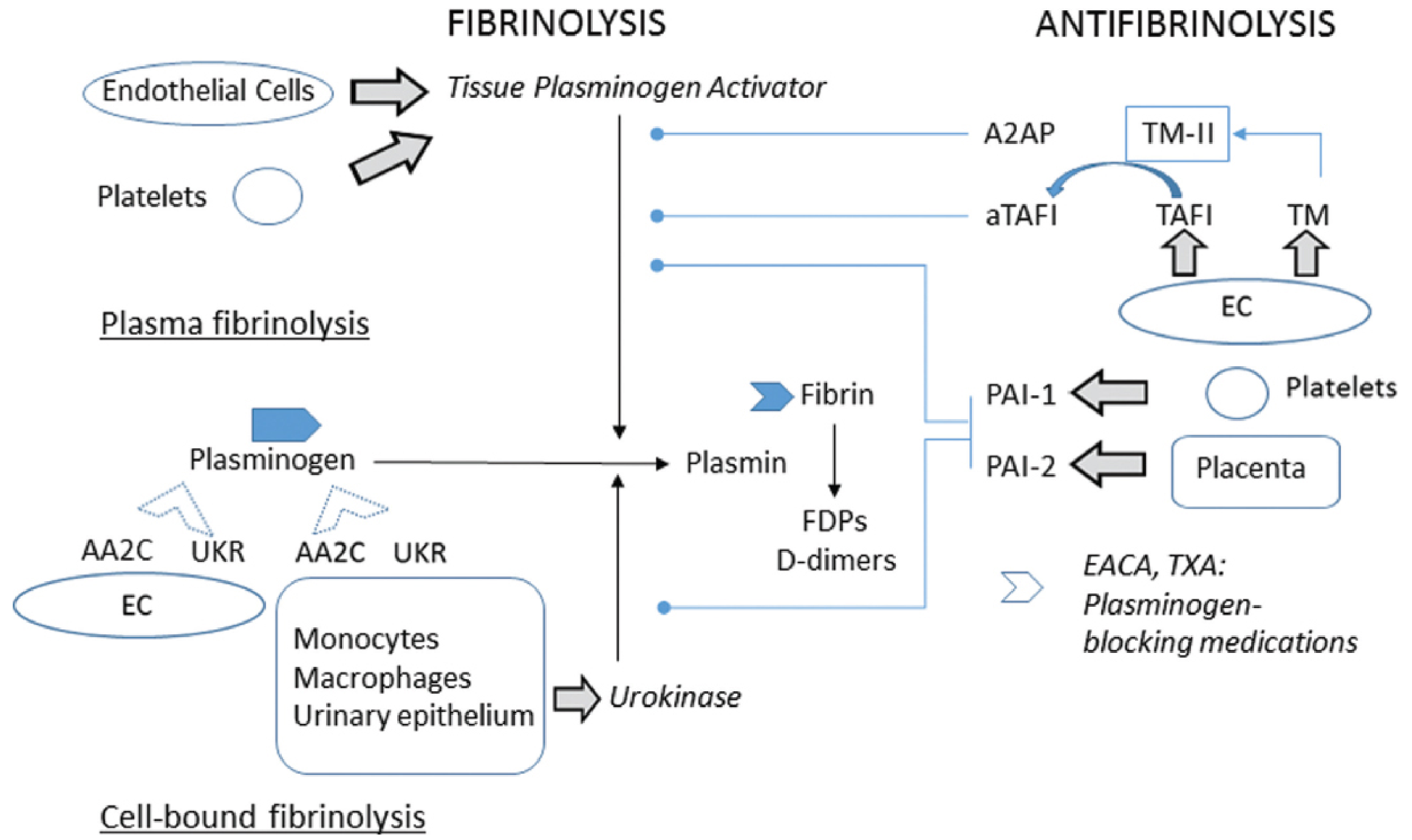
As labeled in the diagram: "EACA, TXA: Plasminogen-blocking medications" - they sit on the antifibrinolysis side of the pathway.
Why They Are NOT Used in MI
In MI (STEMI), the entire problem is an occlusive thrombus blocking a coronary artery. The body's natural fibrinolytic system (tPA, plasmin) is trying to break down that clot. Giving TXA or EACA would:
- Block endogenous clot dissolution - making the coronary occlusion worse
- Prevent reperfusion - the opposite of what is needed
- Increase thrombotic risk - worsen mural thrombus, DVT, and re-occlusion after PCI
- Directly oppose thrombolytic therapy - TXA would neutralize alteplase/streptokinase if given together
This is the exact opposite of MI management, where you want to break the clot and prevent new ones forming.
What TXA and EACA ARE Used For
These drugs are used when there is excessive fibrinolysis causing bleeding:
| Indication | Rationale |
|---|---|
| Major trauma / hemorrhagic shock | Trauma-induced coagulopathy causes hyperfibrinolysis |
| Cardiac surgery (on-pump CABG) | Cardiopulmonary bypass activates fibrinolysis |
| Liver transplantation | Anhepatic phase causes severe fibrinolysis |
| Orthopedic surgery (hip/knee replacement) | Reduces surgical blood loss |
| Postpartum hemorrhage | Uterine fibrinolysis |
| Hemophilia with mucosal bleeding | Stabilizes clots at bleeding sites |
| Menorrhagia | Excessive endometrial fibrinolysis |
| Subarachnoid hemorrhage (selected cases) | Prevents rebleeding |
"TXA has about eight times the antifibrinolytic activity of EACA." - Sabiston Textbook of Surgery
The CRASH-2 Trial (Most Famous TXA Evidence)
In trauma patients with hemorrhage: TXA 1g IV over 10 min, then 1g over 8 hours reduced all-cause mortality (16% to 14.5%) and death from bleeding. But critically - this was in trauma/hemorrhage, NOT in MI. And even in trauma, TXA given after 3 hours increased risk of death from bleeding.
Summary Table: Fibrinolytics vs Antifibrinolytics in MI
| Drug Class | Examples | Effect | Used in MI? |
|---|---|---|---|
| Fibrinolytics (Thrombolytics) | Alteplase, Streptokinase, Tenecteplase | Break clots (activate plasmin) | YES - in STEMI when PCI unavailable |
| Antifibrinolytics | TXA, EACA | Prevent clot breakdown (block plasmin) | NO - would worsen coronary occlusion |
| Anticoagulants | Heparin, LMWH, Bivalirudin | Prevent new clot formation | YES - adjunct in all STEMI/NSTEMI |
| Antiplatelet agents | Aspirin, Clopidogrel, Ticagrelor | Block platelet aggregation | YES - cornerstone of all ACS therapy |
In short: TXA and EACA work in the opposite direction of what MI treatment requires. They are among the drugs you would want to avoid (or actively discontinue if a patient is on them) in the setting of acute MI.
This is a shared conversation. Sign in to Orris to start your own chat.