
Think like i know 0 about hear murmurs ,if u want me to master in murmurs how will you teach me, teach me in flowchart chart
🫀 Heart Murmurs: From Zero to Master — A Flowchart Guide
STEP 1 — What IS a Heart Murmur?
NORMAL HEART SOUNDS = S1 ("lub") + S2 ("dub")
                          ↕                ↕
                     Valves CLOSE      Valves CLOSE
                 (Mitral + Tricuspid) (Aortic + Pulmonic)

MURMUR = EXTRA sound caused by turbulent blood flow
         between S1 and S2, or between S2 and next S1
- Accelerated blood flow through a normal OR abnormal opening
- Blood squeezing through a narrowed valve (stenosis)
- Blood leaking backwards through an incompetent (leaky) valve
STEP 2 — The Cardiac Cycle (The Foundation of Everything)
ONE HEARTBEAT:
─────────────────────────────────────────────────────────
  S1                                S2
  │←─────── SYSTOLE ────────────────│←───── DIASTOLE ────→│
  │                                 │                      │
 Ventricles CONTRACT               Ventricles RELAX
 (blood pumped OUT)                (blood fills IN)
 Mitral/Tricuspid CLOSE            Aortic/Pulmonic CLOSE
─────────────────────────────────────────────────────────
     ↑ Murmur HERE = SYSTOLIC         ↑ Murmur HERE = DIASTOLIC
Memory trick: Squeeze your fist = SYSTOLE (S1 closes). Relax your fist = DIASTOLE (S2 closes).
STEP 3 — MASTER FLOWCHART: Classify the Murmur
YOU HEAR A MURMUR
        │
        ▼
┌──────────────────────────────────────────────┐
│  STEP A: WHEN does it occur?                 │
└──────────────────────────────────────────────┘
        │
   ┌────┴────────────┬─────────────────┐
   ▼                 ▼                 ▼
SYSTOLIC         DIASTOLIC         CONTINUOUS
(between S1→S2)  (between S2→S1)   (through S2)
   │                 │                 │
   ▼                 ▼                 ▼
[Go to Chart A]  [Go to Chart B]   [Go to Chart C]
CHART A — SYSTOLIC Murmurs
SYSTOLIC MURMUR
        │
        ▼
┌──────────────────────────────────────────────┐
│  WHERE in systole does it occur?             │
└──────────────────────────────────────────────┘
        │
   ┌────┴────────────────────┐
   ▼                         ▼
EJECTION (mid-systolic)   HOLOSYSTOLIC (pan-systolic)
Diamond-shaped crescendo  Flat - fills entire systole
   -decrescendo               S1 ──────────── S2
   S1 ◇◇◇◇◇◇◇◇◇ S2
   │                         │
   ▼                         ▼
  [A1]                      [A2]
[A1] Mid-Systolic (Ejection) Murmur
MID-SYSTOLIC EJECTION MURMUR
           │
    ┌──────┴──────┐
    ▼             ▼
LEFT SIDE      RIGHT SIDE
(Aortic area)  (Pulmonic area)
    │             │
    ▼             ▼
┌──────────┐  ┌──────────────┐
│ AORTIC   │  │ PULMONIC     │
│ STENOSIS │  │ STENOSIS     │
│          │  │              │
│ • Harsh  │  │ • Soft/med   │
│   rasping│  │ • 2nd-3rd L  │
│ • Apex   │  │   intercostal│
│   + neck │  │ • Ejection   │
│   (carotid│ │   click on   │
│   radiation│ │   inspiration│
│ • Slow   │  │   disappears │
│   carotid│  │ • Wide fixed │
│   upstroke│ │   split S2 if│
│ • LVH on │  │   ASD present│
│   ECG    │  └──────────────┘
└──────────┘
      │
   ALSO CONSIDER:
   • HOCM (hypertrophic obstructive cardiomyopathy)
     - Murmur at lower left sternal border
     - LOUDER with standing/Valsalva
     - SOFTER with squatting
   • Flow murmur (benign, grade I-II, fever/anemia)
[A2] Holosystolic (Pan-systolic) Murmur
HOLOSYSTOLIC MURMUR
      │
  ┌───┴───────────┐
  ▼               ▼
APEX            LEFT STERNAL BORDER
  │               │
  ▼               ▼
MITRAL         TRICUSPID           VSD
REGURGITATION  REGURGITATION   (harsh, lower
               (increases with  left sternal
               inspiration =    border, thrill
               Carvallo's sign) common)
• Blowing
• Radiates to axilla
• S3 may be present
Late Systolic Murmur (special case)
LATE SYSTOLIC MURMUR
(crescendos toward S2)
        │
        ▼
MITRAL VALVE PROLAPSE (MVP)
• Preceded by a mid-systolic CLICK
• Murmur moves EARLIER with standing
• Murmur moves LATER with squatting
CHART B — DIASTOLIC Murmurs
Key rule: All diastolic murmurs are pathological - they always warrant investigation.
DIASTOLIC MURMUR
        │
        ▼
┌──────────────────────────────────────────────┐
│  WHERE in diastole does it occur?            │
└──────────────────────────────────────────────┘
        │
   ┌────┴──────────────────┐
   ▼                       ▼
EARLY DIASTOLIC          MID/LATE DIASTOLIC
(begins right after S2)  (after an opening snap)
   │                       │
   ▼                       ▼
REGURGITATION of          STENOSIS of
semilunar valves          AV valves
   │                       │
  ┌┴─────┐              ┌──┴────────┐
  ▼      ▼              ▼          ▼
AORTIC  PULMONIC     MITRAL    TRICUSPID
REGURG  REGURG       STENOSIS  STENOSIS
  │                     │
  ▼                     ▼
• Blowing,           • Low-pitched
  high-pitched         RUMBLE
  decrescendo        • Best heard
• Left sternal         at apex
  border              with BELL
• Lean forward,      • Opening snap
  hold breath        • Presystolic
• Wide pulse           accentuation
  pressure             (if sinus
• Corrigan's           rhythm)
  pulse              • Loud S1
CHART C — CONTINUOUS Murmurs
CONTINUOUS MURMUR
(starts in systole, continues THROUGH S2, into diastole)
        │
        ▼
┌─────────────────────────────────────────────────┐
│     PATENT DUCTUS ARTERIOSUS (PDA)              │
│  • "Machinery murmur" - heard in infraclavicular │
│    area / left upper sternal border              │
│  • Crescendo to S2, then fades                  │
│  • Common in premature infants                  │
└─────────────────────────────────────────────────┘
Also: AV fistula, ruptured sinus of Valsalva
STEP 4 — Murmur Grading (Levine Scale)
GRADING SCALE (out of 6):
┌───────┬─────────────────────────────────────────────┐
│ Grade │ Description                                 │
├───────┼─────────────────────────────────────────────┤
│  I/VI │ Very faint - only heard in quiet room       │
│       │ (can be missed)                             │
│ II/VI │ Soft but easily heard                       │
│III/VI │ Moderately loud, NO THRILL                  │
│ IV/VI │ Loud + THRILL present (feel it!)            │
│  V/VI │ Very loud, thrill - heard with edge of      │
│       │ stethoscope only                            │
│ VI/VI │ Heard WITHOUT stethoscope                   │
└───────┴─────────────────────────────────────────────┘
            ↑                   ↑
     Grade I-II = likely benign    Grade ≥III = investigate
STEP 5 — The Diagnostic Flowchart (Action Plan)
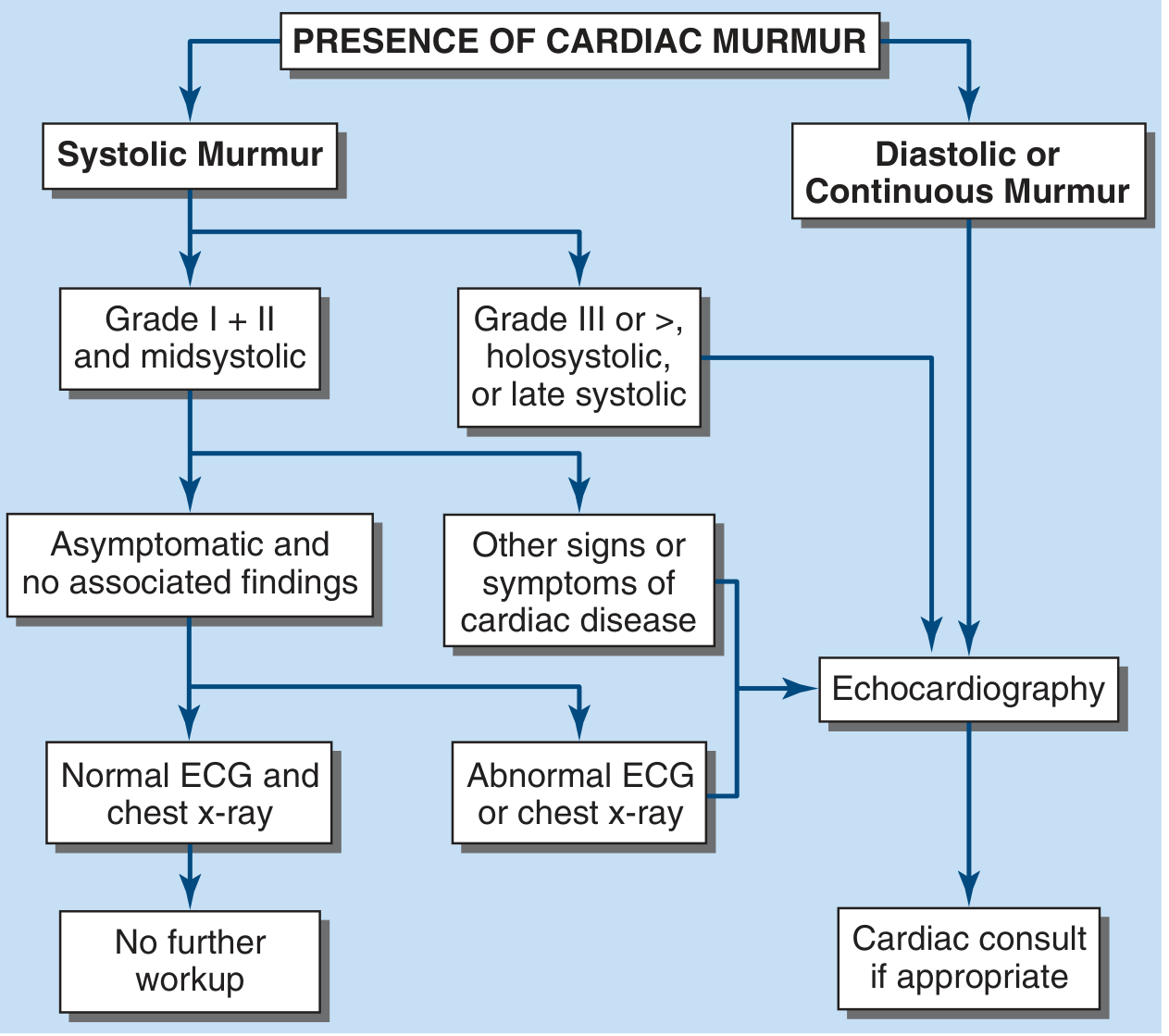
MURMUR DETECTED
        │
   ┌────┴────────────────┐
   ▼                     ▼
SYSTOLIC             DIASTOLIC or
                     CONTINUOUS
   │                     │
   ▼                     └─────────────────→ ECHO always
Grade I-II           Grade ≥III, holosystolic
midsystolic          or late systolic
   │                     │
   ▼                     ▼
Asymptomatic?    Other signs/symptoms?
No findings?         │
   │              ECG or CXR abnormal?
   ▼                     │
ECG + CXR normal         └──────────────→ ECHO + Cardiology
   │
   ▼
NO FURTHER
WORKUP needed
(likely innocent/benign)
STEP 6 — Bedside Maneuvers Flowchart
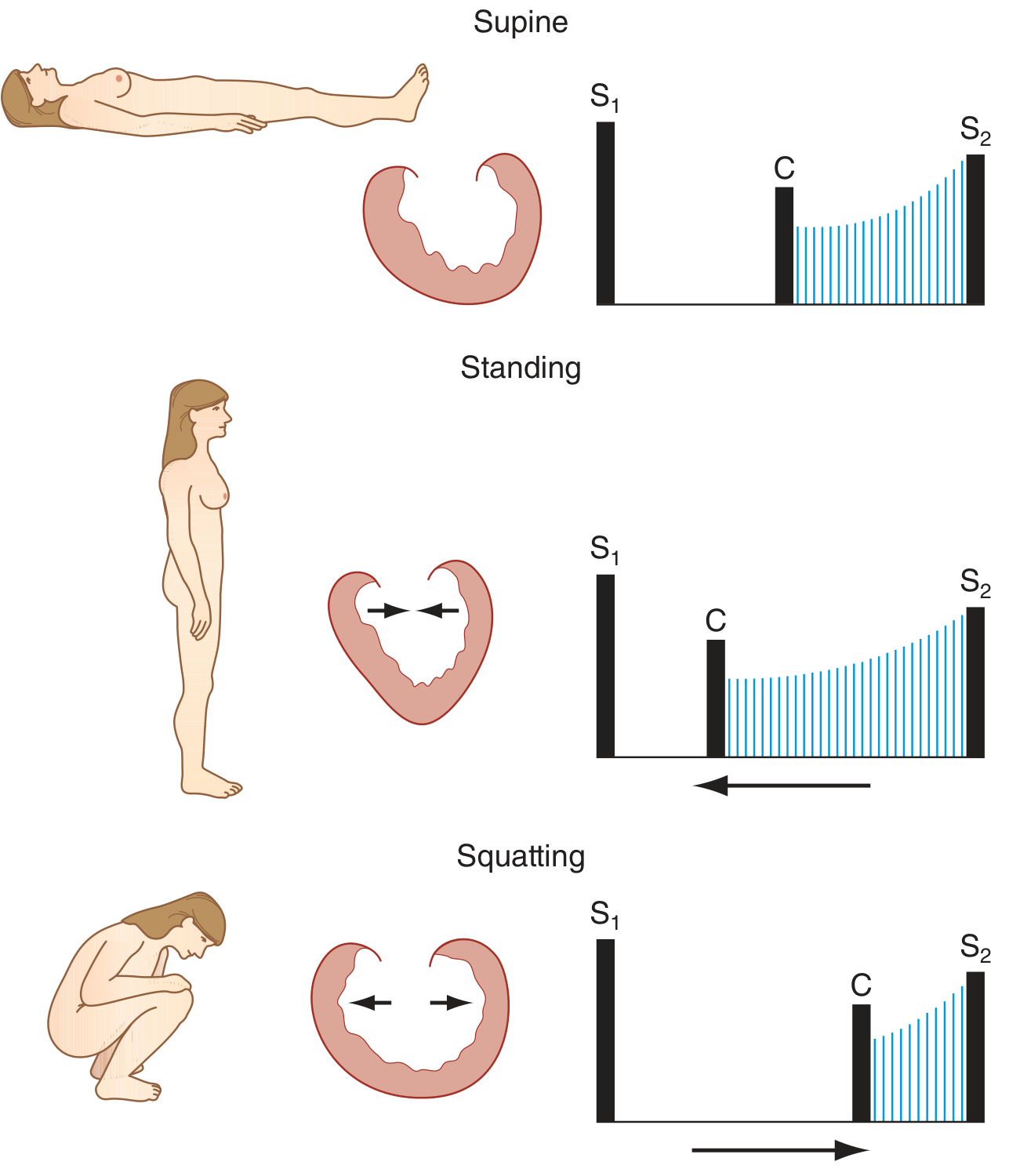
BEDSIDE MANEUVER EFFECTS:

MANEUVER        │ HOCM/MVP murmur │ AS/MR/VSD murmur
────────────────┼─────────────────┼──────────────────
Standing        │ LOUDER ↑        │ softer ↓
(↓ preload)     │ (earlier click  │
                │ in MVP)         │
────────────────┼─────────────────┼──────────────────
Squatting       │ SOFTER ↓        │ louder ↑
(↑ preload +    │ (click moves    │
afterload)      │ toward S2)      │
────────────────┼─────────────────┼──────────────────
Valsalva        │ LOUDER ↑        │ softer ↓
(strain phase,  │                 │
↓ preload)      │                 │
────────────────┼─────────────────┼──────────────────
Inspiration     │ Right-sided     │ Left-sided
                │ murmurs louder  │ unaffected
                │ (Carvallo's     │ (or slightly ↓)
                │ sign)           │
Memory trick for HOCM/MVP: These valves collapse when the heart is SMALL (standing/Valsalva). So murmur gets LOUDER. When heart is BIG (squatting), murmur gets SOFTER.
STEP 7 — Waveform Patterns (Visual Memory)
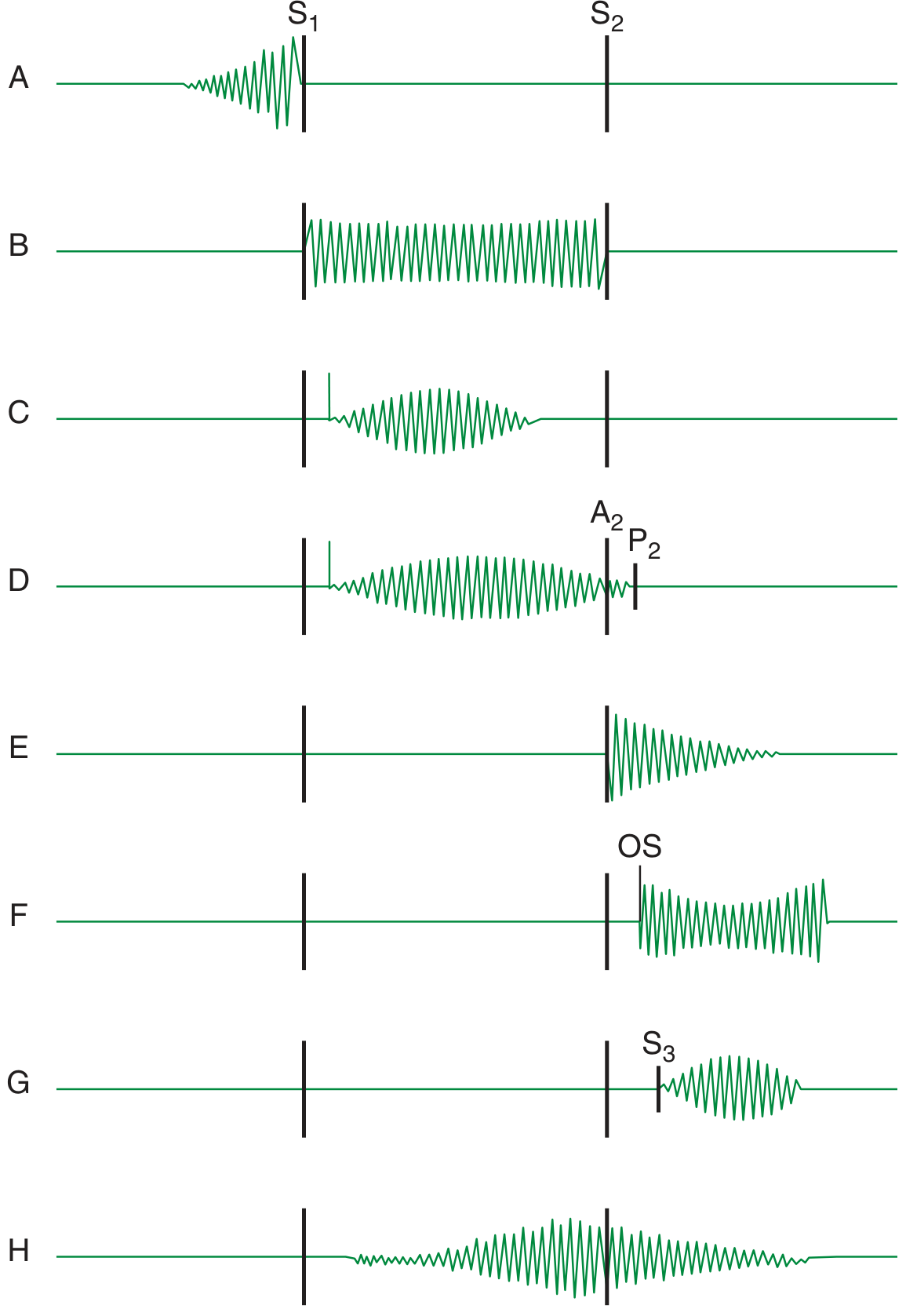
A = Presystolic (MS in sinus rhythm)  - builds up to S1
B = Holosystolic (MR/TR/VSD)          - flat, fills S1→S2
C = Aortic ejection (AS)              - diamond shape, fades before S2
D = Pulmonic stenosis                 - longer, spills past A2
E = Early diastolic (AR/PR)           - decrescendo after S2
F = Mitral stenosis                   - after Opening Snap, mid-late diastolic
G = Short mid-diastolic               - after S3 gallop
H = Continuous (PDA)                  - crescendo through S2
STEP 8 — Quick Reference: Valve Lesion Summary Table
┌──────────────────┬────────────┬─────────────────┬──────────────────┐
│ CONDITION        │ TIMING     │ QUALITY/PITCH    │ BEST HEARD AT    │
├──────────────────┼────────────┼─────────────────┼──────────────────┤
│ Aortic Stenosis  │ Midsystolic│ Harsh, rasping  │ Right 2nd ICS    │
│ (AS)             │            │ low-medium      │ → carotids       │
├──────────────────┼────────────┼─────────────────┼──────────────────┤
│ Mitral           │ Holosyst.  │ Blowing, high   │ Apex → L axilla  │
│ Regurgitation    │            │ pitch           │                  │
├──────────────────┼────────────┼─────────────────┼──────────────────┤
│ Mitral Stenosis  │ Mid-late   │ Low rumble      │ Apex (bell)      │
│ (MS)             │ diastolic  │ (use BELL)      │ left lateral     │
├──────────────────┼────────────┼─────────────────┼──────────────────┤
│ Aortic           │ Early      │ Blowing, high   │ Left sternal     │
│ Regurgitation    │ diastolic  │ pitch decresendo│ border (lean fwd)│
├──────────────────┼────────────┼─────────────────┼──────────────────┤
│ Tricuspid        │ Holosyst.  │ Blowing         │ Lower left       │
│ Regurgitation    │            │                 │ sternal border   │
├──────────────────┼────────────┼─────────────────┼──────────────────┤
│ Pulmonic         │ Midsystolic│ Ejection click  │ Left 2nd-3rd ICS │
│ Stenosis         │            │ + soft murmur   │                  │
├──────────────────┼────────────┼─────────────────┼──────────────────┤
│ VSD              │ Holosyst.  │ Harsh, loud     │ Lower left       │
│                  │            │ + thrill        │ sternal border   │
├──────────────────┼────────────┼─────────────────┼──────────────────┤
│ PDA              │ Continuous │ Machinery       │ L infraclavicular│
├──────────────────┼────────────┼─────────────────┼──────────────────┤
│ MVP              │ Late syst. │ Click + late    │ Apex             │
│                  │            │ systolic murmur │                  │
├──────────────────┼────────────┼─────────────────┼──────────────────┤
│ HOCM             │ Midsystolic│ Harsh, variable │ Lower left       │
│                  │            │ intensity       │ sternal border   │
└──────────────────┴────────────┴─────────────────┴──────────────────┘
STEP 9 — Innocent vs. Pathological Murmur
IS THIS MURMUR DANGEROUS?
        │
   ┌────┴──────────────────────────┐
   ▼                               ▼
INNOCENT (benign)            PATHOLOGICAL
        │                          │
Soft, grade I-II/VI          Any of these:
Midsystolic ONLY             • Diastolic murmur
Asymptomatic patient         • Continuous murmur
No radiation                 • Grade ≥ III/VI
Normal ECG + CXR             • Holosystolic/late systolic
Usually in children/         • Thrill present
young adults or              • Radiates widely
high-flow states             • Abnormal S2 splitting
(anemia, fever,              • Associated symptoms
pregnancy)                   (syncope, dyspnea, chest pain)
        │                          │
        ▼                          ▼
   Reassure                   ECHO + Cardiology referral
STEP 10 — Learning Sequence Ladder (Study Order)
MASTERY PATH:

Level 1 ──→ Understand S1/S2 and the cardiac cycle
Level 2 ──→ Classify: Systolic vs. Diastolic vs. Continuous
Level 3 ──→ Sub-classify systolic: ejection vs. holosystolic vs. late
Level 4 ──→ Sub-classify diastolic: early vs. mid/late
Level 5 ──→ Learn the Levine grading scale
Level 6 ──→ Match each murmur to its valve lesion
Level 7 ──→ Memorize location + radiation + quality for each
Level 8 ──→ Learn bedside maneuvers and what they do to each murmur
Level 9 ──→ Know when to order ECHO vs. reassure
Level 10 ─→ Apply to clinical cases (spot the murmur, name the cause)
BEDSIDE MANEUVER EFFECTS: MANEUVER │ HOCM/MVP murmur │ AS/MR/VSD murmur ────────────────┼─────────────────┼────────────────── Standing │ LOUDER ↑ │ softer ↓ (↓ preload) │ (earlier click │ │ in MVP) │ ────────────────┼─────────────────┼────────────────── Squatting │ SOFTER ↓ │ louder ↑ (↑ preload + │ (click moves │ afterload) │ toward S2) │ ────────────────┼─────────────────┼────────────────── Valsalva │ LOUDER ↑ │ softer ↓ (strain phase, │ │ ↓ preload) │ │ ────────────────┼─────────────────┼────────────────── Inspiration │ Right-sided │ Left-sided │ murmurs louder │ unaffected │ (Carvallo's │ (or slightly ↓) │ sign) │
🩺 Bedside Maneuvers for Heart Murmurs — A Complete Masterclass
THE CORE CONCEPT FIRST (Build the Mental Model)
MURMUR INTENSITY depends on TWO things:
        │
   ┌────┴──────────────────────┐
   ▼                           ▼
How much BLOOD                How big is the
flows through                 PRESSURE GRADIENT
the valve?                    across the valve?
   │                           │
More blood → louder        Bigger gradient → louder
Less blood → softer        Smaller gradient → softer
THE 3 VARIABLES YOU CONTROL
┌─────────────────────────────────────────────────────────────────┐
│                                                                 │
│  PRELOAD = how much blood FILLS the ventricle before it pumps  │
│  (= how stretched the heart is before squeezing)               │
│  ↑ Preload → heart is BIGGER → valves fit better → less leak  │
│  ↓ Preload → heart is SMALLER → valves sag/obstruct more      │
│                                                                 │
│  AFTERLOAD = resistance the heart pumps AGAINST               │
│  (= systemic blood pressure roughly)                           │
│  ↑ Afterload → more backpressure → more regurgitation         │
│  ↓ Afterload → less resistance → less regurgitation           │
│                                                                 │
│  CONTRACTILITY = how forcefully the heart squeezes            │
│  ↑ Contractility → more flow → louder ejection murmurs        │
│                                                                 │
└─────────────────────────────────────────────────────────────────┘
MANEUVER 1 — VALSALVA (Strain Phase)
VALSALVA MANEUVER
        │
        ▼
Patient bears down hard against a closed glottis
        │
        ▼
↑ Intrathoracic pressure
        │
        ▼
↓ Venous return to the heart
        │
        ▼
↓ PRELOAD — Heart becomes SMALLER

        │
   ┌────┴────────────────────────────────────────┐
   ▼                                             ▼
HOCM / MVP                              ALL OTHER MURMURS
(dynamic obstruction)                   (AS, MR, TR, AR, etc.)
        │                                        │
        ▼                                        ▼
Heart is SMALLER →                     Less blood →
outflow tract narrows more →            smaller gradient →
mitral valve sags earlier →             SOFTER ↓
LOUDER ↑ / LONGER
(MVP click moves EARLIER toward S1)

WHY? In HOCM, obstruction is DYNAMIC.
Smaller heart = walls crowd the outflow = more blockage = louder.
In MVP, smaller heart = leaflet prolapses sooner in systole.
Harrison's exact words: "The majority of murmurs decrease in intensity during the strain phase of the maneuver. Two notable exceptions are the murmurs associated with MVP and HOCM, both of which become louder during the Valsalva maneuver."
MANEUVER 2 — STANDING (from squatting or lying)
STANDING UP
        │
        ▼
Gravity pulls blood to legs
        │
        ▼
↓ Venous return
        │
        ▼
↓ PRELOAD — Same effect as Valsalva

        │
   ┌────┴────────────────────────────────────────┐
   ▼                                             ▼
HOCM / MVP                              ALL OTHER MURMURS
LOUDER ↑                                SOFTER ↓
(MVP click moves toward S1)
MANEUVER 3 — SQUATTING (from standing)
SQUATTING DOWN
        │
        ▼
Leg muscles compress veins → blood returns to heart
PLUS increased systemic vascular resistance
        │
        ▼
↑ Venous return + ↑ Afterload
        │
        ▼
↑ PRELOAD + ↑ AFTERLOAD — Heart becomes BIGGER

        │
   ┌────┴────────────────────────────────────────┐
   ▼                                             ▼
HOCM / MVP                              AS / MR / VSD / AR
Heart is BIGGER →                       More blood to pump →
outflow widens →                        bigger gradient →
less obstruction →                      LOUDER ↑
SOFTER ↓ / SHORTER
(MVP click moves AWAY from S1, toward S2)
Harrison's: "Squatting results in abrupt increases in both venous return (preload) and left ventricular afterload that increase ventricular volume, changes that predictably cause a decrease in the intensity and duration of the murmurs associated with MVP and HOCM."
MANEUVER 4 — INSPIRATION
DEEP INSPIRATION
        │
        ▼
Negative intrathoracic pressure
        │
        ▼
Chest "sucks" blood from body veins INTO the RIGHT heart
        │
        ▼
↑ Right-sided filling → ↑ flow across RIGHT-sided valves

        │
   ┌────┴────────────────────────────────────────────────────┐
   ▼                                                         ▼
RIGHT-SIDED MURMURS                               LEFT-SIDED MURMURS
(Tricuspid, Pulmonic)                             (Mitral, Aortic)
LOUDER on inspiration ↑                           Unchanged or slightly ↓
        │
This is called CARVALLO'S SIGN:
Tricuspid Regurgitation murmur increases
with inspiration (right heart fills more →
more blood leaking back)

Remember: "Right = Inspiration"
(mnemonic: RILE = Right Increases with inspiration, Left with Expiration...
 though left-sided changes are minimal)
MANEUVER 5 — ISOMETRIC HANDGRIP EXERCISE
HANDGRIP (squeeze hard for 30 seconds)
        │
        ▼
↑ Systemic vascular resistance
        │
        ▼
↑ AFTERLOAD — Higher pressure in the aorta/arteries

        │
   ┌────┴────────────────────┬─────────────────────────┐
   ▼                         ▼                         ▼
MR / AR / VSD            HOCM                       AS
LOUDER ↑                 SOFTER ↓                   SOFTER ↓
(more resistance         (less gradient             (less outflow
to forward flow →        across outflow             gradient due to
more regurgitation)      tract with ↑ afterload)    ↑ afterload)
Especially useful to distinguish AS from MR at the apex: handgrip makes MR louder but does NOT change AS.
MANEUVER 6 — POST-PVC (After a Premature Beat)
POST-PVC BEAT (or long cycle in atrial fibrillation)
        │
        ▼
Longer filling time → heart fills MORE than usual
PLUS post-extrasystolic potentiation → heart contracts MORE forcefully
        │
        ▼
↑ Stroke volume + ↑ Contractility

        │
   ┌────┴────────────────────────────────────┐
   ▼                                         ▼
OUTFLOW OBSTRUCTION                   REGURGITANT MURMURS
(AS, HOCM, PS)                        (MR, TR)
LOUDER ↑                              NO CHANGE
(more volume + force →                (MR gradient doesn't
bigger gradient across                increase much with
the narrowed valve)                   more filling)
Clinical pearl from Harrison's: "This distinguishes AS from MR when the AS murmur radiates to the apex ('Gallavardin effect') - post-PVC the murmur gets louder in AS but NOT in MR."
MANEUVER 7 — PASSIVE LEG RAISING
PASSIVE LEG RAISING (patient supine, legs lifted 45°)
        │
        ▼
Gravity drains blood from legs back to the central circulation
        │
        ▼
↑ PRELOAD — Same direction as squatting, but less intense

        │
   ┌────┴────────────────────────────────────────┐
   ▼                                             ▼
HOCM / MVP                              All other murmurs
SOFTER ↓                                Slightly louder ↑
(heart gets bigger →
less obstruction)

Useful for patients who CANNOT squat (elderly, post-op)
THE MASTER TABLE (Expanded, With Mechanism)
┌──────────────────────┬──────────┬──────────────┬────────────────────────────────┐
│ MANEUVER             │ Preload  │ Afterload    │ EFFECT ON MURMURS              │
├──────────────────────┼──────────┼──────────────┼────────────────────────────────┤
│ Valsalva (strain)    │ ↓↓       │ ↓            │ HOCM/MVP: ↑ LOUDER             │
│                      │          │              │ All others: ↓ softer           │
├──────────────────────┼──────────┼──────────────┼────────────────────────────────┤
│ Standing             │ ↓        │ ↓ slightly   │ HOCM/MVP: ↑ LOUDER             │
│                      │          │              │ All others: ↓ softer           │
├──────────────────────┼──────────┼──────────────┼────────────────────────────────┤
│ Squatting            │ ↑↑       │ ↑↑           │ HOCM/MVP: ↓ softer             │
│                      │          │              │ AS/MR/AR/VSD: ↑ louder         │
├──────────────────────┼──────────┼──────────────┼────────────────────────────────┤
│ Passive leg raise    │ ↑        │ slight ↑     │ HOCM/MVP: ↓ softer             │
│                      │          │              │ Others: ↑ slightly louder      │
├──────────────────────┼──────────┼──────────────┼────────────────────────────────┤
│ Inspiration          │ ↑ (RIGHT)│ -            │ RIGHT-sided murmurs: ↑ louder  │
│                      │          │              │ (Carvallo's sign for TR)       │
├──────────────────────┼──────────┼──────────────┼────────────────────────────────┤
│ Isometric handgrip   │ slight ↑ │ ↑↑           │ MR/AR/VSD: ↑ louder            │
│                      │          │              │ AS/HOCM: ↓ softer              │
├──────────────────────┼──────────┼──────────────┼────────────────────────────────┤
│ Post-PVC beat        │ ↑↑       │ -            │ AS/HOCM/PS: ↑ louder           │
│                      │          │              │ MR/TR: no change               │
└──────────────────────┴──────────┴──────────────┴────────────────────────────────┘
CLINICAL DECISION FLOWCHART — Which Maneuver to Use When?
YOU HEAR A MURMUR AND WANT TO IDENTIFY IT
                │
   ┌────────────┼────────────────────────────┐
   ▼            ▼                            ▼
Is it         Is it right               Heard at apex -
systolic      or left sided?             AS vs. MR?
   │               │                         │
   ▼               ▼                         ▼
Do VALSALVA    Do INSPIRATION         Do HANDGRIP
+ STANDING         │                  + POST-PVC
   │           Right: louder             │
   │           Left: no change       Handgrip louder
   ▼                                  → MR
LOUDER?                            No change
   │                                  → AS
   ├── YES → HOCM or MVP
   │         Do SQUATTING to confirm:
   │         Softer on squatting = HOCM/MVP ✓
   │
   └── NO → AS, PS, flow murmur
             (ejection type)
THE ONE MEMORY TRICK THAT TIES IT ALL TOGETHER
Think of HOCM/MVP as a "shy valve"

   Small heart  →  valve OVERCROWDS, OVERREACTS  →  LOUD murmur
   Big heart    →  valve has ROOM to behave       →  quiet murmur

Everything that SHRINKS the heart (Valsalva, standing, tachycardia)
    = LOUDER for HOCM/MVP

Everything that FILLS the heart (squatting, leg raise, bradycardia)
    = SOFTER for HOCM/MVP

ALL OTHER MURMURS are the OPPOSITE - they need MORE blood to be loud.