I now have enough material from both GNM (learninggnm.com) and Predictive Homeopathy (Vijaykar's framework via the Moskowitz article) to produce a detailed, student-oriented guide. Let me now write the full response.
⚠️ Important Academic Disclaimer: German New Medicine (GNM) and Predictive Homeopathy are alternative theoretical frameworks used within their respective systems of thought. They are not accepted by mainstream evidence-based medicine and lack clinical trial validation. This content is provided purely for your academic study of these systems as a homoeopathic student. Always integrate this with conventional pathology and clinical reasoning in your practice.
Thyroid Disorders — Through the Lens of GNM & Predictive Homeopathy
PART 1 — GERMAN NEW MEDICINE (GNM)
Background: The Foundation of GNM
German New Medicine was developed by Dr. Ryke Geerd Hamer after he observed a connection between a traumatic life event and the onset of his own cancer. He proposed Five Biological Laws governing all disease:
| Law | Content |
|---|
| 1st Law — The Iron Rule of Cancer | Every disease begins with a DHS (Dirk Hamer Syndrome) — a sudden, isolating, dramatic, unexpected biological conflict shock |
| 2nd Law — Two-Phase Nature | Every disease runs in two phases: conflict-active phase and healing/resolution phase (if conflict resolves) |
| 3rd Law — Ontogenetic System | Each organ derives from a specific embryological germ layer (endoderm, mesoderm, ectoderm/neuroectoderm), and the corresponding brain relay and type of tissue change are determined by that layer |
| 4th Law — Role of Microbes | Bacteria, fungi, and viruses are helpers in the healing phase, not pathogens per se |
| 5th Law — Quintessence | All of the above form a meaningful, biologically purposeful system — disease is the body's intelligent attempt to adapt and survive |
The DHS — How Disease Begins in GNM
A DHS (biological conflict shock) is NOT a simple stress. It must be:
- Sudden (catches you off-guard)
- Dramatic (deeply significant to the individual)
- Isolating (experienced alone, not shared with others)
- Unresolved (no immediate solution)
The shock registers simultaneously in three levels — the psyche, a specific brain relay, and the corresponding organ/tissue. This is what GNM calls the psyche-brain-organ triad.
GNM and the Thyroid — The "Speed/Morsel Conflict"
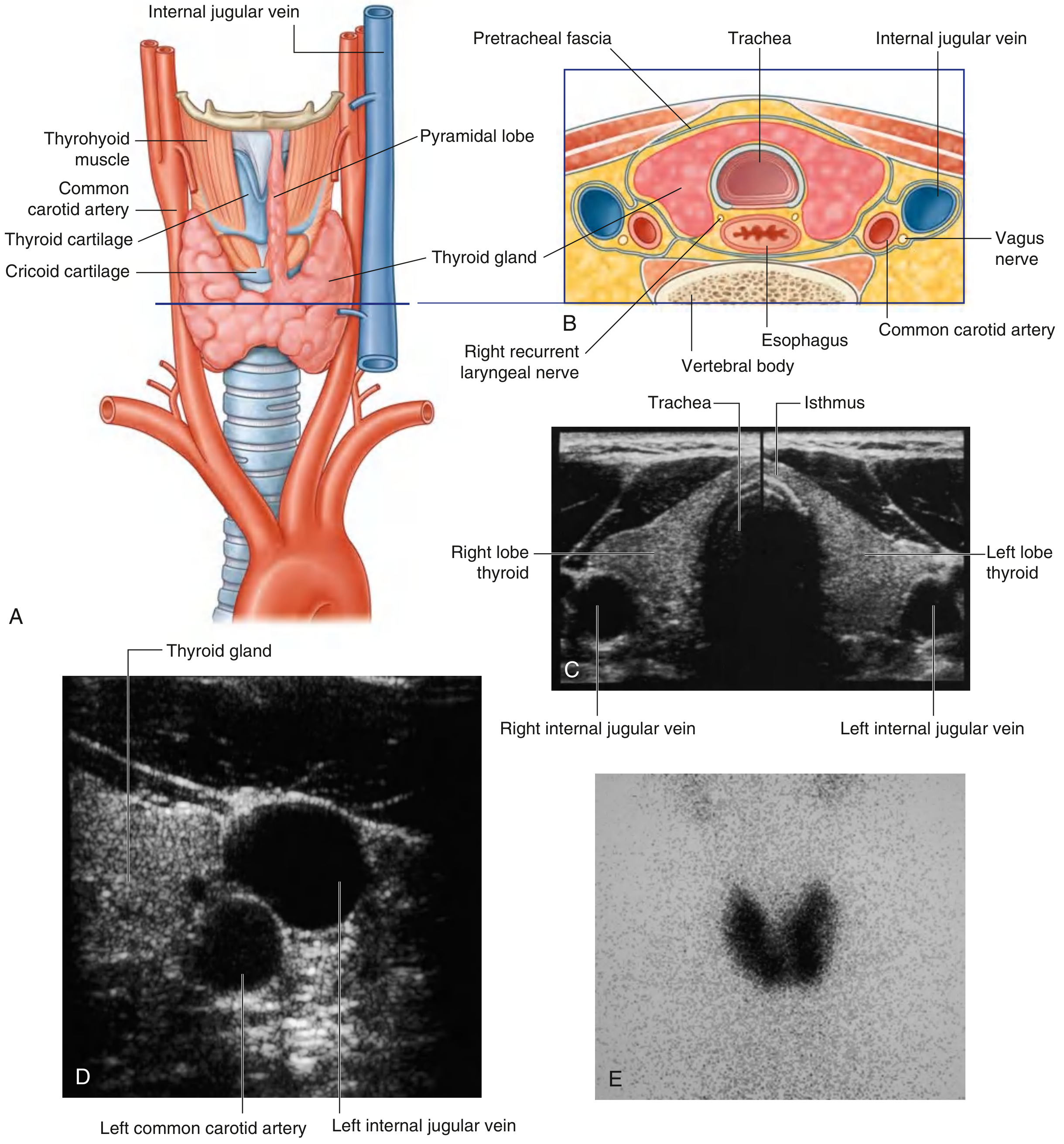
The thyroid gland in GNM is controlled by the brainstem and originates from the endoderm. This is crucial — endodermal organs are associated with ancient survival programs related to food acquisition (morsel conflicts).
The Primary Biological Conflict: "NOT FAST ENOUGH"
"I am not fast enough to catch what I need... or not fast enough to get rid of what I don't need."
In evolutionary terms, the thyroid's biological purpose is to produce thyroxine → accelerate metabolism → make the organism faster to catch a morsel of food (prey) or eliminate an unwanted morsel (predator, threat, burden).
When a person experiences a DHS around the theme of speed, timing, or catching/eliminating something, the thyroid is recruited:
- RIGHT half of thyroid → "Cannot catch (obtain) something fast enough" — wanting something and feeling too slow to get it
- LEFT half of thyroid → "Cannot get rid of (eliminate) something fast enough" — wanting to be free of something and feeling unable to do so
Conflict-Active Phase = HYPERTHYROIDISM
| Aspect | Details |
|---|
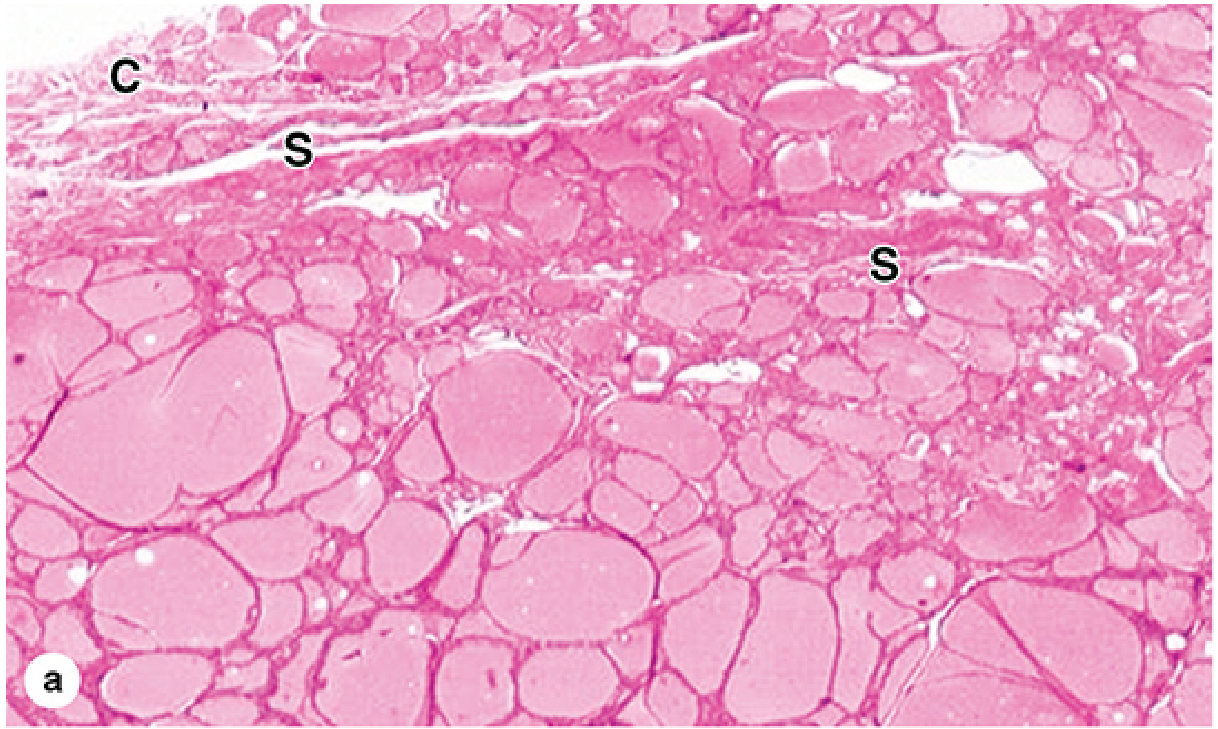
| What happens | Thyroid follicular cells proliferate (cell increase) proportional to conflict intensity |
| Biological purpose | Increase thyroxine production → make the person faster to resolve the conflict |
| Clinical result | Hyperthyroidism — overactive thyroid |
| Brain relay | Brainstem (Hamer Focus appears as ring/circle in CT scan of brainstem) |
| Subjective experience | Patient feels driven, nervous, cannot sleep, overly energetic, anxious |
Typical conflict thoughts that trigger this phase:
- "I'm too slow — I'll miss this opportunity (job, promotion, sale, partner, deadline)"
- "I need to be faster — others are overtaking me"
- "I can't catch up — I'm always behind"
- "I need to move faster before this chance disappears"
- Children: repeatedly being told "You are too slow!" by parents, teachers, coaches
- Competitive athletes: performance anxiety, "I must be faster than the competition"
- Business: "If I don't close this deal now, I'll lose it"
- Caregivers/mothers: "I can't keep up with all the chores / everyone's needs / other parents"
Healing Phase — The Transition
When the biological conflict is resolved (the person feels they no longer need to rush, catches the morsel, or releases the unwanted burden), the brainstem triggers the healing phase:
- The excess thyroid tissue is broken down by mycobacteria (TB bacteria in GNM framework)
- During breakdown: pain, swelling, difficulty swallowing/breathing, night sweats
- This inflammation = Thyroiditis (de Quervain's, Hashimoto's in GNM view — these are healing-phase phenomena)
- Thyroxine levels drop during healing as tissue is removed
- Result: Hypothyroid symptoms appear transiently during healing
Hypothyroidism in GNM — "Hanging Healing"
This is the most clinically important concept:
"Hanging Healing" = the conflict is repeatedly re-triggered (conflict relapses), so the person oscillates between conflict-active and healing phases without completing either.
- During active phase: hyperthyroid, tissue proliferates
- During healing: mycobacteria break down tissue → loss of gland
- With repeated relapses → progressive destruction of thyroid tissue → permanent hypothyroidism
- Clinical pattern: Hashimoto's thyroiditis in GNM is the result of chronic hanging healing
Thought pattern in chronic hanging healing (Hashimoto's / hypothyroidism):
- "I can never catch up — I try and fail, try and fail"
- "I'm permanently behind, I'll never be fast enough"
- The trigger (track) keeps re-firing — a sound, smell, anniversary, person that reminds the subconscious of the original DHS
- Mums: "I want to start my own projects but have to wait until my children grow up" — cyclical unresolved tension
Thyroid DUCTS — A Separate Conflict
The thyroid ducts (not the gland itself) have a different biological conflict, also controlled by the brainstem:
| Gender & Laterality | Biological Conflict | Duct Affected |
|---|
| Right-handed female (normal hormones) | Powerless conflict | Right thyroid duct |
| Left-handed female | Powerless conflict | Left thyroid duct |
| Right-handed male (normal hormones) | Frontal-fear conflict | Left thyroid duct |
| Left-handed male | Frontal-fear conflict | Right thyroid duct |
| Male with low testosterone | Powerless conflict | Reverses the above |
Powerless conflict thoughts:
- "There is nothing I can do about this"
- "My hands are tied — I am helpless"
- "Decisions are being made over my head"
- "I have no control over this situation"
- "I am completely at the mercy of another person / system / authority"
Frontal-fear conflict thoughts:
- "Danger is coming directly at me — head on"
- "A shocking blow is heading my way that I cannot escape"
- A real or imagined frontal confrontation, threat, news (like a terrible diagnosis given suddenly)
Conflict-Active Phase in Thyroid Ducts:
- Cell loss (ulceration) of duct lining → widens the duct to allow more thyroxine through → body's attempt to give more energy to deal with the powerless/fearful situation
Healing Phase in Thyroid Ducts:
- Cells regenerate — swelling, throat tightness, sensation of lump in throat (globus pharyngeus)
Parathyroid Glands in GNM
| Parathyroid | Conflict | Theme |
|---|
| Right | "Ingoing morsel" / Cannot catch (calcium-related) | Inability to get calcium to allow muscle contraction for catching food |
| Left | "Outgoing morsel" | Cannot eliminate something requiring calcium-driven muscular action |
Clinically: tetany, muscle cramps, hypocalcemia = healing phase of parathyroid conflict
GNM Summary Table for Thyroid
| Condition | Phase | Biological Conflict | Germ Layer | Brain Relay |
|---|
| Hyperthyroidism | Conflict-ACTIVE | "Too slow to catch/eliminate" | Endoderm | Brainstem |
| Thyroiditis | Healing phase | Same conflict — resolved | Endoderm | Brainstem (Hamer Focus softens) |
| Hypothyroidism (hanging) | Chronic oscillation | Repeated "too slow" relapses | Endoderm | Brainstem |
| Hashimoto's | Hanging healing | Chronic unresolved speed conflict | Endoderm | Brainstem |
| Thyroid duct issues | Active/healing | Powerless / Frontal-fear | Endoderm | Brainstem |
PART 2 — PREDICTIVE HOMEOPATHY (Dr. Prafull Vijaykar)
Background: The Core Philosophy
Dr. Prafull Vijaykar's Predictive Homeopathy is built on three main pillars:
- Theory of Suppression — disease moves from superficial to deeper tissues if suppressed; cure must be in the reverse direction (Hering's Law)
- Seven-Layer Hierarchy of Suppression — embryologically derived hierarchy from most peripheral to most vital
- Miasm as Cellular Defence — psora, sycosis, and syphilis as progressive stages of cellular breakdown
The aim is to predict the direction of disease — whether the patient is progressing toward cure (centrifugal — moving outward) or suppression (centripetal — moving inward/deeper).
The Seven-Layer Hierarchy — Where Does the Thyroid Sit?
Vijaykar arranged all organs/tissues into 7 layers, from most superficial (least vital) to deepest (most vital):
| Layer | Tissue Origin | Examples | Homoeopathic Position |
|---|
| 1 | Ectoderm | Skin, nails, hair, conjunctiva | Most peripheral, least vital |
| 2 | Endoderm | Upper respiratory tract lining, GI lining, GU lining | Colds, coughs, UTI |
| 3 | Mesenchyme (outer mesoderm) | Connective tissue, bones, joints, muscles, dermis, blood, lymph | Arthritis, anemia, psoriasis |
| 4 | Mesothelium (inner mesoderm) | Heart, blood vessels, kidney/lung parenchyma | HTN, atherosclerosis, renal disease |
| 5 | ENDOCRINE SYSTEM | Pituitary, thyroid, adrenals, pancreatic islets, ovaries, testes | Thyroid disorders sit HERE — Level 5 |
| 6 | Neuro-ectoderm | Brain, CNS, ANS, peripheral nerves | Epilepsy, MS, neuritis |
| 7 | Genetic level | DNA, chromosomes | Genetic diseases |
Key principle: The thyroid is Layer 5 — a DEEP organ.
If a patient who originally had Layer 1–2 symptoms (skin rashes, recurrent colds) now develops thyroid disease, this represents suppression — the vital force has been pushed deeper inward.
Conversely, if a thyroid patient develops skin eruptions or joint pains during treatment, this is Hering's Law in action — cure moving outward, which is a positive prognostic sign.
Miasm and the Thyroid in Vijaykar's Framework
Vijaykar updated Hahnemann's miasms as stages of cellular defense:
| Miasm | Cellular Defence | Pathological Tendency | Thyroid Expression |
|---|
| Psora | Physiological inflammation only — no organic change | Functional insufficiency, reversible | Subclinical hypothyroidism, functional sluggishness, early TSH elevation without structural change |
| Sycosis | Constructive defense — excess / overgrowth | Hypertrophy, hyperplasia, excess secretion | Hyperthyroidism, Graves disease, goiter, thyroid nodules, cysts (excess/overgrowth) |
| Syphilis | Destructive defense — ulceration, necrosis, destruction | Atrophy, fibrosis, destruction | Hashimoto's thyroiditis (destructive), hypothyroidism, thyroid atrophy, thyroid cancer (anaplastic) |
| Tubercular (Psora + Sycosis) | Destructive restlessness | Catabolic, destructive, alternating | Hyperthyroid episodes alternating with fatigue; constantly changing symptoms; Graves with exophthalmos |
The Thought-Emotion-Disease Connection in Predictive Homeopathy
Vijaykar emphasized that every remedy has a psycho-emotional core that matches the patient's inner state, miasm, and the layer affected. For Layer 5 (endocrine/thyroid), the emotions are:
For HYPOTHYROIDISM (Psoric → Syphilitic progression):
The dominant mental state is one of slowing down, giving up, withdrawal, resignation:
| Emotional Core | Description |
|---|
| Feeling of inadequacy | "I am not enough — I cannot meet demands placed on me" |
| Suppression of the self | Long-standing suppression of identity, desires, spontaneity |
| Resignation and withdrawal | "I cannot do anything about my situation" — passive acceptance |
| Grief held inward | Unexpressed, swallowed grief — no outward expression |
| Duty over desire | Constant self-sacrifice, never expressing own needs |
| Fear of failure and judgment | Leading to paralysis and inertia |
These patterns, when chronic, match the psoric-syphilitic miasm — the vital force has tried to function (psora) but has progressively been worn down toward destruction (syphilis).
For HYPERTHYROIDISM / GRAVES DISEASE (Sycotic → Tubercular):
| Emotional Core | Description |
|---|
| Hurry, restlessness, urgency | "I must do everything NOW — there is no time" |
| Over-achievement, perfectionism | Never enough — always pushing harder |
| Anxiety about the future | "If I am not fast enough, I will lose everything" |
| Control issues | Need to control all outcomes; fear of losing control |
| Jealousy and competition | Driven by comparing self with others; fear of being left behind |
| Suppression of emotions in favor of performance | Emotions hidden under constant activity |
These match the sycotic miasm — the vital force compensating by excess (over-producing thyroid hormone, excess cellular proliferation).
Hering's Law as a Prognostic Tool for Thyroid Cases
In Vijaykar's system, when treating a thyroid case, watch for:
Signs of CURE (centrifugal movement — outward):
- Thyroid normalizes → patient develops joint pains, skin eruptions, or cold episodes (moving from Layer 5 → 3 → 2 → 1)
- Do NOT suppress these! These are positive signs.
Signs of SUPPRESSION (centripetal movement — inward):
- Patient was treated for skin disease → now develops arthritis → now develops thyroid disease
- Patient with thyroid disease now develops neurological symptoms (Layer 6) or diabetes (Layer 5 adjacent)
Repertorization — Rubrics to Consider for Thyroid Disorders
As a homoeopathic student, you need to think in three levels of rubrics: mental, physical generals, and particulars. Here are the key rubrics:
Mental Rubrics for HYPOTHYROIDISM
| Rubric (Kent's Repertory) | Corresponding Thought Pattern |
|---|
| MIND — Indolence | Laziness, slowing down of mental activity |
| MIND — Indifference | Loss of motivation, emotional flatness |
| MIND — Weakness of memory | Brain fog, cognitive slowing |
| MIND — Sadness, depression | Inward grief, resignation |
| MIND — Timidity | Fear of asserting oneself |
| MIND — Ailments from grief, silent | Suppressed unexpressed grief |
| MIND — Duty, sense of | Over-burdened with obligations, self-sacrifice |
| MIND — Forsaken feeling | Emotional neglect, unloved |
| MIND — Weeping, cannot weep (cannot express grief) | Emotion held deep inward |
| MIND — Anxiety about the future | Low-grade existential fear |
| MIND — Prostration of mind | Mental exhaustion |
| MIND — Torpor | Sluggishness of thought and response |
Mental Rubrics for HYPERTHYROIDISM / GRAVES
| Rubric | Corresponding Thought Pattern |
|---|
| MIND — Hurry | Internal urgency, cannot slow down |
| MIND — Impatience | "Everything must happen NOW" |
| MIND — Anxiety, constant / driving | Fear of not being fast/good enough |
| MIND — Restlessness | Inner agitation, cannot be still |
| MIND — Competitive | Fear of being surpassed by others |
| MIND — Ailments from anticipation | Performance anxiety |
| MIND — Fear of failure | Core driver of the conflict |
| MIND — Ambition, strong | Unrelenting drive, perfectionism |
| MIND — Irritability | Short fuse, impatience |
| MIND — Jealousy | Comparison and rivalry |
| MIND — Starting from sleep | Internal alarm state |
| MIND — Loquacity | Overactive mind, racing thoughts |
Physical General Rubrics (Both conditions)
| Rubric | When to use |
|---|
| GENERALS — Food desires/aversions | Increased appetite with weight loss (hyper); weight gain with no appetite (hypo) |
| GENERALS — Heat, lack of vital / chilliness | Hypothyroidism |
| GENERALS — Perspiration, increased | Hyperthyroidism |
| GENERALS — Weakness | Both, different character |
| GENERALS — Metabolism, disorders of | General rubric |
Particular Rubrics
| Rubric | Condition |
|---|
| NECK — Thyroid gland, enlarged | Goiter |
| NECK — Goiter | Both hyper and hypo |
| NECK — Swelling of thyroid | Goiter, thyroiditis |
| NECK — Thyroid gland, affections of | General starting rubric |
| FACE — Swelling, puffy (myxedema) | Hypothyroidism |
| EYE — Protrusion of eyeball (exophthalmos) | Graves disease |
| HEART — Palpitation, violent | Hyperthyroidism |
| HEART — Tachycardia | Hyperthyroidism |
| EXTREMITIES — Trembling of hands | Hyperthyroidism |
| SLEEP — Sleeplessness | Hyperthyroidism |
| SKIN — Dry, rough | Hypothyroidism |
| HAIR — Falling out | Hypothyroidism |
| FEMALE — Menses, scanty / suppressed | Hypothyroidism |
| FEMALE — Menses, profuse | Hyperthyroidism |
Key Remedies in Vijaykar's Framework for Thyroid
| Remedy | Miasm | Layer | Core State | Thyroid Expression |
|---|
| Calcarea carbonica | Psora | 3–5 | Fear of failure, overwhelmed by duty, obesity | Hypothyroidism; slow, sluggish, chilly, weight gain |
| Natrum muriaticum | Psora-Syphilis | 4–5 | Suppressed grief, closed heart, self-reliant | Hypothyroidism with grief; or hyperthyroid with suppressed emotion |
| Iodum | Sycosis-Tubercular | 5 | Hurried, restless, emaciation despite eating | Hyperthyroidism; voracious appetite, emaciation, restless |
| Thyroidinum | All (nosode) | 5 | Metabolic dysregulation | Both hypo and hyperthyroidism — when organ itself is the focus |
| Lycopodium | Sycosis | 3–5 | Anticipatory anxiety, performance fear, cowardice | Hyperthyroid with anticipatory anxiety |
| Sepia | Sycosis-Syphilis | 4–5 | Indifference, worn-out, duty-bound | Hypothyroidism with indifference, hormonal exhaustion |
| Spongia tosta | Sycosis | 5 | Fear of suffocation, anxiety | Goiter with difficult breathing |
| Bromium | Sycosis | 5 | Goiter from iodine deficiency | Goiter with blonde/blue-eyed constitution |
| Lachesis | Sycosis-Syphilis | 4–5 | Jealousy, loquacity, suffocation | Hyperthyroid with jealousy; post-menopausal thyroid |
PART 3 — INTEGRATION: GNM + PREDICTIVE HOMEOPATHY
This is where the real clinical insight lies for a homoeopathic student:
| Aspect | GNM Lens | Predictive Homeopathy Lens |
|---|
| Root cause | Specific DHS biological conflict shock | Miasmatic predisposition + suppressed vital force expression |
| Hyperthyroidism | Active conflict: "too slow to catch" | Sycotic miasm: excessive cell growth, overcompensation |
| Hypothyroidism | Hanging healing: chronic unresolved conflict / tissue destruction | Syphilitic miasm: destruction, atrophy, vital force wearing out |
| Hashimoto's | Chronic oscillation in hanging healing — auto-immune tissue destruction | Psora + Syphilis combined: inflammation → destruction |
| Thought pattern | "Speed, urgency, not fast enough, powerlessness" | Depends on remedy picture — hurry (sycotic) vs resignation (psoric-syphilitic) |
| What triggers relapse | "Track" — sensory or situational reminder of original DHS | Miasmatic background + environmental suppression (allopathic drugs) |
| Direction of cure | Resolving the original conflict → completing healing phase | Hering's Law: symptoms moving from Layer 5 → outward |
| Case taking focus | Identify the DHS: "When did this start? What happened at that time? What was your feeling?" | Identify the miasm, layer, emotional core, and suppressive history |
MNEMONICS TO REMEMBER
GNM Thyroid Core — "SPEED SCAN":
Shock (DHS) → Psyche reacts → Endoderm (brainstem) → Excess thyroxine made → Doing this to get faster → Speed conflict → Conflict active = hyperthyroid → After resolution = healing → Non-resolution = hanging healing = hypothyroid
Vijaykar Miasm + Thyroid — "PSY on Level 5":
Psora = functional sluggishness (subclinical hypo)
Sycosis = excess (goiter, hyperthyroidism, Graves)
Ynarchy (Syphilis) = destruction (Hashimoto's, atrophy)
Level 5 = endocrine layer — a deep, vital organ
For taking thyroid cases — "DISC":
DHS — find the original shock (When? What?)
Impact — what was the feeling? (too slow? powerless? frontal fear?)
Suppression history — were any previous symptoms suppressed?
Conflict resolution — has the original issue been resolved?
Sources: learninggnm.com (Dr. R.G. Hamer's Five Biological Laws); Moskowitz, R. "Prafull and Ambrish Vijayakar: Predictive Homeopathy." AJHM, Summer 2014; Vijaykar, P. "Predictive Homeopathy Part I: Theory of Suppression"; janakingston.com GNM Thyroid; timcooksonkinesiology.com