
National vector borne diseases control pragram
- Launched by the Government of India under the Ministry of Health & Family Welfare
- Covers 6 major diseases: Malaria, Dengue, Chikungunya, Japanese Encephalitis (JE), Lymphatic Filariasis, and Kala-azar (Visceral Leishmaniasis)
- Replaced the earlier National Anti-Malaria Programme and merged several disease-specific programs
- Uses integrated vector management, surveillance, and treatment strategies
National Vector Borne Diseases Control Programme NVBDCP India 2024 overview objectives
https://testbook.com/ias-preparation/national-vector-borne-d…
National Vector Borne Diseases Control Programme (NVBDCP)
Overview
Diseases Covered (6 Vector Borne Diseases)
| Disease | Vector | Causative Agent |
|---|---|---|
| Malaria | Anopheles mosquito | Plasmodium vivax / falciparum |
| Dengue / DHF | Aedes aegypti mosquito | Dengue virus (4 serotypes) |
| Chikungunya | Aedes mosquito | Chikungunya virus (alphavirus) |
| Japanese Encephalitis (JE) | Culex mosquito | JE virus (flavivirus) |
| Lymphatic Filariasis | Culex quinquefasciatus | Wuchereria bancrofti |
| Kala-azar (Visceral Leishmaniasis) | Sand fly (Phlebotomus argentipes) | Leishmania donovani |
Historical Milestones
| Year | Milestone |
|---|---|
| 1953 | National Malaria Control Programme (NMCP) launched |
| 1958 | NMCP converted to National Malaria Eradication Programme (NMEP) |
| 1977 | Modified Plan of Operation (MPO) for malaria |
| 1995 | Malaria Action Plan |
| 1997 | Enhanced Malaria Control Project (EMCP) in tribal districts |
| 1999 | Renamed to National Anti-Malaria Programme (NAMP) |
| 2003-04 | NVBDCP launched as umbrella programme covering all VBDs |
| 2021 | Reorganized as National Centre for Vector Borne Disease Control (NCVBDC) |
Objectives (11th Five Year Plan, 2007-12)
- Prevent mortality due to Malaria, Kala-azar, Dengue/DHF, and Japanese Encephalitis
- Reduce morbidity due to Malaria, Dengue/DHF, Chikungunya, and JE
- Eliminate Kala-azar and Lymphatic Filariasis
Long-term Goals
- Malaria elimination (zero indigenous cases) throughout India by 2030
- Eliminate Filariasis by 2027
- Maintain malaria-free status in areas where transmission has been interrupted
Three-Pronged Strategy (as per Park's Textbook)
1. Disease Management
- Early Case Detection and Complete Treatment (EDCT)
- Rapid Diagnostic Tests (RDT) for Pf malaria in high-endemic areas
- Strengthening of referral services
- Epidemic preparedness and rapid response
2. Integrated Vector Management (IVM)
- Indoor Residual Spraying (IRS) in selected high-risk areas
- Insecticide Treated Bed-Nets (ITBNs)
- Larvivorous fish (e.g., Gambusia, Lebistes) in water bodies
- Anti-larval measures in urban areas
- Source reduction and minor environmental engineering
3. Supportive Interventions
- Behaviour Change Communication (BCC) and IEC
- Public-private partnership and inter-sectoral convergence
- Human resource development through capacity building
- Operational research (drug resistance, insecticide susceptibility)
- Monitoring and evaluation through web-based MIS
- Vaccination against Japanese Encephalitis
- Annual Mass Drug Administration (MDA) against lymphatic filariasis
Personal Prophylactic Measures
- Mosquito repellents (creams, coils, mats, liquids)
- Wearing long-sleeved clothing
- Use of bednets (especially during day for children - Aedes bites during day)
Organizational Structure
| Level | Authority |
|---|---|
| National | Directorate of NVBDCP - nodal agency for policy, planning, technical guidance, M&E |
| State | State Programme Officer (SPO) heads the Vector Borne Disease Control Division |
| Divisional | Senior Divisional Officers (SDOs) with zonal officers |
| District | CMO/DHO with DVBDC officer; District Malaria Office |
| PHC level | Medical Officer - surveillance, laboratory services, spray supervision |
| Community | MPWs, ASHAs, community health volunteers for case detection |
- Drug Distribution Centres (DDCs) and Fever Treatment Depots (FTDs) are established at the community level for early treatment
- Regional offices of the Directorate exist in 19 states
- Each state has a State Vector Borne Disease Control Society (now merged with State Health & Family Welfare Society under NRHM)
Malaria Elimination Classification of States
| Category | Phase |
|---|---|
| Category 0 | Prevention of re-establishment |
| Category 1 | Elimination phase |
| Category 2 | Pre-elimination phase |
| Category 3 | Intensified control phase |
Key Sub-Programmes
| Sub-Programme | Key Feature |
|---|---|
| Urban Malaria Scheme (UMS) | Launched 1971; anti-larval measures in urban areas |
| Enhanced Malaria Control Project (EMCP) | For tribal/remote areas with World Bank support |
| Accelerated Plan for Elimination of Kala-azar | Focus on Bihar, Jharkhand, West Bengal, UP |
| Filariasis Elimination Programme | Annual MDA with DEC + Albendazole |
| JE Vaccination Programme | SA-14-14-2 live attenuated vaccine |
Funding
- Central Government supplies: DDT, larvicides, some drugs
- State Governments procure: insecticides for IRS, spray equipment, some anti-malarials
- External support: World Bank (malaria in tribal districts), WHO, Global Fund
Source: Park's Textbook of Preventive and Social Medicine - Chapter on National Health Programmes and NVBDCP
Define and classify low birth weight and its prevention
low birth weight definition classification WHO prevention strategies 2024
Low Birth Weight (LBW) - Definition, Classification & Prevention
Definition
Birth weight of less than 2.5 kg (up to and including 2499 g), the measurement being taken preferably within the first hour of life, before significant postnatal weight loss has occurred.
- Birth weight is the single most important determinant of an infant's chances of survival, healthy growth, and development
- LBW is an indicator of a multifactorial public health problem - reflecting long-term maternal malnutrition, ill-health, and inadequate health care in pregnancy
- Globally, 15-20% of all births are LBW, representing more than 20 million births annually
- In India, approximately 18.6% of babies are born LBW (RSOC 2014), compared to ~4% in developed countries
Classification
A. By Birth Weight
| Category | Birth Weight |
|---|---|
| Low Birth Weight (LBW) | < 2500 g (up to and including 2499 g) |
| Very Low Birth Weight (VLBW) | < 1500 g |
| Extremely Low Birth Weight (ELBW) | < 1000 g |
Note: These three levels reflect diagnostic certainty, not necessarily different grades of clinical severity.
B. By Gestational Age
| Category | Definition |
|---|---|
| Preterm | Born before end of 37 completed weeks (<259 days) |
| Term | Born 37 to <42 completed weeks (259-293 days) |
| Postterm | Born at 42 completed weeks or later (≥294 days) |
- Extremely preterm: < 28 weeks
- Very preterm: 28 to < 32 weeks
- Moderate to late preterm: 32 to 37 weeks
C. By Growth Status - The Two Main Groups of LBW Babies
- Born alive before 37 completed weeks
- Intrauterine growth may be normal (appropriate for gestational age)
- Their weight, length, and development may be within normal limits for gestation duration
- With good neonatal care, can catch up growth by 2-3 years
- Predominant cause of LBW in developed/low-prevalence countries
- Weigh less than the 10th percentile for their gestational age and sex
- May be born at term or preterm
- Result from Intrauterine Growth Restriction (IUGR)
- Represent foetal growth retardation
- Predominant cause of LBW in developing countries (including India)
- These babies miss out on critical growth period in the womb and face long-term consequences
Risk Factors / Causes
Maternal Factors
- Malnutrition and anaemia (most significant in India)
- Short maternal stature
- Very young maternal age (adolescent pregnancy) or advanced maternal age
- High parity and short inter-pregnancy intervals
- Heavy physical labour during pregnancy
- Smoking, excess alcohol, recreational drug use
- Maternal psychological issues (depression, domestic violence)
- Cervical incompetence
Infections
- Urinary tract infections (UTI)
- Malaria
- HIV, syphilis
- Bacterial vaginosis
- TORCH infections (cytomegalovirus, toxoplasmosis, rubella, syphilis)
Medical Conditions
- Hypertension / pre-eclampsia / toxaemia
- Diabetes
- Anaemia, asthma, thyroid disease
Other Factors
- Multiple pregnancy (twins, higher order)
- Genetic risk / family history
- Poor socio-economic conditions
- Inadequate antenatal care
Importance / Public Health Significance
- Infant Mortality Rate (IMR) is 20 times greater for LBW babies than for normal weight babies
- Half of all perinatal deaths and one-third of all infant deaths are due to LBW
- Prematurity is the 2nd leading cause of death in children under 5 years
- LBW is the single most important cause of death in the critical first month of life
Complications of Preterm / LBW Babies
| System | Complication |
|---|---|
| Respiratory | Hyaline membrane disease (RDS), bronchopulmonary dysplasia, apnea, incomplete lung development |
| Cardiovascular | Patent ductus arteriosus (PDA), low/high BP, low heart rate |
| Temperature | Instability due to low body fat |
| Neurological | Intraventricular haemorrhage, periventricular leukomalacia, cerebral palsy |
| GI | Necrotising enterocolitis (NEC), feeding difficulties |
| Immunological | Susceptibility to infections, sepsis |
| Long-term | PEM, cognitive impairment, NCDs (hypertension, diabetes) in adult life |
Prevention
I. DIRECT (Primary) Interventions
1. Increasing Food Intake
- Even a small dietary improvement in a malnourished pregnant mother (even in the last trimester) can significantly improve birth weight
- Supplementary feeding programs
- Distribution of iron and folic acid (IFA) tablets - standard antenatal supplement
- Food fortification and enrichment
- Treatment of anaemia in pregnant mothers
2. Controlling Infections
- Diagnose and treat maternal infections promptly:
- Malaria (ITBNs, antimalarials, IPTp)
- UTIs
- Syphilis, HIV (PMTCT)
- TORCH infections
- Vaccination (e.g., rubella immunization before pregnancy)
3. Early Detection and Treatment of Medical Disorders
- Hypertension / pre-eclampsia management
- Gestational diabetes management
- Thyroid disorders
II. INDIRECT Interventions
- Family planning - birth spacing, avoidance of too frequent pregnancies
- Avoidance of excessive smoking and alcohol
- Improved sanitation and environmental conditions
- Improving health and nutrition of young girls (addressing intergenerational malnutrition)
- Maternity leave with full wages (government policy support)
- Child benefits and social support programs
- Improving socio-economic conditions
III. Antenatal Care (ANC) Package
- 4-visit focused ANC (minimum standard)
- IPTp (Intermittent Preventive Treatment in pregnancy) for malaria with bednets
- Prevention and management of STIs and HIV
- Calcium supplementation (prevents pre-eclampsia)
- Nutritional counselling
- Diagnosis and treatment of chronic conditions
IV. Intrapartum Measures
- Antenatal corticosteroids for women at risk of preterm birth (lung maturity)
- Antibiotics for preterm premature rupture of membranes (pPROM)
- Skilled birth attendance
V. Postnatal / Neonatal Care
- Kangaroo Mother Care (KMC) - skin-to-skin contact for preterm/LBW babies; reduces mortality and hypothermia
- Exclusive breastfeeding support
- CPAP and surfactant therapy for RDS
- Warmth provision (radiant warmers, incubators)
- Emergency newborn care
Treatment of LBW Babies (Two Groups)
| Group | Management |
|---|---|
| < 2 kg | Requires first-class modern neonatal intensive care (NICU) |
| 2-2.5 kg | May need supportive care; temperature regulation, feeding support, monitoring |
Global Targets
- WHO Global Nutrition Target 2025: 30% reduction in LBW by 2025 (3% relative reduction per year from 2012)
- Translates to a reduction from ~20 million to ~14 million LBW infants
Source: Park's Textbook of Preventive and Social Medicine - Chapters on Maternal and Child Health and Nutrition; WHO Global Nutrition Monitoring Framework
Perinatal mortality rate
perinatal mortality rate definition WHO classification causes India 2024
Perinatal Mortality Rate (PMR)
Definition
- ICD-8 defined the perinatal period as from the 28th week of gestation to the 7th day after birth
- ICD-10 (1993) refined criteria for inclusion in perinatal statistics
Formulae
1. Standard WHO Formula (for countries with well-established vital records):
2. WHO Formula (for countries with less well-established records):
The difference lies in the denominator - developed nations use total births (live + late foetal deaths) while developing nations often use only live births. This makes international comparisons difficult.
3. For International Comparisons (WHO Expert Committee, 1970):
ICD-10 Criteria for Inclusion in Perinatal Statistics
- Birth weight ≥ 1000 g (equivalent to ~28 weeks gestation) - preferred criterion
- If birth weight unavailable: gestational age ≥ 28 weeks
- If neither available: crown-to-heel body length ≥ 35 cm
Components of PMR
| Component | Definition |
|---|---|
| Late foetal death (Stillbirth) | Death of a foetus at ≥28 weeks gestation, before delivery |
| Early neonatal death | Death of a live-born infant within the first 7 completed days (0-6 days) of life |
Why Use PMR? (Significance)
-
Factors are common to both components - the causes of stillbirths and early neonatal deaths are often the same (operating before and around birth), so combining them is logical
-
Avoids registration error - A proportion of deaths shortly after birth are incorrectly registered as stillbirths. PMR, being a combination of both, is not influenced by this error because it removes the dividing line between a stillbirth and a live birth with death shortly after
-
Sensitive quality indicator - PMR gives a good indication of the extent of pregnancy wastage and the quality and quantity of health care available to mother and newborn; it reflects maternity care more clearly than neonatal death rate alone
-
High mortality concentration - Although the perinatal period occupies less than 0.5% (<168 hours) of the average lifespan, there are more deaths within this period than during the next 30-40 years of life in many developing countries
-
Benchmark in developed countries - With declining IMR in developed countries, PMR has assumed greater significance as a yardstick of obstetric and paediatric care before and around birth
Incidence
| Region/Country | PMR (approximate) |
|---|---|
| India (2018, SRS) | ~73 per 1000 (live births + stillbirths) |
| India - Rural | ~26 per 1000 |
| India - Urban | ~16 per 1000 |
| Developed countries | 8-10 per 1000 (gradually declining) |
- Perinatal mortality now accounts for about 90% of all foetal and infant mortality in developed countries
- In India, stillbirths are seldom registered, so most studies are hospital-based
- About two-thirds of all perinatal deaths occur among infants with birth weight < 2500 g (LBW)
Social and Biological Risk Factors
- Low socio-economic status
- High maternal age (35 years or more)
- Low maternal age (under 16 years)
- High parity (5th and subsequent pregnancies, especially with short inter-pregnancy intervals)
- Heavy smoking (10 or more cigarettes daily)
- Short maternal stature (compared to average for locality)
- Poor past obstetric history (previous stillbirths, neonatal deaths, premature live-borns)
- Malnutrition and severe anaemia
- Multiple pregnancy
Causes of Perinatal Mortality
(a) Antenatal Causes
- Maternal diseases - hypertension, cardiovascular disease, diabetes, tuberculosis, anaemia
- Pelvic diseases - uterine myomas, endometriosis, ovarian tumours
- Anatomical defects - uterine anomalies, incompetent cervix
- Endocrine imbalance and inadequate uterine preparation
- Blood incompatibilities (e.g., Rh incompatibility)
- Malnutrition
- Toxaemias of pregnancy (pre-eclampsia, eclampsia)
- Antepartum haemorrhages (placenta praevia, abruptio placentae)
- Congenital defects
- Advanced maternal age
(b) Intranatal Causes
- Birth injuries
- Asphyxia (intrapartum hypoxia)
- Prolonged effort / obstructed labour
- Obstetric complications
(c) Postnatal Causes (Early Neonatal)
- Prematurity / LBW
- Respiratory Distress Syndrome (RDS / hyaline membrane disease)
- Respiratory and alimentary infections
- Congenital anomalies
(d) Unknown Causes
- In some cases, causes are not clinically ascertainable
Prevention of Perinatal Mortality
Antenatal Measures
- Early and regular Antenatal Care (ANC) - minimum 4 focused visits
- Identification and management of high-risk pregnancies
- Treatment of anaemia (iron and folic acid supplementation)
- Nutrition supplementation for malnourished mothers
- Management of hypertension, diabetes, infections (UTI, malaria, syphilis)
- Tetanus toxoid immunization
- Rh incompatibility detection and management (Anti-D prophylaxis)
- Treating antepartum haemorrhage promptly
- Antenatal corticosteroids for women at risk of preterm delivery
Intranatal Measures
- Skilled birth attendance at every delivery
- Institutional deliveries (avoidance of home deliveries by unskilled persons)
- Proper management of prolonged/obstructed labour
- Caesarean section when indicated (not elective/unnecessary)
- Aseptic delivery practices to prevent infection
Postnatal / Neonatal Measures
- Immediate newborn resuscitation and airway clearance
- Kangaroo Mother Care (KMC) for LBW/preterm babies
- Early and exclusive breastfeeding
- Thermal care - prevention of hypothermia
- CPAP and surfactant therapy for RDS
- Neonatal intensive care for high-risk newborns
- Prevention and prompt treatment of neonatal sepsis
- Prevention of neonatal tetanus (clean cord care)
Indirect / Social Measures
- Improving socio-economic status and education of women
- Family planning - birth spacing, reducing high parity
- Improving maternal nutrition before and during pregnancy
- Reducing adolescent pregnancies
- Maternity benefits and social support policies
International Certificate of Perinatal Death
- ICD-9 (1975) recommended a special certificate of cause of perinatal death for international comparability
- ICD also has a list of 100 tabulation of perinatal morbidity and mortality
Related Mortality Rates (Contextual Framework)
| Rate | Definition |
|---|---|
| Stillbirth rate | Late foetal deaths (≥28 wks) per 1000 total births |
| Early neonatal mortality rate | Deaths in first 7 days per 1000 live births |
| Perinatal mortality rate | Stillbirths + early neonatal deaths per 1000 total (or live) births |
| Neonatal mortality rate | Deaths within 28 days per 1000 live births |
| Infant mortality rate | Deaths under 1 year per 1000 live births |
Source: Park's Textbook of Preventive and Social Medicine - Chapter on Maternal and Child Health (Perinatal Mortality Rate section, pp. 657-658)
Essential new born care
essential newborn care WHO components ENBC India neonatal 2024
Essential Newborn Care (ENBC)
Definition
Primary goal: To reduce perinatal and neonatal mortality.
- Protected from injury and infection
- Able to breathe normally
- Warm
- Adequately fed
Leading Causes of Neonatal Death Addressed by ENBC
| Cause | % of Neonatal Deaths |
|---|---|
| Prematurity + congenital anomalies | ~60% |
| Birth asphyxia | ~25% |
| Infections (sepsis, tetanus, diarrhoea) | predominate in late neonatal period |
- Asphyxia
- Hypothermia
- Infection
- Feeding problems
Main Components of Essential Newborn Care
1. THERMAL CARE - Prevention of Hypothermia
- Warm delivery room (temperature ≥25°C)
- Immediate drying - dry the baby thoroughly with a warm cloth immediately after birth
- Skin-to-skin contact - place baby on mother's chest/abdomen
- Delayed bathing - avoid early bathing (discourage this unhealthy practice); bath only after 6 hours minimum
- Warm wrapping - wrap in a clean, dry cloth; cover the head
- Warm transportation if referral needed
- Kangaroo Mother Care (KMC) - continuous skin-to-skin contact of the newborn with the mother; highly effective for LBW/preterm babies; replaces or supplements incubator care
2. AIRWAY AND BREATHING - Resuscitation of the Asphyxiated Newborn
- Immediate drying also stimulates breathing
- Assess breathing within the first minute (APGAR score at 1 and 5 minutes)
- Clear the airway - position and clear secretions if needed (suction only if necessary)
- Stimulate the newborn by rubbing the back or flicking the soles if not breathing
- Bag-and-mask ventilation with room air if not breathing after 1 minute (positive pressure ventilation)
- Chest compressions if heart rate <60/min despite ventilation
- Epinephrine if no response to compressions
- Train all delivery point staff in Neonatal Resuscitation Programme (NRP) / Helping Babies Breathe (HBB)
- 7-10: Normal
- 4-6: Moderate asphyxia - stimulate, oxygen
- 0-3: Severe asphyxia - full resuscitation
3. INITIATION OF BREASTFEEDING
- Early initiation - within 1 hour of birth (the "golden hour")
- Colostrum (first milk) is rich in antibodies (secretory IgA), proteins, and immunological factors - must NOT be discarded
- Exclusive breastfeeding for the first 6 months of life
- Correct positioning and attachment of the baby to the breast
- Breastfeeding on demand - 8-12 times per 24 hours
- Benefits: nutrition, passive immunity, mother-infant bonding, reduces neonatal infections, mortality
- Counselling mothers on problems with breastfeeding (engorgement, poor latch, mastitis)
4. INFECTION PREVENTION (Asepsis)
Cord Care
- Clean, dry cord care - apply nothing to the cord (no ghee, oil, turmeric)
- Exception: 7.1% chlorhexidine gel/solution applied to the cord stump for the first 7 days in settings with high neonatal mortality - reduces omphalitis and neonatal mortality
- Keep the cord dry and clean; do not bandage
- Watch for signs of omphalitis (redness, swelling, pus, foul smell)
Hand Hygiene
- Thorough handwashing by all care providers before handling the baby
- Promote hand-washing among mothers and family members
Eye Care
- Instill 1% tetracycline eye ointment (or silver nitrate 1%) immediately after birth
- Prevents ophthalmia neonatorum (gonococcal/chlamydial eye infection)
- Clean eyes from inner to outer canthus
Skin Care
- Do not apply oils, ghee, or other substances to the skin
- Avoid early bathing - wait at least 6 hours (WHO recommends 24 hours if possible)
Vitamin K
- Vitamin K 1 mg IM (phytomenadione) at birth
- Prevents Haemorrhagic Disease of the Newborn (HDN) / Vitamin K Deficiency Bleeding (VKDB)
Immunization at Birth
- BCG vaccine - against tuberculosis (at birth or as soon as possible)
- Hepatitis B vaccine (HBV) - first dose within 24 hours of birth
- OPV-0 (Oral Polio Vaccine) - birth dose at birth
5. NEWBORN WEIGHING AND ASSESSMENT
- Weigh all babies at birth (within 1 hour)
- Normal birth weight: 2500 g - 4000 g
- Assess gestational age and classify:
- LBW (<2500 g): needs extra care
- Very LBW (<1500 g): needs NICU/SNCU
- Measure temperature using thermometer
- Assess APGAR score
- Screen for congenital anomalies (cleft palate, neural tube defects, heart defects)
6. CARE OF LOW BIRTH WEIGHT AND PRETERM BABIES
- Kangaroo Mother Care (KMC): Continuous skin-to-skin contact with mother, exclusive breastfeeding; reduces mortality, hypothermia, and infections in LBW/preterm babies
- Extra care - more frequent home visits (HBNC)
- Monitoring weight gain
- Antenatal corticosteroids (betamethasone/dexamethasone) given to mother before delivery at risk of preterm birth - accelerates lung maturity
- CPAP (Continuous Positive Airway Pressure) for RDS
- Surfactant therapy for severe RDS
- Special Newborn Care Units (SNCUs) at district hospitals for sick and LBW newborns
7. DETECTION AND MANAGEMENT OF DANGER SIGNS / SEPSIS
Danger Signs in Newborn (Refer Immediately):
- Not breathing / very slow breathing
- Convulsions
- Not feeding / stopped feeding
- Very hot or cold (temperature <35.5°C or >37.5°C)
- Jaundice within 24 hours of birth or involving palms and soles
- Fast breathing (>60/min) or chest indrawing
- Umbilical cord red, swollen, or pus-draining (omphalitis)
- Unconscious or floppy (hypotonia)
- Bleeding from any site
Management of Sepsis:
- Injection Gentamicin at community level by ANM for suspected neonatal sepsis (when referral not possible)
- Refer to SNCU/district hospital for IV antibiotics
Home Based Newborn Care (HBNC) - India's Programme
Objectives of HBNC:
- Provision of essential newborn care to all newborns and prevention of complications
- Early detection and special care of preterm and LBW newborns
- Early identification of illness and appropriate referral
- Build confidence and skills of the mother for safe newborn care
ASHA's Role in HBNC:
- Weigh the newborn
- Measure temperature
- Ensure warmth
- Support exclusive breastfeeding (positioning and attachment)
- Promote handwashing
- Provide skin, cord, and eye care
- Counsel against unhealthy practices (early bathing, bottle feeding)
- Identify signs of sepsis and refer promptly
- Recognize postpartum complications in the mother
ASHA Home Visit Schedule:
| Type of Delivery | Visits | Schedule |
|---|---|---|
| Institutional delivery | 6 visits | Day 3, 7, 14, 21, 28, and 42 |
| Home delivery | 7 visits | Day 1, 3, 7, 14, 21, 28, and 42 |
India's Programmes for Newborn Care
| Programme | Key Feature |
|---|---|
| India Newborn Action Plan (INAP) | Launched to reduce neonatal mortality and stillbirths |
| Home Based Newborn Care (HBNC) | ASHA-based community newborn care up to 42 days |
| Special Newborn Care Units (SNCUs) | Facility care for sick/LBW newborns at district hospitals |
| Newborn Stabilization Units (NBSUs) | At CHC level for sick newborns |
| Navjaat Shishu Suraksha Karyakram (NSSK) | Training programme for newborn resuscitation and care at all delivery points |
| Rashtriya Bal Swasthya Karyakram (RBSK) | Screening for 4 Ds: birth defects, development delays, deficiencies, diseases |
| Mother and Child Tracking System (MCTS) | Web-based tracking of all pregnant women and newborns |
WHO Essential Newborn Care - Summary Table
| Component | Timing | Key Action |
|---|---|---|
| Thermal care | At birth | Immediate drying, skin-to-skin, warm wrap |
| Airway/Breathing | First 60 sec | Stimulate, bag-mask if needed |
| Breastfeeding | Within 1 hour | Colostrum, correct latch |
| Cord care | At birth + daily | Clean cut, chlorhexidine (in high-mortality settings) |
| Eye care | At birth | Tetracycline ointment |
| Vitamin K | At birth | 1 mg IM |
| Immunization | At birth | BCG, HBV, OPV-0 |
| Weighing | At birth | Identify LBW |
| KMC | Ongoing | For LBW/preterm |
| Danger sign detection | Ongoing (0-28 days) | Refer promptly |
Sources: Park's Textbook of Preventive and Social Medicine - Chapters on NRHM/NHM, HBNC, Newborn Health; WHO Essential Newborn Care guidelines
Rashtriya bal swarthy a karyakrm new guidelines
Rashtriya Bal Swasthya Karyakram RBSK new guidelines 2024 2025 updates
https://opengovasia.com/india-releases-updated-rbsk-2-0-guid…
RBSK 2.0 May 2026 guidelines mental health NCD longitudinal health card digital changes
Rashtriya Bal Swasthya Karyakram (RBSK)
Overview
- Covers an estimated 27 crore (270 million) children aged 0-18 years across the country
- World's largest child health screening programme
- Services are provided at zero cost to families
- Target: Improve overall quality of life through early detection and management
Core Concept: The "4 Ds"
| D | Meaning |
|---|---|
| Defects at Birth | Congenital structural abnormalities |
| Diseases | Childhood diseases amenable to early treatment |
| Deficiencies | Nutritional and micronutrient deficiencies |
| Development Delays (including Disability) | Cognitive, motor, sensory, behavioural delays |
30 Identified Health Conditions (Original Guidelines)
1. Defects at Birth (9 conditions)
- Neural tube defect
- Down's Syndrome
- Cleft Lip and Palate / Cleft palate alone
- Talipes (Club foot)
- Developmental Dysplasia of the Hip (DDH)
- Congenital Cataract
- Congenital Deafness
- Congenital Heart Diseases
- Retinopathy of Prematurity (ROP)
2. Deficiencies (5 conditions)
- Anaemia, especially Severe Anaemia
- Vitamin A Deficiency (Bitot's spots)
- Vitamin D Deficiency (Rickets)
- Severe Acute Malnutrition (SAM)
- Goitre
3. Childhood Diseases (6 conditions)
- Skin conditions (Scabies, fungal infection, Eczema)
- Otitis Media
- Rheumatic Heart Disease
- Reactive Airway Disease (Asthma)
- Dental Caries
- Convulsive Disorders
4. Development Delays and Disabilities (10 conditions)
- Vision Impairment
- Hearing Impairment
- Neuro-motor Impairment
- Motor Delay
- Cognitive Delay
- Language Delay
- Behaviour Disorder (Autism)
- Learning Disorder
- Attention Deficit Hyperactivity Disorder (ADHD)
- (Optional in high-prevalence states/UTs): Congenital Hypothyroidism, Sickle Cell Anaemia, Beta-Thalassaemia
Programme Implementation - Screening Levels
Level 1: Newborns (0 to 6 weeks)
- Facility-based screening: Screening of birth defects in institutional deliveries at public health facilities by ANMs, Medical Officers, Gynaecologists at designated delivery points
- Community-based screening: ASHAs screen babies born at home during home HBNC visits using a pictorial reference toolkit to detect gross birth defects
- ASHA mobilises caregivers to bring children to Anganwadi Centres (AWCs) for Mobile Health Team screening
Level 2: Children aged 6 weeks to 6 years
- Anganwadi Centre (AWC)-based screening by dedicated Mobile Health Teams (MHTs)
- Screening at AWCs at least twice a year
Level 3: Children aged 6 to 18 years
- Government and Government-aided school-based screening by dedicated Mobile Health Teams
- At least once a year for school children
- At least two dedicated MHTs per block
Mobile Health Teams (MHTs)
- 2 Health Workers (one male, one female) - AYUSH practitioners / Medical Officers
- 1 ANM / Staff Nurse
- Equipped with standard kit for health screening
District Early Intervention Centres (DEICs)
- Established at the district level (district hospital)
- Serve as referral support centres for children identified with health conditions
- Multidisciplinary team: Paediatricians, Medical Officers, Nurses, Paramedics, Physiotherapists, Speech Therapists, Psychologists
- Children aged 0-6 years: Comprehensive care at DEIC level
- Children aged 6-18 years: Management through existing public health facilities; DEIC serves as referral link for both groups
- Tertiary care mapping: Dedicated manager maps tertiary care facilities in government institutions for specialized referral
Referral Pathway
Home/AWC/School Screening (ASHA/MHT)
        ↓
District Early Intervention Centre (DEIC)
        ↓
District Hospital / FRU
        ↓
Tertiary Care / Specialized Centres (Government Institutions - FREE)
⭐ NEW: RBSK 2.0 Guidelines (Released: 3 May 2026)
Key Changes in RBSK 2.0
1. Expanded Screening Scope - Now 38 Conditions
- The programme now covers 38 common health conditions (up from 30)
- New additions include:
- Non-communicable diseases (NCDs): Risk factors for diabetes and hypertension in children
- Mental health conditions: Depression, anxiety in children and adolescents
- Behavioural concerns: Broader behavioural disorders
- Kidney disorders
- Wider range of developmental disorders
2. Retained and Broadened 4D Framework
- The established 4Ds approach is retained and broadened to incorporate new-age health challenges
- New emphasis on conditions that affect adolescents - mental health, NCDs, behavioural concerns
3. Life-Cycle Based Approach Strengthened
- Comprehensive preventive, promotive, and curative continuum of care from birth to 18 years
- Focus on not just survival, but holistic growth, development, and well-being
4. Digital Health Push - Key Innovation
- Introduction of Digital Health Cards (Longitudinal Health Cards) - tracks a child's health status, screenings, interventions, and progress over time
- Real-time data systems for monitoring
- Integrated digital platforms for tracking, monitoring, and service delivery
- Expected to improve programme efficiency, accountability, and evidence-based decision-making
5. Strengthened Referral Tracking System
- Clearly defined pathways from community-level screening to facility-based diagnosis and treatment
- Robust referral tracking throughout the entire care pathway
- Aim: Minimize dropouts and ensure timely follow-up care for all identified children
6. Strengthened Mobile Health Teams
- Existing MHTs strengthened with additional human resources from other NHM programmes
- Enhanced support for screening in schools and Anganwadi centres
7. Greater Intersectoral Convergence
- Stronger convergence among Health, Education, and Women & Child Development (WCD) sectors
- Coordinated service delivery through schools, Anganwadi centres, and community platforms
Comparison: RBSK (2013) vs RBSK 2.0 (2026)
| Feature | RBSK (2013) | RBSK 2.0 (2026) |
|---|---|---|
| Conditions covered | 30 (+3 optional) | 38 |
| Mental health | Limited (ADHD, Autism) | Expanded (depression, anxiety, behavioural) |
| NCDs | Not included | Diabetes/hypertension risk factors included |
| Kidney disorders | Not included | Now included |
| Health tracking | Paper-based | Digital longitudinal health cards |
| Data systems | Periodic reporting | Real-time digital platform |
| Referral tracking | Basic | Robust, case-tracking system to minimize dropouts |
| MHT support | Core team | Augmented with additional NHM HR |
| Convergence | Health sector | Health + Education + WCD (broader) |
Significance of RBSK
- Addresses high burden of childhood ill-health which contributes significantly to child mortality, morbidity, and out-of-pocket expenditure for poor families
- Provides free early detection, treatment, and management for identified conditions
- Reaches children at Anganwadi centres and schools - ensuring universal access
- Integrates with RMNCH+A strategy and the broader NHM framework
- Links with Rashtriya Bal Swasthya Karyakram + HBNC + SNCU as part of India's continuum of newborn and child care
Sources: Park's Textbook of Preventive and Social Medicine - Chapter on NRHM/NHM; The Hindu, 3 May 2026; New Indian Express, 3 May 2026; MoHFW RBSK 2.0 Guidelines
Cancer registry according to park textbook
Cancer Registry - According to Park's Textbook
1. Cancer Registration - Definition and Importance
"Cancer registration is a sine qua non for any cancer control programme." - Park's Textbook
- Assessing the magnitude of the cancer problem
- Planning necessary health services
- Evaluating diagnostic and treatment programmes
- Providing data for epidemiological research
- Monitoring cancer trends over time
2. Types of Cancer Registries
(A) Hospital-Based Registries
- Includes all patients treated by a particular institution, whether in-patients or out-patients
- Registries collect a uniform minimum set of data as recommended in the "WHO Handbook for Standardized Cancer Registers"
- Value: If there is long-term follow-up of patients, these can be of considerable value in evaluation of diagnostic and treatment programmes
- Limitation: Since hospital population will always be a selected population, the use of these registries for epidemiological purposes is limited - they do not represent the cancer burden in the general community
(B) Population-Based Registries
- A logical extension is to set up a hospital-based cancer registry and then extend the same to a "population-based cancer registry"
- Aim: To cover the complete cancer situation in a given geographic area - all cases occurring in a defined population
- Optimum size of base population for a population-based cancer registry: 2 to 7 million people
- Uses: Provides data for:
- Calculating incidence rates (true community-based)
- Identifying high-risk groups
- Planning and evaluating cancer control programmes
- International comparisons of cancer patterns
- These are the gold standard for epidemiological cancer surveillance
3. National Cancer Registry Programme (NCRP) - India
- The National Cancer Registry Programme (NCRP) of the Indian Council of Medical Research (ICMR) provides data on incidence, mortality, and distribution of cancer in India
- As of the latest data in Park's textbook, NCRP has:
- 28 Population-Based Cancer Registries (PBCRs)
- 5 Hospital-Based Cancer Registries (HBCRs)
4. Cancer Statistics in India (2020) - From NCRP Data
| Indicator | Males | Females | Both Sexes |
|---|---|---|---|
| Number of new cancer cases | 6,46,030 | 6,78,383 | 13,24,413 |
| Age-standardized incidence rate | 95.7 | 99.3 | 97.1 per 1,00,000 |
| Risk of developing cancer before age 75 | 10.4% | 10.5% | 10.4% |
| Number of cancer deaths | 4,38,297 | 4,13,381 | 8,51,678 |
| Age-standardized mortality rate | 65.4 | 61.0 | 63.1 per 1,00,000 |
| Risk of dying from cancer before age 75 | 7.4% | 6.7% | 7.1% |
| 5-year prevalent cases | 12,08,835 | 15,11,416 | 27,20,251 |
Top 5 Cancers (India 2020)
| Rank | Males | Females | Both Sexes |
|---|---|---|---|
| 1 | Lip & Oral Cavity | Breast | Breast |
| 2 | Lung | Cervix Uteri | Lip & Oral Cavity |
| 3 | Stomach | Ovary | Cervix Uteri |
| 4 | Colorectum | Lip & Oral Cavity | Lung |
| 5 | Oesophagus | Colorectum | Colorectum |
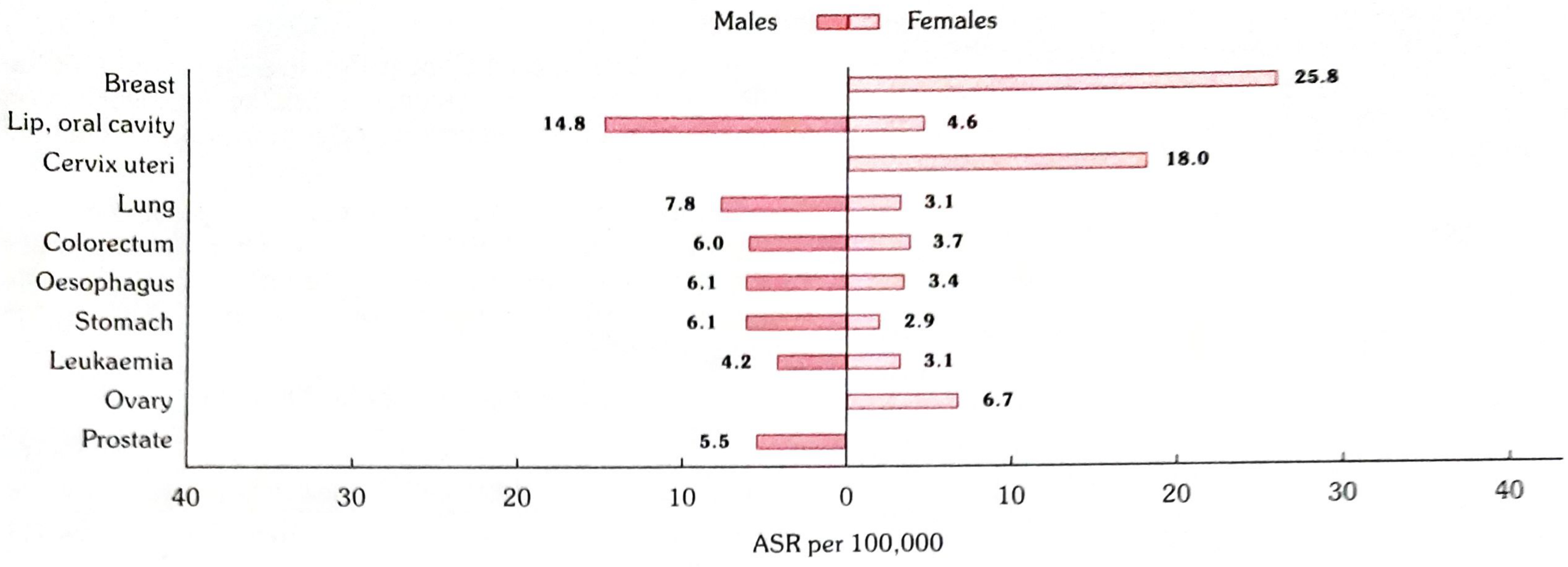
5. Cancer Patterns - Key Observations from Registry Data
- Males: Cancers are mostly tobacco-related (oral cavity, lung, oesophagus)
- Females: Cervical cancer closely associated with poor genital hygiene, early marriage, multiple pregnancies, multiple sexual partners; breast cancer proportionately increasing in metropolitan areas
- Breast cancer rise in cities related to: late marriage, first child at late age, fewer children, shorter breastfeeding periods
- More than two-thirds of cancer patients in India already in advanced and incurable stage at time of diagnosis - highlighting the need for better registry-based early detection
- Hospital data clearly indicates the two most commonly involved organ sites: (i) uterine cervix in women and (ii) oropharynx in both sexes - representing ~50% of all cancer cases
6. Cancer Control Framework (Registry as Part of This)
Primary Prevention
- Tobacco control, dietary modifications, occupational safety, immunization (HBV, HPV), reduction of carcinogen exposure, cancer education
Secondary Prevention (Cancer Registry is here)
- Cancer Registration - the sine qua non of cancer control
- Early Detection / Screening:
- Mass screening (comprehensive cancer detection examination)
- Mass screening at single sites (cervix, breast, lung)
- Selective screening of high-risk groups
- Key tests: Pap smear (cervical cancer), mammography (breast cancer), VIA/VILI (visual inspection)
- Treatment:
- Surgery, radiation, chemotherapy (multi-modality approach)
- Pain relief for incurable cases (WHO cancer pain relief guidelines)
- "Freedom from cancer pain" recognized as a right
Tertiary Prevention
- Rehabilitation and palliative care
7. Uses of Cancer Registry Data (Summary)
| Use | Details |
|---|---|
| Magnitude assessment | Number of cases, prevalence, incidence rates |
| Planning services | Cancer treatment and care infrastructure |
| Epidemiological research | Identifying risk factors, at-risk populations |
| Monitoring trends | Time trends in incidence and mortality |
| Evaluating programmes | Impact of screening and treatment programmes |
| International comparisons | Comparing cancer patterns across countries |
| National health policy | Evidence base for NPCDCS and national cancer plans |
8. Minimum Data Set for Cancer Registry (WHO Handbook)
- Patient identity (name, address, date of birth, sex)
- Date of diagnosis
- Primary site of cancer
- Histological type
- Basis of diagnosis (clinical, histological, etc.)
- Stage at diagnosis
- Treatment given
- Follow-up / outcome data
Source: Park's Textbook of Preventive and Social Medicine - Chapter on Non-Communicable Diseases: Cancer (pp. 434-437)
Health planing cycle according to park
National health mission
National health mission