

IMG-20260513-WA0004.jpg
ECG finding
Reading File
Let me analyze the ECG carefully and search the medical library simultaneously.
Finding Sources
Finding Sources
Reading File
Finding Sources
Reading File
Loading Image
Based on careful analysis of the ECG image and the textbook material, here is a comprehensive interpretation:
ECG Findings — Interpretation
Patient: Female, 60 years old | HR: 90 bpm | Speed: 25 mm/sec | Gain: 10 mm/mV
Primary Finding: Left Ventricular Hypertrophy (LVH) with Strain Pattern
Rhythm & Rate
- Sinus rhythm, rate ~90 bpm — regular
Voltage Criteria for LVH
- Deep S waves in right precordial leads (V1–V2) combined with tall R waves in left precordial leads (V4–V6)
- The Sokolow-Lyon criterion: SV₁ + RV₅ or RV₆ >35 mm — appears met on this tracing
Repolarization / Strain Pattern
- ST-segment depression with asymmetric T-wave inversion in leads I, aVL, and the lateral precordial leads (V4–V6) — this is the classic LV "strain" pattern, reflecting repolarization abnormality in the hypertrophied myocardium
Axis
- QRS axis appears normal to mildly leftward (~0° to –30°), consistent with LVH
P waves
- Broad/notched P waves in inferior leads suggest possible left atrial abnormality (enlargement) — this further increases confidence in LVH diagnosis
Differential / Additional Considerations
| Feature | Significance |
|---|---|
| LV strain pattern | Chronic pressure/volume overload (hypertension, aortic stenosis, HCM) |
| Left atrial enlargement | Often co-exists with LVH due to elevated LV end-diastolic pressure |
| No pathological Q waves | No evidence of prior MI |
| No bundle branch block | QRS appears <120 ms |
Likely Underlying Etiologies
- Systemic hypertension — most common cause of LVH, especially in a 60-year-old female
- Aortic stenosis — pressure overload LVH
- Hypertrophic cardiomyopathy (HCM) — if asymmetric
Reference Diagram (Harrison's, Fig. 247-9)
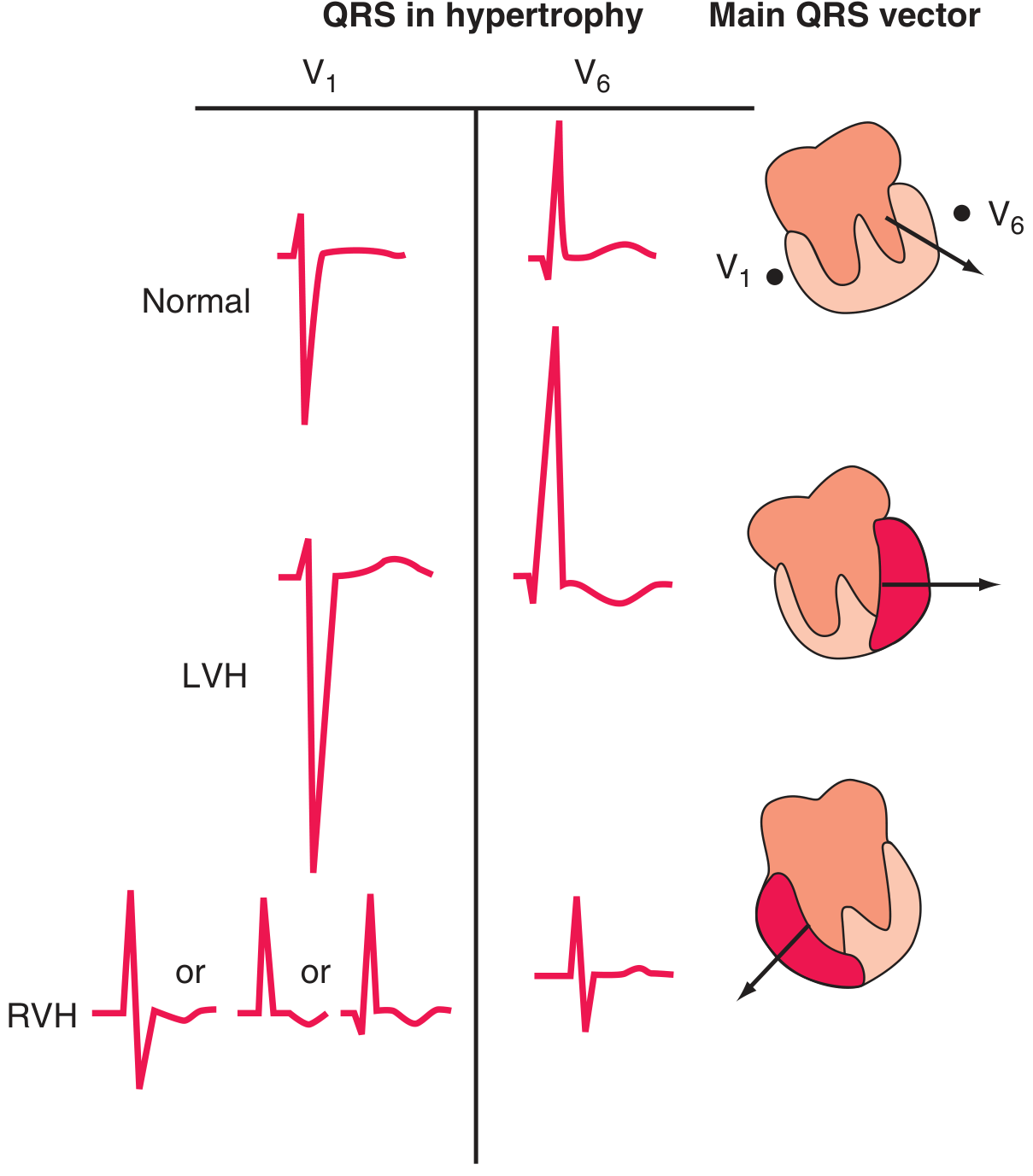
LVH increases electrical forces directed left and posteriorly, with repolarization abnormalities causing ST depression and T-wave inversion in leads with prominent R waves — Harrison's Principles of Internal Medicine, 22E
Recommended Next Steps
- Echocardiogram — to confirm LVH, assess wall thickness, LVEF, and diastolic function (more sensitive and specific than ECG)
- Blood pressure assessment — hypertension workup
- Clinical correlation with symptoms (dyspnea, chest pain, exertional syncope) to exclude aortic stenosis or HCM
Note: ECG voltage criteria for LVH have low sensitivity (~40–60%) but reasonable specificity. The combination of voltage + strain pattern increases diagnostic confidence. — Harrison's Principles of Internal Medicine, 22E, p. 1914–1915
This is a shared conversation. Sign in to Orris to start your own chat.