
What is Dysmenorhoea?
Reading File
Now let me search the medical library for dysmenorrhoea.
Finding Sources
Searching PubMed
dysmenorrhea
Good. Now let me read the most comprehensive sections - Berek & Novak's Gynecology and Harrison's.
Reading File
Reading File
Let me get the main Berek & Novak section on dysmenorrhoea from block 3 (the dedicated chapter section) and Swanson's for risk factors.
Reading File
Reading File
Now let me get the dedicated Berek & Novak chapter content on primary/secondary dysmenorrhoea.
Reading File
Excellent - I have very comprehensive content. Let me read a bit more to get treatment details.
Reading File
I now have enough comprehensive information to give a thorough answer. Let me also look for treatment of primary dysmenorrhoea in the Berek block.
Reading File
I now have comprehensive information to write a thorough answer. Let me compile the full response.
Dysmenorrhoea
Definition
Dysmenorrhoea (spelled "dysmenorrhea" in American English) is painful menstruation - cramp-like pain occurring around the time of menses. It is one of the most common gynaecological complaints, affecting up to 60% of menstruating women.
There are two distinct types:
| Feature | Primary | Secondary |
|---|---|---|
| Definition | Menstrual pain without pelvic pathology | Painful menses associated with underlying pathology |
| Onset | Usually within 1-2 years of menarche (once ovulatory cycles are established) | Develops years after menarche; can occur with anovulatory cycles |
| Age group | Mostly younger women, but can persist into the 40s | Any age |
Primary Dysmenorrhoea
Pathophysiology
The core mechanism involves excessive or imbalanced prostanoid production from the endometrium during menstruation. Here is the cascade:
- In the late luteal phase, progesterone levels fall
- This triggers enzymatic lysis, releasing phospholipids and generating arachidonic acid
- The cyclooxygenase (COX) pathway is activated, producing prostaglandins (especially PGF2α and PGE2) and thromboxane
- Women with dysmenorrhoea have upregulated COX enzyme activity and prostanoid synthase activity
- Elevated prostanoids cause:
- Increased uterine contractions with a dysrhythmic pattern
- Increased uterine basal tone and active pressure
- Decreased uterine blood flow (ischaemia)
- Peripheral nerve hypersensitivity
This is also why NSAIDs - which act as COX inhibitors - are the mainstay of treatment.
Symptoms
Pain typically:
- Begins a few hours before or just after the onset of menstruation
- Lasts 48-72 hours
- Is colicky/cramping in nature, centred in the suprapubic area
- Resembles labour pain
- May radiate to the lumbosacral back and anterior thighs
Associated symptoms include nausea, vomiting, diarrhoea, and rarely syncopal episodes.
Key distinguishing feature: Unlike peritonitis, the pain is relieved by abdominal massage, counterpressure, or body movement.
Signs
- Vital signs are normal
- Suprapubic tenderness on palpation
- Bimanual exam may reveal uterine tenderness, but:
- No cervical motion tenderness
- No adnexal tenderness or masses
- Pelvic organs are otherwise normal
Diagnosis
Primary dysmenorrhoea is a clinical diagnosis of exclusion:
- Rule out underlying pelvic pathology through history and physical exam
- Check for abnormal uterine bleeding, dyspareunia, or non-midline focal pain (which point to secondary causes)
- NAAT for gonorrhoea/chlamydia; CBC and ESR if endometritis/PID is suspected
- Pelvic ultrasound if symptoms don't resolve with NSAIDs
- Laparoscopy is not required to establish the diagnosis
Secondary Dysmenorrhoea
This is painful menses caused by an underlying pelvic condition. Common causes include:
- Endometriosis (classically associated with dyspareunia, dyschezia, lower back pain, and infertility)
- Adenomyosis
- Uterine fibroids (leiomyomas)
- Endometrial polyps
- Pelvic inflammatory disease (PID)
- Cervical stenosis
- Copper IUD
Risk Factors for Dysmenorrhoea
- Heavy menstrual loss
- Premenstrual symptoms
- Age younger than 30 years
- History of PID
- Early menarche
Management
Primary Dysmenorrhoea
First-line: NSAIDs (prostaglandin synthase inhibitors)
- Ibuprofen, naproxen, ketoprofen, mefenamic acid, and nimesulide are all superior to placebo
- Should be started 1-3 days before menses onset (or at first onset of minimal pain/bleeding) and continued every 6-8 hours for the first few days of flow
- A 4-6 month trial is recommended; if one NSAID class fails, try another
- Contraindicated in GI ulcers or aspirin hypersensitivity
- Provide >80% sustained response rates
Second-line: Hormonal contraceptives (equally effective to NSAIDs)
- Combined oestrogen-progestin OCP, progestin-only pills, transdermal patch, vaginal ring, injectable progestin, or levonorgestrel-releasing IUD
- Mechanism: inhibit ovulation, decrease endometrial proliferation, reduce prostaglandin levels
- Can be used as first-line in patients who also desire contraception
- Continuous or extended-cycle regimens are as effective as cyclic regimens
Complementary options (modest evidence):
- Omega-3 fatty acids (fish oil, krill oil) - shown to reduce dysmenorrhoea, likely through competing with omega-6 derived prostaglandins
- Vitamin B1 (thiamine) at 100 mg/day - one large RCT supports efficacy
- Magnesium - promising but optimal dose unclear
- Local heat application, exercise, yoga, acupuncture
Secondary Dysmenorrhoea
Treat the underlying cause:
- Endometriosis: first-line is combined OCP ± NSAIDs; second-line is high-dose progestins or GnRH analogues; surgical resection by laparoscopy if medical therapy fails
- Adenomyosis: combined hormonal treatment, LNG-IUD, or hysterectomy after childbearing is complete
- Fibroids: medical (NSAIDs, hormonal therapy, GnRH analogues) or surgical (myomectomy, ablation, hysterectomy)
Global Prevalence
A 2026 systematic review and meta-analysis across 70 countries (PMID: 41031966) confirmed dysmenorrhoea as one of the most prevalent gynaecological conditions worldwide, reinforcing its clinical significance.
Sources: Berek & Novak's Gynecology, pp. 571-578 | Harrison's Principles of Internal Medicine 22E | Swanson's Family Medicine Review
Notes on infective endocarditis
Searching sources...
Finding Sources
Searching PubMed
infective endocarditis
Good. Now read the best sources in parallel - Braunwald's (cardiology bible), Robbins (pathology), and Goldman-Cecil (medicine).
Reading File
Reading File
Reading File
Excellent material. Now let me get clinical features, Duke criteria, and treatment from Braunwald's block 10 and more from Goldman-Cecil.
Reading File
Reading File
Excellent content. Let me get more on Duke criteria, treatment, and complications.
Reading File
Reading File
Now let me get the Duke criteria major/minor details and the treatment section from Goldman-Cecil.
Reading File
Reading File
Excellent. Let me now get the Duke criteria major/minor details and treatment antibiotic regimens.
Reading File
I now have comprehensive notes. Let me also fetch one key image showing the peripheral stigmata.
Loading Image
Loading Image
I now have all the material needed. Here are comprehensive notes on Infective Endocarditis:
Infective Endocarditis (IE) - Clinical Notes
Definition
Infective endocarditis is a microbial infection of the endocardial surface of the heart - primarily the cardiac valves - leading to the formation of vegetations composed of thrombotic debris, fibrin, inflammatory cells, and organisms, often with destruction of the underlying cardiac tissue. Pacemakers, implantable defibrillators, and prosthetic valves may also be involved.
Classification
Classically divided into acute and subacute, though a clear delineation is not always possible:
| Feature | Acute IE | Subacute IE |
|---|---|---|
| Onset | Rapid (days) | Insidious (weeks to months) |
| Organism | Virulent (e.g. S. aureus) | Less virulent (e.g. Viridans streptococci) |
| Valve status | Can attack normal valves | Usually damaged/abnormal valves |
| Morbidity | High, even with treatment | Lower; most recover with antibiotics |
Modern classification instead uses: causative organism + involved valve + pace of disease.
Epidemiology
- Incidence: approximately 3-14 cases per 100,000 persons/year in developed countries
- In the United States: an estimated 10,000-20,000 new cases per year
- Accounts for approximately 1 case per 1,000 hospital admissions
- A 2025 systematic review of 133 studies (PMID: 40015544) characterised its global epidemiological profile and mortality trends
- S. aureus has become the most common cause of IE in most industrialised countries, displacing viridans streptococci, driven largely by healthcare contact and IV drug use
Pathogenesis
The disease follows a predictable sequence:
- Endothelial damage - from turbulent blood flow (valve abnormalities), instrumentation, or jet lesions
- Sterile vegetation formation - platelets, fibrin, and coagulation molecules aggregate to form a Nonbacterial Thrombotic Endocarditis (NBTE) nidus
- Transient bacteraemia - bacteria seed the sterile vegetation (from dental procedures, gut/skin flora, IV drug use, IV lines)
- Microbial proliferation - bacteria grow within the vegetation, reaching 10⁹-10¹¹ CFU/g of tissue. The avascular surface of valves impedes antibiotic penetration and healing
- Metastatic infection - emboli seed high-flow organs (kidneys, spleen, brain); mycotic aneurysms may form from arterial wall infection
Predisposing Conditions
More common:
- Mitral valve prolapse (especially with regurgitation) - now the leading pre-existing risk factor
- Degenerative valvular disease
- Injection drug use
- Congenital heart disease (especially uncorrected VSD)
- Previous endocarditis
- Prosthetic cardiac valve (accounts for 10-20% of all IE)
Less common:
- Rheumatic heart disease (still important in developing countries)
- Bicuspid aortic valve
- Idiopathic hypertrophic subaortic stenosis
- Coarctation of the aorta
Healthcare-associated factors:
- IV catheters, hyperalimentation lines, pacemakers, cardiovascular implantable electronic devices
- Haemodialysis access
- Comorbidities: diabetes mellitus, HIV infection, end-stage renal disease, neutropenia, malignancy, alcohol use
Microbiology
The big three (account for ~90% of community-acquired native valve IE):
| Organism | Setting | Course |
|---|---|---|
| Viridans group streptococci (S. sanguinis, S. mutans, S. mitis) | Community-acquired, damaged valves, oral/dental source | Subacute |
| Staphylococcus aureus | Healthcare settings, IV drug users, normal or abnormal valves | Acute |
| Enterococci | GI/GU tract source, elderly, healthcare contact | Variable |
Other notable organisms:
- HACEK group (Haemophilus, Aggregatibacter, Cardiobacterium, Eikenella, Kingella) - oral commensals, slow-growing
- Streptococcus gallolyticus (formerly S. bovis) - strongly associated with colorectal adenocarcinoma; warrants colonoscopy
- Fungi (Candida, Aspergillus) - prosthetic valves, immunocompromised
- Culture-negative IE (~10% of cases) - prior antibiotics, HACEK, Coxiella burnetii (Q fever), Bartonella, Brucella, Tropheryma whipplei
Clinical Features
Symptoms
- Fever - most consistent sign (may be absent in elderly subacute cases)
- Fatigue, malaise, weight loss (non-specific constitutional symptoms)
- Night sweats, chills
- Myalgia/arthralgia (~50% of patients)
- Symptoms of heart failure
- Neurological symptoms (stroke/TIA in up to 15-20% of patients)
Signs - Cardiac
- New or changing murmur - present in 90% of patients with left-sided lesions; its absence is common in healthcare-associated IE
- Signs of heart failure (raised JVP, pulmonary oedema) - an ominous sign
- Splenomegaly - more common in subacute disease
Peripheral Stigmata (embolic/immunological)
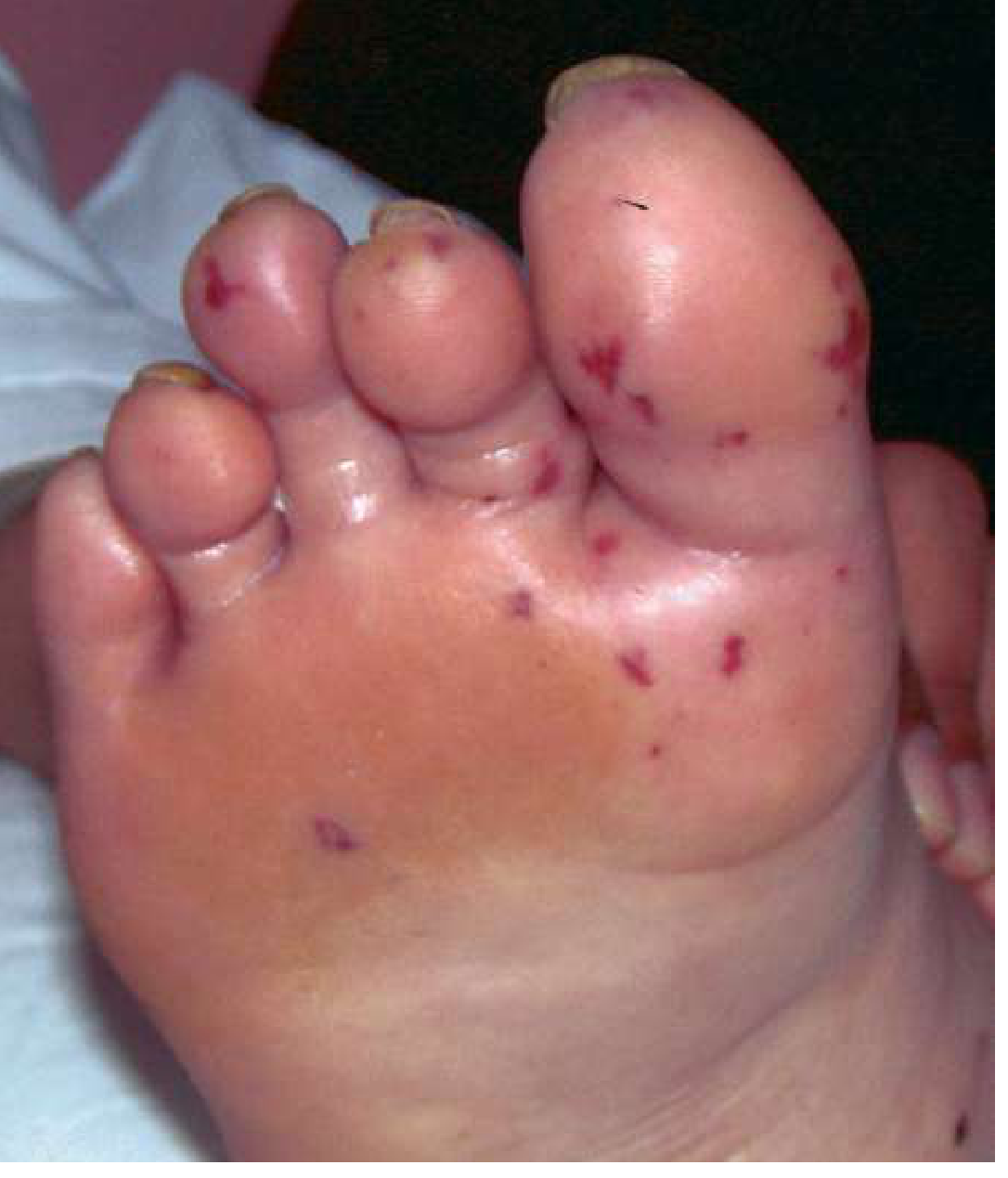
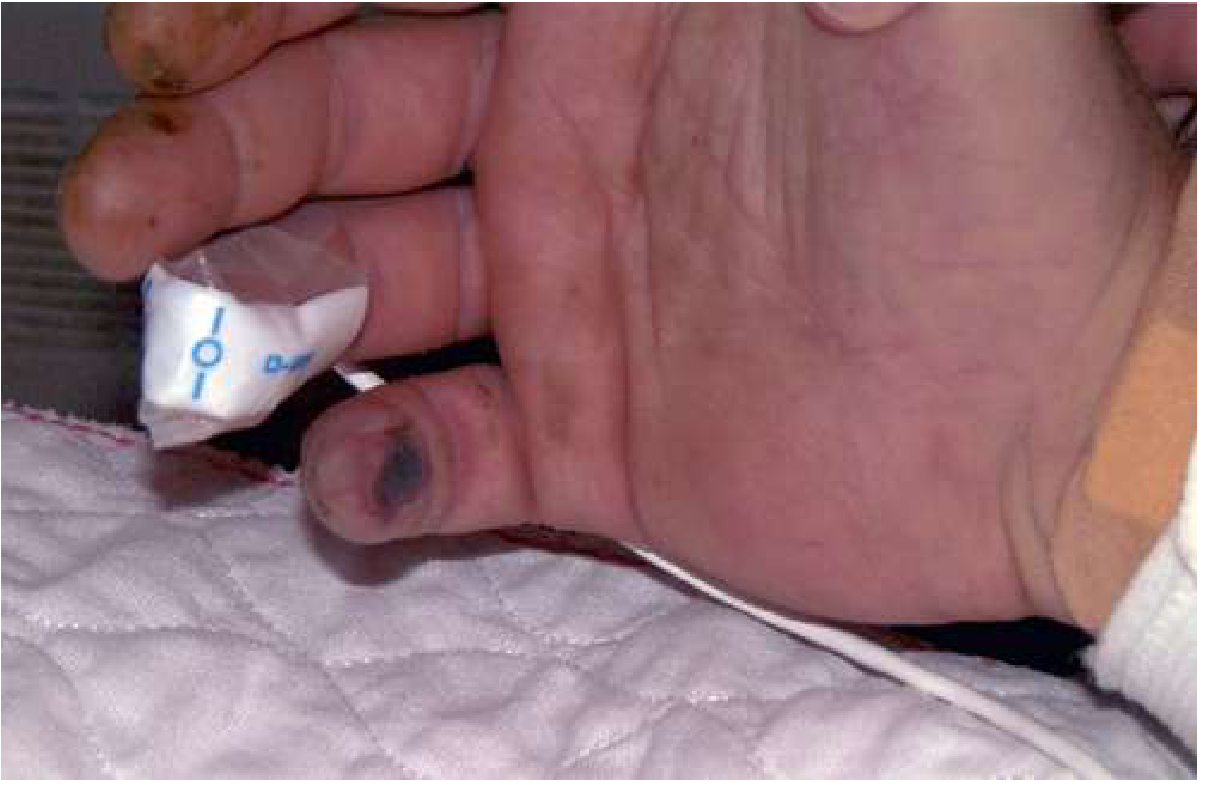
| Sign | Description | Mechanism |
|---|---|---|
| Petechiae | Small haemorrhagic spots on skin/conjunctiva | Embolic/vasculitic |
| Splinter haemorrhages | Linear brownish-red lesions in nail beds, parallel to nail growth | Non-specific; also in healthy hospitalised patients |
| Janeway lesions | Painless haemorrhagic macules on palms/soles | Embolic |
| Osler nodes | Painful, tender nodules on finger/toe pads | Immunological (immune complex deposition) |
| Roth spots | Flame-shaped retinal haemorrhages with pale centre | Immune complex / embolic |
| Clubbing | Finger clubbing | Chronic IE |
Memory aid - "FROM JANE": Fever, Roth spots, Osler nodes, Murmur, Janeway lesions, Anaemia, Nail-bed haemorrhages, Emboli
Morphology (Pathology)
- Vegetations: friable, bulky masses on valve leaflets (usually on the low-pressure side - atrial surface of AV valves; ventricular surface of semilunar valves)
- Most common valves: Mitral and aortic (left-sided)
- Tricuspid valve is the target in IV drug users (right-sided IE)
- Vegetations may erode into the myocardium → ring abscess (perivalvular abscess)
- Shedding of emboli → septic infarcts in brain, kidneys, spleen
- Bacterial infection of arterial wall at embolisation sites → mycotic aneurysms
Diagnosis
Blood Cultures
- Obtain at least 3 sets from separate venipuncture sites (aerobic + anaerobic bottle each)
- Collected at least 1 hour apart to document continuous bacteraemia
- Starting antibiotics before cultures reduces sensitivity by ~one third - culture first if possible
- Bacteraemia in IE is continuous (unlike the intermittent bacteraemia of other infections)
Echocardiography
- Indicated in virtually all patients with suspected or known IE
- TTE (transthoracic) - first-line, but limited sensitivity for small vegetations and prosthetic valves
- TEE (transoesophageal) - preferred when:
- TTE is of poor quality or negative despite high suspicion
- Prosthetic valve is involved
- S. aureus bacteraemia (high risk)
- Suspected perivalvular abscess
- Elderly patients with valvular abnormalities
Modified Duke Criteria
MAJOR Criteria:
- Positive blood cultures - typical organism from ≥2 separate cultures (viridans streptococci, S. gallolyticus, HACEK, S. aureus, or community-acquired Enterococcus without primary focus) OR persistent bacteraemia with any organism (2 positive cultures >12 h apart, or ≥3 of 4 cultures positive >1 h apart)
- Evidence of endocardial involvement - echocardiographic: vegetation, abscess, or new partial prosthetic valve dehiscence; OR new valvular regurgitation
- Positive serology for Coxiella burnetii (anti-phase 1 IgG ≥1:800)
MINOR Criteria:
- Predisposing condition (IV drug use or predisposing cardiac condition)
- Fever ≥38°C
- Vascular phenomena (arterial embolism, septic pulmonary emboli, mycotic aneurysm, intracranial haemorrhage, conjunctival haemorrhages, Janeway lesions)
- Immunological phenomena (glomerulonephritis, Osler nodes, Roth spots, rheumatoid factor)
- Echocardiogram consistent with IE but not meeting major criteria
- Microbiological evidence not meeting major criteria
Classification:
- Definite IE: Pathologically proven OR 2 major OR 1 major + 3 minor OR 5 minor criteria
- Possible IE: 1 major + 1 minor OR 3 minor criteria
- Rejected: Firm alternative diagnosis; resolution with ≤4 days antibiotics; no pathological evidence at surgery/autopsy
Complications
| Complication | Notes |
|---|---|
| Heart failure | Most common cause of death; due to valvular destruction or perivalvular abscess |
| Perivalvular abscess / ring abscess | Extension beyond valve; causes conduction abnormalities (PR prolongation, heart block) |
| Systemic embolism | Brain (stroke/TIA), kidneys, spleen; risk highest with large vegetations, especially mitral valve |
| Mycotic aneurysms | Intracranial mycotic aneurysms - risk of rupture and ICH |
| Neurological events | Stroke in 15-20%; also meningitis, brain abscess, encephalopathy |
| Glomerulonephritis | Immune complex deposition; haematuria, proteinuria, renal failure |
| Splenic abscess | Splenomegaly + septic emboli |
| Metastatic infection / septic emboli | Septic pulmonary emboli (right-sided IE) |
Treatment
General Principles
- All IE patients should be managed in hospital with an endocarditis team (infectious disease + cardiology + cardiac surgery)
- Prolonged IV antibiotics (bactericidal, not bacteriostatic) - typically 4-6 weeks
- The avascular valve surface requires high serum drug concentrations to achieve adequate tissue penetration
Empirical/Targeted Antibiotic Therapy
| Organism | Regimen |
|---|---|
| Native valve - Viridans streptococci (penicillin-sensitive) | Penicillin G or amoxicillin × 4 weeks (± gentamicin × 2 weeks) |
| Native valve - S. aureus (MSSA) | Flucloxacillin (nafcillin) × 4-6 weeks |
| Native valve - S. aureus (MRSA) | Vancomycin × 4-6 weeks |
| Enterococcus | Ampicillin + gentamicin × 4-6 weeks (or ampicillin + ceftriaxone if aminoglycoside-resistant) |
| Prosthetic valve - S. aureus (MRSA) | Vancomycin + rifampicin + gentamicin |
| Culture-negative / empirical | Vancomycin ± gentamicin (pending cultures) |
- A 2025 systematic review (PMID: 39290168) found that oral step-down therapy may be a feasible alternative to full-course IV therapy for S. aureus bacteraemia/endocarditis in selected patients
- Blood cultures should be repeated 48-72 h after starting antibiotics to confirm clearance
Indications for Surgery (Early/Emergency)
Surgery is indicated for:
- Heart failure due to valvular dysfunction (most common indication)
- Uncontrolled infection - perivalvular abscess, fistula, or enlarging vegetation despite antibiotics
- Prevention of embolism - large (>10 mm) mobile vegetations, especially on the mitral valve
- Fungal or highly resistant organism endocarditis
- Prosthetic valve endocarditis with dehiscence or persistent bacteraemia
Prophylaxis
Per AHA 2021 guidelines, antibiotic prophylaxis (amoxicillin 2 g PO 30-60 min before dental procedure) is recommended for high-risk conditions only:
- Prosthetic cardiac valve or material (including TAVI, annuloplasty rings)
- Previous IE
- Unrepaired cyanotic congenital heart disease
- Repaired CHD with residual defects at or near the prosthetic material
- Left ventricular assist devices / implantable hearts
- Cardiac transplant recipients with valvulopathy
Clindamycin is no longer recommended as a penicillin alternative (risk of C. difficile). Doxycycline is now an alternative for truly penicillin-allergic patients.
A 2024 systematic review (PMID: 38581643) confirmed the protective association of antibiotic prophylaxis before invasive dental procedures.
Prognosis
- Left untreated, IE is generally fatal
- With antibiotics ± surgery: mortality is significantly reduced but remains high (~15-30% in-hospital mortality)
- Adverse prognostic factors: S. aureus infection, heart failure, neurological events, perivalvular abscess, prosthetic valve involvement, healthcare-associated acquisition
- Complications (glomerulonephritis, arrhythmias, systemic embolisation) worsen prognosis
Sources: Goldman-Cecil Medicine International Edition, pp. 700-706 | Robbins & Kumar Basic Pathology, pp. 368-369 | Braunwald's Heart Disease 12E, pp. (blocks 10-11) | Harrison's Principles of Internal Medicine 22E
This is a shared conversation. Sign in to Orris to start your own chat.