
Causes of isolated thrombocytopenia Indian elderly indian male
Reading File
Quick answer: In an elderly Indian male with isolated thrombocytopenia (low platelets, normal RBC and WBC), the leading causes include immune thrombocytopenic purpura (ITP), myelodysplastic syndrome (MDS), drug-induced thrombocytopenia, hypersplenism from chronic liver disease (alcohol, hepatitis B/C), and infections like dengue, malaria, and tuberculosis - all highly prevalent in the Indian subcontinent. Hematological malignancies (CLL, lymphoma) and B12/folate deficiency must also be excluded.
Searching sources...
Finding Sources
Searching PubMed
isolated thrombocytopenia elderly causes evaluation
Reading File
Reading File
Finding Sources
Reading File
Finding Sources
Finding Sources
Finding Sources
Finding Sources
Searching PubMed
thrombocytopenia India etiology epidemiology
Reading File
Finding Sources
Finding Sources
Searching the Web
causes isolated thrombocytopenia elderly India clinical approach
Reading Web Page
http://impactfactor.org/PDF/IJPCR/16/IJPCR,Vol16,Issue7,Arti…
Here is a detailed, structured overview of causes of isolated thrombocytopenia in an elderly Indian male, organized by mechanism and weighted by Indian epidemiological context.
Causes of Isolated Thrombocytopenia in an Elderly Indian Male
Isolated thrombocytopenia = low platelet count (<1,50,000/µL) with normal hemoglobin and WBC. In the elderly, this narrows the differential and demands bone marrow evaluation to exclude MDS/malignancy.
Framework: Pathophysiological Classification
1. Decreased Production (Bone Marrow)
| Cause | Notes for Elderly Indian Male |
|---|---|
| Myelodysplastic Syndrome (MDS) | Age-related stem cell disease; isolated refractory thrombocytopenia (MDS-SLD/MDS-RS) can mimic ITP; bone marrow biopsy required. Most common hematological cause in elderly. |
| Megaloblastic anemia (B12/Folate deficiency) | Very common in India (vegetarian diet, B12 deficiency endemic). May present as isolated thrombocytopenia before frank anemia. Check MCV and B12/folate. |
| Aplastic anemia | Less common; can present with isolated cytopenia early |
| Bone marrow infiltration | AML, CLL, lymphoma, metastatic prostate/lung cancer (elderly male risk) |
| Alcohol-induced (direct marrow suppression) | Alcohol is one of the top causes; thiazides also suppress platelet production |
| Chemotherapy/cytotoxic drugs | If on treatment for other malignancy |
2. Increased Destruction - Immune
| Cause | Notes for Elderly Indian Male |
|---|---|
| Primary ITP (Immune Thrombocytopenic Purpura) | Second peak of incidence in elderly (>60 yrs). Can be chronic and refractory. Diagnosis of exclusion. Bone marrow shows megakaryocyte hyperplasia. ITP incidence rises with age and peaks after 80 yrs. |
| Secondary ITP | Due to: |
| - HIV | High burden in India; thrombocytopenia is one of earliest manifestations |
| - Hepatitis B/C | Very prevalent in India; direct viral suppression + immune complex deposition |
| - Helicobacter pylori | H. pylori eradication resolves ITP in a subset - test and treat |
| - SLE / APS | Less common in elderly males but must exclude antiphospholipid syndrome if thrombocytopenia + thrombosis |
| - CLL / lymphoma | Autoimmune thrombocytopenia as paraneoplastic process |
| Drug-induced immune thrombocytopenia | Quinine (anti-malarial - very commonly used in India), sulfonamides, rifampicin (anti-TB), heparin (HIT), PPIs, NSAIDs, beta-lactams |
3. Increased Destruction - Non-Immune (usually NOT isolated; check for MAHA)
| Cause | Notes |
|---|---|
| DIC | Associated with sepsis, liver disease - look for prolonged PT/APTT |
| TTP/HUS | Non-isolated - check blood film for schistocytes |
| Antiphospholipid syndrome | Can present as isolated thrombocytopenia |
4. Sequestration (Hypersplenism)
| Cause | Notes for Indian Male |
|---|---|
| Chronic liver disease/cirrhosis | Most common cause of hypersplenism in India - alcohol, HBV, HCV, NASH. Thrombopoietin (TPO) is liver-derived; cirrhosis reduces TPO + causes portal hypertension/splenomegaly. Very common in elderly Indian male with alcohol history. |
| Kala-azar (Visceral Leishmaniasis) | Endemic in Bihar, Jharkhand, UP, West Bengal. Massive splenomegaly causes platelet sequestration + thrombocytopenia. Hemorrhages from thrombocytopenia are a recognized fatal complication. |
| Myelofibrosis | Extramedullary hematopoiesis in spleen; presents with massive splenomegaly + cytopenia |
5. Tropical/Infectious Causes - HIGHLY relevant in India
This is a priority group for India:
| Infection | Mechanism | Clinical Clue |
|---|---|---|
| Dengue fever | Bone marrow suppression + platelet destruction by antibodies | Fever, myalgia, NS1/IgM positive, seasonal (monsoon) |
| Malaria (P. vivax / P. falciparum) | Platelet sequestration in spleen + immune destruction | Cyclical fever, peripheral smear |
| Leptospirosis | Immune complex-mediated platelet destruction | Jaundice, renal failure, exposure to flood/soil |
| Tuberculosis | Bone marrow infiltration OR immune destruction | Weight loss, fever, lymphadenopathy |
| Typhoid fever | Bone marrow suppression | Relative bradycardia, Widal positive |
| Viral hepatitis (HBV/HCV/HEV) | Direct marrow suppression + hypersplenism | Jaundice, elevated LFTs |
| Scrub typhus/Rickettsial | Immune-mediated + endothelial damage | Eschar, fever, maculopapular rash |
| HIV | Multifactorial: antiplatelet antibodies + megakaryocyte suppression | Risk factors, oral candida, lymphopenia |
According to an Indian study from Kerala (KMCT Medical College, 2024), infections were the most common cause (23%) of thrombocytopenia in patients above 50 years, with dengue, leptospirosis, and sepsis being the top infectious causes. Chronic ITP and MDS were next in frequency.
Summary Table: Probability-Weighted Differential for Elderly Indian Male
| Priority | Cause | Key Investigation |
|---|---|---|
| High | Infections (dengue, malaria, sepsis) | NS1/IgM, peripheral smear, cultures |
| High | Chronic ITP | Diagnosis of exclusion; bone marrow |
| High | Liver disease + hypersplenism (alcohol/HBV/HCV) | LFTs, USG abdomen, viral serology |
| High | MDS | Bone marrow biopsy + cytogenetics |
| High | B12/folate deficiency | B12, folate, MCV, peripheral smear |
| Moderate | Drug-induced (quinine, rifampicin, heparin) | Drug history |
| Moderate | HIV | ELISA |
| Moderate | H. pylori associated ITP | UBT / stool antigen |
| Moderate | Kala-azar | Splenic aspirate, rK39, endemic exposure |
| Lower | Hematological malignancy (CLL, lymphoma, AML) | Bone marrow, LDH, LFTs, CT scan |
| Lower | TTP | Blood film for schistocytes, ADAMTS13 |
| Lower | Aplastic anemia | Bone marrow biopsy |
| Lower | Antiphospholipid syndrome | aPL antibodies |
Key Diagnostic Steps
- History - fever, medications (quinine, rifampicin, PPIs), alcohol use, travel to endemic areas, jaundice, weight loss
- Peripheral blood smear - mandatory; rules out pseudo-thrombocytopenia, TMA/schistocytes, blast cells, lymphocytes in CLL
- LFTs, coagulation (PT/APTT) - rule out DIC, liver disease
- B12, folate, MCV
- Viral serology - HBV, HCV, HIV, dengue NS1/IgM
- USG abdomen - splenomegaly, liver echogenicity, portal hypertension
- Bone marrow biopsy - mandatory in any elderly patient with unexplained isolated thrombocytopenia to rule out MDS, leukemia, aplastic anemia
- H. pylori testing (UBT or stool antigen) - treat if positive, reassess platelet count
Clinical pearl: In an elderly Indian male, any platelet count <100 × 10⁹/L without obvious cause should trigger bone marrow evaluation. MDS causing isolated thrombocytopenia can be indistinguishable from ITP on peripheral smear alone. A practical review on thrombocytopenia management recommends haematology referral for all patients >60 years with unexplained isolated thrombocytopenia.
Sources: Robbins & Kumar Basic Pathology (Table 10.11), Goldman-Cecil Medicine, Frameworks for Internal Medicine, Robbins Cotran Pathologic Basis of Disease; supplemented by Indian epidemiological data and recent clinical guidance.
What if platelet is 11000
A platelet count of 11,000/µL is a hematological emergency. At this level, spontaneous bleeding (intracranial, GI, mucosal) is a real and immediate risk. This significantly narrows the differential - causes that typically produce this level of severe thrombocytopenia in an elderly Indian male include severe ITP, severe dengue, acute leukemia/aplastic anemia, TTP/HUS, and severe sepsis with DIC.
Searching sources...
Finding Sources
Finding Sources
Reading File
Finding Sources
Finding Sources
Reading File
Reading File
Loading Image
Finding Sources
Here is the complete clinical picture for a platelet count of 11,000/µL:
Platelet Count of 11,000/µL - Clinical Implications
1. Why This Is an Emergency
According to Goldman-Cecil Medicine:
"Patients with platelet counts of less than 5,000 to 10,000/µL are at HIGH RISK for spontaneous, life-threatening hemorrhage."
At 11,000/µL, the patient is just above that catastrophic threshold but firmly in the danger zone. Key risks:
| Risk | Threshold |
|---|---|
| Post-traumatic / surgical bleeding | <75,000/µL |
| Spontaneous bleeding risk begins | <30,000/µL |
| HIGH risk for life-threatening spontaneous hemorrhage | <10,000-20,000/µL |
| Intracranial hemorrhage / catastrophic bleed | <5,000/µL |
"Wet purpura" (blood blisters in mouth, mucosal bleeding) at this count = sign of imminent catastrophic bleed - treat as emergency.
2. What Causes Drive Platelets THIS Low?
At 11,000/µL (profound thrombocytopenia), the differential narrows significantly:
Most Likely Causes in This Context (Elderly Indian Male)
| Cause | Why it can reach 11,000 | Clue |
|---|---|---|
| Severe / Acute ITP | Autoantibody destruction can crash platelets acutely | Isolated; no fever; normal smear |
| Dengue fever (severe) | Direct marrow suppression + immune destruction | Fever, myalgia, NS1+, WBC low |
| Aplastic anemia | Marrow failure - can present as isolated thrombocytopenia initially | Pancytopenia evolves |
| Acute Leukemia (AML) | Marrow infiltration | Blasts on smear, fever, bone pain |
| MDS - refractory thrombocytopenia | Ineffective megakaryopoiesis | Elderly, macrocytic cells, dysplastic forms |
| Severe sepsis / DIC | Consumption coagulopathy | Prolonged PT/APTT, fibrinogen low |
| TTP | Consumption in microvascular thrombi | Schistocytes on smear + neurological signs |
| Kala-azar (VL) | Massive splenomegaly + bone marrow infiltration | Splenomegaly, endemic area, rK39+ |
| Drug-induced (quinine, rifampicin) | Immune-mediated rapid destruction | Drug history |
| Severe megaloblastic anemia | Ineffective thrombopoiesis | Macro-ovalocytes, hypersegmented PMNs, B12 low |
Note: Hypersplenism alone CANNOT produce a platelet count of 11,000. Goldman-Cecil states hypersplenism alone rarely drops platelets below 40,000-50,000/µL. If platelets are <40,000 with splenomegaly, always look for an additional cause.
3. Diagnostic Approach - Flowchart
(Goldman-Cecil Medicine systematic approach)
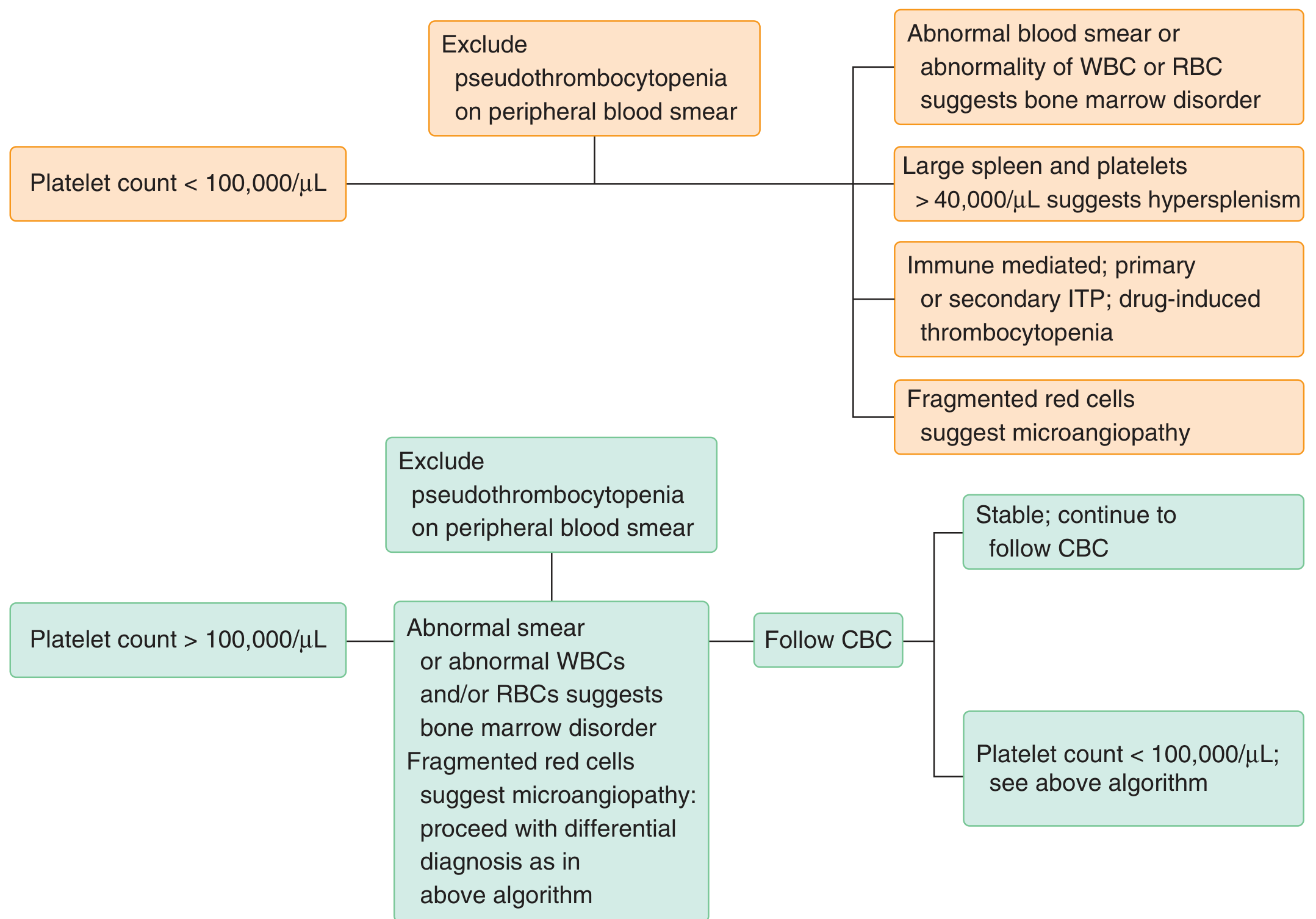
Step 1 - First, exclude pseudothrombocytopenia:
- Repeat CBC in citrate tube (not EDTA) or heparin tube
- Look at smear: platelet clumping = EDTA-induced pseudo-thrombocytopenia (benign)
Step 2 - Peripheral blood smear (mandatory):
| Finding | Suggests |
|---|---|
| Normal RBC + WBC | ITP, drug-induced, dengue |
| Schistocytes (fragmented RBCs) | TTP, DIC, HUS |
| Blasts | Acute leukemia |
| Hypersegmented neutrophils + macro-ovalocytes | Megaloblastic anemia |
| Dysplastic cells | MDS |
| Target cells + teardrop cells | Infiltrative marrow disease |
Step 3 - Emergency workup at 11,000/µL:
- CBC with differential
- Peripheral blood smear (most important single test)
- Coagulation screen: PT, APTT, fibrinogen, D-dimer (exclude DIC)
- LFT, RFT, LDH, bilirubin
- Dengue NS1 antigen + IgM (if fever/seasonal)
- Malaria smear (thick + thin)
- HBsAg, anti-HCV, HIV ELISA
- B12, folate
- Blood culture (if fever)
- Bone marrow biopsy - urgent if no obvious reversible cause found
4. Immediate Management at 11,000/µL
A. All patients - Immediate measures:
- Admit to hospital (platelet <20,000 warrants admission)
- Stop all drugs that impair platelet function: NSAIDs, aspirin, clopidogrel
- Avoid IM injections, invasive procedures
- Strict bed rest; avoid trauma
- Monitor for "wet purpura" - blood blisters in mouth = urgent intervention needed
B. If cause is ITP (most common isolated cause):
Per Rosen's Emergency Medicine:
| Situation | Treatment |
|---|---|
| Platelet <30,000 + asymptomatic | Corticosteroids: Dexamethasone 40 mg/day x 4 days (preferred) OR prednisolone 1 mg/kg/day |
| Platelet <10,000 OR wet bleeding | Corticosteroids + IVIG 1 g/kg single dose |
| Life-threatening bleeding | Add platelet transfusion + consider TPO-RA (eltrombopag) + haematology consult |
At 11,000/µL, this patient needs both steroids AND IVIG simultaneously.
C. Platelet transfusion - when to give:
- Prophylactic: indicated at <10,000/µL in hypoproliferative thrombocytopenia (Goldman-Cecil)
- Therapeutic: overt wet/mucosal bleeding at any count
- Caution in ITP: transfused platelets are rapidly destroyed; transfuse only for active bleeding or emergency procedure
- Each unit raises platelet count by ~10,000-12,000/µL in an average adult
D. Cause-specific treatment:
| Cause | Specific treatment |
|---|---|
| Dengue | Supportive; platelet transfusion if <10,000 or bleeding |
| Severe ITP | Steroids + IVIG; consider TPO-RA (eltrombopag/romiplostim) |
| Aplastic anemia | Cyclosporine + ATG; consider BMT |
| Acute leukemia | Urgent haematology-oncology referral; chemotherapy |
| B12 deficiency | IM cyanocobalamin; platelets recover in 1-2 weeks |
| Drug-induced | Stop offending drug immediately; recovery usually within 7-10 days |
| Kala-azar | Liposomal amphotericin B (first-line in India) |
| DIC | Treat underlying cause; FFP, cryoprecipitate, platelet transfusion |
5. Red Flags Needing ICU-Level Care
At 11,000/µL, watch for:
- Headache or altered sensorium - intracranial hemorrhage; urgent CT head
- Hemoptysis, melena, hematuria - internal bleeding
- Wet purpura (blood blisters in mouth)
- Falling platelet count on serial monitoring
Bottom line: A platelet count of 11,000 in an elderly Indian male = admit, urgent smear + workup, start empirical steroids + IVIG if ITP suspected, and get urgent haematology input. Do not wait for bone marrow results before starting treatment if the patient is actively bleeding.
Sources: Goldman-Cecil Medicine (Ch. 158), Rosen's Emergency Medicine (Ch. 111), Robbins & Kumar Basic Pathology (Ch. 10)
This is a shared conversation. Sign in to Orris to start your own chat.