
Biotransformation of iv anaesthetic agents . Short and crisp answer for anaesthesia exam
Reading File
Searching sources...
Finding Sources
Finding Sources
Finding Sources
Finding Sources
Reading File
Finding Sources
Reading File
I have enough foundational detail. Let me now pull specific biotransformation data for the key IV agents from Morgan & Mikhail's block.
Reading File
Finding Sources
Finding Sources
Finding Sources
Finding Sources
Finding Sources
I now have enough from the textbooks. Here is a concise, exam-focused answer:
Biotransformation of IV Anaesthetic Agents
1. Propofol
- Site: Liver (primary) + kidney + lung (extrahepatic metabolism is significant - clearance exceeds hepatic blood flow by ~30%)
- Pathway: Hepatic conjugation (glucuronidation + sulfation of the phenol ring) → inactive, water-soluble metabolites
- Excretion: Renal (inactive glucuronide/sulfate conjugates); <3% excreted unchanged
- Clinical point: Not significantly affected by cirrhosis or renal failure. Prolonged infusion → Propofol Infusion Syndrome (lipemia, metabolic acidosis)
2. Thiopentone (Thiopental)
- Site: Liver (hepatic microsomal oxidation)
- Pathway:
- Oxidation at C5 side chains → inactive metabolites (most important)
- Desulfuration to pentobarbital (active - accounts for prolonged sedation)
- N-dealkylation, opening of barbituric acid ring
- Excretion: Renal (inactive metabolites)
- Clinical point: Highly lipophilic → redistribution terminates action (not metabolism). Elimination half-life ~11 hours. Repeated doses → accumulation and prolonged recovery ("context-sensitive"). Neonates have impaired clearance.
3. Ketamine
- Site: Liver
- Pathway: N-demethylation by CYP3A4 > CYP2C9 > CYP2B6 → Norketamine (principal active metabolite, 20-30% potency of ketamine) → further hydroxylation and glucuronidation → inactive, water-soluble compounds
- Excretion: Renal (hydroxylated, glucuronidated conjugates)
- Clinical point: Norketamine contributes to prolonged analgesia. Enzyme inducers (e.g., barbiturates) accelerate metabolism.
4. Etomidate
- Site: Liver + plasma
- Pathway: Ester hydrolysis by hepatic esterases and plasma esterases → inactive carboxylic acid metabolite
- Excretion: Renal (76%) and biliary (13%)
- Clinical point: Rapid hydrolysis → short duration. Inhibits 11β-hydroxylase → adrenocortical suppression (even a single dose). Safe in hepatic or renal impairment.
5. Midazolam
- Site: Liver (and intestinal wall)
- Pathway: CYP3A4-mediated hydroxylation → 1-hydroxymidazolam (active, 50% potency) → glucuronidation → inactive 1-hydroxymidazolam glucuronide
- Excretion: Renal
- Clinical point: Active metabolite accumulates in renal failure → prolonged sedation. CYP3A4 inhibitors (e.g., erythromycin, fluconazole) markedly increase midazolam levels.
6. Dexmedetomidine
- Site: Liver
- Pathway: Glucuronidation and CYP2A6-mediated oxidation → inactive metabolites
- Excretion: Renal (95%)
- Clinical point: Hepatic impairment prolongs its effect - dose reduction required.
Quick Memory Table
| Agent | Primary Pathway | Active Metabolite? | Special Point |
|---|---|---|---|
| Propofol | Hepatic conjugation + extrahepatic | No | Clearance exceeds liver blood flow |
| Thiopentone | Hepatic oxidation | Pentobarbital (weak) | Redistribution, not metabolism, terminates action |
| Ketamine | Hepatic N-demethylation (CYP3A4) | Norketamine (20-30%) | Explains prolonged analgesia |
| Etomidate | Ester hydrolysis (liver + plasma) | No | Adrenal suppression; 11β-hydroxylase inhibition |
| Midazolam | Hepatic CYP3A4 hydroxylation | 1-OH midazolam (50%) | Accumulates in renal failure |
| Dexmedetomidine | Hepatic glucuronidation/CYP2A6 | No | Dose-reduce in hepatic failure |
Sources: Morgan and Mikhail's Clinical Anesthesiology 7e; Barash's Clinical Anesthesia 9e; Goodman & Gilman's Pharmacological Basis of Therapeutics; Katzung's Basic and Clinical Pharmacology 16e
Ketamine for md anaesthesia exam. Emphasis on disociative anaethesia . With possible viva questions
Searching sources...
Finding Sources
Finding Sources
Reading File
Finding Sources
Finding Sources
Finding Sources
Finding Sources
Finding Sources
Reading File
Finding Sources
Reading File
Reading File
I now have comprehensive textbook content. Let me compile the full MD exam answer.
Loading Image
Here is a comprehensive MD Anaesthesia exam answer on Ketamine, with emphasis on dissociative anaesthesia and viva questions integrated throughout.
KETAMINE - MD Anaesthesia Exam
1. Introduction & Historical Context
- Derived from phencyclidine (PCP/"angel dust") - developed to retain its remarkable analgesic/anaesthetic properties while reducing psychomimetic effects
- First described as causing "dissociative anaesthesia" in human volunteers in 1965
- Key observed features at discovery: marked nystagmus, significant analgesia, unconsciousness with open eyes, and disturbing emergence delirium
2. Chemical Structure
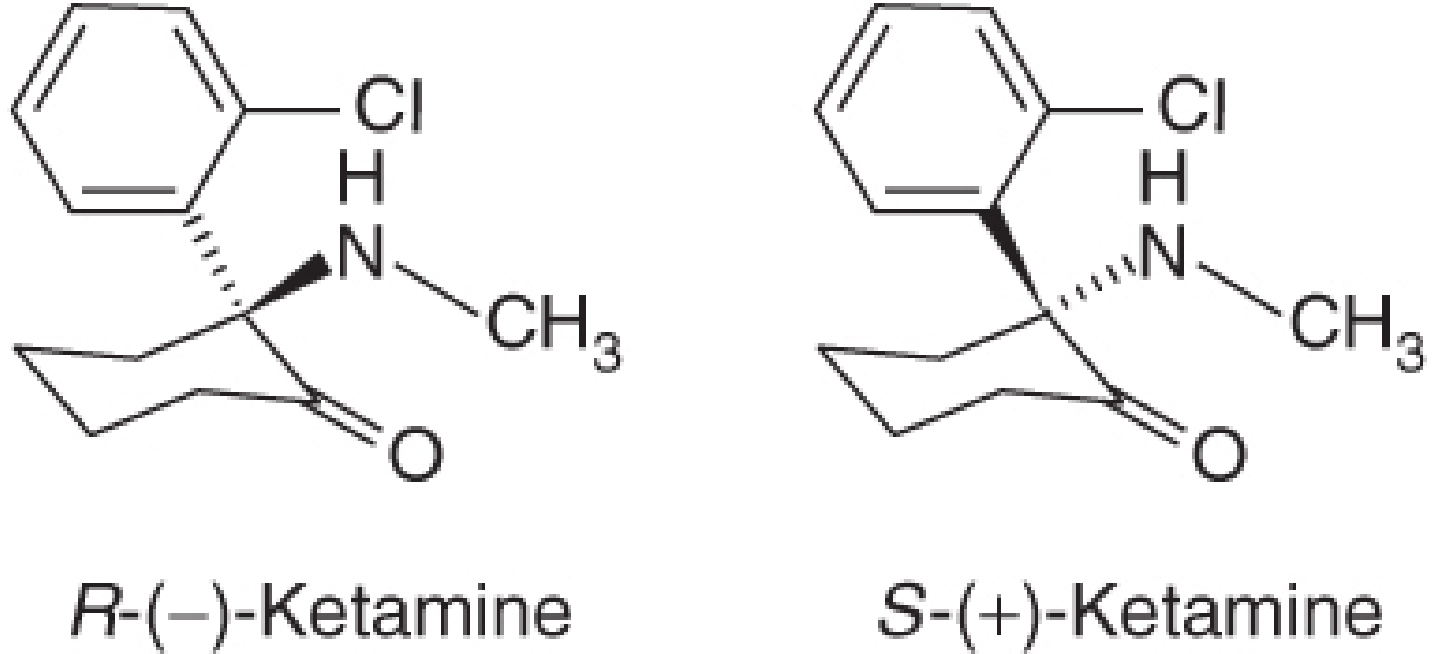
- (RS)-2-(2-chlorophenyl)-2-(methylamino)cyclohexanone
- Chiral compound - commercially available as a racemic mixture of R(-) and S(+) enantiomers
- S(+) enantiomer = 3-4x more potent, more rapid recovery, less psychomimetic effects; available separately in some countries as esketamine
- R(-) enantiomer tends to decrease CMR (cerebral metabolic rate), especially in temporomedial cortex
- Highly lipid-soluble → rapid CNS penetration; pKa 7.5
3. DISSOCIATIVE ANAESTHESIA - The Core Concept
"A trance-like cataleptic state in which the patient appears awake (eyes open, nystagmus present) but is unconscious, amnestic, and analgesic - dissociated from their environment"
Mechanism of Dissociation
- Ketamine produces functional and electrophysiological dissociation between the thalamocortical system and the limbic system
- EEG: Depression of thalamocortical pathways + concomitant activation of the limbic system (particularly hippocampus and frontal cortex)
- Binds preferentially to NMDA receptors on inhibitory interneurons in cortex, limbic system, and hippocampus → promotes uncoordinated increases in neuronal activity → active EEG pattern → unconsciousness
- Despite increased epileptiform activity on EEG, no clinical seizure spread to cortical areas
- The BIS paradoxically increases (from ~40 to 63) with higher ketamine doses under propofol-based GA
Features of Dissociative Anaesthesia
| Feature | Detail |
|---|---|
| Eyes | Open, nystagmus present |
| Consciousness | Unconscious, but appears awake |
| Reflexes | Laryngeal/pharyngeal reflexes maintained |
| Respiration | Maintained - mild depression only |
| Muscle tone | Increased (unlike other agents) |
| Analgesia | Profound - even at subanesthetic doses |
| Amnesia | Present |
| CVS | Stimulated - HR, BP, CO increased |
4. Mechanism of Action
Primary: Non-competitive (open channel) antagonist of NMDA (N-methyl-D-aspartate) receptor
- Binds to the PCP binding site (intrachannel site) within the NMDA receptor
- Decreases channel opening time
- Antagonism more profound when channel has been previously opened by glutamate ("use-dependent block")
- Decreases "wind-up" = amplification of repeated NMDA stimulation (key mechanism in central sensitization and neuropathic pain)
Secondary receptors (also important):
| Receptor | Effect |
|---|---|
| Opioid (mu, delta, kappa) | Contributes to analgesia (minor role) |
| Noradrenergic | Stimulates CNS NE neurons + inhibits catecholamine reuptake → hyperadrenergic state → hypnotic, analgesic, psychic effects |
| Cholinergic/Muscarinic | Anticholinergic physostigmine can antagonize hypnotic effects |
| Nicotinic | Mild action |
| Sigma receptors | Contributes to psychomimetic effects |
5. Pharmacokinetics
| Parameter | Value |
|---|---|
| Induction dose (IV) | 1-2 mg/kg |
| Induction dose (IM) | 4-6 mg/kg |
| Onset (IV) | ~1 minute |
| Duration (single IV bolus) | 10-20 minutes |
| Protein binding | ~47% |
| Volume of distribution | Large (highly lipophilic) |
| Alpha half-life (redistribution) | ~11 minutes |
| Beta half-life (elimination) | ~2.5 hours |
| Metabolism | Hepatic - CYP3A4 > CYP2C9 > CYP2B6 by N-demethylation → norketamine (active; 20-30% potency) → hydroxylation → glucuronidation → inactive |
| Excretion | Renal |
- Analgesic doses: 0.1-0.5 mg/kg IV (subanesthetic)
- Peak plasma levels after IV: ~0.75 mg/mL; CSF levels ~0.2 mg/mL at 1 hour
6. Pharmacodynamics by System
CNS
- Dissociative anaesthesia (as above)
- Increases CBF (~14-36%), CMR, and ICP - S(+) enantiomer increases CMR significantly
- CBV increases by ~50%
- CO2 responsiveness and autoregulation are preserved
- Antidepressant at subanesthetic doses (emerging use for treatment-resistant depression)
- Anticonvulsant - used in refractory status epilepticus
- May be protective against cerebral ischemia
Cardiovascular - Key Unique Feature
- Increases HR, BP, cardiac output, SVR - unlike all other IV agents
- Mechanism: indirect sympathomimetic effect - inhibition of central and peripheral catecholamine reuptake (↑NE, dopamine, serotonin release)
- Ketamine has direct negative inotropy and vasodilation - usually overwhelmed by sympathomimetic effect
- Exception: depleted catecholamine stores (e.g., terminal septic shock) - the direct depressant effect is unmasked → paradoxical hypotension
- Increases PVR - caution in severe right heart dysfunction/pulmonary hypertension
Respiratory - Another Key Unique Feature
- Minimal respiratory depression - largely preserves respiratory drive
- Maintains laryngeal and pharyngeal reflexes (but NOT absolute protection against aspiration)
- Bronchodilator - relaxes bronchial smooth muscle via sympathomimetic effect → drug of choice in asthmatic patients requiring anaesthesia
- Increases secretions (sialogue) - use with antisialagogue (atropine/glycopyrrolate)
Other
- Increases intraocular pressure
- Increases salivation (antisialagogue premedication needed)
- Nystagmus (involuntary eye movements)
- Skeletal muscle tone increased (not a relaxant)
7. Emergence Reactions - HIGH-YIELD VIVA TOPIC
What are emergence reactions?
Agitation during recovery from ketamine, including:
- Floating sensation, vivid dreams (often pleasant), nightmares
- Hallucinations (visual, auditory, proprioceptive)
- Delirium, confusion, disorientation
- Alterations in mood and affect
Incidence
- Adults: 10-30%; Children: lower incidence
- More common in females, adults, patients with psychological disturbance
Prevention and Treatment
- Benzodiazepines (midazolam/diazepam) - most effective prophylaxis
- Dark, quiet recovery environment - minimal stimulation during emergence
- Propofol co-administration reduces incidence
- Physostigmine (anticholinesterase) - can antagonize effects
- Reassurance and reorientation
8. Indications
- Haemodynamically unstable patients (trauma, hypovolemic shock) - only IV agent that supports CVS
- Asthmatic patients requiring emergency anaesthesia
- Paediatric patients - IM route possible for uncooperative children; procedural sedation
- Burn wound care - maintains airway reflexes + analgesic
- Field anaesthesia / disaster/war settings - IM use, no need for IV access
- Bronchoscopy / ENT procedures (maintains airway reflexes)
- Acute pain management - opioid-sparing, anti-hyperalgesic
- Refractory status epilepticus
- Subanesthetic analgesic infusion - postoperative, chronic pain, opioid-tolerant patients
- Treatment-resistant depression (emerging indication - intranasal esketamine approved)
9. Contraindications
| Absolute/Relative | Contraindication | Reason |
|---|---|---|
| Relative | Hypertension, ischaemic heart disease | Sympathomimetic effect ↑HR, BP |
| Relative | Raised ICP / intracranial mass | ↑CBF, ↑ICP (though debated with co-sedation) |
| Relative | Glaucoma / open globe injury | ↑IOP |
| Relative | Psychiatric illness / psychosis history | Psychomimetic effects exacerbated |
| Relative | Severe pulmonary hypertension / RV dysfunction | ↑PVR |
| Relative | Thyrotoxicosis | Exaggerated sympathomimetic response |
Note: The ICP concern has been revised - systematic reviews show ketamine does NOT increase ICP in patients with head injury when co-administered with sedatives. It may actually lower ICP when given with propofol in head-injured patients.
10. Biotransformation (Exam Recap)
- Hepatic N-demethylation via CYP3A4 > CYP2C9 > CYP2B6
- → Norketamine (active, 20-30% potency) → hydroxylated → glucuronidated → renally excreted
- Enzyme inducers (barbiturates, alcohol) → faster metabolism
- Lipophilic → not significantly removed by dialysis
11. Possible Viva Questions with Model Answers
Q1. What is dissociative anaesthesia? How does ketamine produce it?
A functionally distinct state where the patient is unconscious yet appears awake, with open eyes and nystagmus - dissociated from their surroundings. Ketamine produces it by causing electrophysiological dissociation: it depresses thalamocortical pathways (blocking sensory input integration) while simultaneously activating the limbic system. This uncoordinated neural activity leads to unconsciousness, amnesia, and profound analgesia simultaneously.
Q2. Why does ketamine increase blood pressure when all other IV anaesthetics decrease it?
Ketamine inhibits reuptake of catecholamines (norepinephrine, dopamine) centrally and peripherally. This sympathomimetic effect increases HR, BP, and cardiac output. While ketamine has direct myocardial depressant and vasodilatory properties, these are normally overwhelmed by the indirect sympathomimetic action. In catecholamine-depleted states (e.g., terminal cardiogenic shock), the direct depressant effect is unmasked and hypotension can paradoxically occur.
Q3. Does ketamine maintain airway reflexes? Is it safe in a full stomach?
Ketamine maintains laryngeal and pharyngeal reflexes and largely preserves respiratory drive - unique among IV anaesthetics. However, these protective reflexes are blunted, not normal. Ketamine is NOT considered a reliable aspiration preventive. In a patient with a full stomach, rapid-sequence induction with cricoid pressure remains mandatory. Ketamine is, however, excellent in emergency airways and for asthmatic patients.
Q4. What is the mechanism of ketamine's analgesic effect at subanesthetic doses?
The primary analgesic mechanism is prevention of central sensitization via NMDA receptor blockade at the spinal dorsal horn. Ketamine blocks "wind-up" - the progressive amplification of C-fibre NMDA stimulation that underlies hyperalgesia and allodynia. This makes it particularly useful in opioid-tolerant patients, neuropathic pain, and as an opioid-sparing adjunct. The use-dependent nature means it is most effective when NMDA channels are already open.
Q5. Is ketamine contraindicated in head injury?
Historically yes - due to concern about increasing CBF, CMR, and ICP. However, systematic reviews have revised this view: ketamine does not raise ICP in head-injured patients when co-administered with sedatives. In fact, large doses (1.5-5 mg/kg) in propofol-sedated patients with head injury actually decrease ICP. The increase in BP from ketamine may even be beneficial in maintaining CPP. Ketamine is now used cautiously in head-injured patients with co-sedation.
Q6. What is norketamine? What is its clinical significance?
Norketamine is the principal active metabolite of ketamine, produced by N-demethylation in the liver (CYP3A4). It has 20-30% the potency of racemic ketamine. It contributes to the prolonged analgesic effects seen after ketamine administration. Norketamine is further hydroxylated and glucuronidated to inactive metabolites and excreted renally.
Q7. Why does ketamine increase BIS score instead of decreasing it?
Unlike other anaesthetics that suppress cortical activity (low BIS), ketamine's dissociative mechanism activates the limbic system and produces an active EEG pattern, thus paradoxically increasing BIS. Studies show BIS rises from ~40 to 63 with 0.5 mg/kg ketamine under propofol-fentanyl anaesthesia. This is important - a high BIS under ketamine does NOT mean the patient is aware or light.
Q8. What is S(+) ketamine (esketamine)? Advantages?
S(+) or esketamine is the more potent enantiomer (3-4x racemic ketamine). Advantages: lower dose needed, faster recovery, less psychomimetic effects, less salivation. It causes more CBF and CMR increase than the R(-) form. Intranasal esketamine (Spravato) is now approved for treatment-resistant depression. The R(-) enantiomer actually tends to decrease CMR in some areas, which partly buffers the S(+) effects in the racemic mixture.
Q9. How do you prevent emergence delirium with ketamine?
- Benzodiazepine premedication (midazolam 0.05 mg/kg IV) - most evidence-based strategy. 2. Quiet, dark recovery - minimal stimulation during emergence. 3. Propofol co-induction or TIVA. 4. Adequate dose of ketamine (inadequate dosing worsens dysphoria). 5. Reassurance and reorientation on emergence.
Q10. In what emergency scenario is ketamine the drug of choice for RSI?
Severe bronchospasm/acute severe asthma requiring intubation - ketamine is the only IV induction agent with bronchodilator properties, via its sympathomimetic beta-2 adrenergic effect on bronchial smooth muscle. It is also the agent of choice in haemodynamically unstable patients requiring emergency intubation (trauma, septic shock with some catecholamine reserve), where its sympathomimetic support of CVS is lifesaving.
Sources: Barash's Clinical Anesthesia 9e (pp. 1484-1490); Miller's Anesthesia 10e; Goodman & Gilman's Pharmacological Basis of Therapeutics; Morgan & Mikhail's Clinical Anesthesiology 7e
This is a shared conversation. Sign in to Orris to start your own chat.