
Today is my exam 2nd internal exam anatomy and physiology GNM 1st year so give me some important questions and answers for exam most probability to asking in exam and important diagram with answers
Reading File
Now let me search the library for key GNM 1st year anatomy and physiology topics simultaneously:
Finding Sources
Searching the Web
GNM 1st year anatomy physiology 2nd internal exam important questions 2024 2025
Good. Now let me search the library for key GNM anatomy/physiology topics in parallel:
Finding Sources
Finding Sources
Finding Sources
Finding Sources
Searching the Web
GNM 1st year anatomy physiology syllabus INC important topics 2nd internal
Reading Web Page
https://www.pw.live/nursing/exams/gnm-1st-year-syllabus
Finding Sources
Finding Sources
Now I have enough information to provide a comprehensive answer. Let me search for important diagram topics from the library:
Searching Images
heart anatomy chambers valves diagram
Searching Images
nephron structure kidney diagram
Searching Images
neuron structure anatomy diagram
I now have excellent images and enough content to provide a comprehensive exam preparation guide. Let me compile everything:
🏥 GNM 1st Year — Anatomy & Physiology
2nd Internal Exam: Most Important Questions & Answers
📋 SECTION A: LONG ANSWER QUESTIONS (High Probability)
❤️ 1. Describe the anatomy and physiology of the Heart
Q: Write a detailed note on the structure and function of the heart.
Answer:
Location: Mediastinum, between the lungs, resting on the diaphragm. 2/3 lies to the left of the midline.
Size & Weight: Size of a clenched fist; weight ~250–300 g in females, ~300–350 g in males.
Coverings:
- Pericardium — double-walled sac
- Fibrous pericardium (outer)
- Serous pericardium (inner) — parietal and visceral layers (epicardium)
- Pericardial cavity — contains 20–30 mL serous fluid (lubrication)
Layers of Heart Wall:
| Layer | Description |
|---|---|
| Epicardium | Outermost layer (visceral pericardium) |
| Myocardium | Middle, thick muscular layer — pumping action |
| Endocardium | Inner smooth lining |
Chambers (4):
- Right Atrium — receives deoxygenated blood from superior/inferior vena cava
- Right Ventricle — pumps to lungs via pulmonary artery
- Left Atrium — receives oxygenated blood from 4 pulmonary veins
- Left Ventricle — pumps oxygenated blood to body via aorta (thickest wall)
Valves (4):
| Valve | Location | Function |
|---|---|---|
| Tricuspid | Right AV | Prevents backflow into RA |
| Pulmonary (semilunar) | Pulmonary artery | Prevents backflow from pulmonary artery |
| Mitral (Bicuspid) | Left AV | Prevents backflow into LA |
| Aortic (semilunar) | Aorta | Prevents backflow from aorta |
Blood Supply: Coronary arteries (right & left) — first branches of aorta
Cardiac Cycle:
- Systole (contraction) + Diastole (relaxation)
- Normal Heart Rate: 60–100 beats/min
- Cardiac Output: 5 L/min (HR × Stroke Volume)
Conducting System:
- SA Node (Pacemaker) → AV Node → Bundle of His → Bundle Branches → Purkinje Fibers
🫁 2. Respiratory System
Q: Describe the structure and functions of the lungs / respiratory tract.
Answer:
Upper Respiratory Tract: Nose → Nasal cavity → Pharynx → Larynx
Lower Respiratory Tract: Trachea → Bronchi → Bronchioles → Alveoli
Lungs:
- Right lung — 3 lobes (upper, middle, lower)
- Left lung — 2 lobes (upper, lower) — has cardiac notch
- Covered by pleura (visceral and parietal)
Alveoli: Functional unit of lung; site of gaseous exchange
- ~300 million alveoli
- Surfactant (produced by Type II pneumocytes) prevents collapse
Mechanism of Breathing:
- Inspiration: Diaphragm contracts (moves down) → thoracic volume increases → pressure falls → air enters
- Expiration: Diaphragm relaxes → passive process normally
Lung Volumes (Important for Exam):
| Term | Value |
|---|---|
| Tidal Volume (TV) | 500 mL |
| Inspiratory Reserve Volume (IRV) | 3000 mL |
| Expiratory Reserve Volume (ERV) | 1100 mL |
| Residual Volume (RV) | 1200 mL |
| Total Lung Capacity | ~6000 mL |
| Vital Capacity | ~4600 mL |
Transport of Oxygen: 97% bound to Haemoglobin → Oxyhaemoglobin; 3% dissolved in plasma
🧠 3. Nervous System
Q: Classify the nervous system. Describe the structure of a neuron.
Answer:
Classification:
Nervous System
├── Central Nervous System (CNS)
│   ├── Brain (cerebrum, cerebellum, brainstem)
│   └── Spinal Cord
└── Peripheral Nervous System (PNS)
    ├── Somatic (voluntary)
    └── Autonomic
        ├── Sympathetic ("fight or flight")
        └── Parasympathetic ("rest and digest")
Structure of a Neuron:
Parts:
- Cell Body (Soma) — contains nucleus, Nissl bodies (ribosomes)
- Dendrites — short, branched processes; receive impulses
- Axon — single long process; carries impulse away from cell body
- Myelin Sheath — formed by Schwann cells (PNS); speeds conduction
- Nodes of Ranvier — gaps in myelin sheath; saltatory conduction
- Axon terminal / Synaptic knob — releases neurotransmitters
Types of Neurons:
- Sensory (afferent) — impulse to CNS
- Motor (efferent) — impulse from CNS
- Interneurons — connect sensory and motor
Synapse: Junction between two neurons; neurotransmitters (e.g., acetylcholine, noradrenaline) relay signals
🫘 4. Urinary System / Kidney
Q: Describe the anatomy of the kidney. Write a note on the nephron.
Answer:
Kidneys:
- Bean-shaped; located retroperitoneally at T12–L3
- Right kidney is slightly lower (due to liver)
- Weight: ~150 g each
- Dimensions: 10–12 cm long, 5–6 cm wide, 3 cm thick
External Features: Hilum (medial indentation — entry/exit of ureter, renal vessels, nerves)
Internal Structure:
- Renal Cortex (outer) — contains glomeruli and convoluted tubules
- Renal Medulla (inner) — contains renal pyramids (loops of Henle, collecting ducts)
- Renal Pelvis → ureter → urinary bladder → urethra
Nephron (Functional unit — ~1 million per kidney):
| Part | Function |
|---|---|
| Bowman's Capsule + Glomerulus | Filtration of blood (ultrafiltration) |
| Proximal Convoluted Tubule (PCT) | Reabsorption of glucose, amino acids, Na⁺, water |
| Loop of Henle | Concentration of urine; water reabsorption |
| Distal Convoluted Tubule (DCT) | Selective reabsorption; secretion of H⁺, K⁺ |
| Collecting Duct | Final water reabsorption (ADH-controlled) |
Urine Formation:
- Glomerular Filtration — ~180 L/day filtered
- Tubular Reabsorption — ~178.5 L reabsorbed
- Tubular Secretion — waste added → Final urine: ~1.5 L/day
🩸 5. Blood
Q: Describe the composition and functions of blood.
Answer:
Composition:
- Total volume: ~5–6 L in adults
- Plasma (55%): Water (90%), proteins (albumin, globulin, fibrinogen), electrolytes, nutrients, hormones
- Formed Elements (45%):
Cell Normal Value Function RBC (Erythrocytes) 4.5–5.5 million/mm³ O₂ transport via Hb WBC (Leukocytes) 4000–11000/mm³ Immunity, defence Platelets (Thrombocytes) 1.5–4 lakh/mm³ Clotting
Haemoglobin: 12–16 g/dL (female); 13.5–17.5 g/dL (male)
Blood Groups (ABO System):
| Group | Antigen | Antibody | Can Donate To | Can Receive From |
|---|---|---|---|---|
| A | A | Anti-B | A, AB | A, O |
| B | B | Anti-A | B, AB | B, O |
| AB | A+B | None | AB only | All (Universal Recipient) |
| O | None | Anti-A+B | All (Universal Donor) | O only |
Rh Factor: Rh+ (85% population); Rh– important in pregnancy (erythroblastosis fetalis)
📋 SECTION B: SHORT ANSWER QUESTIONS
Q: What is Homeostasis?
Homeostasis is the tendency of the body to maintain a stable internal environment despite external changes. Examples: body temperature (37°C), blood pH (7.35–7.45), blood glucose (70–110 mg/dL).
Q: Name the planes and cavities of the body.
- Planes: Sagittal, Coronal (Frontal), Transverse (Horizontal)
- Body Cavities: Dorsal (cranial + vertebral) and Ventral (thoracic + abdominal + pelvic)
Q: What is a synapse? Name neurotransmitters.
A synapse is the junction between two neurons or between a neuron and an effector. Neurotransmitters: Acetylcholine, Noradrenaline (Norepinephrine), Dopamine, Serotonin, GABA.
Q: Differentiate between Sympathetic and Parasympathetic nervous system.
| Feature | Sympathetic | Parasympathetic |
|---|---|---|
| Response | Fight or flight | Rest and digest |
| Heart rate | Increases | Decreases |
| Pupils | Dilated | Constricted |
| Digestion | Inhibited | Stimulated |
| Neurotransmitter | Noradrenaline | Acetylcholine |
Q: What is Cardiac Output? How is it calculated?
CO = Heart Rate × Stroke Volume = 72 × 70 mL ≈ 5 L/min
Q: What is the difference between arteries and veins?
| Feature | Artery | Vein |
|---|---|---|
| Blood direction | Away from heart | Towards heart |
| Pressure | High | Low |
| Wall | Thick, muscular | Thin |
| Valves | Absent | Present |
| Blood type | Oxygenated (except pulmonary) | Deoxygenated (except pulmonary) |
Q: Define erythropoiesis. Where does it occur?
Formation of RBCs. In adults, occurs in red bone marrow (sternum, vertebrae, ribs, proximal long bones). Stimulated by Erythropoietin (secreted by kidney).
Q: What is peristalsis?
Wave-like muscular contractions of the GI tract that propel food forward. Involves alternating contraction and relaxation of circular and longitudinal muscles.
Q: Name the hormones of the anterior and posterior pituitary.
| Anterior Pituitary | Posterior Pituitary |
|---|---|
| GH, TSH, ACTH, FSH, LH, Prolactin | ADH (Vasopressin), Oxytocin |
Q: What is the Blood-Brain Barrier?
A selective permeability barrier formed by tight junctions between brain capillary endothelial cells, astrocytic end-feet, and pericytes. Protects the brain from toxins and pathogens while allowing glucose, O₂, and CO₂ to pass.
🖼️ IMPORTANT DIAGRAMS (Exam Must-Know)
Diagram 1: Heart — Chambers, Valves & Blood Flow
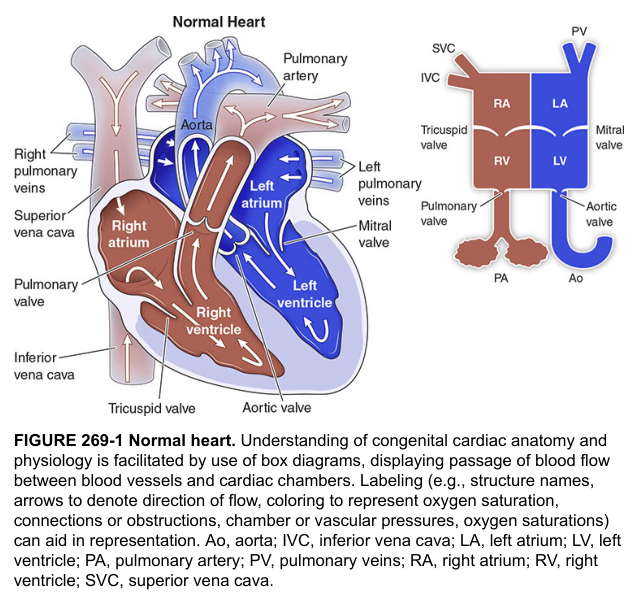
Label in your diagram: RA, RV, LA, LV, SVC, IVC, Pulmonary artery, Pulmonary veins, Aorta, Tricuspid valve, Mitral valve, Pulmonary valve, Aortic valve, blue (deoxygenated) and red (oxygenated) arrows.
Diagram 2: Nephron — Structure and Function
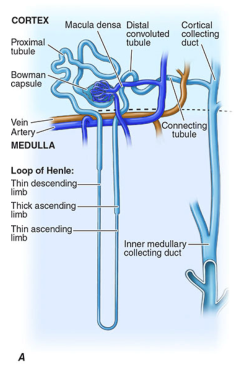
Label: Bowman's capsule, Glomerulus, PCT, Loop of Henle (descending & ascending), DCT, Collecting duct. Note cortex vs. medulla position.
Diagram 3: Neuron — Structure
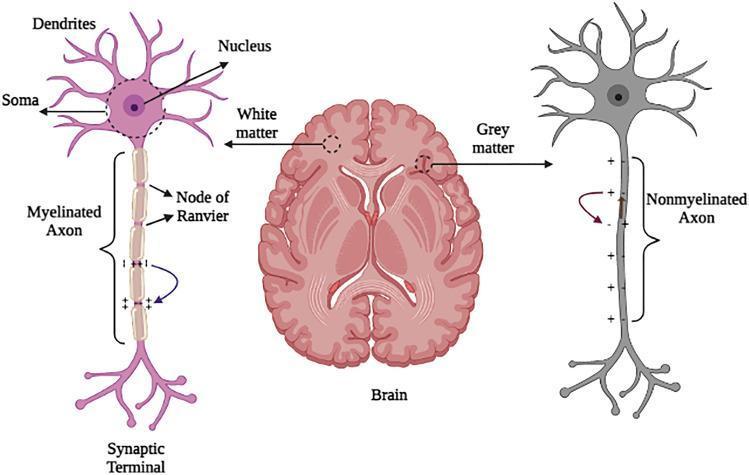
Label: Cell body (soma), Nucleus, Dendrites, Axon, Myelin sheath, Nodes of Ranvier, Axon terminal/synaptic knob.
⭐ TOP 5 MOST LIKELY EXAM QUESTIONS
- Describe the structure and function of the heart (with diagram) — almost always asked
- Write a note on the Nephron (with labeled diagram)
- Classify and describe the Nervous System / Structure of a Neuron
- Composition and functions of Blood / Blood groups
- Respiratory system — lungs and mechanism of breathing / lung volumes
📝 QUICK MEMORY AIDS
| Topic | Key Number |
|---|---|
| Heart chambers | 4 |
| Heart valves | 4 |
| Normal HR | 60–100/min |
| Cardiac Output | ~5 L/min |
| Normal BP | 120/80 mmHg |
| Blood pH | 7.35–7.45 |
| RBC lifespan | 120 days |
| WBC normal | 4000–11000/mm³ |
| Nephrons per kidney | ~1 million |
| Urine per day | ~1.5 L |
| Cranial nerves | 12 pairs |
| Spinal nerves | 31 pairs |
Good luck with your exam! Focus on drawing neat labeled diagrams — they carry significant marks. Heart, Nephron, and Neuron diagrams are the highest-probability ones. 🍀
This is a shared conversation. Sign in to Orris to start your own chat.