
Can you please give me the previous diagram of histological structure of enamel?
I'll look up the histological structure of enamel diagram from the medical library for you.
Searching sources...
Reading File
Finding Sources
Finding Sources
Finding Sources
Good - I found the enamel section in two histology textbooks. Let me read both to find the diagrams/images.
Reading File
Reading File
I found multiple diagrams. Let me fetch the key histological structure images now.
Loading Image
Loading Image
Loading Image
Here are the diagrams of the histological structure of enamel from the medical library:
Histological Structure of Enamel
Figure 1 - Cross-section of an Incisor Tooth (Overall Anatomy)
(Histology: A Text and Atlas with Correlated Cell and Molecular Biology)
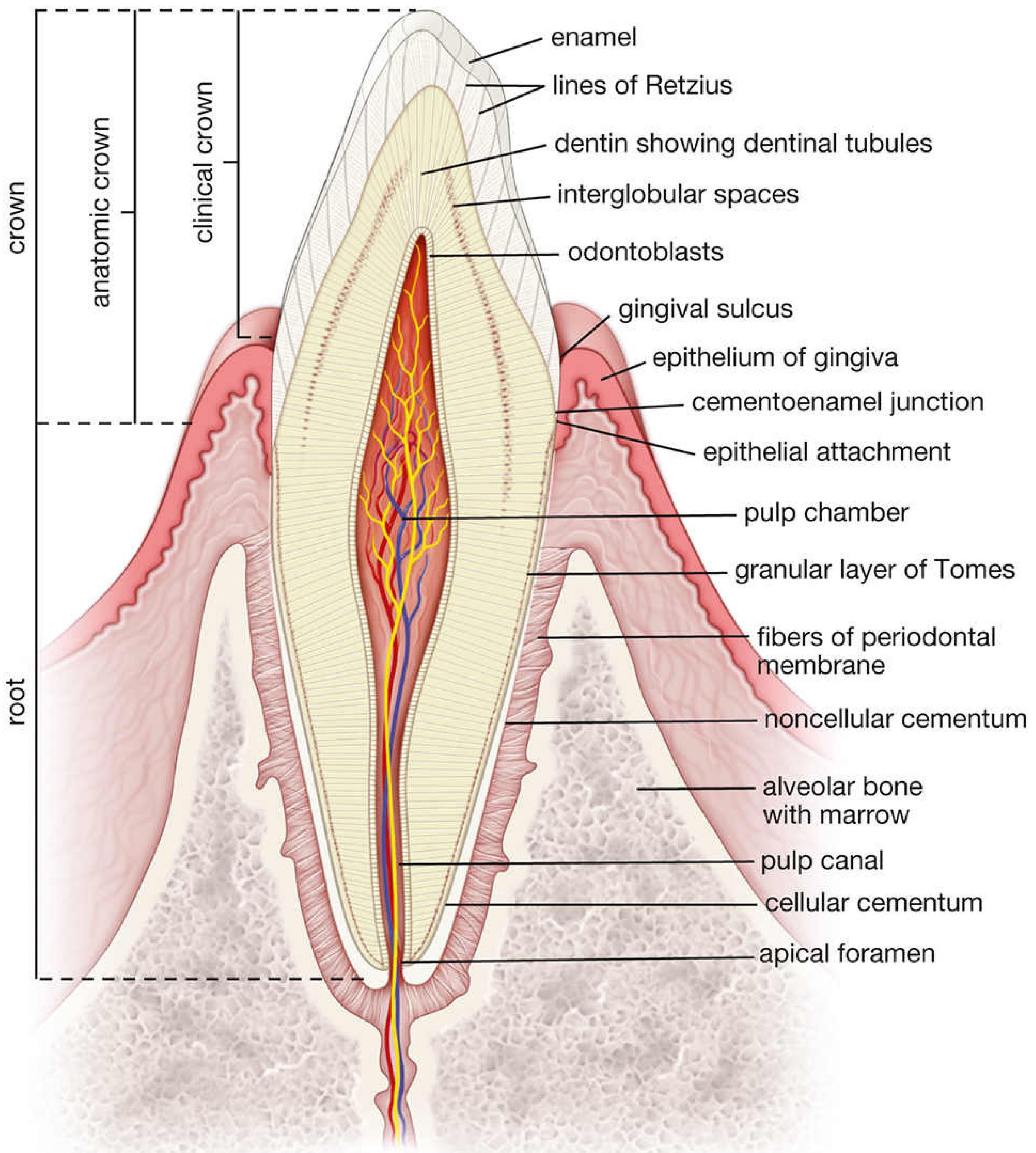
This diagram shows the full tooth in section, labeling the enamel (outermost layer of the crown), lines of Retzius, dentin with dentinal tubules, interglobular spaces, odontoblasts, pulp chamber, cementoenamel junction, noncellular and cellular cementum, alveolar bone, and apical foramen. The enamel covers the anatomic and clinical crown, ending at the cementoenamel junction.
Figure 2 - Basic Organization of Enamel Rods (Prisms)
(Histology: A Text and Atlas with Correlated Cell and Molecular Biology, Fig. 16.10)
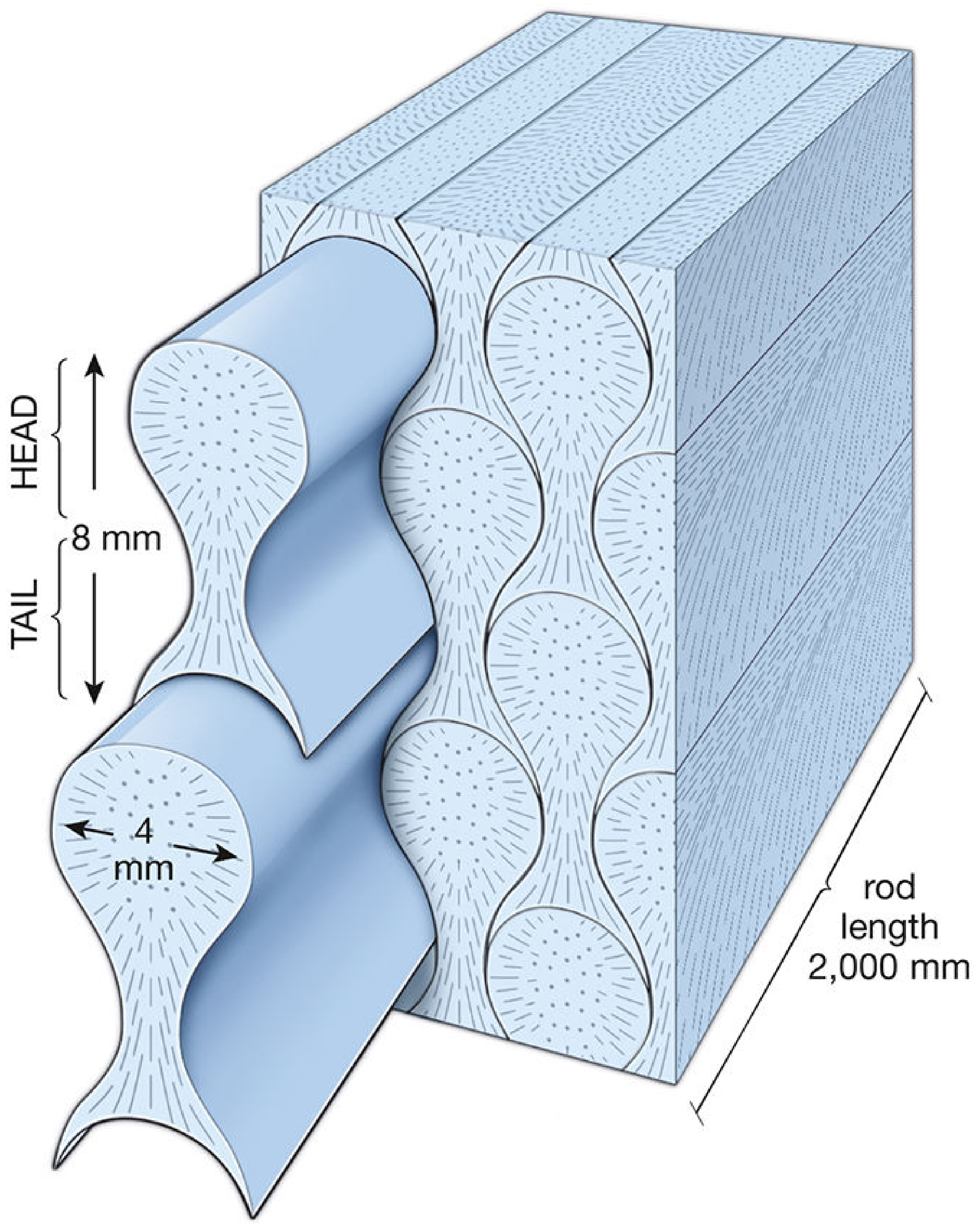
This 3D diagram shows the keyhole-shaped enamel rods (prisms):
- Each rod is 4 µm wide and 8 µm tall, with the head oriented superiorly and the tail pointing inferiorly
- Rods span the full thickness of the enamel (~2,000 µm / 2 mm rod length)
- Hydroxyapatite crystals run parallel to the long axis in the head, and more obliquely in the tail
Figure 3 - Ameloblasts and Enamel (Histological Micrographs)
(Junqueira's Basic Histology - Text and Atlas, 17e, Fig. 15-9)
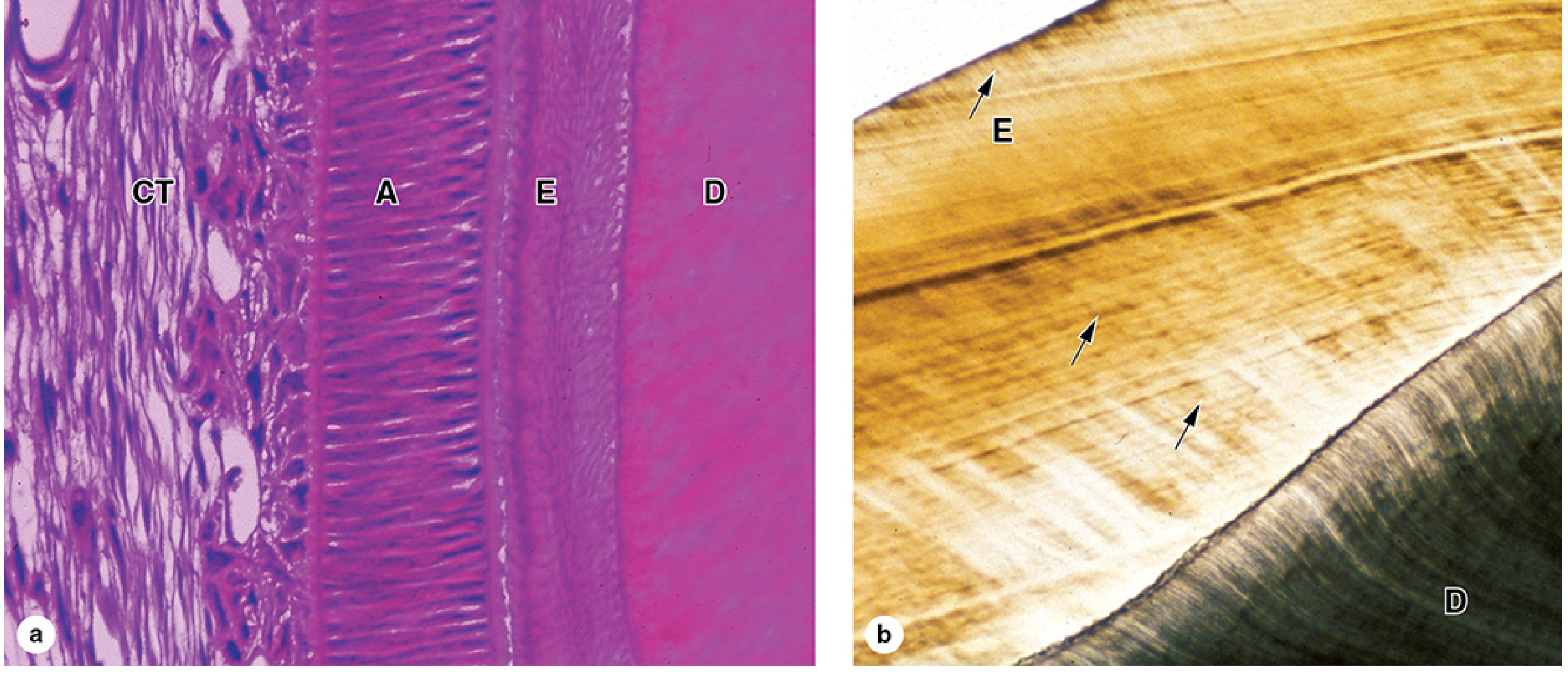
- (a) H&E section (×400): Shows ameloblasts (A) - tall, polarized secretory cells - adjacent to the enamel layer (E), which contacts dentin (D). Connective tissue (CT) lies on the basal side.
- (b) Ground preparation (×400, unstained): Fine dentinal tubules visible in dentin (D), and faint enamel rods (arrows) in the enamel (E), with diagonal incremental growth lines (lines of Retzius) crossing the enamel.
Key histological points about enamel:
- Hardest substance in the body; 96-98% calcium hydroxyapatite
- Acellular - once formed, it cannot regenerate
- Organized into enamel rods (prisms) spanning the full thickness from the dentinoenamel junction to the surface
- Incremental growth lines = lines of Retzius (rhythmic growth bands)
- Secreted by ameloblasts, which disappear after tooth eruption
Sources: Histology: A Text and Atlas with Correlated Cell and Molecular Biology (9781975181512); Junqueira's Basic Histology, 17e (9781264930395)
This is a shared conversation. Sign in to Orris to start your own chat.