
Interaction of thiazide
Reading File
Thiazide diuretics interact with many drugs due to their effects on fluid balance, electrolytes (mainly potassium), uric acid, and blood glucose. Key interactions include: potentiation of antihypertensives, dangerous combinations with digoxin due to hypokalemia, and reduced efficacy when combined with NSAIDs.
Searching sources...
Finding Sources
Finding Sources
Reading File
Reading File
Reading File
I found the drug interactions section in Goodman & Gilman's. Let me read the full interactions content:
Reading File
Finding Sources
Reading File
Reading File
I now have comprehensive data from authoritative sources. Let me fetch the thiazide mechanism diagram and compile the full answer:
Loading Image
Here is a comprehensive overview of thiazide drug interactions, drawn from Goodman & Gilman's, Lippincott Pharmacology, Comprehensive Clinical Nephrology, and Maudsley Prescribing Guidelines.
Drug Interactions of Thiazide Diuretics
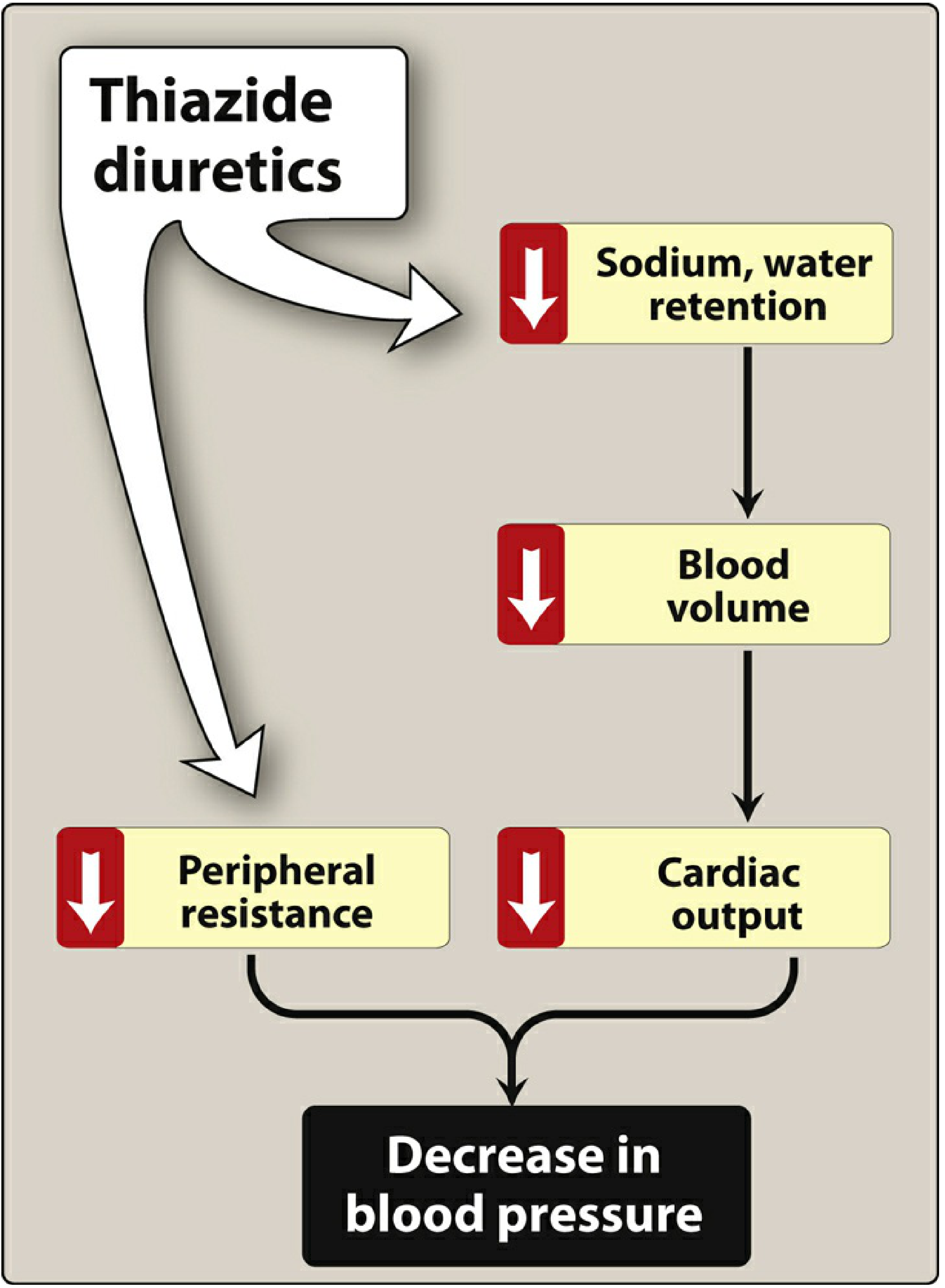
Figure: Mechanism by which thiazides lower blood pressure - Lippincott Illustrated Reviews Pharmacology
Mechanism Basis for Interactions
Thiazides inhibit the Na⁺-Cl⁻ symporter in the distal convoluted tubule, causing Na⁺, K⁺, Cl⁻, water, Mg²⁺, and urate loss while retaining Ca²⁺. Most interactions arise from:
- Hypokalemia - the most dangerous downstream effect
- Volume/Na⁺ depletion - alters renal handling of other drugs
- Metabolic effects - hyperglycemia, hyperuricemia, dyslipidemia
Interactions Where Thiazides INCREASE the Effect of Other Drugs
| Interacting Drug | Mechanism | Clinical Consequence |
|---|---|---|
| Digitalis glycosides (Digoxin) | Thiazide-induced hypokalemia sensitizes myocardium to digoxin toxicity | Risk of fatal arrhythmias - dangerous combination |
| QT-prolonging drugs (quinidine, dofetilide, arsenic trioxide) | Hypokalemia prolongs QT interval further | Potentially lethal ventricular arrhythmias (e.g., torsades de pointes) |
| Lithium | Na⁺ depletion promotes proximal tubular reabsorption of both Na⁺ and Li⁺ | Lithium levels can rise 25-400% within 10 days - lithium toxicity (tremor, confusion, renal failure) |
| Loop diuretics | Additive/synergistic kaliuresis and natriuresis | Severe volume depletion, hypokalemia, hypotension |
| Other antihypertensives (ACE inhibitors, ARBs, beta-blockers, CCBs) | Additive blood pressure lowering | Hypotension (usually beneficial in combination therapy) |
| Anesthetics | Additive vasodilation and hypotension from volume depletion | Profound intraoperative hypotension |
| Diazoxide | Both cause vasodilation + diazoxide also inhibits insulin | Severe hypotension and worsened hyperglycemia |
| Vitamin D | Thiazide-induced hypercalcemia is magnified | Hypercalcemia |
| Potassium-sparing diuretics (amiloride, spironolactone) | Complementary - K⁺-sparing agents counteract thiazide-induced hypokalemia | Beneficial combination; but monitor K⁺ levels |
Interactions Where Other Drugs REDUCE Thiazide Efficacy
| Interacting Drug | Mechanism | Clinical Consequence |
|---|---|---|
| NSAIDs / COX-2 inhibitors | Inhibit prostaglandin synthesis → reduce renal blood flow, increase Na⁺ reabsorption | Blunted diuretic and antihypertensive response |
| Probenecid | Competes for organic anion transporter (OAT1/OAT3) in proximal tubule - blocks tubular secretion of thiazide | Reduced delivery of thiazide to its tubular site of action |
| Bile acid sequestrants (cholestyramine, colestipol) | Bind thiazides in GI tract | Decreased oral absorption of thiazide |
Interactions Increasing Risk of Thiazide Adverse Effects
| Interacting Drug | Mechanism | Clinical Consequence |
|---|---|---|
| Corticosteroids | Both cause K⁺ wasting | Additive hypokalemia |
| Amphotericin B | Nephrotoxicity + K⁺ wasting | Additive hypokalemia |
| Sulfonylureas / Insulin | Thiazide-induced hyperglycemia (↓ insulin secretion, altered glucose metabolism) | Impaired glycemic control; thiazide may diminish the effects of hypoglycemic agents |
| Uricosuric agents (probenecid, sulfinpyrazone) | Thiazide causes hyperuricemia by competing for urate excretion | Thiazide antagonizes uricosurics used to treat gout |
| Carbamazepine / SSRIs | These drugs independently cause hyponatremia; thiazides do the same | Additive hyponatremia risk |
Key Clinical Warnings
-
Digoxin + Thiazide: Thiazide-induced hypokalemia enhances digoxin binding to Na⁺/K⁺-ATPase. Always monitor K⁺ and supplement if needed. - Goodman & Gilman's, p. 1909
-
Lithium toxicity: The most common cause of lithium toxicity in clinical practice is a thiazide prescribed by a physician unaware the patient is on lithium. Li⁺ is handled like Na⁺ in the proximal tubule - volume depletion from thiazides drives compensatory proximal reabsorption of both Na⁺ and Li⁺. Levels can rise 25-400% unpredictably. - Maudsley Guidelines, p. 310; Comprehensive Clinical Nephrology
-
QT-prolonging drugs: Hypokalemia + quinidine/dofetilide/arsenic trioxide is a potentially lethal combination causing fatal ventricular arrhythmias. - Goodman & Gilman's, p. 1911
-
NSAIDs: Both non-selective (ibuprofen, diclofenac, naproxen) and selective COX-2 inhibitors blunt the antihypertensive effect of thiazides. This is a very common clinical interaction, especially since NSAIDs can be bought OTC. - Goodman & Gilman's, p. 1909
-
Probenecid (pharmacokinetic interaction): Blocks secretion of thiazides into the tubular lumen via OAT1/OAT3 competition - since thiazides must reach the luminal side to act on the Na⁺-Cl⁻ symporter, this can attenuate diuresis. - Goodman & Gilman's, p. 1889
Summary Table
| Category | Drug | Type of Interaction |
|---|---|---|
| Potentially fatal | Digoxin, QT-prolonging drugs | Hypokalemia-mediated arrhythmia |
| Potentially fatal | Lithium | Increased lithium levels → toxicity |
| Reduced efficacy | NSAIDs, COX-2 inhibitors | Blunted diuretic/antihypertensive effect |
| Reduced absorption | Bile acid sequestrants | Decreased thiazide bioavailability |
| Additive hypotension | Other antihypertensives, loop diuretics, anesthetics | Volume/pressure depletion |
| Additive hypokalemia | Corticosteroids, amphotericin B, loop diuretics | Increased K⁺ loss |
| Metabolic antagonism | Sulfonylureas/insulin, uricosurics | Worsened glucose/urate control |
| Pharmacokinetic | Probenecid | Blocks tubular secretion of thiazide |
Sources: Goodman & Gilman's Pharmacological Basis of Therapeutics | Lippincott Illustrated Reviews: Pharmacology | Comprehensive Clinical Nephrology, 7th Ed. | Maudsley Prescribing Guidelines in Psychiatry, 15th Ed.
This is a shared conversation. Sign in to Orris to start your own chat.