
Bronchi ke baare me batao
Reading File
Finding Sources
Searching the Web
bronchi anatomy structure function Hindi
Reading File
Reading File
Reading File
Loading Image
Loading Image
ब्रोंकाई (Bronchi) — पूरी जानकारी
ब्रोंकाई क्या है?
Bronchi (एकवचन: Bronchus) श्वसन तंत्र के वो वायुमार्ग हैं जो Trachea (श्वासनली) से फेफड़ों तक हवा पहुंचाते हैं। Trachea जब Carina (कैरिना) नामक जगह पर विभाजित होती है, तो दो Primary Bronchi बनती हैं — एक दाएं फेफड़े के लिए, एक बाएं फेफड़े के लिए।
श्वसन तंत्र में स्थान
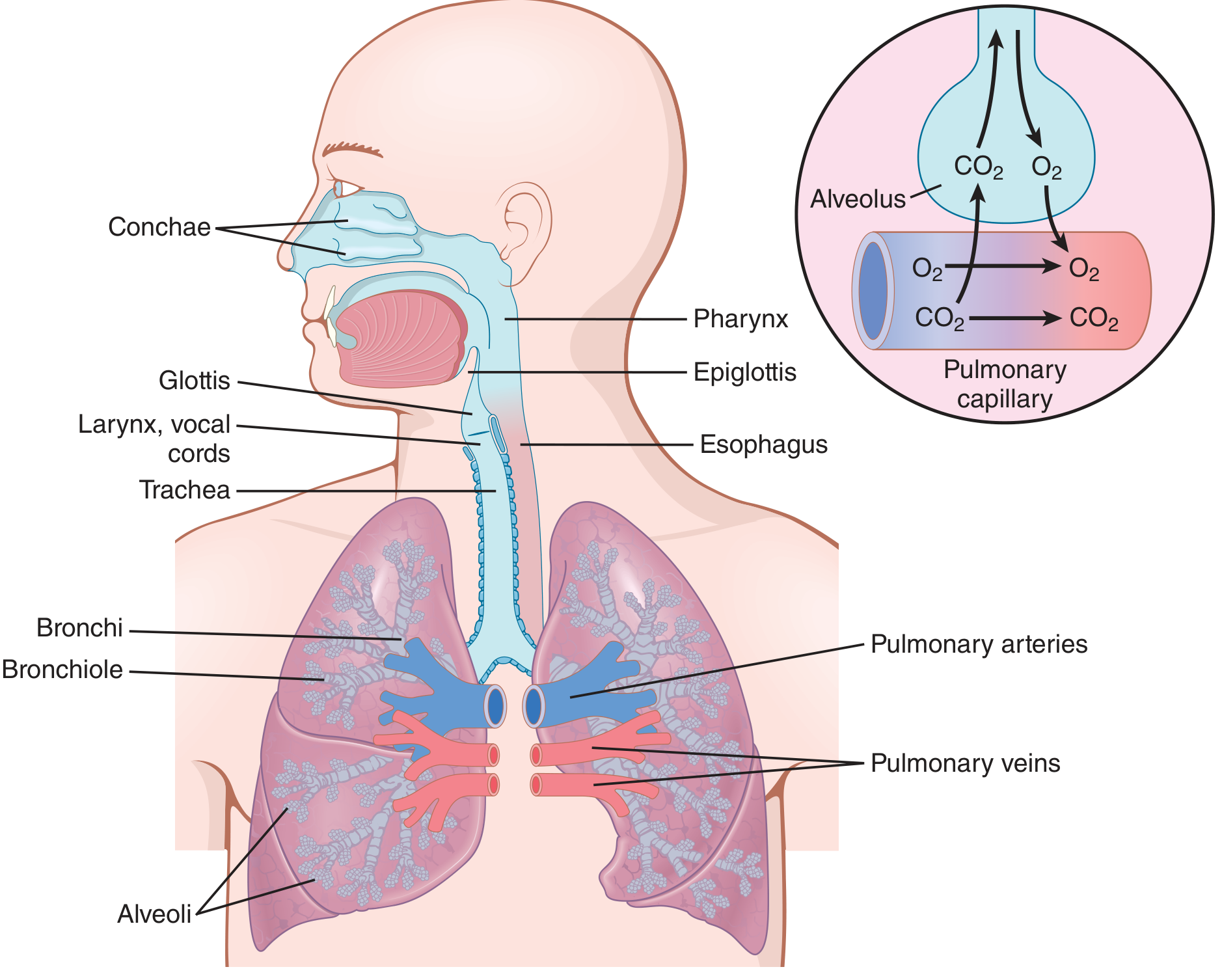
(Guyton and Hall — Trachea से Bronchi → Bronchioles → Alveoli तक का रास्ता)
ब्रोंकाई के प्रकार (Bronchial Tree)
| स्तर | नाम | विशेषता |
|---|---|---|
| 1st | Primary (Main) Bronchi | Trachea से निकलती हैं; Right bronchus अधिक vertical होती है |
| 2nd | Secondary (Lobar) Bronchi | हर lung lobe के लिए अलग |
| 3rd | Tertiary (Segmental) Bronchi | हर bronchopulmonary segment के लिए |
| आगे | Bronchioles | जब diameter < 1 mm हो जाए |
Right vs Left: Right primary bronchus ज़्यादा सीधी (vertical) होती है, इसलिए अगर कोई चीज़ गलती से अंदर जाए (foreign body aspiration) तो वो ज़्यादातर right lung में जाती है।
दीवार की संरचना (Histology)
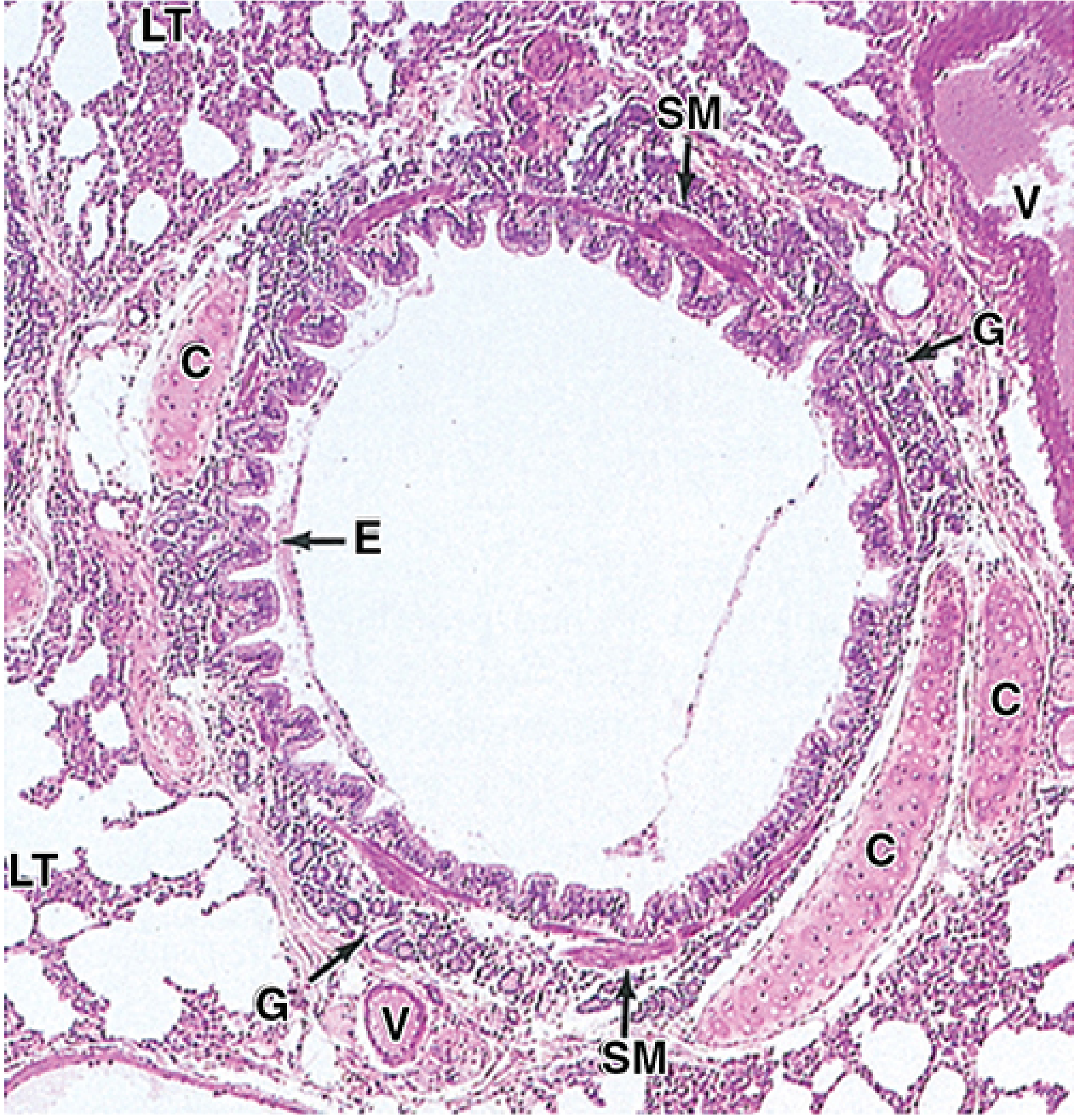
(Junqueira's Histology — H&E stain; E=Epithelium, SM=Smooth Muscle, C=Cartilage, G=Glands, V=Vessels, LT=Lung Tissue)
ब्रोंकाई की दीवार में इन परतों से बनी होती है:
- Epithelium (E): Pseudostratified ciliated columnar cells + Goblet cells — जो mucus बनाती हैं और cilia से उसे बाहर धकेलती हैं
- Lamina Propria: Smooth muscle (SM) के spiral bundles + elastic fibers
- Submucosa: Seromucous glands (G) जो secretion लुमन में खोलती हैं
- Cartilage (C): बड़े bronchi में पूरे rings; छोटे bronchi में isolated plates — यही दीवार को खुला रखती है
- Adventitia: Blood vessels और nerves
जैसे-जैसे bronchi छोटे होते जाते हैं — cartilage कम होती जाती है, smooth muscle और MALT (lymphoid tissue) बढ़ता जाता है।
Bronchi का कार्य (Functions)
- Air Conduction: फेफड़ों तक हवा पहुंचाना
- Airway patency: Cartilage की वजह से वायुमार्ग खुला रहता है
- Mucociliary clearance: Goblet cells और glands mucus बनाती हैं; cilia उसे ऊपर pharynx की तरफ ले जाती हैं — इससे धूल, कीटाणु बाहर होते हैं
- Airflow regulation: Smooth muscle संकुचन/विश्राम से airway diameter बदलती है
Nervous Control (तंत्रिका नियंत्रण)
| तंत्र | प्रभाव |
|---|---|
| Sympathetic (Epinephrine/Norepinephrine via β₂ receptors) | Bronchodilation (वायुमार्ग चौड़ा होता है) |
| Parasympathetic (Acetylcholine via Vagus nerve) | Bronchoconstriction (वायुमार्ग सिकुड़ता है) |
यही कारण है कि asthma में Salbutamol (β₂ agonist) दिया जाता है — यह sympathetic pathway को activate करके bronchi को खोलता है।
Airflow Resistance
सबसे ज़्यादा resistance बड़े bronchi में होती है (तुलनात्मक रूप से कम branches हैं), छोटे bronchioles में नहीं — क्योंकि लगभग 65,000 parallel terminal bronchioles हैं जिनसे हर एक से बहुत कम हवा गुज़रती है। लेकिन रोग की स्थिति में (जैसे Asthma, COPD) छोटे bronchioles भी resistance बढ़ाते हैं।
Sources:
- Junqueira's Basic Histology, 17e
- Guyton and Hall Textbook of Medical Physiology
- Histology: A Text and Atlas (Pawlina)
This is a shared conversation. Sign in to Orris to start your own chat.