
About Pneumothorax from Harrison medicine and recent guidelines and also updates
Reading File
Now let me search the library and recent literature in parallel.
Finding Sources
Searching PubMed
pneumothorax management guidelines
Searching the Web
pneumothorax guidelines 2024 2025 BTS ERS management update
Excellent — found the key ERS/EACTS/ESTS 2024 guidelines (PMID 38806203) and the Harrison's content. Let me now read the Harrison's pneumothorax section and the Murray & Nadel detailed section simultaneously, while also getting the ERS 2024 guideline abstract.
Finding Sources
Reading File
Reading Article
PMID: 38806203
Now let me read the Harrison's 22E pneumothorax section and the Murray & Nadel detailed section simultaneously.
Reading File
Reading File
Reading Article
PMID: 40383767
Now let me get the Murray & Nadel detailed pneumothorax content and fetch the ERS 2025 update article, plus search for a pneumothorax image.
Reading File
Searching Images
pneumothorax chest X-ray classification
Reading Web Page
https://pmc.ncbi.nlm.nih.gov/articles/PMC12362148/
I now have comprehensive material from Harrison's 22E, Murray & Nadel, the 2024 ERS/EACTS/ESTS guidelines, the 2025 tension pneumothorax meta-analysis, and the 2025 Breathe review. Let me fetch the most clinically relevant chest X-ray image and compile the full answer.
Loading Image
I now have all the material needed for a comprehensive answer. Here is the full synthesis:
Pneumothorax — Harrison's 22E, Murray & Nadel, and 2024–2025 Guidelines
Definition & Classification
Pneumothorax is the presence of gas (air) in the pleural space. — Harrison's Principles of Internal Medicine 22E (2025)
| Type | Definition |
|---|---|
| Primary Spontaneous (PSP) | No antecedent trauma; no underlying lung disease |
| Secondary Spontaneous (SSP) | Occurs in the setting of underlying pulmonary disease (most commonly COPD) |
| Traumatic | Penetrating or non-penetrating chest trauma; includes iatrogenic |
| Tension | Positive pleural pressure throughout the entire respiratory cycle |
Epidemiology
- PSP incidence: ~18–28/100,000/year in males; ~2–6/100,000/year in females
- Classic profile: tall, thin young males; strong association with smoking (relative risk ×22 in heavy smokers)
- PSP recurrence after first episode: ~50%
- SSP most commonly due to COPD; also TB, pneumonia (especially Pneumocystis jirovecii), cystic fibrosis, lung cancer, LAM, Birt-Hogg-Dubé syndrome
- Patients >50 years with smoking history are classified as SSP even without formal prior diagnosis
Pathophysiology
PSP arises from rupture of apical pleural blebs — small cystic spaces within or just under the visceral pleura. The pathogenesis involves:
- Distal acinar emphysema (porosity of the lung)
- Pleural porosity theory: pressure differential drives alveolar-to-pleural air tracking
- Blebs are most common at the lung apex due to greater mechanical stress from negative apical pleural pressure
SSP occurs in diseased lung where bullae, necrotic tissue, or severely overinflated lung ruptures into the pleural space.
Tension pneumothorax develops when a one-way valve mechanism traps air progressively — typically during positive-pressure ventilation or resuscitation. Results in:
- Contralateral mediastinal shift
- Kinking/compression of SVC/IVC → marked preload reduction
- Obstructive shock: ↓cardiac output + hypoxia
Clinical Features
Symptoms
- PSP: sudden onset ipsilateral pleuritic chest pain ± dyspnoea; often mild and self-resolving
- SSP: more severe dyspnoea due to limited reserve; higher mortality
- Tension: hypotension, severe dyspnoea, tachycardia, cyanosis — medical emergency
Signs
| Finding | Notes |
|---|---|
| ↓ breath sounds (ipsilateral) | Most consistent |
| Hyperresonance to percussion | Ipsilateral |
| Mediastinal shift (contralateral) | Tension pneumothorax |
| Tracheal deviation | Away from the pneumothorax (tension) |
| Hypotension + elevated JVP | Tension pneumothorax |
Diagnosis
Chest Radiograph
- Upright CXR is standard first-line investigation
- Shows visible visceral pleural line with absent lung markings peripheral to it
- Small: <2 cm rim of air at apex; Large: ≥2 cm (BTS) or ≥3 cm (various US criteria)
- Supine portable CXR is only ~50% sensitive — occult pneumothorax missed in up to 50% of cases
- Subtle supine signs: deep sulcus sign (hyperlucent costophrenic angle)
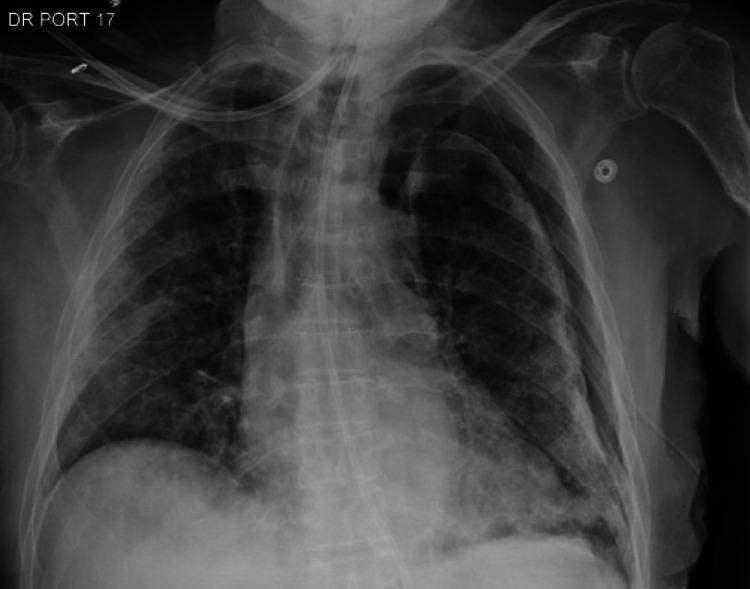
CT Thorax
- Gold standard; detects occult pneumothorax (found in up to 12% of seriously injured patients, comprising >50% of all pneumothoraces in trauma)
- Identifies underlying blebs/bullae, quantifies size accurately
- Essential before surgical planning
Point-of-Care Ultrasound (POCUS) — Murray & Nadel
POCUS has become a key diagnostic tool, especially in trauma and critical care:
- Normal: pleural sliding present = pneumothorax excluded at that location
- Absent sliding → raises suspicion (not specific — also absent in apnoea, pleural adhesions)
- Barcode/stratosphere sign on M-mode: horizontal lines extending throughout screen (absent lung sliding) — pneumothorax or apnoea
- Sea-shore sign (normal): linear chest wall interrupted by granular lung pattern at pleura on M-mode
- Lung point: sliding present on one side of image, absent on the other — highly specific for pneumothorax; represents the edge of pneumothorax; can be used to estimate size
- B-lines exclude pneumothorax at that location (indicate lung-pleura contact)
POCUS is more sensitive than CXR for pneumothorax detection. Ultrasound is the preferred modality in the trauma bay and ICU.
Management
A. Primary Spontaneous Pneumothorax (PSP)
2024 Joint ERS/EACTS/ESTS Guidelines (PMID: 38806203) — Major Paradigm Shift
"A dramatic paradigm shift ... with a strong emphasis on an individualised and minimally invasive approach." — Harnedy et al., Breathe 2025
| Clinical Scenario | Recommendation | Strength |
|---|---|---|
| Minimally symptomatic, clinically stable PSP | Conservative management (no intervention) | Conditional |
| Initial PSP treatment — preferred intervention | Needle aspiration over chest tube drain | Strong |
| Suitable patients with good support/follow-up | Ambulatory management (Heimlich valve/one-way valve device) | Conditional |
| Patients prioritising recurrence prevention | Early surgical intervention | Conditional |
Conservative management: Supplemental O₂ accelerates air reabsorption (4× faster). Observe for 4–6 hours; if clinically stable, can discharge with close follow-up. Outpatient observation is an option for low-risk patients with a good support system. (Harrison's 22E)
Needle aspiration yields favourable patient outcomes vs. intercostal chest drain (ICD): less invasive, better tolerated, less pain, shorter hospital stay, fewer complications.
Ambulatory management using a one-way valve (e.g., Heimlich valve) device connected to a small catheter allows outpatient treatment, avoiding hospitalisation in selected PSP patients.
BTS 2023 Pleural Guidelines (Thorax 2023)
- Needle aspiration or tube drainage if patient is unsuitable for conservative/ambulatory management
- Ambulatory management should be considered for initial treatment of PSP
- Surgical pleurodesis ± bullectomy should be considered for recurrence prevention
Harrison's 22E Summary for PSP
"Conservative management with careful observation can be considered in adults who are asymptomatic or minimally symptomatic. Outpatient observational management is an option for low-risk patients with a good support system. Otherwise, the initial recommended treatment is needle aspiration or tube drainage. If the lung does not expand or if the patient has a recurrent pneumothorax, thoracoscopy with stapling of blebs and pleurodesis is usually indicated."
B. Secondary Spontaneous Pneumothorax (SSP)
- Nearly all patients require tube drainage (more life-threatening given reduced pulmonary reserve)
- Many require thoracoscopy/thoracotomy with bleb stapling + surgical pleurodesis
- Chemical pleurodesis for non-operative candidates
- Autologous blood patch for SSP with persistent air leak (PAL): conditionally recommended by ERS/EACTS/ESTS 2024
- High recurrence risk → low threshold for early surgery
C. Traumatic Pneumothorax — Harrison's 22E
- Present in 40% blunt and 20% penetrating thoracic trauma
- Usually treated with tube drainage unless very small
- Haemopneumothorax: two chest tubes — superior for air, inferior for blood
- Iatrogenic (most common causes: transthoracic needle aspiration, thoracentesis, central line insertion): most managed with supplemental O₂ or aspiration; tube drainage if those fail
- Occult pneumothorax management evolution: was mandatory tube thoracostomy → now observation is appropriate for most stable patients; tube thoracostomy only for ventilated patients, expanding pneumothorax, or developing symptoms
- In 569-patient multicenter study: observation failed in only 6% of patients managed without immediate tube thoracostomy
D. Tension Pneumothorax — Harrison's 22E
"Tension pneumothorax must be treated as a medical emergency. If the tension in the pleural space is not relieved, the patient is likely to die from inadequate cardiac output or marked hypoxemia."
Emergency treatment is needle decompression:
- Classic teaching: 2nd intercostal space, midclavicular line (2ICS-MCL), large-bore needle
- ATLS updated recommendation: 4th–5th intercostal space, midaxillary line — preferred due to:
- Thinner chest wall (lower failure rate: 13% vs. 38% at 2ICS-MCL)
- Greater needle stability during transport
- Avoids internal mammary, subclavian, and pulmonary artery injury
🔬 2025 Meta-Analysis Update — Needle Decompression (PMID: 40383767)
Meta-analysis of 51 studies (n=8,046 patients):
- Overall needle failure rate: 32.84% (significant heterogeneity)
- Every 1 cm increase in needle length reduces failure rate by 7.76%
- A 7 cm needle is recommended for decompression
- Right-sided TP: either 5MAL (5th ICS midaxillary) or 2MCL acceptable
- Left-sided TP: 2nd midclavicular line is safer — avoids risk of cardiac injury at lateral sites
- No significant gender difference in chest wall thickness
After needle decompression → chest tube insertion required to complete management.
E. Chest Tube & Drainage Specifics — Murray & Nadel
- Traditional large-bore tubes (28–40 Fr) vs. small pigtail catheters (14–16 Fr):
- Equally effective for pneumothorax drainage
- Pigtail catheters: Seldinger technique, less dissection, less painful
- Systematic review supports equivalence (also confirmed in 2023 meta-analysis: pigtail vs. chest tube — PMID: 36802811)
- Chest tube complication rate: 15–20% (insertional, positional, infectious, educational)
- Additional tube placement: base on function, not radiographic trajectory
- Prophylactic antibiotics during dwell time: not recommended
- Reexpansion pulmonary edema: rare but recognised complication following drainage of large pneumothorax
- Sentinel port inside thorax = tube functions adequately even if trajectory not ideal
F. Open Pneumothorax (Sucking Chest Wound)
- Chest wall defect permits air entry on diaphragmatic movement
- If wound size approaches tracheal diameter → ventilation severely impaired
- Immediate management: one-way flutter (Heimlich) valve dressing or occlusive dressing with one side open (3-sided dressing) for air egress
- Definitive: operative repair
Surgical Management
- VATS (Video-Assisted Thoracoscopy): preferred approach; bullectomy + mechanical/chemical pleurodesis
- Thoracotomy: for highest-risk occupations requiring lowest possible recurrence rate (e.g., divers, pilots)
- ERS/EACTS/ESTS 2024: could not identify a difference in outcomes between bullectomy + pleurodesis vs. bullectomy alone → no preference; early surgery conditionally recommended when recurrence prevention is priority
- Pleurodesis options: mechanical (pleural abrasion), chemical (talc), pleurectomy
- Success rate: thoracoscopy/thoracotomy with surgical pleurodesis is nearly 100% effective in preventing recurrence (Harrison's 22E)
Emerging & Special Topics
Endobronchial Valves (EBV)
- Not available in 2001 when last CHEST guidelines were published; now used for patients with persistent air leak (PAL)
- One-way valve inserted bronchoscopically to block airflow to the affected segment
- CHEST 2026 updated guidelines will include guidance on EBV for PAL — preview presented at CHEST 2025
Vaping-Associated Pneumothorax (2025 Systematic Review — PMID: 40142348)
- Emerging entity; e-cigarette use associated with pneumothorax, particularly in young patients
- Mechanism: direct lung injury (lipoid pneumonia, eosinophilic pneumonia) → visceral pleural rupture
- Clinicians should enquire about vaping in young patients presenting with PSP
Birt-Hogg-Dubé Syndrome (ERN GENTURIS Guidelines 2024 — PMID: 39085584)
- Autosomal dominant; FLCN mutation; causes bilateral, multiple pulmonary cysts + recurrent pneumothorax
- 2024 guidelines recommend screening + genetic testing in recurrent pneumothorax patients aged <40 with family history
Ambulatory Management in North America
- Inpatient management remains dominant in North America currently
- Upcoming CHEST 2026 guidelines will expand outpatient options
- European guidelines (ERS 2024) already have strong evidence base for ambulatory management
Key 2024–2025 Guideline Summary
| Guideline | Year | Key Change |
|---|---|---|
| Joint ERS/EACTS/ESTS | 2024 | Strong recommendation for needle aspiration > ICD; conservative care first; ambulatory management; early surgery for recurrence prevention |
| BTS Pleural Disease | 2023 | Conservative/ambulatory first; NA or tube if needed; pleurodesis for prevention |
| ATLS/ETC (needle decompression) | Updated | 4th–5th ICS midaxillary line; 7 cm needle; left-sided: 2MCL preferred |
| CHEST (USA) | 2026 (pending) | First update in 25 years; patient-centred; includes EBV for PAL; outpatient options |
Sources
- Harrison's Principles of Internal Medicine 22E (2025, McGraw Hill) — Chapter on Pleural Disease
- Murray & Nadel's Textbook of Respiratory Medicine — Trauma/POCUS sections
- Joint ERS/EACTS/ESTS guidelines on spontaneous pneumothorax (2024) — PMID: 38806203
- Ahmad et al. — Meta-analysis: optimal needle for tension pneumothorax (2025) — PMID: 40383767
- Harnedy et al. — New strategies in management of pneumothorax, Breathe (ERS), 2025
- Al-Taj et al. — Vaping-associated pneumothorax systematic review (2025) — PMID: 40142348
- ERN GENTURIS — Birt-Hogg-Dubé guidelines (2024) — PMID: 39085584
Also OP poisoning
Reading File
Finding Sources
Searching PubMed
organophosphate poisoning management treatment
Searching the Web
organophosphate poisoning management guidelines 2024 2025 atropine pralidoxime update
Finding Sources
Reading File
Reading Article
PMID: 39512408
You've run out of free credits. Sign up for a free account to continue using Orris.
This is a shared conversation. Sign in to Orris to start your own chat.