
What kind of joint is xipsternal joint?
The xiphisternal joint (also called the xiphisternal synchondrosis) is a primary cartilaginous joint (synchondrosis) - a fibrocartilaginous/hyaline cartilage union between the xiphoid process and the body of the sternum.
Searching sources...
Reading File
Finding Sources
Reading File
The textbook confirms everything clearly. Here is the complete answer:
Xiphisternal Joint
The xiphisternal joint (also spelled xiphisternal joint) is a symphysis - a type of secondary cartilaginous joint.
Key facts from Gray's Anatomy for Students:
- It is the joint between the body of the sternum and the xiphoid process
- It is classified as a symphysis (secondary cartilaginous joint), along with the manubriosternal joint
- Only slight angular movements occur at this joint
- With advancing age, it commonly becomes ossified (converts to bone), effectively fusing the xiphoid to the sternal body
Joint type hierarchy:
- Class: Cartilaginous joint
- Subtype: Symphysis (fibrocartilage-united)
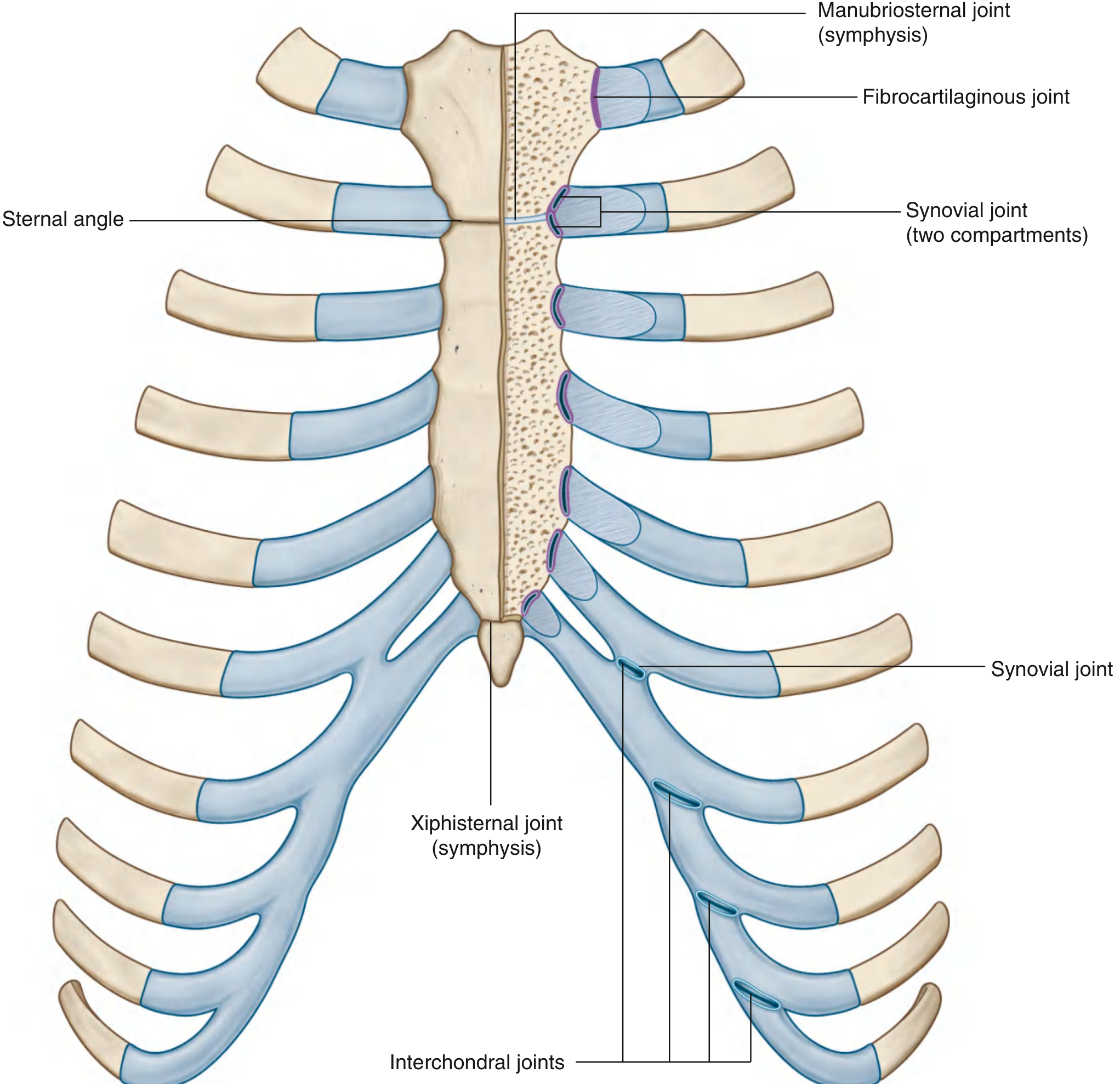
Gray's Anatomy for Students, p. 185 - showing the xiphisternal joint as a symphysis
Clinically, the xiphisternal joint serves as a surface landmark - it lies at the level of the T9 vertebra and marks the inferior end of the sternal body. It is also a reference point used in clinical surgery (e.g., epigastric pain from duodenal ulcers is described as occurring "a hand's breadth below the xiphisternal joint").
This is a shared conversation. Sign in to Orris to start your own chat.