
Explain me topics like introduction to dermatology and layers of skin, epidermal cells, introduction to common skin conditions, adnexal disorders, melanin disorders, skin cancers, facial skin lesions, alopecia, mast cell disorders, woods lamp examination, miscellaneous inflammatory dermatoses, dermoepidermal junction and direct immunofluorescence, scalp hair cycle, nail diseases, cutaneous tb and erythema nodosum, drug reactions topics from dermatology mbbs from standard textbook only for neet pg and inicet preparation 2026
🩺 DERMATOLOGY — Complete NEET PG / INI-CET 2026 Notes
Sources: Fitzpatrick's Dermatology (Editors Vol 1 & 2) | Dermatology 2-Volume Set 5e (Bolognini) | Andrews' Diseases of the Skin
1. INTRODUCTION TO DERMATOLOGY
Basic Concepts
- Dermatology deals with skin, its appendages (hair, nails, glands), and mucous membranes
- Skin is the largest organ of the body (~1.5–2 m², weight ~4 kg)
- Three primary layers: Epidermis → Dermis → Subcutaneous fat (hypodermis)
Functions of Skin (High-Yield)
| Function | Mechanism |
|---|---|
| Barrier | Stratum corneum prevents fluid loss & microbial invasion |
| UV protection | Melanin produced by melanocytes |
| Thermoregulation | Sweat glands + cutaneous vasculature |
| Immunologic | Langerhans cells — antigen presentation |
| Sensory | Merkel cells (mechanoreception), nerve endings |
| Vitamin D synthesis | UV-B converts 7-dehydrocholesterol → Vitamin D3 |
2. LAYERS OF SKIN
Epidermis (From Basal to Surface: "Californians Like Girls in Bikinis" / CBSGS)
| Layer | Key Features |
|---|---|
| Stratum Basale (germinativum) | Single layer of cuboidal/columnar cells on basement membrane; contains stem cells; mitosis occurs here |
| Stratum Spinosum | Prickle cell layer; desmosomes (intercellular bridges); site of acanthosis in eczema |
| Stratum Granulosum | Keratohyaline granules (filaggrin precursor); lamellar bodies release lipids |
| Stratum Lucidum | Only in thick skin (palms, soles); clear, refractile layer |
| Stratum Corneum | Anucleate corneocytes + lipid-rich matrix; "brick and mortar" barrier; 2 weeks to traverse |
NEET Key: Keratinization (cornification) begins at stratum granulosum. Transit from basal layer → shed = ~4 weeks total; nucleated compartment = 2 weeks; stratum corneum = 2 weeks.
Dermis
- Divided into papillary dermis (superficial; collagen type III, fine; interdigitates with epidermis via rete ridges) and reticular dermis (deep; collagen type I, coarse; contains adnexal structures)
- Composition: Glycosaminoglycan gel + fibrous matrix (collagen + elastin)
- Cellular residents: Fibroblasts, macrophages, dermal dendritic cells, mast cells, vascular endothelium
- Collagen type I = 85% of dermal collagen (thick bundles, reticular dermis)
- Collagen type III = 15% (thin fibers, papillary dermis, fetal skin)
- Elastin provides recoil; decreased in solar elastosis (sun damage)
Subcutaneous Fat (Hypodermis)
- Mainly adipocytes + fibrous septa
- Contains large vessels, nerves
- Panniculitis (inflammation here) → Erythema nodosum (septal), erythema induratum (lobular)
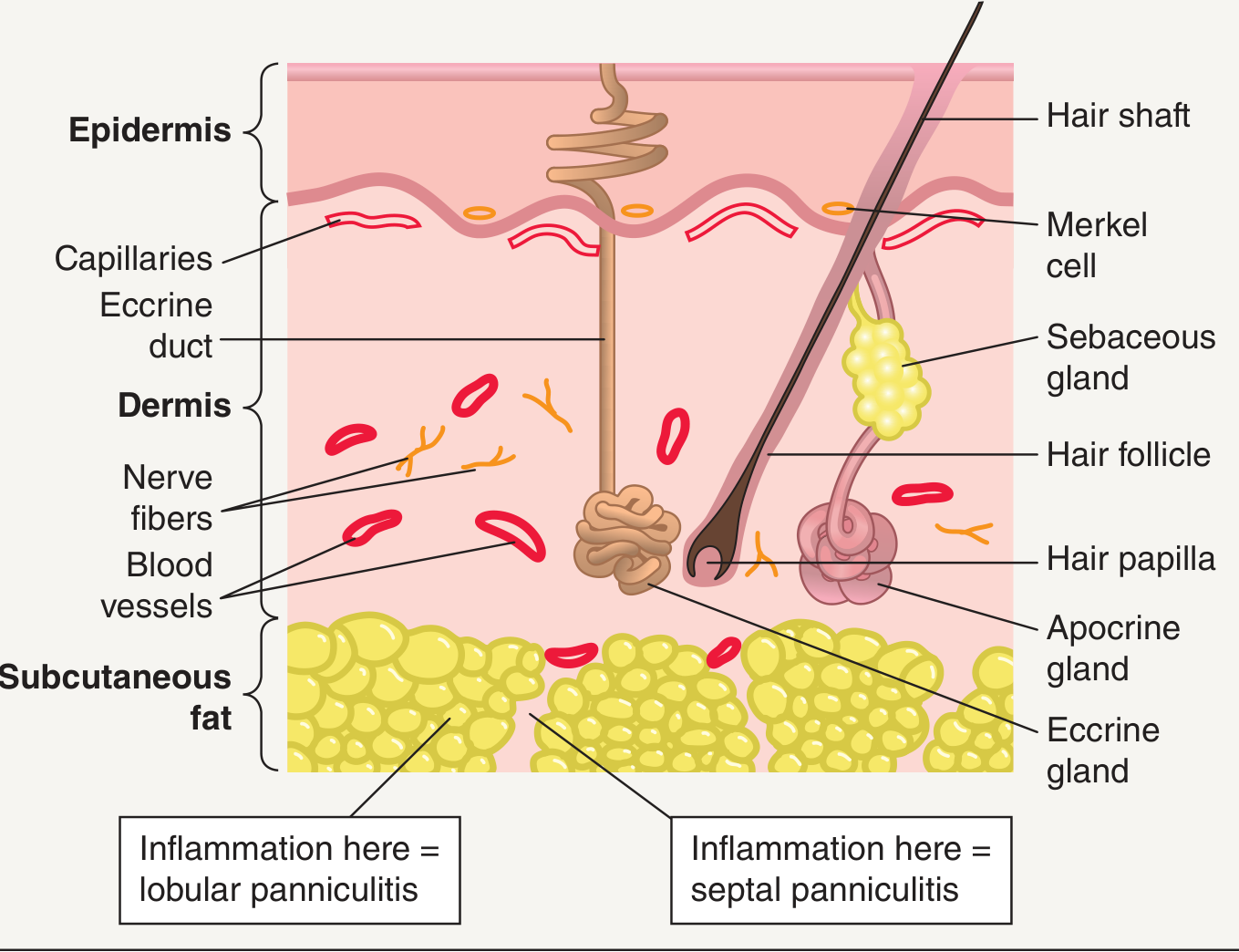
3. EPIDERMAL CELLS (4 Resident Populations)
1. Keratinocytes (80–85%)
- Ectodermal origin; stem cells in basal layer
- Produce keratin intermediate filaments (K5/K14 in basal; K1/K10 in suprabasal)
- Average epidermis = 50 microns thick; surface density ~50,000 nucleated cells/mm²
- In disease (psoriasis, eczema): proliferation ↑, maturation ↑
2. Melanocytes (~5–10%)
- Neural crest origin
- Located in stratum basale (1 per 10 keratinocytes in general skin)
- Produce melanin in melanosomes → transferred to keratinocytes
- Melanosome sits above the nucleus of keratinocytes → protects DNA from UV
- DOPA-positive staining identifies melanocytes
- Two types of melanin: Eumelanin (black-brown, photoprotective) and Phaeomelanin (red-yellow, less protective)
- 1 melanocyte: 36 keratinocytes = "epidermal melanin unit"
3. Langerhans Cells (~3–5%)
- Bone marrow origin (monocyte/macrophage lineage)
- Located in stratum spinosum
- Contain Birbeck granules (tennis-racket / rod-shaped on EM) — PATHOGNOMONIC
- Markers: CD1a, Langerin (CD207), S100
- Function: Phagocytose & process antigens → migrate to lymph nodes → activate T cells
- Depleted by UV radiation, glucocorticoids
- Proliferate in Langerhans Cell Histiocytosis (Letterer-Siwe, Hand-Schüller-Christian, Eosinophilic granuloma)
4. Merkel Cells
- Located in stratum basale (not always visible on H&E)
- Neuroendocrine origin
- Function: Slow-adapting mechanoreceptors (touch discrimination)
- Marker: CK20 (dot-like perinuclear staining) — key for Merkel cell carcinoma
- Merkel cell carcinoma: aggressive, associated with Merkel cell polyomavirus (MCPyV); CK20+ dot-like pattern
Memory Aid for Langerhans vs Merkel:
- Langerhans = CD1a + Birbeck granule → immunologic; spinosum
- Merkel = CK20 → mechanoreceptor; basale
4. INTRODUCTION TO COMMON SKIN CONDITIONS
Morphology of Lesions (Primary → Secondary)
| Lesion | Description | Examples |
|---|---|---|
| Macule | Flat, <1 cm, color change | Vitiligo, freckle |
| Patch | Flat, >1 cm | Café-au-lait, Mongolian spot |
| Papule | Elevated, solid, <1 cm | Wart, lichen planus |
| Plaque | Elevated, solid, >1 cm | Psoriasis |
| Nodule | Deep-seated, solid, 1–2 cm | Dermatofibroma, lipoma |
| Vesicle | Fluid-filled, <1 cm | Herpes, chickenpox |
| Bulla | Fluid-filled, >1 cm | Pemphigus, bullous pemphigoid |
| Pustule | Pus-filled | Folliculitis, acne |
| Wheal | Transient, edematous | Urticaria |
| Cyst | Epithelium-lined, fluid/solid | Epidermal cyst |
- Scale (psoriasis), Crust (impetigo — honey-colored), Erosion (loss of epidermis only), Ulcer (loss of epidermis + dermis), Lichenification (thickened skin from chronic scratching), Excoriation, Atrophy, Scar, Fissure, Comedone
Psoriasis (High-Yield)
- Chronic, immune-mediated (Th17/IL-17 driven)
- Turnover time ↓ to 3–4 days (normal ~4 weeks); epidermal transit ~4 days
- ABCD of psoriasis: Acanthosis, Parakeratosis, Munro microabscesses (neutrophils in stratum corneum), Dilated tortuous capillaries in dermal papillae
- Auspitz sign (pinpoint bleeding on removing scale), Koebner phenomenon
- Woronoff ring (blanching around a psoriatic plaque)
- Nail changes: Pitting (most common), oil drop sign, onycholysis, subungual hyperkeratosis
Eczema / Atopic Dermatitis
- Spongiosis (intercellular edema in epidermis) is hallmark histologically
- Atopic triad: Asthma + allergic rhinitis + atopic dermatitis
- IgE elevated; Th2 response (IL-4, IL-5, IL-13)
- Dennie-Morgan lines (infra-orbital folds), Hertoghe sign (lateral eyebrow thinning)
5. ADNEXAL DISORDERS
Hair Follicle Anatomy
- Three segments: Infundibulum (upper), isthmus (middle), inferior segment (lower, cycling)
- Bulge region = hair follicle stem cells; permanent portion
- Bulb = hair matrix (rapidly dividing cells) + dermal papilla
Sebaceous Glands
- Holocrine secretion (entire cell disintegrates to release sebum)
- Present everywhere except palms and soles
- Fordyce spots = ectopic sebaceous glands on lips/buccal mucosa (normal variant)
- Sebaceous hyperplasia = benign enlargement on face (yellowish papules with central dell)
Eccrine Sweat Glands
- Distributed all over body; highest density: palms, soles, axillae, forehead
- Secretion: merocrine (exocytosis); clear, hypotonic sweat
- Anhidrosis → risk of hyperthermia
- Miliaria (prickly heat): eccrine duct occlusion → miliaria crystallina (superficial), miliaria rubra (deeper), miliaria profunda (deepest, rare)
- Hyperhidrosis: excessive sweating; Tx: Botulinum toxin injection (palms/axillae), anticholinergics, iontophoresis
Apocrine Glands
- Found: axillae, groin, periumbilical, perianal, areolae
- Become active at puberty; secrete odorless secretion → odor on bacterial decomposition
- Apocrine secretion = "decapitation secretion"
- Fox-Fordyce disease = apocrine duct occlusion → pruritic papules in axillae (young women)
- Hidradenitis suppurativa (HS): Chronic, recurrent, deep inflammatory disease of apocrine gland-bearing skin; Hurley staging (I–III); Rx: antibiotics (doxycycline), adalimumab (anti-TNF-α), isotretinoin
Nails (Adnexal)
- Nail plate: keratinized; originates from nail matrix (proximal → produces dorsal nail plate; distal → ventral)
- Lunula = visible part of nail matrix (whitish)
- Nail bed = epithelium under nail plate
- Nail growth: fingernails ~3 mm/month; toenails ~1 mm/month
- Beau's lines = transverse ridges → systemic illness, high fever, chemotherapy
- Mees' lines = transverse white bands → arsenic poisoning, renal failure
- Muehrcke's lines = paired white transverse bands → hypoalbuminemia
- Half-and-half nails (Lindsay's nails) = proximal white + distal red/brown → CKD
- Terry's nails = proximal 2/3 white → cirrhosis, CHF, diabetes
- Koilonychia (spoon-shaped) → iron deficiency anemia (IDA)
- Onycholysis = separation of nail plate from nail bed → psoriasis, trauma, fungal
- Subungual hyperkeratosis → psoriasis, fungal infection
- Paronychia = inflammation of nail fold; acute = Staph. aureus; chronic = Candida
- Onychomycosis: most common nail disease; caused by dermatophytes (T. rubrum most common)
6. MELANIN DISORDERS
Hyperpigmentation
| Condition | Key Features |
|---|---|
| Melasma | Symmetrical hyperpigmentation on face (forehead, cheeks, upper lip); women > men; worsened by sun, OCP, pregnancy; Wood's lamp: epidermal melasma enhances; Tx: Hydroquinone + tretinoin + steroid (triple combo), sunscreen |
| Post-inflammatory hyperpigmentation (PIH) | After acne, eczema, trauma; melanin in epidermis (or dermis if dermal involvement) |
| Café-au-lait macules (CALM) | ≥6 CALMs >1.5 cm in adults → NF1 (von Recklinghausen's); Axillary freckling (Crowe's sign) in NF1 |
| Freckles (Ephelis) | Normal melanocyte number, ↑ melanin production; Autosomal dominant; fade with age |
| Lentigines | Increased melanocyte number; do NOT fade with sun avoidance; LEOPARD syndrome (multiple lentigines) |
| Addison's disease | Diffuse hyperpigmentation, buccal mucosa, scars, pressure areas (↑ ACTH → MSH) |
| Peutz-Jeghers | Perioral + buccal mucosal macules + GI polyps (hamartomas) → ↑ risk of GI cancer |
| Ochronosis | Blue-black pigmentation of sclerae, cartilage; alkaptonuria; also exogenous (topical hydroquinone) |
Hypopigmentation / Depigmentation
| Condition | Key Features |
|---|---|
| Vitiligo | Autoimmune destruction of melanocytes; depigmented (not hypopigmented) macules; Wood's lamp: brilliant white fluorescence; Associated: thyroid disease (Hashimoto's, Graves'), Addison's, DM, pernicious anemia; Koebner phenomenon +; Segmental (unilateral, dermatomal) vs. non-segmental; Tx: NB-UVB (first-line), topical steroids, tacrolimus, JAK inhibitors (ruxolitinib cream) |
| Albinism | Absent/reduced melanin due to enzyme defect; Tyrosinase-negative OCA (most severe) vs. tyrosinase-positive; Chediak-Higashi syndrome (partial albinism + giant lysosomes + recurrent infections) |
| Pityriasis alba | Ill-defined hypopigmented patches; face; children; associated with atopic dermatitis |
| Pityriasis versicolor | Malassezia furfur/globosa; hyper OR hypopigmentation on trunk; Wood's lamp: golden-yellow fluorescence; KOH: "spaghetti and meatballs" (hyphae + spores) |
| Ash-leaf macule | Earliest sign in tuberous sclerosis; Wood's lamp positive |
| Leprosy | Hypopigmented, anesthetic patch → TB leprosy; Loss of sensation (nerve damage) is key feature |
7. SKIN CANCERS
Basal Cell Carcinoma (BCC)
- Most common skin cancer overall
- Originates from basal cells of epidermis and hair follicles; never from palms/soles
- Caused by: UV exposure (primary), arsenic exposure, Gorlin syndrome (PTCH1 gene mutation) → multiple BCCs
- Morphology: Pearly/translucent papule with rolled edges + central ulceration + telangiectasia
- Subtypes: Nodular (most common), superficial, morpheaform (most aggressive/invasive), pigmented
- Histology: Peripheral palisading of cells + clefting artifact; fibromyxoid stroma; mucin
- Rarely metastasizes (<0.1%); locally destructive
- Treatment: Excision (gold standard), Mohs surgery (for recurrent/periorbital), imiquimod (superficial BCC), vismodegib (Hedgehog pathway inhibitor — for advanced/metastatic)
- Immunostain: BerEP4+, CK5/6+
Squamous Cell Carcinoma (SCC)
- Second most common; can metastasize (~2–6%); arises in sun-exposed skin, scars, mucous membranes
- Risk factors: UV, chronic scars (Marjolin's ulcer), HPV (SCCs in mucous membranes), arsenic, radiation, immunosuppression, xeroderma pigmentosum
- Precursor lesion: Actinic keratosis (AK) — scaly, erythematous papule on sun-damaged skin; 0.1–10% progress to SCC/year
- Bowen's disease = SCC in situ; full-thickness epithelial atypia; "erythroplakia" on mucous membrane
- Erythroplasia of Queyrat = Bowen's disease on glans penis
- Histology: Atypical keratinocytes invading dermis; keratin pearls; intercellular bridges; EMA+
- Marjolin's ulcer: well-differentiated SCC in chronic ulcer/scar/burn → high metastatic risk
- Treatment: Excision, Mohs, radiotherapy; systemic: cetuximab, pembrolizumab
Melanoma
- Most deadly skin cancer; neural crest origin
- Major subtypes:
- Superficial spreading melanoma (SSM) — most common (~70%); radial growth phase; ABCDE criteria
- Nodular melanoma — aggressive, vertical growth; amelanotic variants exist
- Lentigo maligna melanoma — elderly; sun-damaged face; begins as Hutchinson's melanotic freckle
- Acral lentiginous melanoma (ALM) — palms, soles, subungual; most common in dark-skinned individuals (Asians, Africans); Hutchinson's sign (pigmentation extending to proximal nail fold)
- ABCDE criteria: Asymmetry, Border irregularity, Color variation, Diameter >6 mm, Evolution
- Risk factors: UV (intermittent intense exposure), fair skin, family history, dysplastic nevi syndrome
- Breslow thickness = most important prognostic factor (depth from granular layer to deepest tumor cell)
- Clark levels (I–V) = anatomic invasion level (less important than Breslow for prognosis)
- Sentinel lymph node biopsy for Breslow >1 mm (or <1 mm with ulceration/high mitosis)
- Markers: S100, HMB-45, Melan-A/MART-1, MiTF
- Treatment: Wide excision ± SLNB; Metastatic: BRAF inhibitors (vemurafenib, dabrafenib) if BRAF V600E mutation (50% of melanomas); anti-PD-1 (pembrolizumab, nivolumab); CTLA-4 (ipilimumab)
- Desmoplastic melanoma: S100+, HMB-45 negative or focally positive; highly neurotropic
Merkel Cell Carcinoma
- Rare, aggressive neuroendocrine carcinoma; elderly immunosuppressed patients
- Associated with Merkel cell polyomavirus (MCPyV)
- CK20 dot-like perinuclear staining + synaptophysin, chromogranin (neuroendocrine markers)
- CK7 negative (helps distinguish from metastatic small cell lung cancer which is CK7+, CK20−)
8. FACIAL SKIN LESIONS
Acne Vulgaris
- Pathogenesis: Follicular hyperkeratosis → plugging → C. acnes colonization → inflammation
- Lesions: Comedones (open = blackhead; closed = whitehead) → papules → pustules → nodules → cysts → scars
- Grade I: Comedones; Grade II: Papules/pustules; Grade III: Nodules; Grade IV: Nodulocystic (Acne conglobata — most severe)
- Rx ladder: Topical retinoids → topical BPO/antibiotics → oral antibiotics (doxycycline/minocycline) → isotretinoin (for severe nodulocystic or refractory)
- Isotretinoin (13-cis retinoic acid): MOA = ↓ sebum production, normalizes follicular keratinization; teratogenic (Category X), monitor LFTs, lipids; iPLEDGE program
- Acne fulminans: Sudden onset, ulcerating, systemic symptoms (fever, arthralgia) — rx: oral steroids + isotretinoin
Rosacea
- Chronic facial erythema (central face: cheeks, nose, chin, forehead); telangiectasia
- Subtypes: Erythematotelangiectatic, Papulopustular, Phymatous (rhinophyma = enlarged bulbous nose), Ocular
- Trigger: Sun, heat, spice, alcohol, stress
- Demodex folliculorum involved in pathogenesis
- Rx: Topical metronidazole, azelaic acid, ivermectin; Oral doxycycline (anti-inflammatory dose); laser for telangiectasia
Sebaceous Gland Lesions
- Sebaceous hyperplasia: Yellowish umbilicated papules on nose/cheeks; elderly; benign
- Steatocystoma multiplex: Multiple cysts on trunk; keratinous + sebaceous content
- Xanthelasma: Yellow plaques on eyelids (medial canthus); ↑ lipids (but 50% have normal lipids); not resolved with statins typically
9. ALOPECIA
Non-Scarring Alopecia (Follicle Preserved — Reversible)
Androgenetic Alopecia (AGA)
- Most common type; males: Hamilton-Norwood pattern (frontotemporal recession → vertex); females: Ludwig pattern (diffuse crown thinning, frontal hairline preserved)
- DHT (dihydrotestosterone) from 5α-reductase converts testosterone → DHT → miniaturization of follicles
- Rx: Minoxidil (topical/oral; ↑ blood flow, prolongs anagen); Finasteride (5α-reductase inhibitor, oral, males only); Hair transplant
Alopecia Areata (AA)
- Autoimmune (T-cell mediated); lymphocytic infiltrate around anagen bulb ("swarm of bees" pattern)
- CD8+ T cells and IFN-γ are key effectors; loss of hair follicle immune privilege (↓ MHC class I expression)
- Non-scarring; well-demarcated, oval/circular patches of hair loss
- Exclamation mark hairs (dystrophic hairs tapered at base) — pathognomonic
- Variants: Alopecia totalis (total scalp loss), alopecia universalis (entire body)
- "Ophiasis pattern" = band-like loss along occipital/temporal periphery (worse prognosis)
- Associated: Thyroid disease, vitiligo, diabetes, Down syndrome
- Nail: Geometric pitting (most specific for AA); trachyonychia
- Rx: Intralesional triamcinolone (first-line for patchy), topical minoxidil, anthralin; systemic: JAK inhibitors (baricitinib, ritlecitinib — FDA approved)
Telogen Effluvium (TE)
- Diffuse, non-scarring; trigger shifts hairs from anagen → telogen prematurely
- Causes: Post-partum (most common), fever, surgery, crash dieting, hypothyroidism, iron deficiency
- Telogen shed 2–3 months after trigger (telogen duration = ~100 days)
- Hair pull test: >10% telogen hairs (normally <10%)
- Self-limiting in most; treat underlying cause
Tinea Capitis
- Fungal (Trichophyton, Microsporum); children predominantly
- Endothrix (T. tonsurans — "black dot ringworm") vs. ectothrix (M. canis — Wood's lamp: greenish fluorescence)
- Rx: Oral griseofulvin (drug of choice in children), terbinafine
Scarring Alopecia (Follicle Destroyed — Irreversible)
- Discoid lupus erythematosus (DLE): Follicular plugging; atrophy; dyspigmentation; "burnt-out" scarring on scalp
- Lichen planopilaris: Follicular lichen planus on scalp; "follicular spines"; Rx: cyclosporin, hydroxychloroquine
- Frontal fibrosing alopecia (FFA): Variant of LPP; recession of frontal hairline; postmenopausal women
- Folliculitis decalvans: S. aureus; pustular alopecia; tufted folliculitis (doll's hair appearance)
- Central centrifugal cicatricial alopecia (CCCA): Most common scarring alopecia in African-American women
10. MAST CELL DISORDERS (MASTOCYTOSIS)
Cutaneous Mastocytosis
- Mast cell proliferation in skin due to KIT (c-KIT / CD117) gain-of-function mutation (D816V most common)
- Mast cells release: Histamine, tryptase, prostaglandins, heparin, TNF-α
| Type | Features |
|---|---|
| Urticaria Pigmentosa (UP) | Most common; yellow-tan to red-brown papules/macules on trunk; Darier's sign + (urtication on rubbing) |
| Mastocytoma | Solitary tan/yellow nodule; children; Darier's sign + |
| Diffuse cutaneous mastocytosis | Diffuse skin involvement; children; blistering |
| Telangiectasia Macularis Eruptiva Perstans (TMEP) | Adults; telangiectatic macules; rare; systemic mastocytosis |
- Darier's sign: Rubbing of a lesion → urtication (mast cell degranulation) — classic for mastocytosis
- Tryptase level is elevated → systemic involvement screening
- Triggers of degranulation: Heat, friction, aspirin, NSAIDs, opiates, alcohol, contrast dye
- Histology: Giemsa stain / Toluidine blue stain shows metachromatic granules in mast cells
- CD117 (c-KIT)+, CD2+, CD25+ in systemic mastocytosis
- Rx: Antihistamines (H1 + H2), cromolyn sodium; imatinib (c-KIT mutation); midostaurin/avapritinib for advanced systemic mastocytosis
11. WOOD'S LAMP EXAMINATION
- Emits long-wave UV light (365 nm); examination in dark room
- Used for fluorescence of skin infections and pigmentary disorders
| Condition | Wood's Lamp Finding |
|---|---|
| Tinea versicolor (Malassezia) | Golden-yellow fluorescence |
| Tinea capitis — Microsporum | Bright green fluorescence |
| Erythrasma (Corynebacterium minutissimum) | Coral-pink/red fluorescence (most tested) |
| Pseudomonas infection | Blue-green fluorescence |
| Vitiligo | Brilliant chalky-white (blue-white) fluorescence (enhanced depigmentation) |
| Epidermal melasma | Accentuated (enhanced contrast) |
| Dermal melasma | No accentuation |
| Porphyria cutanea tarda (PCT) | Pinkish-orange fluorescence (urine) |
| Ash-leaf macule (tuberous sclerosis) | Blue-white (enhanced) |
| Leprosy patches | No fluorescence (hypopigmented, not depigmented) |
NEET Key: Coral-pink = Erythrasma; Bright green = Microsporum capitis; Chalky white = Vitiligo; Golden-yellow = Tinea versicolor
12. MISCELLANEOUS INFLAMMATORY DERMATOSES
Lichen Planus (LP)
- 6 P's: Pruritic, Purple, Polygonal, Planar (flat-topped), Papules, Plaques
- Sites: Flexor wrists, ankles, genitalia, oral mucosa
- Wickham's striae = white lacy pattern on surface (better seen with oil + dermoscopy)
- Oral LP = Wickham's striae on buccal mucosa (lace-like pattern); erosive type → risk of SCC
- Koebner phenomenon +
- Histology: Band-like lymphocytic infiltrate at DEJ, "saw-tooth" rete ridges, Civatte bodies (apoptotic keratinocytes), Max Joseph spaces (subepidermal clefts)
- Associated: Hepatitis C virus (HCV), drugs (gold, antimalarials, beta-blockers, thiazides — lichenoid drug reactions)
- Rx: Topical/systemic steroids, retinoids, cyclosporin; acitretin for hypertrophic LP
Psoriasis (Detailed Histology)
- Acanthosis + Parakeratosis + Munro microabscesses + Kogoj spongiform pustules (in stratum spinosum/granulosum) + Dilated capillaries in dermal papillae + Loss of stratum granulosum
Pityriasis Rosea
- Herald patch (single large lesion, 2–10 cm) → 7–14 days later: secondary eruption of smaller oval lesions along skin lines → "Christmas tree" pattern on back
- Follows Langer's lines
- Caused by HHV-6 and HHV-7 reactivation
- Self-limiting; resolves in 6–8 weeks; Rx: NB-UVB (shorten duration), oral acyclovir (severe cases)
Urticaria
- Wheal and flare; caused by mast cell degranulation → histamine release
- Acute (<6 weeks): Infection, food, drugs; Chronic (>6 weeks): idiopathic in most
- Dermographism (factitious urticaria): "writing on skin" — most common physical urticaria
- Rx: Nonsedating H1 antihistamines (cetirizine, fexofenadine); Omalizumab (anti-IgE) for chronic refractory urticaria
Bullous Disorders
| Disease | Blister Level | Antibody Target | DIF Pattern | Key Features |
|---|---|---|---|---|
| Pemphigus vulgaris | Intraepidermal (suprabasal) | Desmoglein 3 (oral), DSG1+3 (skin+oral) | IgG intercellular "fishnet/net-like" | Nikolsky sign +; flaccid blisters; mucosal involvement ± skin |
| Pemphigus foliaceus | Intraepidermal (subcorneal) | Desmoglein 1 only | IgG intercellular | No mucosal involvement; Nikolsky + |
| Bullous Pemphigoid (BP) | Subepidermal | BP180 (type XVII collagen), BP230 | Linear IgG + C3 at DEJ | Elderly; tense blisters; eosinophilia; Nikolsky sign − |
| Dermatitis herpetiformis (DH) | Subepidermal | Tissue transglutaminase (tTG), endomysium, gliadin | Granular IgA in dermal papillae | Associated with celiac disease (gluten sensitivity); extremely pruritic; Rx: Dapsone + gluten-free diet |
| Linear IgA disease | Subepidermal | BP180 (collagenase IV area) | Linear IgA at DEJ | Drug-induced (vancomycin most common); "cluster of jewels" blisters |
| EBA (Epidermolysis bullosa acquisita) | Subepidermal | Type VII collagen (anchoring fibrils) | Linear IgG at DEJ (floor of blister) | Blisters on trauma-prone sites; associated with IBD |
13. DERMOEPIDERMAL JUNCTION (DEJ) & DIRECT IMMUNOFLUORESCENCE (DIF)
DEJ Structure (Basement Membrane Zone — BMZ)
-
4 layers from top to bottom:
- Lamina lucida — contains laminin 332 (laminin 5), integrins (α6β4), BPAG2 (BP180)
- Lamina densa — contains Type IV collagen, perlecan, nidogen
- Sub-lamina densa — contains Type VII collagen (anchoring fibrils), fibronectin
- Anchoring fibrils (Type VII collagen) loop around collagen VII into dermis
-
Hemidesmosomes: connect keratinocytes to basement membrane; contain BPAG1 (BP230), BPAG2 (BP180), integrin α6β4
-
Mutations in DEJ proteins → Epidermolysis Bullosa (EB):
- Keratin 5/14 → EB Simplex
- Laminin-332 → Junctional EB (Herlitz — lethal)
- Type VII collagen → Dystrophic EB
Direct Immunofluorescence (DIF) — Key Patterns
| Pattern | Disease |
|---|---|
| Intercellular IgG (chicken-wire/fishnet) | Pemphigus vulgaris/foliaceus |
| Linear IgG + C3 along BMZ | Bullous Pemphigoid, EBA |
| Granular IgA in dermal papillae | Dermatitis herpetiformis |
| Linear IgA at BMZ | Linear IgA bullous dermatosis |
| Granular IgG/IgM/C3 at BMZ ("lupus band") | SLE/DLE (in involved skin and sun-exposed, uninvolved skin in SLE) |
| IgA in intercellular spaces | IgA pemphigus |
| Fibrinogen in blood vessel walls | Leukocytoclastic vasculitis |
| IgM/C3 in epidermal basal cells | Lichen planus (Civatte bodies) |
NEET Key: DIF is done on perilesional skin for blistering diseases (except DH where it's done on normal perilesional skin)
14. SCALP HAIR CYCLE
Phases of Hair Growth
| Phase | Duration | % of Scalp Hairs | Features |
|---|---|---|---|
| Anagen (growth) | 2–6 years | 85–90% | Active matrix division; fully pigmented |
| Catagen (involution) | 2–3 weeks | 1–2% | Apoptosis of matrix cells; dermal papilla moves up |
| Telogen (resting/shedding) | 3 months (100 days) | 10–15% | Club hair; shed by brushing; 50–150 hairs/day normal |
| Exogen | Overlap with telogen | — | Active shedding phase |
| Kenogen | After exogen | — | Empty follicle before new anagen begins |
Hair Anatomy
- Hair shaft zones: Medulla (center) → Cortex (bulk) → Cuticle (outer)
- Root sheaths: Internal root sheath (Henle, Huxley, cuticle layers) + External root sheath
- Bulge region = Stem cell niche (CD34+ in mice; K15+ in humans) → permanent; not destroyed in non-scarring alopecia
- Dermal papilla = mesenchymal component; dictates hair follicle cycling
Types of Hair
- Lanugo: Fetal fine unpigmented hair; shed before birth (except premature infants)
- Vellus: Fine, short, unpigmented; body
- Terminal: Coarse, long, pigmented; scalp, beard, pubic, axillary
Clinical Correlations
- Anagen effluvium: Hair loss during anagen; cause = chemotherapy (MTX, cyclophosphamide); immediate hair loss within weeks
- Telogen effluvium: Premature shift to telogen; loss 2–3 months after trigger; post-partum most common
- Trichoscopy (dermoscopy of scalp): Used to evaluate hair disorders; yellow dots = follicular openings (AA); black dots = broken hairs (AA); peripilar sign (LP)
15. NAIL DISEASES
Structural Disorders
| Sign | Disease/Association |
|---|---|
| Pitting | Psoriasis (most common), AA (geometric pitting = AA) |
| Oil drop sign | Psoriasis |
| Onycholysis | Psoriasis, fungal, thyrotoxicosis, trauma |
| Beau's lines | Systemic illness, high fever, zinc deficiency, chemotherapy |
| Mees' lines | Arsenic poisoning, thallium poisoning, renal failure |
| Muehrcke's lines | Hypoalbuminemia, nephrotic syndrome |
| Terry's nails | Cirrhosis, CHF, DM, aging |
| Half-and-half nails | CKD (Lindsay's nails) |
| Koilonychia | IDA, hemochromatosis, Plummer-Vinson syndrome |
| Leukonychia | Trauma (most common); hypoalbuminemia |
| Clubbing | Pulmonary, cardiac, GI disease; Schamroth's window test |
| Yellow nail syndrome | Yellow, thickened, slow-growing nails + lymphedema + pleural effusion |
| Habit-tic deformity | Repetitive trauma to proximal nail fold; median canal dystrophy |
| Pterygium | Lichen planus (most common cause); forward growth of cuticle over nail plate |
| Onychogryposis (ram's horn) | Elderly, neglect, poor circulation |
Nail Infections
- Onychomycosis: T. rubrum most common; Tinea unguium = dermatophyte onychomycosis; Rx: oral terbinafine (drug of choice, pulse/continuous), itraconazole
- Candida onychomycosis: Immunosuppressed, water-exposure; proximal subungual type common in HIV
- Acute paronychia: Bacterial (Staph. aureus); Rx: I&D + antibiotics
- Chronic paronychia: Candida; occupational (water exposure); Rx: antifungals + keep dry
- Herpetic whitlow: HSV-1/2; painful vesicles on periungual area; Rx: acyclovir
- Green nail syndrome: Pseudomonas aeruginosa — green-black discoloration
16. CUTANEOUS TUBERCULOSIS & ERYTHEMA NODOSUM
Cutaneous TB
| Type | Immune Status | Route | Features |
|---|---|---|---|
| Lupus vulgaris | High immunity (good) | Endogenous spread | Most common form; apple-jelly nodules on diascopy; head & neck (nose); can → SCC; Rx: ATT |
| Scrofuloderma | Moderate immunity | Direct extension from nodes/bone | Collar stud abscess; overlying skin sinuses; cervical lymph nodes most common |
| Tuberculosis verrucosa cutis (TBVC) | High immunity | External inoculation (re-exposure) | Warty plaque; hands/feet; Prosector's wart (pathologists); Butcher's wart |
| Primary inoculation TB (Tuberculous chancre) | Low (no prior exposure) | External inoculation | Painless chancre + lymphadenopathy (Ranke complex) |
| Miliary TB | Very low | Hematogenous | Disseminated; tiny papules/vesicles |
| Tuberculid | High (hypersensitivity reaction) | Immunological | No bacilli in lesion; Mantoux +++ |
- Papulonecrotic tuberculid: Recurrent necrotic papules on extensor limbs
- Lichen scrofulosorum: Groups of lichenoid papules; children; perifollicular
- Erythema induratum (Bazin's disease): Nodular vasculitis of legs (calves); women; lobular panniculitis (fat necrosis + granulomas)
Erythema Nodosum (EN)
- Most common panniculitis; septal panniculitis (inflammation of fat septa)
- Bilateral, tender, red nodules on anterior shins (pretibial); no ulceration
- Histology: Septal thickening + lymphocytic infiltrate + Miescher's radial granuloma (in fat septae)
-
Streptococcal infection (most common in children)
-
Sarcoidosis (Löfgren's syndrome: EN + bilateral hilar lymphadenopathy + fever + arthritis)
-
Tuberculosis
-
Reactive: IBD (Crohn's > UC), behcet's
-
Infections: Yersinia, fungi (histoplasma, coccidioides), leprosy
-
Pregnancy/OCP (estrogen)
-
Etc: drugs (sulfonamides, penicillins), lymphoma
-
Löfgren's syndrome = acute sarcoidosis: EN + bilateral hilar adenopathy + uveitis + arthritis → good prognosis
-
Rx of EN: Treat underlying cause; NSAIDs (first-line for pain); KI (potassium iodide) for refractory; systemic steroids
17. DRUG REACTIONS IN DERMATOLOGY
Classification by Mechanism
| Type | Mechanism | Examples |
|---|---|---|
| Type I (IgE-mediated) | IgE → mast cell degranulation | Urticaria, angioedema, anaphylaxis |
| Type II (Cytotoxic) | Antibody + complement | Drug-induced pemphigus |
| Type III (Immune complex) | Ag-Ab complex deposition | Serum sickness, vasculitis |
| Type IV (Cell-mediated/Delayed) | T-cell | Contact dermatitis, SJS/TEN, DRESS, FDE |
Common Cutaneous Drug Reactions
Morbilliform (Exanthematous) Drug Eruption
- Most common drug reaction
- Symmetrical maculopapular rash; starts trunk → extremities
- Causes: Penicillin (most common), amoxicillin (90% in infectious mononucleosis!), sulfonamides
- Onset: 7–14 days after starting drug
- Self-limiting; Rx: Stop drug, antihistamines, topical steroids
Fixed Drug Eruption (FDE)
- Same site each time the drug is taken → hyperpigmented patch/plaque
- Residual hyperpigmentation after resolution
- Common causes: NSAIDs (especially phenylbutazone), tetracyclines, cotrimoxazole, paracetamol, barbiturates
- Histology: Basal layer vacuolation + melanophages in dermis + eosinophils
Stevens-Johnson Syndrome (SJS) / Toxic Epidermal Necrolysis (TEN)
- Spectrum of severity based on BSA skin detachment:
- SJS: <10% BSA
- SJS-TEN overlap: 10–30% BSA
- TEN: >30% BSA
- Mechanism: Drug-induced Fas-L/FasR mediated keratinocyte apoptosis → full-thickness epidermal necrosis
- Nikolsky sign + (Asboe-Hansen sign = lateral pressure extends bulla)
- Common causes: Allopurinol (most common overall/HLA-B5801), carbamazepine (HLA-B1502 in Asians), lamotrigine, phenytoin, NSAIDs (oxicam group), sulfonamides, nevirapine (HIV)
- HLA associations (NEET Key):
- HLA-B*5801 → Allopurinol-induced SJS/TEN (Han Chinese, Thai)
- HLA-B*1502 → Carbamazepine-induced SJS/TEN (South/Southeast Asian)
- HLA-B*5701 → Abacavir hypersensitivity (non-skin but important)
- Mucosal involvement in 100% (oral, ocular, genital)
- Rx: Stop offending drug immediately; ICU/burn unit; IV fluids; eye care (prevent symblepharon); cyclosporin, IVIG (controversial); systemic steroids contraindicated in TEN (↑ sepsis risk)
- Mortality: SJS ~1–5%, TEN ~25–35%; SCORTEN score (prognostic scoring)
DRESS Syndrome (Drug Reaction with Eosinophilia and Systemic Symptoms)
- Also called Drug-induced Hypersensitivity Syndrome (DIHS)
- Onset: 2–8 weeks after drug initiation (longer latency than other reactions)
- Triad: Extensive morbilliform rash + fever + internal organ involvement + lymphadenopathy + eosinophilia
- Atypical lymphocytosis on blood smear
- Organs: Liver (hepatitis most common), kidney, lung, heart (myocarditis), thyroid (late — weeks to months after)
- Causes: Anticonvulsants (phenytoin, carbamazepine, phenobarbital), dapsone, sulfonamides, allopurinol, minocycline
- HHV-6 reactivation during DRESS → marker of DRESS (↑ HHV-6 viral load)
- RegiSCAR criteria used for diagnosis
- Rx: Systemic steroids (prednisone 1–2 mg/kg/day); slow taper (months); IVIG for refractory
Urticaria and Angioedema
- Most common allergic drug reaction
- Type I (IgE-mediated) or direct mast cell activation
- Penicillin = classic cause
- ACE inhibitors → Angioedema (bradykinin-mediated, NOT IgE; C1 esterase inhibitor not involved; replace with ARB)
Drug-Induced Lupus
- Drugs: Hydralazine, Procainamide, Isoniazid, Minocycline, TNF-α inhibitors
- ANA +; Anti-histone antibodies + (most specific); complement normal; dsDNA usually negative
- Resolves on stopping drug
Photosensitivity Reactions
- Phototoxic (more common): Anyone exposed; no prior sensitization; like sunburn; dose-dependent
- Drugs: Tetracyclines (doxycycline), fluoroquinolones, amiodarone, NSAIDs (ketoprofen), voriconazole, psoralens
- "Photo-onycholysis" — doxycycline
- Photoallergic (less common): Prior sensitization required; type IV; eczematous; can spread beyond sun-exposed area
- Drugs: Sulfonamides, thiazides, sunscreens (PABA), promethazine
- Berloque dermatitis: Phototoxic reaction to psoralen in perfumes (lime/bergamot oil) → drip-pattern hyperpigmentation on neck
Other Important Drug Reactions
| Drug | Skin Reaction |
|---|---|
| Minocycline | Blue-black pigmentation (gingiva, scars, tibiae) |
| Amiodarone | Slate-gray/blue pigmentation on sun-exposed skin |
| Clofazimine | Red-bronze skin pigmentation (leprosy treatment) |
| Gold (chrysotherapy) | Chrysiasis (permanent blue-gray pigmentation) |
| Bleomycin | Flagellate erythema (whip-mark pattern) |
| Imatinib | Periorbital edema, depigmentation |
| EGFR inhibitors (cetuximab, erlotinib) | Acneiform papulopustular rash (face, trunk) |
| Lithium | Psoriasiform eruption, acne |
| Beta-blockers | Psoriasiform eruption, Raynaud's |
| Hydroxychloroquine | Blue-gray hyperpigmentation; lichenoid eruption |
| Warfarin | Skin necrosis (protein C/S deficiency — day 3–5) |
| Heparin | Heparin-induced thrombocytopenia with skin necrosis (HIT) |
| Phenytoin | Gingival hyperplasia, hirsutism, coarsening of facies |
| Minoxidil | Hypertrichosis |
| Cyclosporin | Hypertrichosis, gingival hyperplasia |
| Dapsone | Methemoglobinemia, hemolysis (G6PD deficiency) |
| Methotrexate | Erosion of psoriatic plaques (indicator of MTX toxicity) |
QUICK-REFERENCE MNEMONICS FOR NEET PG / INI-CET
| Mnemonic | Recall |
|---|---|
| "ABCDE" | Melanoma criteria |
| "6 P's" | Lichen Planus (Pruritic, Purple, Polygonal, Planar, Papules, Plaques) |
| "PASH" → hidradenitis | Pyoderma gangrenosum + Acne + Suppurative hidradenitis |
| "CARD" → Mast cells | CD117, Artifacts/Darier's sign, Release of histamine, D816V mutation |
| "SCORTEN" | TEN prognosis score: age >40, malignancy, HR>120, initial BSA>10%, BUN>28, serum glucose>252, bicarb<20 |
| DIF substrates | Pemphigus → perilesional skin; DH → normal perilesional skin |
| Wood's lamp summary | Coral pink = Erythrasma; Green = Microsporum; White = Vitiligo; Gold = Tinea versicolor |
What's Covered (All 17 Topics):
- Introduction to Dermatology — skin functions, structure, three layers
- Layers of Skin — CBSGS mnemonic for epidermal layers, dermis (papillary vs reticular), hypodermis, collagen types
- Epidermal Cells — Keratinocytes, Melanocytes (1:36 ratio, epidermal melanin unit), Langerhans cells (Birbeck granules, CD1a, CD207), Merkel cells (CK20)
- Common Skin Conditions — Primary vs secondary morphology, psoriasis (Munro microabscess, Kogoj pustule, Auspitz sign), eczema (spongiosis, IgE, Th2)
- Adnexal Disorders — Holocrine sebaceous glands, eccrine (miliaria, hyperhidrosis), apocrine (Fox-Fordyce, hidradenitis suppurativa)
- Melanin Disorders — Melasma, vitiligo (JAK inhibitors), albinism, pityriasis versicolor (spaghetti & meatballs), leprosy, café-au-lait macules
- Skin Cancers — BCC (peripheral palisading, PTCH1/Gorlin), SCC (Marjolin, Bowen's), Melanoma (ABCDE, Breslow, subtypes, BRAF V600E, immunotherapy), Merkel cell carcinoma
- Facial Skin Lesions — Acne vulgaris (isotretinoin, iPLEDGE), Rosacea (rhinophyma, Demodex), xanthelasma
- Alopecia — AGA (DHT, finasteride), Alopecia areata (swarm of bees, JAK inhibitors, exclamation mark hairs), Telogen effluvium, Tinea capitis, Scarring alopecias
- Mast Cell Disorders — Mastocytosis, Darier's sign, D816V KIT mutation, CD117+/CD2+/CD25+, tryptase
- Wood's Lamp — Coral-pink (erythrasma), Green (Microsporum), White (vitiligo), Golden-yellow (tinea versicolor), Blue-white (ash-leaf macule)
- Inflammatory Dermatoses — Lichen planus (6 P's, Wickham's striae, HCV, lichenoid reactions), Pityriasis rosea (Herald patch, HHV-6/7), Urticaria, Bullous diseases (DIF patterns table)
- DEJ & Direct Immunofluorescence — 4 BMZ layers, hemidesmosomes, Epidermolysis bullosa types, all DIF patterns with diseases
- Scalp Hair Cycle — Anagen/Catagen/Telogen durations and percentages, bulge stem cells, lanugo/vellus/terminal, anagen vs telogen effluvium
- Nail Diseases — Complete nail signs with associations, onychomycosis (terbinafine), paronychia, green nail syndrome
- Cutaneous TB & Erythema Nodosum — All TB types (lupus vulgaris = apple-jelly, scrofuloderma, TBVC), tuberculids, EN (Löfgren's syndrome, septal panniculitis, SSTRIPE causes)
- Drug Reactions — SJS/TEN (SCORTEN, HLA associations), DRESS (HHV-6, 2–8 week latency), FDE, morbilliform, photosensitivity, and drug-specific skin reactions table
Explain hansens disease from standard textbooks of dermatology for neet pg and inicet with pyq included
Hansen's disease leprosy NEET PG previous year questions dermatology 2023 2024 2025
https://ijpgderma.org/leprosy-quiz/
🦠 HANSEN'S DISEASE (LEPROSY) — Complete NEET PG / INI-CET 2026 Notes
Sources: Andrews' Diseases of the Skin — Clinical Dermatology | Robbins, Cotran & Kumar — Pathologic Basis of Disease | Roitt's Essential Immunology | Sherris Medical Microbiology
1. INTRODUCTION & EPIDEMIOLOGY
- Hansen's disease = chronic granulomatous infection caused by Mycobacterium leprae (and rarely M. lepromatosis, proposed 2008)
- Obligate intracellular pathogen — infects dermal macrophages and Schwann cells
- Cannot be cultured in vitro (only in armadillo foot pads and mouse foot pads)
- Grows optimally at 32–34°C → prefers cooler tissues: skin, peripheral nerves, anterior eye, testes, upper airway
- Does NOT affect CNS, liver parenchyma, or bones directly (core temperature too high)
- Incubation period: 2–5 years (tuberculoid); 8–12 years (lepromatous) — longest incubation of any bacterial infection
- Global burden: ~200,000 new cases/year; endemic in India, Brazil, Indonesia, SE Asia, Africa
- India: elimination target <1/10,000; current prevalence ~0.45/10,000
Transmission
- Respiratory droplets (nasal secretions of LL patients) — primary route
- Skin-to-skin contact (prolonged close contact)
- Zoonotic reservoir: Nine-banded armadillo (Dasypus novemcinctus) — in southern USA
- NOT highly contagious — 95% of humans are naturally immune
2. MICROBIOLOGY OF M. LEPRAE
| Feature | Detail |
|---|---|
| Type | Gram-positive, acid-fast bacillus (AFB) |
| Shape | Rod-shaped, arranged in "cigar bundles" (globi) |
| Culture | Cannot be cultured in vitro |
| Animal model | Armadillo, nude mouse footpad |
| Virulence factor | PGL-1 (phenolic glycolipid-1) — essential for host cell invasion |
| Immune evasion | Inhibits mitochondrial energy metabolism; downregulates MHC |
| BCG cross-protection | Yes — BCG confers ~50% protection |
| Staining | Fite-Faraco stain (for tissue); Ziehl-Neelsen stain |
| Replication time | 13 days (slowest of all bacteria) |
NEET Key: M. leprae has the longest doubling time of any bacterium (~13 days). Cannot be cultured on artificial media.
3. IMMUNOLOGY — THE SPECTRUM CONCEPT (RIDLEY-JOPLING)
HIGH CMI ←————————————————————————————→ LOW CMI
   TT        BT        BB        BL        LL
(Tuberculoid)              (Lepromatous)
| Feature | Tuberculoid (TT) | Lepromatous (LL) |
|---|---|---|
| Immune response | Strong Th1 (IL-2, IFN-γ, IL-12, Th17) | Weak Th1; Th2 dominant (IL-4, IL-5, IL-10); ↑ T-reg cells |
| Macrophage type | M1 (classically activated) | M2 (alternatively activated); lepra cells |
| Bacteriology | Paucibacillary (few/no bacilli) | Multibacillary (numerous bacilli, globi) |
| Lepromin test | Strongly positive | Negative |
| Antibody (anti-PGL-1) | Low | High (not protective) |
| Immune complexes | No | Yes → ENL, vasculitis, glomerulonephritis |
| Histology | Well-formed epithelioid granulomas; no bacilli | Foamy (lepra) cells; abundant globi; no/few lymphocytes |
4. CLASSIFICATION
A. Ridley-Jopling Classification (Standard/International)
| Type | Abbreviation | Lesions | Bacilli | Lepromin |
|---|---|---|---|---|
| Tuberculoid | TT | 1–3; well-defined | 0 | +++ |
| Borderline Tuberculoid | BT | Few; defined edges | Rare | + |
| Mid-Borderline | BB | Several; "punched out" | + | ± |
| Borderline Lepromatous | BL | Many; poorly defined | ++ | − |
| Lepromatous | LL | Diffuse; symmetric | +++ | − |
B. WHO Classification (used for MDT regimen selection — NEET Favourite)
| Type | Skin Smear | Lesion Count | Regimen |
|---|---|---|---|
| Paucibacillary (PB) | Negative | ≤5 lesions | 6 months |
| Multibacillary (MB) | Positive | >5 lesions | 12 months |
NEET Key: WHO PB = ≤5 lesions; MB = >5 lesions. Smear positivity alone = MB regardless of lesion count.
C. Indian Classification (IAL — used in Indian textbooks)
- Indeterminate (I) → Tuberculoid (T) → Borderline (B) → Lepromatous (L)
5. CLINICAL FEATURES
Indeterminate Leprosy
- Earliest form; often the first clinical sign
- Solitary, poorly defined hypopigmented macule on cheek, upper arm, thigh, buttock
- Sensory changes minimal or absent; no nerve enlargement; no nodules
- Histology: lymphocytic infiltrate without granulomas; few or no bacilli
- May spontaneously resolve (if CMI strong) or evolve into TT, BB, or LL
- Diagnosis is not indeterminate — the classification is indeterminate
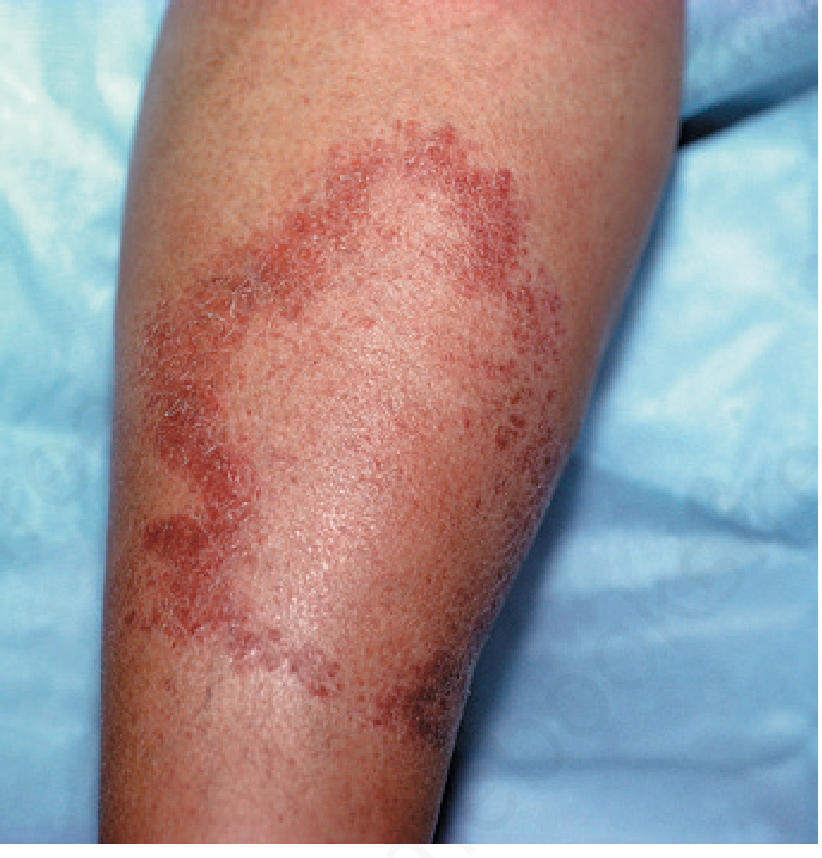
Tuberculoid Leprosy (TT)
- 1–5 lesions, asymmetrically distributed
- Typical lesion: Large erythematous plaque; sharply elevated, indurated border sloping to a flattened atrophic center → "saucer right side up"
- Dry, scaly, hairless (anhidrotic), anesthetic
- Cardinal signs: Anesthesia + Anhidrosis + Alopecia within the lesion
- Enlarged peripheral nerves near the lesion → tender, cord-like
- "Feeding nerve" = enlarged nerve leading to the lesion (in BT especially)
- Common sites: face, limbs, trunk; NOT scalp, axillae, groin, perineum (these areas are warm/moist → not affected)
- Nerves commonly affected: Greater auricular, superficial peroneal, ulnar (most commonly affected nerve overall), posterior tibial, radial cutaneous, facial
Lepromatous Leprosy (LL)
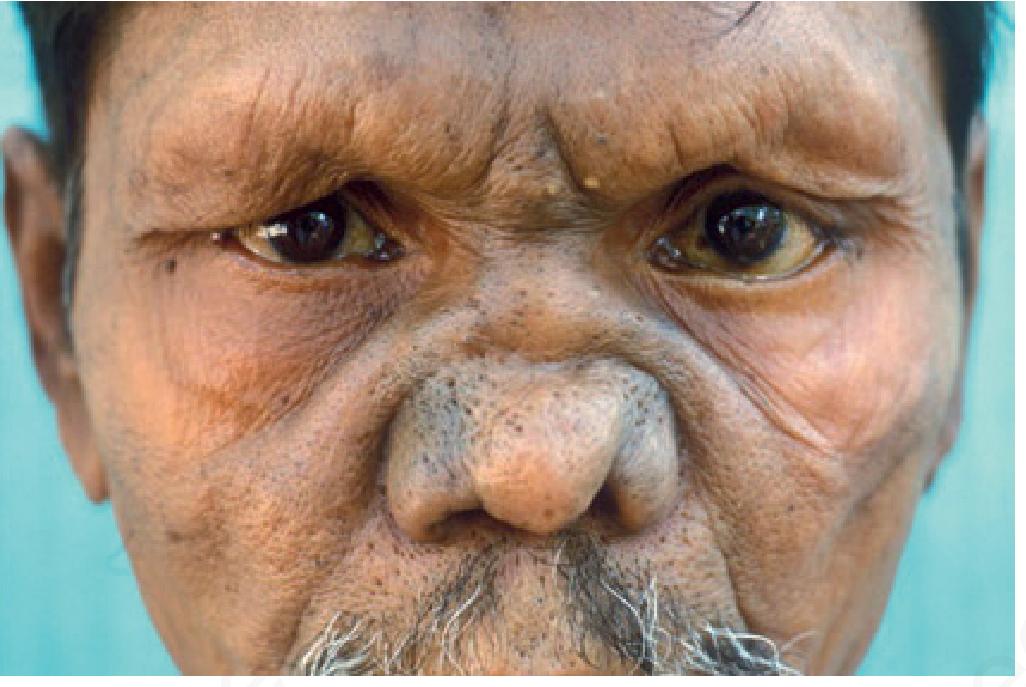
- Numerous lesions, bilaterally symmetric
- Macular → papular → nodular; coalesce → "leonine facies" (diffuse infiltration of face)
- Skin thickening, loss of eyebrows (madarosis — loss of lateral eyebrows first) and eyelashes
- Sensation relatively preserved early (but eventually lost due to diffuse nerve damage)
- Symmetric peripheral neuropathy (unlike TT where asymmetric)
- Nasal involvement: Chronic nasal congestion → saddle-nose deformity (septal perforation)
- Testes: Orchitis → hyalinization → infertility, gynecomastia
- Lymph nodes: Foamy macrophages in paracortex
- Ocular: Corneal opacities ("iris pearls" = miliary lepromas of iris in BL/LL), lagophthalmos
- Glove and stocking anesthesia — due to symmetric polyneuropathy
- Lucio phenomenon: Specific to LL; hemorrhagic necrotic lesions (form of ENL in Lucio leprosy — diffuse non-nodular lepromatous leprosy in Mexico/Central America)
Borderline Leprosy (BB)
- Most unstable type on the spectrum
- "Punched out" lesions with irregular, vague edges
- Mixed features; may have satellite lesions
- BB leprosy is the most difficult to classify
- Liable to type 1 (reversal) reactions
Histoid Leprosy (Wade's histoid)
- Variant of LL (downgraded/relapsed); classically seen in dapsone resistance or after irregular treatment
- Well-defined, dome-shaped, shiny nodules (resembling dermatofibroma)
- Bacilli in spindle-shaped histiocytes arranged in a storiform pattern
- Highest bacterial index (BI) of all forms
- Can occur over bony prominences (elbows, knees)
6. NERVE INVOLVEMENT — HIGH-YIELD TABLE
| Nerve | Deformity/Feature |
|---|---|
| Ulnar nerve (most commonly enlarged/affected overall) | Claw hand (4th & 5th fingers); "Benediction sign" = inability to flex ring and little finger |
| Median nerve | Claw hand (index + middle fingers); "Ape hand" (thenar wasting) |
| Combined ulnar + median | Complete claw hand (all 4 fingers) |
| Radial nerve | Wrist drop, finger drop |
| Common peroneal (lateral popliteal) | Foot drop |
| Posterior tibial nerve | Plantar anesthesia, trophic ulcer, claw toes |
| Facial nerve (VII) | Lagophthalmos (inability to close eye) → exposure keratitis |
| Trigeminal nerve (V) | Corneal anesthesia → corneal ulcers |
| Greater auricular nerve | Visibly enlarged (tuberculoid/BT) |
| Radial cutaneous nerve | Enlarged at wrist (BT) |
Memory Aid: Ulnar = most commonly affected nerve in leprosy. Lateral popliteal = most commonly affected lower limb nerve.
- Ulnar claw = 4th & 5th fingers clawed (main-en-griffe)
- Median claw = Index + middle fingers
- Combined = all 4 fingers
- "Benediction sign" (Pope's blessing) = ulnar nerve → cannot flex 4th & 5th = they remain extended when asked to make fist
- "Ape hand" = median nerve → thenar wasting, thumb cannot oppose
7. HISTOPATHOLOGY
| Feature | Tuberculoid (TT) | Lepromatous (LL) |
|---|---|---|
| Granuloma | Well-formed epithelioid granulomas with Langhans' giant cells; closely resemble TB | Absent; diffuse infiltrate |
| Infiltrating cells | Lymphocytes + epithelioid cells surrounding nerves and adnexae | Foamy macrophages (lepra cells / Virchow cells) filled with bacilli |
| Bacilli | Absent (paucibacillary) | Abundant; arranged in "globi" (cigar bundle pattern); "Mori bodies" |
| Subepidermal clear zone | Absent | Present (Grenz zone — clear zone between epidermis and infiltrate) |
| Nerve | Destroyed, enclosed in granuloma | Infiltrated by bacilli (Schwann cells); onion-skin perineural fibrosis |
| Stain | H&E (no bacilli visible) | Fite-Faraco stain (modified acid-fast) for bacilli; Ziehl-Neelsen for tissue |
NEET Key — Grenz Zone: Pathognomonic of LL — normal collagen-free subepidermal zone between epidermis and the macrophage infiltrate.
Bacterial Index (BI) — Ridley's Logarithmic Scale
| Score | AFB count per oil-immersion field |
|---|---|
| 0 | No AFB in 100 fields |
| 1+ | 1–10 in 100 fields |
| 2+ | 1–10 per 10 fields |
| 3+ | 1–10 per field |
| 4+ | 10–100 per field |
| 5+ | 100–1000 per field |
| 6+ | >1000 per field (Histoid LL has highest BI) |
Morphological Index (MI)
- % of solid-staining (viable) bacilli in a smear
- Normal = ~25–60% solid bacilli
- After treatment: MI falls to 0 within 3–6 months (earlier than BI)
- MI falls before BI — used to monitor early treatment response
8. LEPROMIN TEST (MITSUDA REACTION)
- Not a diagnostic test — measures cell-mediated immunity (CMI)
- Intradermal injection of autoclaved M. leprae suspension (Mitsuda antigen)
| Reaction | Time | Interpretation |
|---|---|---|
| Fernandez reaction (early) | 48–72 hours | Tuberculin-like; indicates prior exposure (type IV hypersensitivity) |
| Mitsuda reaction (late) | 3–4 weeks | Granuloma formation; indicates good CMI; (+) in TT/BT, (−) in LL |
| Type | Lepromin Result |
|---|---|
| TT | Strongly positive (3+) |
| BT | Positive |
| BB | Weakly positive to negative |
| BL | Negative |
| LL | Strongly negative |
| Healthy population | Positive (~70%) |
| Normal newborns | Negative |
Key: Lepromin positive = good prognosis; Lepromin negative = lepromatous/poor immunity. Diagnostic value = NIL.
9. LEPROSY REACTIONS (HIGH-YIELD)
Type 1 Reaction (Reversal Reaction — RR)
| Feature | Detail |
|---|---|
| Mechanism | Type IV (delayed) hypersensitivity — sudden upregulation of CMI |
| Immunology | ↑ IL-2, IFN-γ; CD4+ T cells |
| Spectrum | BT, BB, BL (borderline types — most unstable) |
| NOT in | TT or LL (stable poles) |
| Skin | Existing lesions become red, swollen, edematous, warm — "upgrading" or "downgrading" |
| Nerve | Acute neuritis — painful, tender nerves; sudden nerve function impairment |
| Systemic | No systemic features (fever, lymphadenopathy absent) |
| Timing | During/after MDT |
| Treatment | Systemic corticosteroids (prednisolone 40–60 mg/day) — tapered over 3–6 months |
Type 2 Reaction — Erythema Nodosum Leprosum (ENL)
| Feature | Detail |
|---|---|
| Mechanism | Type III (immune complex) hypersensitivity — antigen-antibody complex deposition |
| Immunology | ↑ TNF-α, IL-6; complement activation; vasculitis |
| Spectrum | BL and LL only (multibacillary types with high antibody load) |
| Skin | Tender, erythematous nodules (new lesions, NOT existing ones) — on face, extensor limbs; may ulcerate |
| Systemic | Fever, malaise, lymphadenopathy, arthralgia, iridocyclitis, orchitis, nephritis — systemic features present |
| Timing | During/after MDT; 50% of LL patients experience ENL |
| Labs | Neutrophilia, elevated ESR, complement consumption |
| Treatment | Thalidomide (drug of choice; contraindicated in pregnancy — severe teratogen); Prednisolone; Clofazimine (↓ frequency/severity of ENL with long-term use) |
Type 3 Reaction — Lucio Phenomenon
- Specific to diffuse lepromatous (Lucio) leprosy in Mexico/Central America
- Hemorrhagic, necrotic plaques → ulceration
- Mechanism: immune complex vasculitis (similar to ENL but distinct)
- NOT a classic type 1 or type 2 — considered a separate category
Comparison — Type 1 vs Type 2 Reaction (Most Tested)
| Feature | Type 1 (RR) | Type 2 (ENL) |
|---|---|---|
| Mechanism | Type IV (cellular) | Type III (immune complex) |
| Spectrum | Borderline (BT/BB/BL) | LL and BL only |
| Skin lesions | Existing lesions — red/swollen | New tender nodules |
| Nerve involvement | Common; acute neuritis | May occur |
| Systemic symptoms | Absent | Present (fever, malaise) |
| Treatment | Prednisolone | Thalidomide |
| Histology | Lymphocytic infiltrate, edema | Neutrophilic infiltrate; vasculitis |
10. MDT — MULTIDRUG THERAPY (WHO REGIMEN)
Adult PB Leprosy (≤5 lesions) — 6 months
| Drug | Daily | Monthly (supervised) |
|---|---|---|
| Dapsone | 100 mg daily (self) | — |
| Rifampicin | — | 600 mg (supervised) |
Adult MB Leprosy (>5 lesions) — 12 months
| Drug | Daily | Monthly (supervised) |
|---|---|---|
| Dapsone | 100 mg daily (self) | — |
| Clofazimine | 50 mg daily (self) | 300 mg (supervised) |
| Rifampicin | — | 600 mg (supervised) |
Pediatric MDT (10–14 years, weight-adjusted)
- PB: Rifampicin 450 mg monthly + Dapsone 50 mg daily × 6 months
- MB: Rifampicin 450 mg + Clofazimine 150 mg monthly; Dapsone 50 mg + Clofazimine 50 mg alternate days × 12 months
- Clofazimine 6 mg/kg/month (supervised) for children
Single-Lesion PB Leprosy — ROM Regimen
- Rifampicin 600 mg + Ofloxacin 400 mg + Minocycline 100 mg — single dose
- Only for single skin lesion with no nerve involvement (not indeterminate)
Drug Mechanisms & Side Effects
| Drug | MOA | Key Side Effects |
|---|---|---|
| Rifampicin | Inhibits RNA polymerase (bactericidal); most rapidly kills M. leprae | Orange urine, hepatotoxicity, drug interactions (CYP inducer) |
| Dapsone | Inhibits PABA incorporation (bacteriostatic) | Methemoglobinemia, hemolytic anemia (G6PD deficiency), dapsone hypersensitivity syndrome (DHS), agranulocytosis |
| Clofazimine | Binds DNA, also anti-inflammatory (anti-ENL effect) | Red-brown/bronze skin discoloration (reversible), ichthyosis, GI upset; not recommended in pregnancy |
NEET Key: Rifampicin = most bactericidal drug in leprosy MDT. Clofazimine = reduces frequency/severity of ENL. Thalidomide = DOC for ENL but teratogenic.
11. DISABILITY GRADING (WHO)
| Grade | Eyes | Hands | Feet |
|---|---|---|---|
| 0 | No problem | No problem | No problem |
| 1 | Visual impairment <6/60; insensitive cornea | Anaesthesia (no deformity) | Anaesthesia (no deformity) |
| 2 | Severe visual impairment ≥6/60 OR obvious deformity (lagophthalmos, iridocyclitis, corneal opacity) | Visible deformity or damage | Visible deformity or damage |
NEET Key: Grade 2 disability = visible deformity. Grade 1 = only anesthesia/impairment without visible deformity.
12. DIAGNOSIS OF LEPROSY
Clinical Diagnosis (WHO Criteria — 3 Cardinal Signs)
- Hypopigmented/erythematous skin lesion with loss of sensation
- Thickened peripheral nerve with sensory/motor loss
- Positive skin smear for AFB
- 1 or more cardinal signs → diagnosis of leprosy
Investigations
| Test | Use |
|---|---|
| Slit skin smear | Sample from earlobe, forehead, chin, active lesion; Fite-Faraco stained; calculates BI + MI |
| Skin biopsy | Confirms histological type; most important for diagnosis; done at lesion edge |
| Lepromin test | Not diagnostic; measures CMI |
| PCR | Detects M. leprae DNA; useful for indeterminate/pure neural leprosy; can detect drug resistance |
| Serology (anti-PGL-1 IgM) | Elevated in MB leprosy; useful for monitoring relapse |
| Nerve conduction study | Assesses nerve damage |
| Nerve biopsy | Sural nerve; for pure neural leprosy |
Sensory Testing Sequence (First to Last affected)
- Temperature (cold sensation — FIRST to be lost)
- Light touch
- Pain (pin prick)
- Deep pressure (last to be lost)
NEET Key: Temperature sensation is the FIRST to be lost in leprosy.
13. SPECIAL FORMS & ASSOCIATIONS
Pure Neural Leprosy
- Only nerve involvement, no skin lesions
- Can be TT, BT, or LL type
- Constitutes up to 5% of cases in Nepal/India
- Diagnosis: Nerve biopsy (sural nerve most commonly biopsied)
Leprosy in Children
- Indeterminate form most common
- Tuberculoid most common type overall in children
- BCG vaccination offers partial protection
Leprosy and Pregnancy
- Type 1 and type 2 reactions ↑ during pregnancy and postpartum
- Clofazimine: relatively contraindicated (crosses placenta → neonatal skin discoloration)
- Thalidomide: absolutely contraindicated in pregnancy
- MDT (rifampicin + dapsone) — safe in pregnancy
Leprosy and HIV
- HIV does not dramatically increase risk of leprosy
- Can cause immune reconstitution inflammatory syndrome (IRIS) → type 1 reactions after ART
- HIV + leprosy = more unusual presentations
14. VACCINES IN LEPROSY
| Vaccine | Detail |
|---|---|
| BCG | ~50% protection; children benefit most; revaccination may increase protection |
| MIP (Mw vaccine) | Mycobacterium indicus pranii; developed at JALMA, Agra (ICMR); immunoprophylactic + immunotherapeutic; used as adjuvant with MDT |
| LepVax | Novel subunit vaccine in trials |
NEET Key: MIP vaccine = developed in India (JALMA, Agra/Delhi — answer varies by source; JALMA is in Agra); used as adjunct in MB leprosy. BCG gives partial protection.
15. OCULAR, NASAL & SYSTEMIC INVOLVEMENT
Ocular (Lepromatous)
- Lagophthalmos (VII nerve) → exposure keratitis
- Corneal anesthesia (V nerve) → corneal ulcers
- Iris pearls (miliary lepromas of iris) — in BL/LL
- Corneal opacities, avascular keratitis, pannus formation
- Iridocyclitis (in ENL reactions)
Nasal
- Chronic nasal congestion → epistaxis
- Septal perforation → saddle-nose deformity
- Loss of upper incisor teeth (from alveolar infiltration in LL)
Testes
- Orchitis → destruction of seminiferous tubules → azoospermia, infertility, gynecomastia (LL)
Kidney
- ENL → immune complex glomerulonephritis (mesangial)
16. LEPROSY — KEY MNEMONICS
| Mnemonic | Fact |
|---|---|
| "Ulnar is the MOST common nerve" | Ulnar = most frequently affected nerve in leprosy (elbow level) |
| "Temperature FIRST" | First sensation lost = cold/temperature |
| "ENL = EVERYTHING (systemic)" | Type 2 = fever, lymphadenopathy, iritis, orchitis |
| "Reversal = Reversal of CMI (Borders go up)" | Type 1 = borderline spectrum; no systemic features |
| "Thalidomide for ENL, Prednisolone for RR" | Treatment distinction |
| "Grenz zone = LL" | Subepidermal clear zone in lepromatous leprosy |
| "BI falls slowly, MI falls fast" | MI → 0 in 3–6 months; BI takes years |
| "Histoid = Highest BI" | Wade's histoid leprosy |
| "6P in PB, 12P in MB" | 6 months PB; 12 months MB |
17. PREVIOUS YEAR QUESTIONS (PYQ) — NEET PG / INI-CET / AIPGMEE
🔴 PYQ BLOCK 1 — Bacteriology & Immunology
- A. 24 hours
- B. 6 days
- C. 13 days ✅
- D. 30 days
- A. Tuberculoid leprosy
- B. Normal adults
- C. Sarcoidosis
- D. Lepromatous leprosy ✅
- A. It is diagnostic of leprosy
- B. It requires a live bacillus suspension
- C. It measures cell-mediated immunity ✅
- D. Mitsuda reaction is read at 48–72 hours
- A. Producing anti-PGL-1 antibodies
- B. Activating Th2 cells
- C. Cross-reactive CMI against M. leprae ✅
- D. Directly neutralizing M. leprae
🔴 PYQ BLOCK 2 — Classification & Histology
- A. ≤3 lesions only
- B. Single lesion only
- C. ≤5 lesions with negative smear ✅
- D. >5 lesions with negative smear
- A. Epithelioid granuloma
- B. Caseous necrosis
- C. Foamy macrophages (lepra/Virchow cells) with globi ✅
- D. Neutrophilic microabscesses
- A. Tuberculoid leprosy
- B. Borderline leprosy
- C. Lepromatous leprosy ✅
- D. Indeterminate leprosy
- A. Well-defined shiny nodules
- B. Seen in previously untreated patients ✅ (Incorrect — seen in dapsone-resistant/relapsed patients)
- C. High bacterial index
- D. Spindle-shaped histiocytes in storiform pattern
- A. TT
- B. BB (mid-borderline) ✅
- C. BT
- D. LL
🔴 PYQ BLOCK 3 — Clinical Features & Nerve Involvement
- A. Posterior tibial nerve
- B. Ulnar nerve ✅
- C. Greater auricular nerve
- D. Facial nerve
- A. Radial nerve
- B. Ulnar nerve ✅
- C. Median nerve
- D. Peroneal nerve
- A. Posterior tibial nerve
- B. Femoral nerve
- C. Common peroneal (lateral popliteal) nerve ✅
- D. Sural nerve
- A. Fine touch
- B. Pain
- C. Temperature (cold) ✅
- D. Deep pressure
- A. LL leprosy
- B. Indeterminate leprosy
- C. BT (borderline tuberculoid) leprosy ✅
- D. BB leprosy
- A. Traumatic septal fracture
- B. Granulomatous infiltration of nasal septum (LL) ✅
- C. Type 1 reaction
- D. ENL
🔴 PYQ BLOCK 4 — Reactions
- A. TT leprosy only
- B. LL leprosy only
- C. Borderline spectrum (BT, BB, BL) ✅
- D. All forms of leprosy
- A. Type I hypersensitivity
- B. Type III (immune complex) hypersensitivity ✅
- C. Type IV hypersensitivity
- D. Type II hypersensitivity
- A. Prednisolone
- B. Clofazimine
- C. Thalidomide ✅
- D. Dapsone
- A. New lesions appear
- B. Systemic features like fever are common
- C. Existing lesions become erythematous and edematous ✅
- D. Immune complexes are deposited in vessel walls
- A. Borderline leprosy
- B. Tuberculoid leprosy
- C. ENL patients in India
- D. Diffuse lepromatous leprosy (Lucio leprosy) — mainly Mexico/Central America ✅
🔴 PYQ BLOCK 5 — Treatment
- A. Rifampicin + Dapsone × 12 months
- B. Rifampicin + Dapsone + Clofazimine × 12 months ✅
- C. Rifampicin + Clofazimine × 6 months
- D. Rifampicin + Dapsone × 6 months
- A. Dapsone
- B. Rifampicin
- C. Clofazimine ✅
- D. Minocycline
- A. Methemoglobinemia
- B. Hemolytic anemia in G6PD deficiency
- C. Hepatocellular carcinoma ✅ (Not a known effect)
- D. Agranulocytosis
- A. Rifampicin, Ofloxacin, Metronidazole
- B. Rifampicin, Ofloxacin, Minocycline — single dose ✅
- C. Rifampicin, Ofloxacin, Moxifloxacin
- D. Rifampicin, Ofloxacin, Minocycline × 6 months
- A. Vitiligo
- B. Nevus depigmentosus ✅ (Note: Some sources say indeterminate leprosy — the KEY differentiator is white accentuation on Wood's lamp WITHOUT complete depigmentation)
- C. Nevus anemicus
- D. Indeterminate leprosy
🔴 PYQ BLOCK 6 — Miscellaneous
- A. Number of bacilli per field
- B. Percentage of solid (viable) bacilli ✅
- C. Granuloma density
- D. Nerve damage extent
- A. Visible deformity or damage
- B. Claw hand
- C. Anesthesia of the palm (no visible deformity) ✅
- D. Loss of digits
- A. NIMHANS, Bangalore
- B. JALMA, Agra (ICMR) ✅
- C. AIIMS, New Delhi
- D. CMC, Vellore
- A. Inhibiting RNA polymerase
- B. Inhibiting PABA synthesis
- C. Binding to mycobacterial DNA + anti-inflammatory effect ✅
- D. Inhibiting cell wall synthesis
- A. Symmetric skin lesions
- B. Leonine facies
- C. Lepromin test positive ✅
- D. Highest bacterial index
RAPID REVISION TABLE — NEET PG FAVOURITE COMPARISONS
| Feature | Tuberculoid (TT) | Lepromatous (LL) |
|---|---|---|
| Lesion count | 1–3 (few) | Numerous |
| Symmetry | Asymmetric | Symmetric |
| Sensation in lesion | Anesthetic | Reduced/normal early |
| Lepromin test | Strongly +ve | Strongly −ve |
| Bacilli in smear | 0 (PB) | +++ (MB) |
| Granuloma | Well-formed | Absent |
| Histology | Epithelioid granuloma | Lepra cells + Globi |
| CMI | High (Th1) | Low (Th2) |
| Prognosis | Good | Poor (without treatment) |
| Nerve damage | Early, asymmetric | Late, symmetric |
| Communicability | Low | High |
| Reactions | Type 1 (if BT) | Type 2 (ENL) |
- Ridley-Jopling vs WHO classification — lesion counts, smear status
- Type 1 vs Type 2 reactions — mechanism, spectrum, treatment
- Nerve involvement table — ulnar (most common), peroneal (foot drop), facial (lagophthalmos)
- MDT regimens — 6 months PB vs 12 months MB; ROM single dose
- Lepromin test — not diagnostic; Mitsuda reaction at 3–4 weeks
- Histology — epithelioid granuloma (TT) vs foamy lepra cells + Grenz zone (LL)
- Thalidomide for ENL; Prednisolone for Type 1/RR
- First sensation lost = Temperature (cold)
Help me revise the topics for neet pg and inicet exam in fast way based on the image I provide which should be included in one page all the matter should exactly be the same without adding anything or from outer sources make it as a aesthetic style notes
- Extract all the content exactly as written — no additions from outside sources
- Reformat it into beautiful, aesthetic one-page revision notes styled for quick NEET PG / INI-CET revision