
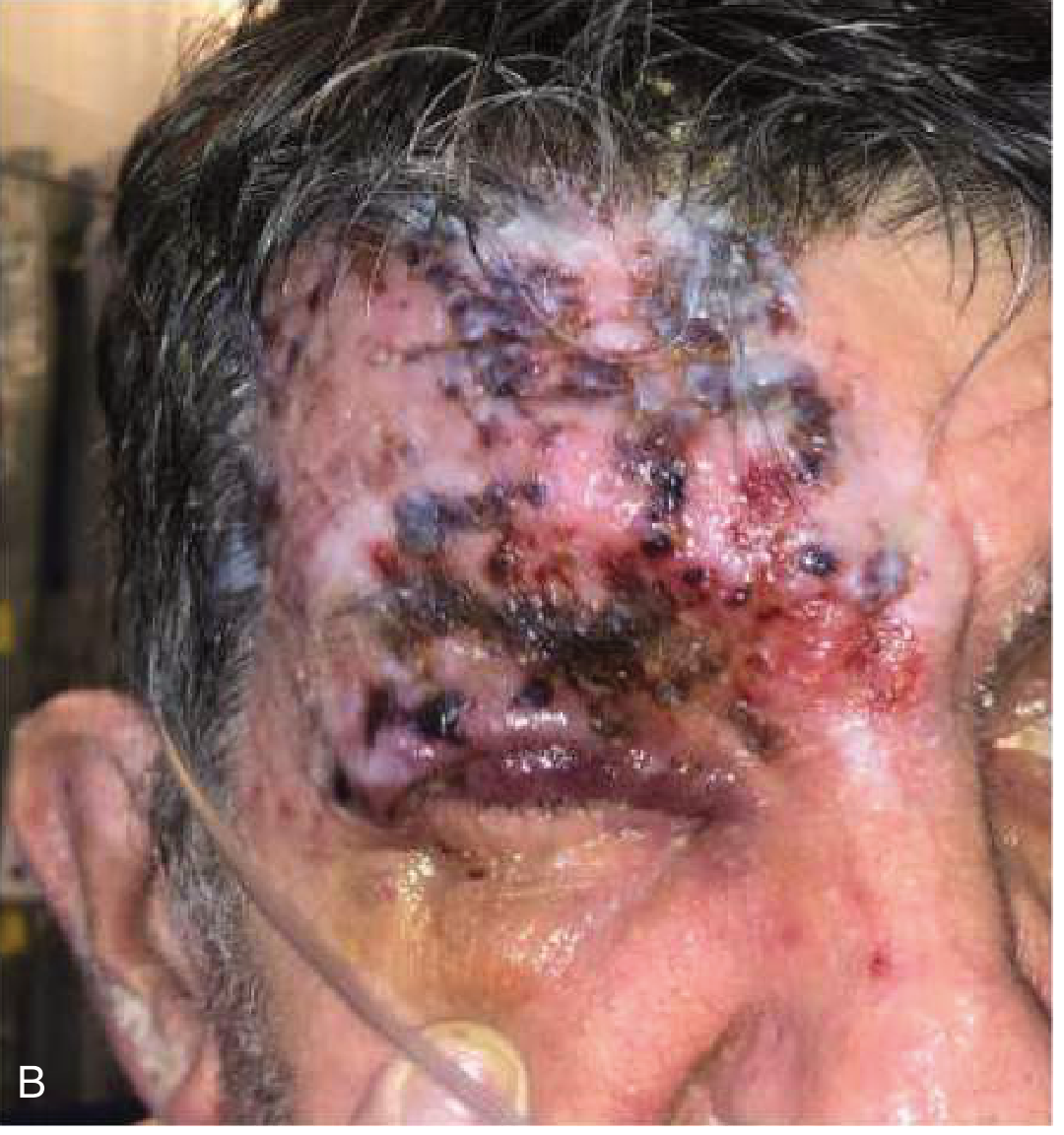
78 years male bed ridden due to stroke since last year came with multiple blisters over left side ko face 3-4 days no itching no burning sensation no signs of inflammation and his vital are stable how to manage this case
Reading File
This is a clinical case scenario - an elderly bedridden stroke patient with multiple blisters on left side of face for 3-4 days, no itching/burning, no inflammation. The most likely diagnosis is Herpes Zoster (shingles) with the atypical presentation due to age/immunosuppression, though the absence of pain is notable. Let me search the medical library thoroughly.
Searching sources...
Finding Sources
Finding Sources
Searching PubMed
herpes zoster elderly management antiviral
Good - I have Fitzpatrick's dermatology and Cecil Medicine sections. Let me read the key sections in parallel.
Reading File
Reading File
Finding Sources
Excellent! Now let me read the key treatment sections from Fitzpatrick's and also look for Ramsay Hunt syndrome and ophthalmic zoster details since this is facial involvement.
Reading File
Finding Sources
Reading File
Now let me read the Fitzpatrick's antiviral therapy section and Ramsay Hunt/ophthalmic zoster details.
Reading File
Reading File
I now have comprehensive information from Fitzpatrick's Dermatology, Goldman-Cecil Medicine, Bradley & Daroff's Neurology, and Dermatology 5e. Let me also quickly fetch the herpes zoster images to include them visually.
Loading Image
Reading File
I now have comprehensive information. Let me also quickly look at the pain management/PHN prevention section from Fitzpatrick's.
Reading File
I now have all the information needed for a comprehensive answer. Let me compile it.
Clinical Assessment: Herpes Zoster (Shingles) - Facial/Ophthalmic Distribution
Diagnosis: Herpes Zoster (reactivation of varicella-zoster virus, VZV) involving the left trigeminal nerve (likely V1 - ophthalmic division), consistent with Herpes Zoster Ophthalmicus or facial zoster.
The unilateral left facial distribution in an elderly, immunologically compromised (bedridden post-stroke) patient is classic.
Why no pain/itching/burning? In elderly and immunocompromised patients, the classic prodromal pain may be blunted or absent - this is a recognized variant. Herpes sine herpete (pain without rash) and its reverse (rash with minimal pain) both exist. Age-related sensory neuropathy from the stroke itself may also mask pain.
Step-by-Step Management
1. Confirm the Diagnosis
- Clinical diagnosis is usually sufficient: unilateral grouped vesicles/blisters in dermatomal distribution on left face in an elderly immunocompromised patient.
- PCR of vesicle fluid - gold standard if confirmation needed (VZV PCR from lesion swab). This also distinguishes from zosteriform HSV.
- Tzanck smear - quick bedside test; shows multinucleate giant cells (non-specific, does not differentiate VZV from HSV).
- Direct fluorescent antibody (DFA) test from lesion scraping - rapid and specific.
2. Critical Assessment - Eye Involvement (URGENT)
Because this is facial zoster, you MUST immediately check for Herpes Zoster Ophthalmicus (HZO):
- Is the tip or side of the nose involved? (Hutchinson's sign - involvement of the nasociliary branch = high risk of ocular involvement)
- Check for conjunctival injection, photophobia, visual changes, periorbital edema
- Urgent ophthalmology referral if any eye involvement is suspected - HZO can cause keratitis, uveitis, and blindness
- Also check for ear canal vesicles/facial palsy (Ramsay Hunt syndrome - zoster of CN VII)
As noted in Bradley & Daroff's Neurology: "Involvement of the ophthalmic division of the trigeminal nerve (herpes zoster ophthalmicus) may be accompanied by keratitis, a potential cause of blindness requiring immediate treatment."
3. Antiviral Therapy (START IMMEDIATELY)
This patient is ≥50 years + cranial nerve involvement - antiviral treatment is mandatory.
Preferred oral antivirals (Fitzpatrick's Table 165-4):
| Drug | Dose | Duration |
|---|---|---|
| Valacyclovir (preferred) | 1 g orally every 8 hours | 7 days |
| Famciclovir (preferred) | 500 mg orally every 8 hours | 7 days |
| Acyclovir (less preferred) | 800 mg orally 5 times/day | 7 days |
Valacyclovir and famciclovir are preferred over acyclovir due to greater oral bioavailability, higher blood levels, and thrice-daily dosing (better compliance in elderly).
Note: Antivirals are most effective within 72 hours of rash onset. Since this patient presents at 3-4 days, initiation is still warranted - evidence shows benefit up to 7 days in cases with active lesion formation, cranial nerve involvement, or immunocompromise.
If severely immunocompromised or disseminated disease:
- IV Acyclovir 10 mg/kg every 8 hours for 7-10 days
Renal dose adjustment: This 78-year-old bedridden patient likely has reduced renal clearance. Check serum creatinine/eGFR and adjust antiviral dose accordingly (valacyclovir/acyclovir require dose reduction in renal impairment).
4. Corticosteroids (Consider)
- Short course of oral prednisolone (e.g., 40-60 mg/day tapered over 3 weeks) alongside antivirals reduces acute pain and improves quality of life in immunocompetent patients ≥50 years with moderate-severe pain.
- In this patient with no active inflammation/pain and likely immunocompromised state (bed-ridden, post-stroke), benefit vs. risk must be carefully weighed. Use cautiously; avoid if diabetic or septic.
5. Pain Management (Even if Currently Absent)
Pain may emerge as the rash evolves. Have a plan ready:
- Paracetamol/NSAIDs for mild-moderate pain
- Gabapentin (300 mg titrated) - reduces acute pain AND decreases risk of postherpetic neuralgia (PHN). Consider starting proactively given his age (>60 years = 50% PHN risk).
- Opioids for breakthrough severe pain (with caution in elderly)
- Avoid topical antivirals - they have no role in herpes zoster
6. Local Wound Care
- Keep blisters clean and dry; gentle antiseptic (chlorhexidine) to prevent secondary bacterial infection
- Non-adherent dressings if needed
- Do NOT puncture blisters - reduces risk of secondary infection and scarring
- Monitor for secondary bacterial superinfection (S. aureus, Streptococcus)
7. Infection Control (Isolation Precautions)
- VZV is transmissible to non-immune individuals (can cause chickenpox)
- Isolate patient from seronegative/immunocompromised individuals
- Contact + airborne precautions until all lesions are crusted
8. Monitoring for Complications in This Patient
Given his age, bedridden status, and post-stroke immunocompromise, watch for:
| Complication | Watch for |
|---|---|
| Postherpetic Neuralgia (PHN) | Pain persisting >30 days after rash - occurs in up to 50% of patients >60 yr |
| HZO / Keratitis | Visual changes, eye redness, Hutchinson's sign |
| Ramsay Hunt Syndrome | Facial palsy + ear/palate vesicles |
| Secondary bacterial infection | Purulent discharge, fever, erythema spreading |
| VZV encephalitis / vasculopathy | New neurological changes (already has stroke baseline - watch carefully) |
| Disseminated zoster | >20 vesicles outside primary dermatome = internal organ involvement risk |
9. General Supportive Care (Bedridden Patient)
- Maintain adequate hydration and nutrition
- Continue pressure ulcer prevention (already at high risk as bed-ridden)
- Nutritional support for wound healing
- DVT prophylaxis as per baseline post-stroke management
Summary Table
| Priority | Action |
|---|---|
| Urgent | Ophthalmology consult if any eye signs or Hutchinson's sign |
| Urgent | Start Valacyclovir 1g TDS x 7 days (renal-adjusted) |
| Same day | VZV PCR/Tzanck swab to confirm diagnosis |
| Proactive | Gabapentin to prevent PHN |
| Ongoing | Wound care, infection control, monitoring for complications |
Sources: Fitzpatrick's Dermatology, 8th Ed., p. 3078-3082 (Table 165-4) | Goldman-Cecil Medicine, p. 4297 | Bradley & Daroff's Neurology in Clinical Practice, pp. 1011-1013 | Dermatology 2-Volume Set, 5th Ed., p. 1697
This is a shared conversation. Sign in to Orris to start your own chat.