
Teach me candidiasis and it's types
Reading File
Now let me search the medical library for candidiasis content in parallel.
Finding Sources
Finding Sources
Good results. Now let me read the most comprehensive sources in parallel - Fitzpatrick's (dermatology), Medical Microbiology, and Goldman-Cecil for the full picture.
Reading File
Reading File
Reading File
Excellent content. Now let me read more from Fitzpatrick's for the detailed types and also get the Goldman-Cecil invasive candidiasis section.
Reading File
Reading File
Finding Sources
I have rich content. Let me read a bit more from Fitzpatrick's for the types detail and get some key images.
Reading File
Reading File
I have comprehensive content. Let me fetch the key clinical images and also get the invasive candidiasis details from Goldman-Cecil.
Loading Image
Loading Image
Finding Sources
Let me get the oral candidiasis image and the chronic mucocutaneous image, plus Harrison's invasive candidiasis section.
Loading Image
Loading Image
Reading File
I now have all the information needed to write a comprehensive, well-illustrated answer. Let me also grab the oral candidiasis image from Fitzpatrick's.
Loading Image
I have all the content and images needed. Now I'll compose a comprehensive, well-organized teaching answer.
Candidiasis - A Complete Guide
What Is Candidiasis?
Candidiasis (also called candidosis or moniliasis) is a fungal infection caused by yeasts of the genus Candida. These organisms are normal commensals of the human GI tract, genitourinary tract, oropharynx, and skin - they become pathogens only when host defenses break down or local conditions tip in their favor.
"Candida albicans is an opportunistic organism, acting as a pathogen in the presence of impaired immune response, or where local conditions favor growth."
- Andrews' Diseases of the Skin
The Organism
-
Morphology: Dimorphic - exists as budding yeasts (blastoconidia), pseudohyphae, and true hyphae. The ability to switch between these forms is a key virulence trait.
-
Key species: C. albicans is still the single most common, but non-albicans species now collectively account for the majority of invasive disease. The "Big Five" are:
- C. albicans
- C. glabrata (now Nakaseomyces glabrata)
- C. parapsilosis
- C. tropicalis
- C. krusei (now Pichia kudriavzevii)
-
Candidal colonization is found in the oral mucosa of >40% of healthy adults, with higher rates in women and smokers.
-
Medical Microbiology 9e
Predisposing Factors
| Factor | Mechanism |
|---|---|
| Antibiotics | Eliminate competing bacterial flora |
| Corticosteroids / immunosuppressants | Impair immune defenses |
| Diabetes mellitus | High glucose favors growth; impaired immunity |
| HIV/AIDS (low CD4) | T-cell depletion |
| Neutropenia, hematologic malignancy | Loss of innate defenses |
| Central venous catheters, TPN | Direct vascular access |
| Extremes of age (neonates, elderly) | Immature/waning immunity |
| Moisture, warmth, occlusion | Favors local growth (diapers, skin folds) |
| Pregnancy | Hormonal and microbiome changes |
- Medical Microbiology 9e, Table 65.1
Pathogenesis
Candida infects via:
- Endogenous translocation - normal commensal flora breaches a disrupted epithelial barrier
- Exogenous transmission - contaminated catheters, IV fluids, or hospital environment
Virulence factors include:
- Adhesins (adhere to epithelial and endothelial cells)
- Hydrolytic enzymes (proteases, phospholipases)
- Phenotypic switching
- Biofilm formation on catheters and prosthetic devices
- The IL-17 pathway is the primary immunological defense; defects in this pathway predispose to mucocutaneous candidiasis
Types of Candidiasis
Candidiasis is broadly divided into mucocutaneous (superficial) and invasive (systemic) forms.
A. MUCOCUTANEOUS CANDIDIASIS
1. Oropharyngeal Candidiasis (Oral Thrush)
The most common form. Three clinical subtypes:
| Subtype | Appearance |
|---|---|
| Pseudomembranous (thrush) | White/cream curd-like plaques on erythematous background; plaques wipe off leaving raw, bleeding surface |
| Erythematous (atrophic) | Shiny, red, depapillated tongue - often seen in denture wearers (denture stomatitis) or after antibiotics |
| Hyperplastic (candidal leukoplakia) | White plaques that do NOT wipe off; seen in smokers; considered pre-malignant |
Angular cheilitis (perleche): Fissuring, crusting, and soreness at the corners of the mouth. Often coexists with oral candidiasis.
Predisposing factors: Inhaled corticosteroids, broad-spectrum antibiotics, HIV/AIDS (most common oral lesion), dentures, xerostomia.
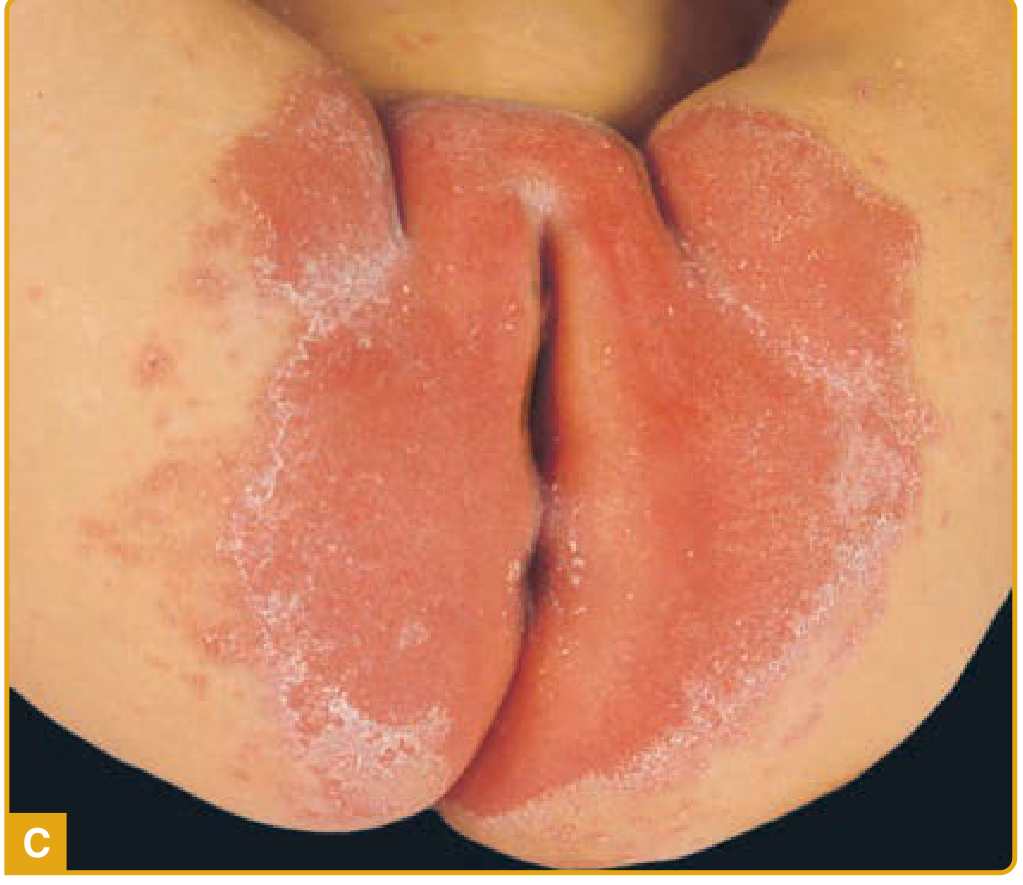
2. Esophageal Candidiasis
- The most common cause of infectious esophagitis
- Presents with odynophagia (painful swallowing), dysphagia, and retrosternal discomfort
- Strongly associated with AIDS (CD4 < 100), and also hematologic malignancies
- Diagnosis: Endoscopy shows white plaques with erythematous base; brushings show pseudohyphae on KOH
- Always requires systemic (not just topical) treatment - fluconazole 200 mg/day for 14 days is the standard
3. Vulvovaginal Candidiasis (VVC)
- Affects ~75% of women at least once in their lifetime; 5-8% have recurrent VVC (≥4 episodes/year)
- Symptoms: intense vulvar itching, burning, external dysuria, thick white "cottage cheese" discharge
- The vaginal pH is normal (<4.5) - this distinguishes it from bacterial vaginosis and trichomonas
- Uncomplicated VVC: short-course topical azoles (clotrimazole, miconazole) or single-dose oral fluconazole 150 mg
- Recurrent VVC: suppressive fluconazole therapy; newer agents - oteseconazole, ibrexafungerp
- Self-diagnosis is frequently incorrect - laboratory confirmation improves accuracy
4. Cutaneous Candidiasis (Candidal Intertrigo)
Classic presentation: beefy-red erythematous plaques with characteristic satellite papules and pustules at the periphery.
Favored sites: intertriginous areas -
- Axillae, inguinal folds, inframammary creases
- Perianal region, abdominal skin folds
- Interdigital spaces (especially 3rd web space - "erosio interdigitalis blastomycetica")
- Diaper area in infants
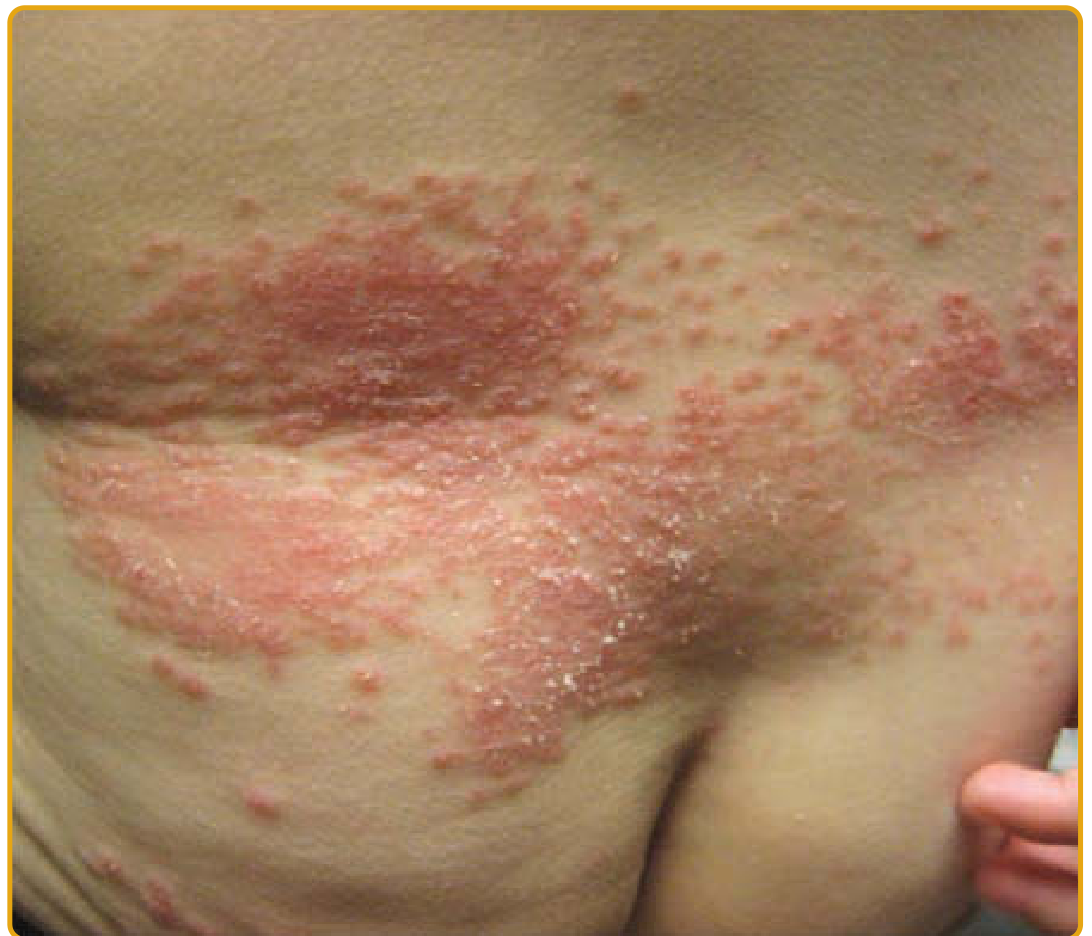
Key diagnosis tip: KOH preparation shows budding yeast and pseudohyphae. On histology, Candida pseudohyphae run vertically through the stratum corneum - unlike dermatophytes which run parallel.
5. Candidal Diaper Dermatitis
- Common in infants - the moist, occluded environment of diapers is ideal for growth
- Presents as beefy-red plaques with satellite pustules in the diaper area
- Unlike simple irritant diaper rash, it involves the skin folds (not just the convex surfaces)
- Treat with topical nystatin or clotrimazole + frequent diaper changes
6. Candidal Paronychia and Onychomycosis
- Chronic paronychia: erythematous, swollen, tender proximal nail fold - loss of the cuticle is a hallmark
- Affects people with repeated wet-work exposure (dishwashers, bartenders, healthcare workers)
- Onychomycosis follows if the infection spreads to the nail plate - thickening, discoloration, onycholysis
- Treatment: topical ciclopirox or systemic fluconazole/itraconazole
7. Balanitis / Balanoposthitis
- Candidal infection of the glans penis and prepuce
- Presents with erythema, edematous papules, pustules, and white discharge under the foreskin
- Risk factors: uncircumcised males, diabetes, sexual contact with infected partner
- Pustules are more characteristic here than in vulvitis
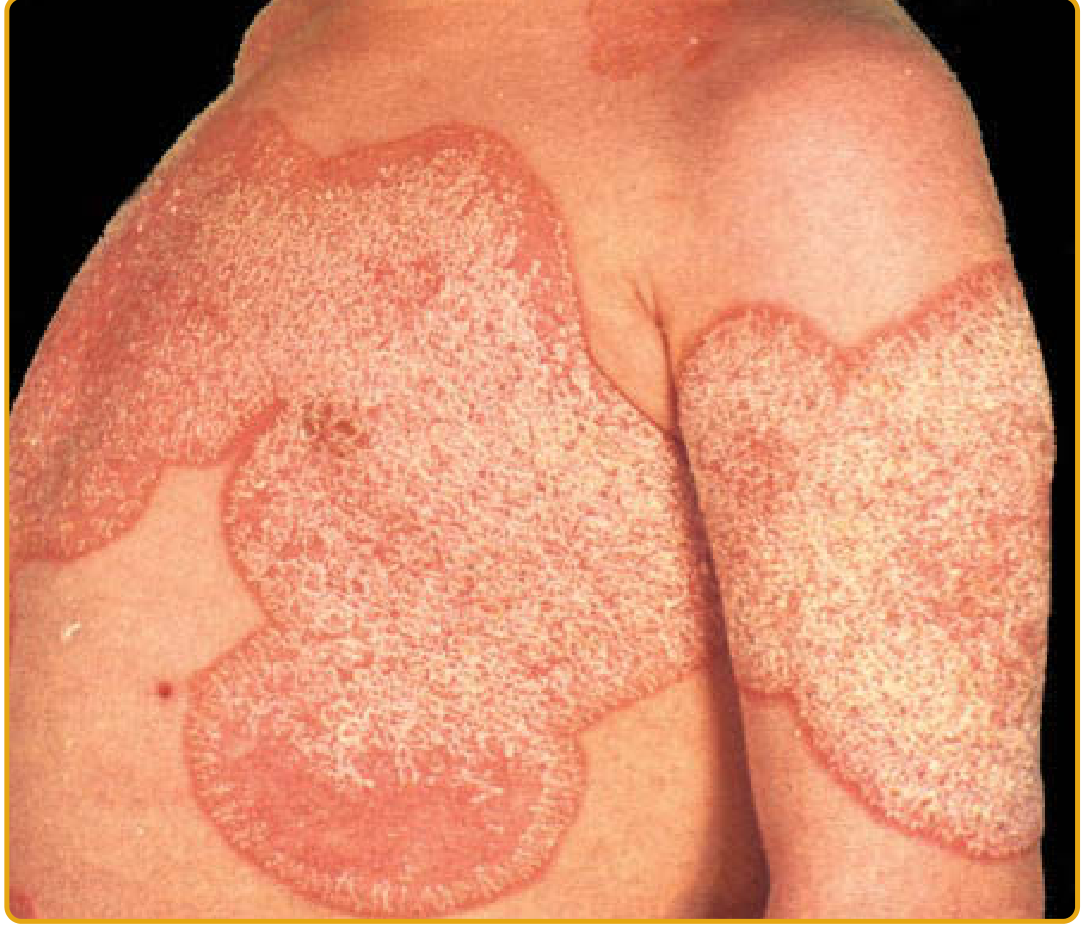
8. Chronic Mucocutaneous Candidiasis (CMC)
A heterogeneous group of conditions characterized by persistent, recurrent Candida infections of the skin, nails, and mucous membranes - but NOT systemic dissemination. It is a marker of underlying immunodeficiency (particularly defects in the IL-17 pathway, STAT1 gain-of-function, or AIRE gene mutations in APECED syndrome).
- Onset often in childhood
- Nails and skin can develop thick, verrucous, hyperkeratotic plaques ("candida granuloma")
- Requires lifelong suppressive azole therapy (fluconazole 200-400 mg daily)
B. INVASIVE (SYSTEMIC) CANDIDIASIS
9. Candidemia (Bloodstream Infection)
- The 4th most common cause of nosocomial bloodstream infection in the US
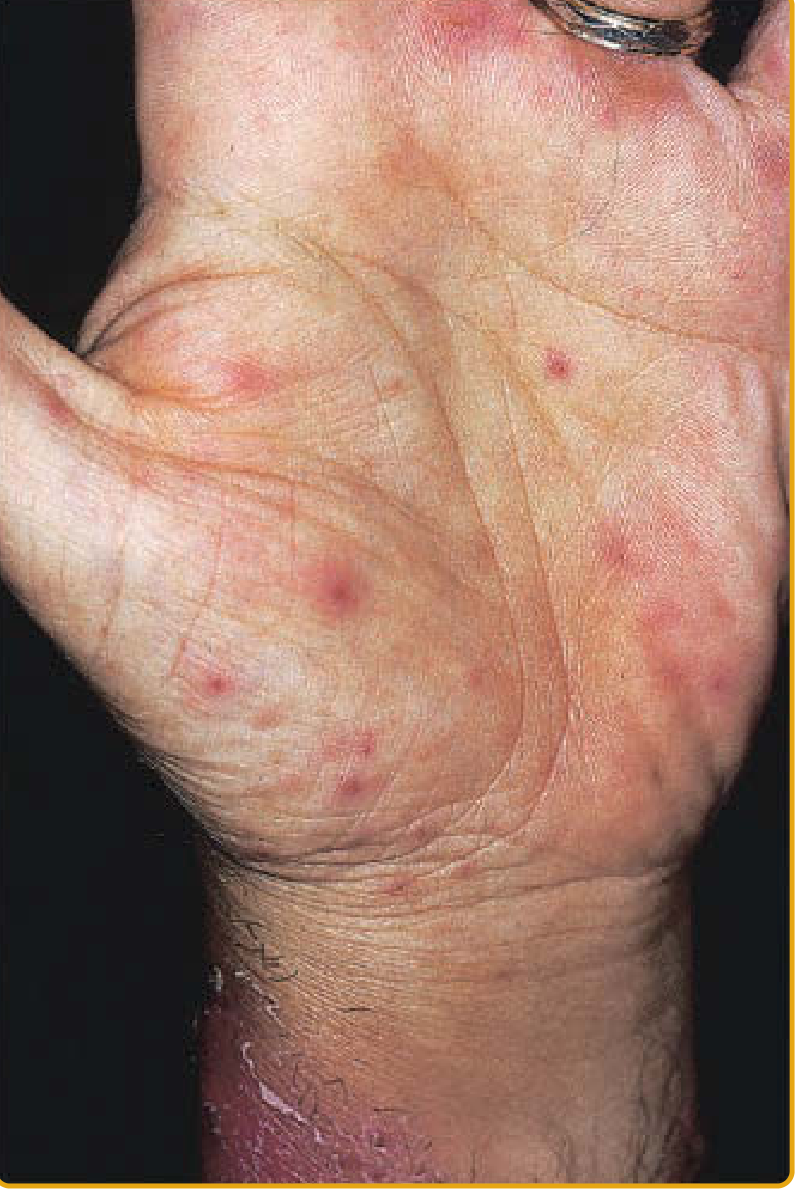
- Classic triad: fever + rash + myalgia in a hospitalized patient
- Skin lesions appear in 10-30% of cases - sparse erythematous papules with central pallor/necrosis on the trunk and proximal extremities; most commonly associated with C. tropicalis
- All patients with candidemia must be treated - even a single positive blood culture warrants therapy (due to high rate of metastatic foci)
- Vascular catheters should be removed when feasible
Risk factors for candidemia:
- ICU stay, broad-spectrum antibiotics
- Central venous catheters, TPN
- Hematologic malignancy, neutropenia
- Abdominal surgery, organ transplant
- Hemodialysis, extreme prematurity
Treatment (candidemia): Echinocandins are first-line (caspofungin 50 mg/day, anidulafungin 100 mg/day, micafungin 100 mg/day). Step-down to oral fluconazole once stable and if susceptibility is confirmed.
10. Chronic Disseminated Candidiasis (Hepatosplenic Candidiasis)
- Occurs in patients recovering from prolonged neutropenia (often after chemotherapy)
- Paradoxically develops as neutrophils recover
- Presents with persistent fever despite antibiotic therapy, right upper quadrant pain, elevated ALP
- CT/MRI shows multiple small "bullseye" lesions in liver and spleen
- Requires prolonged antifungal therapy (months)
11. Candida Endocarditis
- Rare but highly lethal (~50% mortality)
- Associated with IV drug use, prosthetic heart valves, prolonged central catheters, prior cardiac surgery
- Large bulky vegetations on aortic/mitral valves
- Large emboli to major arteries (femoral, iliac) are a hallmark
- Requires antifungal therapy + surgical valve replacement in most cases
12. Candida Meningitis / CNS Candidiasis
- Uncommon; seen in very low birth weight neonates, post-neurosurgical patients, HIV/AIDS
- CSF: elevated protein, low glucose, pleocytosis
- Echinocandins have poor CNS penetration - use liposomal amphotericin B ± flucytosine, then fluconazole for consolidation
13. Candida Urinary Tract Infection
- Candiduria is common in catheterized, hospitalized patients - most cases are asymptomatic colonization
- Symptomatic cystitis/pyelonephritis is rare and typically seen in diabetics, patients with anatomic abnormalities
- Treatment of asymptomatic candiduria is NOT recommended (except before urologic procedures or in neutropenic/transplant patients)
- Fluconazole is first-line for symptomatic disease (echinocandins have poor urinary excretion)
14. Candidal Osteomyelitis / Osteoarthritis
- Hematogenous seeding to bone or joints - most commonly vertebrae
- IV drug users are at risk for candidal arthritis (large joints: knee, hip)
- Requires prolonged antifungal therapy ± surgical debridement
Diagnosis Summary
| Test | Use |
|---|---|
| KOH preparation | Superficial infections - shows budding yeast + pseudohyphae |
| Gram stain | Dense gram-positive ovoid bodies, 2-5 µm |
| Culture | Definitive identification; blood cultures for candidemia (sensitivity ~50%) |
| PAS stain (histology) | Shows yeast and pseudohyphae in tissue |
| GMS stain | Candida is GMS+ but Congo red negative (unlike Blastomyces) |
| Beta-D-glucan (serum) | Useful screening test for invasive candidiasis |
| PCR / MALDI-TOF | Rapid species identification |
| Imaging (CT/MRI) | Invaluable for hepatosplenic, osteoarticular, and CNS forms |
Treatment Overview
| Form | First-Line Treatment |
|---|---|
| Oral thrush | Clotrimazole troches; oral fluconazole for severe/AIDS cases |
| Esophageal | Fluconazole 200 mg/day x 14 days (systemic required) |
| Vulvovaginal | Topical azoles or single-dose fluconazole 150 mg PO |
| Cutaneous | Topical imidazoles (clotrimazole, miconazole, ketoconazole) |
| Chronic mucocutaneous | Lifelong suppressive fluconazole |
| Candidemia | Echinocandin (caspofungin/anidulafungin/micafungin) + catheter removal |
| Hepatosplenic | Fluconazole (step-down from echinocandin) for months |
| CNS/meningitis | Liposomal amphotericin B ± flucytosine → fluconazole |
Quick Memory Map
CANDIDIASIS
├── MUCOCUTANEOUS (superficial)
│   ├── Oral → Thrush / Erythematous / Hyperplastic / Angular cheilitis
│   ├── Esophageal → Odynophagia, AIDS-defining
│   ├── Vulvovaginal → Cottage-cheese discharge, normal pH
│   ├── Cutaneous (Intertrigo) → Beefy-red + satellite pustules
│   ├── Diaper rash → Involves skin folds
│   ├── Paronychia / Onychomycosis → Wet-work exposure
│   ├── Balanitis → Uncircumcised + diabetics
│   └── Chronic Mucocutaneous (CMC) → IL-17 defect, lifelong therapy
│
└── INVASIVE (systemic)
    ├── Candidemia → ICU, catheters, fever+rash+myalgia
    ├── Hepatosplenic → Post-neutropenia recovery, bullseye lesions
    ├── Endocarditis → Large vegetations, IVDU, prosthetic valves
    ├── Meningitis → Neonates, post-neurosurgery
    ├── UTI → Catheterized patients, usually colonization
    └── Osteomyelitis/Arthritis → Vertebrae, IVDU
Sources: Fitzpatrick's Dermatology, 9e | Andrews' Diseases of the Skin | Medical Microbiology 9e | Goldman-Cecil Medicine | Harrison's Principles of Internal Medicine 22e (2025)
This is a shared conversation. Sign in to Orris to start your own chat.