
Chest xray how to read
how to read a chest X-ray systematic approach
https://www.ncbi.nlm.nih.gov/books/NBK553874
How to Read a Chest X-Ray
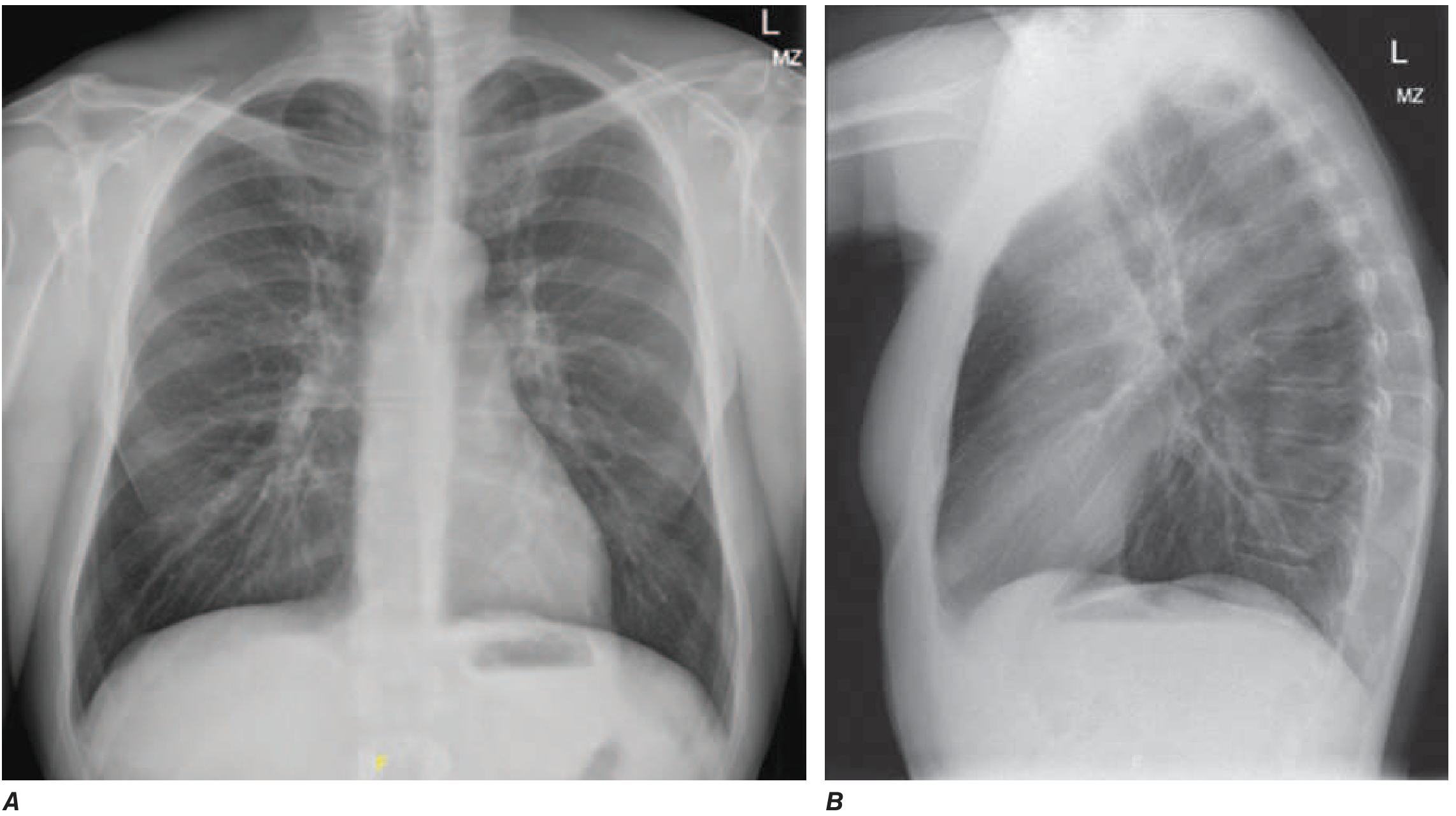
Step 0 - Before You Even Look at the Image
- Patient details: Name, date of birth, date/time of the film
- Clinical context: Why was this ordered? What are you looking for?
- Comparison films: Pull up the prior CXR if available - changes over time are often more important than a single snapshot
Step 1 - Assess Image Quality (RIPE)
| Letter | Stands for | What to check |
|---|---|---|
| R | Rotation | Medial ends of clavicles should be equidistant from the spinous processes. A rotated film can falsely suggest tracheal deviation or cardiomegaly. |
| I | Inspiration | Should see 5-6 anterior ribs (or 9-10 posterior ribs) above the diaphragm. Poor inspiration makes the heart look bigger and the bases appear collapsed. |
| P | Projection | PA (posteroanterior) vs AP (anteroposterior). On AP films the scapulae project into the lung fields and the heart appears magnified - do NOT call cardiomegaly on an AP. Bedside films are almost always AP. |
| E | Exposure | Vertebral bodies should just be visible behind the cardiac shadow. Underexposed = everything looks white; overexposed = subtle opacities are hidden. |
Step 2 - Systematic Reading (ABCDE Approach)
A - Airway
- Trachea: Should be midline. Deviation can be caused by:
- Pushed away: tension pneumothorax, large pleural effusion, mass
- Pulled toward: lung collapse, fibrosis, pneumonectomy
- Carina: Check the carina angle (normally < 70°). Wide angle suggests left atrial enlargement.
- Main bronchi: Trace the left and right main bronchi branching from the carina.
B - Breathing (Lung Fields)
| Finding | Description | Common causes |
|---|---|---|
| Consolidation | Homogeneous opacity, air bronchograms present | Pneumonia, infarction, hemorrhage |
| Collapse/atelectasis | Lobar volume loss, fissure displacement, increased density | Endobronchial obstruction, mucus plug |
| Pneumothorax | Visible pleural line with no lung markings beyond it | Spontaneous, trauma, iatrogenic |
| Nodule/mass | Focal rounded opacity | Malignancy, granuloma, abscess |
| Interstitial pattern | Reticular, nodular, or ground-glass changes | Pulmonary edema (Kerley B lines), ILD, infection |
| Hyperinflation | Flat diaphragms, increased AP diameter, barrel chest appearance | COPD, asthma |
C - Cardiac
- Size: Cardiothoracic ratio (CTR) = maximum horizontal cardiac diameter / maximum horizontal thoracic diameter. Should be < 0.5 on a PA film. A CTR > 0.5 suggests cardiomegaly (pericardial effusion, dilated cardiomyopathy, etc.).
- Do not apply this on AP films - the heart is magnified.
- Shape: Boot-shaped heart (RVH), flask-shaped (pericardial effusion), prominent left heart border
- Heart borders:
- Right border = right atrium
- Left upper border = aortic knuckle + pulmonary artery
- Left lower border = left ventricle
D - Diaphragm
- Right hemidiaphragm is normally higher than the left (liver underneath).
- Check for:
- Elevated hemidiaphragm: phrenic nerve palsy, subphrenic abscess, collapse/consolidation of lower lobe, hepatomegaly
- Flattened diaphragm: COPD hyperinflation
- Free air under the diaphragm: perforated viscus (surgical emergency!)
- Costophrenic angles: should be sharp. Blunting = pleural effusion (at least ~200-300 mL to blunt the angle on PA view)
E - Everything Else (Extras)
Hila
- Left hilum is normally 0.5-1.5 cm higher than the right.
- Bilateral hilar enlargement: sarcoidosis, lymphoma, bilateral malignant nodes, pulmonary arterial hypertension
- Unilateral hilar enlargement: lymphoma, malignancy, infection
Mediastinum
- Superior mediastinum: check for widening (aortic dissection, lymphoma, retrosternal goitre)
- Anterior: thymoma, teratoma, "terrible lymphoma" ("4 Ts")
- Middle: pericardial cyst, lymph nodes
- Posterior: neurogenic tumors, esophageal pathology
Bones
- Rib fractures (look for steps or discontinuity)
- Rib notching (coarctation of the aorta - inferior rib margin erosions, usually sparing ribs 1-2)
- Lytic or sclerotic lesions (metastases, myeloma)
- Vertebral collapse
- Shoulder and clavicle pathology
Soft Tissues
- Subcutaneous emphysema (surgical emphysema - bubbly appearance in soft tissues)
- Breast shadows (absent breast shadow = previous mastectomy)
- Foreign bodies, pacemakers, central lines, ETT
Step 3 - Devices and Lines (If Present)
| Device | Correct position |
|---|---|
| ETT (endotracheal tube) | Tip 3-5 cm above carina, at level of T3-T4 |
| Central venous catheter | Tip at SVC/right atrial junction |
| NG tube | Tip below diaphragm, well into stomach |
| Chest drain | In pleural space, oriented toward the pathology |
| PICC line | Tip in SVC or upper right atrium |
Quick Reference: Common Patterns
| Pattern | Think of |
|---|---|
| Unilateral white-out | Large pleural effusion, total lung collapse, pneumonectomy |
| Bilateral basal airspace shadowing + Kerley B lines | Pulmonary edema (heart failure) |
| Upper lobe fibrosis + cavitation | TB, sarcoidosis, ankylosing spondylitis |
| Lower lobe fibrosis | IPF, asbestosis |
| Bat-wing/butterfly perihilar pattern | Pulmonary edema |
| Ring shadows / hyperinflation | Bronchiectasis, COPD |
| Air under diaphragm | Perforated viscus |
Practical Tips
- Always use the same sequence - it doesn't matter which order, but being consistent prevents you from skipping things.
- Compare sides - asymmetry is often the clue.
- Context is king - the same opacity can be pneumonia or malignancy depending on the patient.
- Look at the edges - apices, costophrenic angles, and behind the heart are common areas where abnormalities are missed.
- A normal CXR doesn't rule out serious pathology - a PA film misses around 20-25% of pulmonary nodules < 1 cm.

This is small raised dany or red blister on my hand 2 week ago these were very small and non itching ..it start itching and increase in number from yesterday with no discahrge and some other problem and nowhere on body ..it start on my body when i was pluckin mangoes from a tree 2 week ago , i used hydrosortisone 1 prcnt but didn't improve ..dignossi?and tratment with brands of tubes available in pakistan
mango tree sap contact dermatitis urushiol papular rash treatment
allergic contact dermatitis treatment Pakistan betamethasone clobetasol brands
topical corticosteroid antihistamine brands Pakistan dermatitis treatment mometasone betamethasone
mometasone betamethasone cream available brands in Pakistan pharmacy names
Important Disclaimer
Looking at Your Image
Most Likely Diagnosis: Allergic Contact Dermatitis (ACD) from Mango Tree Sap
| Your History | What It Means |
|---|---|
| Started while plucking mangoes | Direct skin contact with mango sap (urushiol) |
| Initially small, non-itchy (2 weeks ago) | Sensitization phase - immune system was being primed |
| Now suddenly itching and spreading | Elicitation phase - T-cell mediated response activated (takes ~1-2 weeks on first exposure) |
| Only on exposed arm, not elsewhere | Contact limited to the area that touched the sap/tree |
| No discharge | Not infected (non-purulent) |
| 1% hydrocortisone didn't help | Hydrocortisone 1% is a weak (Class VII) steroid - too weak for this reaction |
Why Mango?
"Mango dermatitis is uncommon in natives of mango-growing countries who have never been exposed to Toxicodendron species. Many persons who have been so exposed are sensitized by one or a few episodes of contact with the peel of the mango fruit."
"Mango (Mangifera indica) and cashew (Anacardium occidentale) are common foods with urushiol-like compounds. In sensitized individuals, reexposure can result in urticaria and pruritus. Over 12 to 48 hours, symptoms may progress to varying degrees of vesiculobullous formation."
Treatment Plan
Step 1 - Upgrade the Steroid (Most Important)
| Drug | Potency | Pakistan Brand Names | How to Use |
|---|---|---|---|
| Mometasone furoate 0.1% cream | Medium-high | Elocon (MSD/Schering), Momate, Mofur | Apply once daily to affected area for 7-14 days |
| Betamethasone valerate 0.1% cream | Medium-high | Betnovate (GSK), Betacin, Bepronate, Dermoval | Apply twice daily for 7-10 days |
| Betamethasone + Neomycin (if any secondary infection) | Medium-high + antibiotic | Betnovate-N (GSK - widely available) | Twice daily if skin looks infected |
Step 2 - Oral Antihistamine (for Itch Relief)
| Drug | Common Pakistan Brands | Dose |
|---|---|---|
| Cetirizine 10mg | Zyrtec, Acitriz, Cetislim | Once daily at night |
| Levocetirizine 5mg | Xyzal, Zyrova, Levoriz | Once daily at night |
| Chlorpheniramine (older, cheaper) | Piriton, Allermine | 4mg three times daily |
Step 3 - Wash the Area Well
Step 4 - Keep the Area Cool and Dry
When to See a Doctor Urgently
- Blisters start forming or rash becomes weeping/oozing
- Rash spreads to your face, eyes, or genitals
- Fever develops
- The rash does not improve within 5-7 days of proper treatment
- Swelling around the rash increases
Prevention Going Forward
- Wear long sleeves and gloves when picking mangoes
- Wash exposed skin immediately after contact with mango sap
- You are now sensitized - future exposure will cause faster, possibly more severe reactions