
Hi
Hey! How can I help you today?
Paracetamol poisoning
Paracetamol (acetaminophen) poisoning is one of the most common causes of acute liver failure. It occurs when the liver's glutathione stores are depleted, allowing the toxic metabolite NAPQI to accumulate and cause hepatocellular necrosis. The antidote is N-acetylcysteine (NAC), which replenishes glutathione. The Rumack-Matthew nomogram guides treatment decisions based on plasma paracetamol levels vs. time post-ingestion.
Searching sources...
Reading File
Finding Sources
Finding Sources
Searching PubMed
"paracetamol poisoning" AND "N-acetylcysteine"
Reading File
Reading File
Loading Image
Here is a full clinical overview of paracetamol poisoning, sourced from The Essentials of Forensic Medicine and Toxicology, 36th edition (2026):
Paracetamol (Acetaminophen) Poisoning
Doses
| Category | Adults | Children |
|---|---|---|
| Therapeutic dose | 500-1000 mg/dose (max 4 g/day) | 10-15 mg/kg/dose (max 60 mg/kg/day) |
| Toxic dose | ≥150 mg/kg (single ingestion) | ≥150-200 mg/kg |
| Lethal dose | >350 mg/kg | >250-350 mg/kg |
Toxicokinetics and Mechanism
- Absorbed rapidly; peak plasma levels at 30-60 minutes; plasma half-life ~2 hours
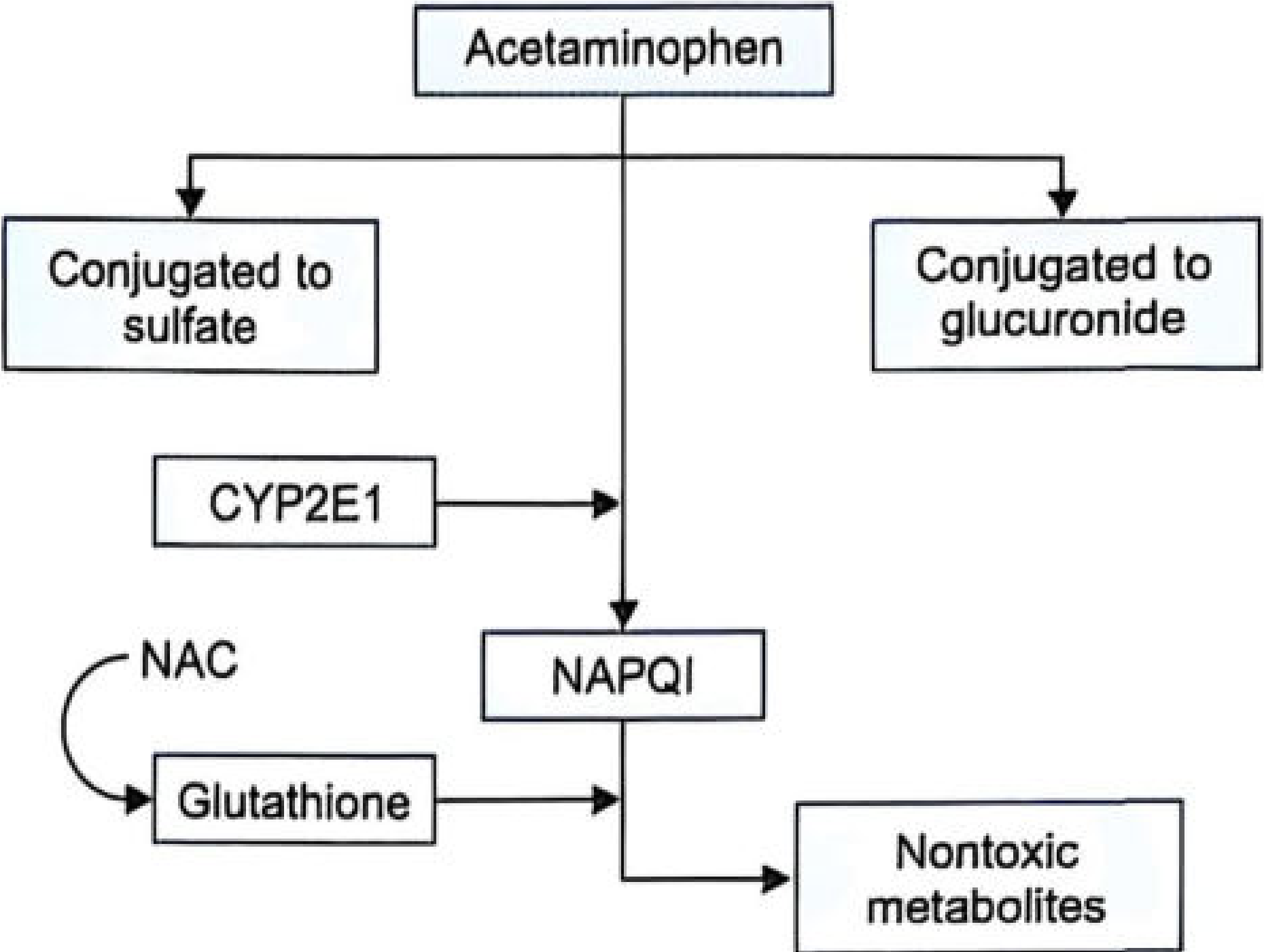
- 90% of hepatic metabolism: conjugation with glucuronide and sulfate → nontoxic metabolites
- ~10% via CYP2E1 → NAPQI (N-acetyl-p-benzoquinone imine)
Detoxification vs Toxicity:
- Normally, NAPQI is neutralized by glutathione → cysteine and mercapturic acid conjugates (safely excreted)
- In overdose, glutathione reserves are exhausted → NAPQI accumulates → binds covalently to liver cell proteins in the centrilobular region → oxidative stress + hepatocyte necrosis
Clinical Stages
| Stage | Timeframe | Clinical Features |
|---|---|---|
| Stage I | 0-24 hours | Nausea, vomiting, anorexia, malaise, pallor, diaphoresis. Often asymptomatic; LFTs usually normal |
| Stage II | 24-72 hours | Right upper quadrant pain; rising AST/ALT and bilirubin; prolonged PT; possible renal involvement |
| Stage III | 72-96 hours | Peak hepatotoxicity: jaundice, coagulopathy, hypoglycemia, hepatic encephalopathy, renal failure, metabolic acidosis, possible multi-organ failure |
| Stage IV | 4-14 days (or more) | Clinical improvement if patient survives; gradual normalization of LFTs; full recovery possible due to liver regeneration |
Management
1. Gastric Lavage
Considered if the patient presents very shortly after ingestion (ideally within the first hour).
2. Activated Charcoal
Given within 1-2 hours post-ingestion to limit absorption. Note: can reduce effectiveness of oral NAC if given together.
3. Antidote - N-Acetylcysteine (NAC)
Most beneficial when given within 8-10 hours of overdose.
Oral NAC:
- Loading dose: 140 mg/kg
- Maintenance: 70 mg/kg every 4 hours (min 24 hrs/6 doses, up to 72 hrs/18 doses)
- Dilute to ~5% using water, soda, or juice
IV NAC (FDA-approved protocol, 21-hour regimen):
- 150 mg/kg over 1 hour (loading)
- Then 50 mg/kg over 4 hours
- Then 100 mg/kg over 16 hours
- Preferred when oral route is compromised (e.g., persistent vomiting)
Methionine (alternative):
- Oral glutathione precursor: 2.5 g every 4 hours for up to 4 doses
- Useful when NAC is unavailable, especially in remote settings
4. Hemodialysis
Considered in severe overdose with extremely high serum levels or metabolic complications/organ failure.
5. Liver Transplantation
Indicated when:
- Severe metabolic acidosis
- Prothrombin time >100 seconds
- Serum creatinine >300 µmol/L
Rumack-Matthew Nomogram
Plots serum paracetamol concentration vs. time since ingestion to guide treatment decisions. Treatment is indicated when levels fall above the treatment line on the nomogram.
Postmortem Findings
- Centrilobular hepatic necrosis
- Acute tubular necrosis
- Myocardial damage
- Cerebral edema
Recent Evidence
A 2025 systematic review and meta-analysis (PMID 40013897) compared two-bag vs. three-bag acetylcysteine regimens in paracetamol poisoning treatment - the two-bag simplified regimen has been gaining evidence as a safer option with fewer anaphylactoid reactions than the traditional three-bag IV protocol.
Source: The Essentials of Forensic Medicine and Toxicology, 36th edition (2026)
This is a shared conversation. Sign in to Orris to start your own chat.