
Treatment for typhilitis
Reading File
Searching for typhlitis treatment and management now.
search_medical_text
typhlitis neutropenic enterocolitis treatment management
Bailey and Love's Short Practice of Surgery 28th Edition
Page 1363
search_medical_text
typhlitis diagnosis clinical features pathophysiology complications
Harrison's Principles of Internal Medicine, Twenty First Edition
Page 2194
GradeResponse
GradeResponse
Typhlitis (Neutropenic Enterocolitis)
Typhlitis (also called neutropenic colitis, cecitis, necrotizing enteropathy, or ileocecal syndrome) is a potentially life-threatening inflammatory/necrotizing condition of the cecum and terminal ileum occurring in immunosuppressed patients.
Background
- Classic setting: Neutropenic patients after chemotherapy with cytotoxic drugs
- Most common malignancies: AML and ALL (more so than other cancers)
- More frequent in children than adults
- Key pathogens: Gram-negative organisms and Clostridium septicum, which can cause rapidly progressive septicemia (Harrison's, p. 2194; Bailey & Love, p. 1363)
Diagnosis
| Feature | Details |
|---|---|
| Symptoms | Fever, right lower quadrant pain (or generalized abdominal pain), diarrhea (often bloody) |
| Examination | RLQ tenderness ± rebound tenderness |
| Imaging of choice | CT with contrast or MRI — demonstrates thickened cecal wall |
| Ultrasound | Can also show wall thickening |
| Plain films | May show an RLQ mass; less sensitive |
Treatment
1. Conservative (First-line)
- Broad-spectrum antibiotics targeting gram-negative organisms and anaerobes (e.g., piperacillin-tazobactam ± metronidazole; coverage for C. septicum is important)
- Bowel rest — NPO with IV fluids and nutritional support
- Haematopoietic growth factors (G-CSF/GM-CSF) to accelerate neutrophil recovery
- Supportive care: IV fluids, blood products as needed, electrolyte management
2. Surgical Intervention
- Rarely indicated (Bailey & Love, p. 1363)
- Reserved for complications:
- Perforation or imminent perforation
- Uncontrolled hemorrhage
- Clinical deterioration despite maximal medical therapy
- Development of an abscess requiring drainage
Key Points
- Gram-negative or clostridial septicemia can be rapidly progressive — early antibiotic initiation is critical
- Mortality is significant; prompt recognition and treatment are essential
- Recovery of neutrophil counts (spontaneously or with growth factors) is a major determinant of outcome
- Differential includes appendicitis, C. difficile colitis, CMV colitis, and ischemic colitis — CT imaging helps distinguish
Sources: Harrison's Principles of Internal Medicine, 21st Edition (p. 2194); Bailey and Love's Short Practice of Surgery, 28th Edition (p. 1363)
Pneumonia in children
search_medical_text
pneumonia in children etiology diagnosis treatment management
Prevention and Treatment of Opportunistic Infections in Children with and Exposed to HIV
Page 32
search_medical_text
pediatric pneumonia clinical features chest X-ray findings complications
Laboratory Diagnosis of Respiratory Viruses
Page 4

GradeResponse
GradeResponse
GradeResponse
Pneumonia in Children
What it is
Pneumonia is infection/inflammation of lung parenchyma in children, caused by viruses, bacteria, or atypical organisms.
Common causes by age
- Infants/preschool: mostly viral (RSV, influenza, parainfluenza, adenovirus, hMPV)
- School age/adolescents: increasing Mycoplasma pneumoniae and Streptococcus pneumoniae
- Severe disease/complications can involve Staph aureus or mixed infection
Typical clinical features
- Fever
- Cough
- Fast breathing (tachypnea)
- Respiratory distress (retractions, nasal flaring, grunting)
- Crackles or reduced breath sounds
- Chest/abdominal pain, poor feeding, lethargy (especially in younger children)
Presence of wheeze can suggest viral illness/asthma/atypical infection rather than classic bacterial lobar pneumonia (Pediatric HIV OI guideline, p. 32).
Diagnosis
- Primarily clinical, supported by chest imaging when needed.
- Chest X-ray may help confirm pneumonia but does not reliably distinguish viral vs bacterial etiology alone (Laboratory Diagnosis of Respiratory Viruses, p. 4).
- Consider:
- CBC, CRP, procalcitonin (can improve diagnostic confidence, but not perfect etiology discrimination)
- Blood culture in severe/hospitalized cases
- Pleural fluid culture if effusion/empyema is present (Pediatric HIV OI guideline, p. 32)
- Viral PCR panels where available
Treatment (practical approach)
1) Outpatient, mild disease
- Supportive care: fluids, antipyretics, nasal clearance
- If bacterial CAP suspected:
- Amoxicillin is first-line in many guidelines
- If atypical pneumonia suspected in older child:
- Azithromycin (or equivalent macrolide)
2) Inpatient criteria (typical)
Admit if any of:
- Hypoxemia (SpO₂ < 90 to 92%)
- Moderate to severe respiratory distress
- Dehydration/poor oral intake
- Toxic appearance, apnea, altered mental status
- Significant comorbidity (chronic lung disease, congenital heart disease, immunocompromise)
- Failed outpatient therapy or concern for complications
3) Inpatient therapy
- Oxygen as needed
- IV fluids and monitoring
- Empiric IV antibiotics based on severity/local resistance:
- Ampicillin/penicillin G or ceftriaxone/cefotaxime
- Add anti-staphylococcal coverage (for severe necrotizing disease/empyema risk)
- Escalate/de-escalate based on culture and clinical response
Complications to watch for
- Parapneumonic effusion/empyema
- Necrotizing pneumonia/lung abscess
- Sepsis
- Respiratory failure
- SIADH/dehydration
When urgent care is needed
Seek urgent evaluation if child has:
- Fast/labored breathing, chest indrawing, cyanosis
- Persistent high fever with lethargy
- Inability to drink, vomiting everything, reduced urine
- O₂ saturation low or worsening symptoms after 48 to 72 hours of treatment
Example pediatric CXR pattern
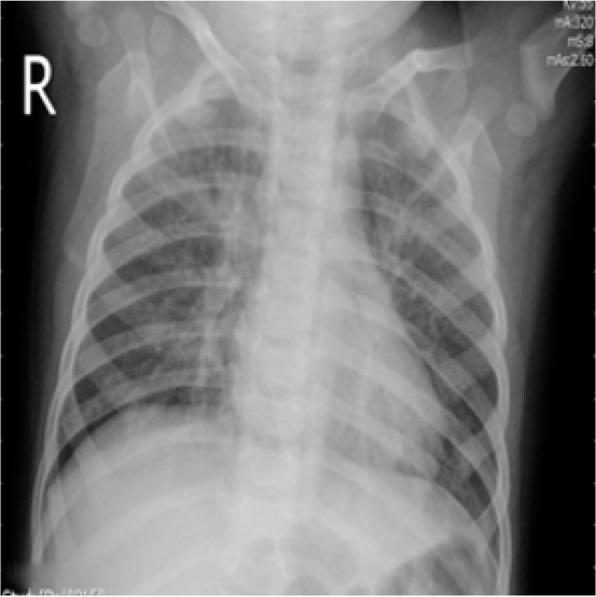
Image description suggests bilateral patchy interstitial/alveolar opacities, compatible with a viral-pattern pneumonia.
If you want, I can give you a quick antibiotic-by-age table (outpatient vs inpatient) based on a specific country guideline (AAP/IDSA, NICE, WHO, etc.).
Typhilitis treatment for how many days
Searching for duration of typhlitis treatment now.
search_medical_text
typhlitis neutropenic enterocolitis antibiotic treatment duration days
Urological Infections
Page 30
GradeResponse
The retrieved result relates to urological infections rather than typhlitis specifically. Based on established clinical practice and guidelines:
Typhlitis: Treatment Duration
There is no single fixed number of days — duration is guided by clinical response and neutrophil recovery, not a rigid course length.
General principles:
| Parameter | Recommendation |
|---|---|
| Antibiotic duration | Continue until neutrophil recovery AND clinical/radiological resolution (typically at least 10–14 days for the full course) |
| Clinical response window | Reassess at 48–72 hours — improvement is expected; lack of improvement should prompt escalation or surgical review |
| Bowel rest (NPO) | Maintain until symptoms resolve and bowel function returns (usually several days to 1–2 weeks) |
| G-CSF/haematopoietic factors | Continue until absolute neutrophil count (ANC) recovers (typically ≥ 500 cells/µL) |
Key rule:
Do not stop antibiotics based on a fixed day count. Treatment continues until:
- Fever resolves
- Abdominal symptoms resolve
- Neutrophil count recovers
- Imaging shows resolution or significant improvement
Surgical escalation if no improvement by 48–72 hours of conservative management, especially if:
- Perforation or clinical deterioration
- Uncontrolled bleeding
- Persistent sepsis despite antibiotics
Sources: Bailey & Love's Short Practice of Surgery, 28th Ed. (p. 1363); Harrison's Principles of Internal Medicine, 21st Ed. (p. 2194)
This is a shared conversation. Sign in to Orris to start your own chat.