
Balanced diet in normal, pregnant, lactating women in community medicine
balanced diet food groups normal pregnant lactating women India RDA
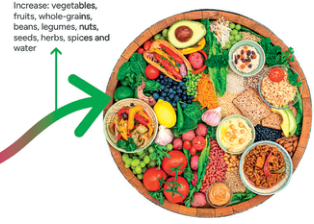
Summary : This image is an illustration of a healthy eating plate, emphasizing the increase of certain food groups for a balanced diet. illustration: Main Message : • The image shows a round plate filled with a variety of foods, primarily vegetables, fruits, whole grains, beans, legumes, nuts, seeds, and herbs. • A large green arrow points to the plate, accompanied by the text: "Increase: vegetables, fruits, whole-grains, beans, legumes, nuts, seeds, herbs, spices and water". Scene Overview : • The plate is visually divided into sections, each containing different plant-based foods such as leafy greens, tomatoes, berries, grains, nuts, and legumes. • The foods are presented in bowls and loose arrangements, with vibrant colors (greens, reds, yellows, browns) dominating the palette. • The background is white, and the plate is bordered with a wooden rim. Technical Details : • No scale bar or magnification is present. • The only on-image text is the dietary recommendation. • The illustration is clear, with high contrast and realistic food depictions. Spatial Relationships : • The arrow and text are positioned to the left of the plate, directing attention to the food selection. • Foods are evenly distributed around the plate, with no single food group dominating the visual space. Analysis : • The illustration visually reinforces the recommendation to increase intake of plant-based foods and water for a healthy diet. • The diversity of foods shown suggests variety and balance, with an emphasis on minimally processed, whole foods. • The absence of animal products or processed foods highlights a plant-forward dietary pattern.
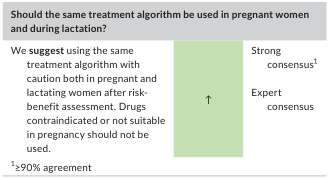
Should the same treatment algorithm be used in pregnant women and during lactation? <table><thead><tr><th colspan="3">Should the same treatment algorithm be used in pregnant women and during lactation?</th></tr></thead><tbody><tr><td>We suggest using the same treatment algorithm with caution both in pregnant and lactating women after risk-benefit assessment. Drugs contraindicated or not suitable in pregnancy should not be used.</td><td>↑</td><td>Strong consensus¹<br><br>Expert consensus</td></tr></tbody></table> ¹≥90% agreement
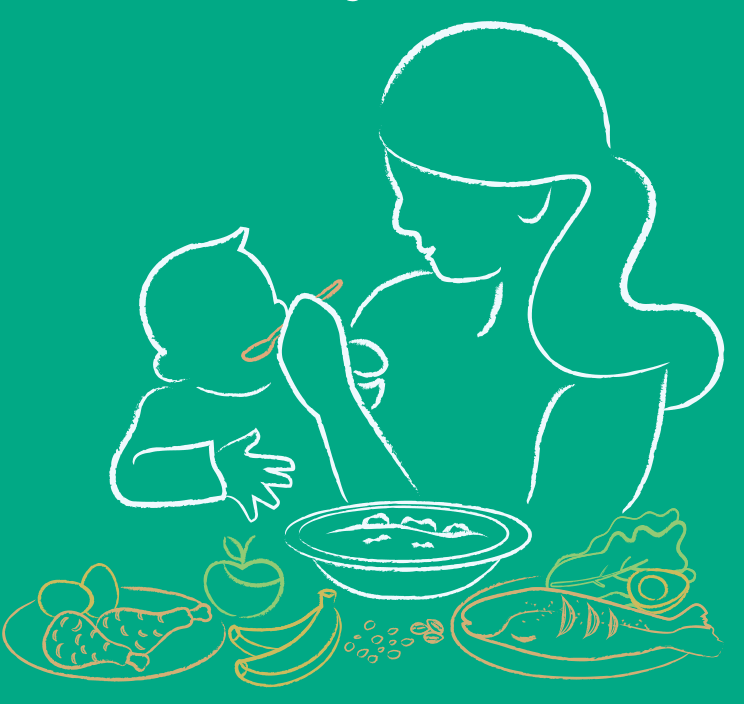
Summary : This illustration shows a woman feeding a young child with a spoon, surrounded by various foods representing a balanced diet. illustration: Scene Overview : • Main subjects are a woman and a child, depicted in white outline on a green background. • The woman is holding a spoon and feeding the child, who is reaching out with one hand. • The composition is central, with the figures occupying the middle of the image. • The colour palette is limited to green, white, and yellow/orange line art for food items. Technical Details : • No scale bar or magnification is present. • No text or UI elements are visible. • The illustration style is simple and schematic, with no shading or detailed features. Spatial Relationships : • The woman and child are in the foreground, with food items arranged in the lower part of the image. • Food items include a plate with chicken drumsticks and slices, an apple, bananas, grains or seeds, a bowl of soup or porridge, a plate with a whole fish, and leafy greens with an avocado. • The food is distributed evenly on both sides of the central bowl, suggesting variety. Analysis : • The image visually communicates the importance of feeding young children a diverse and nutritious diet, including protein (chicken, fish), fruits (apple, banana), grains/seeds, and vegetables (leafy greens, avocado). • The central action of spoon-feeding highlights care and attention to child nutrition. • The arrangement of foods suggests a message about balanced meals for healthy growth.
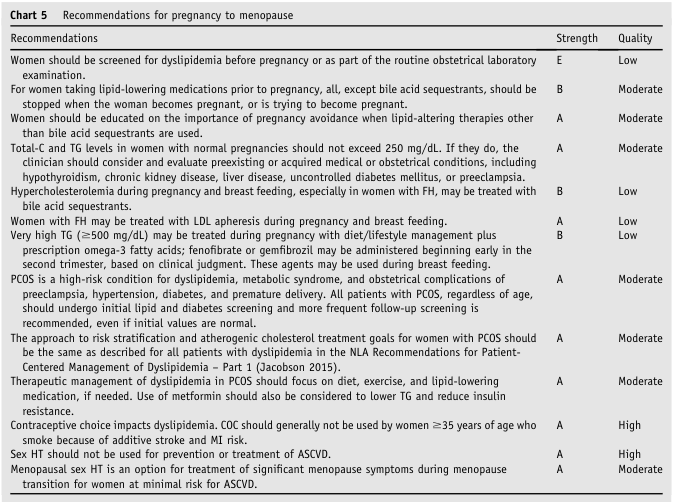
Chart 5 Recommendations for pregnancy to menopause <table><thead><tr><th>Recommendations</th><th>Strength</th><th>Quality</th></tr></thead><tbody><tr><td>Women should be screened for dyslipidemia before pregnancy or as part of the routine obstetrical laboratory examination.</td><td>E</td><td>Low</td></tr><tr><td>For women taking lipid-lowering medications prior to pregnancy, all, except bile acid sequestrants, should be stopped when the woman becomes pregnant, or is trying to become pregnant.</td><td>B</td><td>Moderate</td></tr><tr><td>Women should be educated on the importance of pregnancy avoidance when lipid-altering therapies other than bile acid sequestrants are used.</td><td>A</td><td>Moderate</td></tr><tr><td>Total-C and TG levels in women with normal pregnancies should not exceed 250 mg/dL. If they do, the clinician should consider and evaluate preexisting or acquired medical or obstetrical conditions, including hypothyroidism, chronic kidney disease, liver disease, uncontrolled diabetes mellitus, or preeclampsia.</td><td>A</td><td>Moderate</td></tr><tr><td>Hypercholesterolemia during pregnancy and breast feeding, especially in women with FH, may be treated with bile acid sequestrants.</td><td>B</td><td>Low</td></tr><tr><td>Women with FH may be treated with LDL apheresis during pregnancy and breast feeding.</td><td>A</td><td>Low</td></tr><tr><td>Very high TG (≥500 mg/dL) may be treated during pregnancy with diet/lifestyle management plus prescription omega-3 fatty acids; fenofibrate or gemfibrozil may be administered beginning early in the second trimester, based on clinical judgment. These agents may be used during breast feeding.</td><td>B</td><td>Low</td></tr><tr><td>PCOS is a high-risk condition for dyslipidemia, metabolic syndrome, and obstetrical complications of preeclampsia, hypertension, diabetes, and premature delivery. All patients with PCOS, regardless of age, should undergo initial lipid and diabetes screening and more frequent follow-up screening is recommended, even if initial values are normal.</td><td>A</td><td>Moderate</td></tr><tr><td>The approach to risk stratification and atherogenic cholesterol treatment goals for women with PCOS should be the same as described for all patients with dyslipidemia in the NLA Recommendations for Patient-Centered Management of Dyslipidemia – Part 1 (Jacobson 2015).</td><td>A</td><td>Moderate</td></tr><tr><td>Therapeutic management of dyslipidemia in PCOS should focus on diet, exercise, and lipid-lowering medication, if needed. Use of metformin should also be considered to lower TG and reduce insulin resistance.</td><td>A</td><td>Moderate</td></tr><tr><td>Contraceptive choice impacts dyslipidemia. COC should generally not be used by women ≥35 years of age who smoke because of additive stroke and MI risk.</td><td>A</td><td>High</td></tr><tr><td>Sex HT should not be used for prevention or treatment of ASCVD.</td><td>A</td><td>High</td></tr><tr><td>Menopausal sex HT is an option for treatment of significant menopause symptoms during menopause transition for women at minimal risk for ASCVD.</td><td>A</td><td>Moderate</td></tr></tbody></table>
balanced diet normal pregnant lactating women India ICMR RDA 2020 community medicine
Balanced Diet in Normal, Pregnant, and Lactating Women - Community Medicine
Definition of a Balanced Diet
- Park's Textbook of Preventive and Social Medicine, p. 734
Principles of Constructing a Balanced Diet
| Nutrient | Proportion of Daily Energy |
|---|---|
| Protein | 10-15% of daily energy (first priority to meet) |
| Fat | 15-30% of daily energy |
| Carbohydrates | Remaining energy (rich in natural fibre) |
ICMR-NIN Recommended Dietary Allowances (RDA) 2020 - Key Values for Women
Normal Adult Women (Moderate Work, 55 kg)
| Nutrient | RDA |
|---|---|
| Energy | Sedentary: ~1662 kcal/d; Moderate: ~1912 kcal/d; Heavy: ~2312 kcal/d |
| Protein | 46 g/day |
| Dietary Fibre | 32 g/day |
| Calcium | 1000 mg/day |
| Iron | 29 mg/day |
| Zinc | 13 mg/day |
| Iodine | 150 µg/day |
| Folate | 220 µg/day |
| Vitamin B12 | 2.2 µg/day |
| Vitamin C | 65 mg/day |
| Vitamin A | 840 µg/day |
| Vitamin D | 600 IU/day |
Pregnant Women (55 + 10 kg)
| Nutrient | Extra requirement over baseline |
|---|---|
| Energy | 2nd trimester: +350 kcal/day; 3rd trimester: +475 kcal/day |
| Protein | +9.5 g/day (2nd trimester); +22.0 g/day (3rd trimester) |
| Iron | 27 mg/day |
| Calcium | 1000 mg/day (same as normal) |
| Magnesium | 440 mg/day |
| Zinc | 14.5 mg/day |
| Iodine | 220 µg/day |
| Folate | 520 µg/day |
| Vitamin B12 | 2.5 µg/day |
| Vitamin C | 80 mg/day |
| Vitamin A | 1000 µg/day |
| Vitamin D | 600 IU/day |
- Folic acid supplementation is mandatory from periconception to prevent neural tube defects (NTDs)
- Iodine deficiency causes cretinism and intellectual disability in the newborn
- Iron-folate supplementation is routinely recommended nationally
- DHA (omega-3) supplementation is recommended for fetal brain development
- Calcium supplementation reduces risk of pre-eclampsia
Lactating Women (0-6 months)
| Nutrient | Extra requirement over baseline |
|---|---|
| Energy | +550 kcal/day (0-6 months) |
| Protein | +18 g/day over normal (total ~64 g/day) |
| Calcium | 1200 mg/day |
| Iron | 21 mg/day |
| Zinc | ~16 mg/day |
| Iodine | 290 µg/day |
| Folate | 450 µg/day |
| Vitamin C | 85 mg/day |
| Vitamin A | 1300 µg/day |
| Vitamin D | 600 IU/day |
- Cereals and millets: 300 g/day
- Pulses (legumes): 120 g/day
- Green leafy vegetables: 50 g/day
- Other vegetables: 300 g/day
- Fruits: 200 g/day
- Milk/milk products: 500 g/day
- Fats and oils: 30 g/day
- Sugar and jaggery: 20 g/day
- Total energy: ~2500 kcal/day; Protein: ~74 g/day
Tolerable Upper Limits (TUL) - Key Safety Points
| Nutrient | Upper Limit |
|---|---|
| Calcium | 2500 mg/day |
| Iron | 45 mg/day |
| Zinc | 40 mg/day |
| Iodine | 1100 µg/day |
| Folate | 1000 µg/day |
| Vitamin C | 2000 mg/day |
| Vitamin A | 3000 µg/day |
| Vitamin D | 4000 IU/day |
Food Guide - Groups and Their Roles
| Food Group | Key Nutrients Provided |
|---|---|
| Cereals and millets | Energy, B vitamins, iron, fibre |
| Pulses and legumes | Protein, iron, folate, fibre |
| Milk and milk products | Calcium, protein, Vitamin B12, Vitamin D |
| Eggs, meat, fish | Complete protein, iron, B12, zinc, DHA |
| Green leafy vegetables | Folate, iron, calcium, Vitamin A, Vitamin C |
| Other vegetables and fruits | Vitamins C and A, folate, fibre, antioxidants |
| Fats and oils | Energy, essential fatty acids (EFA), fat-soluble vitamins |
Community Medicine Perspective - Key Points
-
Protein-Energy Malnutrition (PEM) is the most common nutritional problem in India, particularly among pregnant and lactating women in rural and urban slum settings.
-
Iron Deficiency Anaemia (IDA) affects >50% of pregnant women in India - routine iron-folic acid supplementation is a national programme intervention.
-
Iodine Deficiency Disorders (IDD) - Universal Salt Iodization (USI) remains the primary strategy; extra iodine supplementation is needed in pregnancy and lactation.
-
Vitamin D deficiency is widespread - sunlight exposure and dietary sources (fortified milk, fatty fish, eggs) are recommended.
-
The food guide pyramid (and its updated "My Plate" format) is used as an educational tool in community health settings to teach balanced diets.
-
Dietary diversity - using multiple food groups daily is the practical community-level recommendation rather than focusing on individual nutrients.
-
Adolescent girls who are nutritionally depleted enter pregnancy at a disadvantage, creating intergenerational malnutrition cycles - nutritional interventions before and during pregnancy are high priority.
Summary Comparison Table
| Parameter | Normal Woman | Pregnant Woman | Lactating Woman |
|---|---|---|---|
| Extra calories | Baseline | +350-475 kcal/day | +550 kcal/day |
| Extra protein | Baseline | +9.5-22 g/day | +18 g/day |
| Folate | 220 µg | 520 µg | 450 µg |
| Iron | 29 mg | 27 mg | 21 mg |
| Calcium | 1000 mg | 1000 mg | 1200 mg |
| Vitamin A | 840 µg | 1000 µg | 1300 µg |
| Key supplement | - | Iron-folic acid, Vit D, Calcium, Iodine, DHA | Vitamin D, Iodine, Calcium |
Source: Park's Textbook of Preventive and Social Medicine (Table 28 - RDA for Indians 2020); Biochemistry, 8th ed - Lippincott Illustrated Reviews; ICMR-NIN Expert Group Report 2020; NHM Dietary Norms for Lactating Women
Generate a visual food group poster for pregnant and lactating women
A vibrant, educational nutrition poster titled "Balanced Diet for Pregnant & Lactating Women" designed for community health settings. The poster shows two sections side by side: one for pregnant women and one for lactating women. Each section contains colorful illustrated food groups arranged in a plate or pyramid style: PREGNANT WOMEN section includes: - Cereals & millets (rice, wheat, roti) - for energy - Pulses & legumes (dal, lentils, beans) - for protein & folate - Green leafy vegetables (spinach, fenugreek) - for iron & folate - Milk & dairy (glass of milk, curd) - for calcium - Fruits (orange, banana, guava) - for Vitamin C & A - Eggs/fish - for protein & DHA - A small supplement icon showing iron-folic acid tablet Key nutrients highlighted: +350-475 kcal/day, Folic Acid 520µg, Iron 27mg, Calcium 1000mg LACTATING WOMEN section includes: - Cereals & millets - large portion for energy - Pulses (generous portion) - for protein - Milk & dairy (extra glass) - for calcium 1200mg - Green leafy vegetables - for iron & vitamins - Fruits - for antioxidants & Vitamin A - Fats & oils (small amount) - for essential fatty acids - Water/fluids - 8-10 glasses per day Key nutrients highlighted: +550 kcal/day, Protein +18g, Calcium 1200mg, Vitamin A 1300µg Bottom of poster shows a simple comparison table with icons. Include a breastfeeding mother icon and a pregnant woman silhouette. Use warm, welcoming colors (greens, oranges, yellows). Text is clear, large, and easy to read. Professional medical poster style suitable for community health centers and antenatal clinics in India.
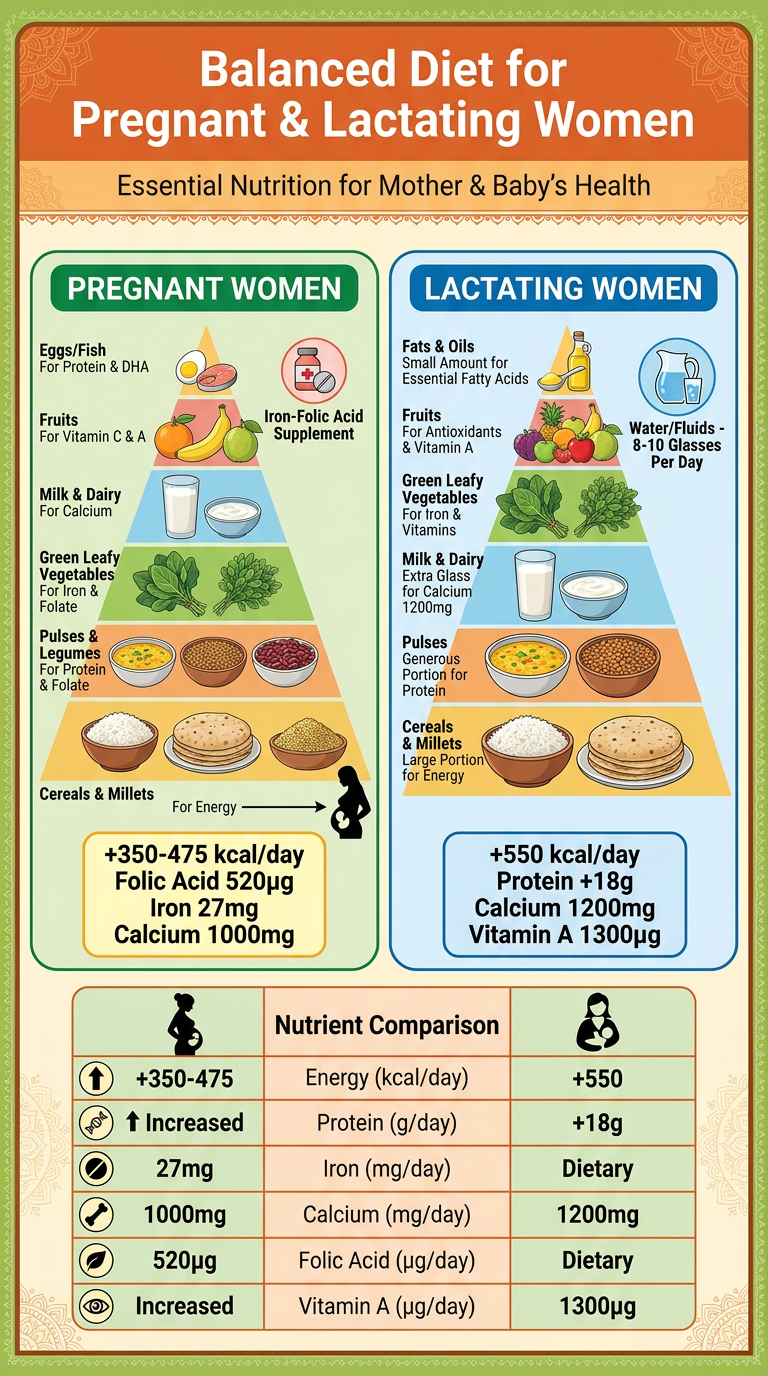
- All major food groups with their key nutrients (cereals for energy, pulses for protein & folate, green leafy vegetables for iron, dairy for calcium, fruits for Vitamin C/A, eggs/fish for DHA)
- Highlights the iron-folic acid supplement requirement
- Key targets: +350-475 kcal/day, Folic Acid 520 µg, Iron 27 mg, Calcium 1000 mg
- Larger portions of energy-dense foods (+550 kcal/day)
- Emphasis on extra dairy (Calcium 1200 mg), protein (+18 g/day), and fluids
- Vitamin A boosted to 1300 µg/day for breast milk quality