
Poop color in neonates 3 months
Reading File
Finding Sources
Finding Sources
Searching the Web
neonate infant stool color changes first 3 months normal
Finding Sources
Finding Sources
Reading File
Finding Sources
Finding Sources
Finding Sources
Reading Web Page
https://www.healthpartners.com/blog/baby-poop-colors/
Searching Images
neonate infant stool poop color chart meconium transitional
Loading Image
Here is a comprehensive guide to neonatal/infant stool colors in the first 3 months:
Stool Color in Neonates — Birth to 3 Months
Phase 1: Meconium (Days 1–3)
| Color | Description | Significance |
|---|---|---|
| Black / Greenish-black | Thick, tarry, sticky | Normal first stool. Composed of intestinal epithelial cells, lanugo, mucus, bile, and amniotic fluid. Contains bilirubin, giving the dark color. |
- Most infants pass 1 meconium stool within the first 24 hours of life (Harriet Lane Handbook, 23e)
- Failure to pass meconium within 48 hours raises concern for Hirschsprung disease, meconium ileus (cystic fibrosis), or intestinal atresia
- "White/acholic" meconium at birth is abnormal — associated with jejunal atresia or proximal obstruction preventing bile-staining
Phase 2: Transitional Stool (Days 3–5)
| Color | Description | Significance |
|---|---|---|
| Greenish-brown → greenish-yellow | Softer than meconium | Normal transition as milk replaces intestinal contents |
Phase 3: Established Feeding Stool (Week 2 onward through 3 months)
Breastfed infants
| Color | Description | Significance |
|---|---|---|
| Mustard yellow (most common) | Loose, seedy/grainy, soft | Normal. Reflects bilirubin breakdown products + breast milk composition |
| Bright yellow / orange | Watery, frequent | Normal; may reflect mother's diet or medications |
| Green, frothy | Loose | May indicate foremilk/hindmilk imbalance (baby getting more watery foremilk than fat-rich hindmilk) |
Frequency: Up to after every feed in early weeks; after 6 weeks, some breastfed babies go several days between stools — both are normal.
Formula-fed infants
| Color | Description | Significance |
|---|---|---|
| Tan / yellow-brown | Thicker, formed, less seedy | Normal |
| Pale yellow / greenish-tan | Pasty | Normal variant |
⚠️ Abnormal Colors — Require Evaluation
| Color | Concern | Possible Cause |
|---|---|---|
| White / pale / acholic / chalky | ⚠️ Urgent | Lack of bile — biliary atresia, neonatal hepatitis, choledochal cyst. Requires urgent workup (GGT, direct bilirubin, liver ultrasound) |
| Bright red blood | ⚠️ | Anal fissure, milk protein allergy (cow's milk protein), necrotizing enterocolitis (NEC), intussusception |
| Dark red / maroon / "currant jelly" | ⚠️ Urgent | Intussusception, NEC, volvulus |
| Black (after day 3–5) | ⚠️ | Upper GI bleed (melena); distinguish from normal meconium by timing |
| Persistent green + mucus | Evaluate | Infection, formula intolerance, milk protein allergy |
Stool Color Card (Biliary Atresia Screening)
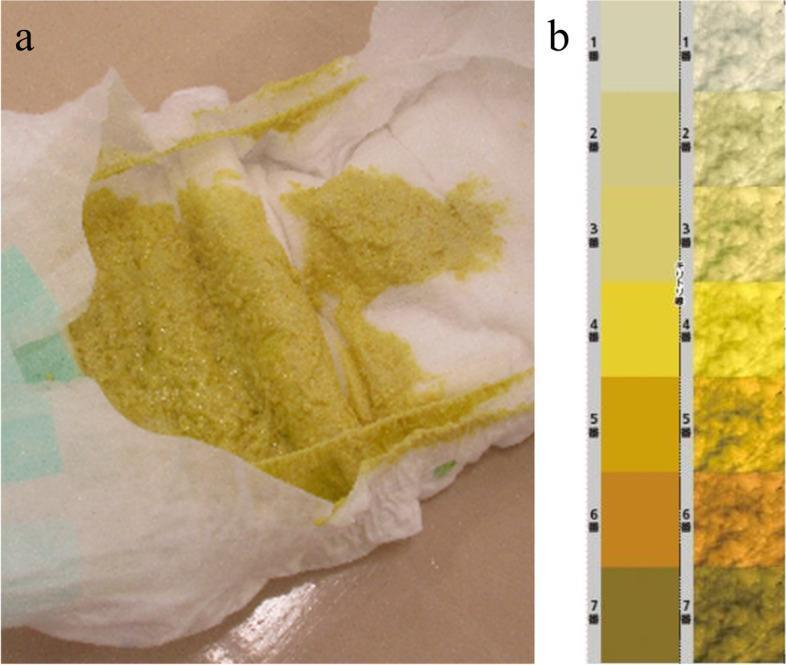
Panel a shows a normal yellow-green breastfed infant stool. Panel b shows the standardized stool color card used for biliary atresia screening — colors 1–3 (pale/acholic) are abnormal and warrant hepatology referral; colors 4–7 (yellow to dark green/brown) are normal.
Key Clinical Pearls
- Earth tones (yellow, tan, brown, green) = generally normal in infants under 3 months
- White or pale stools at any point after day 3 = biliary atresia until proven otherwise — the window for Kasai procedure is <60–90 days, so early detection is critical
- Stool color alone does not indicate hydration — monitor wet diapers (≥6/day after day 5) separately
- Black stool after day 5 is melena until proven otherwise — ask about maternal cracked nipples (swallowed blood) before pursuing GI workup
Sources: Harriet Lane Handbook 23e; HealthPartners; AAP; Similac/Abbott Nutrition parent guide
This is a shared conversation. Sign in to Orris to start your own chat.