
Pain on wrist extension near FCU tendon due to?
Reading File
Researching pain on wrist extension near the FCU (flexor carpi ulnaris) tendon, including causes, anatomy, and differentials.
search_medical_text
FCU flexor carpi ulnaris tendon pain wrist extension causes
Bailey and Love's Short Practice of Surgery 28th Edition
Page 563
search_medical_text
ulnar wrist pain tendinopathy differential diagnosis
Bailey and Love's Short Practice of Surgery 28th Edition
Page 568
GradeResponse
GradeResponse
Based on retrieved sources and anatomical knowledge, here is a comprehensive answer:
Pain on Wrist Extension Near the FCU Tendon
Anatomy Context
The flexor carpi ulnaris (FCU) is a wrist flexor that inserts into the pisiform, hook of hamate, and 5th metacarpal base. It lies on the ulnar/volar aspect of the wrist. Pain in this region provoked by wrist extension (which stretches the FCU and stresses adjacent structures) has several causes:
Common Causes
1. FCU Tendinopathy / Tendinitis
- Most common cause of pain directly over the FCU tendon
- Wrist extension stretches the FCU tendon, reproducing pain
- Often due to overuse (racquet sports, golf, manual labor)
- Tenderness over the pisiform and ulnar volar wrist
2. Triangular Fibrocartilage Complex (TFCC) Injury
- The TFCC stabilizes the distal radioulnar joint (DRUJ) and sits on the ulnar side of the wrist
- Traumatic or degenerative tears present with ulnar-sided wrist pain, which can be exacerbated by wrist loading and rotation in extension
- Diagnosed with MRI arthrogram or wrist arthroscopy (Bailey & Love's, p. 563)
3. Pisotriquetral Arthritis / Pisiform Pathology
- The FCU inserts onto the pisiform; arthritic or instability changes in the pisotriquetral joint can mimic FCU tendinopathy
- Pain on gripping and wrist extension; tenderness directly over the pisiform
4. ECU (Extensor Carpi Ulnaris) Tendon Pathology
- The ECU runs dorso-ulnar, but can cause pain that is confused with the volar FCU region
- ECU subluxation or tendinitis is provoked during forearm supination + wrist extension
5. Ulnar Tunnel Syndrome (Guyon's Canal Compression)
- Compression of the ulnar nerve in Guyon's canal (just adjacent to the FCU/pisiform)
- Pain, numbness, and weakness on the ulnar side; may worsen with wrist positions that tension the nerve
6. Distal Radioulnar Joint (DRUJ) Instability
- Instability or arthritis at the DRUJ produces ulnar-sided wrist pain reproduced by extension and forearm rotation
7. Hook of Hamate Fracture
- The FCU indirectly transmits force to the hamate; a hook fracture causes pain at the hypothenar/ulnar base reproduced by gripping and wrist movements
- Common in golfers and racquet sport athletes
Distinguishing Features
| Condition | Key Finding |
|---|---|
| FCU Tendinopathy | Tenderness directly over FCU, pain with resisted wrist flexion + ulnar deviation |
| TFCC Tear | Press test, ulnar fovea sign, DRUJ instability |
| Pisotriquetral Arthritis | Pisiform grind test positive |
| ECU Pathology | Dorso-ulnar tenderness, provoked by supination |
| Ulnar Tunnel Syndrome | Sensory/motor deficits in ulnar distribution |
| Hook of Hamate Fracture | Hypothenar tenderness, carpal tunnel view X-ray/CT |
Key Clinical Pearl
Pain on wrist extension near the FCU specifically suggests the tendon is being stretched under load — this is most consistent with FCU tendinopathy or pisotriquetral joint pathology, but TFCC injury must always be excluded in ulnar-sided wrist pain, especially with a history of trauma (Bailey & Love's, p. 563).
Treatment of Schwanoma near elbow , cubital region
search_medical_text
schwannoma treatment surgical excision peripheral nerve sheath tumor
Harrison's Principles of Internal Medicine, Twenty First Edition
Page 2745
search_medical_text
cubital tunnel ulnar nerve schwannoma elbow treatment
Harrison's Principles of Internal Medicine, Twenty First Edition
Page 12707
GradeResponse
GradeResponse
Based on retrieved sources and established surgical knowledge:
Treatment of Schwannoma in the Cubital/Elbow Region
Background
A schwannoma (neurilemmoma) near the elbow most commonly arises from the ulnar nerve in the cubital tunnel, though it can arise from any peripheral nerve in the region (median, radial, medial cutaneous nerve of forearm). It is a benign, encapsulated tumor arising from Schwann cells of the nerve sheath — crucially, it is eccentric to the nerve fascicles, which is the key surgical advantage.
Preoperative Workup
| Investigation | Purpose |
|---|---|
| MRI with contrast | Characterize lesion, assess nerve involvement, rule out malignancy |
| Ultrasound | Can show nerve swelling/fusiform mass at elbow (Harrison's, p. 12707); guides needle biopsy if needed |
| Electrodiagnostics (NCV/EMG) | Baseline ulnar nerve function; slowing across elbow suggests nerve involvement |
| CT (if bony involvement suspected) | Rule out osseous erosion |
Definitive Treatment: Surgical Excision (Enucleation)
Schwannomas are treated by intracapsular enucleation (shell-out technique), which is the gold standard:
Key Principles
- Nerve-sparing dissection — since schwannomas are eccentric to nerve fascicles, they can be shelled out from the nerve without sacrificing it
- Fascicular preservation — the tumor is peeled away from the native fascicles under loupe magnification or microsurgical technique
- Intraoperative nerve monitoring — used in many centers to reduce risk of post-excision neurological deficit
- Do NOT perform en bloc resection — unlike neurofibromas (which are intrafascicular), schwannomas do not require nerve sacrifice; en bloc would cause unnecessary denervation
Surgical Approach for Cubital Region
- Medial approach to the elbow along the ulnar nerve course
- Identify the cubital tunnel; release the Osborne ligament if concurrent cubital tunnel syndrome is present
- Careful dissection under magnification to identify the tumor capsule
- Longitudinal incision through the epineurium; blunt dissection to enucleate the tumor
- If nerve compression coexists: ulnar nerve decompression or anterior transposition at the same sitting
When Malignancy is Suspected (Malignant Peripheral Nerve Sheath Tumor — MPNST)
- MPNSTs can arise from schwannomas, especially in neurofibromatosis type 1 (NF1) (Harrison's, p. 2745)
- Red flags: rapid growth, pain, firmness, size >5 cm, invasion on MRI
- Treatment shifts to wide local excision with clear margins ± adjuvant radiotherapy
- Chemotherapy (ifosfamide-based) for metastatic disease
Outcomes
| Factor | Prognosis |
|---|---|
| Benign schwannoma | Excellent; recurrence rare after complete enucleation |
| Post-op neurological deficit | Low (~5%) with microsurgical technique |
| Malignant transformation | Extremely rare for isolated schwannoma (more common in NF1) |
| Recurrence | <5% for benign; higher for MPNST |
Summary
Intracapsular microsurgical enucleation is the treatment of choice for a cubital region schwannoma. The eccentric nature of the tumor relative to nerve fascicles allows complete removal while preserving ulnar nerve function. Concurrent cubital tunnel decompression should be performed if ulnar neuropathy is present. Malignant transformation must always be excluded, particularly in NF1 patients.
Red discolouration of skin on leg after one year of ACL surgery
Reading File
Finding Sources
Finding Sources
Finding Sources
Reading File
Finding Sources
Reading File
Reading File
Red skin discolouration on the leg one year after ACL surgery is a classic presentation of Complex Regional Pain Syndrome (CRPS) — but several other post-surgical causes must be considered. Here is a full breakdown:
Red Discolouration of Skin on Leg After ACL Surgery — Causes
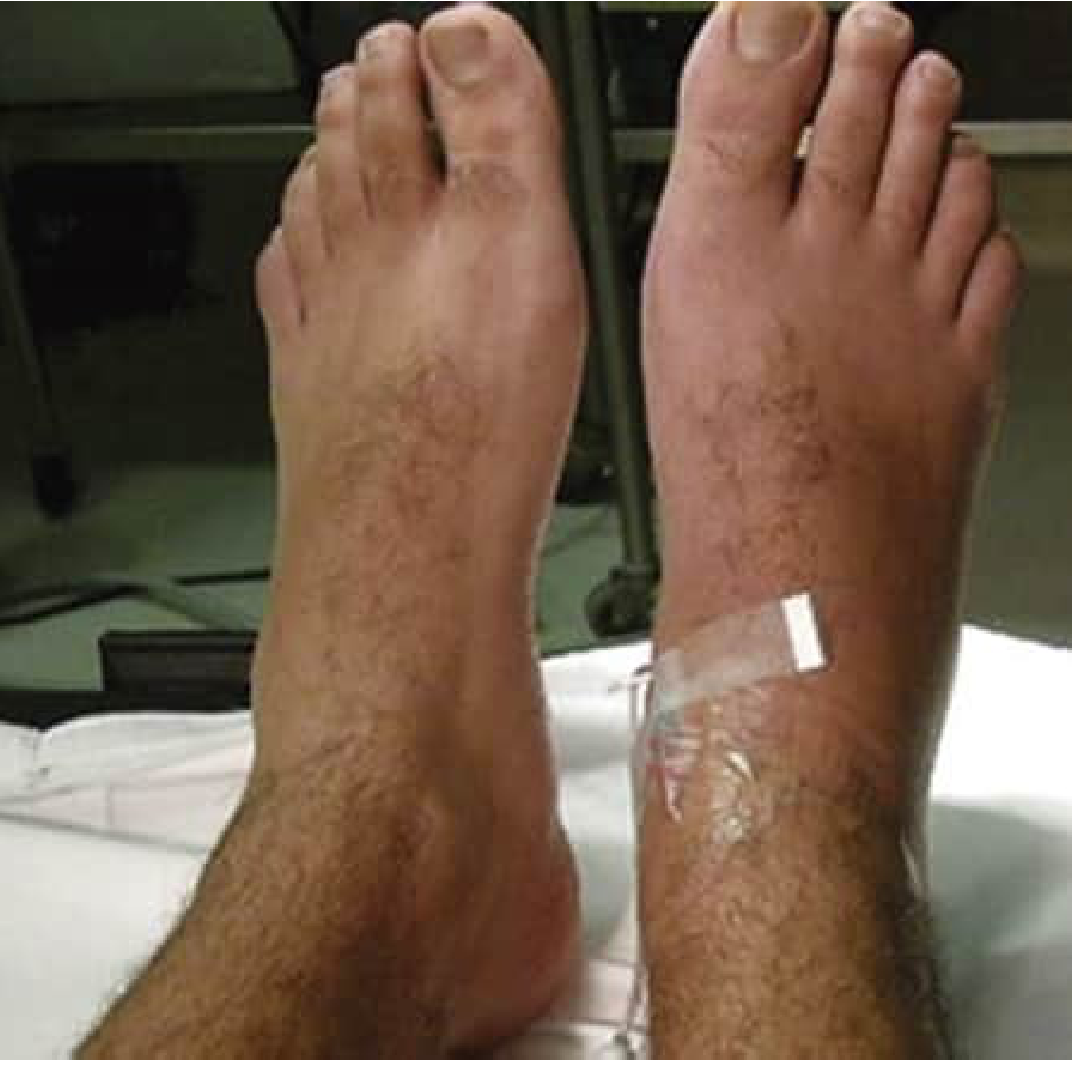
1. Complex Regional Pain Syndrome (CRPS) — Most Likely
CRPS is a well-recognized post-surgical complication (accounts for 3–24% of CRPS cases), and the leg is a common site. It follows trauma, fracture, sprain, or surgery and involves disproportionate, ongoing pain with multi-system changes.
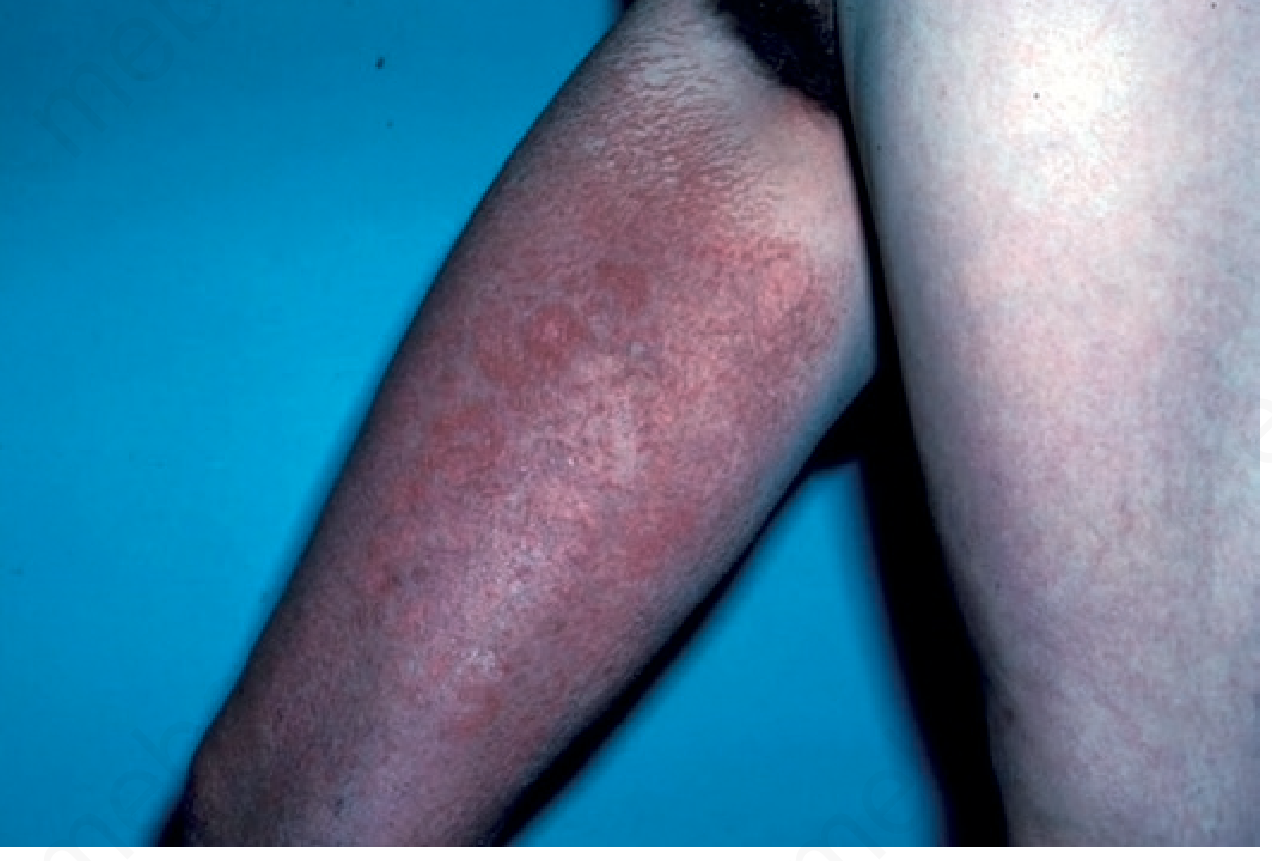
Skin findings in CRPS:
- Reddish/red-brown skin discolouration — classic
- Skin color shifts: red → blue → purple → pale (over minutes to hours)
- Livedo reticularis — red, non-blanchable, net-like pattern (~60% of patients)
- Shiny, atrophic skin; hyperpigmentation; telangiectases; brownish-red patches
- Edema (may mimic cellulitis in early stages)
- Temperature asymmetry between affected and unaffected limb
"Autonomic dysfunction may manifest as changes of skin color and temperature... The affected area may be reddish at one time and then become blue, purple, or pale over a course of minutes to hours." — Bradley and Daroff's Neurology, p. 52
CRPS Types:
- CRPS I (Reflex Sympathetic Dystrophy) — no definable nerve lesion (most common post-ACL)
- CRPS II (Causalgia) — definable nerve lesion present
Budapest Diagnostic Criteria for CRPS — requires signs in ≥2 categories AND symptoms in ≥3 categories:
| Category | Symptoms/Signs |
|---|---|
| Sensory | Hyperalgesia, allodynia |
| Vasomotor | Skin colour changes, temperature asymmetry |
| Sudomotor/Edema | Sweating changes, edema |
| Motor/Trophic | Reduced ROM, muscle atrophy, nail/hair changes |
2. Stasis Dermatitis / Chronic Venous Insufficiency
- Can develop post-operatively if deep venous damage or DVT occurred after ACL surgery
- Reddish-brown discolouration from hemosiderin leaking out of red blood cells in overtaxed dermal capillaries
- Associated pedal edema, scaling, varicosities
- "In all stages, reddish brown discoloration is caused by staining from hemosiderin that has leaked out of red blood cells in the overtaxed dermal capillaries" — Textbook of Family Medicine, p. 3781
3. Post-Thrombotic Syndrome (after DVT)
- ACL surgery is a risk factor for deep vein thrombosis (DVT)
- Chronic venous hypertension after DVT → skin discolouration, lipodermatosclerosis, ulceration
- Must be excluded with Doppler ultrasound
4. Scar/Graft Site Hyperpigmentation
- Post-inflammatory hyperpigmentation or vascular prominence at the graft harvest site (patellar tendon, hamstring)
- Usually localised and fades with time
5. Infection / Cellulitis (urgent to exclude)
- Post-operative infection presenting late (though 1 year is very late for primary infection)
- Acute redness, warmth, swelling, fever, raised CRP/WBC
Diagnostic Approach
| Investigation | Purpose |
|---|---|
| Clinical assessment (Budapest criteria) | Diagnose CRPS |
| Three-phase technetium bone scan | Confirms CRPS; shows periarticular uptake |
| Doppler ultrasound of leg veins | Exclude DVT, assess chronic venous insufficiency |
| MRI of knee/leg | Assess post-surgical changes, osteonecrosis |
| Skin biopsy | If dermatological cause suspected |
| Blood cultures, CRP, WBC | Exclude infection |
Key Takeaway
In a patient with red skin discolouration on the leg one year after ACL surgery, CRPS Type I is the most important diagnosis to consider — it is a recognized post-surgical complication presenting with burning pain, autonomic skin changes (redness, temperature change, livedo), and trophic changes. Early diagnosis and referral to a pain specialist or neurologist significantly improves outcomes (Andrews' Diseases of the Skin, p. 78; Bradley & Daroff's Neurology, p. 52).
Treatment of cellulitis leg
Finding Sources
Finding Sources
Reading File
Reading File
Reading File
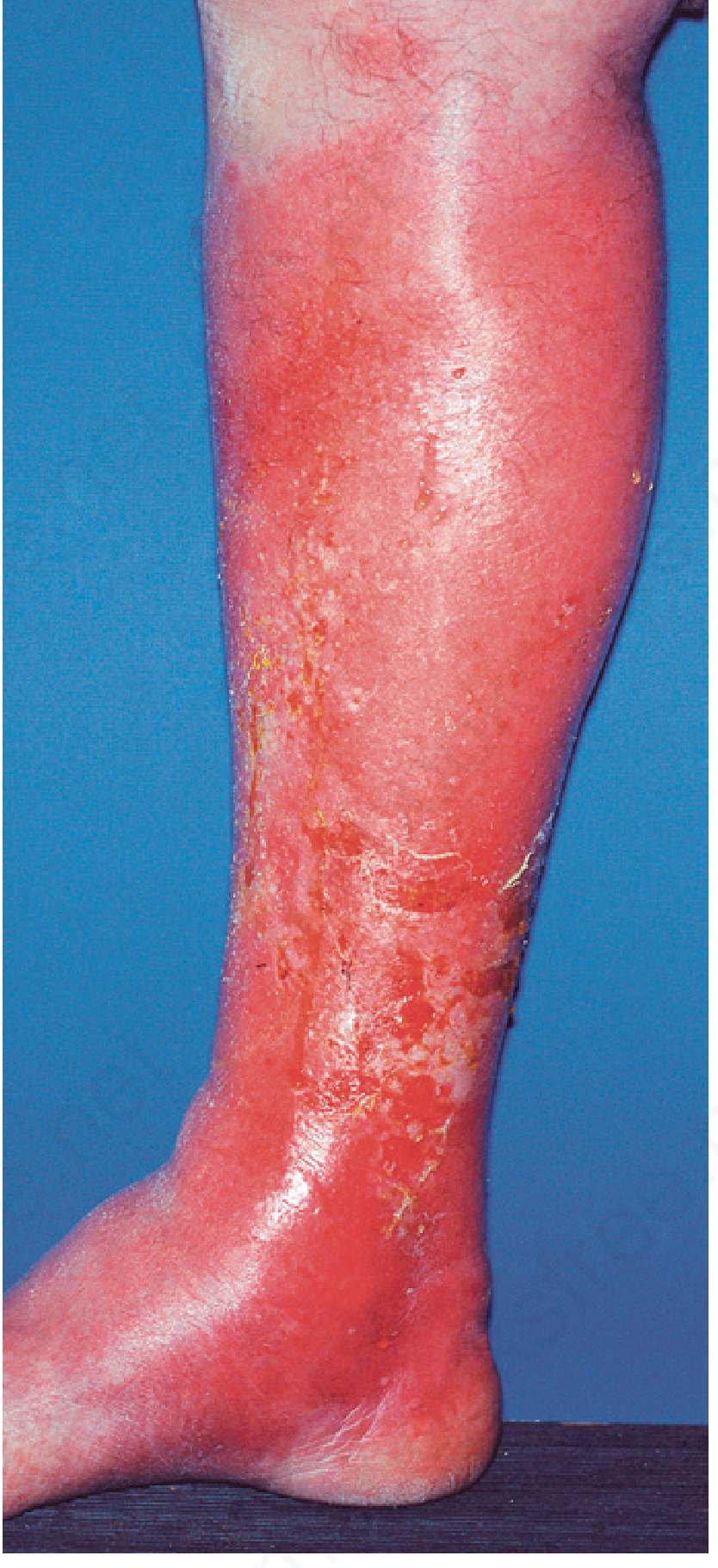
Treatment of Cellulitis of the Leg
Pathogens
- ~75% Streptococci (Group A Strep — S. pyogenes)
- Majority of remainder: Staphylococci (S. aureus, including MRSA)
- Less common: Vibrio vulnificus, Pseudomonas (immunocompromised)
Stratified Treatment by Severity
| Severity | Setting | First-line Therapy |
|---|---|---|
| Mild (no systemic toxicity) | Outpatient | Oral dicloxacillin or cephalexin × 5–10 days |
| Moderate | IV therapy needed | IV penicillin, ceftriaxone, cefazolin, or clindamycin |
| Severe (sepsis, immunocompromised) | Inpatient/ICU | IV vancomycin + piperacillin/tazobactam |
| MRSA suspected | Inpatient | IV vancomycin, daptomycin, linezolid, telavancin, or ceftaroline |
"Mild cases may be treated with oral cephalosporin, dicloxacillin, or clindamycin. Moderate cases: IV penicillin, ceftriaxone, cefazolin, or clindamycin. Severe cases: IV vancomycin + piperacillin/tazobactam." — Rosen's Emergency Medicine, p. 1245
General Measures
- Elevation of the affected leg — reduces swelling, accelerates resolution
- Mark the erythema border with a pen to monitor spread or regression
- Ice bags / cold compresses — for local symptom relief
- Antibiotics for at least 10 days when leg is involved, especially with bullae
Indications for Hospitalisation
- Bullae or skin necrosis present
- Lymphangitis / lymphadenopathy
- Systemic toxicity (fever, hypotension, tachycardia)
- Elderly or immunocompromised patients
- Longer duration before presentation
- Underlying leg ulcers or comorbidities (cardiac, renal, hepatic failure)
"Leg involvement, especially when bullae are present, will more likely require hospitalisation with intravenous antibiotics." — Andrews' Diseases of the Skin, p. 308
Common Portal of Entry on the Leg
- Tinea pedis (athlete's foot) — most common in lower leg cellulitis; treat concurrently with antifungal to prevent recurrence
- Wounds, ulcers, abrasions, insect bites
MRSA Risk Factors (escalate to vancomycin)
- Prior MRSA infection
- Healthcare exposure
- IV drug use
- Failure to respond to beta-lactam after 48–72 hrs
Recurrent Cellulitis — Prevention
- Long-term low-dose antibiotic prophylaxis (e.g., penicillin V or erythromycin) in patients with frequent recurrences
- Treat underlying predisposing conditions: tinea pedis, lymphedema, venous stasis, obesity
- Compression stockings for venous insufficiency
- Predisposing factors include: diabetes, alcoholism, immunodeficiency, venous stasis, lymphedema, prior knee/saphenous vein surgery, irradiation
Differentials to Exclude
| Mimic | Distinguishing Feature |
|---|---|
| Stasis dermatitis | No pain/fever; bilateral; centred over medial malleoli |
| Allergic contact dermatitis | Itchy, not painful |
| Eosinophilic cellulitis | Less pain; eosinophilia (not neutrophilia) |
| Erythema migrans (Lyme) | Less painful; tick exposure history |
| DVT | No skin warmth/erythema; confirmed on Doppler |
— Andrews' Diseases of the Skin, p. 308; Rosen's Emergency Medicine, p. 1245; Textbook of Family Medicine, p. 3880
This is a shared conversation. Sign in to Orris to start your own chat.