

IMG_4660.jpg
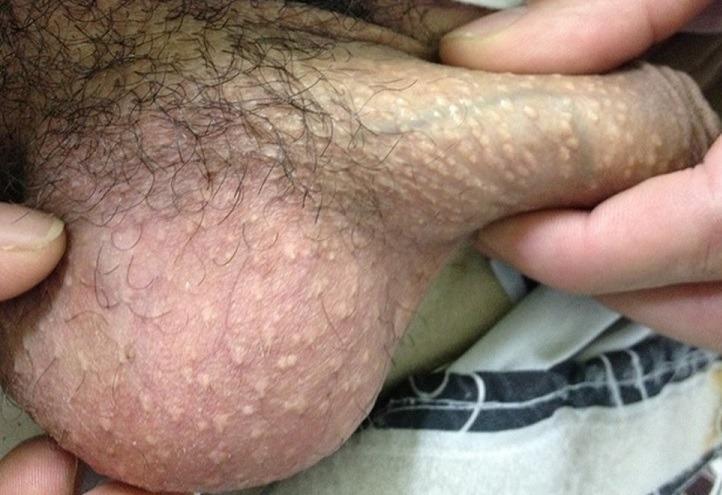
Small bumps type seeing in pic on penis what could be it is
analyse_media
Reading File
Finding Sources
Finding Sources
Reading File
Reading File
Searching Images
pearly penile papules coronal margin rows
Based on your photo, this looks like Fordyce spots (also called Fordyce granules) - not a disease or infection, just a normal anatomical variant.
What's seen in the picture: Numerous tiny, closely-packed, uniform bumps spread evenly across the skin of the shaft, similar in color to the surrounding skin (not raised inflamed lesions, no pus, no ulceration, no redness around them). This distribution across the shaft skin, rather than being confined to a single row at the corona/glans margin, fits Fordyce spots better than the other common look-alike condition (pearly penile papules).
For comparison, here is a reference clinical image of Fordyce spots on the penile shaft:
What Fordyce spots are: ectopically located, normal sebaceous (oil) glands in the skin. They're extremely common (present in a large proportion of adult men to some degree), completely benign, not contagious, and not related to any STI or hygiene issue - Andrews' Diseases of the Skin, p. 1846.
The main look-alike to rule out - Pearly Penile Papules: small (1-3 mm) dome-shaped, pearly-white bumps arranged in one or more neat rows specifically around the coronal margin/rim of the glans (occasionally extending onto the shaft). These are also completely benign angiofibromas, not an infection, not HPV-related - Andrews' Diseases of the Skin, p. 736; Campbell-Walsh Urology, p. 2023.
Key reassurance points, either way:
- Both conditions are benign normal variants, not infections and not sexually transmitted
- They don't need treatment unless bothersome cosmetically (laser ablation, electrodesiccation, or shave excision are options for pearly penile papules; CO2 laser/electrodesiccation for prominent Fordyce spots)
- Neither causes pain, discharge, or spreads
When to actually see a doctor instead of assuming this: if the bumps are growing, changing shape, becoming painful/itchy, ulcerating, bleeding, have discharge, or if you've had a new sexual partner/unprotected contact recently (to rule out genital warts, molluscum contagiosum, or herpes) - a clinician or GUM/STI clinic can confirm with a simple visual exam, usually no biopsy needed.
I'm giving you the most likely explanation based on the visual pattern, but I can't formally diagnose from a photo. If you have any doubt, itching, pain, or recent new sexual contact, it's worth a quick in-person check with a doctor or sexual health clinic for certainty.
This is a shared conversation. Sign in to Orris to start your own chat.