
The resident episode 1 pilot what the learning in terms of medical perspective
The Resident Season 1 Episode 1 Pilot medical accuracy lessons teaching points
The Resident TV show pilot episode medical education review doctor perspective
https://epmonthly.com/article/review-the-resident-is-televis…
The Resident - Pilot: Medical Learning Points
1. Surgical Impairment & Patient Safety
- Impaired surgeons are a real patient safety crisis. A surgeon with a neurological or movement disorder (essential tremor, early Parkinson's, alcohol/drug impairment, or fatigue-induced tremor) operating is a direct threat to patient life.
- Intraoperative vascular injury from laparoscopic or open appendectomy is a recognised complication. Rapid hemorrhagic shock can develop within minutes.
- The anesthesiologist's role in maintaining vigilance - the scene shows the anesthesiologist being distracted by a selfie, highlighting how OR culture and hierarchy breakdowns contribute to adverse events. Distraction in the OR is a documented patient safety issue.
- Duty to report vs. culture of cover-up - after the death, staff deleted smartphone photos and fabricated a "heart attack" narrative. In reality, doctors have a professional and legal duty to document and disclose adverse events. This cover-up mirrors real-world concerns about a "wall of silence" in medicine.
2. Endocarditis - Recognition at the Bedside
- Osler's nodes are tender, raised, red nodules on the finger/toe pads and palms - a classic peripheral stigma of infective endocarditis (IE). They result from immune complex deposition or septic emboli.
- IV drug use is a major risk factor for IE, typically right-sided (tricuspid valve), caused by Staphylococcus aureus.
- Clinical signs of IE to recognize:
- Fever, new murmur, embolic phenomena
- Osler's nodes, Janeway lesions, Roth spots, splinter hemorrhages, finger clubbing
- AMA (Against Medical Advice) discharges are ethically and legally complex. Patients with capacity have the right to refuse treatment. The physician must document that the patient was informed of the risks, ensure capacity is assessed, and ideally have the patient sign an AMA form.
- Negotiating with patients - Conrad negotiated her pain medication request (she asked for 3 mg dilaudid/hydromorphone, he agreed to 2 mg) to keep her admitted. This reflects real harm-reduction patient management strategies.
3. Cardiac Arrest Management - PEA and Prolonged CPR
- PEA = organized electrical activity on ECG without a pulse. It requires identification and treatment of reversible causes (the H's and T's: hypovolemia, hypoxia, hydrogen ion/acidosis, hypo/hyperkalemia, hypothermia; tension pneumothorax, tamponade, toxins, thromboembolism).
- In a patient with severe IE + sepsis, causes could include hypovolemia, septic shock, or a large septic embolus.
- ETCO2 is a key indicator of CPR quality and prognosis. An ETCO2 consistently <10 mmHg after 20 minutes of CPR strongly predicts failure to achieve ROSC and poor neurological outcome.
- Conrad's use of ETCO2 to predict brain death outcome is medically accurate and clinically important.
- ROSC achieved after >20 minutes of CPR with low ETCO2 and unknown downtime is associated with severe anoxic brain injury.
- Conrad's statement - "You didn't save a life, you saved a brainstem" - is a powerful teaching moment about the difference between physiological survival and meaningful neurological recovery.
4. The Core Moral of the Episode - Iatrogenic Harm
"What they don't teach you in medical school is that there are so many ways to do harm."
| Concept | Clinical Relevance |
|---|---|
| Iatrogenesis | Harm caused by medical intervention itself |
| Overzealous resuscitation | Prolonged CPR creating survivors with no quality of life |
| Non-maleficence | The ethical principle "first, do no harm" (primum non nocere) |
| Medical futility | Continuing aggressive intervention when benefit is impossible |
| Goals of care | What the patient actually wants vs. what medicine can technically do |
5. Medical Hierarchy and Intern Training
- The intern-resident-attending hierarchy is real and shapes how decisions get made (and sometimes blocked) at the bedside.
- Interns are supervised but often left in situations where their decisions matter enormously - as Devon's prolonged CPR showed.
- Hidden curriculum in medicine - the things not taught in medical school (system pressures, patient manipulation, billing incentives, covering for superiors) are just as influential as the formal curriculum.
- The show portrays moral distress - when clinicians know the right thing to do but systemic or hierarchical pressure prevents them from acting on it.
6. Patient Mix in the Episode (Realistic ER Cases)
| Patient | Condition | Learning Point |
|---|---|---|
| Young woman, IV drug user | Infective Endocarditis, PEA arrest | Bedside signs of IE, AMA management, resuscitation endpoints |
| Patient with cancer | Oncology patient in hospital | Goals of care, palliative discussion |
| Diabetic patient | Required amputation - shows total indifference | Patient engagement, health literacy, autonomy |
| Croatian patient | Paralysis | Neurological assessment, communication barriers |
7. Systemic / Healthcare System Lessons
- Medical error is the third leading cause of death in the US - this statistic (from the BMJ 2016 study) is cited in the show by Nic. While debated, it highlights patient safety as a national priority.
- Cover-up culture - the OR team collectively concealing Bell's error mirrors documented cases of institutional cover-ups in medicine, a key driver of "just culture" and transparency reforms.
- Technology distraction in the OR - staff taking selfies with Bell before the surgery is not just absurd drama. Phone use in operating rooms is a real policy issue in hospitals worldwide.
Summary Table
| Scene | Medical Concept | Real-World Lesson |
|---|---|---|
| Bell's tremor in OR | Surgical impairment | Fitness-to-practice, impaired physician reporting |
| Patient death - cover-up | Adverse event disclosure | Duty to disclose, Just Culture, M&M conferences |
| Osler's nodes | IE peripheral signs | Bedside diagnosis, IV drug use risk factors |
| AMA negotiation | Patient autonomy | Capacity assessment, informed refusal |
| PEA arrest - ETCO2 | Resuscitation science | ETCO2 as prognostic marker, CPR endpoints |
| ROSC - brain dead | Anoxic brain injury | Medical futility, goals of care |
| Intern on Day 1 | Medical hierarchy | Supervision, hidden curriculum, moral distress |
| Nic's "3rd cause of death" | Patient safety | Medical error epidemiology |
Given e short and easy understanding this medical in terms of ayurvedic
The Resident Pilot - Through an Ayurvedic Eye 🌿
1. Surgical Impairment (Dr. Bell's Trembling Hands)
- Tremor (shaking of limbs) is called Kampa in Ayurveda - caused by aggravated Vata dosha, specifically Vyana Vata (which governs movement of limbs).
- A healer who is imbalanced in body or mind should NOT practice - Ayurveda strongly emphasizes Swastha Vritta (physician's own health and conduct). The physician must be Shuchi (pure/clean), Daksha (skilled), and Jitendriya (master of senses).
- The cover-up in the show = violation of Satya (truthfulness), one of Ayurveda's core ethical pillars for a physician.
Simple takeaway: A shaking hand means Vata is out of control. A good healer must first heal themselves before touching a patient.
2. Infective Endocarditis (Heart Infection in IV Drug User)
- The heart is Hridaya - considered the seat of Ojas (vital life essence), Prana (life force), and consciousness.
- Infection/fever is Jwara - caused by Ama (toxic undigested matter) combined with aggravated Pitta dosha. Drug use massively increases Ama in the body.
- Osler's nodes (painful skin bumps) = Pitta-Rakta dushti - vitiation of blood (Rakta dhatu) by toxins spreading through the channels (Srotas).
- IV drug use = directly introduces Visha (poison/toxin) into Rakta (blood), corrupting all downstream tissues.
- Ayurveda would say drug addiction is a disorder of Prajna-aparadha - a "mistake of the intellect" where the person knows harm exists but continues anyway.
Simple takeaway: Drugs pollute the blood (Rakta) with Ama, Pitta burns out of control, and the heart's Ojas is destroyed - the body falls apart from the inside.
3. PEA Cardiac Arrest & Prolonged CPR
- Cardiac arrest = Hridroga (heart disease) reaching its final stage - Hridaya stambha (heart standstill).
- In Ayurveda, when Prana Vayu (the life-breath governing the heart and brain) leaves the body, no intervention can recall it meaningfully.
- The concept of Asadhya (incurable/untreatable disease) is core to Ayurveda. Treating an Asadhya condition aggressively is considered adharma (unethical/against natural law).
- Brain death in Ayurveda = departure of Prana from Manas (mind) and Buddhi (intellect) - the body may breathe, but the person is gone.
- Conrad's words - "You saved a brainstem, not a life" - perfectly mirror the Ayurvedic concept that Ayu (life) means body + mind + soul together, not just a beating heart.
Simple takeaway: When Prana leaves, it leaves. Ayurveda teaches us to recognize when a condition is beyond cure and to let go with dignity - not to harm the body further in the name of saving it.
4. "So Many Ways to Do Harm" - Iatrogenesis
- Ayurveda explicitly recognizes Chikitsa-janya Vikara - diseases caused by treatment itself.
- The first duty of a physician in Ayurveda is Ahimsa (non-harming). This is older than the Hippocratic "do no harm" by thousands of years.
- Nidana Parivarjana (removal of the cause) is always the first step - not aggressive intervention.
- Ayurveda classifies patients into Sadhya (curable), Yapya (manageable), and Asadhya (incurable) before deciding treatment - this prevents futile and harmful interventions.
Simple takeaway: Ayurveda asks "Should I treat?" before "How do I treat?" - knowing when NOT to act is a sign of a wise physician.
5. The Intern's Idealism vs. Reality
- Ayurvedic medical education through the Guru-Shishya parampara (teacher-student tradition) was always a lived, apprenticeship-based learning - exactly what Conrad gives Devon.
- Charaka Samhita says a physician needs four qualities: Paryavadatnata (theoretical knowledge), Bahushruta (wide learning), Dakshatva (practical skill), and Shaucha (purity of conduct).
- Devon's textbook training without real exposure = knowledge without Anubhava (lived experience) - incomplete by Ayurvedic standards.
Simple takeaway: In Ayurveda, a doctor is never fully trained until they sit with a teacher in real situations - books alone make a scholar, not a healer.
6. Medical Error & Cover-Up
- The Charaka Samhita lays out a strict code of physician ethics - the physician must be honest about outcomes, including failures.
- Satya (truth) and Dharma (right conduct) are non-negotiable for a Vaidya (Ayurvedic physician).
- Concealing a patient's death for personal protection = Lobha (greed) and Moha (delusion) overpowering the physician's Viveka (discernment) - a clear sign of their own mental Tamas (inertia/darkness) dominating.
Simple takeaway: Ayurveda says a physician who hides their mistakes is governed by Tamas and Lobha - the darkest qualities of the mind. A true Vaidya owns their errors as part of the healing path.
Quick Reference Summary 🌿
| Episode Event | Ayurvedic Concept | Simple Meaning |
|---|---|---|
| Bell's hand tremor | Kampa - aggravated Vata | Vata out of balance = shaking, loss of control |
| Drug use + heart infection | Visha + Ama + Rakta dushti | Drugs poison the blood and destroy the heart's life force |
| Osler's nodes (skin bumps) | Pitta-Rakta vitiation | Toxic heat spreading through blood to skin |
| Brain death after CPR | Loss of Prana from Manas | Body alive, person gone - Prana has left |
| Futile resuscitation | Asadhya - incurable condition | Wisdom is knowing when NOT to treat |
| Cover-up in OR | Tamas + Lobha in physician | Darkness and greed blocking right conduct |
| Intern learning from resident | Guru-Shishya parampara | True medical education is always lived, not just read |
| "Do no harm" | Ahimsa + Nidana Parivarjana | Remove the cause first; never add new harm |
Search for Charaka Samhita references on physician ethics and patient harm
Charaka Samhita physician ethics patient harm original verses references chapters
https://ijme.in/articles/medical-ethics-as-prescribed-by-car…
Charaka Samhita: References on Physician Ethics & Patient Harm
1. Historical Standing of the Charaka Samhita
- Training and duties of physicians
- Privileges and social status of doctors
- Ethical conduct in practice
- Legal accountability for negligence
"The Charaka Samhita (about seventh century BC) lays down an elaborate code regarding training, duties, privileges and social status of physicians."
2. Charaka's Oath - The Core Ethical Text
A. Total Devotion to the Patient
"Having entered, thy speech, mind, intellect and senses shall be entirely devoted to no other thought than that of being helpful to the patient and of things concerning him only."
- Charaka Samhita, Vimana Sthana
B. Non-Abandonment & Non-Harm
"Day and night however thou mayest be engaged, thou shalt endeavour for the relief of patients with all thy heart and soul. Thou shalt not desert or injure thy patient even for the sake of thy life or living."
- Charaka Samhita (Charaka's Oath)
"There is a precept against doing harm, like the principle of primum non nocere in the Charaka Samhita oath: 'Thou shall not desert or injure thy patient for the sake of thy life or living.'"
C. Confidentiality
"The peculiar customs of the patient's household shall not be made public. Even knowing that the patient's span of life has come to its close, it shall not be mentioned by thee there, where if so done, it would cause shock to the patient or to others."
- Charaka Samhita, Vimana Sthana
- Patient confidentiality - predates HIPAA by over 2,000 years
- Compassionate truth-telling - even when a patient is dying, how and when you disclose matters
D. Humility & Non-Arrogance
"Thou shalt behave and act without arrogance and with undistracted mind, humility and constant reflection... thou shalt pray for the welfare of all creatures."
- Charaka Samhita
"Though possessed of knowledge, one should not boast."
- Charaka Samhita, Vimana Sthana
E. Consent Before Entry
"When entering the patient's house thou shalt be accompanied by a man known to the patient and who has his permission to enter. Thou shalt be well clad and bent of head, self-possessed and conduct thyself after repeated consideration."
- Charaka Samhita, Vimana Sthana Ch. 8
F. No Extortion / Financial Exploitation
3. Charaka's Classification of Disease - The Ethical Duty to Recognize Limits
| Classification | Meaning | Ethical Duty |
|---|---|---|
| Sadhya | Curable | Treat actively and completely |
| Yapya | Manageable/controllable | Treat palliatively, manage symptoms |
| Asadhya | Incurable, beyond treatment | Do NOT treat - withdrawal is ethical |
"A wise physician should discard the patient who has developed respiratory failure, subnormal temperature, pain in groins and does not get any relief."
- Charaka Samhita, Indriya Sthana
"The patient having weakness of voice, diminution of strength and complexion, and aggravation of disease without apparent cause - this indicates death. A wise physician should recognize this."
- Charaka Samhita, Indriya Sthana
4. The Four Qualities of a Good Physician (Charaka Sutra Sthana, Ch. 9)
| Sanskrit Term | Meaning | Modern Parallel |
|---|---|---|
| Paryavadatnata | Theoretical / textbook knowledge | Medical school curriculum |
| Bahushruta | Wide learning from many sources | Continuing medical education |
| Dakshatva | Practical skill, dexterity | Clinical competence |
| Shaucha | Purity - physical, mental, ethical | Professionalism, fitness to practice |
5. Charaka on the Negligent Physician - Legal Accountability
"Physicians were punished for negligence. Medical knowledge was utilized for the purpose of law."
- The Essentials of Forensic Medicine and Toxicology, 36th ed.
- A physician who lacks proper training but practices is called a "Quack" (Kutsa Vaidya) - someone who harms patients under the guise of healing
- The Charaka Samhita distinguishes between errors of ignorance (less culpable) and errors of arrogance or negligence (fully culpable)
- Bell's case is the latter - he knew he was impaired, continued anyway = deliberate negligence
6. The Cover-Up in Charaka's Framework
Prajna-aparadha occurs when a person knows what is right but acts against it due to Rajas (passion/ego) or Tamas (inertia/darkness/greed).
- Satya (Truth)
- Dharma (Righteous conduct)
- Ahimsa (Non-harm - the deceased patient's family is also harmed by the lie)
Summary Reference Table
| Charaka Reference | Chapter / Location | Ethical Principle | The Resident Parallel |
|---|---|---|---|
| Physician's Oath - full devotion to patient | Vimana Sthana Ch. 8-9 | Beneficence, undivided attention | OR staff taking selfies |
| "Thou shalt not injure thy patient" | Vimana Sthana (Oath) | Non-maleficence / Ahimsa | Bell operating while impaired |
| Confidentiality + compassionate disclosure | Vimana Sthana Ch. 8 | Patient privacy, sensitive truth-telling | Cover-up of death |
| "Behave without arrogance" | Vimana Sthana | Humility (Shaucha) | Bell's celebrity culture in OR |
| Sadhya / Yapya / Asadhya classification | Sutra Sthana | Recognize limits, avoid futile harm | Devon's prolonged CPR |
| Indriya Sthana prognosis signs | Indriya Sthana (12 chapters) | Reading death signs - stop treatment | ETCO2 low, brain death inevitable |
| Four qualities of physician | Sutra Sthana Ch. 9 | Competence + integrity (Shaucha) | Bell lacks Shaucha despite skill |
| Prajna-aparadha | Sharira Sthana | Error of intellect - knowing wrong but doing it | Entire cover-up scene |
| Kutsa Vaidya (negligent quack) | Sutra Sthana | Physician punishable for negligence | Bell's accountability avoided |
The resident episode 2 what the learning in terms of medical perspective
The Resident Season 1 Episode 2 Independence Day medical plot heart transplant summary
The Resident S01E02 Independence Day medical accuracy teaching points organ transplant ethics
https://bioethicstoday.org/blog/bioethicstv-january-21-22-20…
The Resident - Season 1, Episode 2: "Independence Day" - Medical Learning Points
Episode Summary (Medical Lens)
- Micah (28-year-old schoolteacher with end-stage heart disease) is waiting for a heart transplant - Conrad has been working to get him listed
- A Congressman (63-year-old, smoker, VIP) collapses with a heart attack during a hunting trip with Dr. Bell - also needs a heart transplant
- Conrad leaves Devon alone to run the ER with 20 patients - Devon's "Independence Day"
- A missing patient file subplot raises suspicions about systemic manipulation of records
1. Heart Transplant Allocation - How It Really Works
What the show depicts:
What medicine actually says:
"The allocation of donor hearts is based on: (1) the urgency of the recipient clinical situation, (2) the length of time spent on the waiting list, (3) the distance from the recipient center, and (4) blood group."
| Criterion | Clinical Standard |
|---|---|
| Advanced disease severity | Refractory heart failure with VO₂ <14 mL/kg/min, or need for inotropes/LVAD to maintain stability |
| Age | Not an absolute contraindication, but frailty is a relative contraindication |
| BMI | >35 kg/m² requires weight loss before listing |
| Psychosocial issues | Tobacco use limits post-transplant survival - must stop for at least 6 months |
| Comorbidities | Poorly controlled diabetes, severe vascular disease, eGFR <30 are relative contraindications |
| Donor-recipient matching | Sensitized patients need crossmatch; pulmonary vascular resistance must be assessed |
Key medical lesson:
"In reality, this heart recipient switch could never happen unless the first patient was unable to accept the heart and the second patient was the next on the list."
2. Cardiac Transplantation - The Science
"A decade after Norman Shumway accomplished the technique of a successful heart transplant in canines, Christiaan Barnard successfully performed the first human-to-human transplant on December 3, 1967. Now, >5 decades later, this surgery has become entrenched in the standard armamentarium for treating patients with advanced heart failure."
- Characterized by refractory symptoms despite maximal medical therapy
- Patient cannot tolerate neurohormonal antagonists at recommended doses
- Worsening renal function (cardiorenal syndrome)
- Low cardiac output state with elevated pulmonary pressures on invasive hemodynamic assessment
- Requires mechanical ventricular assist devices (LVAD/RVAD) or cardiac transplantation
3. The "Precordial Thump" - Conrad's Classroom Scene
- The precordial thump is a sharp blow delivered to the midsternum
- It can occasionally convert ventricular fibrillation (VF) or pulseless ventricular tachycardia (pVT) to sinus rhythm IF delivered within the first 30 seconds of witnessed arrest
- Current AHA/ACLS guidelines (2020): The precordial thump may be considered for witnessed, monitored VF/pVT when a defibrillator is NOT immediately available - but it is NOT routinely recommended and has a low success rate
- The show's depiction (immediate recovery, no defibrillator needed) is dramatically exaggerated but not entirely fictitious for very early VF
4. Devon Alone in the ER - "Independence Day"
What happened:
Medical learning - Patient Safety & Supervision:
| Issue | Real-World Context |
|---|---|
| Inadequate supervision of interns | ACGME (Accreditation Council for Graduate Medical Education) mandates that interns must have direct or indirect supervision at all times |
| Intern duty hours | Post-2003 ACGME reforms capped intern hours at 80/week and mandated supervision levels |
| Patient-to-physician ratios in the ED | Leaving one intern for 20 patients without backup is a staffing failure, not a teaching exercise |
| Cognitive overload | An intern managing 20 undifferentiated emergency patients faces decision paralysis, missed diagnoses, and medication errors |
5. VIP Patient Bias - "Two-Tier Medicine"
What the episode shows:
Medical and ethical lessons:
- Allocation is centrally managed by a national computer algorithm
- Priority based on medical urgency + waitlist time + geographic proximity + blood type compatibility
- No human override is permitted for social, financial, or political reasons
- Violations can result in loss of transplant center certification
6. Missing Patient File - Medical Records & Chain of Custody
What happens:
Medical learning:
- Medical records are legal documents - tampering, altering, or destroying them is a criminal offense (medical fraud)
- Chain of custody for records - particularly in adverse outcomes - must be preserved for medicolegal purposes
- Electronic Health Records (EHRs) create an audit trail - every access, edit, or deletion is timestamped with user ID
- The physical disappearance of a chart (in this pre-EHR era depiction) mirrors real historical cases where paper records were altered to conceal malpractice
- In modern hospitals, accessing or altering records without authorization violates HIPAA and can trigger FBI/OIG investigation
7. Racial & Social Inequity in Medicine (Subtext Lesson)
- Black patients in the US are less likely to be referred for transplant evaluation
- They spend longer times on transplant waitlists
- They have higher rates of delisting due to clinical deterioration while waiting
- UNOS has made progressive reforms to address geographic and racial inequities in organ allocation
8. Conrad's Ethics - Hero or Vigilante?
| Conrad's action | Ethical analysis |
|---|---|
| Swapping samples to "correct" an unjust decision | Technically fraud - criminal tampering with medical samples |
| Outcome was good - right patient got the heart | Does not justify the means - slippery slope in medicine |
| Bypasses institutional process | Even when institutions fail, individual unilateral fraud is not the sanctioned response |
| Alternative: whistleblowing to UNOS directly | The correct path - report Bell's manipulation to UNOS immediately |
Summary Table
| Scene | Medical Concept | Real Lesson |
|---|---|---|
| Heart allocated to Micah | UNOS organ allocation system | Allocation is by urgency + waitlist time + matching - not social status |
| Bell tries to redirect heart to Congressman | VIP bias / organ fraud | Federal crime; UNOS allocation cannot be overridden by hospital admin |
| Congressman (smoker, 63) needs heart | Transplant listing criteria | Active/recent smoking is a contraindication to listing |
| Precordial thump by Conrad | VF/VT emergency intervention | Effective only in first 30 seconds of witnessed arrest, not routine |
| Devon alone with 20 patients | Intern supervision standards | ACGME mandates supervision; abandonment is reportable |
| Missing patient file | Medical records integrity | Records are legal documents; tampering is criminal fraud |
| Micah (Black) vs. Congressman (White VIP) | Healthcare inequity | Racial and socioeconomic disparities in transplant access are real |
| Conrad swaps blood samples | Vigilante ethics | Right outcome, illegal method - highlights systemic failure |
| Advanced heart failure indication | Cardiac transplant science | Heart failure refractory to maximal therapy - VO₂ <14 mL/kg/min threshold |
Same give detail for episode 3 But ethical message given in short and medical understanding explain as usual u explain
The Resident Season 1 Episode 3 Comrades in Arms medical plot uninsured patient summary
https://telltaletv.com/2018/01/the-resident-review-comrades-…
"Comrades in Arms" "The Resident" episode 3 Luisa uninsured undocumented Bell tremor medication plot details
https://www.tvfanatic.com/the-resident-season-1-episode-3-re…
The Resident - Season 1, Episode 3: "Comrades in Arms" - Medical Learning Points
Episode Summary (Medical Lens)
- Luisa - a hospital employee (transporter), undocumented + uninsured, collapses and is found to have a life-threatening tumor requiring $1 million surgery
- Jude's patient (Conrad's army buddy) - a drunk man who fell during a charity race, presenting with an open fracture (bone visibly protruding)
- Dr. Bell - self-medicating a new experimental drug for his hand tremor, with dangerous side effects (aggression, cognitive impairment)
- "Barb" (hospital consultant) - instructing all staff to upcode billing to increase reimbursement, directly blocking expensive care for Luisa
1. Life-Threatening Tumor in an Uninsured, Undocumented Patient
What happened:
Medical understanding:
| Tumor type | Mechanism of collapse |
|---|---|
| Intracranial tumor | Herniation, seizure, raised ICP |
| Mediastinal/thoracic mass | Superior vena cava (SVC) syndrome, airway compression |
| Adrenal pheochromocytoma | Hypertensive crisis → cardiovascular collapse |
| Retroperitoneal sarcoma | Hemorrhage into tumor |
| Spinal cord tumor | Sudden cord compression |
- Complex neurosurgery or cardiothoracic surgery
- Intraoperative monitoring (neuromonitoring, fluoroscopy)
- Prolonged ICU stay
- Blood products, potential reconstructive procedures
- Specialized surgical teams
The EMTALA Law (What Barb Violated):
Any patient who presents to a hospital emergency department must receive a medical screening examination regardless of insurance status, citizenship, or ability to pay. If an emergency medical condition exists, the hospital must stabilize the patient before any transfer or discharge.
2. Open (Compound) Fracture - The Drunk Patient
What happened:
Medical understanding:
"Open fractures are surgical emergencies and require immediate irrigation and debridement, tetanus prophylaxis, and antibiotic coverage."
| Grade | Description | Infection risk |
|---|---|---|
| Type I | Clean wound <1 cm, minimal soft tissue damage | ~1-2% |
| Type II | Wound 1-10 cm, moderate soft tissue damage | ~5-10% |
| Type IIIA | Wound >10 cm, adequate soft tissue coverage | ~10-25% |
| Type IIIB | Extensive soft tissue loss, periosteal stripping | ~25-50% |
| Type IIIC | Any open fracture with arterial injury requiring repair | ~25-50%+ |
- ABC - ensure airway, breathing, circulation first (especially in trauma)
- Photograph + cover the wound with a sterile saline-soaked dressing - do NOT repeatedly examine it
- IV antibiotics immediately - within 1 hour of presentation (first-generation cephalosporin ± aminoglycoside for Type III)
- Tetanus prophylaxis
- Urgent OR for irrigation, debridement, and fracture fixation
- Delay to debridement >6 hours significantly increases infection risk
- Alcohol impairs platelet function → increased bleeding
- Causes vasodilation → masks signs of shock
- Impairs pain perception → patient may not appreciate severity
- Raises infection risk (immune suppression)
- Complicates anesthesia (drug interactions, aspiration risk)
The Alcoholic Who Refuses Help:
- Provide clear, non-judgmental information about consequences
- Offer treatment and support resources
- Accept refusal if capacity is intact
- Document the conversation and offer an open door
3. Dr. Bell's Tremor - Self-Medicating with an Experimental Drug
What happened:
Medical understanding:
| Cause | Type | Key Features |
|---|---|---|
| Essential tremor | Action/postural tremor | Worsens with movement, improves with alcohol, genetic |
| Early Parkinson's disease | Resting tremor | "Pill-rolling," improves with movement, asymmetric |
| Multiple Sclerosis | Intention tremor | Worsens as limb approaches target, MS lesions on MRI |
| Drug/alcohol withdrawal | Action tremor | History, associated autonomic features |
| Fatigue / stress-induced | Physiological | Resolves with rest |
| Tremor type | First-line treatment |
|---|---|
| Essential tremor | Propranolol (beta-blocker), Primidone |
| Parkinson's tremor | Levodopa/carbidopa, Dopamine agonists |
| MS intention tremor | Clonazepam, occupational therapy, DBS in severe cases |
| All refractory tremors | Deep Brain Stimulation (DBS) |
- A surgeon self-diagnosing and self-treating a neurological condition is dangerous
- He is bypassing proper neurological evaluation (MRI, EMG, specialist review)
- Experimental drugs without proper trial protocols can have unpredictable CNS effects
- Physician health impairment reporting: In the US, colleagues who observe a physician practicing while cognitively or physically impaired have an ethical and legal obligation to report to the state medical board's Physician Health Program (PHP)
4. "Upcoding" - Medical Billing Fraud
What happened:
Medical understanding:
- ICD-10 codes - diagnosis codes (e.g., I21.0 = ST-elevation MI of anterior wall)
- CPT codes - procedure codes (e.g., 99213 = office visit, moderate complexity)
- Patient had a simple 10-minute consultation → coded as a complex 45-minute consultation
- Patient had a minor laceration repair → coded as complex wound repair
- Patient had lobar pneumonia → coded as sepsis
- Upcoded diagnoses enter the patient's permanent medical record
- Future doctors treating the patient see a false disease history
- Insurance companies may deny legitimate future claims based on pre-existing conditions that were fabricated
- It distorts population health data used for research and resource planning
- False Claims Act violations - up to 3x damages + $11,000 per false claim
- Exclusion from Medicare/Medicaid
- Criminal prosecution for healthcare fraud
- In 2018 (when this aired), the US DOJ recovered $2.3 billion in healthcare fraud settlements
5. The Alcoholic Charity Race Patient - "You Can't Help Everyone"
- Luisa's case: the system almost let her die for financial reasons
- The drunk patient's case: the system saved him medically, but he walked out and returned to the same self-destructive pattern
| SDOH Factor | Patient Affected | Clinical Impact |
|---|---|---|
| Insurance status | Luisa | Care delayed/denied, near death |
| Immigration status | Luisa | ICE called, deportation threatened during active illness |
| Income/socioeconomic status | Luisa | Cannot pay → hospital refuses care |
| Alcohol use disorder | Charity race patient | Re-injury inevitable without addiction treatment |
| Physician self-neglect | Bell | Impaired surgeon continuing to operate |
Ethical Messages (Short)
| Scene | Ethical point |
|---|---|
| Luisa denied care | Every patient deserves stabilization regardless of ability to pay (EMTALA) |
| Barb calling ICE on a patient | Using law enforcement to avoid care obligations = weaponizing the system against patients |
| Upcoding instruction | Financial fraud that harms both patients and public health data |
| Bell self-medicating | Physicians are not above the need for proper medical evaluation; self-treatment is dangerous |
| Drunk patient discharged to bar | Patient autonomy is real - doctors must respect it even when it hurts |
| Conrad defying admin | Individual courage matters, but it cannot substitute for systemic reform |
Summary Table
| Scene | Medical Concept | Clinical Teaching |
|---|---|---|
| Luisa collapses | Tumor emergency presentation | Sudden collapse in young adult - workup for mass lesion |
| Care denied for uninsured patient | EMTALA law | Stabilization is legally mandatory regardless of coverage |
| Bone protruding from skin | Open (compound) fracture | Gustilo-Anderson classification; surgical emergency; IV antibiotics within 1 hour |
| Drunk patient back at bar | Alcohol use disorder (AUD) | Chronic brain disease; patient autonomy limits physician intervention |
| Bell's new medication | Tremor management + self-prescribing | Bell likely has MS; correct pathway is proper neurological evaluation, not self-experiment |
| Bell's aggression + confusion | Drug-induced CNS toxicity | Experimental CNS agents risk cognitive/behavioral adverse effects |
| Barb's upcoding order | Medical billing fraud | False Claims Act violation; permanently distorts patient records |
| Barb dumping Luisa | Patient dumping | Illegal transfer of unstable patient; EMTALA violation |
Details of Luisa bone protruding tremors topic...and above side effects and all above related to ayurveda
open fracture bone protruding through skin Gustilo type
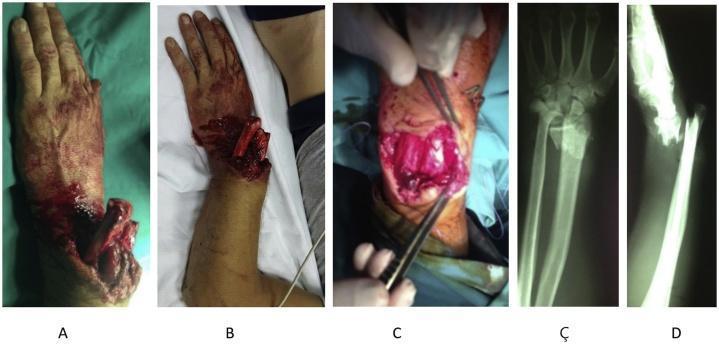
This composite figure presents clinical photographs and diagnostic X-rays of a severe orthopedic injury to the left wrist. Panels A and B are clinical photographs showing a high-energy trauma manifestation: a Gustilo-Anderson Type IIIB open fracture. There is a significant dorsal soft tissue defect with extensive skin loss and a protruding, exposed bone fragment, likely the distal radius. Panel C provides a closer view of the open wound during surgical exploration, highlighting injured musculotendinous structures. Panels Ç and D are anteroposterior (AP) and lateral X-ray views, respectively. They reveal a complex, comminuted extra-articular fracture of the distal radius. The radiological images demonstrate significant dorsal angulation, proximal migration (shortening) of the radial fragment, and a secondary involvement or dislocation of the distal radioulnar joint (DRUJ). These images collectively illustrate the initial presentation of a traumatic mangled extremity requiring urgent surgical debridement and stabilization. The case is educational for identifying severe open fractures, assessing soft tissue loss, and interpreting complex fracture patterns in emergency orthopedic settings.
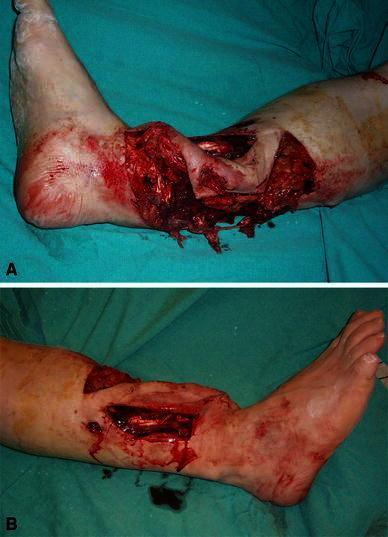
Two clinical photographs (labeled A and B) demonstrate a severe, high-energy Gustilo type IIIC open fracture of the distal right tibia and ankle. The images show a massive soft tissue defect with extensive loss of skin, subcutaneous fat, and muscle. In Figure A, large, irregular wound margins are visible with significant hemorrhage and tissue maceration. A flap of avulsed skin is retracted to reveal the underlying deep structures. In Figure B, the bone is clearly exposed within a deep, longitudinal wound bed, showing evidence of fragmentation and cortical splintering. The surrounding skin exhibits multiple abrasions, contusions, and blood staining. This visual representation highlights the clinical features of a limb-threatening orthopedic injury, characterized by severe comminution and critical soft tissue compromise, requiring urgent surgical intervention and vascular assessment.
Deep Dive: Luisa's Tumor + Open Fracture + Bell's Tremor Drug - with Ayurvedic Parallels
PART 1: LUISA'S TUMOR - "Collapse from a Life-Threatening Mass"
Modern Medicine: How a Tumor Causes Sudden Collapse
How tumors cause sudden collapse - mechanisms:
| Mechanism | What's happening inside | Example tumor |
|---|---|---|
| Raised Intracranial Pressure (ICP) | Growing tumor compresses brain tissue, blocks CSF flow → herniation | Brain glioma, meningioma |
| Hemorrhage into tumor | Tumor's fragile blood vessels rupture suddenly | Glioblastoma, metastasis |
| Spinal cord compression | Mass presses on spinal cord → sudden paralysis or collapse | Vertebral metastasis, ependymoma |
| SVC Syndrome | Mediastinal mass compresses the superior vena cava → blood can't return from head/arms → facial swelling, fainting | Lymphoma, thymoma |
| Hormonal crisis | Adrenal tumor releases sudden catecholamine surge → hypertensive crisis | Pheochromocytoma |
| Airway compression | Neck/thoracic mass occludes trachea → respiratory arrest | Thyroid cancer, lymphoma |
| Seizure | Tumor irritates motor cortex | Any intracranial tumor |
Why it is "sudden" when it has been growing for months:
Key clinical red flags that would have been present for weeks (but often missed):
- Persistent headaches (worse in morning, worsened by bending/coughing)
- Progressive fatigue
- Unexplained weight loss
- New neurological symptoms (vision changes, weakness in one limb)
- Swelling of face/neck (SVC syndrome)
- Episodes of palpitations/sweating/headache (pheochromocytoma)
🌿 Ayurvedic View: Luisa's Tumor = "Arbuda"
What is Arbuda in Ayurveda?
"Mamsam tu dosha dushyam yatra cha krutsnam, tam Arbudam vadanti"
- A mass formed when vitiated Doshas (usually Vata + Kapha + Rakta) corrupt the Mamsa dhatu (muscle/flesh tissue) and Rakta (blood), producing an abnormal, growing, hard swelling
Three-Dosha involvement in Arbuda:
| Dosha | Role in tumor formation |
|---|---|
| Vata | Creates irregular growth, dryness, destroys normal tissue architecture |
| Pitta | Generates inflammation, heat, tissue destruction (malignant behavior) |
| Kapha | Creates cohesion, bulk, slow progressive growth (the "glue" of the mass) |
| Feature | Granthi | Arbuda |
|---|---|---|
| Size | Smaller | Larger |
| Growth | Slow | Faster |
| Mobility | Mobile | Fixed |
| Prognosis | Manageable | Often Asadhya (incurable) |
| Pain | Less | More |
Luisa's collapse in Ayurvedic terms:
- Murcha (fainting/loss of consciousness) - exactly what Luisa experienced
- Vibhrama (altered perception/confusion)
- Bala kshaya (loss of strength)
Why Ayurveda says Arbuda develops in a young person:
- Prajna-aparadha - mistakes of intellect in lifestyle (wrong diet, irregular sleep, overwork)
- Ama accumulation - unprocessed toxins building up in tissues over years
- Ojas depletion - vitality exhausted by chronic stress (Luisa is a hospital transporter + studying for medical school = chronic overwork)
- Srotas obstruction - blocked channels preventing proper tissue nourishment
Simple Ayurvedic message: Arbuda doesn't appear overnight. It builds silently when Ama chokes the tissues and Ojas is depleted. The body gives signals for months - fatigue, heaviness, loss of appetite - but in a world that values productivity over rest, these signals are ignored until collapse.
PART 2: BONE PROTRUDING THROUGH SKIN - Open Fracture
Modern Medicine: The Open Fracture in Full Detail
What exactly is happening inside:
- The fracture fragments create sharp edges
- One fragment lacerates outward through muscle, fascia, and skin ("inside-out" mechanism)
- Bone is now exposed to the external environment = immediate contamination risk
- Blood vessels around the fracture rupture → haematoma → further swelling
- If a major artery is involved (Type IIIC) → limb is ischemic within hours
The Gustilo-Anderson Classification (from Sabiston Surgery Textbook & Rockwood & Green's Fractures, 2025):
| Type | Wound | Soft tissue | Antibiotics | Infection risk |
|---|---|---|---|---|
| I | <1 cm, clean | Minimal damage | Cefazolin (1st gen cephalosporin) | 0-2% |
| II | >1 cm | Moderate flaps/avulsion | Cefazolin ± aminoglycoside | 2-10% |
| IIIA | Large, adequate coverage | Extensive but bone covered | Cefazolin + aminoglycoside | 10-25% |
| IIIB | Large, bone exposed | Periosteal stripping, needs flap | Cefazolin + aminoglycoside + Penicillin G | 25-50% |
| IIIC | Any size + arterial injury | Vascular repair needed | Same as IIIB | 25-50%+ |
Immediate management - step by step:
- ABCDE primary survey first (life over limb)
- Control active bleeding with direct pressure
- Photograph the wound ONCE - do not repeatedly disturb it
- Cover with sterile saline-soaked gauze - do not push bone back in
- Splint the limb in position found
- IV access + blood samples (CBC, coagulation, group & crossmatch)
- IV cefazolin 2g immediately - within 1 hour of presentation (golden rule)
- Tetanus prophylaxis
- Pain management (IV opioids)
- Plain X-ray (2 views minimum)
- CT angiography if vascular injury suspected (Type IIIC)
- Irrigation and debridement (I&D) - remove all contaminated/dead tissue
- Minimum 3-9 litres of normal saline lavage
- Fracture fixation - external fixator (temporary) or intramedullary nail
- Wound left open (not closed) for 48-72 hours
- Return to OR in 48h for reassessment
- Continue IV antibiotics 24-72 hours (debate ongoing)
- Monitor for compartment syndrome - a surgical emergency where swelling increases pressure in the muscle compartment beyond perfusion pressure → muscle necrosis → permanent disability if not treated within 6 hours by fasciotomy
Why alcohol made this case worse (medically):
| Alcohol effect | Clinical consequence |
|---|---|
| Impairs platelet function | More bleeding intraoperatively |
| Masks pain | Patient may not report worsening compartment syndrome |
| Immune suppression | Higher infection risk |
| Aspiration risk | Cannot safely do general anaesthesia without full stomach precautions |
| Vasodilation | Misleadingly normal blood pressure despite significant blood loss |
🌿 Ayurvedic View: Open Fracture = "Asthi-bhagna" + "Vrana" (Wound)
Asthi-bhagna (Bone Fracture) in Ayurveda:
Three-Dosha involvement in bone injury:
| Dosha | Role |
|---|---|
| Vata | Governs Asthi dhatu - the dhatu most directly dependent on Vata. Fracture = acute Vata aggravation causing pain, crepitus, loss of movement |
| Pitta | Governs inflammation, heat, Rakta (blood) - bleeding, swelling, fever |
| Kapha | Governs healing, callus formation (new bone) - Kapha must be nourished for proper union |
Ayurvedic treatment of Asthi-bhagna:
| Sushruta's step | Modern equivalent |
|---|---|
| Shodhana - cleansing the wound with medicated decoctions (Triphala kwatha, Panchavalkala) | Irrigation with normal saline |
| Ropana - healing herbs (Manjistha, Turmeric/Haridra paste) applied to wound | Wound care, antimicrobial coverage |
| Sandhaniya - bone-uniting herbs | Calcium, Vitamin D, bone healing nutrition |
| Bandhana - splinting/bandaging | External fixation / casting |
| Pathya - diet to nourish Asthi dhatu | High protein, calcium-rich diet |
- Asthishrinkhala (Cissus quadrangularis) - the most famous bone-healing herb; stimulates osteoblast activity (modern research confirmed)
- Haridra (Turmeric) - anti-inflammatory, antimicrobial = reduces infection risk
- Shallaki (Boswellia) - reduces Vata-Pitta inflammation around fracture
- Bala (Sida cordifolia) - strengthens Asthi and Mamsa dhatu
The protruding bone - Ayurvedic significance:
Simple Ayurvedic message: The bone protruding through skin = Vata has completely overpowered the body's structure. The skin (Twak = Ojas boundary) is breached. Immediate Shodhana (cleansing) is the first and most critical step - just as modern medicine says antibiotics within 1 hour are non-negotiable.
PART 3: BELL'S TREMOR + EXPERIMENTAL DRUG SIDE EFFECTS
Modern Medicine: Tremor + Drug-Induced Aggression & Cognitive Impairment
Bell's tremor - the likely diagnosis (Multiple Sclerosis):
| Tremor type | Timing | Key feature |
|---|---|---|
| Essential tremor | With movement | Bilateral, symmetric, improves with alcohol |
| Parkinson's tremor | At rest | "Pill-rolling," improves with movement |
| MS intention tremor | End of purposeful movement | Worsens as hand approaches target, cerebellar origin |
| Physiological | With fatigue/stress | Bilateral fine tremor, resolves with rest |
What MS is (brief):
- Immune system attacks myelin sheaths (the insulation around nerve fibres)
- Scars (sclerosis/plaques) form at multiple sites = "multiple sclerosis"
- Common symptoms: fatigue, vision changes (optic neuritis), limb weakness, spasticity, intention tremor, cognitive fog ("MS brain"), bladder dysfunction
- Relapsing-Remitting MS (most common): attacks (relapses) followed by partial recovery
The experimental drug and its side effects:
- Aggression (fighting, hostile outbursts)
- Cognitive impairment (confusion, poor judgment)
| Drug class | Used for tremor | CNS side effects |
|---|---|---|
| Cannabinoids (Cannabis-based medicines) | MS spasticity/tremor | Cognitive slowing, mood changes, psychosis (rare) |
| Clonazepam (benzodiazepine) | Cerebellar tremor | Sedation, confusion, disinhibition → aggression |
| Propranolol | Essential tremor | Bradycardia, fatigue, depression (not aggression) |
| Experimental neurostimulants | Off-label tremor use | Unpredictable CNS effects - aggression, mania |
| High-dose baclofen | Spasticity | Confusion, sedation, paradoxical agitation |
- No pharmacokinetic data on the individual - normal dose may be toxic for Bell
- No monitoring - no one is checking his blood levels, liver function, or CNS status
- Drug interactions - Bell is likely on other medications; unknown interaction profiles
- Masked symptoms - the drug may partially suppress tremor while causing cognitive impairment that Bell cannot self-assess
- The fundamental irony - Bell is cognitively impaired from the drug meant to help him operate safely. He is now doubly dangerous: trembling hands AND impaired judgment.
The deeper medical issue - Physician Self-Neglect:
- Denial of diagnosis
- Avoidance of formal specialist assessment
- Self-prescribing to avoid disclosing to colleagues
- Continuing to operate despite known impairment
- 5x more likely to self-treat rather than seek formal care
- Less likely to have a personal GP/PCP
- More likely to delay diagnosis of their own serious conditions
🌿 Ayurvedic View: Tremor + Drug Side Effects
Kampa (Tremor) in Ayurveda:
Types of Kampa in Ayurveda - mapped to modern types:
| Ayurvedic type | Dosha | Modern parallel |
|---|---|---|
| Vepathu - fine trembling at rest | Vata dominant | Parkinson's resting tremor |
| Kampa - trembling with movement | Vata + Vata-in-Asthi | Essential tremor |
| Chesta-viparyaya - uncoordinated intentional movement | Vata disrupting Majja dhatu (nervous tissue) | MS intention tremor / cerebellar tremor |
The experimental drug side effects - Ayurvedic analysis:
| Modern side effect | Ayurvedic interpretation | Dosha/Guna |
|---|---|---|
| Aggression, hostility | Aggravated Rajas in the Manas (mind) | Rajas guna dominant |
| Cognitive impairment, confusion | Tamas guna increasing in Buddhi (intellect) | Tamas guna dominant |
| Unpredictable mood | Vata disturbing Sadhaka Pitta (the Pitta subdosha of the heart governing emotions and memory) | Vata-Pitta imbalance in Manas |
Why Ayurveda would have warned Bell against this approach:
"A physician who treats himself without proper observation of signs, without proper knowledge of the disease, and without proper guidance - causes more harm than the disease itself."
- Wrong Matra (unknown correct dose)
- Wrong Kala (taken without fasting protocol or monitoring)
- No Anupana (no carrier/adjuvant to guide it to the right tissue)
- No proper Vaidya (physician) overseeing it
| Treatment | Herb/Therapy | Action |
|---|---|---|
| Basti (medicated enema) | Masha taila, Bala taila | Most important Vata-pacifying treatment; directly nourishes Majja dhatu via colon (the seat of Vata) |
| Shirodhara | Tila taila / Brahmi taila poured on forehead | Calms Vata in nervous system, reduces Kampa |
| Nasya | Anu taila instilled nasally | Direct route to brain via nasal-brain pathway; nourishes Majja |
| Ashwagandha | Withania somnifera | Adaptogen, nourishes Majja and Ojas, reduces neurological fatigue |
| Brahmi | Bacopa monnieri | Improves cognitive function, calms Sadhaka Pitta, reduces confusion |
| Bala | Sida cordifolia | Strengthens Vyana Vata's control over motor function |
Simple Ayurvedic message: Bell's tremor is Majja-gata Vata - Vata has entered the deepest nervous tissue. Trying to suppress it with an untested drug without proper guidance aggravates Rajas and Tamas in the mind. Ayurveda would prescribe Basti + Shirodhara to nourish Majja from within - calming Vata without poisoning the mind.
Overall Three-Topic Ayurvedic Summary 🌿
| Topic | Modern diagnosis | Ayurvedic name | Root cause | Treatment principle |
|---|---|---|---|---|
| Luisa's tumor | Space-occupying mass causing collapse | Asadhya Arbuda | Ama + Rakta-Mamsa dushti + Ojas kshaya | Shodhana, Rasayana, palliate; recognize Asadhya |
| Bone protruding | Gustilo Type II/III open fracture | Vikshipta Asthi-bhagna + Vrana | Acute Vata aggravation, Twak (skin) boundary broken | Shodhana (Triphala wash), Ropana (Haridra paste), Bandhana (splinting), Sandhaniya herbs |
| Bell's tremor | MS intention tremor (Majja-gata Vata) | Kampa - Majja dhatu kshaya | Vata entering Majja, Tarpaka Kapha depleted | Basti, Shirodhara, Nasya, Ashwagandha, Brahmi |
| Drug side effects | Cognitive impairment + aggression | Rajas-Tamas vitiation in Manas | Wrong Aushadha used as Visha (poison) | Stop the drug; Medhya Rasayana (Brahmi, Shankhapushpi) to restore Buddhi |
The resident season 1 episode 4 to episode 14 medical related notes and lessons
The Resident Season 1 episodes 4 5 6 7 8 medical plot summary Identity Crisis None the Wiser No Matter the Cost Elopement
The Resident Season 1 episodes 9 10 11 12 13 14 medical plot summary Lost Love Haunted And the Nurses Get Screwed
https://en.wikipedia.org/wiki/List_of_The_Resident_episodes
The Resident Season 1 episodes 4 5 6 7 8 9 10 11 12 13 14 full medical storylines Lane chemotherapy fraud Lily patient diagnoses
The resident season 1 episode 4 to episode 14 medical related notes and lessons including medicine mention their side effects and ayurvedic aprroach perspective
https://en.wikipedia.org/wiki/List_of_The_Resident_episodes
https://the-resident.fandom.com/wiki/Lane_Hunter
The Resident Season 1 episode 4 "Identity Crisis" episode 5 "None the Wiser" episode 6 "No Matter the Cost" detailed medical plot diagnosis treatment drugs
The Resident Season 1 episode 7 elopement episode 8 family affair episode 9 lost love episode 10 haunted medical details Wegener disease hallucinations
The Resident Season 1 episodes 11 12 13 14 surgical fire nurse investigation Lily death run doctor bus accident total eclipse heart medical details
The Resident Season 1 - Episodes 4 to 14
Medical Notes, Lessons, Medicines + Side Effects + Ayurvedic Perspective
📺 EPISODE 4 - "Identity Crisis"
Medical Plot:
- A patient in the ER dies after being misidentified - Conrad gave a death notification to the wrong family
- Nic tracks missing patient records from Lane Hunter's oncology clinic
- Dr. Okafor reduces a dislocated shoulder in the waiting room
- Devon spends hours on the phone fighting an insurance company to get a surgery approved
🏥 Medical Learning
1. Patient Misidentification - A "Never Event"
- Patients arriving unconscious/unable to identify themselves
- Similar names in the same ER
- Rushed triage with no double-check
- Lack of standardized ID protocols
- TWO patient identifiers before ANY clinical action (full name + date of birth)
- Wristband checked at every handover
- Electronic barcode scanning systems
- Never rely on room number or bed number alone
2. Shoulder Dislocation Reduction (Mina's bedside skill)
| Technique | How | Use |
|---|---|---|
| Cunningham | Massage deltoid/biceps while patient sits still | No sedation needed |
| External rotation | Slowly externally rotate arm to 90° | Low force, safe |
| Traction-countertraction | Sheet around chest + longitudinal pull | Classic technique |
| FARES method | Slow oscillation + abduction | Fastest, least painful |
3. Insurance Prior Authorization Battles
- Prior authorization = insurance company requirement to approve procedures before they happen
- Creates dangerous delays in urgent care
- Studies show prior auth delays lead to adverse outcomes in up to 24% of cases (AMA data)
- Doctors spend an average of 14 hours per week on prior auth tasks
💊 Medicine in this Episode:
| Side Effect | Severity | Notes |
|---|---|---|
| Sedation / cognitive impairment | Common | Worst in elderly and surgeons |
| Aggression / disinhibition | Common | Paradoxical reaction, especially in anxious patients |
| Memory impairment (anterograde amnesia) | Common | |
| Dependence / withdrawal seizures | Serious | Even after short-term use |
| Respiratory depression | Serious | Especially with opioids |
| Falls and fractures in elderly | Common |
🌿 Ayurvedic Perspective
| Modern Concept | Ayurvedic View |
|---|---|
| Patient misidentification | Violation of Anamnesis (proper history-taking); Ayurveda mandates knowing the patient's Prakriti, Desha, Kala before any intervention |
| Shoulder dislocation | Sandhi-bhagna/Vishlesha - joint displacement caused by sudden Vata surge; reduced by Samshthapana (repositioning) + Sneha Bandhana (oil + splint) |
| Insurance delay | Artha-dosha - when monetary greed (Lobha) obstructs the physician's duty (Dharma), it violates the Charaka code |
| Benzodiazepine aggression | Rajas aggravation - sedating drugs that paradoxically increase Rajas align with Ayurvedic warnings about Tamas-producing medicines that destabilize Manas |
Ayurvedic lesson: The correct identification of a patient - their name, history, body constitution, and current state - is the foundation of Ayurvedic diagnosis (Rogi Pariksha). Without it, all treatment is misdirected.
📺 EPISODE 5 - "None the Wiser"
Medical Plot:
- Three concurrent surgeries running simultaneously: (1) Ed's atrophied testicle removal; (2) Christine's abdominal aortic aneurysm (AAA) repair; (3) York's foreign object removal from colon
- Bell is on benzodiazepines and faints mid-surgery
- The wrong testicle is removed from Ed (healthy one instead of atrophied)
- A morbidity and mortality (M&M) conference is held afterward
- Nic shares concerns about Lane's oncology protocols with Conrad
🏥 Medical Learning
1. Abdominal Aortic Aneurysm (AAA)
"Aortic rupture is associated with 90% mortality. Aneurysm diameter is the strongest predictor of rupture."
- Definition: Aortic diameter >3 cm
- Risk factors: Male sex, age >65, smoking, hypertension, family history
- Elective repair threshold: >5.5 cm in men, >5.0 cm in women
- Symptoms of rupture: Sudden severe back/abdominal pain, hypotension, pulsatile abdominal mass = surgical emergency
- Repair options: Open surgery OR Endovascular Aneurysm Repair (EVAR)
- Complications post-repair: Acute kidney injury (40-75%), respiratory failure (40%), MI (25%), sepsis (15%)
2. Wrong-Organ Surgery - A "Never Event"
- No surgical time-out before incision
- Marking protocol not followed (mark the correct site before patient enters OR)
- Communication failure between teams
- Staff distraction
- Pre-op verification - correct patient, procedure, site
- Site marking - surgeon marks the operative site with indelible ink
- Time-out - mandatory pause before incision: team confirms patient, procedure, side, and allergies
3. Morbidity & Mortality (M&M) Conference
- Identify what went wrong and why
- Learn and improve without blame (just culture)
- Not a disciplinary proceeding (ideally)
- Mandatory in most surgical training programs
💊 Medicine:
- Causing his mid-surgery fainting and impaired judgment
- Critical lesson: Any CNS-altering drug is an absolute contraindication before performing surgery
🌿 Ayurvedic Perspective
| Medical Concept | Ayurvedic View |
|---|---|
| AAA (bulging aorta) | Rakta-vaha Srotas vikara - the main blood vessel (Mahanaadi) weakening due to Vata eroding the wall from within; Vata-Pitta causing thinning and expansion |
| Wrong organ removed | Failure of Purva Karma (pre-operative preparation ritual in Shalya Tantra) - Sushruta insisted on marking, identifying, and confirming the surgical site before any incision |
| Three simultaneous surgeries | Bala and Kala principle - Ayurveda says surgery must consider the physician's own energy (Bala) and the right time (Kala); rushing three surgeries together violates both |
| M&M conference | Aligned with Guru Sabha - the assembly of senior vaidyas for case review described in Charaka Samhita as essential for learning |
📺 EPISODE 6 - "No Matter the Cost"
Medical Plot:
- Conrad investigates a patient with chronic, painful, undiagnosed illness - eventually solved
- Mina helps a young man from her neighborhood who tried to mug her
- Nic enlists Devon to investigate Lane Hunter's patient records
🏥 Medical Learning
1. Chronic Undiagnosed Illness - Diagnostic Odyssey
- Anchoring bias - first diagnosis sticks despite contradictory evidence
- Rare diseases (avg: 7 years to diagnosis for rare disease patients)
- Psychosomatic misclassification - pain without obvious cause labeled as psychiatric
- Tests ordered without a clear hypothesis
- Return to first principles - full history, physical exam
- Question all prior assumptions
- Look for connecting threads across symptoms
2. Lane Hunter's Chemotherapy Fraud - The Deepening Storyline
- Giving chemotherapy to patients who do not have cancer (or whose cancer is in remission)
- Falsifying pathology reports and blood work
- Motivated purely by financial gain (chemotherapy reimbursements are extremely high)
| Chemotherapy agent | Common side effects | Serious toxicity |
|---|---|---|
| Cyclophosphamide | N&V, alopecia, fatigue | Hemorrhagic cystitis, bladder cancer |
| Doxorubicin | N&V, cardiomyopathy | Irreversible heart failure (>550 mg/m² cumulative) |
| Vincristine | Constipation, neuropathy | Peripheral neuropathy (permanent) |
| Cisplatin | N&V, tinnitus | Nephrotoxicity, ototoxicity (permanent hearing loss) |
| 5-Fluorouracil (5-FU) | Mucositis, diarrhea | Cardiotoxicity, hand-foot syndrome |
| Methotrexate | Mucositis, fatigue | Hepatotoxicity, pulmonary fibrosis |
🌿 Ayurvedic Perspective
| Concept | Ayurvedic View |
|---|---|
| Diagnostic odyssey | Nidana Panchaka - Ayurveda's 5-step diagnostic framework (cause, premonitory signs, symptoms, exploratory treatment, pathological process) prevents premature diagnosis |
| Unnecessary chemotherapy | Introducing Visha (poison) into a healthy body; directly violates Ahimsa and Nidana Parivarjana (remove cause, don't add new harm); would be classified as Kutsa Vaidya behavior |
| Chemotherapy side effects | Chemo = pure Ama-Visha (toxic matter) creating Rakta-dushti (blood toxicity), Agni-nasha (digestive fire destruction), Ojas-kshaya (vital essence depletion) |
Ayurvedic healing for chemo damage: Rasayana therapy (Ashwagandha, Shatavari, Amalaki) to rebuild Ojas; Panchakarma Shodhana to clear Ama; Agni-deepana herbs (Trikatu, Pippali) to restore digestive fire destroyed by cytotoxic agents.
📺 EPISODE 7 - "The Elopement"
Medical Plot:
- Walter - an older man with terminal cancer refuses treatment and wants to go home to die on his own terms
- Lane insists on an aggressive experimental treatment; Conrad defends Walter's right to refuse
- A VIP patient sexually harasses Nic
- Bell realizes he needs Mina's steady hands to assist him in surgery
🏥 Medical Learning
1. Terminal Cancer - Patient's Right to Refuse Treatment
- Grounded in autonomy (Principle 1 of bioethics)
- Supported by case law (Cruzan v. Director, 1990; Schloendorff v. Society of NY Hospital, 1914)
- Clinical standard: If the patient has capacity (understands the decision and its consequences), their refusal must be respected
- It violates patient autonomy
- Experimental treatment on a terminal patient without genuine informed consent = research without ethics approval
- A physician who overrides refusal commits battery (illegal touching without consent)
- Palliative care and hospice are valid, dignified choices
- Quality of remaining life > quantity of life prolonged by suffering
2. Medical Paternalism vs. Patient Autonomy
- Information provided in understandable terms
- Patient's values and goals explored
- Decision made jointly
- Patient's final choice respected
💊 Medicine:
| Drug | Use | Key side effects |
|---|---|---|
| Morphine | Pain control, dyspnea | Constipation, sedation, respiratory depression |
| Haloperidol | Terminal agitation/delirium | EPS, QT prolongation |
| Midazolam | Palliative sedation | Respiratory depression |
| Dexamethasone | Reduce tumor edema, appetite | Hyperglycemia, immune suppression, insomnia |
| Ondansetron | Nausea | Constipation, headache |
🌿 Ayurvedic Perspective
| Concept | Ayurvedic View |
|---|---|
| Terminal cancer, patient refuses treatment | Ayurveda's Asadhya doctrine: when a disease is incurable, the physician's duty shifts to comfort, dignity, and spiritual preparation - NOT aggressive futile treatment |
| Forcing treatment on terminal patient | Violates Ahimsa (non-harm) - forcing suffering on someone who is dying is the opposite of healing |
| Palliative care | Sukha Marana (peaceful death) - Ayurveda honors the dying process; Charaka describes preparation for death as a sacred transition requiring peace, not medical aggression |
| Morphine for dying | Ayurveda's equivalent: Gandha/Ahiphena (opium-based) preparations used in Ayurvedic palliative texts for pain in terminal illness; recognized as legitimate Anarthanashaka (destroyer of suffering) |
📺 EPISODE 8 - "Family Affair"
Medical Plot:
- A homeless Jane Doe wanders into a hospital charity gala appearing to be in psychosis
- She was illegally dumped by another hospital (patient dumping)
- Conrad and Nic challenge her diagnosis of paranoid schizophrenia - they suspect an organic cause
- Eventually diagnosed with Wegener's Granulomatosis (Granulomatosis with Polyangiitis - GPA) attacking her brain
- Devon cares for a male escort; Micah returns for post-transplant checkup
🏥 Medical Learning
1. Wegener's Granulomatosis (GPA) Mimicking Psychosis - "The Great Masquerader"
- An autoimmune vasculitis - inflammation of small and medium blood vessels
- Classic triad: Upper respiratory (sinusitis, nosebleeds), lower respiratory (pulmonary infiltrates), kidney disease (glomerulonephritis)
- When it attacks the brain (CNS vasculitis): confusion, hallucinations, psychosis, seizures, personality change
- Neuropsychiatric symptoms are the presenting feature in ~1-2% of GPA
- No obvious inflammatory signs
- No classic renal or respiratory features yet
- Psychiatry sees "psychosis" → treats with antipsychotics → underlying vasculitis progresses
- c-ANCA (PR3-ANCA) - highly specific for GPA (90% sensitivity in active disease)
- Biopsy showing necrotizing granulomata
- CT chest/sinuses - nodules, cavities, sinusitis
- Urinalysis - red cell casts in urine = glomerulonephritis
- Rituximab + cyclophosphamide for induction remission
- Prednisolone (high-dose steroids) initially
- Maintenance with azathioprine or rituximab
2. Organic vs. Functional Psychiatric Disease - Critical Distinction
"Always rule out organic (medical) causes of apparent psychiatric symptoms before labeling a patient with a psychiatric diagnosis."
| Cause | Clue |
|---|---|
| CNS vasculitis (GPA, SLE) | Systemic features, inflammatory markers |
| Autoimmune encephalitis (NMDA-receptor) | Young woman, acute onset, movement disorder |
| Thyroid storm / myxedema | Thyroid history, vitals abnormal |
| Wernicke's encephalopathy | Alcoholism, ophthalmoplegia, ataxia |
| Neurosyphilis | Sexual history, positive RPR/VDRL |
| CNS Infection (meningitis, encephalitis) | Fever, neck stiffness, CSF changes |
| Lead/heavy metal toxicity | Occupational exposure |
| Vitamin B12 deficiency | Diet, macrocytic anemia, subacute degeneration |
💊 Medicine:
| Drug | Side Effects |
|---|---|
| Cyclophosphamide | Hemorrhagic cystitis, bladder cancer, infertility, myelosuppression |
| Rituximab | Infusion reactions, PML risk (rare), immunosuppression |
| Prednisolone | Cushing's syndrome, osteoporosis, diabetes, hypertension, insomnia, weight gain |
| Azathioprine | Myelosuppression, hepatotoxicity, lymphoma risk |
🌿 Ayurvedic Perspective
| Concept | Ayurvedic View |
|---|---|
| GPA (autoimmune vasculitis) | Rakta-dushtijanya Vata-Pitta roga - vitiated Pitta inflames Rakta (blood/vessels), Vata creates the granuloma patterning and multiorgan spread |
| Psychosis from organic cause | Unmada (psychiatric disturbance) in Ayurveda is always investigated for Sharira hetu (physical causes) first - Charaka lists fever, toxins, nutritional deficiency as organic causes of Unmada |
| Homeless patient dumped | Charaka: "The preceptor, the poor, travellers, the destitute - treat them as your own kin" - patient dumping is the antithesis of Ayurvedic medical duty |
| Steroid side effects (Cushingoid) | High-dose steroids = Pitta aggravation → weight gain (Kapha increase), skin changes, bone weakening (Asthi kshaya), blood sugar elevation (Medas vitiation) |
📺 EPISODE 9 - "Lost Love"
Medical Plot:
- Conrad's ex-fiancée Catherine arrives with mysterious abdominal pain that stumps everyone
- Conrad fights to keep Bell away from performing her surgery
- Eventually a rare or complex abdominal diagnosis is uncovered
- Bell panics as OR cameras are announced (exposing his operating record)
- Lane realizes Nic is investigating her clinic
🏥 Medical Learning
1. Abdominal Pain as a Diagnostic Challenge - "The Acute Abdomen"
| Quadrant | Common causes |
|---|---|
| RUQ | Cholecystitis, hepatitis, liver abscess, Fitz-Hugh-Curtis |
| LUQ | Splenic pathology, gastric ulcer, pancreatitis |
| RLQ | Appendicitis, Crohn's, ovarian cyst/torsion, ectopic pregnancy |
| LLQ | Diverticulitis, sigmoid volvulus, ovarian pathology |
| Diffuse/central | Peritonitis, mesenteric ischemia, aortic dissection, IBD, SBO |
| Referred | MI (epigastric), pneumonia (upper abdominal), renal colic (flank to groin) |
- Mesenteric ischemia - "pain out of proportion" to exam; elderly/AF patients
- Addison's crisis - bilateral adrenal insufficiency
- Porphyria - periodic severe colic, neuropsychiatric symptoms
- Familial Mediterranean Fever
- Hereditary angioedema - bowel wall edema
2. Physician Bias When Treating Known Patients
- Emotional bias clouds clinical judgment (over-investigation OR under-investigation)
- Difficulty with difficult conversations (prognosis, bad news)
- Role conflict - physician role vs. personal relationship
- AMA Code of Ethics and GMC guidelines both advise against treating close family/friends except in emergencies
3. OR Cameras - Surveillance and Accountability
- OR cameras (video recording of procedures) are being trialed in many hospitals globally
- Benefits: quality review, training, medico-legal documentation, accountability
- Studies show OR video review reduces surgical errors by up to 21%
- Bell's panic reveals the show's core premise: transparency is the antidote to concealed incompetence
🌿 Ayurvedic Perspective
| Concept | Ayurvedic View |
|---|---|
| Complex abdominal pain | Udara roga (abdominal disease) - Ayurveda's Charaka Samhita dedicates an entire chapter to abdominal disorders; Vata-Pitta-Kapha analysis of pain character, timing, relation to food |
| Physician treating loved ones | Moha (attachment/delusion) clouds Viveka (discernment); Charaka warns physicians against emotional entanglement distorting clinical judgment |
| OR camera accountability | Aligns with Ayurvedic principle of Tapas (discipline and transparent practice) - a true Vaidya has nothing to hide |
📺 EPISODE 10 - "Haunted"
Medical Plot:
- Conrad is hit by a bicycle and badly sprains his ankle; he refuses treatment and works through it
- Conrad treats his old medical professor Jacoby who is having vivid hallucinations of deceased former patients
- A nurse sends Jacoby to the psychiatric ward simply for talking to herself
- Bell operates on a foreign dignitary with complications
🏥 Medical Learning
1. Ankle Sprain - The Physician as Patient
| Grade | Ligament damage | Instability | Treatment |
|---|---|---|---|
| I | Microscopic tears | None | RICE, early mobilization |
| II | Partial tear | Mild-moderate | RICE, brace, physio |
| III | Complete tear | Significant | Immobilization ± surgery |
- Pride prevents help-seeking
- Occupational pressure to "push through"
- Fear of losing clinical privileges
2. Hallucinations in an Elderly Professor - Differential Diagnosis
| Cause | Features | Key investigation |
|---|---|---|
| Lewy Body Dementia | Visual hallucinations (detailed, vivid), Parkinsonism, fluctuating cognition | DaTscan, clinical criteria |
| Delirium | Acute, fluctuating, often reversible | Rule out infection, metabolic, drugs |
| Psychotic depression | Mood features, guilt-laden content | Mental state exam |
| Schizophrenia (late-onset) | Rare in elderly, no prior history | Diagnosis of exclusion |
| Charles Bonnet Syndrome | Visual hallucinations in visually impaired; patient knows they're not real | Visual acuity testing |
| Bereavement-related hallucinations | Seeing/hearing deceased loved ones; normal grief | History |
🌿 Ayurvedic Perspective
| Concept | Ayurvedic View |
|---|---|
| Ankle sprain | Marma-ghata - the ankle (Kshipra marma) is a vital marma point; injury here affects Vata flow to the entire lower limb; treated with Pinda Sweda (warm rice poultice), Mahanarayan taila massage, Bandhana (bandage) |
| Conrad refusing treatment | Adhyatma-dosha - self-neglect by a physician is a spiritual fault; a healer who cannot heal themselves teaches others to ignore their body |
| Hallucinations in professor | Pradvesha Unmada (psychosis from guilt/grief) - Charaka describes visions of the dead in those burdened by Karmic guilt or unresolved emotional burden (Manasika Dosha); the professor's guilt over past patients manifests as Vata-Manas disorder |
| Nurse's premature psych referral | Failure of Rogi Pariksha - complete patient examination must precede any diagnosis; Ayurveda would examine all eight diagnostic parameters (Ashtasthana Pariksha) before labeling any behavior pathological |
📺 EPISODE 11 - "And the Nurses Get Screwed"
Medical Plot:
- Nic investigated for Lily's death - Lane pins the potassium overdose on Nic
- During a routine surgery, Bell's patient catches fire in the OR
- Hospital starts investigation into Bell's surgical records
- Devon treats a hypochondriac in the ER who he fears will end up under Lane's predatory care
🏥 Medical Learning
1. Surgical Fire in the Operating Room
"The Anesthesia Patient Safety Foundation has developed an educational video and online teaching module that provides fire safety education from the perspective of the anesthesia provider."
| Element | Source in OR |
|---|---|
| Oxidizer | Oxygen (especially enriched O₂ environment), N₂O |
| Ignition source | Electrocautery, laser, defibrillator, light cables |
| Fuel | Surgical drapes, gowns, alcohol-based prep solutions, sponges, intestinal gas, airway (intubation fires) |
- Head/neck/face surgery with open O₂ delivery (mask or nasal cannula)
- Bowel surgery with methane gas + electrocautery
- Alcohol-based skin prep not fully dried before draping
- Reduce FiO₂ to minimum effective level during head/neck procedures
- Allow alcohol prep to fully dry (≥3 minutes) before draping
- Surgeons announce before using electrocautery near oxygen source
- Have fire extinguisher immediately accessible
- Call "FIRE" - alert whole team
- Remove burning materials
- Stop O₂ flow
- Use saline/water to extinguish
- Activate fire protocol (evacuate patient if necessary)
2. Potassium Overdose (Lily's Death) - IV Potassium Safety
"Treatment of hyperkalemia with ECG changes should immediately involve calcium gluconate for stabilization of the cardiac membrane... giving the patient dextrose followed by insulin..."
- Maximum concentration: 40 mEq/L peripheral; 200 mEq/L central line only
- Maximum rate: ≤10 mEq/hour peripheral; ≤40 mEq/hour in ICU with monitoring
- Never give IV potassium as a bolus - can cause immediate fatal cardiac arrest
- Potassium chloride (KCl) ampoules are kept separately from other drugs in most hospitals precisely because they look similar to saline/water
- Peaked T waves
- PR prolongation
- QRS widening
- Sine wave pattern
- Ventricular fibrillation → death
- Calcium gluconate IV - stabilizes cardiac membrane (immediate)
- Insulin + dextrose - shifts K⁺ into cells (30 min)
- Salbutamol nebuliser - shifts K⁺ intracellularly
- Sodium bicarbonate - in acidotic patients
- Kayexalate (sodium polystyrene sulfonate) - removes K⁺ from gut
- Dialysis - in renal failure or severe refractory cases
3. Illness Anxiety Disorder (Hypochondria)
"When there is preoccupation with health concerns superimposed by substantial somatic symptoms, the diagnosis is somatic symptom disorder. Phenomenologically, health anxiety can be broken down into several components, including idiopathic physical symptoms, such as amplification of bodily sensations."
- CBT (Cognitive Behavioral Therapy) - first-line
- Reassurance providing (but not excessive) + regular scheduled visits
- SSRIs (fluoxetine, paroxetine) if severe
- Avoid excessive investigations - reinforces anxiety
- Key: validate the patient's distress without validating the false belief
🌿 Ayurvedic Perspective
| Concept | Ayurvedic View |
|---|---|
| OR surgical fire | Fire (Agni) in Ayurveda is sacred and must be controlled; an uncontrolled fire in a healing space = complete failure of Shuddha Karma (pure/clean practice) |
| Potassium overdose murder | Administering Visha (poison) deliberately = the most severe violation of Charaka's Oath - "Thou shall not desert or injure thy patient" |
| Illness anxiety / hypochondria | Mana-roga with Vata-Rajas dominance - the anxious mind amplifies bodily sensations; treated with Ashwagandha, Brahmi, Shankhapushpi and Sattvavajaya Chikitsa (mind training therapy) |
| Nurse blamed for doctor's crime | Adharma - using a lower-ranked person as a scapegoat violates justice (Nyaya), one of the four goals of Ayurvedic societal ethics |
📺 EPISODE 12 - "Rude Awakenings and the Raptor"
Medical Plot:
- A fellow doctor, Bradley Jenkins, falls through the hospital skylight
- Conrad and Devon race to save him - significant polytrauma
- Dr. AJ Austin ("The Raptor") is introduced - brilliant, volatile cardiothoracic surgeon
- Bell realizes cameras in the OR will expose him; escalates his manipulation
🏥 Medical Learning
1. Polytrauma - Doctor Falls Through Skylight
- Penetrating lacerations from glass fragments
- Blunt force polytrauma - multiple simultaneous injuries
- Traumatic Brain Injury (TBI) risk
- Pneumothorax from rib fractures/glass penetration
- Spinal injury - until proven otherwise in falls from height
- Primary survey (ABCDE) - Airway, Breathing, Circulation, Disability (neuro), Exposure
- Stabilize life-threatening injuries first
- Secondary survey - head-to-toe assessment for all injuries
- Imaging: Whole-body CT ("Trauma Pan-scan")
- Surgical intervention for hemorrhage control
2. Physician Burnout and "Falling Through the System"
- ~50% of US physicians meet criteria for burnout (Medscape 2023)
- Burnout leads to: medical errors, substance abuse, depression, suicide
- Resident physicians have the highest rates, especially in surgery
- 30-hour shifts impair cognitive performance equivalent to 0.10% blood alcohol (over legal limit)
- Working through fatigue is normalized in medicine despite clear evidence of harm
- Post-duty rest requirements exist (ACGME: max 80h/week, max 24+4h shift) but are frequently violated
🌿 Ayurvedic Perspective
| Concept | Ayurvedic View |
|---|---|
| Polytrauma from fall | Patanadijanya Abhighata - trauma from falling; Shalya Tantra (Sushruta's surgical branch) addresses all traumatic injuries systematically |
| Physician falling from exhaustion | Ayas-kshaya (depletion from overwork) - Ayurveda explicitly warns against extreme physical and mental exertion (Ati-Vyayama) causing Vata aggravation → accidents, disease, death |
| AJ Austin (brilliant but volatile) | Pitta-dominant Prakriti - high intellect, high performance, high volatility; needs Pitta-pacifying practices (Sheetali pranayama, Coriander, Coconut water, meditation) to prevent destructive anger |
📺 EPISODE 13 - "Run, Doctor, Run"
Medical Plot:
- A patient deteriorates rapidly from undetermined symptoms - Conrad and Devon fight time
- Multiple ER cases including patients from a bus accident
- Conrad is personally implicated in a patient's outcome, setting up the finale
- Nic's framing by Lane escalates
🏥 Medical Learning
1. Rapid Deterioration - Unknown Cause
| Letter | Cause |
|---|---|
| A | Alcohol, Anoxia |
| E | Epilepsy, Electrolytes, Encephalopathy |
| I | Insulin (hypo/hyperglycemia) |
| O | Opioids, Overdose |
| U | Uremia |
| T | Trauma, Temperature |
| I | Infection, Inflammation |
| P | Psychiatric, Poisoning |
| S | Stroke, Space-occupying lesion |
2. Mass Casualty / Bus Accident Triage
| Color | Status | Criteria |
|---|---|---|
| RED | Immediate | Life-threatening but salvageable |
| YELLOW | Delayed | Serious but stable |
| GREEN | Minor | Walking wounded |
| BLACK | Expectant/Deceased | Not salvageable or dead |
🌿 Ayurvedic Perspective
| Concept | Ayurvedic View |
|---|---|
| Rapid deterioration - unknown cause | Apatarpana (rapid depletion) - when Ojas falls catastrophically fast, the physician must move immediately to Brinhana (nourishing/strengthening) therapy; also check for Visha (toxin) exposure |
| Mass casualty triage | Bahu-rogi Pariksha - Charaka acknowledges scenarios where a physician must prioritize; Hita-ahita viveka (discernment of benefit) guides triage decisions |
📺 EPISODE 14 - "Total Eclipse of the Heart" (Season Finale)
Medical Plot:
- Conrad makes a desperate move to save Nic from Lane's sabotage
- Lane Hunter's chemotherapy fraud is fully exposed
- Lily's death from potassium overdose is revealed to be deliberate murder by Lane
- Conrad "calls in a favor" from someone he swore never to use
- Nic is exonerated; Lane is arrested
🏥 Medical Learning
1. Lane Hunter's Full Crime - Medical Murder
- Fraud - billing for chemotherapy that patients didn't need
- Battery - administering chemotherapy without proper informed consent (patients didn't know they didn't have cancer)
- Murder - deliberately causing Lily's death by potassium overdose to prevent exposure
- Confirmation bias - patients trusted their oncologist
- Patients received chemotherapy symptoms (nausea, fatigue, hair loss) confirming their belief in the diagnosis
- No second opinions sought - Lane actively discouraged them
- Records falsified - pathology reports altered
- Institutional silence - hospital revenue depended on her oncology program
2. Whistleblowing in Medicine
- False Claims Act - whistleblowers can receive 15-30% of recovered fraud
- Sarbanes-Oxley Act - protects healthcare employees from retaliation
- Qui Tam provisions - allow private individuals to sue on behalf of the government
- Whistleblowers face retaliation (as Nic did - framing, investigation, suspension)
- Institutional loyalty protects perpetrators
- Without physical evidence (like patient records), claims are hard to prove
💊 The Full Drug-Harm Summary of Season 1:
| Drug/Treatment | Episode | Harm caused | Notes |
|---|---|---|---|
| Benzodiazepines | 3, 4, 5 | Aggression, cognitive impairment, surgical fainting | Bell self-prescribed; paradoxical CNS effects |
| IV Chemotherapy (multi-agents) | 6-14 | Permanent neuropathy, organ damage, death | Given to healthy patients by Lane |
| IV Potassium (overdose) | 11, 14 | Fatal hyperkalemia, cardiac arrest | Deliberate murder by Lane |
| Morphine / Opioids | 7 | Respiratory depression, dependence | Appropriate in terminal care |
| Dilaudid (Ep 1) | 1 | Opioid toxicity | Patient negotiated dose; precipitated PEA arrest |
| Experimental tremor drug | 3 | Aggression, cognitive impairment | Bell self-prescribing; unknown drug |
🌿 Final Ayurvedic Summary - Season 1 Theme
| Season 1 overarching theme | Ayurvedic principle |
|---|---|
| System prioritizes money over patients | Artha-dosha (economic corruption) - Charaka warns that physicians who practice for gold rather than Dharma violate the sacred physician contract |
| Lane's chemotherapy murder | Visha-prayoga (deliberate poison administration) - the most extreme Ayurvedic medical crime; the Arthashastra of Kautilya (contemporary with Charaka) prescribed severe punishment for physicians who deliberately harm patients |
| Persistent patient advocacy (Conrad, Nic) | Rogi-hita principle - the patient's welfare above all else; the truest expression of Charaka's Oath |
| Whistleblowing vindicated | Satya (truth) and Dharma (right conduct) always prevail eventually - as Charaka Samhita teaches, a physician governed by Satya protects not only the patient but the entire community |
| Physician self-harm (Bell, Bradley) | Swastha Vritta (physician's own health protocol) - the healer must be healthy in body, mind, and spirit; neglecting this harms both physician and patient |
| Episode | Core Medical Topic | Key Drug/Treatment | Primary Lesson |
|---|---|---|---|
| 4 | Patient misidentification, shoulder dislocation | Benzodiazepines | Never-events; two-identifier rule |
| 5 | AAA repair, wrong testicle, M&M conference | Benzos (Bell faints) | Universal protocol; surgical time-out |
| 6 | Diagnostic odyssey, chemo fraud begins | Cyclophosphamide, Doxorubicin, Cisplatin | Second opinion mandatory before chemo |
| 7 | Terminal cancer, patient autonomy, palliative care | Morphine, Dexamethasone | Autonomy > paternalism; Asadhya principle |
| 8 | GPA mimicking psychosis, patient dumping | Rituximab, Cyclophosphamide, Prednisolone | Organic causes before psychiatric diagnosis |
| 9 | Complex abdominal pain, physician-patient conflict | - | Physician treating known patients = bias risk |
| 10 | Ankle sprain, elderly hallucinations, Lewy Body | - | Physician self-neglect; organic causes of hallucinations |
| 11 | OR fire, potassium overdose murder, health anxiety | IV KCl, Calcium gluconate | Fire triangle prevention; hyperkalemia ECG changes |
| 12 | Polytrauma (fall), physician burnout | - | ATLS protocol; resident fatigue and safety |
| 13 | Unknown rapid deterioration, mass casualty triage | - | AEIOU-TIPS; START triage |
| 14 | Chemo fraud exposed, medical murder | Multiple chemo agents | Second opinions; whistleblower protections |