
Recurrent apthous ulcer without any associated symptoms
I'll look up recurrent aphthous ulcers (RAU) in the medical library first.
Searching sources...
Reading File
Finding Sources
Finding Sources
Good - found strong matches in Cummings Otolaryngology and Andrews' Dermatology. Let me read those sections in parallel.
Reading File
Reading File
Excellent content. Let me continue reading both sections for treatment details.
Reading File
Reading File
I now have comprehensive content. Let me also fetch the clinical image and get the Cummings treatment section.
Reading File
Loading Image
I now have comprehensive information. Here is a detailed, well-structured answer on Recurrent Aphthous Ulcers (RAU) without associated systemic symptoms.
Recurrent Aphthous Ulcer (Recurrent Aphthous Stomatitis - RAS)
RAS is the most common nontraumatic oral ulceration, affecting 20-40% of the general population. It typically begins in the second or third decade of life and recurs for many years. When it occurs without associated systemic symptoms, it is classified as true idiopathic RAS.
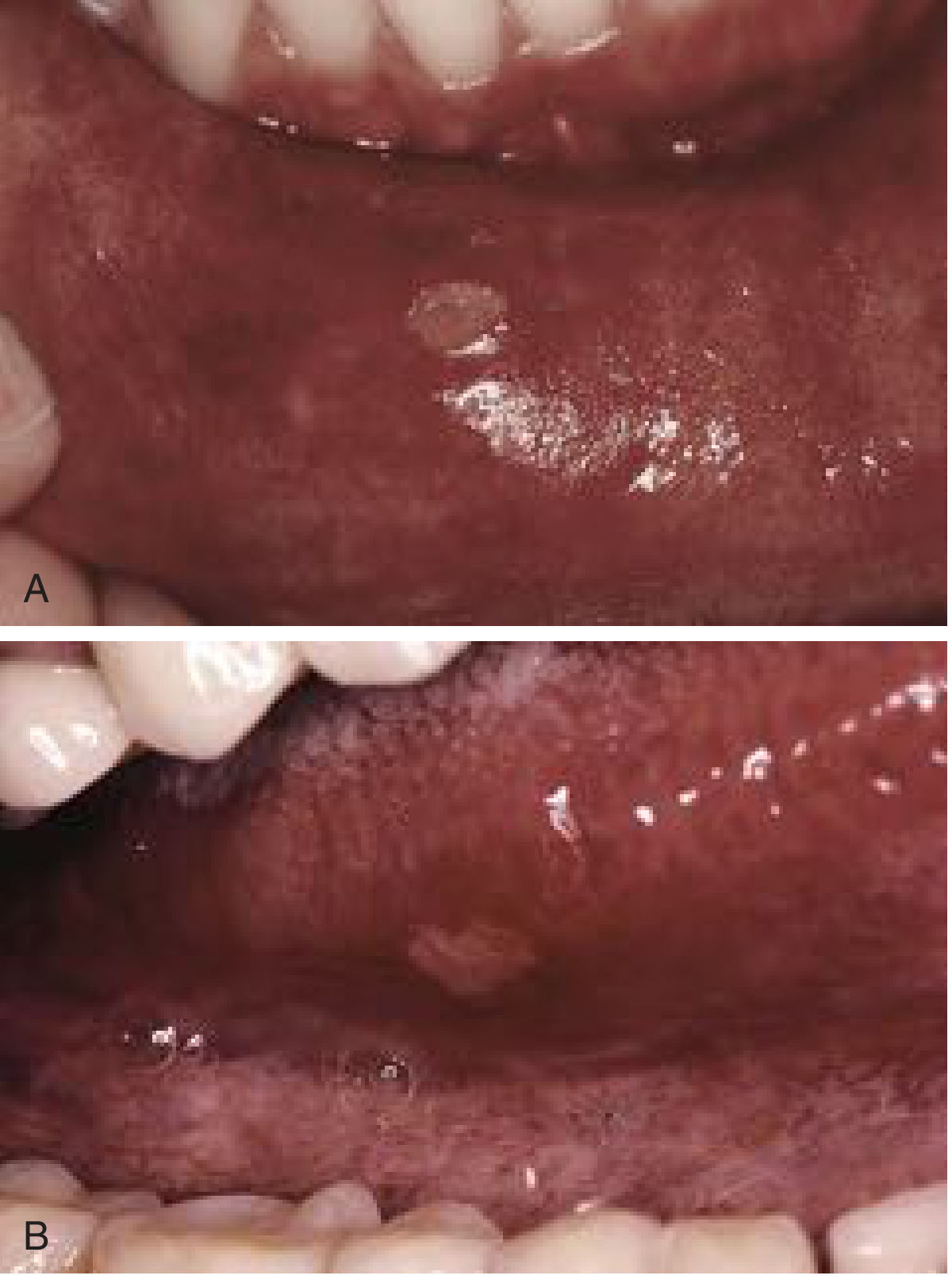
Fig: Minor aphthous ulcers showing characteristic yellow fibrinous base, sharply marginated periphery, and erythematous halo - Cummings Otolaryngology
Definition and Epidemiology
- Most common lesion of oral mucosa; affects 10-40% of the population
- Greater prevalence among professionals, higher socioeconomic groups, and non-smokers (tobacco use appears protective)
- Familial clustering noted (HLA B51 association)
- Onset typically in 2nd-3rd decade; patients may experience recurrences several times yearly for decades
Etiology and Pathogenesis
The specific etiopathogenesis is not fully known. It is considered multifactorial:
- Immune-mediated: T-cell and antibody-mediated keratinocyte lysis; TNF-α and other cytokines/chemokines are upregulated
- Early lesion: lymphocytic infiltrate at the future ulcer site (preulcerative phase)
- The specific triggering antigen remains unidentified
- Histology: lymphocytic infiltrate with occasional plasma cells and eosinophils (delayed hypersensitivity pattern); no pathognomonic features
Trigger Factors
| Category | Examples |
|---|---|
| Psychological | Stress |
| Physical | Trauma, toothbrush injury, dental procedures |
| Dietary | Chocolate, tomatoes, walnuts, citrus, spicy foods, fresh pineapple |
| Hormonal | Menstrual cycle, menopause, pregnancy |
| Drug-related | NSAIDs, beta-blockers, potassium-channel blockers |
| Nutritional | Low folate, vitamin B12, iron (approx. 20% of patients) |
Clinical Types
1. Minor Aphthous Ulcers (85% of all cases)
- Size: up to 10 mm
- Location: nonkeratinized movable mucosa (labial, buccal, ventral/lateral tongue, floor of mouth, soft palate, tonsillar pillars) - anterior oral cavity predominantly
- Duration: 7-10 days
- Healing: without scarring
- Absence of vesicular phase (key distinction from herpes)
2. Major Aphthous Ulcers (~10% of cases)
- Size: >1 cm
- Location: posterior oral cavity, oropharynx
- Deeply cratered, sharply marginated, painful
- Duration: up to 6 weeks (longer in immunocompromised)
- Heals with scarring
- May cause odynophagia
3. Herpetiform Aphthous Ulcers (least common)
- Multiple pinhead-sized to 2-mm shallow craterform ulcers
- Widespread distribution over movable mucosa
- No vesicular phase (unlike herpes simplex)
- Pain disproportionately greater than lesion size
- Adult onset
Differential Diagnosis
When RAU presents without associated symptoms, the following must still be excluded:
| Condition | Distinguishing Feature |
|---|---|
| Recurrent intraoral HSV | Keratinized mucosa, vesicular phase, viral prodrome, responds to antivirals |
| Traumatic ulcer | Single lesion, identifiable cause, does not recur in same pattern |
| Mucous patches (syphilis) | Serology positive, systemic signs |
| Candidiasis | Pseudomembrane, KOH positive, responds to antifungals |
| Erythema multiforme | Target lesions, often preceded by HSV or drug |
| Pemphigus/cicatricial pemphigoid | Nikolsky sign, specific immunofluorescence |
| Lichen planus | Wickham's striae, bilateral buccal distribution |
| Behçet disease | Genital ulcers, uveitis, skin lesions (only if systemic features present) |
| Celiac disease / IBD | GI symptoms, nutritional deficiencies |
Key point from Andrews' Dermatology: "History, physical examination, complete blood count, and long-term follow-up documenting the recurrent course, in the absence of other symptoms, will secure the diagnosis."
Workup for RAU Without Associated Symptoms
Even in isolated RAU, the following basic workup is recommended:
- CBC (rule out cyclic neutropenia, anemia)
- Serum ferritin, vitamin B12, folate (deficiency found in ~20% of patients; correction clears or improves aphthosis)
- Consider anti-tissue transglutaminase (anti-tTG) if celiac disease suspected
- Long-term follow-up to document recurrent course
Treatment
Symptomatic / Pain Relief
- Diphenhydramine (Benadryl) + Maalox mixture (1:1) - hold in mouth 5 min before meals
- Lidocaine 2% viscous solution (1 tsp held for several minutes)
- Dyclonine hydrochloride 0.5% topical
- OTC topical anesthetics/protectants
Topical Agents (Shorten Duration + Aid Healing)
- Topical corticosteroids (mainstay): fluocinonide gel or fluocinolone in Orabase 3-4x/day; clobetasol ointment
- Chlorhexidine mouthwash 0.12-0.2% twice daily (reduces secondary bacterial colonization)
- Amlexanox 5% oral paste (Aphthasol) - promotes healing and relieves pain
- Tetracycline suspension 250 mg/5 mL, hold 2 min then swallow, 4x/day for 1 week
- Sucralfate suspension (alone or with topical steroid)
Systemic Agents (Severe or Continuous Outbreaks)
- Short course oral corticosteroids (3-4 days) - for severe/indolent lesions
- Intralesional steroid injection - for major aphthae
- Colchicine 0.6 mg/day, increasing to 1.2-1.8 mg/day - for prevention
- Dapsone (if colchicine fails/not tolerated) - start 25 mg, titrate up to 100-150 mg/day
- Thalidomide 100-300 mg/day - highly effective but reserved for severe refractory cases (risk: teratogenicity, peripheral neuropathy); lenalidomide is an alternative
- Nutritional supplementation: correct B12, folate, or iron if deficient - often clears condition
Trigger Avoidance
Advise patients to avoid identified personal triggers: spicy foods, citrus, chocolate, walnuts, pineapple, identified food allergens, and stress reduction strategies.
Key Points for RAU Without Systemic Symptoms
- True idiopathic RAS is a diagnosis of exclusion - rule out systemic associations first
- NSAIDs, beta-blockers, and K-channel blockers can mimic RAU - withdrawal resolves lesions
- Smoking cessation may worsen RAU (tobacco appears to be protective)
- If lesions number 3 or more and involve both oral AND genital mucosa, the term complex aphthosis applies and Behçet disease workup is warranted
- PFAPA syndrome should be considered in children with striking 4-week periodicity
- No permanent cure exists; treatment is aimed at reducing frequency, duration, and pain
Sources: Cummings Otolaryngology Head and Neck Surgery, Ch. 87 | Andrews' Diseases of the Skin, Ch. 34
This is a shared conversation. Sign in to Orris to start your own chat.