
Anomalies of accommodation with any possible pictures for 15 marks
Reading File
Now let me search the medical library for anomalies of accommodation in parallel:
Finding Sources
Finding Sources
Finding Sources
Finding Sources
Finding Sources
Finding Sources
Reading File
Reading File
Let me now search specifically for ophthalmology content on accommodation disorders:
Finding Sources
Finding Sources
Reading File
Finding Sources
Searching the Web
anomalies of accommodation ophthalmology presbyopia spasm paralysis insufficiency excess
Reading File
Reading Web Page
https://www.ncbi.nlm.nih.gov/books/NBK592379
Finding Sources
I now have comprehensive information. Let me also fetch a relevant image for the RAF rule and accommodation measurement:
Loading Image
I now have all the information needed to write a comprehensive 15-mark answer. Here it is:
Anomalies of Accommodation
Definition
Accommodation is the ability of the eye to increase its refractive power by altering the curvature of the crystalline lens, allowing clear near vision. Any deviation from this normal state - either a decrease or an increase in accommodative ability - constitutes an anomaly of accommodation.
Classification (Duke-Elder)
ANOMALIES OF ACCOMMODATION
├── A. DIMINISHED / DEFICIENT ACCOMMODATION
│   ├── 1. Physiological  → Presbyopia
│   ├── 2. Pharmacological → Cycloplegia
│   └── 3. Pathological
│       ├── Insufficiency of accommodation
│       ├── Ill-sustained accommodation
│       ├── Inertia (infacility) of accommodation
│       └── Paralysis of accommodation
└── B. INCREASED ACCOMMODATION
    ├── 1. Excessive accommodation
    └── 2. Spasm of accommodation
Measuring the Near Point of Accommodation (NPA)
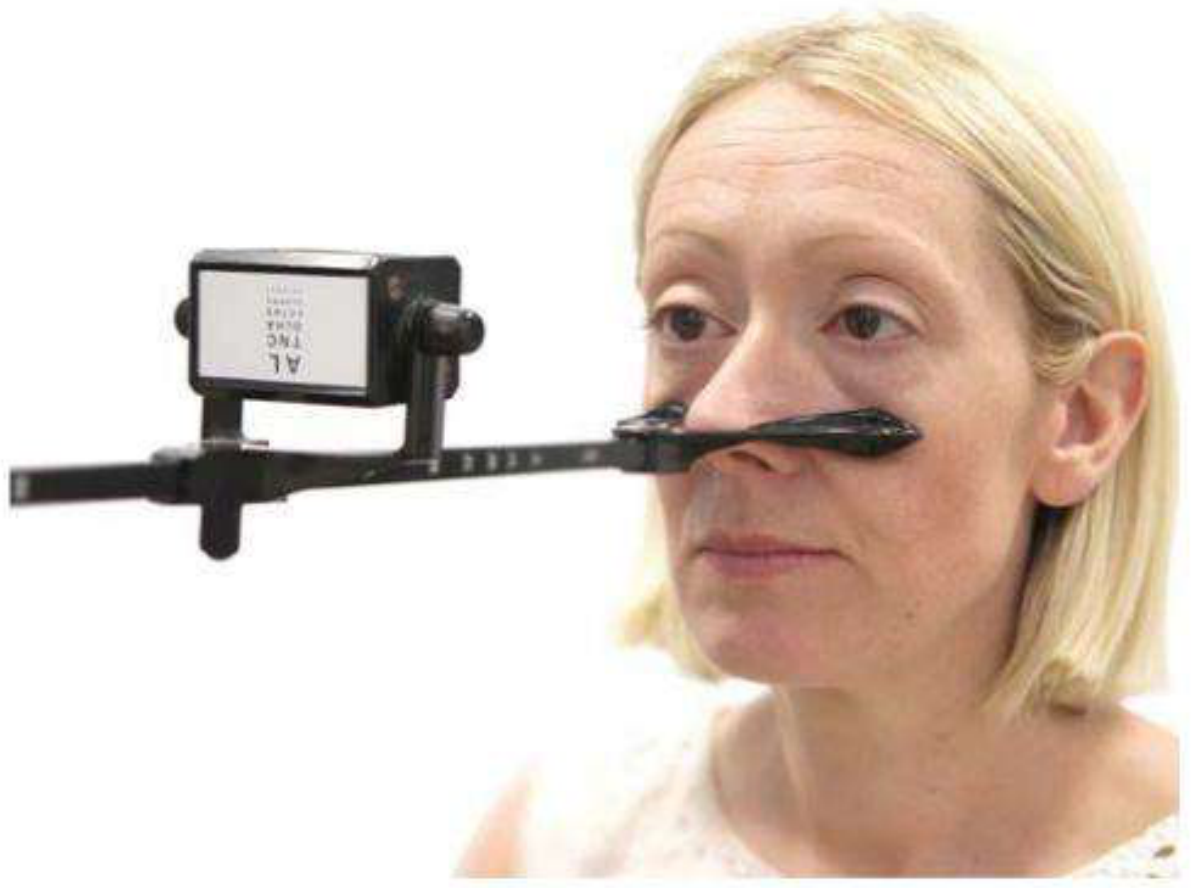
The NPA is measured with the RAF rule (Royal Air Force rule), which rests on the patient's cheeks. A line of print is slowly brought closer until it blurs - the distance at which blurring occurs is the NPA. Normal values:
| Age | NPA |
|---|---|
| 20 years | ~8 cm |
| 40 years | ~18 cm |
| 50 years | ~46 cm |
A. DIMINISHED / DEFICIENT ACCOMMODATION
1. Presbyopia (Physiological)
Definition: A progressive, age-related decline in the amplitude of accommodation due to loss of lens elasticity (sclerosis of the crystalline lens nucleus). It is NOT a refractive error but a failure of accommodation.
Pathophysiology:
- The crystalline lens gradually loses its pliability with age
- The zonular fibers attach to the ciliary body, which in youth can alter lens shape to increase near-focusing power
- As the lens hardens, this shape change becomes impossible regardless of how hard the ciliary muscle contracts
- A secondary role is played by weakening of the ciliary muscle itself
Clinical Features:
- Presents in the 4th to 6th decade of life
- Difficulty reading small print, eye strain, headaches
- Patient holds reading material progressively farther away
- NPA recedes with age - when it recedes to >46 cm, reading becomes difficult without correction
Treatment:
- Reading glasses (convex lenses / plus lenses) for near work
- Bifocal or progressive addition lenses (PALs) if distance correction also needed
- Surgical options: clear lens extraction with multifocal IOL implantation, monovision LASIK, corneal inlays (e.g., small aperture KAMRA inlay), conductive keratoplasty, presbyLASIK
- Scleral expansion surgery (results inconsistent)
(Goldman-Cecil Medicine; Kanski's Clinical Ophthalmology)
2. Cycloplegia (Pharmacological)
Definition: Paralysis of the ciliary muscle by pharmacological agents, resulting in complete loss of accommodation.
Agents (in order of increasing strength and duration):
- Tropicamide 1% - shortest acting (~4-6 hours)
- Cyclopentolate 1% - effective within 30 min, recovery in 2-3 hours; most commonly used clinically
- Homatropine 2%
- Atropine 1% - strongest, duration up to 2 weeks
Clinical Use:
- Refraction in children (to unmask hidden hypermetropia)
- Treatment of uveitis (to relieve ciliary spasm and prevent synechiae)
- Dynamic retinoscopy to confirm adequacy of cycloplegia
3. Pathological Forms
a. Insufficiency of Accommodation
Definition: The amplitude of accommodation (AA) is lower than expected for the patient's age, not due to lens sclerosis.
Causes:
- Systemic: anaemia, debilitating illness, diabetes mellitus, thyroid disease
- Local: after severe uveitis or ocular surgery
- Neurological: early paresis of the oculomotor nerve (III)
- Psychological: fatigue, stress, anxiety
Symptoms:
- Blurred near vision
- Asthenopia (eye strain, headaches) with near work
- Reduced NPA for the patient's age
Management:
- Treat the underlying cause
- Convex (plus) lenses for near work
- Vision therapy / accommodative exercises
- Bifocals if distance glasses also needed
b. Ill-Sustained Accommodation
Definition: The amplitude of accommodation is normal, but the system fails to sustain long-term accommodative effort. It is similar to insufficiency but AA is within normal limits.
Features:
- Vision starts clear for near but blurs after prolonged near work
- Patient fails the ±2.00 D flipper test (accommodative facility test)
- Decreased positive relative accommodation (PRA)
- Common in debilitating systemic illness and after prolonged near work
Management: Same as for insufficiency - plus lenses for near, vision therapy.
c. Inertia (Infacility) of Accommodation
Definition: The accommodative system is slow to make a change - there is a lag between the accommodative stimulus and the accommodative response.
Features:
- Blurred distance vision immediately after sustained near work
- Slow transition between near and distance focus
- Fails the ±2.00 D flipper test (monocularly and binocularly)
- Normal amplitude of accommodation
- Some consider it a precursor to myopia
Management: Accommodative facility exercises (flippers), plus lenses for near work.
d. Paralysis of Accommodation
Definition: Complete loss of the ability to accommodate in a non-presbyopic patient, either unilaterally or bilaterally.
Causes:
- III nerve palsy (most important): interruption of parasympathetic fibers travelling with CN III - presents with dilated fixed pupil, ptosis, and divergent strabismus alongside cycloplegia
- Adie's tonic pupil: post-ganglionic parasympathetic denervation, gives sluggish/absent pupil response + loss of accommodation
- Trauma to the ciliary ganglion or ciliary nerves
- Cycloplegic drugs (atropine, scopolamine, tricyclics, antihistamines)
- Toxins: diphtheria toxin (classically causes bilateral post-diphtheritic paralysis), botulinum toxin, lead poisoning
- Systemic diseases: multiple sclerosis, encephalitis, syphilis
Clinical Features:
- Chief complaint: blurred near vision
- Micropsia (objects appear smaller)
- May be associated with a fixed dilated pupil (mydriasis + cycloplegia = internal ophthalmoplegia)
Management:
- Identify and treat the underlying cause
- Reading glasses (convex lenses) while awaiting recovery
- Recovery is variable; post-diphtheritic paralysis generally recovers fully
B. INCREASED ACCOMMODATION
1. Excessive Accommodation
Definition: The eye exerts more accommodation than necessary for a given visual stimulus, or is unable to relax accommodation fully.
Who is affected:
- Young uncorrected hyperopes (must over-accommodate constantly to see clearly at any distance)
- Young myopes doing prolonged near work with associated excessive convergence
- Children with undetected astigmatism
- Early presbyopes straining to maintain near focus
Symptoms:
- Eye strain (asthenopia), headache, browache
- Blurred distance vision after prolonged near work
- Difficulty relaxing accommodation when shifting from near to far
- Often accompanied by accommodative esotropia (convergent squint) in hyperopic children
Clinical Signs:
- Reduced ability to relax accommodation on accommodative facility testing
- High lag of accommodation on dynamic retinoscopy
Management:
- Full optical correction of the underlying refractive error (especially hyperopia)
- Vision therapy
- Cycloplegic eye drops (low-dose atropine or cyclopentolate) to break the cycle of over-accommodation
2. Spasm of Accommodation
Definition: A prolonged, involuntary contraction of the ciliary muscle that keeps the lens in a state of near focus, causing pseudomyopia (artificially induced myopia from over-accommodation).
Pathophysiology: Overstimulation of the parasympathetic supply to the ciliary muscle, causing sustained contraction beyond the voluntary control.
Causes:
- Functional/psychosomatic (most common in young patients) - stress, anxiety, exam pressure
- Excessive near work in poor illumination
- Organic: miotic eye drops (pilocarpine, carbachol), organophosphate poisoning
- Part of Spasm of the Near Reflex triad: overaccommodation + overconvergence (esotropia) + miosis
Symptoms:
- Blurred distance vision (pseudomyopia)
- Diplopia (from associated convergence spasm)
- Headache, browache, eye pain
- Miotic pupils (small pupils with near triad spasm)
Diagnosis:
- Cycloplegic refraction: the induced myopia disappears after cycloplegia, revealing the true refraction (which may even show hyperopia)
- This distinguishes spasm (pseudomyopia) from true myopia
Management:
- Cycloplegic drops (cyclopentolate, atropine) to break the spasm
- Correct any underlying refractive error
- Prescribe appropriate glasses (especially full plus correction for hyperopes)
- Vision therapy and behavioural modification (reduce excessive near work)
- Address psychological factors in functional cases
- Treat causative miotic drug if applicable
Summary Table
| Anomaly | AA | Key Feature | Management |
|---|---|---|---|
| Presbyopia | Reduced (age-related) | Lens sclerosis, >40 yrs | Plus lenses, bifocals, surgery |
| Cycloplegia | Absent | Drug-induced, reversible | Stop drug |
| Insufficiency | Reduced (pathological) | Below age-expected, systemic cause | Plus lenses, treat cause |
| Ill-sustained | Normal | Blurs with sustained near work | Plus lenses, vision therapy |
| Inertia/Infacility | Normal | Slow focus change, fails flipper test | Facility exercises |
| Paralysis | Absent | CN III palsy, diphtheria, Adie's | Treat cause, plus lenses |
| Excessive | Increased effort | Uncorrected hyperopia, asthenopia | Full spectacle correction |
| Spasm | Excessive involuntary | Pseudomyopia, miotic pupils, near triad | Cycloplegics, correct refraction |
Key Points for 15 Marks
- Accommodation anomalies are classified as diminished (physiological, pharmacological, pathological) or increased (excessive, spasm).
- Presbyopia is the most common - physiological, due to lens sclerosis, presenting in the 4th-6th decade; treated with plus lenses.
- Paralysis of accommodation (cycloplegia) may signal serious pathology - always exclude CN III palsy and diphtheria.
- Spasm of accommodation causes pseudomyopia; cycloplegic refraction is diagnostic.
- Ill-sustained accommodation and inertia have a normal amplitude but differ in facility and sustainability.
- The spasm of the near reflex triad = overaccommodation + convergence spasm + miosis - often functional/psychogenic.
- The RAF rule is the standard clinical tool for measuring the NPA and amplitude of accommodation.
(Sources: Kanski's Clinical Ophthalmology 10th Ed.; Goldman-Cecil Medicine; AOA Accommodative & Vergence Dysfunction Guidelines; StatPearls - Accommodative Excess)
This is a shared conversation. Sign in to Orris to start your own chat.