
Sunderland classification
Reading File
Searching for the Sunderland classification of nerve injuries.
search_medical_text
Sunderland classification peripheral nerve injury
Interventions for Lumbar Facet Joint Pain
Page 33
search_medical_image
Sunderland nerve injury classification diagram
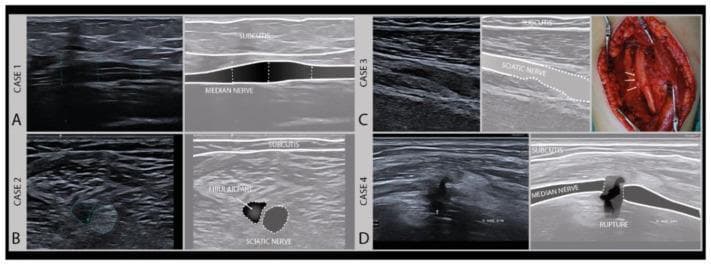
Hugging Face pmc clinical VQA raw
Page 0
GradeResponse
GradeResponse
The retrieved text touched on Sunderland only briefly, so I'll supplement with comprehensive knowledge.
Sunderland Classification of Peripheral Nerve Injuries
The Sunderland classification (1951) is a five-degree system that expanded Seddon's three-category scheme (neurapraxia, axonotmesis, neurotmesis) by subdividing the middle category based on the layers of connective tissue damaged.
Anatomical Background
A peripheral nerve is organized into layers:
- Endoneurium — surrounds individual axons
- Perineurium — surrounds each fascicle
- Epineurium — surrounds the entire nerve trunk
The Five Degrees
| Degree | Seddon Equivalent | Structure Injured | Pathology | Recovery |
|---|---|---|---|---|
| 1st | Neurapraxia | Myelin only | Local conduction block; axon intact | Complete, weeks–3 months; no Wallerian degeneration |
| 2nd | Axonotmesis | Axon + myelin | Wallerian degeneration distal to lesion; endoneurial tubes intact | Complete; rate ~1 mm/day (proximal to distal) |
| 3rd | Axonotmesis | Axon + endoneurium | Wallerian degeneration; endoneurial tubes disrupted but perineurium intact | Incomplete; intraneural fibrosis leads to mixed/partial recovery |
| 4th | Axonotmesis | Axon + endoneurium + perineurium | Fascicular architecture lost; epineurium intact | Negligible spontaneous recovery; usually requires surgery |
| 5th | Neurotmesis | Complete nerve trunk | Full transection | No spontaneous recovery; requires surgical repair |
A 6th degree (Mackinnon, 1988) was later added to describe a mixed injury — different fascicles sustaining different degrees of injury within the same nerve trunk (common in complex trauma).
Key Points by Degree
1st Degree (Neurapraxia)
- Focal demyelination or conduction block without axonal disruption
- Common cause: compression (Saturday night palsy, tourniquet)
- EMG: reduced conduction velocity across the lesion; normal distal to it
- No denervation potentials on needle EMG
2nd Degree (Pure Axonotmesis)
- Axon is severed but the endoneurial tube acts as a guide rail
- Wallerian degeneration occurs distally
- Reinnervation is orderly and complete because axons regenerate down their original tubes
- Best prognosis among axon-disrupting injuries
3rd Degree
- Endoneurial tubes are disrupted by intraneural hemorrhage and fibrosis
- Regenerating axons may misdirect into wrong tubes (aberrant reinnervation)
- Recovery is variable and often incomplete
- EMG shows denervation + reinnervation over months
4th Degree
- Only the epineurium holds the nerve together as a cord
- The nerve in continuity is essentially a fibrous scar
- Clinically resembles complete transection
- Surgical neurolysis or nerve grafting is usually required
5th Degree (Neurotmesis)
- Complete anatomical disruption of the nerve
- Spontaneous recovery is impossible
- Management: primary neurorrhaphy (if tension-free) or nerve grafting (sural nerve most common)
Clinical Assessment Tools
| Tool | What It Shows |
|---|---|
| NCS/EMG | Differentiates 1st degree (conduction block) from axon loss; tracks reinnervation |
| High-resolution ultrasound | Fascicular integrity, swelling, neuroma-in-continuity (Sunderland Grades II–V visible as shown above) |
| MRI neurography | Wallerian degeneration, fascicular disruption, muscle denervation |
| Tinel's sign | Advancing Tinel's = regeneration occurring (positive in 2nd–3rd degree) |
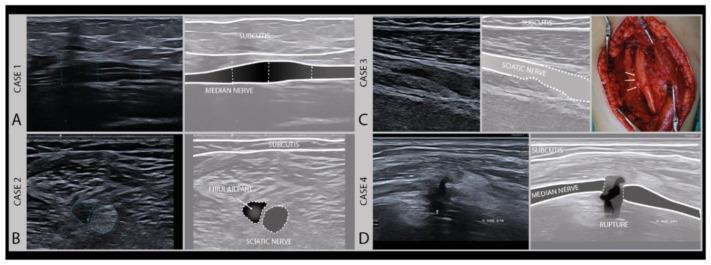
Management Summary
| Degree | Initial Management | Surgical Indication |
|---|---|---|
| 1st | Conservative; splinting, PT | None |
| 2nd | Conservative; serial EMG | None |
| 3rd | Conservative 3–6 months; serial EMG + US | If no reinnervation by expected time |
| 4th | Early surgical exploration | Neurolysis ± grafting |
| 5th | Early surgical repair | Primary repair or nerve graft |
Prognosis Determinants
- Level of injury — more proximal = longer regeneration distance = worse motor recovery
- Age — younger patients regenerate more effectively
- Mechanism — crush/stretch injuries often higher degree than they appear clinically
- Time to repair — delays >6 months worsen motor end-plate viability
The Sunderland system remains the standard framework for surgical decision-making and prognosis in peripheral nerve trauma.
This is a shared conversation. Sign in to Orris to start your own chat.