
Granular cast is plus 3 in urine test what it indicates
Reading File
Finding Sources
Finding Sources
Finding Sources
Reading File
Reading File
Reading File
Here is a comprehensive answer based on authoritative nephrology and clinical pathology textbooks:
Granular Casts 3+ in Urine — Clinical Significance
What Are Granular Casts?
Granular casts are acellular urinary casts with a rough, granular surface. The granules can be fine or coarse:
- Fine granules — derived from altered/denatured plasma proteins
- Coarse granules — result from degeneration of cells (e.g., renal tubular epithelial cells) embedded in the cast matrix
They form in the renal tubules when protein and cellular debris aggregate within the tubular lumen.
What Does 3+ Granular Casts Indicate?
A 3+ (large amount) of granular casts is a significant finding and almost always indicates serious renal pathology. Key conditions include:
| Condition | Notes |
|---|---|
| Acute Tubular Necrosis (ATN) | Classic "muddy brown" granular casts + renal tubular epithelial cells = hallmark of ATN |
| Glomerulonephritis | Granular casts accompany hematuria and proteinuria in various GN subtypes |
| Tubulointerstitial Nephritis | White blood cell casts and non-pigmented granular casts are typical |
| Acute Kidney Injury (AKI) | Finding of RTECs + granular casts ± epithelial casts is the hallmark of ATN-related AKI |
| Chronic Kidney Disease (CKD) | Broad granular casts reflect interstitial fibrosis and tubular dilation |
| Pyelonephritis | Granular casts may accompany WBC casts |
| Renal Papillary Necrosis | Coarsely granular casts with hematuria |
| Viral Infections | Can also produce granular casts |
| Renal Allograft Rejection | Granular casts are a feature |
| Chronic Lead Poisoning | Associated finding |
"Granular casts are nonspecific but usually pathologic." — National Kidney Foundation Primer on Kidney Diseases, 8th Ed.
"In patients with AKI, the finding of RTECs, in association with granular casts and/or epithelial casts, is the hallmark of ATN." — Comprehensive Clinical Nephrology, 7th Ed.
The "Muddy Brown" Cast — Key ATN Marker
The classic muddy brown granular cast is the most important subtype. It is deeply associated with ischemic or nephrotoxic ATN and its presence alongside renal tubular epithelial cells strongly supports this diagnosis.
Non-Pathologic Causes (Rare)
In small amounts, granular casts can occasionally be seen in:
- Vigorous/strenuous exercise
- Volume depletion / dehydration
- Heat-related stress
However, a 3+ result is not explained by exercise or dehydration alone — significant renal disease must be ruled out.
Image — Granular Casts (Microscopy)
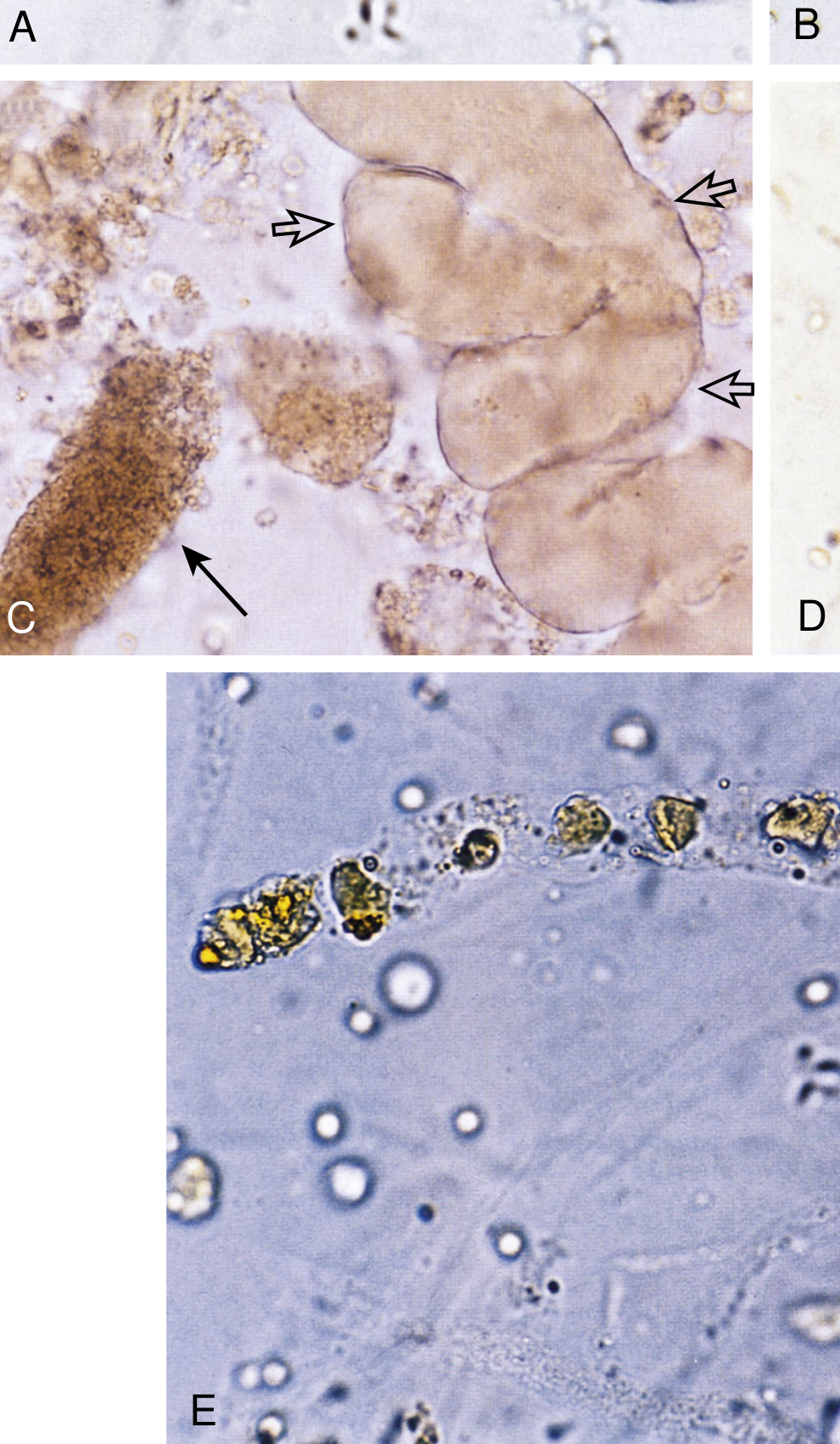
Muddy brown granular casts and amorphous debris — from a patient with acute tubular necrosis (ATN). (Magnification ×100)
Clinical Bottom Line
A 3+ granular cast finding demands urgent clinical correlation:
- Check serum creatinine, BUN — is there AKI or CKD?
- Look at the full urine sediment — are there RBC casts (→ GN), WBC casts (→ pyelonephritis/interstitial nephritis), or epithelial casts (→ ATN)?
- Review clinical context — recent hypotension, nephrotoxin exposure, infection, autoimmune disease?
- Consider nephrology referral if etiology unclear.
— National Kidney Foundation Primer on Kidney Diseases, 8th Ed. | Henry's Clinical Diagnosis and Management by Laboratory Methods | Comprehensive Clinical Nephrology, 7th Ed.
This is a shared conversation. Sign in to Orris to start your own chat.