Best app to create medical mnemonics
best apps to create medical mnemonics 2025 2026
Top Apps for Medical Mnemonics
1. Picmonic - Best Overall
- Strengths: Pre-built mnemonic library, spaced repetition, proven retention boost
- Pricing: Subscription-based (~$20-30/month)
2. Sketchy - Best for Pharmacology & Microbiology
- Strengths: Deep pharm/micro coverage, narrative-based memory scenes
- Pricing: Subscription (~$30/month)
3. Anki - Best for Custom Mnemonic Flashcards
- Strengths: Fully customizable, massive shared deck library, free on Android/desktop (small fee on iOS), offline use
- Best for: Students who want to build their own mnemonic system
4. Gizmo (AI-powered) - Best for AI-Generated Mnemonics
- Strengths: AI generation from personal content, flexible input formats
5. Osmosis - Best for Visual Learning + Mnemonics
- Strengths: Broad medical content, integrated learning system
6. Memorang - Best Free Mnemonic Creator
- Strengths: Free tier, community content, mnemonic-specific creation tools
Quick Recommendation Guide
| Goal | Best App |
|---|---|
| Pre-built visual mnemonics | Picmonic or Sketchy |
| Create your own mnemonics | Anki or Memorang |
| AI generates mnemonics from your notes | Gizmo |
| Free option | Anki (desktop/Android) |
| Pharma/Micro specifically | Sketchy |
| Full integrated study system | Osmosis |
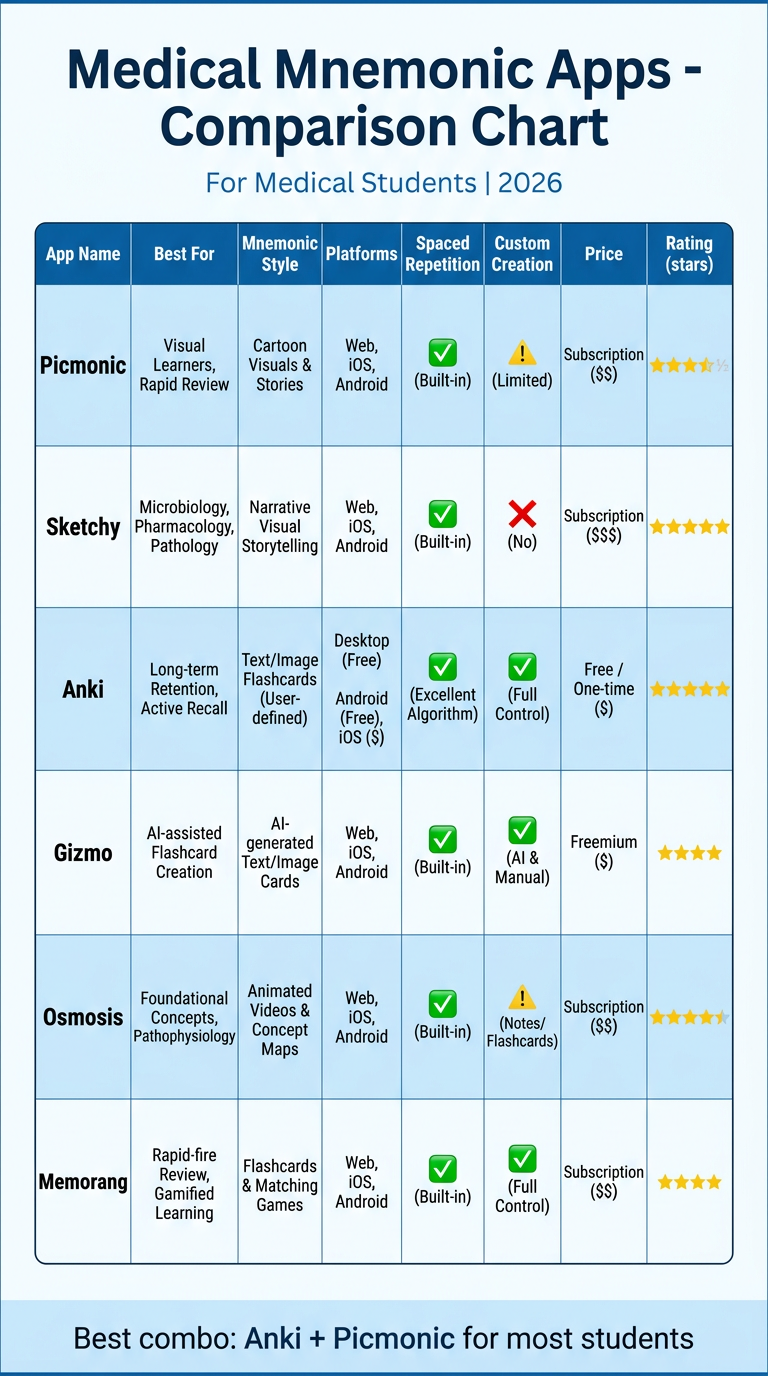
Create a comparison chart of these mnemonic apps
What format would you like the comparison chart in?
A clean, professional comparison chart/table poster for medical students comparing 6 mnemonic apps: Picmonic, Sketchy, Anki, Gizmo, Osmosis, and Memorang. The table should have these columns: App Name, Best For, Mnemonic Style, Platforms, Spaced Repetition, Custom Creation, Price, and Rating (stars). Use a medical blue and white color scheme with a dark header row. Each row alternates between light blue and white. Include a title at the top: "Medical Mnemonic Apps - Comparison Chart". Add a subtitle: "For Medical Students | 2026". Make it visually polished, easy to read, with app name in bold and small icons or emoji-style indicators (checkmarks and X marks) for yes/no features. Footer text: "Best combo: Anki + Picmonic for most students"