
Biochemistry padha de English me simple language me MBBS ka
I'll help you with MBBS Biochemistry in simple English! Let me first check what topics you want covered.
Asking for Preferences
Which Biochemistry topic(s) do you want to study?
Perfect! Carbohydrate Metabolism it is. Let me pull up the textbook content now.
Searching sources...
Reading File
Finding Sources
Finding Sources
Finding Sources
Now let me read the key sections from the best biochemistry textbooks:
Reading File
Reading File
Reading File
Now let me get the detailed glycolysis steps and TCA cycle reactions, plus fetch the key diagrams:
Reading File
Reading File
Finding Sources
Loading Image
Loading Image
Reading File
I now have excellent material from Lippincott, Basic Medical Biochemistry, and Harper's. Let me compile this into a clear, student-friendly guide.
🔬 Carbohydrate Metabolism - MBBS Biochemistry (Simple English)
Sources: Lippincott Illustrated Biochemistry 8e, Basic Medical Biochemistry 6e, Harper's Biochemistry 32e
The Big Picture First
Think of carbohydrate metabolism as your body's energy factory. Glucose is the fuel. Your body breaks it down in steps to extract energy (ATP). The whole journey goes:
Glucose → Glycolysis → Pyruvate → Acetyl-CoA → TCA Cycle → Oxidative Phosphorylation → ATP (energy)
PART 1: How Does Glucose Get Into Cells?
Before anything can happen, glucose must enter the cell. There are two ways:
A. GLUT Transporters (Passive - no energy needed)
These are protein "doors" in the cell membrane. Glucose binds, the door opens, glucose slips in - no ATP needed (facilitated diffusion).
| Transporter | Where | Role |
|---|---|---|
| GLUT-1 | Most tissues | Baseline glucose uptake |
| GLUT-2 | Liver, kidneys, pancreas (β cells) | Senses high blood glucose |
| GLUT-4 | Muscle & fat | Activated by insulin |
| GLUT-5 | Small intestine, testes | Transports fructose |
Exam tip: GLUT-4 is the one insulin activates. In diabetes, GLUT-4 does not work well - muscle and fat cannot take up glucose properly.
B. SGLT (Sodium-Dependent - active, needs energy)
Used in gut and kidney tubules. Sodium drags glucose in against its concentration gradient. This needs Na⁺/K⁺ ATPase to maintain the sodium gradient. SGLT-2 inhibitors (gliflozins) are diabetic drugs that block this in the kidney, causing glucose to spill into urine.
PART 2: GLYCOLYSIS - "Breaking Glucose in Half"
Location: Cytoplasm (cytosol)
Occurs in: Every cell in the body
Simple equation:
1 Glucose (6C) → 2 Pyruvate (3C) + 2 ATP + 2 NADH
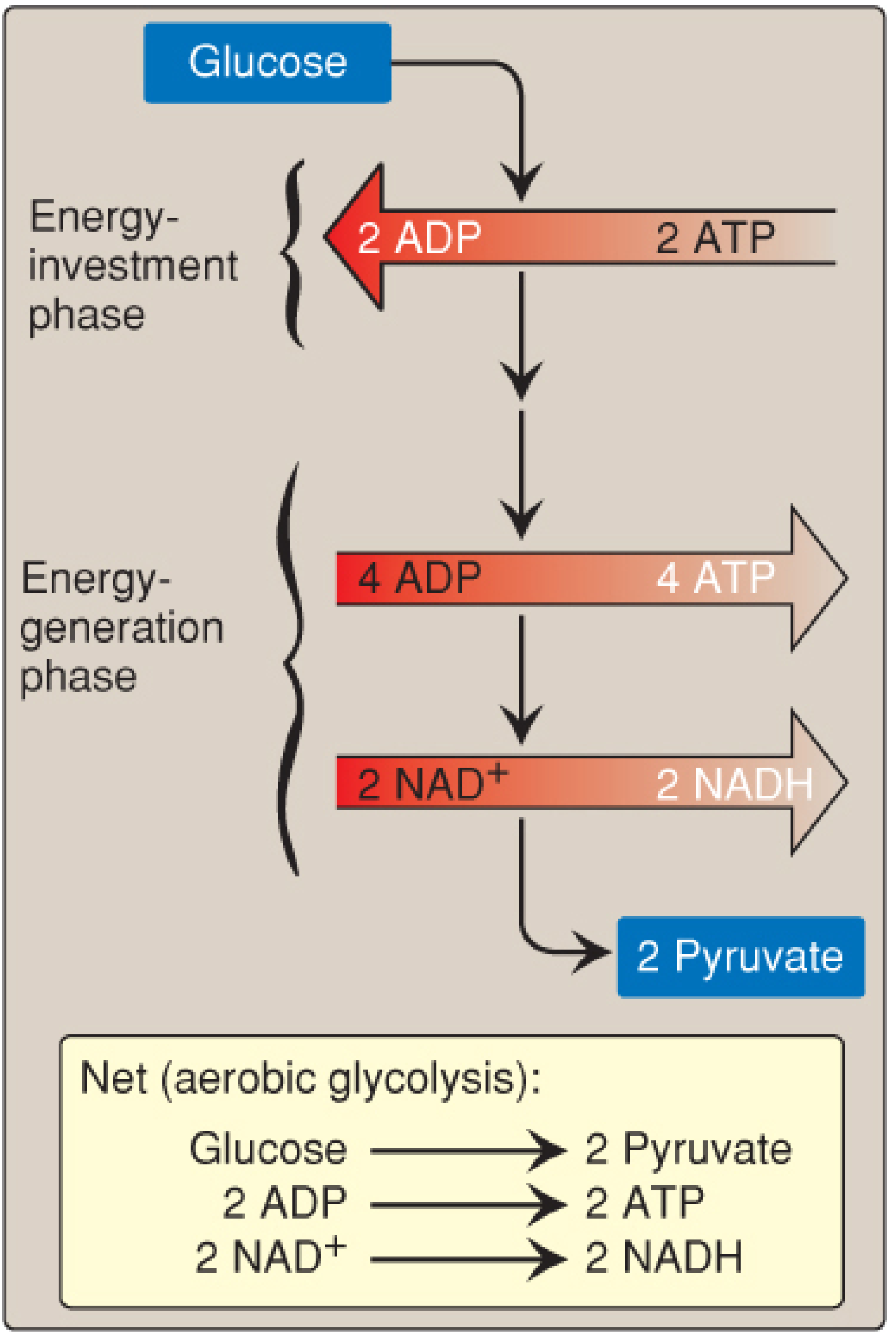
The Two Phases
Phase 1 - Energy Investment (Steps 1-5) - "Spend money to make money"
- You use 2 ATP to phosphorylate glucose
- This "primes the pump" - glucose is trapped in the cell and activated
Phase 2 - Energy Generation (Steps 6-10) - "Get returns"
- You make 4 ATP + 2 NADH
- Net gain = 4 - 2 = 2 ATP per glucose
The 10 Key Steps (Simplified)
| Step | Reaction | Enzyme | Notes |
|---|---|---|---|
| 1 | Glucose → Glucose-6-P | Hexokinase (or Glucokinase in liver) | Irreversible. Traps glucose in cell |
| 2 | Glucose-6-P → Fructose-6-P | Phosphoglucose isomerase | |
| 3 | Fructose-6-P → Fructose-1,6-bisP | Phosphofructokinase-1 (PFK-1) | MOST IMPORTANT regulatory step. Irreversible |
| 4 | Fructose-1,6-bisP → DHAP + GAP | Aldolase | Splits 6C into two 3C molecules |
| 5 | DHAP → GAP | Triose phosphate isomerase | |
| 6 | GAP → 1,3-bisphosphoglycerate | GAP dehydrogenase | Makes NADH |
| 7 | 1,3-bisP glycerate → 3-phosphoglycerate | Phosphoglycerate kinase | Substrate-level phosphorylation (makes ATP) |
| 8 | 3-PG → 2-PG | Phosphoglycerate mutase | |
| 9 | 2-PG → Phosphoenolpyruvate (PEP) | Enolase | Inhibited by fluoride (used in lab tubes!) |
| 10 | PEP → Pyruvate | Pyruvate kinase | Irreversible. Makes ATP |
The 3 Irreversible (Key) Enzymes - Remember "HoPK"
- Hexokinase / Glucokinase (step 1)
- PFK-1 (step 3) - the rate-limiting step
- Pyruvate Kinase (step 10)
These three are bypassed in gluconeogenesis (making new glucose).
What Controls PFK-1?
- Activated by: AMP, ADP (low energy state = speed up glycolysis), Fructose-2,6-bisphosphate (most potent activator, stimulated by insulin)
- Inhibited by: ATP, citrate (high energy state = slow down)
PART 3: WHAT HAPPENS TO PYRUVATE?
Pyruvate has two fates depending on oxygen availability:
[WITH O2]
Pyruvate ─────────────────────────→ Acetyl-CoA → TCA Cycle
(Pyruvate Dehydrogenase)
[WITHOUT O2]
Pyruvate ─────────────────────────→ Lactate
(Lactate Dehydrogenase)
PART 4: PYRUVATE DEHYDROGENASE COMPLEX (PDC)
Location: Mitochondrial matrix
Function: Links glycolysis to TCA cycle
Pyruvate (3C) → Acetyl-CoA (2C) + CO₂ + NADH
This is an irreversible reaction - you cannot go back from Acetyl-CoA to pyruvate (which is why you cannot convert fat into glucose!).
Cofactors needed (remember "Tender Loving Care For Nancy")
- TPP (Thiamine - Vitamin B1)
- Lipoate (Lipoic acid)
- CoA (Coenzyme A - Pantothenic acid, B5)
- FAD (Riboflavin, B2)
- NAD⁺ (Niacin, B3)
Clinical link: Thiamine (B1) deficiency → PDC cannot work → pyruvate builds up → lactic acidosis. This is why alcoholics get Wernicke's encephalopathy!
PDC Regulation
- Activated by: ADP, NAD⁺, CoA, Ca²⁺, insulin
- Inhibited by: Acetyl-CoA, NADH, ATP (products inhibit when energy is high)
PART 5: TCA CYCLE (Krebs Cycle / Citric Acid Cycle)
Location: Mitochondrial matrix
Occurs in: All cells with mitochondria (NOT RBCs)
The TCA cycle is a cycle - it starts and ends with the same molecule (oxaloacetate, OAA).
Simple concept: Acetyl-CoA (2C) enters + OAA (4C) → Citrate (6C). After one full turn, OAA is regenerated, 2 CO₂ are released, and energy carriers are made.
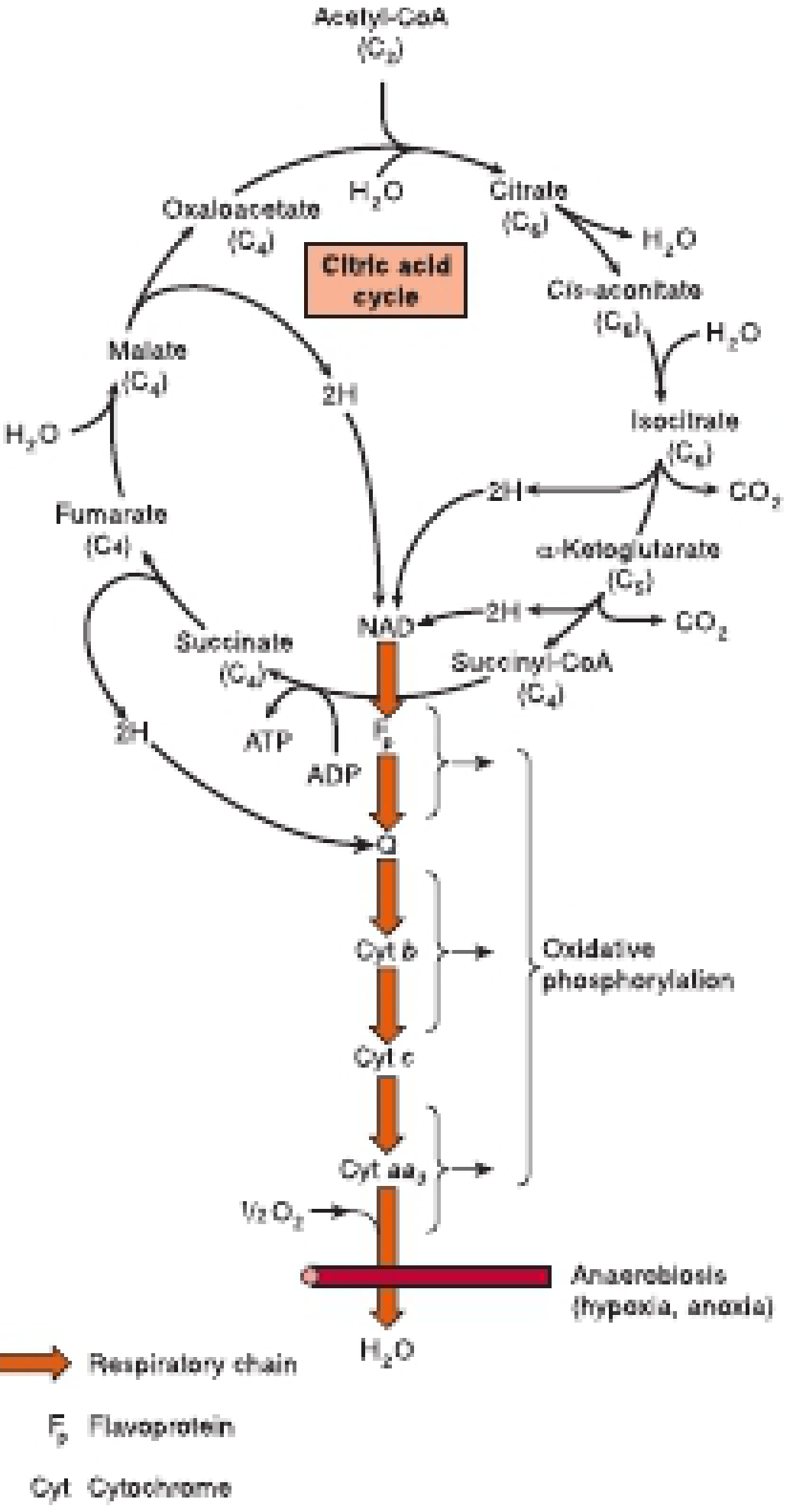
The 8 Steps of TCA
| Step | Substrate → Product | Enzyme | What's Made |
|---|---|---|---|
| 1 | OAA + Acetyl-CoA → Citrate | Citrate synthase | (condensation) |
| 2 | Citrate → Isocitrate | Aconitase | |
| 3 | Isocitrate → α-ketoglutarate | Isocitrate dehydrogenase | NADH + CO₂ |
| 4 | α-KG → Succinyl-CoA | α-KG dehydrogenase | NADH + CO₂ |
| 5 | Succinyl-CoA → Succinate | Succinyl-CoA synthetase | GTP (= ATP) |
| 6 | Succinate → Fumarate | Succinate dehydrogenase | FADH₂ |
| 7 | Fumarate → Malate | Fumarase | |
| 8 | Malate → OAA | Malate dehydrogenase | NADH |
Per Turn of TCA Cycle, you get:
- 3 NADH + 1 FADH₂ + 1 GTP + 2 CO₂
Regulation of TCA Cycle
- Citrate synthase - inhibited by citrate, ATP, NADH
- Isocitrate dehydrogenase - inhibited by NADH, ATP; activated by ADP
- α-KG dehydrogenase - inhibited by succinyl-CoA, NADH
PART 6: TOTAL ATP YIELD FROM 1 GLUCOSE
| Step | ATP Produced |
|---|---|
| Glycolysis (substrate level) | 2 ATP |
| Glycolysis - 2 NADH (via ETC) | ~5 ATP (2.5 each) |
| PDC - 2 NADH | ~5 ATP |
| TCA x 2 turns - 6 NADH | ~15 ATP |
| TCA x 2 turns - 2 FADH₂ | ~3 ATP |
| TCA x 2 turns - 2 GTP | 2 ATP |
| TOTAL | ~30-32 ATP |
Old textbooks said 36-38 ATP but modern counts give 30-32 due to mitochondrial transport costs.
PART 7: ANAEROBIC GLYCOLYSIS - When No Oxygen is Available
Without oxygen, NADH cannot be reoxidized in the ETC. But glycolysis needs NAD⁺ to continue (step 6). So the cell recycles NADH → NAD⁺ by converting pyruvate to lactate.
Pyruvate + NADH → Lactate + NAD⁺ (enzyme: Lactate Dehydrogenase)
Net yield: Only 2 ATP per glucose (much less efficient!)
Where this matters:
- RBCs - no mitochondria, always use anaerobic glycolysis
- Exercising muscle - when O₂ supply cannot keep up with demand
- Cancer cells - prefer anaerobic glycolysis even with O₂ present (Warburg effect)
- Eye lens, cornea - no blood supply
Clinical: Lactic Acidosis - excess lactate accumulates when tissues are hypoxic (shock, sepsis) or when PDC/mitochondria are dysfunctional.
PART 8: GLYCOGEN METABOLISM (Quick Overview)
Glycogen = storage form of glucose, like a "glucose battery"
- Stored mainly in liver (for blood glucose maintenance) and muscle (for local use)
| Process | What | Where | Key Enzyme |
|---|---|---|---|
| Glycogenesis | Glucose → Glycogen | Liver & Muscle | Glycogen synthase |
| Glycogenolysis | Glycogen → Glucose | Liver & Muscle | Glycogen phosphorylase |
Hormonal control:
- Insulin - promotes glycogenesis (after meals)
- Glucagon/Epinephrine - promotes glycogenolysis (fasting/stress)
Glycogen Storage Diseases (GSDs): Inherited enzyme defects. Most important:
- Von Gierke (Type I): Glucose-6-phosphatase deficiency → severe hypoglycemia, liver enlargement
- McArdle (Type V): Muscle phosphorylase deficiency → muscle cramps on exercise
- Pompe (Type II): Lysosomal acid maltase (GAA) deficiency → cardiomegaly in infants
PART 9: GLUCONEOGENESIS - "Making New Glucose"
When blood glucose is low (fasting), the liver (and kidney) can make glucose from non-carbohydrate precursors.
Precursors (the 4 main ones):
- Lactate (from RBCs, exercising muscle)
- Glycerol (from fat breakdown)
- Alanine (from muscle protein)
- Oxaloacetate (from most amino acids)
Key concept: Gluconeogenesis is mostly the REVERSE of glycolysis, EXCEPT at the 3 irreversible steps which need special bypass enzymes:
| Glycolysis (irreversible) | Gluconeogenesis bypass |
|---|---|
| Pyruvate kinase (PEP → Pyruvate) | Pyruvate carboxylase + PEPCK |
| PFK-1 (F-6-P → F-1,6-bisP) | Fructose-1,6-bisphosphatase |
| Hexokinase (Glucose → G-6-P) | Glucose-6-phosphatase |
Main site: Liver (and kidney during prolonged fasting)
Glucose-6-phosphatase is only in liver and kidney - muscle cannot release free glucose into blood!
PART 10: PENTOSE PHOSPHATE PATHWAY (HMP Shunt)
An alternative fate of Glucose-6-P (not just glycolysis)
Purpose:
- Makes NADPH (needed for fatty acid synthesis, steroid synthesis, and to protect RBCs from oxidative damage via glutathione)
- Makes Ribose-5-phosphate (needed for nucleotide/DNA/RNA synthesis)
High activity in: Liver, adrenal cortex (steroid synthesis), RBCs (antioxidant defense), lactating breast (fatty acid synthesis)
Clinical: G6PD deficiency - most common enzyme deficiency worldwide. RBCs cannot make NADPH → cannot protect against oxidative stress → hemolytic anemia triggered by drugs (primaquine, dapsone), infections, or fava beans.
Summary Flowchart
GLUCOSE
│
↓ [Glycolysis - Cytoplasm]
PYRUVATE + 2 ATP + 2 NADH
│
├──[No O2]──→ LACTATE (only 2 ATP total)
│
↓ [Pyruvate Dehydrogenase - Mitochondria]
ACETYL-CoA + CO2 + NADH
│
↓ [TCA Cycle - Mitochondria]
3 NADH + 1 FADH2 + 1 GTP + 2 CO2 per turn
│
↓ [Oxidative Phosphorylation - ETC]
~30-32 ATP TOTAL
High-Yield Exam Points
| Topic | Fact to Remember |
|---|---|
| Rate-limiting step of glycolysis | PFK-1 (step 3) |
| Activated by insulin | PFK-1, Pyruvate kinase, PDC, Glycogen synthase |
| Cannot do gluconeogenesis | Muscle (no glucose-6-phosphatase) |
| Irreversible in PDC | Pyruvate → Acetyl-CoA (fat cannot become glucose) |
| TCA per turn | 3 NADH, 1 FADH₂, 1 GTP, 2 CO₂ |
| Enzyme inhibited by fluoride (lab tubes) | Enolase (step 9 of glycolysis) - prevents glycolysis in blood glucose samples |
| Warburg effect | Cancer cells use anaerobic glycolysis even in O₂ |
| Vitamin B1 deficiency | PDC fails → lactic acidosis, Wernicke's |
| G6PD deficiency | Hemolytic anemia with oxidative stress |
| Von Gierke's disease | G6Pase deficiency, fasting hypoglycemia |
Sources:
- Lippincott Illustrated Reviews: Biochemistry, 8e, pp. 294-298
- Basic Medical Biochemistry: A Clinical Approach, 6e, pp. 791-793, 844
- Harper's Illustrated Biochemistry, 32e, pp. 168-170
Koi bhi step detail me samajhna ho - glycolysis ke steps, TCA cycle, ya koi clinical disease - batao, aur detail karke explain kar deta hoon!
Sab details me samjhao
Bilkul! Sab topics detail me cover karta hoon. Pehle textbooks se sab material ek saath pull karta hoon.
Searching sources...
Reading File
Finding Sources
Finding Sources
Reading File
Reading File
Reading File
Finding Sources
Finding Sources
Finding Sources
Finding Sources
Finding Sources
Reading File
Reading File
Reading File
Reading File
Reading File
Reading File
Loading Image
Loading Image
Loading Image
Ab mere paas sab kuch hai. Ab complete, detailed notes likhta hoon!---
🔬 CARBOHYDRATE METABOLISM - Complete MBBS Notes
Simple English | Textbook-Based | Exam-Ready
Sources: Lippincott Illustrated Biochemistry 8e | Basic Medical Biochemistry 6e | Harper's Biochemistry 32e
📋 TABLE OF CONTENTS
- Glucose Transport (GLUTs & SGLTs)
- Glycolysis - All 10 Steps in Detail
- Pyruvate's Fate - Aerobic vs Anaerobic
- Pyruvate Dehydrogenase Complex (PDC)
- TCA Cycle / Krebs Cycle - All 8 Steps
- Oxidative Phosphorylation & ETC
- Total ATP Yield
- Gluconeogenesis
- Glycogen Metabolism
- Pentose Phosphate Pathway (HMP Shunt)
- Cori Cycle & Glucose-Alanine Cycle
- Clinical Conditions - All High-Yield Diseases
PART 1: GLUCOSE TRANSPORT INTO CELLS
Glucose is a big, polar molecule - it cannot just slip through the fat-based cell membrane. It needs special transport proteins.
A. GLUT Transporters (Facilitated Diffusion - FREE, no ATP needed)
These are like revolving doors. Glucose binds on one side, protein changes shape, glucose enters. One glucose at a time = uniporter.
| GLUT | Location | Km (mM) | Special Feature |
|---|---|---|---|
| GLUT-1 | RBCs, brain, most tissues | 1 (high affinity) | Basal uptake; always active |
| GLUT-2 | Liver, kidney, pancreas β-cells | 15-20 (low affinity) | High capacity; glucose sensor in pancreas |
| GLUT-3 | Brain neurons, most tissues | 1 (high affinity) | Ensures brain gets glucose even when low |
| GLUT-4 | Muscle, adipose tissue | 5 | Insulin-dependent! Stored in vesicles, moves to surface with insulin |
| GLUT-5 | Small intestine, testes | 10 | Mainly transports fructose (not glucose) |
Key concept - Why low Km = high affinity?
Low Km means the transporter gets half-saturated at very low glucose concentrations - so it works efficiently even when blood glucose is low. GLUT-1 in the brain ensures the brain never runs out of glucose.
Why GLUT-2 has high Km?
Because liver and pancreas are glucose "sensors." They only react/work when blood glucose is genuinely high (after meals). They are not meant for "always-on" low-level uptake.
B. SGLT Transporters (Active Transport - needs Na+ gradient)
Used in: intestinal epithelium (absorbs dietary glucose) and renal tubules (reabsorbs filtered glucose).
Mechanism: Na+ flows down its concentration gradient INTO the cell and drags glucose along with it (symport). Both move in same direction. Na+/K+ ATPase maintains the low intracellular Na+, so ATP is indirectly needed.
Clinical: SGLT-2 inhibitors (Gliflozins) - e.g., Empagliflozin, Dapagliflozin
- Block glucose reabsorption in kidney proximal tubule
- Glucose spills into urine → lowers blood glucose
- Used in Type 2 Diabetes; also reduces cardiovascular events and protects kidneys
PART 2: GLYCOLYSIS - ALL 10 STEPS IN DETAIL
Location: Cytosol (cytoplasm)
Occurs in: ALL cells (even RBCs which have no mitochondria)
Key concept: 1 glucose (6 carbons) → 2 pyruvate (3 carbons each)
PHASE 1: Energy-Investment Phase (Steps 1-5)
"Spend 2 ATP to prime the pump"
Step 1 - Glucose → Glucose-6-Phosphate (G6P)
Enzyme: Hexokinase (most tissues) OR Glucokinase / Hexokinase IV (liver & pancreas)
Uses: 1 ATP
Why irreversible: Phosphorylation traps glucose inside the cell. G6P cannot leave through GLUT transporters.
Hexokinase vs Glucokinase - Very Important Difference:
| Feature | Hexokinase (I-III) | Glucokinase (Hexokinase IV) |
|---|---|---|
| Where | All tissues | Liver + Pancreatic β-cells |
| Km for glucose | Low (~0.1 mM) - high affinity | High (~10 mM) - low affinity |
| Vmax | Low | High |
| Inhibited by G6P? | YES (product inhibition) | NO (no feedback inhibition) |
| Induced by insulin? | NO | YES |
Why does this matter clinically?
- Hexokinase: Works even at low glucose - always phosphorylates glucose. But once cells are full (G6P builds up), it stops automatically.
- Glucokinase: Only activates when blood glucose is HIGH (after a meal). Acts as a glucose-sensor in the pancreas - triggers insulin secretion. In liver, it clears excess blood glucose rapidly. Mutations in glucokinase → MODY (Maturity Onset Diabetes of the Young) Type 2.
Step 2 - Glucose-6-P → Fructose-6-P
Enzyme: Phosphoglucose Isomerase
Type: Isomerization (aldose to ketose)
Reversible
Step 3 - Fructose-6-P → Fructose-1,6-bisphosphate (F1,6-bisP)
Enzyme: Phosphofructokinase-1 (PFK-1)
Uses: 1 ATP
Irreversible - This is the RATE-LIMITING STEP of glycolysis
PFK-1 Regulation:
| Inhibitors (slow down glycolysis) | Activators (speed up glycolysis) |
|---|---|
| ATP (high energy state) | AMP, ADP (low energy state) |
| Citrate (TCA intermediates are full) | Fructose-2,6-bisphosphate (most potent!) |
| H+ (acidosis) | NH4+ |
What is Fructose-2,6-bisphosphate (F2,6-bisP)?
This is a separate molecule (NOT a glycolysis intermediate) made by the enzyme PFK-2 (bifunctional enzyme):
- Insulin → activates PFK-2 → F2,6-bisP increases → PFK-1 activated → glycolysis ON
- Glucagon → inhibits PFK-2 / activates F2,6-bisPhosphatase → F2,6-bisP decreases → PFK-1 inhibited → glycolysis OFF, gluconeogenesis ON
This is how insulin and glucagon control glycolysis!
Step 4 - Fructose-1,6-bisP → DHAP + Glyceraldehyde-3-P (GAP)
Enzyme: Aldolase
Type: Aldol cleavage - splits the 6C molecule into two 3C molecules
Products:
- Dihydroxyacetone phosphate (DHAP) - can go to glycerol-3-P (for fat synthesis)
- Glyceraldehyde-3-phosphate (GAP) - continues in glycolysis
Step 5 - DHAP → GAP
Enzyme: Triose Phosphate Isomerase
Why: DHAP cannot continue in glycolysis, so it gets converted to GAP
Result: 2 GAP molecules now continue (both from one glucose)
From step 6 onwards, everything happens TWICE (once for each GAP)
PHASE 2: Energy-Generation Phase (Steps 6-10)
"Make 4 ATP + 2 NADH (net gain = 2 ATP)"
Step 6 - GAP → 1,3-bisphosphoglycerate (1,3-BPG)
Enzyme: Glyceraldehyde-3-phosphate Dehydrogenase (GAPDH)
Makes: NADH
Important:
- This is an oxidation-reduction reaction - NAD+ is reduced to NADH
- The energy of oxidation is conserved in the high-energy phosphate bond of 1,3-BPG
- Arsenate (pentavalent arsenic) poisons this step: competes with phosphate, forms unstable product → bypasses ATP generation → no net ATP from glycolysis!
- This step REQUIRES NAD+. If NAD+ runs out, glycolysis stops - that's why in anaerobic conditions, pyruvate must be converted to lactate to regenerate NAD+
Step 7 - 1,3-BPG → 3-Phosphoglycerate (3-PG)
Enzyme: Phosphoglycerate Kinase
Makes: 1 ATP (per GAP = 2 ATP total)
Type: Substrate-level phosphorylation (ATP made directly, not via ETC)
2,3-BPG (Important for MBBS!):
Some 1,3-BPG can be converted to 2,3-BPG by bisphosphoglycerate mutase (in RBCs).
- 2,3-BPG binds to hemoglobin and DECREASES its affinity for O2 (shifts oxygen dissociation curve RIGHT)
- This promotes O2 release to tissues
- High altitude, anemia, chronic hypoxia → increased 2,3-BPG → more O2 delivery to tissues
Step 8 - 3-PG → 2-Phosphoglycerate (2-PG)
Enzyme: Phosphoglycerate Mutase
Type: Intramolecular phosphate transfer (isomerization)
Step 9 - 2-PG → Phosphoenolpyruvate (PEP)
Enzyme: Enolase
Reaction: Dehydration (removes water)
Makes: PEP, which has a very high-energy phosphate bond
Inhibitor: Fluoride (F⁻) inhibits enolase. That's why blood glucose samples are collected in fluoride oxalate tubes - fluoride stops glycolysis so glucose doesn't get consumed before measurement!
Step 10 - PEP → Pyruvate
Enzyme: Pyruvate Kinase
Makes: 1 ATP (per GAP = 2 ATP total)
Irreversible - 3rd regulatory enzyme of glycolysis
Pyruvate Kinase Regulation:
- Activated by: Fructose-1,6-bisP (feedforward activation - PFK-1 goes up, so PK goes up), insulin
- Inhibited by: ATP, acetyl-CoA, alanine, glucagon (via phosphorylation)
Clinical: Pyruvate Kinase Deficiency
- Most common enzyme defect of glycolysis
- RBCs cannot make ATP → RBC membrane fails → Hemolytic Anemia
- Unlike G6PD deficiency, NOT triggered by oxidative stress; it's chronic
Glycolysis Summary
| What's spent | Amount |
|---|---|
| ATP (steps 1 & 3) | -2 ATP |
| What's made | Amount |
|---|---|
| ATP (steps 7 & 10, ×2) | +4 ATP |
| NADH (step 6, ×2) | +2 NADH |
| Net ATP | +2 ATP |
PART 3: FATE OF PYRUVATE
After glycolysis, pyruvate has 3 possible fates:
┌─────[O2 present]──→ Acetyl-CoA (via PDC) ─→ TCA cycle
│
2 Pyruvate ──────┤
│
├─────[No O2]────────→ Lactate (via LDH)
│
└─────[Liver/Kidney]──→ Glucose (Gluconeogenesis)
PART 4: PYRUVATE DEHYDROGENASE COMPLEX (PDC)
Location: Mitochondrial matrix
Function: Converts pyruvate (3C) → Acetyl-CoA (2C) + CO2 + NADH
This is an oxidative decarboxylation reaction - you lose one carbon as CO2, and oxidation gives NADH.
This reaction is IRREVERSIBLE - you cannot go back from Acetyl-CoA to pyruvate.
Clinical significance: Fatty acids → Acetyl-CoA → but Acetyl-CoA CANNOT become glucose. This is why fat cannot be converted to glucose in the body.
Structure of PDC
PDC is a giant enzyme complex with 3 enzymatic subunits:
| Subunit | Enzyme | Cofactor |
|---|---|---|
| E1 | Pyruvate Decarboxylase | TPP (Thiamine - B1) |
| E2 | Dihydrolipoyl Transacetylase | Lipoic acid + CoA |
| E3 | Dihydrolipoyl Dehydrogenase | FAD + NAD+ |
Memory trick for cofactors - "The Lovely Cat Follows Nick":
- Thiamine (B1) - TPP
- Lipoic acid
- CoA (Pantothenate - B5)
- FAD (Riboflavin - B2)
- NAD+ (Niacin - B3)
The reaction sequence:
- E1 (with TPP): Pyruvate loses CO2, remaining 2C fragment binds to TPP
- E2 (with Lipoate): 2C fragment transferred to lipoate, then to CoA → Acetyl-CoA formed, lipoate reduced
- E3 (with FAD): Reduced lipoate is reoxidized, FAD reduced to FADH2, then FADH2 transfers electrons to NAD+ → NADH
PDC Regulation (Very Important for MBBS!)
TWO mechanisms:
- Allosteric (fast, instant)
- Covalent modification by phosphorylation (slower)
Allosteric:
- Activated by: AMP, ADP, NAD+, CoA, Ca2+ (during exercise/muscle contraction), insulin
- Inhibited by: Acetyl-CoA (product), NADH (product), ATP (high energy)
Covalent (Phosphorylation):
- PDC Kinase phosphorylates PDC → INACTIVE (when ATP, acetyl-CoA, NADH are high)
- PDC Phosphatase dephosphorylates PDC → ACTIVE (when Ca2+, insulin are high)
Memory trick: "Phosphorylation turns OFF PDC; Dephosphorylation turns it ON"
(Opposite of glycogen phosphorylase!)
PDC Deficiency - Clinical
Cause: Usually mutation in E1-alpha subunit gene (X-linked dominant)
Effect: Pyruvate cannot enter TCA cycle → builds up → converted to lactate
Result: Lactic acidosis + neurological damage
Symptoms: Seizures, developmental delay, lethargy, lactic acidosis
Treatment: High fat diet (ketogenic - provides acetyl-CoA directly, bypasses PDC)
Other clinical links:
| Deficiency | Effect on PDC |
|---|---|
| Thiamine (B1) deficiency | E1 cannot work → PDC fails → lactic acidosis, Wernicke's encephalopathy |
| Arsenic / Arsenite poisoning | Inactivates lipoic acid (E2) → PDC fails → lactic acidosis |
PART 5: TCA CYCLE (Krebs / Citric Acid Cycle) - ALL 8 STEPS
Location: Mitochondrial matrix
Works in: All cells with mitochondria (NOT in RBCs)
Input: 1 Acetyl-CoA (2C) + 1 OAA (4C) → produces CO2 + energy carriers
Key concept: Oxaloacetate (OAA) is regenerated each turn = it is a catalyst (acts like it)
The 8 Steps of TCA Cycle:
Step 1: OAA (4C) + Acetyl-CoA (2C) → Citrate (6C)
Enzyme: Citrate Synthase
Type: Condensation (C-C bond formed)
Inhibited by: Citrate, ATP, NADH, Succinyl-CoA
Activated by: ADP, OAA
Step 2: Citrate (6C) → Isocitrate (6C)
Enzyme: Aconitase (Aconitate Hydratase)
Type: Isomerization (via cis-aconitate intermediate)
Important: Citrate is symmetrical, but aconitase acts asymmetrically. The carbons that leave as CO2 in this turn are NOT the ones that just entered as Acetyl-CoA - they are the old OAA carbons!
Inhibited by: Fluorocitrate (produced from fluoroacetate - a rat poison!)
Step 3: Isocitrate (6C) → α-Ketoglutarate (5C) + CO2
Enzyme: Isocitrate Dehydrogenase
Makes: NADH + CO2
Rate-limiting step of TCA cycle
Inhibited by: NADH, ATP
Activated by: ADP, Ca2+, AMP, isocitrate
Step 4: α-Ketoglutarate (5C) → Succinyl-CoA (4C) + CO2
Enzyme: α-Ketoglutarate Dehydrogenase (α-KG Dehydrogenase)
Makes: NADH + CO2
Cofactors: Same as PDC! - TPP, Lipoate, CoA, FAD, NAD+ (B1, Lipoic acid, B5, B2, B3)
Inhibited by: Succinyl-CoA, NADH
Inhibited by arsenic (because it uses lipoic acid)
This is the 2nd oxidative decarboxylation; second CO2 is released here.
Step 5: Succinyl-CoA (4C) → Succinate (4C)
Enzyme: Succinyl-CoA Synthetase
Makes: GTP (= equivalent to ATP) - substrate-level phosphorylation
Also makes: CoA is released (recycled)
This is the only step that directly makes a high-energy phosphate in TCA
Step 6: Succinate (4C) → Fumarate (4C)
Enzyme: Succinate Dehydrogenase
Makes: FADH2 (not NADH - because the energy difference is not enough to reduce NAD+)
Location: Inner mitochondrial membrane (only TCA enzyme in membrane, part of Complex II of ETC)
Inhibited by: Malonate (competitive inhibitor, structural analog of succinate - used in research)
Step 7: Fumarate (4C) → Malate (4C)
Enzyme: Fumarase (Fumarate Hydratase)
Type: Hydration (adds water)
Fumarate is a trans compound; malate formed is L-malate (stereospecific)
Step 8: Malate (4C) → Oxaloacetate (4C)
Enzyme: Malate Dehydrogenase
Makes: NADH
OAA is regenerated - cycle can start again!
Important: This reaction is thermodynamically unfavorable (high positive ΔG) under most conditions. It is driven forward by the consumption of OAA in Step 1 (citrate synthase pulls the reaction)
Per Turn Summary:
| Product | Amount |
|---|---|
| NADH | 3 (steps 3, 4, 8) |
| FADH2 | 1 (step 6) |
| GTP | 1 (step 5) |
| CO2 | 2 (steps 3, 4) |
Per glucose (2 turns of TCA) = 6 NADH + 2 FADH2 + 2 GTP + 4 CO2
TCA Cycle Regulation
TCA cycle is regulated mainly at 3 points:
- Citrate Synthase - inhibited by citrate, NADH, ATP, succinyl-CoA
- Isocitrate Dehydrogenase - inhibited by NADH, ATP; activated by ADP, Ca2+
- α-KG Dehydrogenase - inhibited by succinyl-CoA, NADH; activated by Ca2+
Overall principle: When energy is high (ATP, NADH high), TCA slows down. When energy is low (ADP, AMP high), TCA speeds up.
Anaplerosis & Cataplerosis
Anaplerosis = refilling TCA cycle intermediates (so the cycle keeps going)
- Main reaction: Pyruvate + CO2 → OAA (enzyme: Pyruvate Carboxylase, needs biotin)
- Amino acids also feed in at various points
Cataplerosis = removing intermediates from TCA cycle (for biosynthesis)
- OAA → PEP (for gluconeogenesis)
- α-Ketoglutarate → Glutamate (for amino acid synthesis)
- Succinyl-CoA → Heme synthesis
Key rule: Anaplerosis must equal cataplerosis to sustain the cycle
PART 6: OXIDATIVE PHOSPHORYLATION & ELECTRON TRANSPORT CHAIN (ETC)
Location: Inner mitochondrial membrane
Function: Uses NADH and FADH2 energy to make ATP
Requires: Oxygen (O2) as final electron acceptor
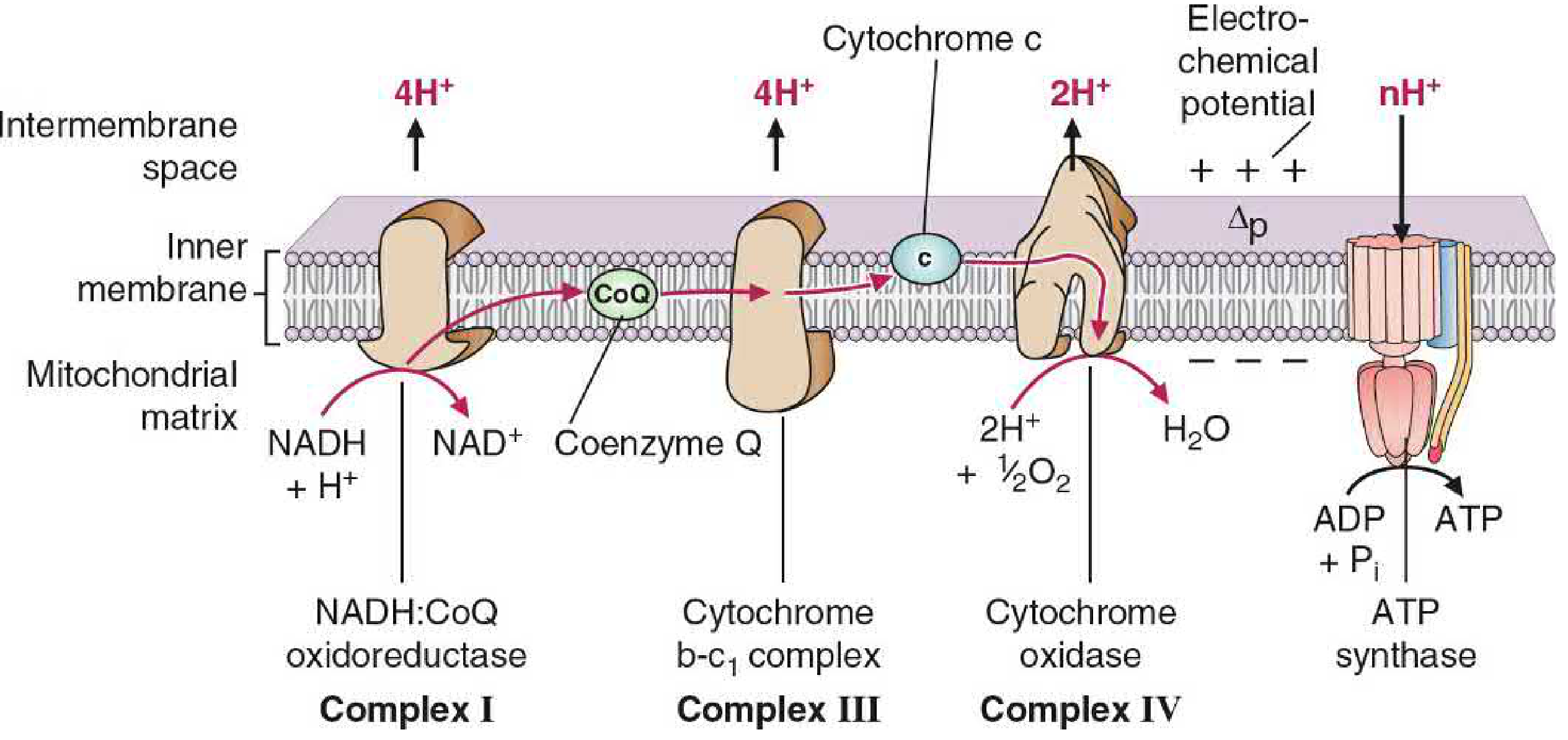
The 4 Complexes
| Complex | Name | Accepts | Pumps H+? | Clinical |
|---|---|---|---|---|
| Complex I | NADH-CoQ oxidoreductase | NADH | Yes (4 H+) | Inhibited by rotenone, metformin |
| Complex II | Succinate dehydrogenase | FADH2 | NO | Inhibited by malonate |
| Complex III | Cytochrome b-c1 complex | CoQ (Ubiquinol) | Yes (4 H+) | Inhibited by antimycin A |
| Complex IV | Cytochrome c oxidase | Cytochrome c | Yes (2 H+) | Inhibited by cyanide, CO, azide |
Electron flow: NADH → Complex I → CoQ → Complex III → Cyt c → Complex IV → O2 → H2O
FADH2 flow: FADH2 → Complex II → CoQ → Complex III → (same as above)
Chemiosmotic Theory (Peter Mitchell, Nobel Prize 1978)
- As electrons flow through Complexes I, III, IV, protons (H+) are pumped OUT of the mitochondrial matrix into the intermembrane space
- This creates an electrochemical gradient (proton motive force, Δp) across the inner membrane
- Protons want to flow back into the matrix (down their gradient)
- They can only re-enter through ATP Synthase (Complex V / F0F1-ATPase)
- As protons flow through ATP synthase, it rotates (like a turbine) and generates ATP from ADP + Pi
ATP Yield per NADH vs FADH2
- 1 NADH → ~2.5 ATP (passes through Complexes I, III, IV - pumps 10 H+)
- 1 FADH2 → ~1.5 ATP (bypasses Complex I, only pumps 6 H+ through Complexes III & IV)
Inhibitors of ETC - Clinical Importance
| Poison/Drug | Blocks | Effect |
|---|---|---|
| Cyanide (KCN) | Complex IV | Cells cannot use O2 → cells die despite O2 being present |
| Carbon monoxide (CO) | Complex IV (also Hb) | Same as cyanide; headache, coma, death |
| Rotenone | Complex I | Insecticide; also caused Parkinsonism in farmers |
| Metformin (diabetes drug) | Complex I (mildly) | Reduces NADH oxidation → less gluconeogenesis |
| Oligomycin | ATP Synthase | Stops ATP synthesis; stops electron flow (coupled) |
Uncouplers - Separate Proton Flow from ATP Synthesis
Uncouplers allow H+ to re-enter matrix WITHOUT going through ATP synthase. Energy is lost as heat instead of ATP.
| Uncoupler | Details |
|---|---|
| 2,4-DNP (dinitrophenol) | Industrial chemical; causes weight loss, fatal hyperthermia |
| Thermogenin (UCP-1) | Brown adipose tissue; newborn infants use it to generate heat |
| Aspirin (high dose) | Mild uncoupling |
PART 7: TOTAL ATP YIELD FROM 1 GLUCOSE
| Stage | Product | ATP Yield |
|---|---|---|
| Glycolysis | 2 ATP (substrate level) | 2 ATP |
| Glycolysis | 2 NADH × 2.5 ATP | 5 ATP |
| PDC (2 turns) | 2 NADH × 2.5 ATP | 5 ATP |
| TCA Cycle (2 turns) | 6 NADH × 2.5 ATP | 15 ATP |
| TCA Cycle (2 turns) | 2 FADH2 × 1.5 ATP | 3 ATP |
| TCA Cycle (2 turns) | 2 GTP | 2 ATP |
| TOTAL | ~30-32 ATP |
Note: Old textbooks quoted 36-38 ATP. Modern calculation gives 30-32 because mitochondrial transport costs (moving pyruvate in, ATP out) reduce the yield slightly.
Aerobic vs Anaerobic:
- Aerobic: ~30-32 ATP per glucose
- Anaerobic (no O2): Only 2 ATP per glucose (only glycolysis works)
PART 8: GLUCONEOGENESIS - Making Glucose from Scratch
Definition: Synthesis of glucose from non-carbohydrate precursors
Location: Mainly liver (90%), some kidney cortex (10%, increases during prolonged fasting)
When: During fasting, starvation, prolonged exercise, or after low-carb diet
The 4 Main Precursors
| Precursor | Source | Where it enters |
|---|---|---|
| Lactate | RBCs, exercising muscle | → Pyruvate (via LDH) |
| Glycerol | Adipose tissue (fat breakdown) | → DHAP (enters glycolysis) |
| Alanine | Muscle protein breakdown | → Pyruvate (via transamination) |
| Glucogenic amino acids | Most amino acids (except Leu, Lys) | Various TCA intermediates |
Note: Fatty acids (except odd-chain fatty acids) cannot become glucose. Even-chain fatty acids → Acetyl-CoA → TCA cycle only (cannot become glucose because there is no net carbon addition to OAA from Acetyl-CoA after 2 CO2 are lost).
The 3 Bypass Steps (Most Important!)
Gluconeogenesis is glycolysis run in REVERSE - but 3 steps are irreversible in glycolysis and need special bypass enzymes:
Bypass 1: Pyruvate → PEP (Replaces Pyruvate Kinase)
Two-step process:
Step A: Pyruvate → OAA (in mitochondria)
- Enzyme: Pyruvate Carboxylase (requires Biotin + ATP)
- Activated by: Acetyl-CoA
- Note: Acetyl-CoA activating pyruvate carboxylase is clever - when fat is being burned (lots of Acetyl-CoA), body says "also make glucose from pyruvate"
Step B: OAA → PEP (in cytoplasm)
- Enzyme: PEPCK (Phosphoenolpyruvate Carboxykinase) (needs GTP, releases CO2)
- OAA is transported out of mitochondria as malate (since OAA cannot cross the membrane)
- Induced by: Glucagon, cortisol, fasting → makes gluconeogenesis go
Memory: "Pyruvate → (Pyruvate Carboxylase) → OAA → (PEPCK) → PEP"
Bypass 2: Fructose-1,6-bisP → Fructose-6-P (Replaces PFK-1)
Enzyme: Fructose-1,6-bisPhosphatase (FBPase-1)
- Simply removes the phosphate from position 1 by hydrolysis
- Inhibited by: AMP, Fructose-2,6-bisphosphate (when fed state = glycolysis ON = gluconeogenesis OFF)
- Activated by: ATP, citrate
Bypass 3: Glucose-6-P → Glucose (Replaces Hexokinase)
Enzyme: Glucose-6-Phosphatase
- Located in ER membrane of liver and kidney only
- Muscle CANNOT release free glucose (no glucose-6-phosphatase) - muscle glycogen stays in muscle
- In liver, releases free glucose into blood to maintain blood glucose levels
Gluconeogenesis Regulation (Summary)
| Hormone/Signal | Effect on Gluconeogenesis |
|---|---|
| Glucagon (fasting) | ACTIVATES (induces PEPCK, FBPase; inactivates PFK-1 via F2,6-bisP) |
| Insulin (fed) | INHIBITS |
| Cortisol | ACTIVATES (induces enzymes - important in stress) |
| Adrenaline (exercise) | ACTIVATES |
| AMP | INHIBITS (low energy → don't waste ATP making glucose) |
| Acetyl-CoA | ACTIVATES (activates Pyruvate Carboxylase - step 1) |
Energy Cost of Gluconeogenesis
Making 1 glucose from 2 pyruvate costs: 6 ATP (4 ATP + 2 GTP)
This is why gluconeogenesis requires energy - the liver uses fat oxidation to supply this energy during fasting.
PART 9: GLYCOGEN METABOLISM
Glycogen = polymer of glucose, stored in liver (for blood glucose) and muscle (for local energy)
Structure:
- Glucose units linked by α-1,4-glycosidic bonds (straight chain)
- Branch points: α-1,6-glycosidic bonds every 8-10 residues
- Branching increases solubility and allows rapid mobilization from many chain ends simultaneously
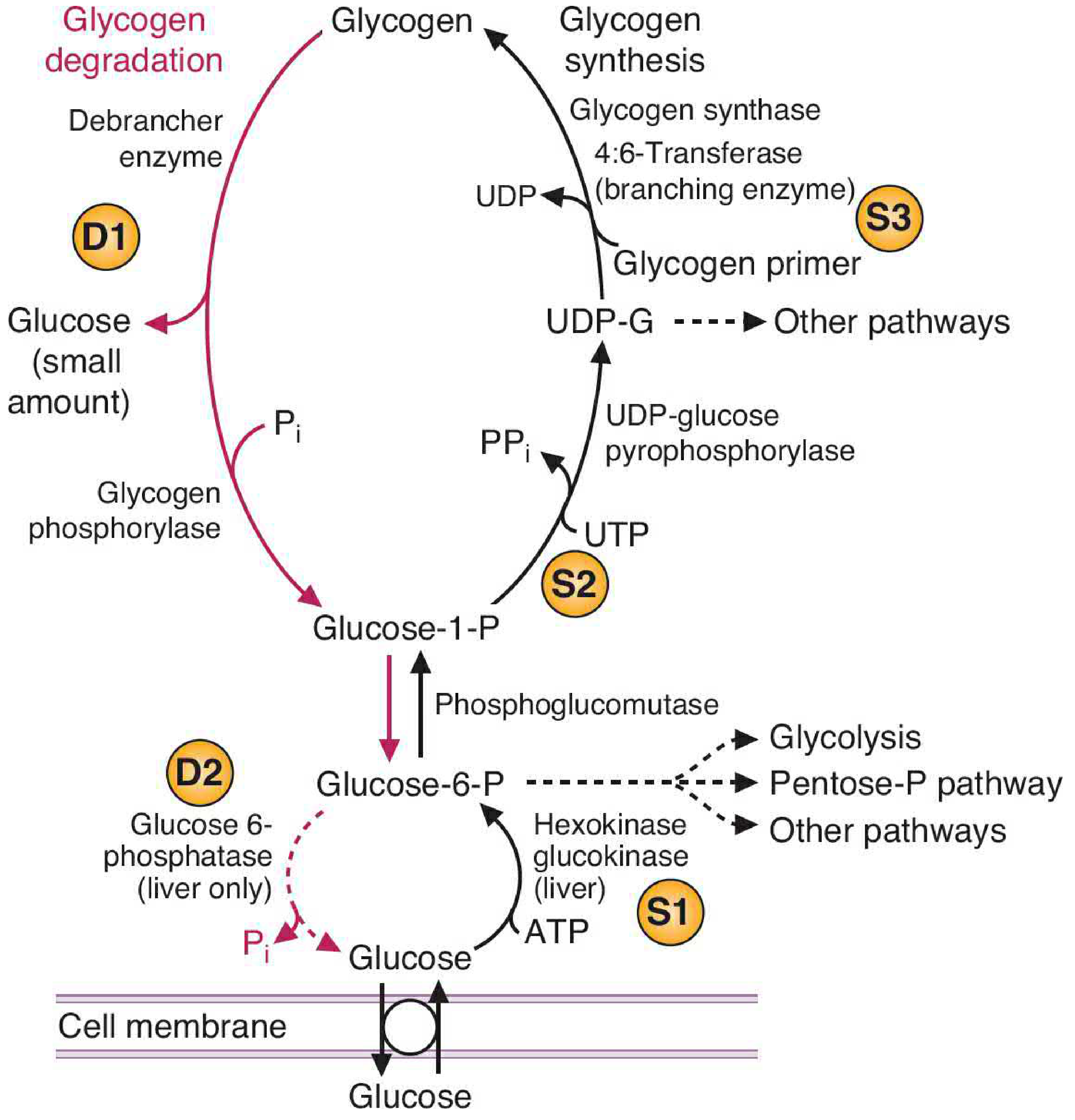
GLYCOGENESIS (Synthesis)
Steps:
- Glucose → Glucose-6-P (Hexokinase/Glucokinase)
- Glucose-6-P → Glucose-1-P (Phosphoglucomutase)
- Glucose-1-P + UTP → UDP-Glucose + PPi (UDP-glucose pyrophosphorylase)
- UDP-glucose is the "activated" form of glucose - the "building block"
- PPi (pyrophosphate) is hydrolyzed to 2Pi by pyrophosphatase → drives reaction forward
- UDP-Glucose added to glycogen chain (Glycogen Synthase - key enzyme, adds α-1,4 links)
- Branching Enzyme (Amylo-4,6-transglycosylase): moves a block of 6-7 residues from end of chain to form a new α-1,6 branch
Glycogenin: The primer protein. Glycogen synthesis STARTS on glycogenin. First few glucose molecules are attached to it, then glycogen synthase takes over.
Activated by: Insulin (activates glycogen synthase via phosphatase), glucose (in liver)
Inhibited by: Glucagon, epinephrine (via cAMP/PKA → phosphorylate and INACTIVATE glycogen synthase)
GLYCOGENOLYSIS (Degradation)
Steps:
- Glycogen Phosphorylase cleaves α-1,4 bonds from the non-reducing ends → Glucose-1-P (NOT free glucose - phosphate comes from Pi, not water)
- But phosphorylase STOPS 4 residues from a branch point. Then:
- Debranching Enzyme (bifunctional):
- Transferase activity: moves 3 of the 4 remaining residues to another chain
- Glucosidase activity: releases the last α-1,6 branch residue as FREE glucose (not G1P!)
- Glucose-1-P → Glucose-6-P (Phosphoglucomutase)
- In liver/kidney: Glucose-6-phosphatase → Free glucose → blood In muscle: No G6Pase → G6P enters glycolysis directly
Hormonal Regulation
| State | Liver | Muscle |
|---|---|---|
| After meal (insulin ↑) | Glycogen synthesis ↑ | Glycogen synthesis ↑ |
| Fasting (glucagon ↑) | Glycogen degradation ↑ | Little change (fasting) |
| Exercise/Stress (epinephrine ↑) | Glycogen degradation ↑ | Glycogen degradation ↑ |
| Exercise (Ca2+, AMP ↑) | - | Glycogen degradation ↑ (AMP activates phosphorylase) |
Mechanism of Glucagon/Epinephrine:
Glucagon/Epinephrine → GPCR → adenylyl cyclase → ↑cAMP → Protein Kinase A (PKA) → phosphorylates:
- Glycogen Phosphorylase Kinase → activates
- Glycogen Phosphorylase → ACTIVE (phosphorylated = active)
- Glycogen Synthase → INACTIVE (phosphorylated = inactive) Result: Glycogen breakdown ON, glycogen synthesis OFF
Insulin does the opposite via phosphatases (dephosphorylation = glycogen synthase active, phosphorylase inactive).
Glycogen Storage Diseases (GSDs) - High Yield
| Type | Name | Deficient Enzyme | Features |
|---|---|---|---|
| I | Von Gierke | Glucose-6-phosphatase | Severe fasting hypoglycemia, huge liver, lactic acidosis, hyperuricemia, hyperlipidemia |
| II | Pompe | Lysosomal acid α-glucosidase (GAA) | Cardiomegaly in infants, muscle weakness; "Cardiomegaly = Pompe" |
| III | Cori | Debranching enzyme | Moderate hypoglycemia, liver enlargement; gluconeogenesis intact (unlike Type I) |
| IV | Andersen | Branching enzyme | Abnormal (long, unbranched) glycogen accumulates; liver cirrhosis |
| V | McArdle | Muscle glycogen phosphorylase | Muscle cramps on exercise, myoglobinuria, NO rise in blood lactate with exercise (classic test!) |
| VI | Hers | Liver glycogen phosphorylase | Mild fasting hypoglycemia, liver enlargement; relatively benign |
Clinical pearl - McArdle's ischemic forearm test:
- Ask patient to exercise forearm with tourniquet (no blood flow)
- Normal: Lactate rises, ammonia rises
- McArdle: Lactate does NOT rise (muscle can't break down glycogen to make pyruvate/lactate) but ammonia rises
- Myalgia, cramps, fatigue during exercise are typical symptoms
PART 10: PENTOSE PHOSPHATE PATHWAY (HMP SHUNT / Hexose Monophosphate Shunt)
Location: Cytosol
NOT for ATP production - instead produces:
- NADPH (for biosynthesis and antioxidant defense)
- Ribose-5-phosphate (for nucleotide synthesis - DNA, RNA, ATP, NAD+, etc.)
Where it's most active: Liver (fatty acid synthesis), adrenal cortex (steroid synthesis), RBCs (antioxidant defense), lactating breast (fatty acid synthesis), rapidly dividing cells (nucleotide synthesis)
Two Phases:
Phase 1: Oxidative Phase (Irreversible) - Makes NADPH
- Glucose-6-P → 6-Phosphoglucono-δ-lactone (G6PD - makes NADPH)
- 6-Phosphoglucono-δ-lactone → 6-Phosphogluconate (Lactonase)
- 6-Phosphogluconate → Ribulose-5-P + CO2 (6-Phosphogluconate dehydrogenase - makes NADPH)
Net from oxidative phase: 1 Glucose-6-P → 1 Ribulose-5-P + 2 NADPH + 1 CO2
Phase 2: Non-Oxidative Phase (Reversible) - Makes/uses Ribose-5-P
- Ribulose-5-P can be converted to Ribose-5-P (by isomerase) for nucleotide synthesis
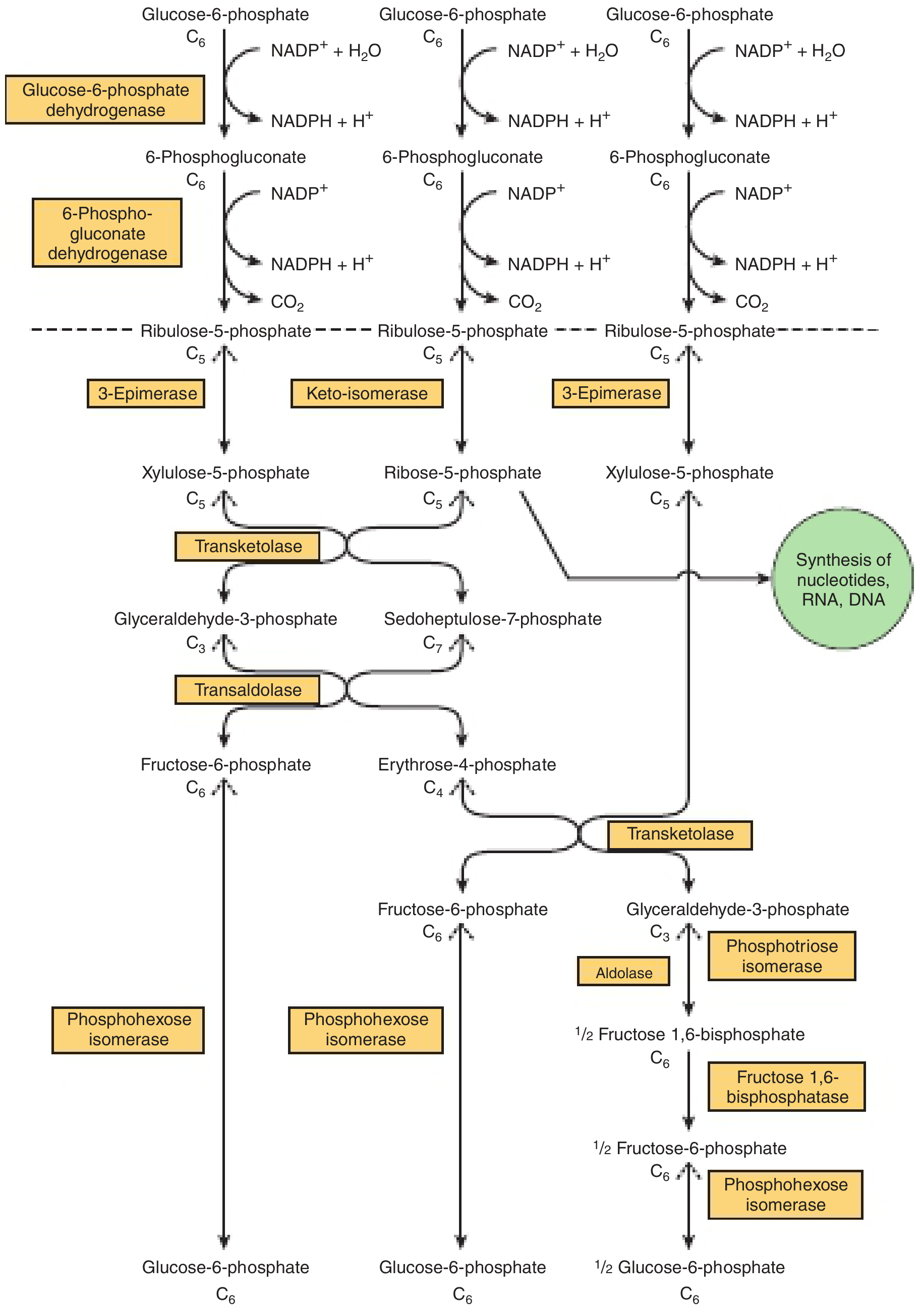
- OR if nucleotides not needed, Ribose-5-P can be converted back to glycolytic intermediates (F6P and GAP) via transketolase and transaldolase reactions (these need thiamine/B1 as cofactor!)
Why NADPH is so Important
Role in RBCs (Most testable!):
- H2O2 builds up in RBCs from oxidative metabolism
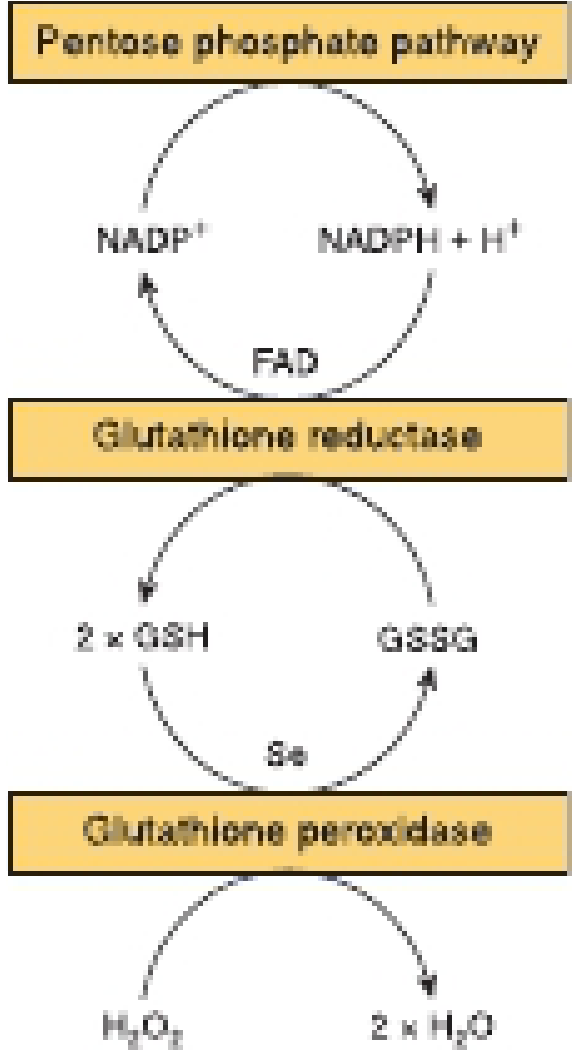
- Glutathione peroxidase destroys H2O2 using reduced glutathione (GSH)
- GSH gets oxidized to GSSG (disulfide form)
- Glutathione reductase regenerates GSH using NADPH
- HMP shunt is the ONLY source of NADPH in RBCs (no mitochondria, no malic enzyme)
- Without NADPH → cannot regenerate GSH → H2O2 accumulates → oxidizes Hb to Heinz bodies → RBC membrane damage → hemolysis
Other roles of NADPH:
- Fatty acid synthesis (cytoplasm)
- Cholesterol/steroid synthesis
- Cytochrome P450 reactions (drug metabolism)
- NADPH oxidase in neutrophils (kills bacteria) - deficient in Chronic Granulomatous Disease
G6PD Deficiency - Most Common Enzyme Defect Worldwide
Genetics: X-linked recessive (mainly males affected)
Prevalence: ~400 million people worldwide; common in Africa, Mediterranean, Middle East
Why common in malaria belt? Heterozygous females have PARTIAL protection against malaria (RBCs infected by Plasmodium lyse faster due to oxidative stress, limiting parasite spread)
Mechanism: Without G6PD → no NADPH → no reduced glutathione → H2O2 destroys Hb → denatured Hb = Heinz bodies (seen on methyl violet stain) → RBC hemolysis = Heinz body hemolytic anemia
Triggers of hemolytic crisis:
- Drugs: Primaquine, dapsone, sulfonamides, nitrofurantoin, rasburicase
- Infection (oxidative stress from immune response)
- Fava beans (broad beans - favism) - contain vicine and convicine which generate H2O2
- Naphthalene (mothballs)
Two variants:
| Variant | Population | Enzyme stability | Severity |
|---|---|---|---|
| A- (African) | Afro-Caribbean | Unstable (degrades in old RBCs) | Mild to moderate, self-limiting |
| Mediterranean | Mediterranean/Middle East | Stable but low activity | Severe, can be fatal |
Lab findings during crisis:
- Hemolytic anemia (decreased Hb, increased reticulocytes, increased bilirubin)
- Heinz bodies on peripheral smear
- Decreased G6PD activity (best tested AFTER hemolytic crisis, not during, because young RBCs have higher G6PD activity)
PART 11: CORI CYCLE & GLUCOSE-ALANINE CYCLE
Cori Cycle (Lactate Cycle)
MUSCLE/RBCs LIVER
Glucose ──→ Lactate ──────────────────→ Lactate
↓
Pyruvate
↓ (Gluconeogenesis)
Glucose ←──────────────────────────── Glucose
- RBCs and anaerobic muscle produce lactate
- Lactate goes to liver via blood
- Liver converts lactate → pyruvate → glucose (gluconeogenesis)
- Glucose goes back to muscle/RBCs
- Energy note: Muscle gets 2 ATP from lactate production; liver uses 6 ATP to make glucose. NET: liver subsidizes muscle energy production. The liver makes up the deficit using fat oxidation.
Glucose-Alanine Cycle
MUSCLE LIVER
Pyruvate + NH3 ──→ Alanine ──────────→ Alanine
↓ (Transamination)
Pyruvate + NH3
↓ ↓
Glucose Urea
Glucose ←──────────────────────────── Glucose
- During prolonged exercise/fasting, muscle breaks down protein
- Amino acids transaminated to alanine (safe NH3 carrier)
- Alanine sent to liver → converted back to pyruvate for gluconeogenesis + NH3 goes to urea cycle
- Glucose returns to muscle
PART 12: CLINICAL CONDITIONS - COMPLETE SUMMARY
Inborn Errors of Metabolism
| Disease | Defect | Key Features |
|---|---|---|
| Von Gierke (GSD I) | Glucose-6-phosphatase | Fasting hypoglycemia, hepatomegaly, lactic acidosis, hyperuricemia (gout), hyperlipidemia; glucose/fructose/galactose restriction |
| Pompe (GSD II) | Acid α-glucosidase (lysosomal) | Infant: Cardiomegaly, hypotonia, early death; Adult: Muscle weakness. Rx: Alglucosidase alfa (enzyme replacement) |
| Cori (GSD III) | Debranching enzyme | Milder than Type I; gluconeogenesis intact; liver + muscle |
| McArdle (GSD V) | Muscle phosphorylase | Exercise intolerance, myoglobinuria; no lactate rise with ischemic exercise test |
| G6PD deficiency | G6PD | Hemolytic anemia with oxidative triggers; Heinz bodies |
| Pyruvate Kinase deficiency | Pyruvate kinase | Chronic hemolytic anemia (not triggered) |
| PDC deficiency | E1-alpha of PDC | Lactic acidosis, neurological damage; Rx: ketogenic diet |
| MODY Type 2 | Glucokinase mutation | Mild, stable hyperglycemia; doesn't need treatment usually |
Toxin/Drug Effects
| Agent | Mechanism | Effect |
|---|---|---|
| Cyanide | Blocks Complex IV | Histotoxic hypoxia - cells can't use O2; Rx: Hydroxocobalamin / sodium thiosulfate |
| CO | Blocks Complex IV + Hb | Cherry-red skin; headache, coma; Rx: 100% O2 |
| Arsenic (trivalent) | Inhibits lipoic acid (in PDC, α-KGD) | Lactic acidosis, peripheral neuropathy |
| Fluoride | Inhibits enolase (step 9 glycolysis) | Used in glucose collection tubes |
| Metformin | Mild Complex I inhibition | Inhibits gluconeogenesis; used in T2DM; risk of lactic acidosis in renal failure |
Hormonal Regulation - One-Page Summary
| Hormone | Glycolysis | Gluconeogenesis | Glycogenesis | Glycogenolysis |
|---|---|---|---|---|
| Insulin (fed) | ↑ | ↓ | ↑ | ↓ |
| Glucagon (fasting) | ↓ | ↑ | ↓ | ↑ |
| Epinephrine (stress) | ↑ (muscle) | ↑ (liver) | ↓ | ↑ |
| Cortisol (stress) | - | ↑ (induces enzymes) | - | - |
🎯 MASTER MNEMONIC SHEET
10 Steps of Glycolysis - "Good Gracious! Father Franklin Did Go By Plane, Eventually"
- Glucose → G6P (Hexokinase)
- G6P → F6P (Phosphoglucose isomerase)
- F6P → F1,6-bisP (PFK-1)
- F1,6-bisP → DHAP + GAP (Aldolase)
- DHAP → GAP (Triose phosphate isomerase)
- GAP → 1,3-BPG (GAPDH - NADH)
- BPG → 3PG (Phosphoglycerate Kinase - ATP)
- PG → 2PG (Phosphoglycerate Mutase)
- Enolase: 2PG → PEP
- PEP → Pyruvate (Pyruvate Kinase - ATP)
TCA Cycle - "Citrate Is Krebs' Starting Substrate For Making Oxaloacetate"
- Citrate (Citrate synthase)
- Isocitrate (Aconitase)
- Ketoglutarate = α-KG (Isocitrate dehydrogenase - NADH, CO2)
- Succinyl-CoA (α-KG dehydrogenase - NADH, CO2)
- Succinate (Succinyl-CoA synthetase - GTP)
- Fumarate (Succinate dehydrogenase - FADH2)
- Malate (Fumarase)
- Oxaloacetate (Malate dehydrogenase - NADH)
Irreversible Glycolysis Steps - "HoPKins CaFe"
- Hexokinase / Glucokinase
- PFK-1
- Pyruvate Kinase
PDC Cofactors - "The Lovely Cat Found Napping"
Thiamine, Lipoate, CoA, FAD, NAD+
GSDs - "Very Poor Cow Always Makes Lots"
- Von Gierke (I), Pompe (II), Cori (III), Anderson (IV), McArdle (V), Liver phosphorylase/Hers (VI)
All content sourced from: Lippincott Illustrated Biochemistry 8e, Basic Medical Biochemistry 6e, Harper's Illustrated Biochemistry 32e
---Yeh lo - Carbohydrate Metabolism ke Complete Detailed MBBS Notes - sab kuch cover kar diya! 🎯
Quick Summary - Kya Kya Cover Kiya:
| # | Topic | Details |
|---|---|---|
| 1 | Glucose Transport | GLUT 1-5 differences, SGLT mechanism, clinical drugs |
| 2 | Glycolysis | All 10 steps, each enzyme, regulation, clinical (arsenic, fluoride, PK deficiency, MODY) |
| 3 | Pyruvate Fate | Aerobic vs anaerobic, 3 possible fates |
| 4 | PDC | Structure (E1/E2/E3), cofactors (B1,B2,B3,B5,Lipoate), regulation, PDC deficiency, Wernicke's |
| 5 | TCA Cycle | All 8 steps, each enzyme, NADH/FADH2/GTP yield, anaplerosis |
| 6 | ETC & Oxidative Phosphorylation | All 4 complexes, chemiosmotic theory, inhibitors (cyanide, CO, rotenone), uncouplers |
| 7 | Total ATP | 30-32 ATP, why not 38 |
| 8 | Gluconeogenesis | 4 precursors, 3 bypass enzymes (Pyruvate Carboxylase, PEPCK, FBPase, G6Pase), regulation |
| 9 | Glycogen Metabolism | Synthesis, degradation, all 6 GSDs with features and treatment |
| 10 | Pentose Phosphate | NADPH, Ribose-5P, G6PD deficiency, Heinz bodies, favism, two variants |
| 11 | Cori & Alanine cycles | Complete pathways |
| 12 | Clinical Summary | All diseases + hormonal regulation table |
Koi bhi concept aur acha samajhna ho - mechanisms, diagrams, ya MCQ practice - batao! 📚
HMP Shunt
HMP Shunt (Hexose Monophosphate Pathway / Pentose Phosphate Pathway) - yeh ek alternate glucose pathway hai jo ATP nahi balki NADPH aur Ribose-5-P banata hai.
Searching sources...
Reading File
Finding Sources
Reading File
Reading File
Reading File
Reading File
Reading File
Loading Image
Loading Image
Loading Image
Finding Sources
Finding Sources
Loading Image
Loading Image
Finding Sources
Ab mere paas sab images aur complete textbook content hai. Poora detailed HMP Shunt guide likhta hoon!
🔬 HMP SHUNT (Hexose Monophosphate Pathway / Pentose Phosphate Pathway)
Complete MBBS Notes - Simple English
Sources: Basic Medical Biochemistry 6e | Harper's Biochemistry 32e | Lippincott 8e
INTRODUCTION - "Yeh Pathway Kya Hai?"
HMP Shunt ek alternative glucose pathway hai. Glycolysis se alag, yeh pathway:
- ATP nahi banata
- NADPH banata hai (reducing power - antioxidant + biosynthesis)
- Ribose-5-Phosphate banata hai (DNA/RNA ke liye nucleotides)
Bypass kyun? Yeh Glucose-6-Phosphate (G6P) par shunt (detour) leta hai - isliye naam "HMP Shunt"
KEY FACTS AT A GLANCE
| Feature | HMP Shunt | Glycolysis |
|---|---|---|
| Location | Cytosol | Cytosol |
| ATP produced | ❌ ZERO | ✅ 2 ATP |
| NADPH produced | ✅ YES | ❌ No |
| NADH produced | ❌ No | ✅ YES |
| CO2 produced | ✅ YES | ❌ No |
| Coenzyme used | NADP+ | NAD+ |
| Starting material | Glucose-6-P | Glucose-6-P |
WHERE DOES IT OCCUR? (Tissue Distribution)
| Tissue | Why active? |
|---|---|
| Liver | Major site - fatty acid synthesis needs NADPH; enzyme induced by insulin |
| Adrenal cortex | Steroid (cortisol/aldosterone) synthesis needs NADPH |
| RBCs | Antioxidant defense - ONLY source of NADPH here |
| Lactating breast | Fatty acid synthesis for milk lipids |
| Testes/ovaries | Steroid hormone synthesis |
| Phagocytes (neutrophils) | NADPH oxidase uses NADPH to kill bacteria (respiratory burst) |
| Lens of eye | Protection from oxidative damage |
| Rapidly dividing cells | Need Ribose-5-P for nucleotide synthesis |
Low activity in: Muscle (mainly does glycolysis)
THE TWO PHASES
Phase 1 (Oxidative) = IRREVERSIBLE → makes NADPH
Phase 2 (Non-Oxidative) = REVERSIBLE → shuffles carbon skeletons
PHASE 1: OXIDATIVE PHASE - "NADPH Factory"
3 reactions, 2 NADPH produced per glucose-6-P
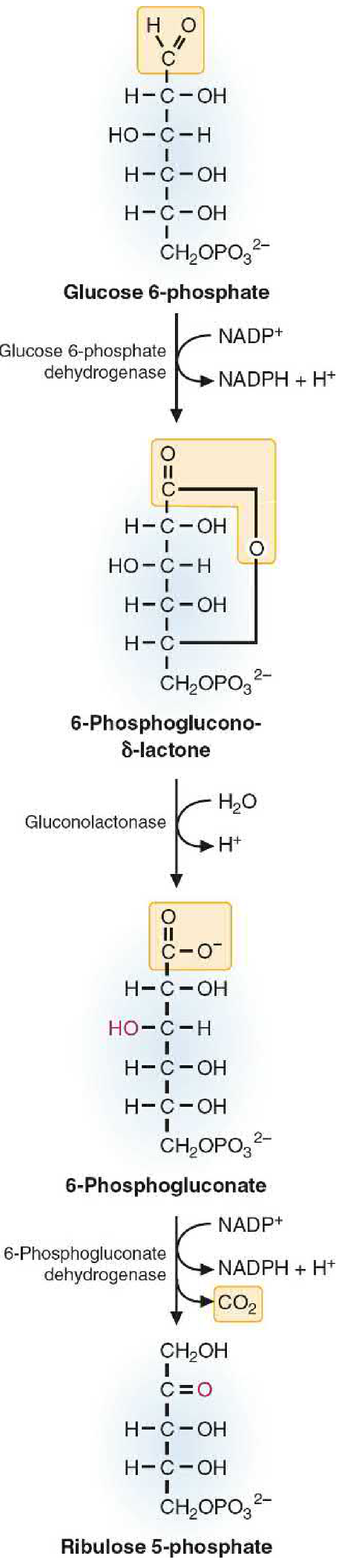
Step 1: Glucose-6-P → 6-Phosphoglucono-δ-lactone
Enzyme: Glucose-6-Phosphate Dehydrogenase (G6PD)
- Uses: NADP+ → makes NADPH
- This is the committed step (rate-limiting)
- Carbon 1 (aldehyde group) is oxidized
- Inhibited by NADPH (product inhibition - if NADPH is enough, pathway slows)
- This is the enzyme deficient in G6PD deficiency!
Step 2: 6-Phosphoglucono-δ-lactone → 6-Phosphogluconate
Enzyme: Gluconolactonase (Gluconolactone Hydrolase)
- Simple hydrolysis - adds water
- Opens the ring structure
- No coenzyme needed
Step 3: 6-Phosphogluconate → Ribulose-5-Phosphate + CO2
Enzyme: 6-Phosphogluconate Dehydrogenase
- Uses: NADP+ → makes NADPH
- An oxidative decarboxylation (loses one CO2)
- Similar mechanism to isocitrate dehydrogenase in TCA cycle
- Product: Ribulose-5-P (5-carbon ketose sugar)
Phase 1 Net Result (per molecule):
1 Glucose-6-P + 2 NADP+ → 1 Ribulose-5-P + 2 NADPH + CO2
PHASE 2: NON-OXIDATIVE PHASE - "Carbon Shuffler"
After phase 1, the cell has Ribulose-5-P. Now what? Depends on what the cell needs!
First - Ribulose-5-P is converted to two products:
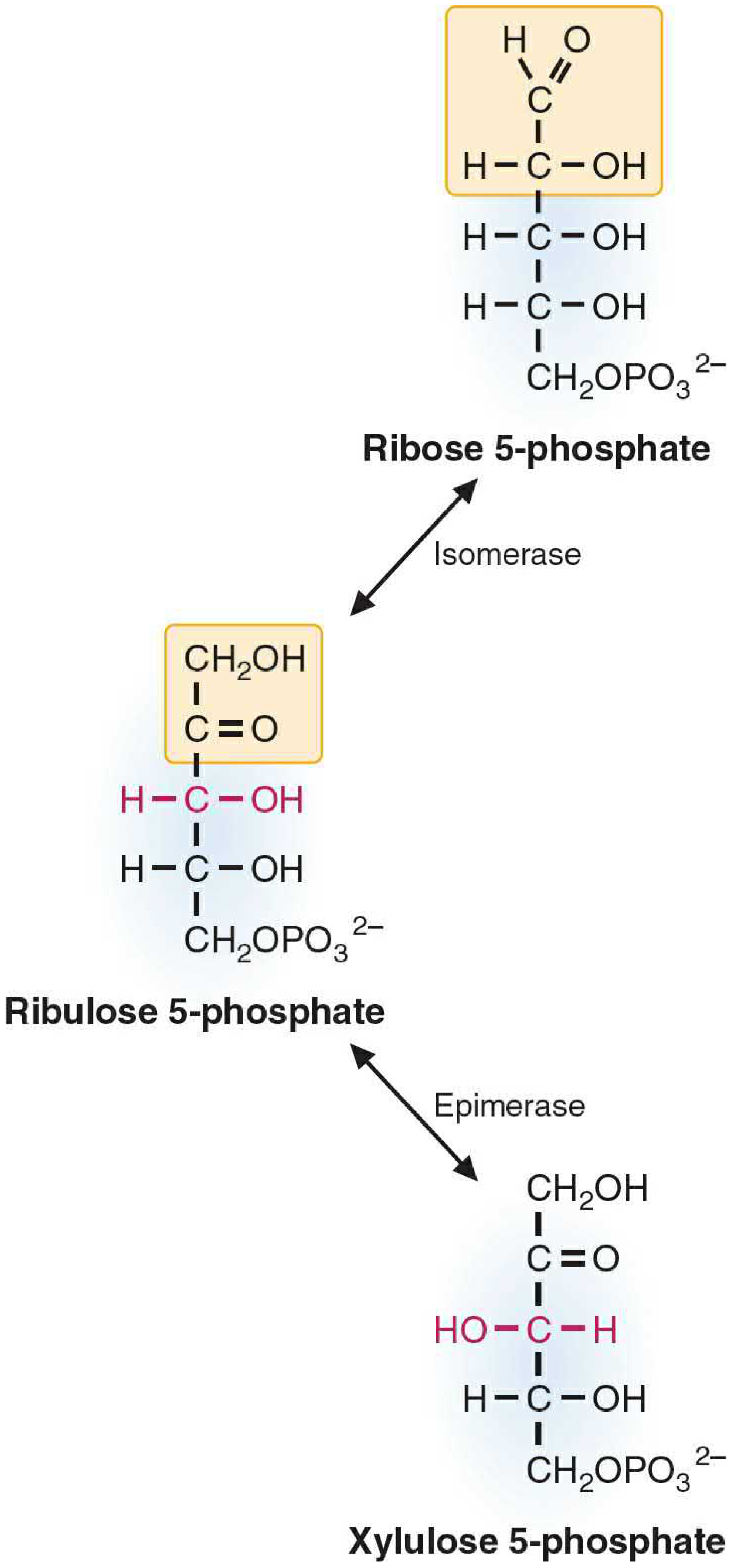
- Ribulose-5-P → Ribose-5-P (by Isomerase - aldose/ketose conversion) → Used for nucleotide synthesis (DNA, RNA, ATP, NAD+, FAD, CoA)
- Ribulose-5-P → Xylulose-5-P (by Epimerase - changes stereochemistry at C3) → Used in carbon-shuffling reactions below
The Two Key Enzymes of Non-Oxidative Phase:
Transketolase (Cofactor: Thiamine - Vitamin B1)
- Transfers a 2-carbon unit from a ketose to an aldose
- Reaction: ketose (shorter by 2C) + aldose (longer by 2C)
- Requires TPP (Thiamine Pyrophosphate, Vitamin B1) as cofactor!
- Clinical: B1 deficiency → transketolase fails → HMP shunt cannot recycle carbons → measured as RBC transketolase activity test (gold standard for B1 deficiency)
Transaldolase (No cofactor needed)
- Transfers a 3-carbon unit from a ketose to an aldose
- Proceeds via Schiff base intermediate (3C unit attached to lysine in enzyme)
The Non-Oxidative Reactions:
Starting with: 2 Xylulose-5-P + 1 Ribose-5-P (from 3 Ribulose-5-P)
Step A (Transketolase):
Xylulose-5-P (C5) + Ribose-5-P (C5) → Sedoheptulose-7-P (C7) + Glyceraldehyde-3-P (C3)
Step B (Transaldolase):
Sedoheptulose-7-P (C7) + Glyceraldehyde-3-P (C3) → Fructose-6-P (C6) + Erythrose-4-P (C4)
Step C (Transketolase):
Xylulose-5-P (C5) + Erythrose-4-P (C4) → Fructose-6-P (C6) + Glyceraldehyde-3-P (C3)
End products: Fructose-6-P and Glyceraldehyde-3-P (both are glycolytic intermediates!)
These can re-enter glycolysis - so the carbon is NOT wasted.
OVERALL EQUATION
If the goal is to maximize NADPH (cycle keeps running):
Glucose-6-P + 12 NADP+ + 6 H₂O → 6 CO₂ + 12 NADPH + Phosphate
For 3 glucose-6-P going through once:
- Input: 3 Glucose-6-P
- Output: 6 NADPH + 3 CO2 + products that regenerate 2 Glucose-6-P (and 1 GAP → can become ½ Glucose-6-P)
THE CELL'S CHOICES - "What Does the Cell Need?"
This pathway is FLEXIBLE. Depending on what the cell needs, it adjusts:
| Cell Needs | What Happens |
|---|---|
| Only NADPH | Oxidative reactions produce NADPH; non-oxidative reactions convert Ribulose-5-P BACK to Glucose-6-P → cycle repeats → maximize NADPH |
| NADPH + Ribose-5-P | Oxidative phase runs → NADPH made + Ribulose-5-P → isomerase converts to Ribose-5-P. Both products used directly |
| Only Ribose-5-P (e.g., dividing cell) | High NADPH inhibits G6PD → oxidative phase OFF; non-oxidative phase runs in reverse: Fructose-6-P + GAP → Ribose-5-P via transketolase/transaldolase |
| NADPH + Pyruvate | Both phases run; Ribulose-5-P → Fructose-6-P/GAP → enter glycolysis → pyruvate |
WHY IS NADPH SO IMPORTANT?
In RBCs - The Most Tested!
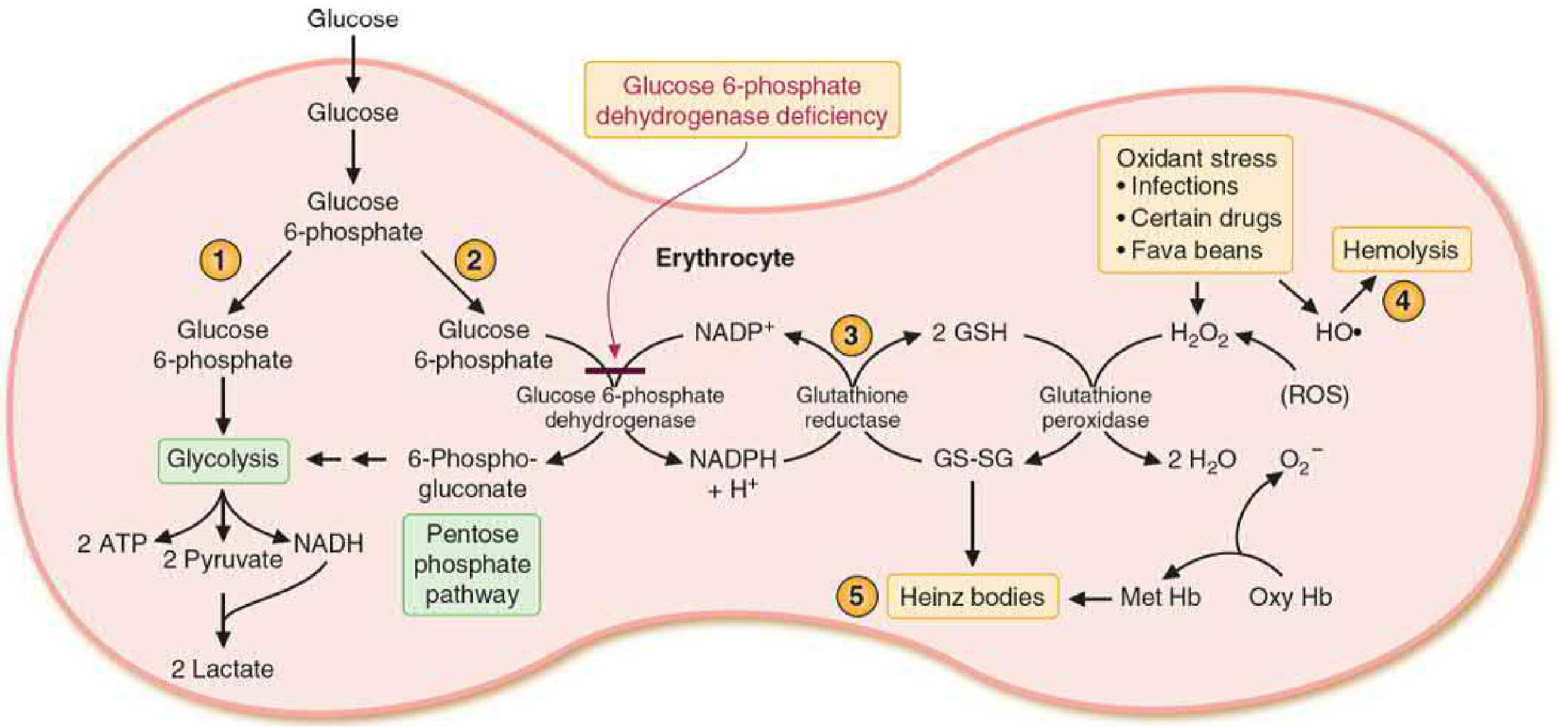
Step-by-step protection mechanism in RBCs:
HMP Shunt → makes NADPH
↓
NADPH + Glutathione Reductase → converts GSSG (oxidized) → GSH (reduced)
↓
GSH + Glutathione Peroxidase → destroys H₂O₂ and lipid peroxides
↓
Result: RBC membrane protected, Hb not oxidized
If HMP Shunt fails (G6PD deficiency):
No NADPH → cannot regenerate GSH → H₂O₂ accumulates
↓
H₂O₂ oxidizes Hb → methemoglobin → denatured Hb = Heinz bodies
↓
Heinz bodies attach to RBC membrane → membrane damage → HEMOLYSIS
Complete List of NADPH Roles:
| Role | Where |
|---|---|
| Reduce glutathione (GSH) | ALL cells, especially RBCs |
| Fatty acid synthesis | Liver, adipose, lactating breast |
| Cholesterol synthesis | Liver, steroidogenic cells |
| Steroid synthesis | Adrenal cortex, gonads |
| Cytochrome P450 reactions | Liver (drug metabolism) |
| NADPH Oxidase - kills bacteria | Neutrophils, macrophages |
| Nitric oxide synthesis (eNOS) | Endothelial cells |
| Deoxynucleotide synthesis | All dividing cells |
| Fatty acid chain elongation | ER membrane |
G6PD DEFICIENCY - Complete Coverage
Basic Facts:
- Most common enzyme deficiency in the world (~400 million people)
- Gene is on X chromosome → X-linked recessive → mainly males affected
- Females are carriers (one normal X protects them usually)
- Malaria belt distribution - heterozygous females have partial malaria protection (infected RBCs are more fragile and lyse faster)
Mechanism:
No G6PD → No NADPH → No reduced glutathione (GSH)
→ Cannot remove H₂O₂ when oxidative stress occurs
→ H₂O₂ oxidizes hemoglobin → Heinz bodies
→ RBC membrane damaged → HEMOLYSIS
Triggers of Hemolytic Crisis:
| Category | Examples |
|---|---|
| Antimalarial drugs | Primaquine, Chloroquine (high dose) |
| Antibiotics | Dapsone, Sulfonamides, Nitrofurantoin, Trimethoprim |
| Other drugs | Rasburicase, Methylene blue |
| Food | Fava beans (Favism) - contains vicine + convicine → generate H₂O₂ |
| Infection | Viral/bacterial infections - immune response → oxidative stress |
| Chemicals | Naphthalene (mothballs), henna |
Two Main Variants:
| Feature | African (A-) | Mediterranean |
|---|---|---|
| Population | Sub-Saharan Africa | Mediterranean, Middle East, India |
| Enzyme | Unstable, degrades in old RBCs | Stable but LOW activity in all RBCs |
| Severity | Mild-moderate, SELF-LIMITING | Severe, can be fatal |
| Why self-limiting? | Young RBCs (reticulocytes) still have enough G6PD → as old cells lyse, new ones replace them | All cells affected - no "safe" RBCs |
Lab Findings During Crisis:
- Decreased Hb (hemolytic anemia)
- Increased bilirubin (indirect - from Hb breakdown)
- Increased reticulocytes (bone marrow response)
- Heinz bodies on peripheral smear with methyl violet/crystal violet stain
- Normal G6PD activity may be falsely normal DURING the crisis (old cells with low G6PD have already lysed; only young cells with higher activity remain!)
- Test after crisis for reliable G6PD measurement
Treatment:
- Stop the triggering drug/exposure
- Avoid fava beans
- Supportive: fluids, folic acid (for reticulocytosis)
- Severe: blood transfusion
- NO specific enzyme replacement currently
REGULATION OF HMP SHUNT
Main regulatory enzyme = G6PD (Step 1)
Inhibited by:
- NADPH (product inhibition - the most important regulator)
- If NADPH/NADP+ ratio is HIGH → pathway slows down automatically
Activated by (Gene induction):
- Insulin (post-meal, when glucose is high and cell is in "build mode")
- Induces G6PD synthesis in liver → more flux through HMP shunt
- This couples glucose availability to NADPH production for biosynthesis
Connected to Glycolysis:
- Xylulose-5-P (a product of HMP shunt) activates a phosphatase that increases Fructose-2,6-bisphosphate → activates PFK-1 → speeds up glycolysis
- So when HMP shunt is active, glycolysis also gets boosted!
THIAMINE (B1) DEFICIENCY AND HMP SHUNT
Transketolase needs Thiamine Pyrophosphate (TPP) as cofactor.
Clinical test: Erythrocyte transketolase activity test
- Measure RBC transketolase activity WITH and WITHOUT added TPP
- If B1 deficient: baseline activity is LOW, adding TPP gives a BIG BOOST (>15-20% stimulation = deficient)
- If B1 sufficient: adding TPP has little effect (enzyme already saturated)
This is why the test is used to diagnose Beriberi / Wernicke's early - even before clinical symptoms appear.
CHRONIC GRANULOMATOUS DISEASE (CGD) - Related Condition
Deficiency: NADPH Oxidase (in neutrophils/macrophages)
Result: Cannot make superoxide (O2•⁻) → cannot kill phagocytosed bacteria
Normal mechanism:
NADPH + O₂ → NADPH Oxidase → O₂•⁻ (superoxide) → H₂O₂ → HOCl → kills bacteria
CGD: Neutrophils can engulf bacteria but cannot kill them → recurrent, severe bacterial/fungal infections (especially catalase-positive organisms like Staph aureus, Aspergillus)
Diagnosis: Nitroblue tetrazolium (NBT) test - normal cells turn blue (superoxide made); CGD cells remain colorless
Treatment: Prophylactic antibiotics (TMP-SMX), antifungals (Itraconazole), IFN-γ, bone marrow transplant (curative)
HMP SHUNT vs GLYCOLYSIS - COMPARISON TABLE
| Feature | HMP Shunt | Glycolysis |
|---|---|---|
| Location | Cytosol | Cytosol |
| Starts with | Glucose-6-P | Glucose |
| ATP consumed | 0 | 2 |
| ATP produced | 0 | 4 (net 2) |
| NADPH produced | 2 per G6P | 0 |
| NADH produced | 0 | 2 |
| CO2 produced | 1 per G6P | 0 |
| Coenzyme | NADP+ | NAD+ |
| Products | Ribulose-5-P, NADPH | Pyruvate, ATP, NADH |
| Reversible phase? | Phase 2 is reversible | Most steps reversible except 3 |
| Key enzyme | G6PD | PFK-1 |
| Purpose | Biosynthesis + antioxidant | Energy production |
| Oxygen needed? | No | No (anaerobic glycolysis) |
IMPORTANT INTERMEDIATES - REMEMBER THESE
| Compound | Carbons | Made by | Goes to |
|---|---|---|---|
| Ribulose-5-P | 5C | Phase 1 (oxidative) | Ribose-5-P OR Xylulose-5-P |
| Ribose-5-P | 5C | Isomerase | Nucleotide synthesis (DNA, RNA) |
| Xylulose-5-P | 5C | Epimerase | Transketolase reactions |
| Sedoheptulose-7-P | 7C | Transketolase (step A) | Transaldolase reaction |
| Erythrose-4-P | 4C | Transaldolase (step B) | Transketolase (step C) + Aromatic amino acid synthesis |
| Fructose-6-P | 6C | Non-oxidative phase output | Re-enters glycolysis |
| Glyceraldehyde-3-P | 3C | Non-oxidative phase output | Re-enters glycolysis |
Special note on Erythrose-4-P: Also used for synthesis of aromatic amino acids (phenylalanine, tyrosine, tryptophan) in bacteria (shikimate pathway) - this is the target of the herbicide glyphosate and the antibiotic chloramphenicol's basis of selectivity
HIGH-YIELD EXAM POINTS - MUST KNOW!
| Point | Fact |
|---|---|
| Rate-limiting enzyme | G6PD (Glucose-6-Phosphate Dehydrogenase) |
| Inhibited by | NADPH (product inhibition) |
| Induced by | Insulin (in liver) |
| Cofactor for Transketolase | Thiamine (Vitamin B1) |
| Only NADPH source in RBCs | HMP Shunt (RBCs have no mitochondria) |
| Most common enzyme deficiency worldwide | G6PD deficiency |
| G6PD deficiency inheritance | X-linked recessive |
| Heinz body stain | Crystal violet / Methyl violet |
| Favism caused by | Fava beans (broad beans) |
| Test for B1 deficiency using HMP | Erythrocyte transketolase activity |
| CGD - deficiency | NADPH Oxidase |
| CGD - test | Nitroblue tetrazolium (NBT) test |
| Phase 1 = | Irreversible |
| Phase 2 = | Reversible |
| G6PD + 6-PGD use | NADP+ (not NAD+) |
| ATP produced = | ZERO |
CLINICAL SCENARIO - QUICK MCQ APPROACH
Q: Patient develops hemolytic anemia after taking primaquine for malaria. Peripheral smear shows Heinz bodies. Diagnosis?
→ G6PD deficiency - oxidant drug → RBCs lack NADPH → cannot regenerate GSH → H2O2 destroys Hb → Heinz bodies → hemolysis
Q: Child with recurrent bacterial (Staph, Aspergillus) infections. NBT test negative. Diagnosis?
→ Chronic Granulomatous Disease (CGD) - NADPH oxidase deficiency
Q: B1 deficiency patient - which HMP shunt enzyme activity will be LOW?
→ Transketolase (needs TPP = thiamine pyrophosphate)
Q: Which tissues have HIGH G6PD activity?
→ Liver, adrenal cortex, lactating breast, RBCs, phagocytes, gonads
Q: G6PD is inhibited by what?
→ NADPH (when cell has enough, shunt slows down)
Q: Rapidly dividing tumor cell needs ribose-5-P but NADPH is already high. Which direction does HMP shunt go?
→ Only non-oxidative phase (reverse direction): Fructose-6-P + GAP → Ribose-5-P (G6PD is inhibited by high NADPH, so oxidative phase is OFF)
Sources: Basic Medical Biochemistry: A Clinical Approach 6e (pp. 962-971), Harper's Illustrated Biochemistry 32e (pp. 203-210)
Sab kuch cover ho gaya - reactions, enzymes, regulation, G6PD deficiency, CGD, aur exam MCQ points! 🎯
Koi aur topic chahiye - jaise Lipid Metabolism, Protein Metabolism, ya Enzymes & Vitamins? Batao!
English me bta sab dubara
Here is everything about the HMP Shunt explained fully in simple English, using the same textbook content.
🔬 HMP SHUNT (Hexose Monophosphate Pathway / Pentose Phosphate Pathway)
Complete MBBS Notes — Pure English, Simple Language
Sources: Basic Medical Biochemistry 6e | Harper's Biochemistry 32e | Lippincott 8e
WHAT IS THE HMP SHUNT?
The HMP Shunt is an alternative pathway for glucose metabolism. Instead of breaking glucose down for energy (like glycolysis does), this pathway uses glucose to produce two very important things:
- NADPH — a molecule that provides reducing power for antioxidant defense and biosynthesis
- Ribose-5-Phosphate — a 5-carbon sugar needed to make DNA, RNA, and nucleotides
Think of it this way: Glycolysis is the "energy factory." HMP Shunt is the "supply factory" — it makes raw materials the cell needs to build things and protect itself.
No ATP is produced in this pathway. That is its defining feature.
KEY COMPARISON WITH GLYCOLYSIS
| Feature | HMP Shunt | Glycolysis |
|---|---|---|
| Location | Cytosol | Cytosol |
| ATP produced | ZERO | 2 (net) |
| NADPH produced | YES — 2 per glucose | None |
| NADH produced | None | 2 per glucose |
| CO2 released | YES — 1 per glucose | None |
| Coenzyme used | NADP+ | NAD+ |
| Main purpose | Biosynthesis + antioxidant protection | Energy production |
| Starting material | Glucose-6-Phosphate | Glucose |
Both pathways start from Glucose-6-Phosphate (G6P) — that is the branching point.
WHERE DOES IT OCCUR? (Tissue Distribution)
| Tissue | Reason |
|---|---|
| Liver | Major site — makes NADPH for fatty acid and cholesterol synthesis; G6PD enzyme is induced by insulin here |
| Adrenal cortex | Needs huge amounts of NADPH to synthesize steroid hormones (cortisol, aldosterone) |
| Red Blood Cells (RBCs) | HMP shunt is the ONLY source of NADPH in RBCs — used to protect the cell from oxidative damage |
| Lactating breast | NADPH needed for fatty acid synthesis to make milk fat |
| Testes and ovaries | Steroid hormone (testosterone, estrogen) synthesis |
| Neutrophils and macrophages | NADPH is used by NADPH oxidase to generate superoxide and kill bacteria |
| Rapidly dividing cells | Need large amounts of ribose-5-phosphate for DNA/RNA synthesis |
| Lens of the eye | Protection from oxidative damage (no blood supply, so very vulnerable) |
Low activity in muscle — muscle mainly uses glycolysis for energy, does not need much NADPH.
THE TWO PHASES
The HMP Shunt has two distinct phases:
- Phase 1 — Oxidative Phase → Irreversible → Produces NADPH
- Phase 2 — Non-Oxidative Phase → Reversible → Rearranges carbon skeletons
PHASE 1: OXIDATIVE PHASE
"The NADPH Factory"
3 reactions. Produces 2 NADPH and 1 CO2 per Glucose-6-P.
Reaction 1: Glucose-6-P → 6-Phosphoglucono-δ-Lactone
Enzyme: Glucose-6-Phosphate Dehydrogenase (G6PD)
- NADP+ accepts electrons → becomes NADPH
- Carbon-1 of glucose-6-P (the aldehyde carbon) is oxidized
- This is the rate-limiting, committed step of the entire pathway
- The reaction is irreversible
- Strongly inhibited by NADPH — when the cell already has enough NADPH, the pathway slows down automatically (product inhibition)
- This is the enzyme that is deficient in G6PD deficiency disease
Reaction 2: 6-Phosphoglucono-δ-Lactone → 6-Phosphogluconate
Enzyme: Gluconolactonase (Gluconolactone Hydrolase)
- A simple hydration reaction — water is added, the ring structure opens
- No coenzyme is needed
- No energy is produced or consumed
Reaction 3: 6-Phosphogluconate → Ribulose-5-Phosphate + CO2
Enzyme: 6-Phosphogluconate Dehydrogenase (6-PGD)
- This is an oxidative decarboxylation — oxidation happens AND one carbon is lost as CO2
- NADP+ accepts electrons → becomes NADPH (second NADPH of this phase)
- The product is Ribulose-5-Phosphate, a 5-carbon ketose sugar
- The mechanism is similar to isocitrate dehydrogenase in the TCA cycle
Phase 1 Summary:
1 Glucose-6-P + 2 NADP+ → 1 Ribulose-5-P + 2 NADPH + 1 CO2
PHASE 2: NON-OXIDATIVE PHASE
"The Carbon Shuffler"
After phase 1, the cell has Ribulose-5-Phosphate. What happens next depends entirely on what the cell needs at that moment.
Step 1 of phase 2 — Ribulose-5-P is converted into two different 5-carbon sugars:
-
Ribulose-5-P → Ribose-5-P (enzyme: Isomerase — converts ketose to aldose form) → Ribose-5-P goes directly into nucleotide synthesis (for DNA, RNA, ATP, NAD+, FAD, CoA)
-
Ribulose-5-P → Xylulose-5-P (enzyme: Epimerase — flips the OH group at carbon-3) → Xylulose-5-P enters the carbon-shuffling reactions below
The Two Key Enzymes of Phase 2:
1. Transketolase
- Transfers a 2-carbon unit from a ketose sugar to an aldose sugar
- Cofactor required: Thiamine Pyrophosphate (TPP) — Vitamin B1
- Without B1, this enzyme does not work → HMP shunt cannot complete Phase 2
- Clinical test: RBC transketolase activity is used to diagnose Vitamin B1 deficiency — if B1 is low, adding TPP in the test tube will strongly boost the enzyme activity
2. Transaldolase
- Transfers a 3-carbon unit from a ketose sugar to an aldose sugar
- No cofactor is required
- The 3-carbon unit forms a Schiff base with a lysine residue inside the enzyme
The 3 Non-Oxidative Reactions:
Starting material: 2 Xylulose-5-P + 1 Ribose-5-P
Reaction A — Transketolase:
Xylulose-5-P (5C) + Ribose-5-P (5C) → Sedoheptulose-7-P (7C) + Glyceraldehyde-3-P (3C)
[2-carbon unit transferred]
Reaction B — Transaldolase:
Sedoheptulose-7-P (7C) + Glyceraldehyde-3-P (3C) → Fructose-6-P (6C) + Erythrose-4-P (4C)
[3-carbon unit transferred]
Reaction C — Transketolase:
Xylulose-5-P (5C) + Erythrose-4-P (4C) → Fructose-6-P (6C) + Glyceraldehyde-3-P (3C)
[2-carbon unit transferred]
Final output from 3 Ribulose-5-P:
- 2 Fructose-6-P and 1 Glyceraldehyde-3-P
- Both of these are glycolytic intermediates — they re-enter glycolysis
- No carbon is wasted!
THE COMPLETE PATHWAY DIAGRAM
THE CELL'S FOUR CHOICES
The beauty of the HMP shunt is its flexibility. The cell can adjust what it produces based on what it needs:
| Cell Need | What Happens |
|---|---|
| NADPH only | Oxidative phase runs. Non-oxidative phase converts Ribulose-5-P back to Glucose-6-P. Cycle keeps repeating → maximum NADPH |
| NADPH + Ribose-5-P (most common) | Oxidative phase runs → 2 NADPH made. Isomerase converts Ribulose-5-P to Ribose-5-P. Both products used |
| Ribose-5-P only (rapidly dividing cells, eg. cancer) | NADPH is already high → it inhibits G6PD → oxidative phase is OFF. Non-oxidative phase runs in reverse: Fructose-6-P and GAP (from glycolysis) → Ribose-5-P |
| NADPH + pyruvate | Both phases run. Oxidative phase makes NADPH + Ribulose-5-P → non-oxidative phase converts it to Fructose-6-P + GAP → glycolysis → pyruvate |
REGULATION OF HMP SHUNT
The main regulatory enzyme is G6PD (the very first enzyme).
Inhibition:
- NADPH is the primary inhibitor — when NADPH levels are high, G6PD is inhibited, and the pathway slows down automatically. This is classic product inhibition.
Activation (Gene induction):
- Insulin induces G6PD gene expression in the liver — after a carbohydrate-rich meal, insulin rises, G6PD synthesis increases, and more flux goes through the HMP shunt. This makes sense because the cell is in "build mode" and needs NADPH for fatty acid synthesis.
Connection to Glycolysis:
- Xylulose-5-Phosphate (a product of the HMP shunt) activates a phosphatase that increases Fructose-2,6-bisphosphate → this activates PFK-1 → this speeds up glycolysis.
- So when the HMP shunt is running fast, it also boosts glycolysis simultaneously.
WHY IS NADPH SO CRITICAL?
In Red Blood Cells — The Most Exam-Tested Concept
RBCs have no mitochondria. They cannot make NADPH from any other source. The HMP shunt is their only NADPH source. This makes RBCs extremely vulnerable if G6PD fails.
Here is how RBCs use NADPH to protect themselves:
HMP Shunt makes NADPH
↓
Glutathione Reductase uses NADPH to convert:
GSSG (oxidized glutathione) → GSH (reduced glutathione)
↓
Glutathione Peroxidase uses GSH to destroy:
H₂O₂ and lipid peroxides → water
↓
RBC membrane is protected. Hemoglobin stays intact.
If G6PD is absent:
No NADPH → cannot regenerate GSH
↓
H₂O₂ accumulates when oxidative stress occurs
↓
H₂O₂ oxidizes hemoglobin → Methemoglobin → denatures further → Heinz bodies
↓
Heinz bodies attach to inner membrane → membrane rigid and fragile
↓
RBC destroyed in spleen → HEMOLYTIC ANEMIA
All Roles of NADPH — One Complete List
| Function | Tissue |
|---|---|
| Reduce glutathione (antioxidant defense) | ALL cells, especially RBCs |
| Fatty acid synthesis (acetyl-CoA → fatty acids) | Liver, adipose tissue, lactating breast |
| Cholesterol synthesis | Liver |
| Steroid hormone synthesis | Adrenal cortex, gonads |
| Drug metabolism by Cytochrome P450 | Liver |
| Respiratory burst — kills bacteria (NADPH Oxidase) | Neutrophils, macrophages |
| Nitric oxide synthesis (eNOS) | Endothelial cells |
| Deoxynucleotide synthesis (for DNA replication) | All dividing cells |
| Fatty acid chain elongation | Endoplasmic reticulum |
G6PD DEFICIENCY — Full Details
Basic Facts
- Most common enzyme deficiency in the world (~400 million carriers)
- Inheritance: X-linked recessive
- Mainly affects males (one X chromosome — if it carries the mutant gene, no backup)
- Females are usually carriers (two X chromosomes — one normal X is enough)
- Distribution overlaps with malaria-endemic regions — heterozygous females have partial protection against Plasmodium (infected RBCs are more oxidatively fragile and lyse faster, limiting parasite spread)
Triggers of Hemolytic Crisis
| Category | Specific Examples |
|---|---|
| Antimalarials | Primaquine, Chloroquine (high doses) |
| Antibiotics | Dapsone, Sulfonamides, Nitrofurantoin |
| Other drugs | Rasburicase, Methylene blue |
| Food | Fava beans (broad beans) — contain vicine and convicine which generate H₂O₂ directly. This condition is called Favism |
| Infections | Viral or bacterial infections trigger oxidative stress through the immune response |
| Chemicals | Naphthalene (mothballs) |
Two Main Variants
| Feature | African Variant (A-) | Mediterranean Variant |
|---|---|---|
| Common in | Sub-Saharan Africa, African-Americans | Mediterranean, Middle East, India |
| Enzyme | Unstable — degrades in old RBCs | Stable but has very low activity in ALL RBCs |
| Young RBCs affected? | No — enough G6PD | Yes — all RBCs affected |
| Severity | Mild to moderate, self-limiting | Severe, can be fatal |
| Why self-limiting? | Only old RBCs lyse. New reticulocytes still have enough G6PD, so crisis stops as old cells are replaced | Every RBC is affected — no "safe" young cells |
Laboratory Findings During Crisis
| Finding | Explanation |
|---|---|
| Low hemoglobin | Hemolysis destroying RBCs |
| Elevated indirect bilirubin | Heme breakdown product from lysed RBCs |
| Elevated reticulocytes | Bone marrow trying to replace lost RBCs |
| Heinz bodies on smear | Denatured, oxidized hemoglobin clumps — stain with crystal violet or methyl violet |
| G6PD level may appear normal | During crisis, old low-G6PD cells have already lysed. Remaining cells are young reticulocytes with relatively higher G6PD. Wait 2-3 weeks after crisis to test reliably. |
Treatment
- Identify and remove the trigger (stop the drug, treat infection)
- Avoid fava beans, naphthalene, triggering drugs permanently
- Supportive care — IV fluids, folic acid supplementation
- Blood transfusion for severe anemia
- No enzyme replacement therapy available currently
THIAMINE (VITAMIN B1) DEFICIENCY AND HMP SHUNT
Transketolase, the enzyme of Phase 2, requires Thiamine Pyrophosphate (TPP) as its cofactor. If Vitamin B1 is deficient:
- Transketolase cannot transfer 2-carbon units
- Phase 2 fails — carbon skeletons pile up as Ribulose-5-P
- Cannot convert HMP intermediates back to glycolytic intermediates
- Also affects PDC and alpha-KG dehydrogenase (which also need TPP)
Diagnostic test: Erythrocyte Transketolase Activation Test
- Measure RBC transketolase activity BEFORE and AFTER adding TPP in the test tube
- If B1 is sufficient: adding TPP causes less than 15% increase in activity (enzyme already saturated with TPP)
- If B1 is deficient: adding TPP causes more than 15-20% increase (enzyme was starved of its cofactor)
- This test can detect deficiency even before symptoms appear — it is more sensitive than direct thiamine measurement
CHRONIC GRANULOMATOUS DISEASE (CGD)
This disease shows what happens when NADPH oxidase — the enzyme that uses NADPH to kill bacteria — stops working.
Deficiency: NADPH Oxidase (in neutrophils and macrophages)
Normal killing mechanism (Respiratory Burst):
NADPH + O₂ → NADPH Oxidase → Superoxide (O₂•⁻)
↓
Superoxide dismutase → H₂O₂
↓
Myeloperoxidase → Hypochlorous acid (HOCl) — bleach — kills bacteria
In CGD: The neutrophil engulfs bacteria but cannot kill them. The bacteria survive inside the phagocyte and cause recurrent, deep-seated infections.
Organisms that cause infections in CGD: Catalase-positive bacteria and fungi:
- Staphylococcus aureus (most common)
- Aspergillus species (most common fungal cause)
- Serratia, Nocardia, Burkholderia
Why catalase-positive organisms? Normal organisms produce H₂O₂ themselves during metabolism, which helps partially compensate inside the defective phagocyte. Catalase-positive organisms destroy their own H₂O₂ — so even that tiny killing mechanism is gone.
Diagnosis: Nitroblue Tetrazolium (NBT) Test
- Normal neutrophils reduce yellow NBT dye to blue-purple formazan using superoxide
- CGD neutrophils: cannot make superoxide → NBT remains yellow/colorless
Treatment: Prophylactic trimethoprim-sulfamethoxazole (TMP-SMX), prophylactic itraconazole, interferon-gamma (IFN-γ), bone marrow transplant (only curative option)
IMPORTANT INTERMEDIATES TO KNOW
| Compound | Carbons | Produced By | Fate |
|---|---|---|---|
| Ribulose-5-P | 5C | Phase 1 (oxidative phase) | → Ribose-5-P or Xylulose-5-P |
| Ribose-5-P | 5C | Isomerase from Ribulose-5-P | → Nucleotide synthesis |
| Xylulose-5-P | 5C | Epimerase from Ribulose-5-P | → Carbon-shuffling via transketolase |
| Sedoheptulose-7-P | 7C | Transketolase (Reaction A) | → Transaldolase |
| Erythrose-4-P | 4C | Transaldolase (Reaction B) | → Transketolase again; also aromatic amino acid synthesis in bacteria |
| Fructose-6-P | 6C | Non-oxidative phase output | → Re-enters glycolysis at Step 2 |
| Glyceraldehyde-3-P | 3C | Non-oxidative phase output | → Re-enters glycolysis at Step 6 |
COMPLETE HIGH-YIELD EXAM TABLE
| Question | Answer |
|---|---|
| Rate-limiting enzyme of HMP shunt | G6PD |
| G6PD is inhibited by | NADPH (product inhibition) |
| G6PD is induced by | Insulin (in liver) |
| Cofactor for Transketolase | Thiamine — Vitamin B1 (TPP) |
| Cofactor for Transaldolase | None |
| Only NADPH source in RBCs | HMP Shunt (no mitochondria in RBCs) |
| Most common enzyme deficiency worldwide | G6PD deficiency |
| Inheritance of G6PD deficiency | X-linked recessive |
| What are Heinz bodies? | Denatured oxidized hemoglobin clumps inside RBCs |
| Heinz body stain | Crystal violet / Methyl violet |
| Favism is caused by | Fava beans triggering hemolysis in G6PD-deficient people |
| Test for B1 deficiency using HMP enzyme | RBC Transketolase Activity Test |
| CGD deficiency | NADPH Oxidase |
| CGD test | Nitroblue Tetrazolium (NBT) test |
| Phase 1 is | Irreversible |
| Phase 2 is | Reversible |
| ATP produced in HMP shunt | Zero |
| CO2 is produced in | Step 3 only (by 6-Phosphogluconate Dehydrogenase) |
| Net equation (per G6P) | 1 G6P + 2 NADP+ → 1 Ribulose-5-P + 2 NADPH + CO2 |
ONE-PAGE SUMMARY
Glucose-6-Phosphate
│
▼ [G6PD — Rate-limiting, needs NADP+] → NADPH #1
6-Phosphoglucono-δ-Lactone
│
▼ [Gluconolactonase — adds water]
6-Phosphogluconate
│
▼ [6-PGD — oxidative decarboxylation] → NADPH #2 + CO2
Ribulose-5-Phosphate (5C)
│
─────┴──────────────────
│ │
[Isomerase] [Epimerase]
↓ ↓
Ribose-5-P Xylulose-5-P
(nucleotides) │
[Transketolase + Transaldolase]
↓
Fructose-6-P + Glyceraldehyde-3-P
↓
RE-ENTER GLYCOLYSIS
Sources: Basic Medical Biochemistry: A Clinical Approach 6e (pp. 962-971) | Harper's Illustrated Biochemistry 32e (pp. 203-210) | Lippincott Illustrated Reviews: Biochemistry 8e
All done in clean English! If you want the next topic — Lipid Metabolism, Protein Metabolism, Vitamins, Enzymes, or anything else — just ask!
Blood glucose regulation
Searching sources...
Finding Sources
Finding Sources
Finding Sources
Finding Sources
Finding Sources
Reading File
Reading File
Reading File
Reading File
Reading File
Reading File
Reading File
Loading Image
Loading Image
Loading Image
All the textbook material and diagrams are in hand. Here is the complete, clean, English-only guide.
🩸 BLOOD GLUCOSE REGULATION
Complete MBBS Notes — Simple English
Sources: Guyton & Hall Medical Physiology | Costanzo Physiology 7e | Basic Medical Biochemistry 6e
WHY DOES BLOOD GLUCOSE NEED TO BE REGULATED?
Normal fasting blood glucose = 70–100 mg/dL (or 80–90 mg/100 mL)
After a meal it rises to 120–140 mg/dL, but returns to normal within 2 hours.
The body keeps glucose in this tight range for two critical reasons:
Why it must not fall too low:
- The brain, retina, and gonads rely almost exclusively on glucose for energy. They cannot easily switch to fats.
- Severe hypoglycemia → coma → death
Why it must not rise too high:
- High glucose creates osmotic pressure → cellular dehydration
- Glucose spills into urine (glycosuria) → osmotic diuresis → dehydration + electrolyte loss
- Long-term high glucose damages blood vessels → heart attack, stroke, kidney failure, blindness
THE NORMAL GLUCOSE CURVE AFTER A MEAL
Blood Glucose
(mg/dL)
140 │ ╭───╮
120 │ ╱ ╲
100 │─────╱ ╲────────── ← Fasting level restored
80 │ Fasting ╲_______
└────────────────────────── Time
0 1hr 2hrs 3hrs
After eating: glucose rises. Insulin is released. Glucose is taken up by tissues. Blood glucose falls back to normal within about 2 hours.
THE FOUR MAIN DEFENDERS OF BLOOD GLUCOSE
Blood glucose is maintained by a four-layer defense system:
| Layer | Mechanism | Speed |
|---|---|---|
| 1 | Liver as a glucose buffer | Minutes |
| 2 | Insulin and glucagon (pancreatic hormones) | Minutes |
| 3 | Epinephrine + sympathetic nervous system | Minutes (in emergencies) |
| 4 | Growth hormone and cortisol | Hours to days |
SECTION 1: THE LIVER — THE GLUCOSE BUFFER
The liver is the single most important organ for moment-to-moment blood glucose control.
- After a meal, when blood glucose is HIGH: The liver takes up glucose from the portal blood and stores it as glycogen (glycogenesis) and fat. Up to two-thirds of absorbed glucose can be stored in the liver this way.
- During fasting, when blood glucose is LOW: The liver breaks down its glycogen (glycogenolysis) and makes new glucose (gluconeogenesis) and releases it into the blood.
Key fact: The liver can release free glucose because it has Glucose-6-Phosphatase — the enzyme that removes the phosphate from G6P and releases free glucose into blood. Muscle does NOT have this enzyme, so muscle glycogen stays in muscle.
Clinical consequence: Patients with severe liver disease (cirrhosis) cannot buffer blood glucose properly. They get hypoglycemia after fasting and hyperglycemia after eating — because the liver cannot absorb or release glucose normally.
SECTION 2: INSULIN — THE "FED STATE" HORMONE
What is Insulin?
- A polypeptide hormone made of 51 amino acids (two chains — A and B — linked by disulfide bonds)
- Made by beta (β) cells of the Islets of Langerhans in the pancreas
- Secreted as proinsulin → C-peptide is cleaved → active insulin released
- Think of insulin as the "hormone of abundance" — it is released when nutrients are plenty, and it tells every cell: "Store energy now"
The Insulin Receptor
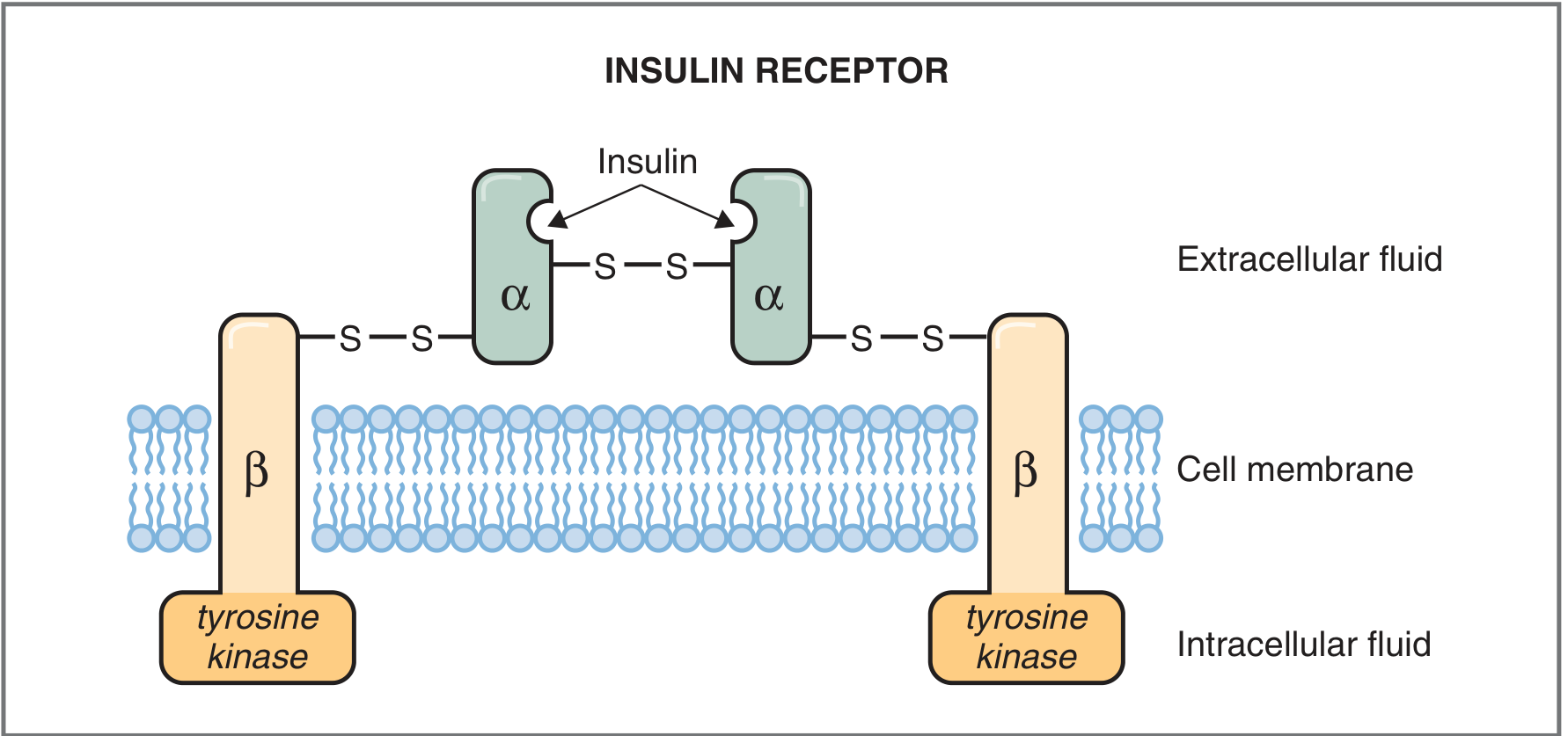
The insulin receptor is a tetramer (2α + 2β subunits):
- α subunits: Outside the cell. They bind insulin. Connected to each other by disulfide bonds.
- β subunits: Span the cell membrane. Have intrinsic Tyrosine Kinase activity on their inner (cytoplasmic) end.
How Insulin Works — Step by Step:
- Insulin binds to the α subunits → causes a conformational change in the whole receptor
- This activates tyrosine kinase in the β subunits → they phosphorylate themselves (autophosphorylation)
- Activated tyrosine kinase then phosphorylates other proteins inside the cell (kinases, phosphatases, G proteins)
- These activated proteins produce all the metabolic effects of insulin
- The insulin-receptor complex is internalized by endocytosis → insulin is degraded inside the cell
- Down-regulation: Chronic high insulin → fewer insulin receptors on cell surface. This is why obese patients and Type 2 diabetics become less sensitive to insulin
The insulin receptor is a Receptor Tyrosine Kinase (RTK) — this is an exam favorite. Contrast this with glucagon which uses a GPCR → cAMP pathway.
What Triggers Insulin Secretion?
| Stimulus | Effect |
|---|---|
| High blood glucose (most important!) | Strong stimulation — rises 10–25x above baseline |
| Amino acids (especially Arginine, Lysine) | Moderate stimulation — potentiates glucose effect |
| GLP-1 and GIP (incretins from gut) | Anticipatory boost — released when food enters the gut |
| Gastrin, Secretin, CCK | Minor stimulation |
| Parasympathetic nerves | Stimulate insulin release |
| Glucagon (at high levels) | Stimulates insulin (alpha→beta cell crosstalk) |
| Growth hormone, Cortisol (prolonged) | Stimulate insulin secretion (and cause insulin resistance) |
Incretins (GLP-1 and GIP): Released from gut cells when food enters the intestine. They signal the pancreas to prepare insulin release BEFORE glucose even reaches the blood. This is called the incretin effect — it explains why oral glucose raises insulin more than IV glucose at the same dose. This is the basis for GLP-1 agonist drugs (Semaglutide, Liraglutide) used in Type 2 Diabetes.
Sympathetic nerves: During stress and exercise, sympathetic stimulation inhibits insulin secretion and increases glucagon. This makes sense — during a fight-or-flight response, you want glucose available in the blood, not being stored.
What Does Insulin Do?
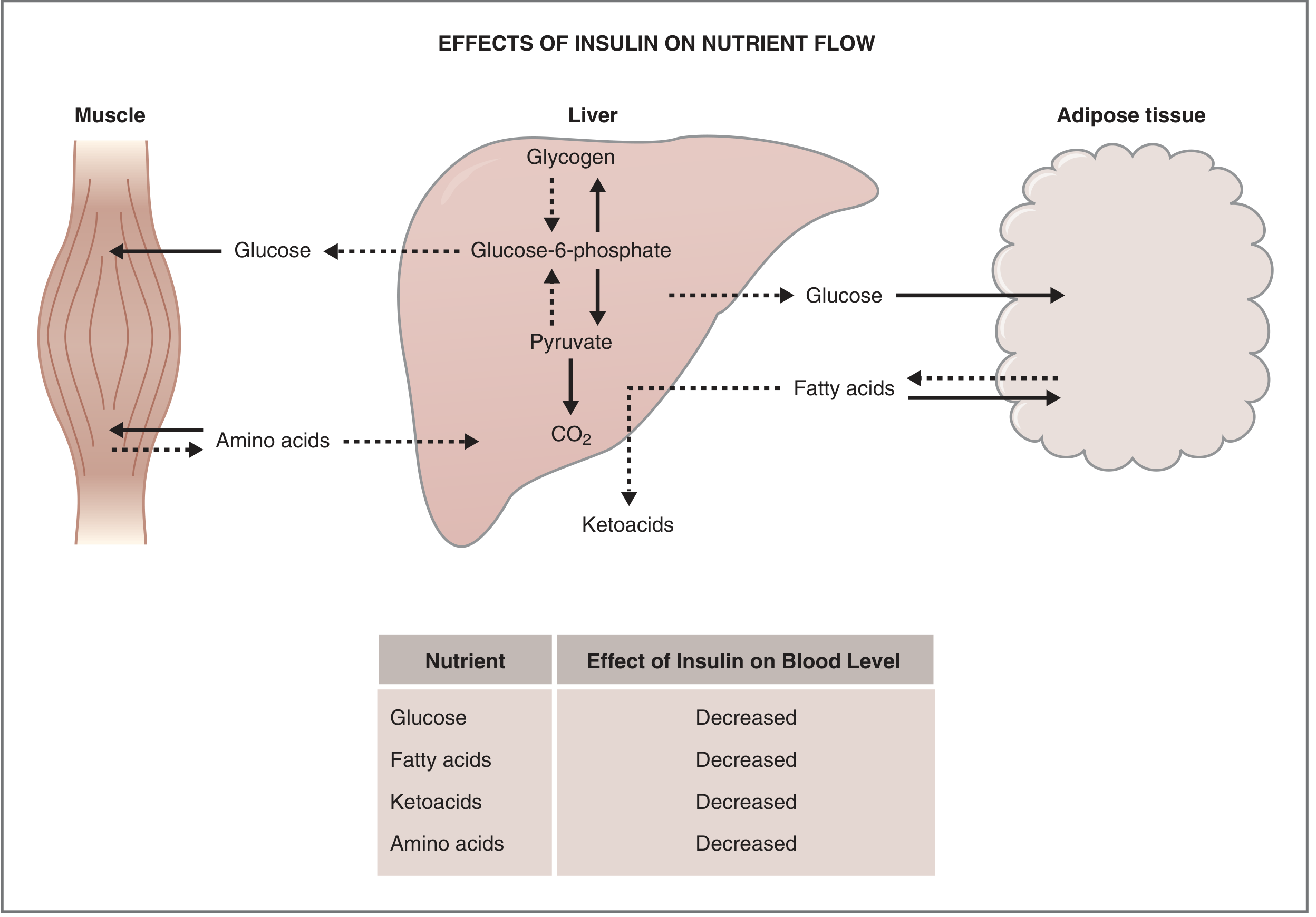
On Glucose (most important):
| Action | Mechanism |
|---|---|
| Increases glucose uptake into muscle and fat | Moves GLUT-4 transporters from intracellular vesicles to the cell surface |
| Increases glycogen synthesis (liver + muscle) | Activates Glycogen Synthase (via phosphatase) |
| Decreases glycogen breakdown | Inactivates Glycogen Phosphorylase |
| Decreases gluconeogenesis | Reduces PEPCK; increases F-2,6-bisP → activates PFK-1 away from gluconeogenesis |
| Increases glycolysis | Activates PFK-1, Pyruvate Kinase, PDC |
On Fat:
| Action | Effect |
|---|---|
| Activates Lipoprotein Lipase (LPL) in fat tissue | Takes fatty acids out of blood → stored in adipocytes |
| Inhibits Hormone Sensitive Lipase (HSL) | Stops fat breakdown → less fatty acids released |
| Promotes fatty acid synthesis in liver | Excess glucose → fat storage |
| Inhibits ketogenesis | Less fatty acid oxidation → less acetyl-CoA → fewer ketone bodies |
On Protein:
| Action | Effect |
|---|---|
| Increases amino acid uptake by muscle | Blood amino acid levels fall |
| Increases protein synthesis | Anabolic effect on muscle |
| Decreases protein degradation | Protects muscle mass |
On Potassium:
- Insulin drives K+ into cells by stimulating Na+/K+ ATPase
- Clinically important: Insulin is used to treat hyperkalemia (high potassium) in emergency medicine
- Diabetic ketoacidosis: When insulin is replaced, K+ shifts into cells → watch for hypokalemia
One-Line Summary of Insulin's Effect on Blood Levels:
Insulin lowers blood glucose, blood fatty acids, blood ketoacids, blood amino acids, and blood K+.
SECTION 3: GLUCAGON — THE "FASTING STATE" HORMONE
What is Glucagon?
- A 29 amino acid polypeptide hormone (molecular weight 3485)
- Made by alpha (α) cells of the Islets of Langerhans
- The "hyperglycemic hormone" — its job is to RAISE blood glucose
- Even 1 µg/kg of glucagon can increase blood glucose by ~20 mg/dL within 20 minutes
What Triggers Glucagon Secretion?
| Stimulus | Effect |
|---|---|
| Low blood glucose (most important!) | Strong stimulation — the lower the glucose, the more glucagon |
| Amino acids (especially Arginine) | Stimulates glucagon (makes sense — pure protein meal has no glucose, glucagon prevents hypoglycemia) |
| Sympathetic nerve stimulation | Stimulates glucagon (stress response) |
| Exercise | Increases glucagon |
| High blood glucose | INHIBITS glucagon |
| Insulin | INHIBITS glucagon (paracrine effect in islets) |
| Somatostatin | INHIBITS glucagon |
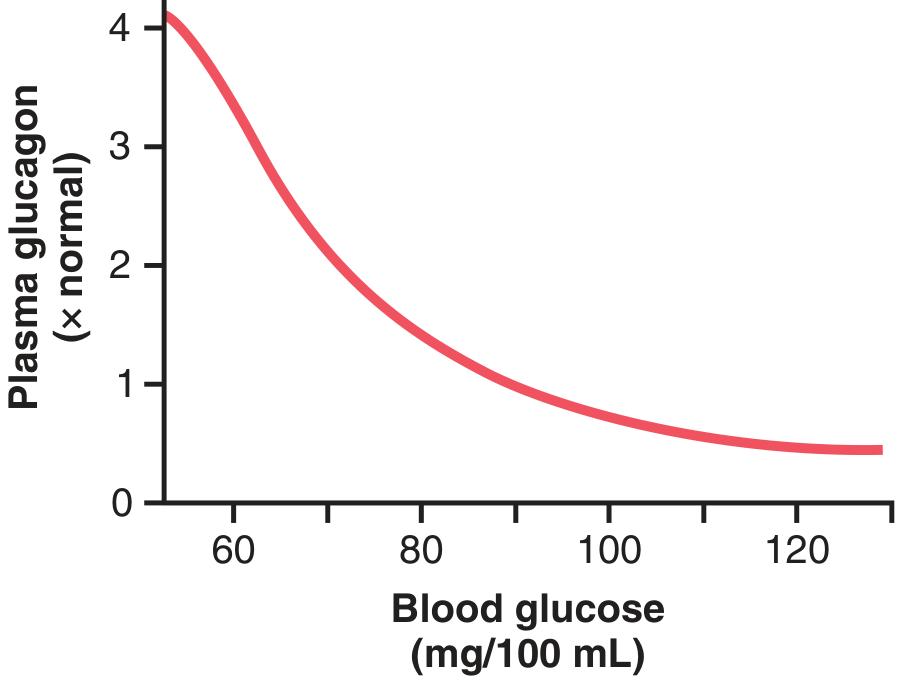
Note the inverse relationship: as blood glucose falls, glucagon rises sharply. As blood glucose rises, glucagon is suppressed.
The Glucagon Receptor — Signal Cascade
Glucagon acts through a GPCR (G Protein Coupled Receptor) → cAMP pathway:
Glucagon binds GPCR on liver cell
↓
G protein activates Adenylyl Cyclase
↓
ATP → cAMP (cyclic AMP)
↓
cAMP activates Protein Kinase A (PKA)
↓
PKA phosphorylates:
• Phosphorylase Kinase → ACTIVE
• Glycogen Phosphorylase → ACTIVE (glycogen breakdown ON)
• Glycogen Synthase → INACTIVE (glycogen synthesis OFF)
• PEPCK induced → Gluconeogenesis ON
↓
Glucose released into blood → blood glucose rises
This cascade is a million-fold amplification system — tiny amounts of glucagon produce a massive glucose response.
What Does Glucagon Do?
Primary Effects (at normal concentrations):
1. Glycogenolysis in Liver:
- Breaks down liver glycogen → releases glucose into blood
- Infusion of glucagon for 4 hours can completely deplete all liver glycogen stores
2. Gluconeogenesis in Liver:
- Even after glycogen is depleted, glucagon continues to raise blood glucose
- Stimulates amino acid uptake by liver
- Activates enzymes for gluconeogenesis, especially PEPCK (Pyruvate → PEP step)
Secondary Effects (at high concentrations):
- Activates Hormone-Sensitive Lipase in adipose tissue → releases fatty acids from fat → provides fuel for gluconeogenesis
- Inhibits triglyceride storage in liver → more fatty acids available for other tissues
- Strengthens heart contraction (pharmacological doses)
- Inhibits gastric acid secretion
SECTION 4: THE FOUR-HORMONE ORCHESTRA
At any given moment, blood glucose is controlled by the balance between four hormones:
| Hormone | Source | Raises or Lowers Glucose | Speed |
|---|---|---|---|
| Insulin | Pancreatic β cells | ⬇ LOWERS | Fast (minutes) |
| Glucagon | Pancreatic α cells | ⬆ RAISES | Fast (minutes) |
| Epinephrine (Adrenaline) | Adrenal medulla | ⬆ RAISES | Fast (minutes) |
| Cortisol | Adrenal cortex | ⬆ RAISES | Slow (hours–days) |
| Growth Hormone | Anterior pituitary | ⬆ RAISES | Slow (hours–days) |
EPINEPHRINE (Adrenaline) — Emergency Glucose Raiser
Released during: stress, exercise, hypoglycemia, shock, anxiety
How it raises glucose:
- In liver: activates glycogenolysis (same cAMP cascade as glucagon) → glucose floods into blood within minutes
- In adipose tissue: activates Hormone-Sensitive Lipase → releases fatty acids → provides fuel + reduces glucose use by other tissues
Note: Epinephrine raises BOTH blood glucose AND blood fatty acids. Glucose goes up for the brain; fatty acids go up for muscles. This is ideal for a fight-or-flight scenario.
Clinical: Beta-blockers (propranolol) block epinephrine's effect → can mask hypoglycemia symptoms (palpitations, tremor) in diabetic patients on insulin. Important drug interaction to know.
CORTISOL — Slow but Sustained Glucose Raiser
Released during: prolonged stress, fasting, illness, Cushing syndrome
How it raises glucose:
- Promotes gluconeogenesis — induces PEPCK and other gluconeogenic enzymes in the liver
- Promotes protein breakdown in muscle → amino acids released as gluconeogenic precursors
- Inhibits glucose uptake by peripheral tissues (anti-insulin effect)
- Promotes fat breakdown — provides glycerol for gluconeogenesis
Clinical: Long-term steroid treatment (prednisolone, dexamethasone) → iatrogenic Cushing's syndrome → steroid-induced diabetes. Patients on chronic steroids must have blood glucose monitored.
GROWTH HORMONE — The Other Slow Glucose Raiser
Released during: sleep, exercise, hypoglycemia, puberty
How it raises glucose:
- Inhibits glucose uptake and utilization by peripheral tissues → cells switch to fat burning instead
- Promotes lipolysis → fatty acids become the preferred fuel
- These effects develop over hours, not minutes
Clinical: Acromegaly (excess GH in adults) → persistent glucose-raising effects → diabetes mellitus in up to 25% of acromegaly patients. Similarly, gigantism in children. Somogyi effect: Overnight growth hormone surge can cause early morning hyperglycemia in insulin-treated diabetics.
SOMATOSTATIN — The Brake Pedal
- Released from delta (δ) cells of pancreatic islets
- Inhibits BOTH insulin AND glucagon secretion
- Also inhibits GH secretion from pituitary
- Acts as a paracrine regulator — fine-tunes the insulin-glucagon balance locally within the islet
- Pharmacological analogs: Octreotide — used to treat acromegaly, glucagonoma, carcinoid syndrome, and some types of severe hypoglycemia (e.g., insulinoma)
SECTION 5: WHAT HAPPENS AT DIFFERENT PHYSIOLOGICAL STATES
Fed State (After a Meal)
Blood glucose rises → Insulin rises → Glucagon falls
| Organ | What Happens |
|---|---|
| Pancreas β cells | Secrete insulin (10–25x basal levels) |
| Liver | Takes up glucose → makes glycogen + fat; stops gluconeogenesis |
| Muscle | GLUT-4 inserted → glucose enters → glycogen and protein synthesis |
| Adipose | GLUT-4 inserted → glucose enters → fat synthesis; lipolysis stopped |
| Brain | Continues to use glucose (GLUT-1 and GLUT-3, always active) |
Fasting State (4–12 Hours Without Food)
Blood glucose starts falling → Insulin falls → Glucagon rises
| Organ | What Happens |
|---|---|
| Liver | Glycogenolysis begins → releases glucose to maintain 80 mg/dL |
| Adipose | Lipolysis begins (HSL activated) → fatty acids released |
| Muscle | Uses fatty acids and ketones for energy instead of glucose |
| Brain | Still uses glucose (liver supplying it) |
| Pancreas α cells | Glucagon secretion rises → drives liver glycogenolysis |
Prolonged Fasting / Starvation (24–48+ Hours)
Liver glycogen is depleted → Gluconeogenesis is the ONLY source of blood glucose
| Source | What Provides |
|---|---|
| Muscle protein | Amino acids (esp. Alanine) → liver → glucose |
| Adipose fat | Glycerol → liver → glucose; Fatty acids → liver → ketone bodies |
| Kidney cortex | Also contributes to gluconeogenesis |
The brain eventually adapts to use ketone bodies (acetoacetate, β-hydroxybutyrate) — this reduces the brain's demand for glucose and spares muscle protein from being broken down.
Exercise
During exercise: muscle consumes glucose rapidly → blood glucose tends to fall
| Response | Mechanism |
|---|---|
| Glucagon rises | Drives liver glycogenolysis |
| Epinephrine rises | Fast glycogenolysis + lipolysis |
| Muscle glycogen breakdown | AMP rises in muscle (low ATP) → activates glycogen phosphorylase |
| Liver gluconeogenesis | Lactate from muscle → Cori cycle → liver → glucose |
| Insulin falls | GLUT-4 still inserted by muscle contractions (insulin-independent mechanism during exercise) |
SECTION 6: THE INSULIN/GLUCAGON RATIO — THE MASTER SWITCH
The body does not respond to either hormone alone. What matters is the ratio:
High Insulin / Low Glucagon = Fed State = BUILD and STORE
Low Insulin / High Glucagon = Fasting State = BREAK DOWN and RELEASE
This ratio controls 4 hepatic processes simultaneously:
| Ratio | Glycolysis | Gluconeogenesis | Glycogenesis | Glycogenolysis |
|---|---|---|---|---|
| High Insulin:Glucagon (fed) | ON | OFF | ON | OFF |
| Low Insulin:Glucagon (fasting) | OFF | ON | OFF | ON |
The molecular switch is Fructose-2,6-bisphosphate (F2,6-bisP):
- Insulin → activates PFK-2 → increases F2,6-bisP → activates PFK-1 → glycolysis ON; FBPase-1 OFF → gluconeogenesis OFF
- Glucagon → activates PKA → phosphorylates PFK-2/FBPase bifunctional enzyme → F2,6-bisP falls → PFK-1 OFF; FBPase-1 ON → gluconeogenesis ON
SECTION 7: WHAT HAPPENS WHEN REGULATION FAILS
Hypoglycemia (Blood Glucose < 70 mg/dL)
Causes:
- Too much insulin (diabetic taking excess dose)
- Insulinoma (insulin-secreting tumor)
- Alcohol (blocks gluconeogenesis)
- Addison's disease (no cortisol)
- Prolonged starvation
Body's counter-regulatory response (in order):
- Insulin secretion stops (first and fastest)
- Glucagon rises (within minutes)
- Epinephrine rises (triggers: glucose < 60 mg/dL) → causes sweating, tremor, palpitations, anxiety
- Cortisol and GH rise (glucose < 55 mg/dL) → slower, sustained response
- Hypothalamus detects low glucose → activates sympathetic nervous system → hunger, sweating
Symptoms of hypoglycemia:
- Adrenergic (from epinephrine): Sweating, palpitations, tremor, anxiety, pallor
- Neuroglycopenic (brain starved of glucose): Confusion, headache, seizures, coma
Whipple's Triad (classic criteria for true hypoglycemia):
- Symptoms of hypoglycemia
- Blood glucose < 55 mg/dL at time of symptoms
- Symptoms relieved by giving glucose
Hyperglycemia (Blood Glucose > 126 mg/dL fasting)
Causes: Diabetes mellitus (Type 1 or Type 2), steroids, Cushing's, acromegaly, stress, pancreatitis
Consequences of uncontrolled hyperglycemia:
- Osmotic effects: Cellular dehydration, glycosuria, polyuria (osmotic diuresis), polydipsia
- Non-enzymatic glycation: Glucose attaches to proteins non-enzymatically → HbA1c (diagnostic marker), glycated LDL, glycated basement membranes
- Diabetic complications: Microangiopathy (retinopathy, nephropathy, neuropathy), macroangiopathy (heart attack, stroke)
- DKA (Type 1): No insulin → no glucose uptake → fat burned → ketone bodies → metabolic acidosis, Kussmaul breathing, acetone breath
- HHS (Type 2): Extreme hyperglycemia → severe dehydration → coma without significant ketosis (some residual insulin prevents ketogenesis)
SECTION 8: GLUCOSE DIAGNOSTIC THRESHOLDS
| Test | Normal | Pre-Diabetes | Diabetes |
|---|---|---|---|
| Fasting blood glucose | < 100 mg/dL | 100–125 mg/dL | ≥ 126 mg/dL |
| 2-hour OGTT (75g glucose) | < 140 mg/dL | 140–199 mg/dL | ≥ 200 mg/dL |
| HbA1c | < 5.7% | 5.7–6.4% | ≥ 6.5% |
| Random glucose | — | — | ≥ 200 + symptoms |
HbA1c: Reflects average blood glucose over the past 2–3 months (lifespan of RBC). Used for diagnosis and monitoring of diabetes. Falsely low in hemolytic anemia (RBCs die fast, not enough time to glycate). Falsely high in iron deficiency (RBCs live longer than normal).
EXAM HIGH-YIELD TABLE
| Fact | Answer |
|---|---|
| Normal fasting blood glucose | 70–100 mg/dL |
| Insulin made by | Pancreatic β cells |
| Glucagon made by | Pancreatic α cells |
| Somatostatin made by | Pancreatic δ cells |
| Insulin receptor type | Receptor Tyrosine Kinase (RTK) |
| Glucagon receptor type | GPCR → cAMP → PKA |
| Insulin's most potent stimulator | Blood glucose (direct) |
| Most potent activator of PFK-1 | Fructose-2,6-bisphosphate |
| Hormone that drives GLUT-4 insertion | Insulin |
| Glucose transporter in brain | GLUT-1, GLUT-3 (insulin-independent) |
| Glucose transporter in pancreas | GLUT-2 (glucose sensor) |
| Organ that can release free glucose | Liver and kidney (have G6Pase) |
| Organ that CANNOT release free glucose | Muscle (no G6Pase) |
| Incretins (potentiate insulin) | GLP-1 and GIP |
| Drug that mimics GLP-1 | Semaglutide, Liraglutide |
| Drug that blocks sympathetic hypoglycemia symptoms | Beta-blockers |
| Insulin + glucose → treat | Hyperkalemia |
| Whipple's Triad | Hypoglycemia symptoms + low glucose on test + relief with glucose |
| HbA1c reflects | Average glucose over 2–3 months |
| Counter-regulatory hormones | Glucagon, Epinephrine, Cortisol, GH (all raise glucose) |
ONE-PAGE VISUAL SUMMARY
BLOOD GLUCOSE CONTROL
HIGH GLUCOSE LOW GLUCOSE
(After meal) (Fasting/starvation)
↓ ↓
β cells secrete α cells secrete
INSULIN GLUCAGON
↓ ↓
Liver: stores glucose as Liver: breaks down glycogen
glycogen, stops gluco- and makes new glucose via
neogenesis gluconeogenesis
↓ ↓
Muscle: GLUT-4 inserts → Muscle: uses fatty acids
takes up glucose and ketones instead
↓ ↓
Adipose: stores fat, Adipose: releases fatty
stops lipolysis acids (HSL activated)
↓ ↓
Blood glucose FALLS ←──────── If still low ──────────→
Epinephrine released
(glycogenolysis + lipolysis)
If persistent:
Cortisol + GH released
(reduces peripheral glucose use)
Sources: Guyton and Hall Textbook of Medical Physiology (pp. 2777–2937) | Costanzo Physiology 7e (pp. 463–510) | Basic Medical Biochemistry 6e (pp. 1582–1584)
This covers the full topic — normal values, insulin mechanism, glucagon mechanism, all counter-regulatory hormones, fed vs fasting states, hypoglycemia, hyperglycemia, and exam MCQ points. Want to continue with Lipid Metabolism, Diabetes in detail, or Hormones of the Pancreas next?
This is a shared conversation. Sign in to Orris to start your own chat.