
Acute pancreatitis
Reading File
Now let me search the library and PubMed in parallel for comprehensive coverage.
Finding Sources
Searching PubMed
"acute pancreatitis"[MeSH Terms] AND management
Excellent - I have several strong textbook sources. Let me read the main Sleisenger & Fordtran chapter and Rosen's Emergency Medicine in parallel, and do a broader PubMed search.
Reading File
Reading File
Searching PubMed
"acute pancreatitis"[MeSH Terms]
Good content from Rosen's. Let me read more of it plus get the Sleisenger & Fordtran main chapter and the radiology section for imaging content.
Reading File
Reading File
Excellent - very rich content. Let me read more from Rosen's (diagnosis, scoring, management) and the radiology chapter (CT findings) in parallel.
Reading File
Reading File
Let me now read more of the Rosen's management section and fetch a key CT image of acute pancreatitis from the radiology textbook.
Reading File
Loading Image
I now have comprehensive content. Let me read the final management/treatment section from Rosen's.
Reading File
Now I have comprehensive content covering etiology, clinical features, diagnosis, imaging, severity scoring, and management. Let me fetch the CT scan images of pancreatitis for the visual response, and compile the full answer.
Loading Image
Loading Image
I now have all the information needed for a comprehensive, well-illustrated response. Let me compile it.
Acute Pancreatitis
Acute pancreatitis (AP) is a sudden inflammatory condition of the pancreas caused by enzymatic autodigestion of pancreatic tissue. It is the most common pancreatic disease worldwide and a leading cause of gastrointestinal hospitalization in the United States. Severity ranges from mild and self-limited to life-threatening necrotizing disease with multiorgan failure - overall mortality can reach 30% in severe cases, though the trend is improving.
Pancreatic anatomy (anterior view):
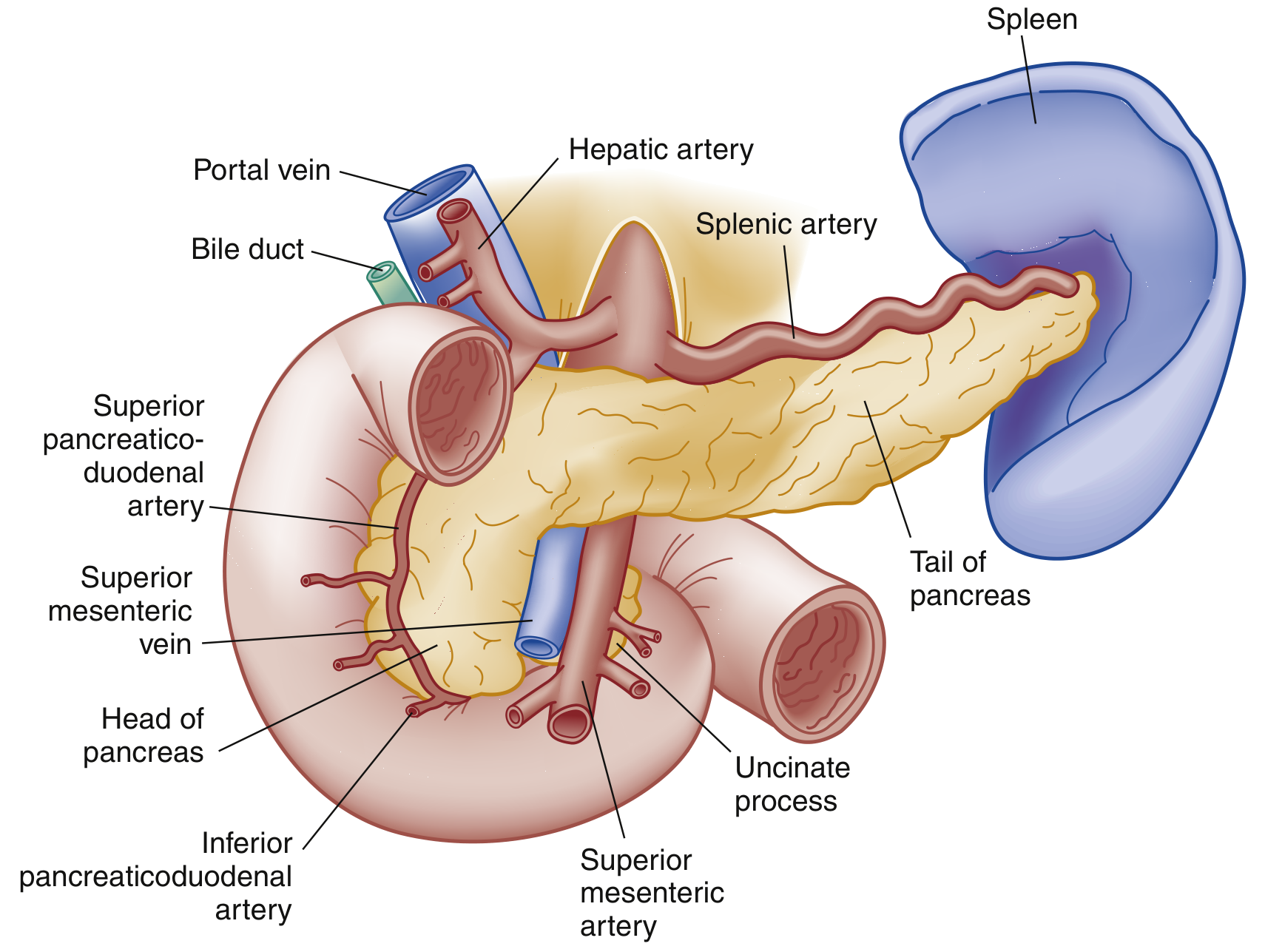
Etiology
The two dominant causes account for the vast majority of cases:
- Gallstones: 40-70% of cases (most common cause overall)
- Alcohol: 25-35% of cases
Other important causes include:
| Category | Examples |
|---|---|
| Toxic-Metabolic | Hypertriglyceridemia (>1000 mg/dL), hypercalcemia, uremia, scorpion venom, drugs |
| Mechanical-Obstructive | Post-ERCP (5-10%), ampullary stenosis, pancreas divisum, annular pancreas, tumor |
| Infectious | Viral (mumps, coxsackievirus, HIV, CMV, EBV, varicella); bacterial (TB, Mycoplasma); parasitic (Ascaris) |
| Vascular | Vasculitis, embolism, hypoperfusion, hypercoagulability |
| Other | Idiopathic, hereditary, autoimmune, DKA |
Note: Many "idiopathic" cases are thought to be caused by occult microlithiasis. Smoking and diabetes are independent risk factors.
In children, the distribution differs: trauma, systemic disease, medications (valproate, L-asparaginase, steroids, 6-mercaptopurine), and biliary disease are more prominent causes, with a genetic component (SPINK1, CFTR mutations) in recurrent cases.
Pathophysiology
Regardless of the trigger, AP begins with inappropriate intracellular activation of digestive enzymes - particularly trypsinogen converting to trypsin - within acinar cells. This leads to:
- Autodigestion of pancreatic parenchyma
- Local inflammatory response and microvascular damage
- Release of inflammatory mediators (cytokines, phospholipase A2, elastase)
- Progression to systemic inflammatory response syndrome (SIRS)
- In severe disease: multiorgan failure, pancreatic necrosis, and sepsis
Classification (Revised Atlanta 2012)
By morphological type:
- Interstitial edematous pancreatitis: The majority (~90-95%). Pancreatic edema with preserved perfusion. Usually resolves within the first week.
- Necrotizing pancreatitis: ~5-10% of cases. Involves ischemic necrosis of pancreatic parenchyma and/or surrounding peripancreatic tissue. Necrosis may remain sterile or become infected; infected necrosis carries significantly higher morbidity.
By severity:
- Mild: No organ failure, no local or systemic complications
- Moderately severe: Transient organ failure (<48 hours) and/or local complications
- Severe: Persistent organ failure (>48 hours), single or multiorgan
Local complications (by fluid collection type):
| Type | Timing | Features |
|---|---|---|
| Acute peripancreatic fluid collection | <4 weeks | Homogeneous fluid adjacent to pancreas (interstitial) |
| Pancreatic pseudocyst | >4 weeks | Homogeneous with well-defined wall (interstitial) |
| Acute necrotic collection | <4 weeks | Heterogeneous fluid + necrosis (necrotizing) |
| Walled-off necrosis | >4 weeks | Heterogeneous with well-defined wall (necrotizing) |
Clinical Features
Symptoms:
- Persistent, moderate-to-severe epigastric or left upper quadrant pain
- Radiation to the back, chest, or flanks (classic "boring" quality)
- Pain may be relieved by leaning forward
- Nausea, vomiting, and anorexia
- Pain is exacerbated by oral intake
Signs:
- Tachycardia, fever (inflammatory response)
- Hypotension/shock in severe disease (fluid shifts, volume loss)
- Epigastric tenderness ± guarding
- Diminished or absent bowel sounds (paralytic ileus)
- Jaundice suggests biliary/obstructive etiology
- Cullen sign: Periumbilical bluish discoloration (hemoperitoneum) - rare, poor prognosis
- Grey Turner sign: Reddish-brown flank discoloration (retroperitoneal hemorrhage) - rare, poor prognosis
- Basilar crackles or decreased breath sounds (pulmonary complications)
- Right upper quadrant tenderness + Murphy sign in gallstone pancreatitis
Systemic complications:
- Pulmonary: pleural effusions (up to 50%, predominantly left-sided), ARDS, atelectasis
- Cardiovascular: shock from fluid shifts and third-spacing
- Renal failure: hypoperfusion + inflammatory mediators
- Coagulopathy/DIC: cytokine-mediated coagulation cascade activation
- Metabolic: hyperglycemia (decreased insulin), hypocalcemia (low albumin + magnesium)
Diagnosis
AP is diagnosed when at least 2 of 3 criteria are met:
- Abdominal pain characteristic of AP
- Serum lipase or amylase ≥3x upper limit of normal
- Characteristic findings on imaging
Laboratory tests:
| Test | Notes |
|---|---|
| Lipase | Preferred - more sensitive and specific than amylase. Peaks earlier, stays elevated ~1-2 weeks. Use this preferentially. |
| Amylase | Less specific (elevated in salivary disease, renal failure, appendicitis, cholecystitis, bowel obstruction). Stays elevated ~3-5 days. May be falsely normal in alcohol/hypertriglyceridemia-induced AP. |
| ALT | PPV ~95% for biliary pancreatitis when elevated |
| Bilirubin, AST | Evaluate for obstructive cause |
| Triglycerides | Check if no gallstones or alcohol history |
| Calcium | Elevated may be causative; low indicates severity |
| CBC, BMP | Evaluate SIRS, organ failure |
Testing both lipase AND amylase does not improve diagnostic accuracy. Enzyme levels do NOT correlate with severity.
Imaging
Abdominal Ultrasound - should be performed in all patients:
- Limited direct pancreatic visualization (bowel gas obstruction)
- First-line to evaluate for biliary etiology (gallstones, ductal dilation)
- Normal ultrasound does NOT exclude AP
Contrast-Enhanced CT (CECT) - gold standard for severity assessment:
-
90% sensitivity and specificity
- Indicated when diagnosis is uncertain, or to assess severity/complications
- Best done 48-72 hours after onset (early CT may underestimate necrosis)
- Normal CT in 15-30% of mild cases
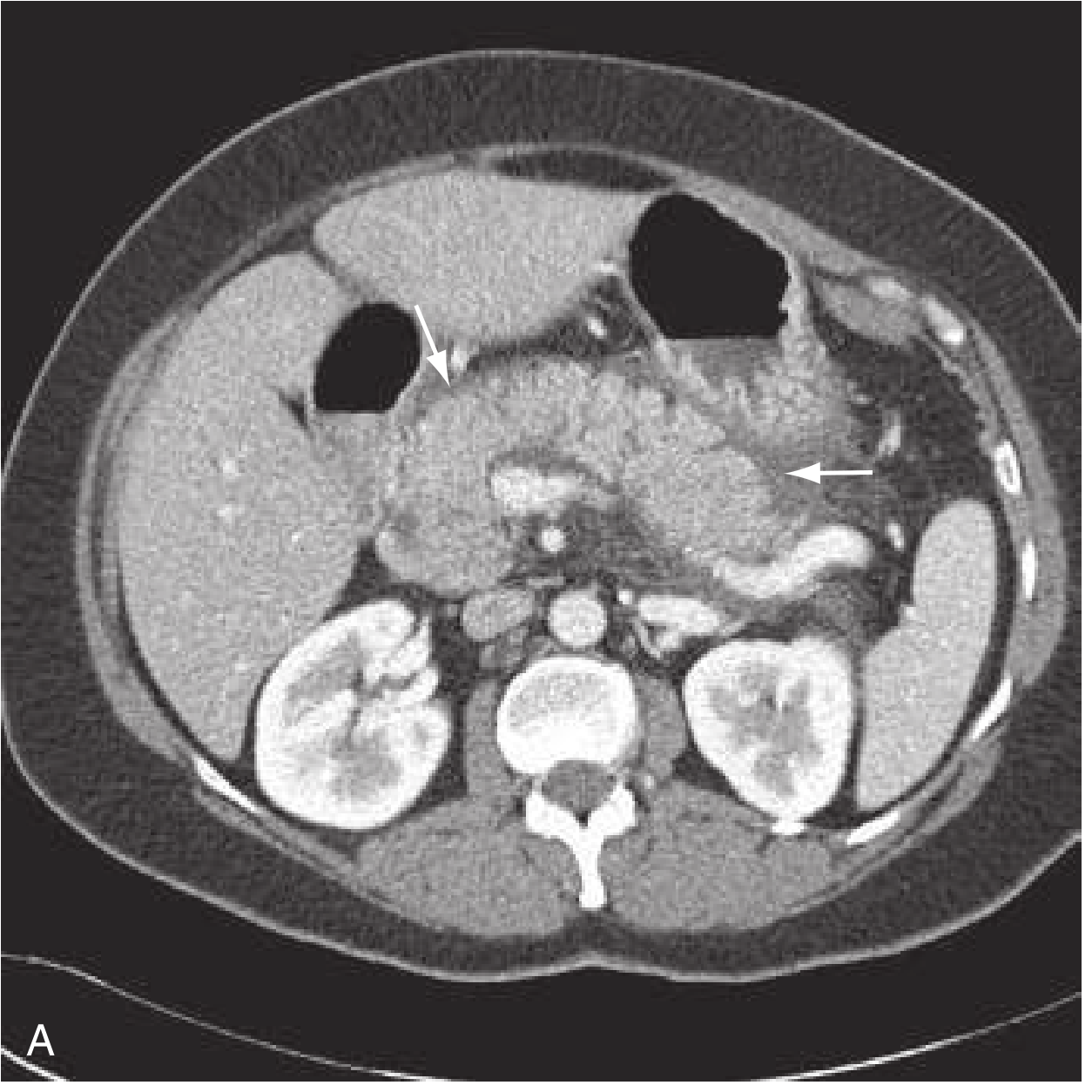
CT findings of interstitial edematous pancreatitis (peripancreatic fat stranding, mild fluid):
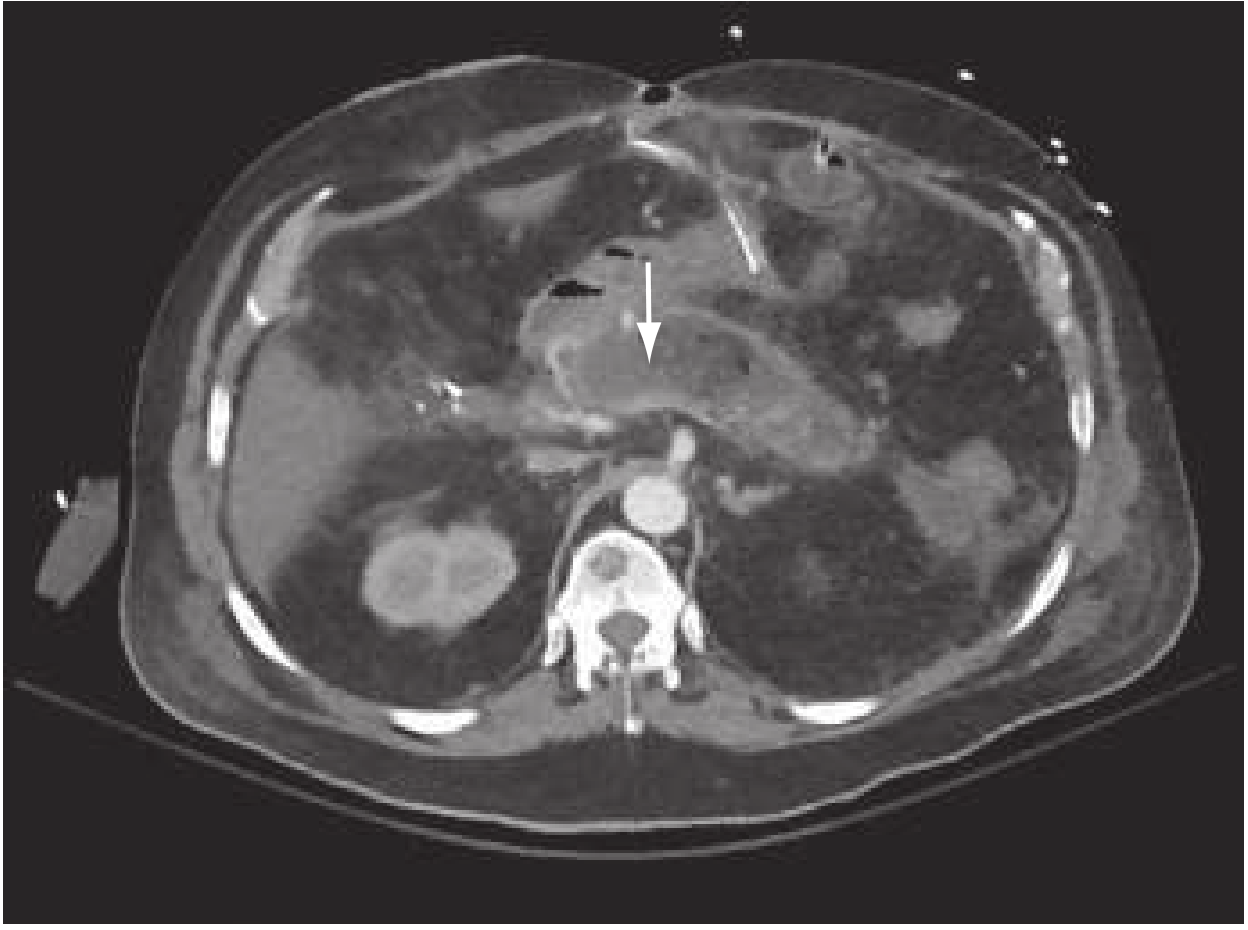
CT findings of necrotizing pancreatitis (area of non-enhancement, arrow):
MRI/MRCP: Superior for biliary tract imaging, equal diagnostic value to CT; preferred when contrast is contraindicated or for duct evaluation. MRCP has largely replaced diagnostic ERCP.
CT Severity Index (CTSI / Balthazar score): Grades from A-E based on pancreatic inflammation + degree of necrosis. Scores ≥7 carry ~17% mortality and 92% morbidity.
Severity Scoring Systems
Several scoring systems predict disease severity, though no single system is ideal for ED use:
| Score | Parameters | Notes |
|---|---|---|
| BISAP (Bedside Index for Severity in AP) | BUN >25, impaired mental status, SIRS, age >60, pleural effusion | Simpler, ED-friendly; score ≥3 predicts severe AP |
| Ranson criteria | 11 parameters over 48 hours | Classic but requires 48-hr assessment |
| APACHE II | Multiple physiologic variables | Validated, used in ICU |
| Revised Atlanta | Clinical + radiologic | Current standard classification |
Management
Initial resuscitation
- IV fluid resuscitation is the cornerstone of initial therapy
- Lactated Ringer's solution preferred over normal saline (NS associated with hyperchloremic acidosis and worse outcomes in some studies)
- Goal-directed: 250-500 mL/hr initially; reassess at 6 hours
- Avoid aggressive over-resuscitation (worsens pulmonary complications)
- Continuous monitoring: urine output, BUN, hematocrit, vital signs
Pain management
- Aggressive analgesia required - IV opioids (morphine, hydromorphone, fentanyl) are acceptable and do not worsen outcomes
- NSAIDs/ketorolac useful adjuncts
- Avoid withholding analgesia out of concern for masking symptoms
Nutrition
- Mild AP: Oral feeding as tolerated - initiate early (within 24-48 hours when pain improves and tolerated)
- Severe AP: Enteral feeding preferred over parenteral (maintains gut barrier, reduces infectious complications)
- Nasojejunal or nasogastric tube feeding if oral route not possible
- Total parenteral nutrition (TPN) is a last resort
- NPO is no longer recommended as standard practice for mild AP; early refeeding improves outcomes
Antibiotics
- NOT indicated prophylactically in sterile necrosis
- Indicated only for proven or strongly suspected infected pancreatic necrosis or concurrent infection (cholangitis, etc.)
- Agents: carbapenems, fluoroquinolones, or metronidazole combinations (good pancreatic penetration)
Biliary pancreatitis - specific interventions
- ERCP with sphincterotomy: Indicated within 24-48 hours if concurrent acute cholangitis or biliary obstruction (NOT for uncomplicated gallstone pancreatitis)
- Cholecystectomy: Should be performed during the same admission in mild biliary AP (reduces recurrence risk); can be deferred in severe AP
Necrotizing pancreatitis
- Sterile necrosis: Conservative management; antibiotics NOT indicated
- Infected necrosis (suspected when clinical deterioration after day 7-10, fever, leukocytosis):
- CT-guided fine needle aspiration (FNA) for culture (though diagnosis increasingly made clinically)
- Step-up approach is now standard:
- Percutaneous or endoscopic drainage first
- Video-assisted retroperitoneal debridement (VARD) or endoscopic necrosectomy if drainage fails
- Open surgical necrosectomy (last resort - high mortality)
- Surgery delayed at least 4 weeks to allow "walled-off necrosis" to mature
ICU care
Patients with severe AP (persistent organ failure) require ICU-level monitoring for:
- Respiratory: supplemental O2, may need mechanical ventilation for ARDS
- Cardiovascular: vasopressors for shock refractory to fluids
- Renal: renal replacement therapy for AKI
Differential Diagnosis
- Peptic ulcer disease / perforated viscus
- Cholecystitis, cholangitis, choledocholithiasis
- Mesenteric ischemia
- Bowel obstruction
- Myocardial infarction (especially inferior MI)
- Aortic dissection / AAA
- Pericarditis
- Diabetic ketoacidosis
- Sickle cell crisis
Prognosis & Complications
- Majority (~80%) have mild disease and recover within 1-2 weeks
- ~20% develop severe AP; mortality ~30% in this group
- Overall mortality has decreased despite rising hospitalization rates
Late complications:
- Pancreatic pseudocyst (most common fluid complication)
- Walled-off necrosis
- Splenic or portal vein thrombosis
- Gastrointestinal bleeding
- Gastric outlet obstruction
- Exocrine insufficiency and endocrine insufficiency (diabetes) - especially after recurrent or necrotizing disease
- Recurrent AP can progress to chronic pancreatitis (fibrosis, ductal changes, exocrine/endocrine failure)
Sources: Rosen's Emergency Medicine, 9e (Ch. 77); Sleisenger and Fordtran's Gastrointestinal and Liver Disease; Grainger & Allison's Diagnostic Radiology, 6e (Ch. 25)
This is a shared conversation. Sign in to Orris to start your own chat.