
Immunotherapy in ent, cetuximab, monoclonal antibodies, paclitaxel all in detail according to standard ent textbooks and recent publications in simplified manner
Reading File
Finding Sources
Finding Sources
Finding Sources
Finding Sources
Finding Sources
Finding Sources
Finding Sources
Finding Sources
Reading File
Reading File
Reading File
Searching Content
"## IMMUNOTHERAPY" in /textbooks/9781138094611/9781138094611_block1.md
Reading File
Reading File
Reading File
Reading File
Searching PubMed
"head and neck squamous cell carcinoma" AND immunotherapy
Searching the Web
recent advances immunotherapy head and neck cancer 2024 2025 cetuximab pembrolizumab
Searching Images
EGFR monoclonal antibody mechanism of action cetuximab
Immunotherapy, Cetuximab, Monoclonal Antibodies & Paclitaxel in ENT (Head & Neck Oncology)
Synthesized from Cummings Otolaryngology Head and Neck Surgery, K.J. Lee's Essential Otolaryngology, Scott-Brown's Otorhinolaryngology Head & Neck Surgery, Goodman & Gilman's Pharmacological Basis of Therapeutics, Katzung's Pharmacology, plus 2024-2025 trial data.
1. Background - why these drugs matter in ENT
Head and neck squamous cell carcinoma (HNSCC) is the main ENT malignancy where systemic therapy is used. Classic cytotoxic chemotherapy (cisplatin, carboplatin, 5-FU, methotrexate, taxanes) has plateaued in efficacy, which pushed development of two newer classes:
- Targeted monoclonal antibodies (anti-EGFR: cetuximab, panitumumab, nimotuzumab)
- Immunotherapy / immune checkpoint inhibitors (anti-PD-1: nivolumab, pembrolizumab)
"Alongside trials using more traditional types of chemotherapy, there is also now significant interest in developing more target-directed drug therapies and novel therapies, including immunotherapy." - Scott-Brown's Otorhinolaryngology Head & Neck Surgery, Vol 1
2. Monoclonal Antibodies - the general concept
Monoclonal antibodies (Mabs) are lab-engineered antibodies that bind one specific target ("epitope") with high precision. In head and neck cancer, the two most clinically important target pathways are:
| Target | Antibody | Type | Effect |
|---|---|---|---|
| EGFR (epidermal growth factor receptor) | Cetuximab | Chimeric (human-mouse) IgG1 | Blocks EGF binding -> stops growth signaling |
| EGFR | Panitumumab | Fully human IgG2 | Same target, fewer infusion reactions (no mouse component) |
| EGFR | Nimotuzumab | Humanized | Used more outside the US, lower skin toxicity |
| PD-1 | Nivolumab, Pembrolizumab | Humanized IgG4 | Immune checkpoint blockade - "releases the brakes" on T cells |
EGFR is overexpressed in over 90% of head and neck cancers, which is why it became the prime target for antibody therapy (K.J. Lee's Essential Otolaryngology). Mechanistically, anti-EGFR Mabs work by:
- Competitively blocking EGF/TGF-alpha from binding the receptor's extracellular domain
- Down-regulating downstream growth/survival signaling (RAS-MAPK, PI3K-AKT)
- Reducing VEGF production (anti-angiogenic effect)
- Antibody-dependent cellular cytotoxicity (ADCC) - flagging tumor cells for immune destruction
"Cetuximab is a human-murine IgG1 chimeric Mab directed against EGFR... Cetuximab can also mediate ADCC against tumor cells that express high levels of EGFR." - Cummings Otolaryngology; Goodman & Gilman's Pharmacology
3. Cetuximab - detailed
What it is: Recombinant chimeric human-mouse monoclonal antibody approved for squamous cell carcinoma (SCCA) of the head and neck (K.J. Lee's Essential Otolaryngology).
Mechanism: Selectively binds the EGFR extracellular domain, competitively inhibiting EGF -> cell growth inhibition, apoptosis, reduced VEGF production.
Indications in ENT:
- Locally/regionally advanced SCCHN (combined with radiotherapy)
- Recurrent or metastatic SCCHN (combined with platinum chemotherapy, or as monotherapy after platinum failure)
Key landmark trials:
- Bonner trial (radiation alone vs. radiation + weekly cetuximab): median survival 49 months with cetuximab vs. 29.3 months with radiation alone, without a significant increase in mucositis - established cetuximab-RT as an option for cisplatin-ineligible patients.
- EXTREME trial (Vermorken et al.): adding cetuximab to platinum/5-FU in recurrent/metastatic disease improved overall survival from 7.4 to 10.1 months, response rate from 20% to 36% - this made cetuximab-chemo a first-line standard for years.
Side effects: Acneiform rash, infusion reactions, fatigue, hypomagnesemia. Note: retrospective analysis found no clear biomarker (EGFR expression level did not predict response).
Important caveat: Adding cetuximab (or panitumumab) to chemoradiation in primary/locally advanced disease did not improve survival compared to chemoradiation alone - this curbed enthusiasm for combining anti-EGFR therapy with concurrent chemoradiotherapy (K.J. Lee's Essential Otolaryngology).
4. Paclitaxel - detailed
Class: Taxane - microtubule-stabilizing agent (prevents depolymerization, "freezing" the mitotic spindle so cells cannot divide, and triggers apoptosis).
Role in ENT: One of the active single agents in head and neck cancer (response rates 15-40% along with methotrexate, cisplatin, carboplatin, 5-FU, ifosfamide, bleomycin - Scott-Brown's Otorhinolaryngology). Commonly used in:
- Weekly carboplatin + paclitaxel regimens (organ preservation protocols)
- Induction regimens: cetuximab + paclitaxel + carboplatin before chemoradiation
- Salvage regimens for recurrent/metastatic disease, including paclitaxel + cetuximab for patients who have already progressed on platinum chemo and anti-PD-1 immunotherapy (2024 ESMO Open phase II trial)
Pharmacology: IV administration, hepatically metabolized. Broad activity beyond H&N - ovarian, breast, lung, esophageal, prostate, bladder cancers (Katzung's; Goodman & Gilman's).
Toxicity: Myelosuppression (neutropenia), peripheral neuropathy, hypersensitivity reactions, alopecia.
5. Immunotherapy in ENT (Immune Checkpoint Inhibitors)
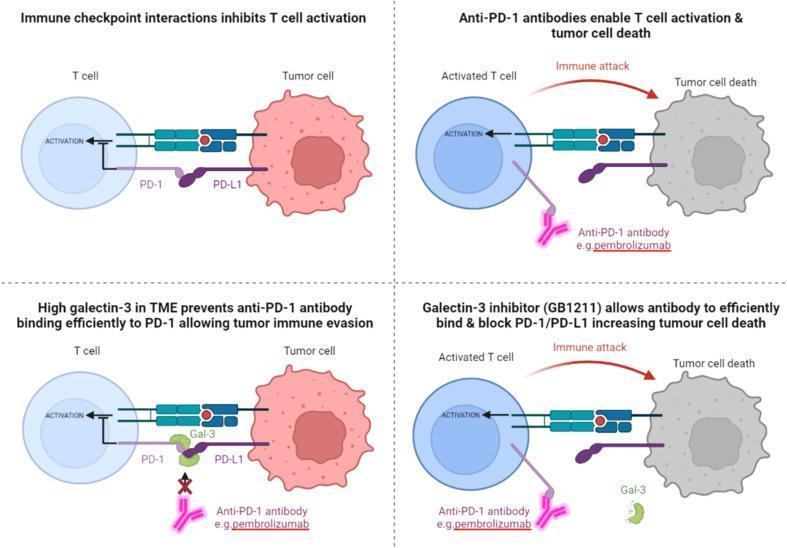
Concept: Tumor cells exploit the PD-1/PD-L1 "checkpoint" pathway to switch off T cells and evade immune attack. Checkpoint inhibitors block this interaction, "releasing the brakes" so T cells can recognize and kill tumor cells.
Key drugs and trials:
| Drug | Trial | Setting | Result |
|---|---|---|---|
| Nivolumab | CheckMate-141 | Recurrent/metastatic SCCHN, post-platinum | Median OS 7.5 vs 5.1 months vs standard therapy (methotrexate/docetaxel/cetuximab); far fewer severe adverse events (13.1% vs 35.1%) -> FDA approval |
| Pembrolizumab | KEYNOTE-048 | First-line recurrent/metastatic SCCHN | Pembrolizumab +/- chemo now standard palliative first-line regimen, especially in PD-L1 positive tumors |
| Pembrolizumab | KEYNOTE-055 | Platinum/cetuximab-refractory disease | Activity as single agent |
| Pembrolizumab | KEYNOTE-689 (2025, practice-changing) | Perioperative (neoadjuvant + adjuvant) in resectable, locally advanced HNSCC | 36-month event-free survival 57.6% vs 46.4% with standard care alone (HR 0.73, p=0.008); greatest benefit in high PD-L1 expressers |
"The clinical utility of major targeting agent, PD-1 antibody or immunotherapy has been evolving... Based on the study outcome, the FDA approved nivolumab for the treatment of patients with recurrent or metastatic SCCHN with disease progression on or after a platinum-based therapy." - K.J. Lee's Essential Otolaryngology
Important negative/mixed trials (2024-2025) - shows the field is still evolving:
- KEYNOTE-412: adding pembrolizumab to chemoradiotherapy + maintenance did NOT significantly improve event-free survival in unselected HNSCC.
- JAVELIN-100: avelumab added to chemoradiation showed no PFS benefit.
- GORTEC REACH: avelumab-cetuximab-RT vs standard care - no benefit shown at final analysis.
- NRG-HN004: cetuximab-RT vs durvalumab-RT in cisplatin-ineligible patients - comparing immunotherapy vs anti-EGFR combined with radiation.
This tells us immunotherapy clearly works in the recurrent/metastatic and now perioperative settings, but adding it indiscriminately to concurrent chemoradiation in unselected locally advanced disease has largely failed to show benefit - patient selection (PD-L1 status, HPV status) matters.
6. Simplified summary table
| Drug/Class | Target | Best-established ENT use | Landmark evidence |
|---|---|---|---|
| Cetuximab | EGFR | RT combo (cisplatin-ineligible) or with platinum/5-FU in R/M disease | Bonner trial, EXTREME trial |
| Panitumumab/Nimotuzumab | EGFR | Alternative anti-EGFR agents | Comparable efficacy, different toxicity profile |
| Paclitaxel | Microtubules | Induction/salvage chemo, combo with carboplatin or cetuximab | Multiple phase II/III combination trials |
| Nivolumab | PD-1 | R/M disease post-platinum | CheckMate-141 |
| Pembrolizumab | PD-1 | First-line R/M (+/- chemo); now perioperative | KEYNOTE-048, KEYNOTE-689 |
7. Recent literature check (2024-2025 systematic reviews/meta-analyses)
I cross-checked the textbook material against recent systematic reviews and meta-analyses (all within the last 2 years) - no major contradictions, but they refine the picture:
- PMID 41385149 - "Progress in immunotherapy for resectable HNSCC" (2025) - supports the shift toward perioperative immunotherapy seen in KEYNOTE-689.
- PMID 40373754 - Meta-analysis on adding immunotherapy to standard of care in unresectable locally advanced HNSCC (2025) - consistent with mixed results (benefit not uniform, echoes KEYNOTE-412/JAVELIN-100 findings).
- PMID 39850817 - Meta-analysis of RCTs on immunotherapy efficacy/safety in HNSCC (2024) - confirms overall survival benefit and favorable safety profile of checkpoint inhibitors versus standard chemo, consistent with CheckMate-141/KEYNOTE-048.
Overall, the textbook fundamentals (mechanisms, cetuximab/paclitaxel roles, CheckMate-141/KEYNOTE-048) remain accurate; the newest addition since most ENT textbooks were published is the practice-changing perioperative pembrolizumab data (KEYNOTE-689, 2025) and confirmation that combining immunotherapy with concurrent chemoradiation in unselected patients has generally disappointed (KEYNOTE-412, JAVELIN-100, GORTEC REACH).
This is a shared conversation. Sign in to Orris to start your own chat.