
Chop wound images fmt
I'll look up chop wound images from the medical library for you right away.
Searching sources...
Reading File
Finding Sources
Finding Sources
Good, I have hits. Now let me read the dedicated "Chop Wounds" section from DiMaio and the relevant section from The Essentials to get all images and content.
Reading File
Reading File
I have images. Let me also get the earlier section in Essentials that has more chop wound images and the DiMaio figure.
Reading File
Finding Sources
Now let me get the Parikh section on chop wounds and also read more of the Essentials section to get any additional images.
Reading File
Reading File
Now let me also look at the earlier part of the Essentials chop wound section with more images.
Reading File
Now let me find the dedicated chop wound section in Essentials with the main images.
Finding Sources
I have enough content. Let me fetch the key chop wound images to display them.
Loading Image
Loading Image
Loading Image
Excellent - all three images are loaded. Here is the complete, well-illustrated answer on chop wounds:
Chop Wounds - Forensic Medicine
Definition & Causative Weapons
Chop wounds are produced by heavy instruments with a sharp cutting edge delivered with considerable force. Common weapons include:
- Axes
- Machetes
- Meat cleavers
- Heavy choppers (dao, kukri, etc.)
The combination of weight + cutting edge distinguishes these from pure incised wounds.
Characteristic Features
| Feature | Description |
|---|---|
| Skin wound | Incised (clean-cut) appearance on the skin surface |
| Underlying bone | Comminuted fracture or deep groove in bone - hallmark finding |
| Margins | Sharp; may show abrasion/bruising if weapon edge is blunt |
| Depth | Corresponds to cross-section of penetrating blade |
| Tissue destruction | Marked destruction of underlying tissues and organs |
| Combination injury | Can show both incised AND lacerated characteristics when crushing + cutting combine |
Clinical Images
Fig. 8.36 - Chop wound on back of neck (large axe-type injury with extensive soft tissue destruction and near-decapitation):
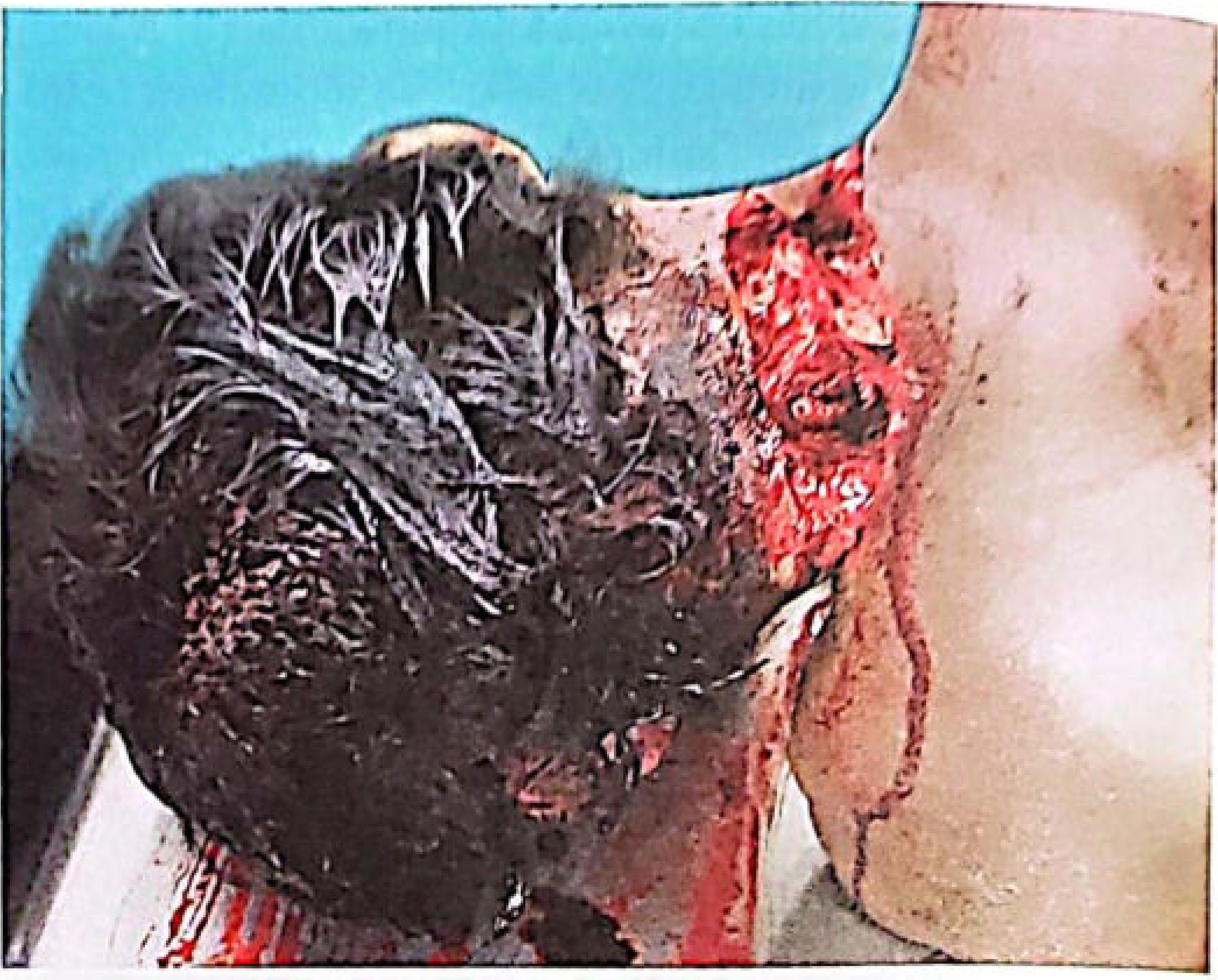
Fig. 8.35 - Decapitation with chop wound (illustrating the severity of a fatal chopping blow to the neck/face region):
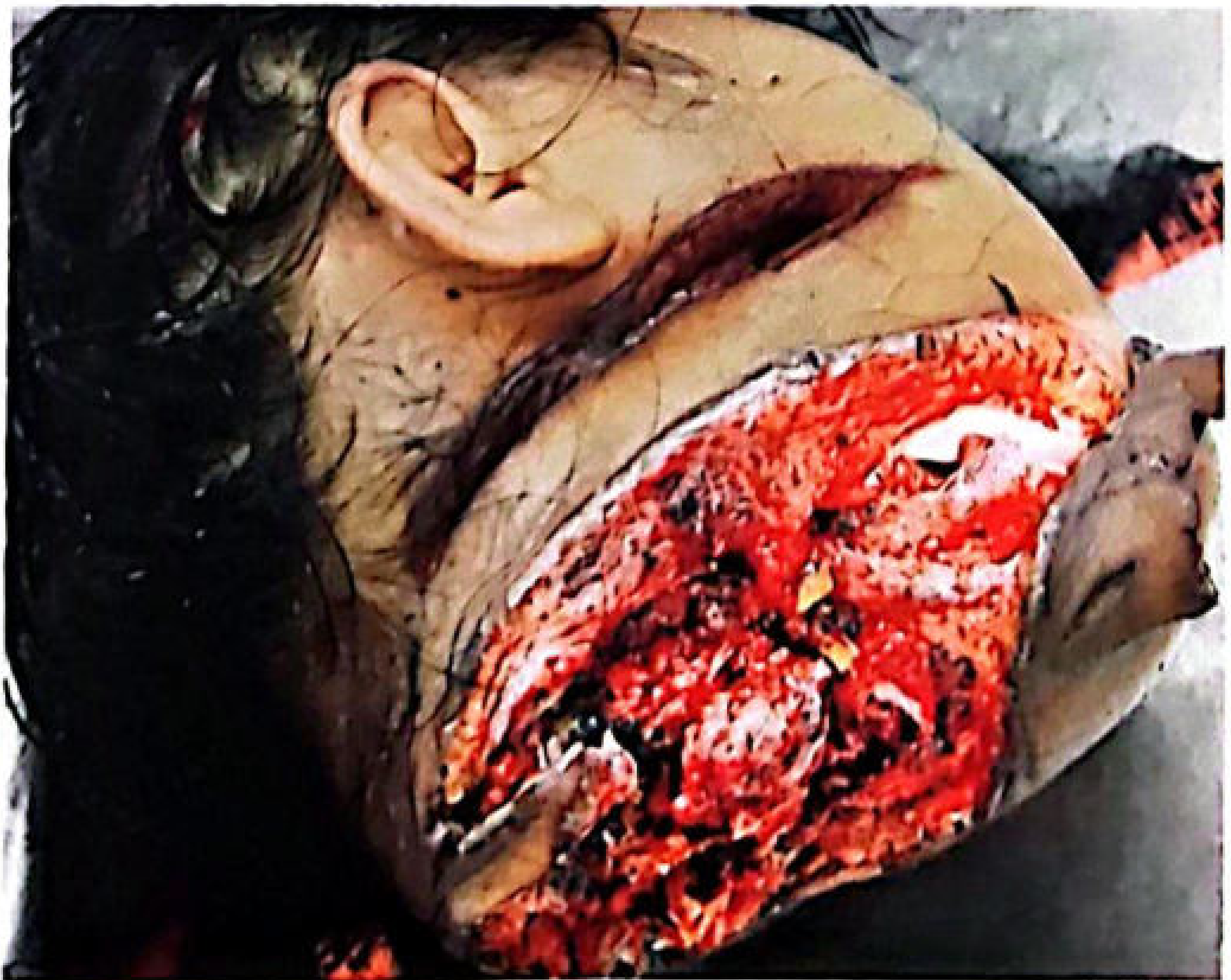
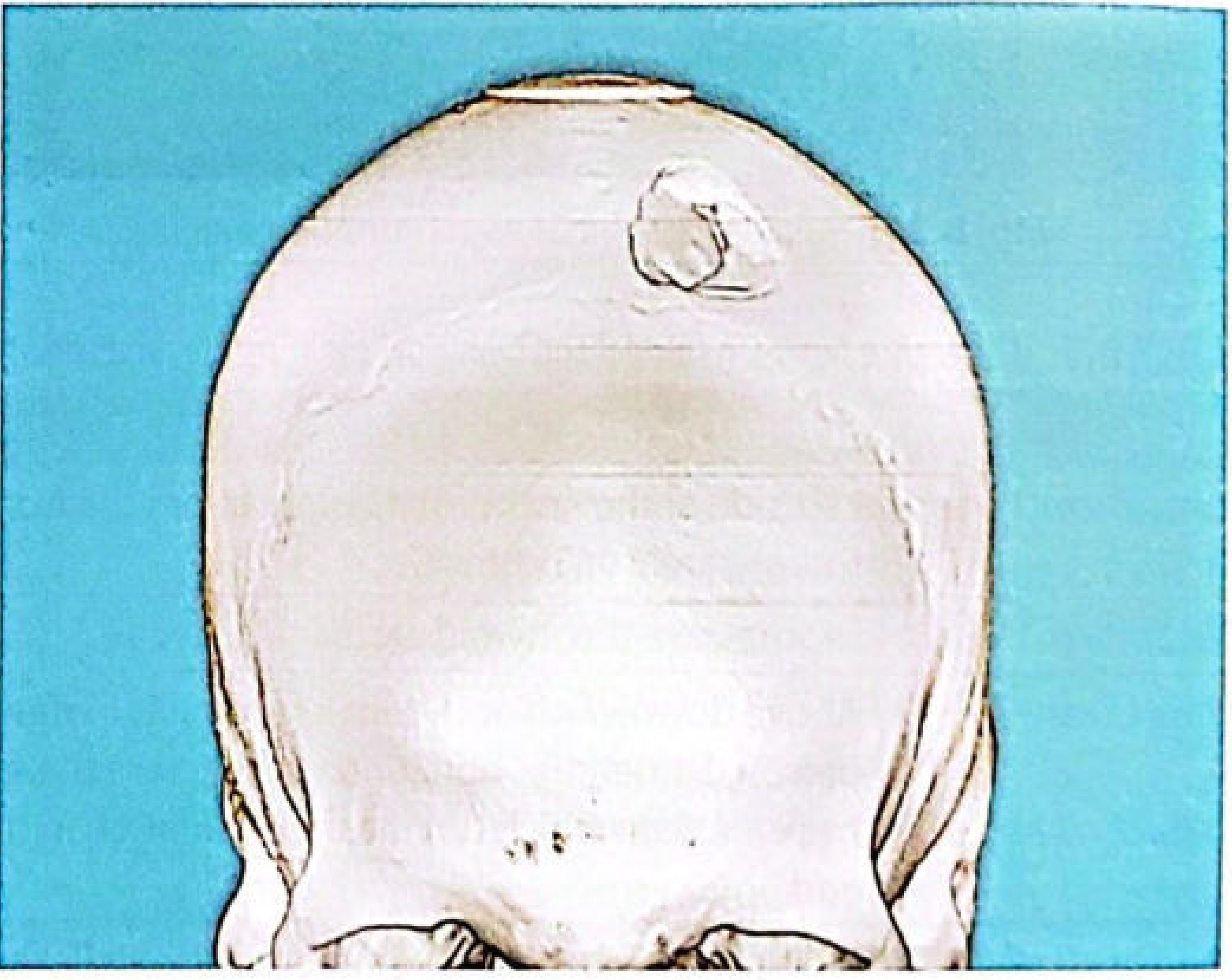
Fig. 8.37 - Cut injury of skull (wide gap anteriorly caused by the heel of the axe in a frontal attack - demonstrating the bone injury pattern):
Bone Injury Pattern (Forensic Significance)
Key features for determining direction of force from bone injury:
- In the skull: The undermined (beveled) edge of the fracture defect indicates the direction in which force was exerted; the slanted edge is the side from which force was directed
- Long bones: Bone fragments get loosened on the opposite side of the force
- Sharp weapon: Initial impact slices cleanly through bone on one edge; rebound removal at a slightly different angle cracks off an irregular bone fragment - producing one smooth and one rough edge at the ends of the chop wound
- Tangential blow: May cut off a disk-shaped portion of skull bone or soft tissue
- Neck wounds: The neck may be almost completely separated
When the perpetrator pulls out a weapon embedded in bone, they may twist it - fracturing or breaking off adjacent bone. In tangential skull wounds, discs of bone may be cut off entirely.
Medicolegal Aspects
- Manner: The vast majority are homicidal. Suicidal chop injuries are very rare.
- Common targets: Head, face, neck, shoulders, and extremities (exposed parts)
- Accidental causes: Power fans, band saws, ship/airplane propellers
- Extremity injuries: May cause complete or incomplete amputation of fingers/limbs; joints may be disarticulated
- Vitality: Wounds on head and trunk are usually associated with fatal injury to vital structures
Sources: The Essentials of Forensic Medicine and Toxicology, 36th Ed. (Figs. 8.35-8.37); DiMaio's Forensic Pathology, 3rd Ed. (Chop Wounds section); Parikh's Textbook of Medical Jurisprudence
This is a shared conversation. Sign in to Orris to start your own chat.