
Oleander poisoning
Reading File
Finding Sources
Searching PubMed
oleander poisoning cardiac glycoside toxicity
Reading File
Reading File
Searching PubMed
yellow oleander Thevetia poisoning treatment
Reading File
Finding Sources
Reading File
Reading File
Loading Image
Reading File
Finding Sources
I now have comprehensive information from multiple authoritative textbooks. Let me compile the full answer.
Oleander Poisoning
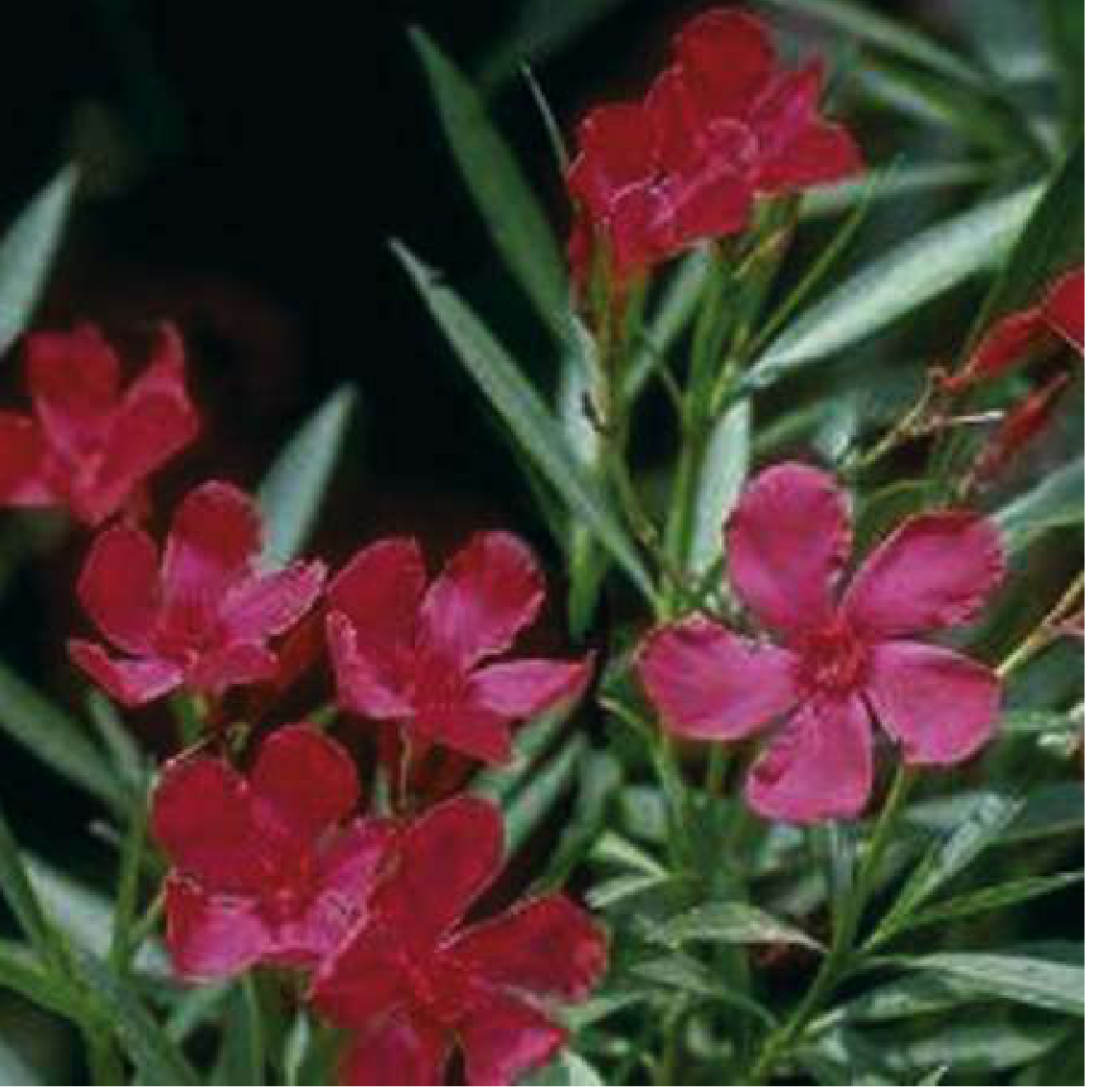
The Plant
Two species are clinically important:
- Nerium oleander (common/pink/white oleander) - an ornamental shrub found worldwide
- Thevetia peruviana (yellow oleander) - particularly prevalent in South Asia; seeds are a common means of intentional self-poisoning
All parts of both plants are toxic. Yellow oleander seeds are especially dangerous; 8-10 seeds or 15-20 g of root can be fatal in an adult, with death within 24 hours.
Toxic Principles
Oleander contains cardioactive steroids (cardiac glycosides):
| Species | Active Toxins |
|---|---|
| Nerium oleander | Oleandrin, neriine |
| Thevetia peruviana (yellow oleander) | Thevetin, thevotoxin, cerberin |
Mechanism: Cardiac glycosides bind and inhibit the Na⁺/K⁺-ATPase pump on cell membranes. This causes a rise in intracellular Ca²⁺, leading to:
- Decreased automaticity
- Increased contractility
- Disrupted cardiac conduction
This is identical in mechanism to pharmaceutical digoxin toxicity.
Clinical Features
Gastrointestinal (early)
- Burning sensation in the mouth, tingling of tongue
- Nausea, vomiting, diarrhea
- Abdominal pain, dryness of the throat
Cardiovascular (most serious)
- Bradydysrhythmias (sinus bradycardia, AV blocks 1st/2nd/3rd degree)
- Tachydysrhythmias (atrial and ventricular)
- Hypotension, syncope, cardiac arrest
- Irregular pulse resembling digitalis toxicity
Neurological
- Headache, dizziness, drowsiness
- Altered mental status, generalized weakness
- Dilated pupils
- Tetanic convulsions (occasionally, particularly with cerberin-containing Thevetia)
- Visual disturbances (in severe toxicity, like digoxin)
Terminal
- Collapse, coma, death
Diagnosis
ECG - performed immediately; all degrees of AV block, ventricular dysrhythmias, or bradycardia are danger signs.
Serum potassium - hyperkalemia (K⁺ >5.0 mEq/L) after acute overdose is a marker of severe toxicity and an indication for Fab antidote. Traditional hyperkalemia treatments (insulin, calcium, bicarbonate, hemodialysis) are usually unnecessary if Fab is given.
Serum digoxin level - may cross-react with the assay and qualitatively confirm cardioactive steroid exposure, but the numeric value does NOT correlate with degree of toxicity from plant sources and should NOT be used to calculate Fab dosing. This is unlike pharmaceutical digoxin poisoning.
Electrolytes, renal and liver function, CBC as baseline.
Management
Decontamination
- Activated charcoal (oral, early) - reduces systemic absorption if the patient presents within ~1 hour of ingestion and airway is protected. Repeat-dose activated charcoal may be helpful (oleander glycosides undergo enterohepatic recirculation).
Antidote: Digoxin-Specific Antibody Fragments (Fab)
This is the cornerstone of treatment. Administer to any patient with:
| Indication | Threshold |
|---|---|
| Heart rate | <40 beats/min |
| Rhythm | Sinus arrest, ventricular dysrhythmia, 2nd or 3rd degree AV block |
| Hemodynamics | Hypotension |
| Potassium | >5.0 mEq/L after acute overdose |
Dosing (empiric - do NOT use serum digoxin level to calculate):
- Cardiac arrest / hemodynamically unstable: 20 vials IV
- Stable with serious toxicity: 10 vials IV (initial)
- Reassess every hour; repeat dosing may be needed
- Yellow oleander poisoning may require higher doses than pharmaceutical digoxin overdose
Unlike digoxin overdose, where weight-based calculation using serum level is standard, plant cardioactive steroid poisoning requires empiric dosing because serum assay values do not reflect true toxin burden. - Tintinalli's Emergency Medicine
Adjuncts
- Atropine - may be tried for symptomatic bradycardia but is without demonstrated benefit as primary therapy
- Transvenous pacing - avoid (theoretical risk of triggering dysrhythmia in already sensitized myocardium); only consider if Fab fails
- Calcium - avoid (same theoretical concern for precipitating "stone heart"/cardiac arrest)
- Beta-adrenergic agents - only adjunctive, not primary
- IV fluids and vasopressors for hemodynamic support as needed
Specific to Yellow Oleander
- Sodium lactate (molar IV solution) to combat acidosis
- 5% glucose with atropine 1.2 mg + adrenaline (if BP low) to counteract heart block - older treatment protocols, now largely superseded by Fab
Disposition
| Clinical Status | Disposition |
|---|---|
| Symptomatic: bradycardia, hypotension, AMS, hyperkalemia | Monitored inpatient bed |
| Received digoxin Fab | ICU with cardiology + toxicology consult |
| Asymptomatic, normal ECG and labs | Observe 6-8 hours before discharge |
Forensic / Medicolegal Points
- Yellow oleander seeds and roots are used for suicide (particularly by women in parts of India, related to dowry disputes) and for abortion
- Also used in cattle poisoning (seeds mixed with fodder)
- Resists putrefaction - thevetin can be detected in exhumed, putrefied bodies even years after death
- Chemically detected via the Stas-Otto procedure (ether extract from viscera); thevetin is resistant to acid destruction
Differential Diagnosis
- Pharmaceutical digoxin toxicity (clinically identical)
- Beta-blocker or calcium channel blocker overdose
- Intrinsic cardiac disease (AV nodal disease, sick sinus syndrome)
- Other plant cardiotoxins: lily of the valley (Convallaria majalis), foxglove (Digitalis spp.), yew (Taxus spp.), aconite (Aconitum spp.)
Sources:
- Rosen's Emergency Medicine, Chapter 153 (Cardiac Glycosides - Plant Sources)
- Tintinalli's Emergency Medicine, Cardioactive Steroids (Foxglove, Oleander)
- Parikh's Textbook of Medical Jurisprudence, Forensic Medicine and Toxicology, Yellow Oleander
- P.C. Dikshit Textbook of Forensic Medicine and Toxicology
Recent literature: A 2025 review in Toxins (Basel) (PMID 40137888) specifically covers human deaths from oleander poisoning, and a 2023 review in Toxicon (PMID 36706925) discusses the toxicological-therapeutic dichotomy of Nerium oleander.
This is a shared conversation. Sign in to Orris to start your own chat.