
Lr6 so4 r3
Checking Date & Time
It looks like your message — "Lr6 so4 r3" — didn't come through clearly. Could you clarify what you mean? For example:
- Are you referring to a chemical formula (e.g., a lanthanum sulfate compound)?
- Is this a game notation, code snippet, or shorthand for something?
- Did you mean to type something else?
Let me know and I'll help right away!
Nerve supply of eye muscle
Reading File
Finding Sources
Finding Sources
Finding Sources
Finding Sources
Good results from multiple sources. Let me read the key sections.
Reading File
Reading File
Reading File
Excellent data. Let me also fetch the key anatomical diagram.
Loading Image
Loading Image
Here is a comprehensive overview of the nerve supply of the eye muscles.
Nerve Supply of the Eye Muscles
The extraocular muscles are controlled by three cranial nerves: CN III (oculomotor), CN IV (trochlear), and CN VI (abducens). A simple mnemonic is LR₆SO₄R₃ — Lateral Rectus (CN VI), Superior Oblique (CN IV), the Rest (CN III).
Quick Reference Table
| Muscle | Primary Action | Nerve |
|---|---|---|
| Lateral rectus | Abduction (lateral) | CN VI — Abducens |
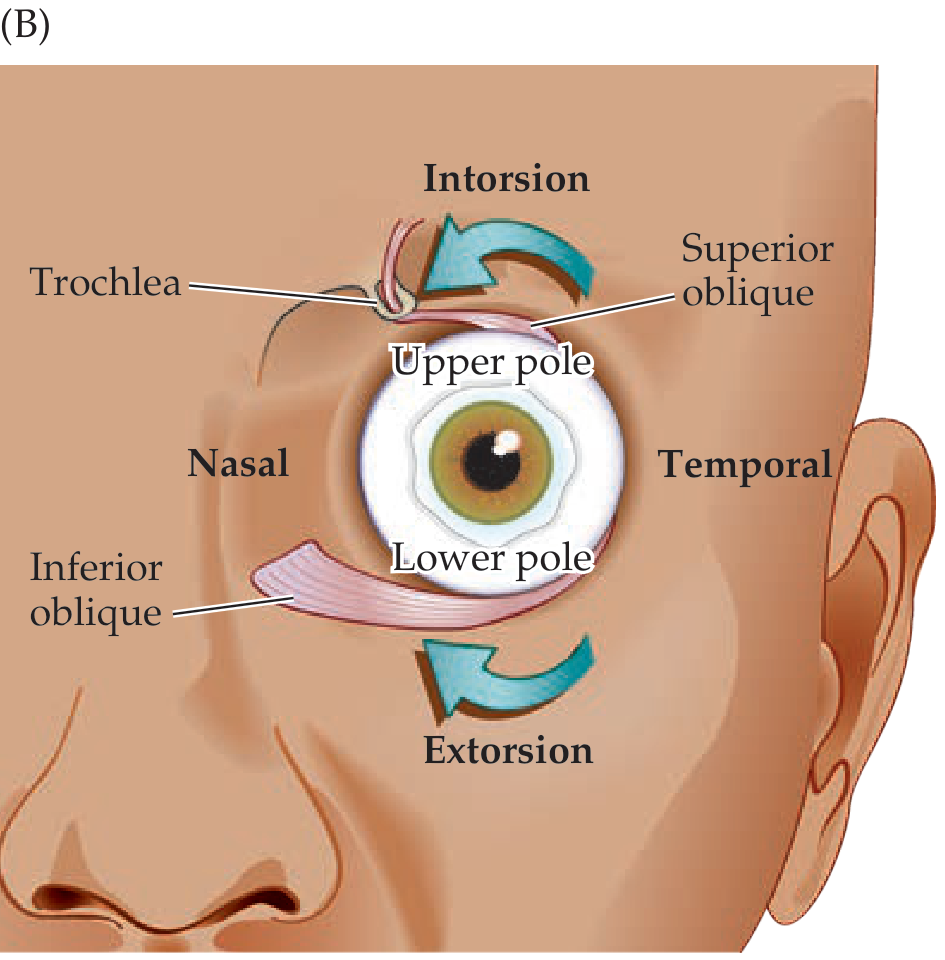
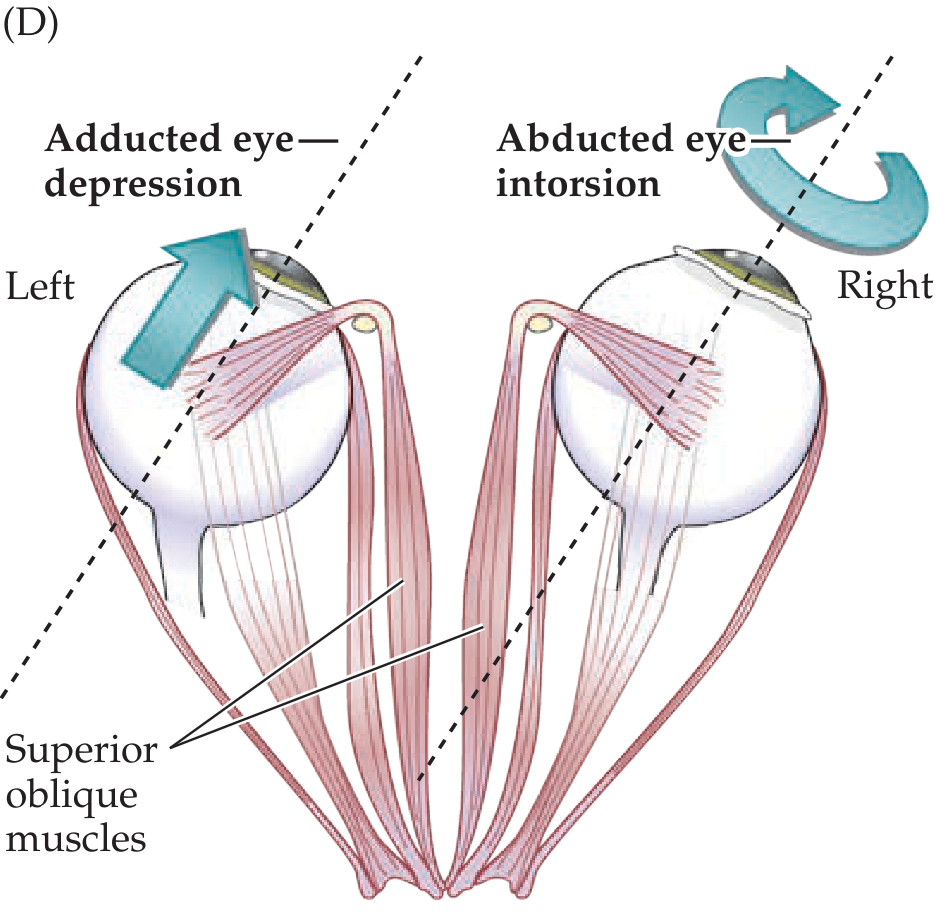
| Superior oblique | Depression + intorsion | CN IV — Trochlear |
| Medial rectus | Adduction (medial) | CN III — Oculomotor |
| Superior rectus | Elevation + intorsion | CN III — Oculomotor |
| Inferior rectus | Depression + extorsion | CN III — Oculomotor |
| Inferior oblique | Elevation + extorsion | CN III — Oculomotor |
| Levator palpebrae superioris | Elevates upper eyelid | CN III — Oculomotor |
CN III — Oculomotor Nerve
Supplies all extraocular muscles except lateral rectus and superior oblique. After entering the orbit through the superior orbital fissure, it divides into two branches:
- Superior division: Superior rectus + levator palpebrae superioris
- Inferior division: Medial rectus, inferior rectus, inferior oblique
The inferior division also carries preganglionic parasympathetic fibers → ciliary ganglion → pupillary constrictor (sphincter pupillae) + ciliary muscle (accommodation).
Nucleus: Midbrain at the level of the superior colliculus.
Note: Superior rectus axons cross the midline and join the contralateral CN III.
CN IV — Trochlear Nerve
- Supplies only the superior oblique muscle
- The superior oblique passes through the trochlea (bony pulley) — hence the name
- Nucleus: Contralateral midbrain at the level of the inferior colliculus
- Only cranial nerve to exit the dorsal brainstem; has the longest intracranial course
Actions of superior oblique:
- Eye adducted → depression (main clinical action)
- Eye abducted → intorsion
CN VI — Abducens Nerve
- Supplies only the lateral rectus muscle (abduction)
- Nucleus: Pons, in the floor of the fourth ventricle
Additional (Non-Extraocular) Muscle Innervation
| Muscle | Nerve | Function |
|---|---|---|
| Sphincter pupillae | CN III (parasympathetic) | Pupil constriction |
| Ciliary muscle | CN III (parasympathetic) | Accommodation (lens thickening) |
| Dilator pupillae | Sympathetic (superior cervical ganglion) | Pupil dilation |
| Müller's muscle | Sympathetic | Accessory lid elevator |
Oblique Muscle Actions Illustrated
Key Clinical Points
| Nerve Palsy | Finding |
|---|---|
| CN III palsy | "Down and out" eye, ptosis, dilated fixed pupil (mydriasis) |
| CN IV palsy | Vertical diplopia; patient tilts head away from affected side to compensate |
| CN VI palsy | Convergent squint; inability to abduct the eye (esotropia) |
Sources: Neuroanatomy through Clinical Cases 3rd Ed.; Kanski's Clinical Ophthalmology 10th Ed.; Principles of Neural Science (Kandel), 6th Ed.
This is a shared conversation. Sign in to Orris to start your own chat.