

f1e9d923-c215-499f-82eb-d284ab14c749.jpeg
Explain this question with images
The question asks: "Most common sign associated with decreased cardiac output is" - and the answer is (A) Shortness of Breath (SOB).
Searching sources...
Reading File
Searching the Web
decreased cardiac output signs symptoms most common shortness of breath
Finding Sources
Finding Sources
Reading File
Reading File
Loading Image
Loading Image
Q.1561 - Most Common Sign Associated with Decreased Cardiac Output
✅ Answer: (A) Shortness of Breath (SOB)
What is Cardiac Output?
Cardiac Output (CO) = Heart Rate × Stroke Volume
Normal CO = ~5 L/min. When it falls, the body cannot deliver enough oxygen to tissues, and fluid backs up into the lungs - producing the cardinal symptom: shortness of breath (dyspnea).
Why is SOB the MOST COMMON sign?
When cardiac output drops, two key things happen simultaneously:
- Reduced forward flow - less oxygen delivered to tissues → fatigue, dizziness
- Backward congestion - blood dams up behind the failing ventricle → fluid accumulates in the lungs (pulmonary congestion) → SOB
As confirmed by [Guyton & Hall Medical Physiology](Guyton and Hall Textbook of Medical Physiology):
"This low cardiac output is still sufficient to sustain life, but it is likely to be associated with symptoms such as dizziness or fainting, fatigue, and shortness of breath with activity."
And [Katzung's Basic & Clinical Pharmacology](Katzung's Basic and Clinical Pharmacology):
"The primary signs and symptoms of all types of heart failure include tachycardia, decreased exercise tolerance, shortness of breath, and cardiomegaly."
The Pathophysiology - Step by Step
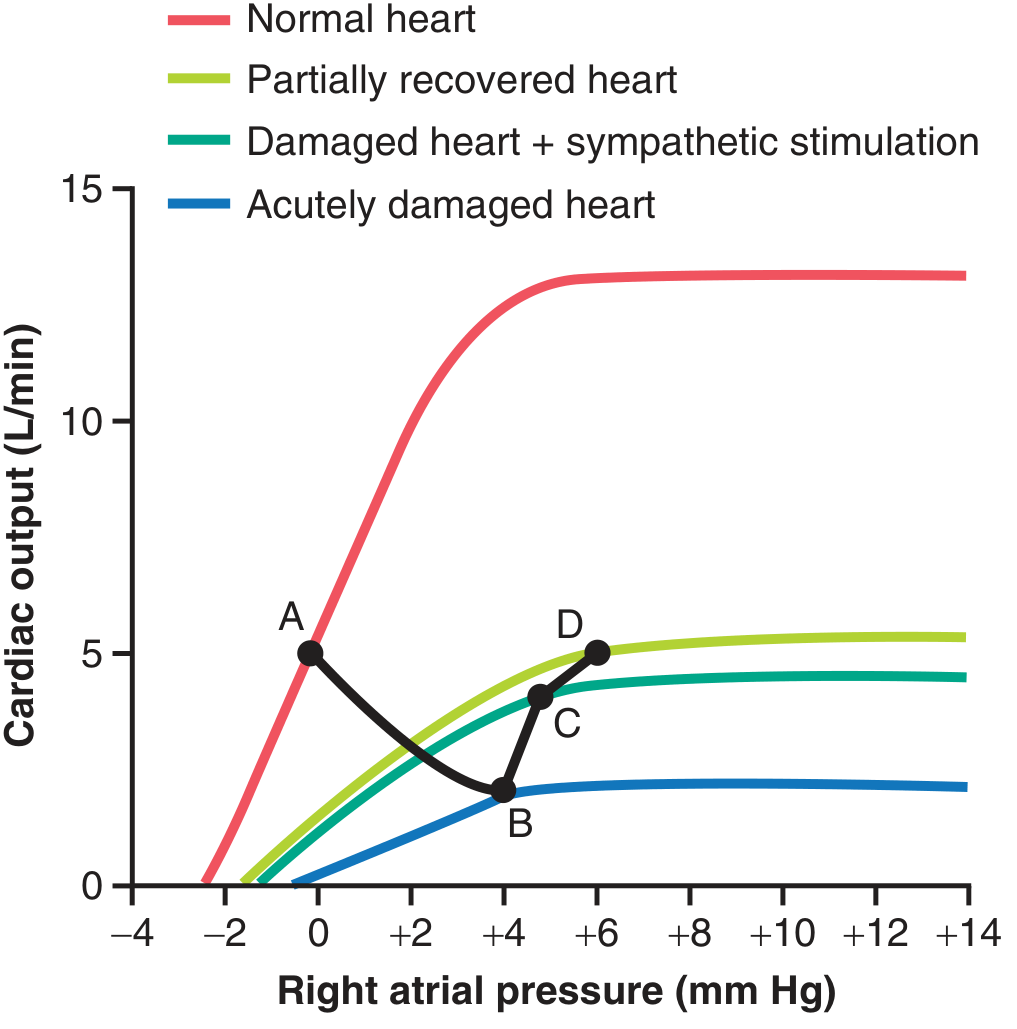
This graph (from Guyton & Hall) shows what happens after heart damage:
- Point A = Normal (CO ~5 L/min)
- Point B = Acutely damaged heart (CO drops to ~2 L/min) → SOB, dizziness, fatigue appear
- Point C = After sympathetic compensation kicks in
- Point D = Partial recovery
The moment CO falls from A to B, shortness of breath is the first and most prominent symptom the patient notices - especially with exertion.
Body's Compensatory Response to Low CO
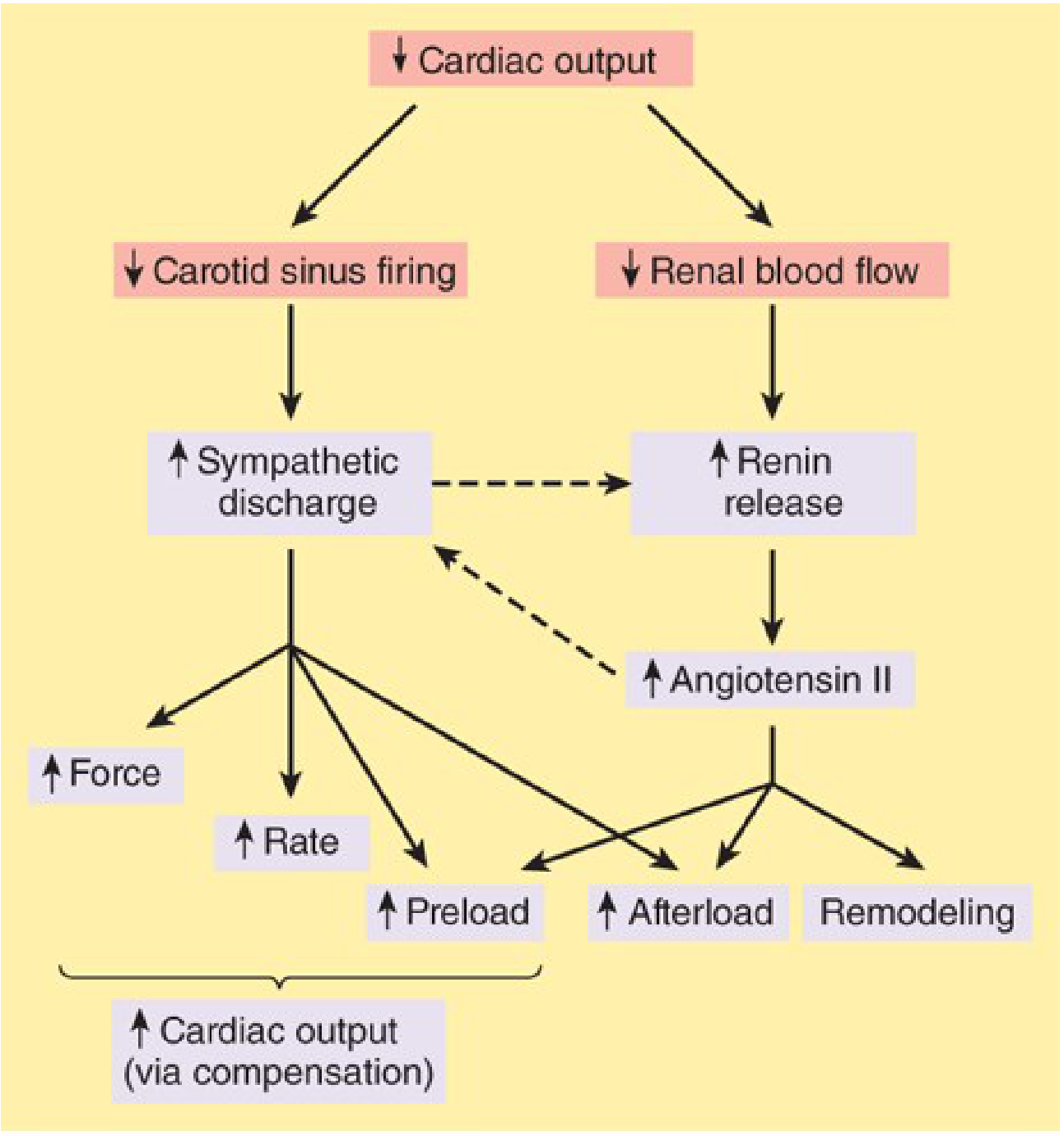
When CO drops:
- Baroreceptors detect low pressure → ↑ Sympathetic discharge
- Kidneys detect low flow → ↑ Renin → ↑ Angiotensin II
- Result: ↑ heart rate, ↑ preload, ↑ afterload, cardiac remodeling
- All this fluid retention worsens pulmonary congestion → more SOB
Why NOT the Other Options?
| Option | Why it's wrong |
|---|---|
| (B) Peripheral edema | Occurs in right-sided heart failure (blood backs up into systemic veins). It is a later, chronic finding - not the most immediate/common sign of low CO overall. |
| (C) Cardiac murmurs | Murmurs arise from turbulent flow through valves or septal defects - they are a cause of reduced CO (e.g., aortic stenosis), not a sign of it. |
| (D) Arthritis | Completely unrelated to cardiac output physiology. |
Memory Tip
Low CO = Lungs get congested = SOB comes first Think: Heart fails to pump → fluid backs up into lungs → patient gasps for breath → SOB is the hallmark
Answer: (A) Shortness of Breath ✅
This is a shared conversation. Sign in to Orris to start your own chat.