
What is kochers test
Kocher's test is a clinical sign used to detect exophthalmos (proptosis) in thyroid eye disease (Graves' ophthalmopathy). When the patient looks downward, the upper eyelid fails to follow the downward movement of the eyeball - creating a visible strip of sclera above the iris. This lag of the upper eyelid on downward gaze is the positive sign.
Searching sources...
Reading File
Searching the Web
Kocher's test thyroid eye disease clinical sign
Finding Sources
Finding Sources
Reading File
Loading Image
Here is a complete answer based directly from Kanski's Clinical Ophthalmology (10th ed):
Kocher Sign (Kocher's Test)
The Kocher sign describes a staring and frightened appearance of the eyes, which is particularly marked on attentive fixation. It is a clinical sign of thyroid eye disease (TED / Graves' ophthalmopathy).
It results from severe bilateral upper eyelid retraction - the upper lid margin rises above the superior limbus, exposing sclera both above and below the iris, giving the eyes that characteristic wide, alarmed look.
How it differs from other lid signs in TED
These four signs are often confused - here is how they differ:
| Sign | Description | Mechanism |
|---|---|---|
| Kocher sign | Staring, frightened appearance on attentive fixation | Severe bilateral lid retraction in primary gaze |
| Dalrymple sign | Widened palpebral fissure in primary gaze | Upper lid retraction/spasm (milder than Kocher) |
| von Graefe sign | Lid lag on downgaze - upper lid fails to follow the eyeball downward | Retarded descent of the upper lid |
| Stellwag sign | Infrequent blinking | Sympathetic overactivity |
Note: The term "Kocher's test" in some texts is used interchangeably with the Kocher sign - referring to this observation of the frightened/staring appearance when asking the patient to fixate attentively.
Underlying cause
In TED, excess sympathetic stimulation (from elevated thyroid hormones/catecholamines) causes overactivity of the superior tarsal muscle (Muller's muscle), which elevates the upper lid. Combined with inflammatory infiltration and fibrosis of the levator palpebrae, this causes persistent lid retraction that worsens with attentive gaze - producing the Kocher sign.
Clinical image (from Kanski's Clinical Ophthalmology)
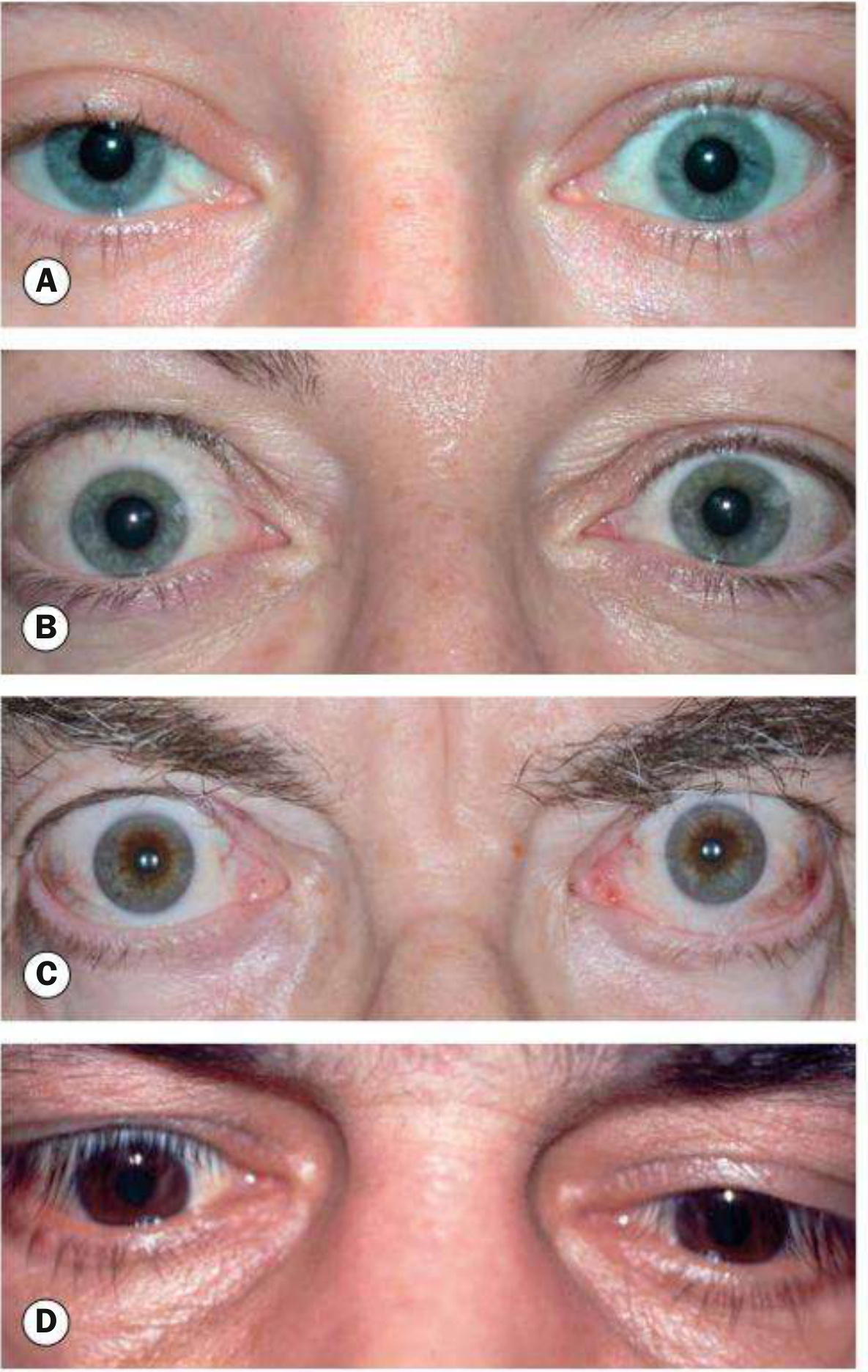
Fig. 4.11 - Panel C shows the Kocher sign: severe bilateral lid retraction giving a staring, frightened appearance.
- Kanski's Clinical Ophthalmology: A Systematic Approach, 10th ed., Lid retraction section
I didn't asked sign i asked test
Kocher's test is used to diagnose appendicitis. The patient is asked to raise their right leg while lying supine - pain in the right iliac fossa (RIF) on doing so suggests appendicitis. Some sources describe it as pressure applied at a specific point.
Searching sources...
Finding Sources
Searching the Web
Kocher's test clinical examination what is it used for
Reading File
Reading File
Loading Image
Apologies for the initial confusion. Here is the correct answer:
Kocher's Test
Kocher's test is a clinical test performed during examination of a thyroid swelling (goitre) to detect tracheal compression/narrowing ("scabbard trachea").
How it is performed
- The examiner applies gentle compression (slight push) on the lateral lobes of the thyroid gland from both sides simultaneously.
Positive result
- Production of stridor (a high-pitched inspiratory noise due to air rushing through a narrowed trachea) on compression = positive Kocher's test
What a positive test indicates
A positive test means the trachea is already narrowed and has very little reserve. Compressing the lateral lobes of the thyroid reduces the tracheal lumen further, triggering stridor. This is particularly seen in:
- Multinodular goitre - causing external tracheal compression
- Carcinoma of thyroid infiltrating into the tracheal wall (scabbard trachea)
- Any large goitre with substernal extension
Clinical significance
It is an important pre-operative assessment. A positive Kocher's test warns the surgeon that the patient may develop acute airway obstruction and needs careful airway management during and after thyroidectomy.
Image showing Kocher's test - gentle compression on lateral lobes of the thyroid:

- S. Das - A Manual on Clinical Surgery, 13th Edition, Chapter 27
This is a shared conversation. Sign in to Orris to start your own chat.