
Ozone therapy in orthopaedics 10 marks pg answer with flow chart and images
ozone therapy orthopaedics musculoskeletal
ozone therapy orthopaedics mechanism applications clinical uses 10 marks
https://pmc.ncbi.nlm.nih.gov/articles/PMC11290204
ozone therapy intervertebral disc herniation lumbar
ozone therapy knee osteoarthritis intra-articular
PMID: 38905033
PMID: 39579218
ozone therapy orthopaedics flowchart mechanism diagram ozone disc herniation osteomyelitis images
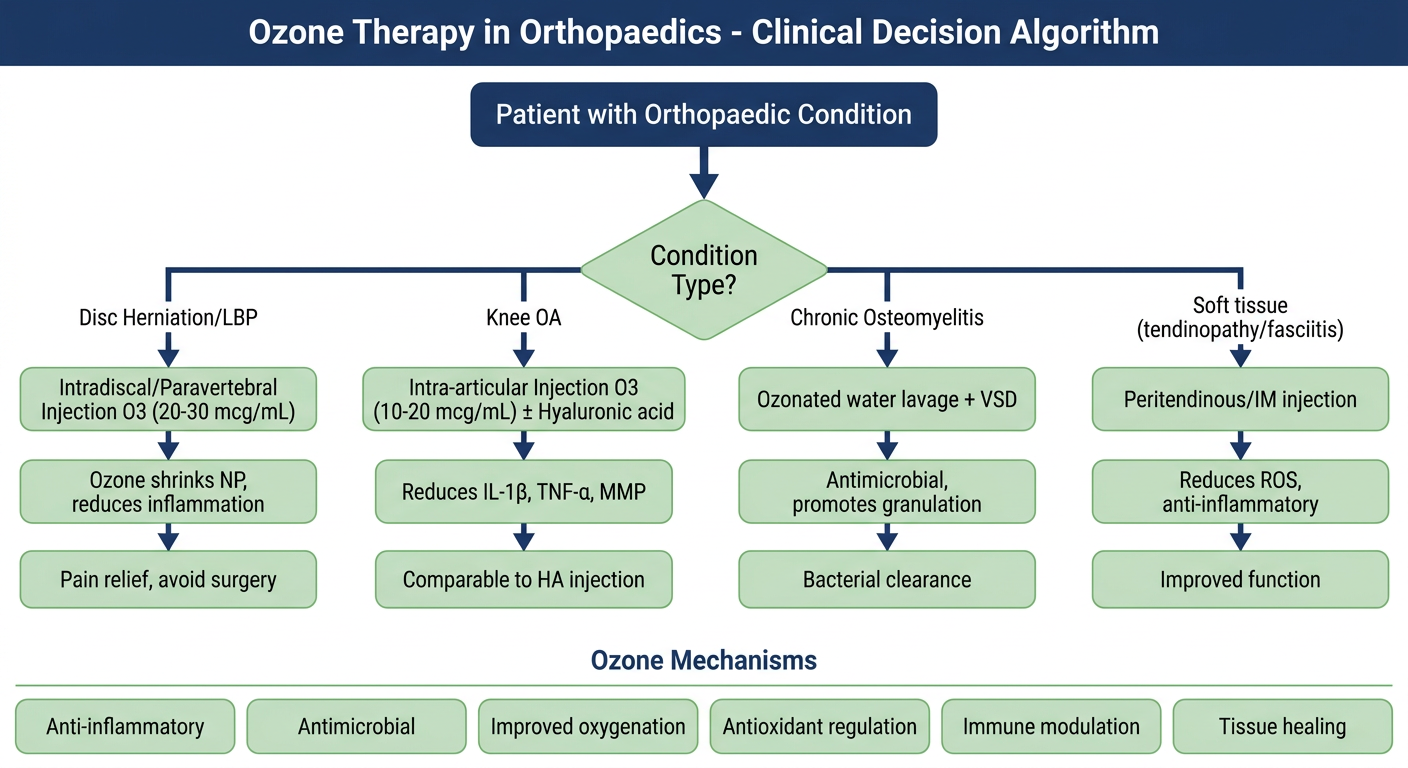
Medical flowchart titled "Ozone Therapy in Orthopaedics - Clinical Decision Algorithm". Clean, professional medical flowchart with the following flow: Top box: "Patient with Orthopaedic Condition" → Diamond: "Condition Type?" with 4 branches: 1) Disc Herniation/LBP → "Intradiscal/Paravertebral Injection O3 (20-30 mcg/mL)" → "Ozone shrinks NP, reduces inflammation" → "Pain relief, avoid surgery"; 2) Knee OA → "Intra-articular Injection O3 (10-20 mcg/mL) ± Hyaluronic acid" → "Reduces IL-1β, TNF-α, MMP" → "Comparable to HA injection"; 3) Chronic Osteomyelitis → "Ozonated water lavage + VSD" → "Antimicrobial, promotes granulation" → "Bacterial clearance"; 4) Soft tissue (tendinopathy/fasciitis) → "Peritendinous/IM injection" → "Reduces ROS, anti-inflammatory" → "Improved function". Bottom section showing "Ozone Mechanisms" with 6 boxes: Anti-inflammatory, Antimicrobial, Improved oxygenation, Antioxidant regulation, Immune modulation, Tissue healing. Color scheme: navy blue headers, light green boxes, white background, medical style.
Ozone Therapy in Orthopaedics
Definition and Introduction
Chemistry and Preparation
- Ozone (O3) is an allotrope of oxygen - a triatomic, unstable molecule that readily releases nascent oxygen (O•)
- Generated by passing pure oxygen through an electrical corona discharge
- Concentration is expressed in micrograms per milliliter (mcg/mL)
- Therapeutic range: 1-40 mcg/mL depending on indication and route
- Must be used immediately after preparation (half-life ~40 minutes at room temperature)
Mechanism of Action
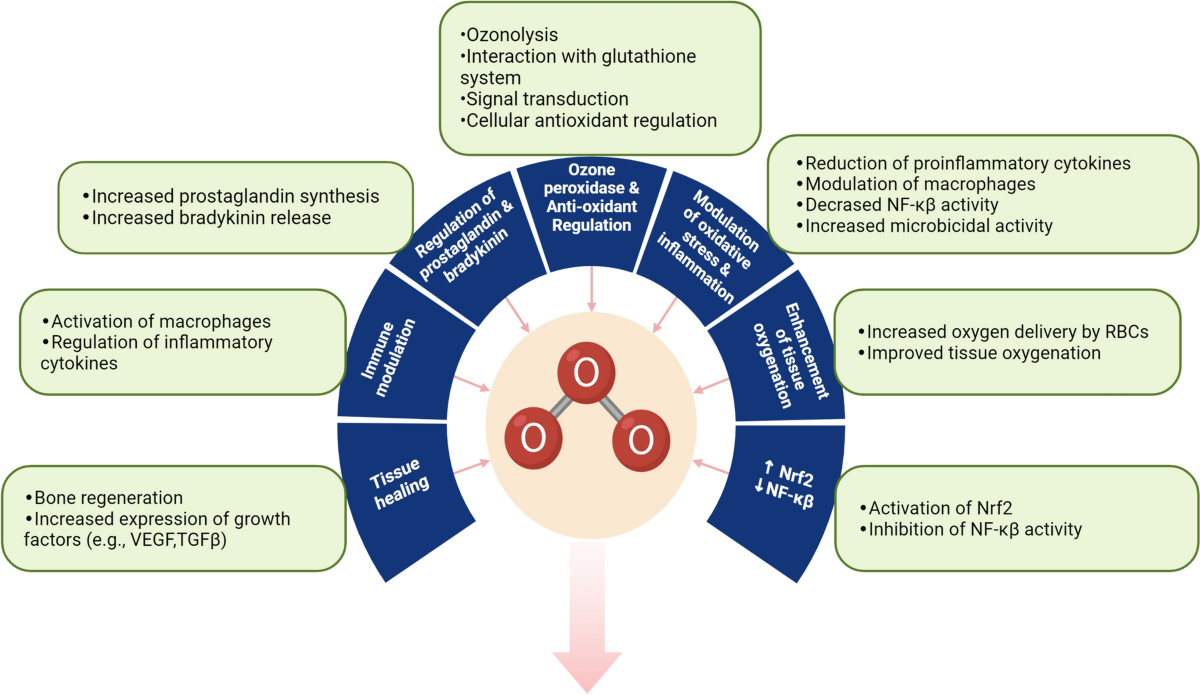
1. Anti-inflammatory Action
- Ozone reacts with polyunsaturated fatty acids in biological fluids, generating Reactive Oxygen Species (ROS) and lipid oxidation products (LOPs)
- These LOPs act as signaling molecules that downregulate NF-κB pathway, reducing production of IL-1β, TNF-α, IL-6, and prostaglandins
- Reduces bradykinin and prostaglandin synthesis at pain receptor level
2. Antioxidant / Redox Regulation
- Paradoxically, controlled oxidative stress activates the Nrf2 pathway, upregulating the body's own antioxidant defenses (superoxide dismutase, catalase, glutathione peroxidase)
- Resets the cellular redox balance in chronically inflamed tissues
3. Enhanced Tissue Oxygenation
- Increases 2,3-diphosphoglycerate (2,3-DPG) in red blood cells, promoting oxygen release to hypoxic tissues
- Improves microcirculation in ischemic/degenerative tissues
4. Analgesic Mechanism
- Oxidizes arachidonic acid, blocking prostaglandin E2 synthesis
- Inactivates algogenic substances (bradykinin, substance P) at nerve endings
- Blocks NMDA receptor phosphorylation (reducing central sensitization)
5. Antimicrobial Action
- Ozone is a potent bactericidal, fungicidal, and virucidal agent
- Oxidizes and disrupts bacterial cell membranes and DNA
- Germicidal at concentrations as low as 0.1 mcg/mL
6. Tissue Healing and Regeneration
- Upregulates VEGF (vascular endothelial growth factor) and TGF-β
- Stimulates fibroblast proliferation and collagen synthesis
- Promotes angiogenesis and granulation tissue formation
- Supports bone regeneration
Routes of Administration
| Route | Concentration | Indication |
|---|---|---|
| Intradiscal | 15-30 mcg/mL | Lumbar disc herniation |
| Paravertebral/Epidural | 5-15 mcg/mL | Radiculopathy, LBP |
| Intra-articular | 10-20 mcg/mL | Knee OA, TMJ |
| Intramuscular (trigger point) | 5-15 mcg/mL | Myofascial pain, tendinopathy |
| Peritendinous | 5-10 mcg/mL | Tendinitis, fasciitis |
| Topical (ozonated water/oil) | - | Wounds, osteomyelitis |
| Major autohemotherapy (MAH) | 20-40 mcg/mL | Systemic effects, chronic pain |
| Minor autohemotherapy (MiAH) | 10-20 mcg/mL | Systemic immune modulation |
| Rectal insufflation | 10-30 mcg/mL | Systemic, chronic disease |
Orthopaedic Applications
1. Lumbar Disc Herniation (Strongest Evidence)
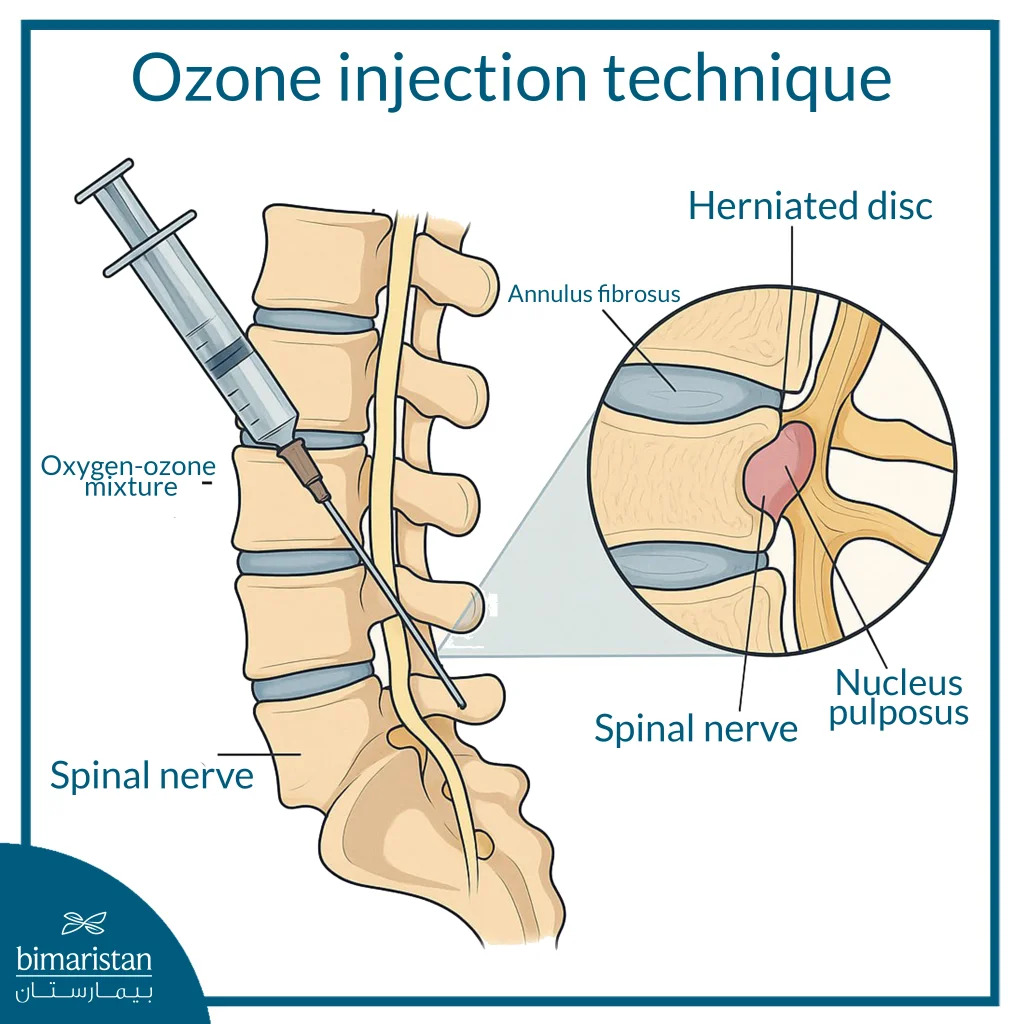
- Most extensively studied application
- Mechanism: Ozone oxidizes proteoglycans in nucleus pulposus (NP), causing disc shrinkage and dehydration ("chemonucleolysis"), reducing mechanical nerve compression
- Also reduces the inflammatory cascade around the nerve root
- Technique: CT/fluoroscopy-guided intradiscal + periradicular injection, 2-10 mL of O2/O3 at 20-30 mcg/mL
- Intradiscal ozone injections superior to steroid injections at ≥6 months (OR = 3.95, 95% CI 2.44-6.39)
- Comparable outcomes to microdiscectomy at 18 months (SMD = -0.05)
- Greater VAS reduction vs. steroids at 1 month (SMD = 2.53)
2. Knee Osteoarthritis
- Intra-articular ozone reduces chondrocyte apoptosis and cartilage degradation
- Decreases synovial inflammation and MMP (matrix metalloproteinase) activity
- Stimulates cartilage repair and proteoglycan synthesis
- Intra-articular ozone achieves similar VAS and WOMAC scores to hyaluronic acid at 4-6 months follow-up
- Combination of ozone + HA was shown to be more effective than either alone in some RCTs
3. Chronic Osteomyelitis
- Ozonated water lavage combined with vacuum-sealed drainage (VSD) provides:
- Bacterial clearance (including MRSA)
- Reduced biofilm formation
- Stimulation of granulation tissue
- Effective adjunct to IV antibiotics, especially in antibiotic-resistant cases
- Route: Local irrigation with ozonated saline (3 cycles of ozonated gas in 100 mL saline)
4. Cervical Disc Herniation / Neck Pain
- Oxygen-ozone therapy shows benefit in cervical radiculopathy
- Periradicular and epidural routes used
- A 2024 review (Jandura et al., PMID 38541068) supports its use as a minimally invasive alternative
5. Soft Tissue Conditions
| Condition | Route | Notes |
|---|---|---|
| Lateral epicondylitis (Tennis elbow) | Perilesional injection | Reduces inflammation at enthesis |
| Plantar fasciitis | Peritendinous injection | Comparable to corticosteroids |
| De Quervain's tenosynovitis | Local injection | Case series evidence |
| Carpal tunnel syndrome | Local infiltration | Reduces inflammatory mediators |
| Myofascial pain / Trigger points | IM injection | Disrupts pain-spasm cycle |
| Spondylolisthesis / Spondylolysis | Paravertebral | Combined with rehabilitation |
6. Wound Healing (Post-Operative / Diabetic Foot)
- Ozonated water/oil reduces bacterial load, promotes angiogenesis
- Reduces wound size, accelerates closure in chronic ulcers
- Valuable in post-operative wound complications
FLOWCHART: Ozone Therapy in Orthopaedics - Clinical Decision Algorithm
Contraindications
| Absolute | Relative |
|---|---|
| Glucose-6-phosphate dehydrogenase (G6PD) deficiency | Hyperthyroidism |
| Pregnancy | Active hemorrhage |
| Thrombocytopenia | Severe cardiovascular disease |
| Hypersensitivity to ozone | Coagulation disorders |
| Active seizure disorder | Immunosuppression |
Complications and Safety
- Local: Post-injection pain, temporary flare of symptoms, hematoma
- Rare: Pneumocephalus (epidural route), gas embolism (IV route - AVOID direct IV injection)
- Ozone gas embolism is the most feared complication - prevented by using O2/O3 mixture and correct technique
- Overall: Very low complication rate when administered by trained practitioners with proper equipment
- No teratogenicity, nephrotoxicity, or hepatotoxicity at therapeutic doses
Advantages Over Conventional Treatments
| Ozone Therapy | vs. Conventional |
|---|---|
| Minimally invasive | vs. Open surgery |
| No systemic side effects | vs. Long-term NSAIDs/steroids |
| Day care procedure | vs. Hospitalization |
| Addresses disc, joint, soft tissue | Multitarget mechanism |
| Cost-effective | vs. Surgical interventions |
| Can be repeated | vs. Corticosteroid limits |
Limitations and Current Status
- Lack of FDA approval - major barrier to mainstream acceptance
- No standardized protocols for concentration, volume, frequency, or technique
- Evidence quality: High-quality RCTs are limited; best evidence exists for lumbar disc herniation and knee OA
- Operator-dependent procedure requiring trained personnel and proper ozone generator
- Storage and stability issues (must be used immediately)
- The Frontiers in Physiology 2022 review notes that "lack of standardization in treatment protocols is the Achilles' heel of this technique"
Summary Table
| Condition | Route | O3 Concentration | Evidence Level |
|---|---|---|---|
| Lumbar disc herniation | Intradiscal | 20-30 mcg/mL | Level I (Meta-analysis) |
| Knee OA | Intra-articular | 10-20 mcg/mL | Level I (Meta-analysis) |
| Chronic osteomyelitis | Topical/irrigation | Ozonated water | Level III-IV |
| Cervical radiculopathy | Periradicular | 5-15 mcg/mL | Level II-III |
| Tendinopathy | Peritendinous | 5-10 mcg/mL | Level III-IV |
| Chronic wounds | Topical | Ozonated oil/water | Level II-III |
Key Points for Exam
- Ozone = O3 - unstable triatomic oxygen, generated from pure O2
- Strongest evidence: Lumbar disc herniation (outperforms steroids at 6 months; comparable to surgery at 18 months) and knee OA (comparable to HA)
- Mechanism in disc: Oxidizes proteoglycans in NP → disc shrinkage → nerve decompression
- Mechanism in joints: Inhibits NF-κB, reduces IL-1β, TNF-α, MMPs, prevents chondrocyte apoptosis
- Most feared complication: Gas embolism (prevented by proper technique)
- Absolute contraindication: G6PD deficiency
- Not FDA approved - used as complementary/alternative or when conventional therapy fails
- Best results: Ozone combined with hyaluronic acid in knee OA; ozone combined with VSD in osteomyelitis
- Chang et al. 2024 (PMID 38905033) - Intradiscal ozone superior to steroids and comparable to microdiscectomy for HLD
- Migliorini et al. 2024 (PMID 39579218) - Ozone vs. HA intra-articular: comparable outcomes in knee OA (Level I evidence)
- Arias-Vázquez et al. 2026 (PMID 41496305) - 2026 meta-analysis confirms ozone injections reduce pain in knee OA