
normal penis vs hypogonadism pic
hypogonadism small penis micropenis compared to normal anatomy
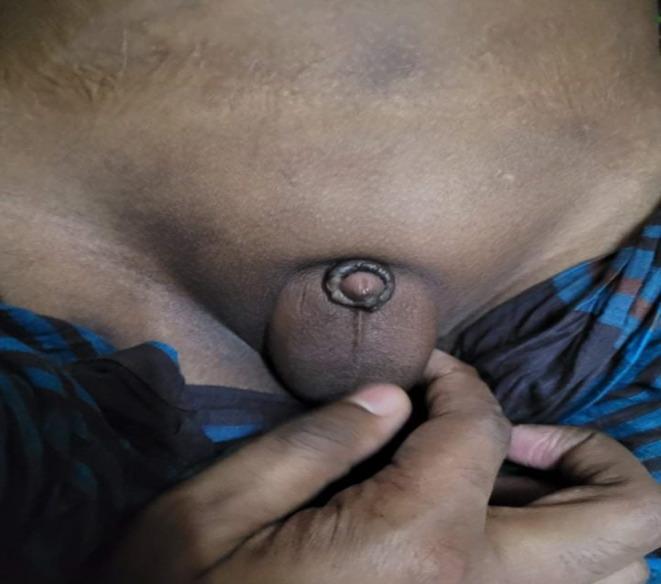
This clinical photograph displays the external genitalia of a pediatric patient, demonstrating a micropenis. The primary finding is a significantly small penis, estimated at 1.5 cm in stretched length, positioned above a normally structured but small scrotum. The skin of the penile shaft and scrotum exhibits darker pigmentation compared to the adjacent abdominal and thigh skin. Notable landmarks include the median raphe on the scrotum and a complete absence of pubic hair, consistent with Tanner stage 1 development. The patient exhibits an increased body mass index (BMI), with visible adipose tissue in the suprapubic area, which can occasionally exacerbate the appearance of a buried or small penis. The clinical context suggests secondary hypogonadism and renal parenchymal disease as part of a multisystemic condition, likely Bardet-Biedl syndrome, which often presents with obesity, polydactyly, and hypogonadotropic hypogonadism. The image is focused on the urogenital region, with the genitalia partially stabilized by a gloved hand for clinical documentation.
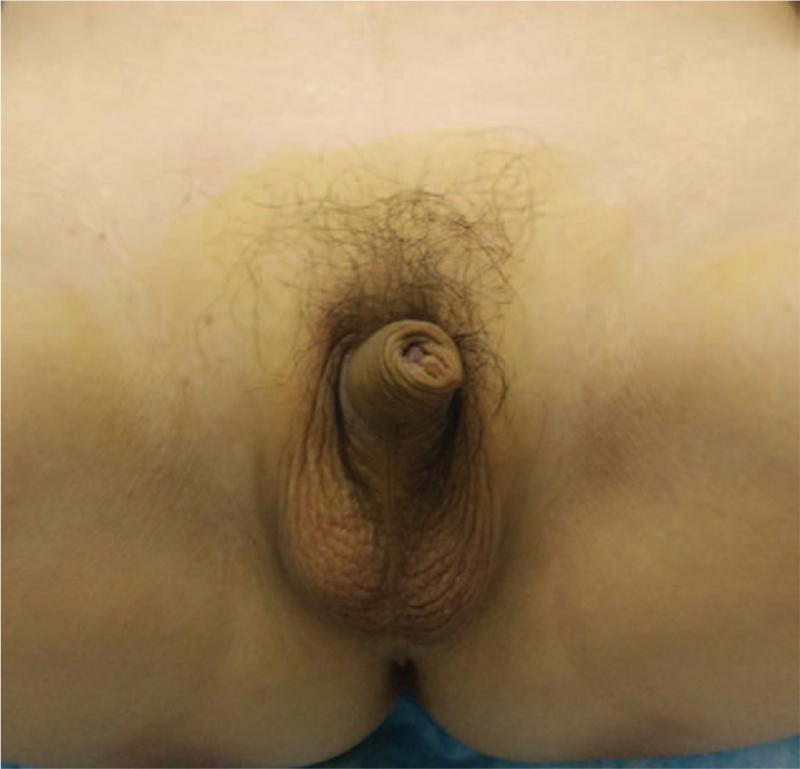
Clinical photograph of the male pelvic and genital region demonstrating phenotypic features of hypogonadism. The image shows an underdeveloped penis (micropenis) and small, bilateral scrotal sacs consistent with testicular atrophy. The scrotum exhibits a normal wrinkled skin texture but appears reduced in volume. Pubic hair distribution is notably sparse, with a low density primarily localized around the base of the penis, corresponding to a low Tanner stage for pubic hair development. The surrounding skin of the groin and lower abdomen appears normal without visible lesions or masses. This visual evidence of primary or secondary hypogonadism, when correlated with the clinical context of a 47,XXY karyotype, is characteristic of Klinefelter syndrome. The educational focus is on identifying physical manifestations of endocrine dysfunction and chromosomal abnormalities in adult males.
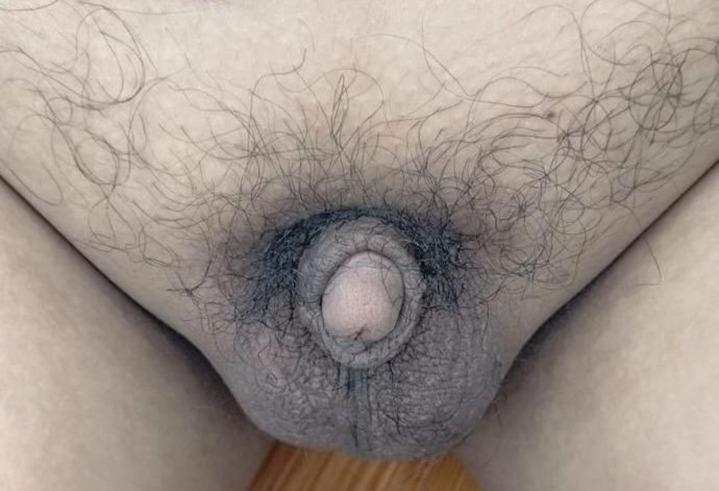
This clinical photograph shows the external genitalia of an adult male exhibiting signs of hypogonadism. The image demonstrates a microphallus (micropenis) with a significantly reduced penile length relative to the scrotum. The scrotum is intact and appears to contain small, prepubertal testes. Pubic hair distribution is sparse and primarily concentrated at the base of the penis, corresponding to Tanner stage 2 development, which is inconsistent with adult age. The skin of the genital region shows normal pigmentation without evidence of acute lesions. This visual presentation is characteristic of conditions involving delayed puberty or hypogonadotropic hypogonadism, such as Kallmann syndrome, where secondary sexual characteristics fail to fully develop due to hormonal deficiencies.
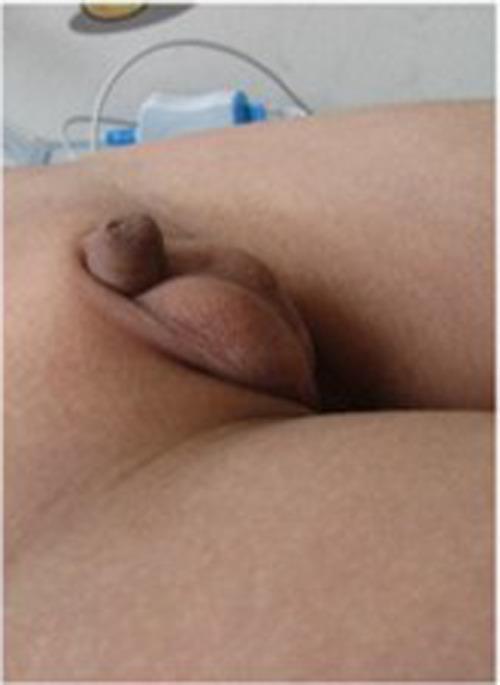
Content Type: Clinical Photograph. Specialty: Pediatric Endocrinology / Urology. Anatomy: Male genitalia. This clinical photograph demonstrates a case of micropenis and hypoplastic genitalia in a pediatric patient. The penis is significantly reduced in size, with the glans visible but small (2 cm x 1 cm reported). The scrotum is likewise underdeveloped (hypoplastic) and appears small, containing low-volume testicles (1 ml reported). The surrounding skin tissue shows normal texture and pigmentation without evidence of lesions or secondary sexual characteristics. In the background, medical monitoring equipment/tubing is visible, suggesting a clinical or hospital setting. This image serves as an educational visual for identifying genital hypoplasia and micropenis, which are often clinical features of complex genetic syndromes, such as Ulnar-Mammary Syndrome (linked to TBX3 mutations), as suggested by the context of systemic limb and endocrine abnormalities.
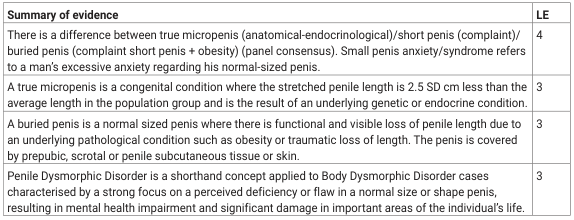
<table> <tr> <th>Summary of evidence</th> <th>LE</th> </tr> <tr> <td>There is a difference between true micropenis (anatomical-endocrinological)/short penis (complaint)/buried penis (complaint short penis + obesity) (panel consensus). Small penis anxiety/syndrome refers to a man’s excessive anxiety regarding his normal-sized penis.</td> <td>4</td> </tr> <tr> <td>A true micropenis is a congenital condition where the stretched penile length is 2.5 SD cm less than the average length in the population group and is the result of an underlying genetic or endocrine condition.</td> <td>3</td> </tr> <tr> <td>A buried penis is a normal sized penis where there is functional and visible loss of penile length due to an underlying pathological condition such as obesity or traumatic loss of length. The penis is covered by prepubic, scrotal or penile subcutaneous tissue or skin.</td> <td>3</td> </tr> <tr> <td>Penile Dysmorphic Disorder is a shorthand concept applied to Body Dysmorphic Disorder cases characterised by a strong focus on a perceived deficiency or flaw in a normal size or shape penis, resulting in mental health impairment and significant damage in important areas of the individual’s life.</td> <td>3</td> </tr> </table>
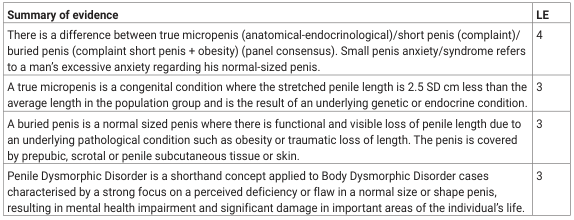
<table> <tr> <th>Summary of evidence</th> <th>LE</th> </tr> <tr> <td>There is a difference between true micropenis (anatomical-endocrinological)/short penis (complaint)/buried penis (complaint short penis + obesity) (panel consensus). Small penis anxiety/syndrome refers to a man’s excessive anxiety regarding his normal-sized penis.</td> <td>4</td> </tr> <tr> <td>A true micropenis is a congenital condition where the stretched penile length is 2.5 SD cm less than the average length in the population group and is the result of an underlying genetic or endocrine condition.</td> <td>3</td> </tr> <tr> <td>A buried penis is a normal sized penis where there is functional and visible loss of penile length due to an underlying pathological condition such as obesity or traumatic loss of length. The penis is covered by prepubic, scrotal or penile subcutaneous tissue or skin.</td> <td>3</td> </tr> <tr> <td>Penile Dysmorphic Disorder is a shorthand concept applied to Body Dysmorphic Disorder cases characterised by a strong focus on a perceived deficiency or flaw in a normal size or shape penis, resulting in mental health impairment and significant damage in important areas of the individual’s life.</td> <td>3</td> </tr> </table>
| Feature | Normal | Hypogonadism |
|---|---|---|
| Stretched penile length (adult) | >9.3 cm (>2.5 SD from mean) | <9.3 cm (micropenis: <7 cm) |
| Testicular volume (adult) | 15-25 mL | Often <4 mL (atrophy) |
| Pubic hair | Tanner V | Reduced/absent |
| Scrotal development | Normal rugae, pigmentation | Underdeveloped, small |
| Secondary sexual characteristics | Present | Absent or sparse |
adult hypogonadism penis pic