
Common cause of normochromic normocytic anemia in indian setup
Reading File
Now let me search the medical library for normochromic normocytic anemia causes.
Finding Sources
Finding Sources
Good. Now let me read the dedicated Goldman-Cecil section on normocytic normochromic anemia and the Henry's Clinical Diagnosis section:
Reading File
Reading File
Finding Sources
Now let me search for anemia of chronic disease and India-specific context, plus aplastic anemia patterns:
Finding Sources
Finding Sources
Reading File
Searching the Web
normochromic normocytic anemia common causes Indian setup tropical
I now have excellent information from both textbook sources and an Indian study. Let me also fetch the Indian study PDF data and the anemia classification flowchart:
Reading Web Page
http://impactfactor.org/PDF/IJCPR/17/IJCPR,Vol17,Issue6,Arti…
Loading Image
I now have comprehensive information from textbooks and an Indian clinical study. Here is the full answer:
Normochromic Normocytic Anemia - Common Causes in the Indian Setup
In normochromic normocytic anemia (NNA), the MCV and MCHC are both within normal limits. The red cells look normal on peripheral smear. The key first step is to classify it by reticulocyte count - this separates the two major mechanistic groups.
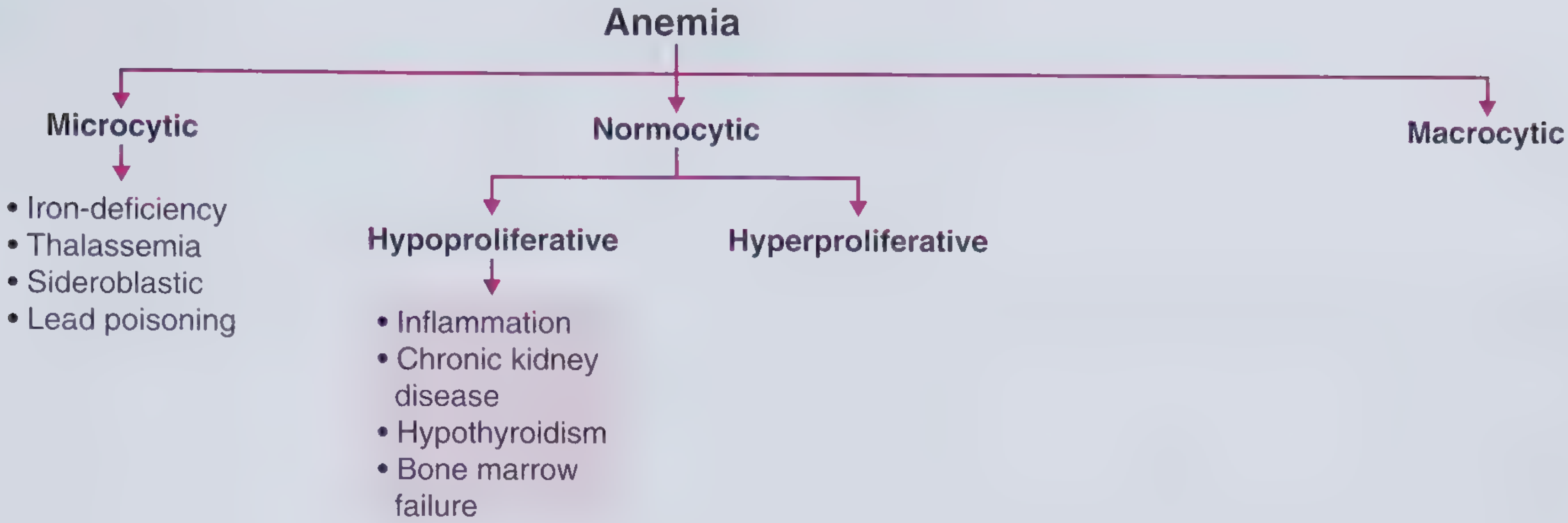
Framework: Reticulocyte Count Guides the Differential
| Reticulocyte Count | Mechanism | Category |
|---|---|---|
| Low / Normal (<2%) | Bone marrow not producing enough | Hypoproliferative |
| High (>2%) | Peripheral destruction / loss | Hyperproliferative |
Most Common Causes in the Indian Setting
A. HYPOPROLIFERATIVE (Low Reticulocyte Count) - More Common Overall
1. Anemia of Chronic Disease / Anemia of Inflammation (ACI) - #1 Cause
- The single most common cause of NNA worldwide and in India
- In a 2025 Indian tertiary care study from Kerala (195 inpatients), NNA constituted 31.3% of all anemias, with chronic kidney disease being the leading etiology, followed by malignancy, infection, and rheumatologic disorders
- Mechanism: Pro-inflammatory cytokines (IL-6, TNF-α) drive hepcidin elevation → iron sequestration in macrophages + reduced EPO response + shortened RBC survival
- In India, the most relevant underlying causes are:
- Tuberculosis (India has the world's highest TB burden) - infection prevalence 18-95% in ACI series
- HIV infection
- Chronic malaria (especially in tribal/endemic zones)
- Rheumatoid arthritis and other autoimmune disorders (8-71%)
- Malignancies - GI cancers, lymphomas (30-77%)
- Visceral leishmaniasis (kala-azar) - endemic in Bihar, Jharkhand, UP
- Key labs: Low serum iron, low TIBC, normal or HIGH ferritin (distinguishes from iron deficiency)
2. Chronic Kidney Disease (CKD)
- Increasingly prevalent in India due to rising diabetes and hypertension
- Mechanism: Reduced EPO production by peritubular cells in proportion to the degree of renal impairment
- The Kerala study identified CKD as the #1 specific cause of NNA in their cohort
- Typically normochromic normocytic; echinocytes ("burr cells") may appear on smear
- Reticulocyte count is decreased; EPO levels inappropriately low
3. Hypothyroidism
- Mild normocytic normochromic anemia from reduced EPO stimulation and reduced bone marrow activity
- Autoimmune thyroiditis is common in India
- Symptoms: weight gain, constipation, dry skin, cold intolerance
4. Other Endocrine Causes
- Hypopituitarism, Addison's disease, hypogonadism (testosterone deficiency in men)
- All lead to reduced erythropoietic drive
5. Bone Marrow Failure / Aplastic Anemia
- India has a significantly higher incidence of aplastic anemia than the West - linked to hepatitis viruses, pesticide/chemical exposure, and idiopathic causes
- Presents with pancytopenia; NNA is a feature
- Also: myelodysplastic syndrome (MDS), marrow infiltration by lymphoma/metastases
B. HYPERPROLIFERATIVE (High Reticulocyte Count)
6. Acute Blood Loss
- The most acute presentation - iron stores haven't depleted yet so MCV stays normal initially
- GI bleeding (peptic ulcer, hookworm infestation - very common in India), surgical or trauma bleeding
7. Hemolytic Anemias
- Very relevant in India:
- G6PD deficiency - commonest enzymopathy; precipitated by infections, drugs (primaquine, dapsone), fava beans
- Sickle cell disease - prevalent in tribal belts (Madhya Pradesh, Odisha, Maharashtra, Chhattisgarh)
- Hereditary spherocytosis
- Autoimmune hemolytic anemia (AIHA)
- Malaria - P. vivax and P. falciparum both cause hemolysis; common in India
- Microangiopathic hemolytic anemia (TTP, HUS, DIC)
- Key finding: polychromasia on smear, raised LDH, raised indirect bilirubin, reduced haptoglobin
India-Specific Highlights
| Cause | Why More Prominent in India |
|---|---|
| TB-related ACI | Highest TB burden globally |
| Malaria-related hemolysis/ACI | Endemic in Northeastern states, tribal belts |
| CKD-related NNA | Diabetes + hypertension epidemic |
| G6PD deficiency hemolysis | Common in many Indian communities |
| Sickle cell disease | Prevalent in tribal populations |
| Aplastic anemia | Higher incidence vs. Western nations; pesticide/hepatitis link |
| Kala-azar (visceral leishmaniasis) | Endemic Bihar/Jharkhand/UP corridor |
| Hookworm + acute blood loss | Rural sanitation issues |
Quick Diagnostic Approach
NNA confirmed (normal MCV + normal MCHC)
            |
      Reticulocyte count
     /                   \
  LOW/NORMAL             HIGH
  (Hypoproliferative)    (Hyperproliferative)
       |                        |
  Check: Creatinine        Check: Peripheral smear
         TFTs                    Coombs test
         Ferritin/Iron           LDH / Haptoglobin
         LFTs                    Malaria smear
         Bone marrow bx          G6PD screen
Sources:
- Goldman-Cecil Medicine, p. 1661 - Normocytic Normochromic Anemia section
- Henry's Clinical Diagnosis and Management by Laboratory Methods - Normocytic Anemia chapter
- Frameworks for Internal Medicine, p. 333 - Anemia of Inflammation classification
- Symptom to Diagnosis: An Evidence-Based Guide - Normocytic anemia differential
- Kerala tertiary care study (2025) - 31.3% NNA prevalence; CKD as leading cause
- StatPearls - Normochromic Normocytic Anemia
This is a shared conversation. Sign in to Orris to start your own chat.