
Shoulder joint
Reading File
Finding Sources
Finding Sources
Reading File
Reading File
Reading File
Reading File
Reading File
Searching Images
shoulder joint glenohumeral anatomy diagram
Reading File
Reading File
Loading Image
Loading Image
Loading Image
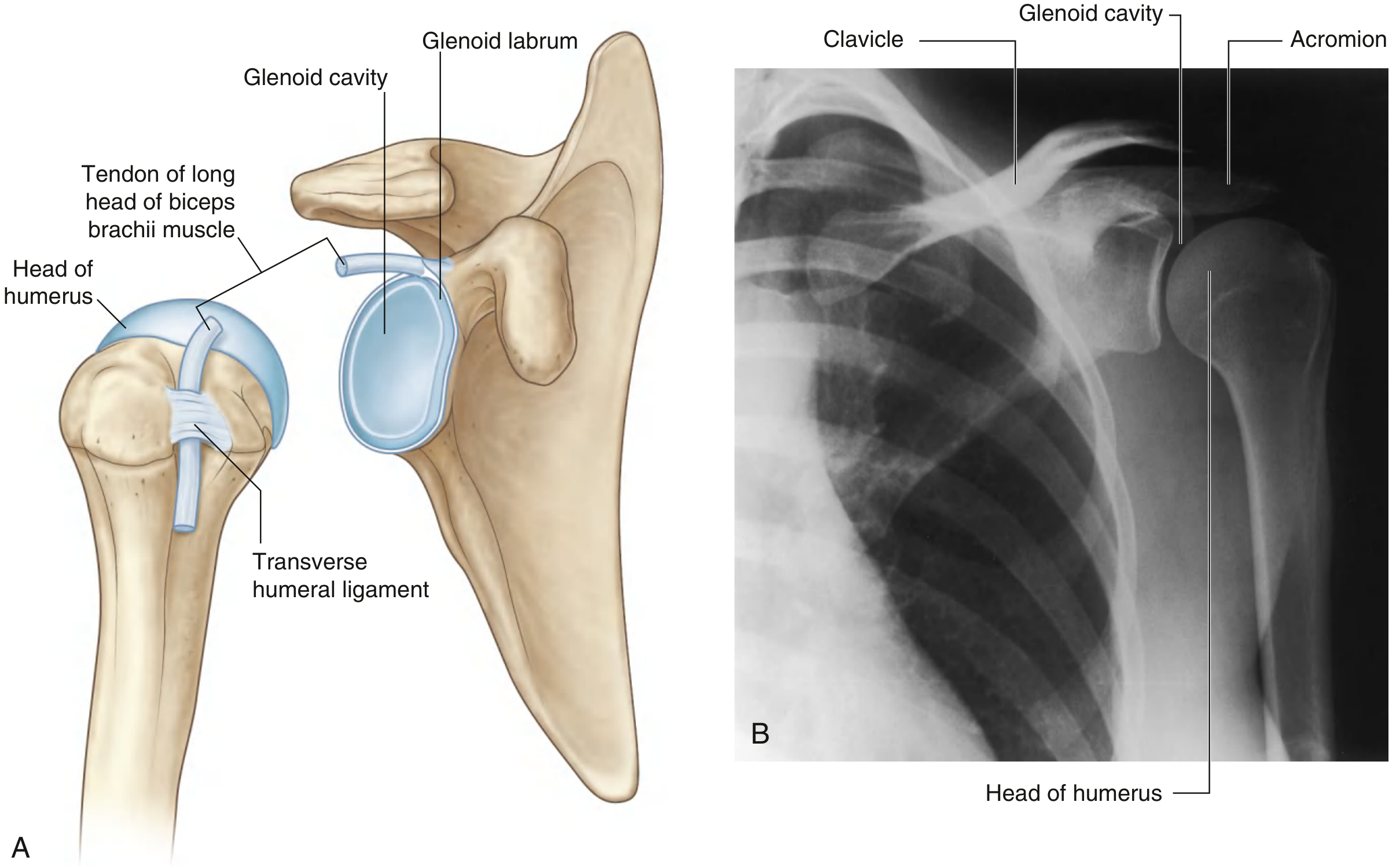
The shoulder joint usually refers to the glenohumeral joint.
It is a synovial ball-and-socket joint between:
- head of humerus
- glenoid cavity of scapula
Key features
- Very mobile, relatively less stable
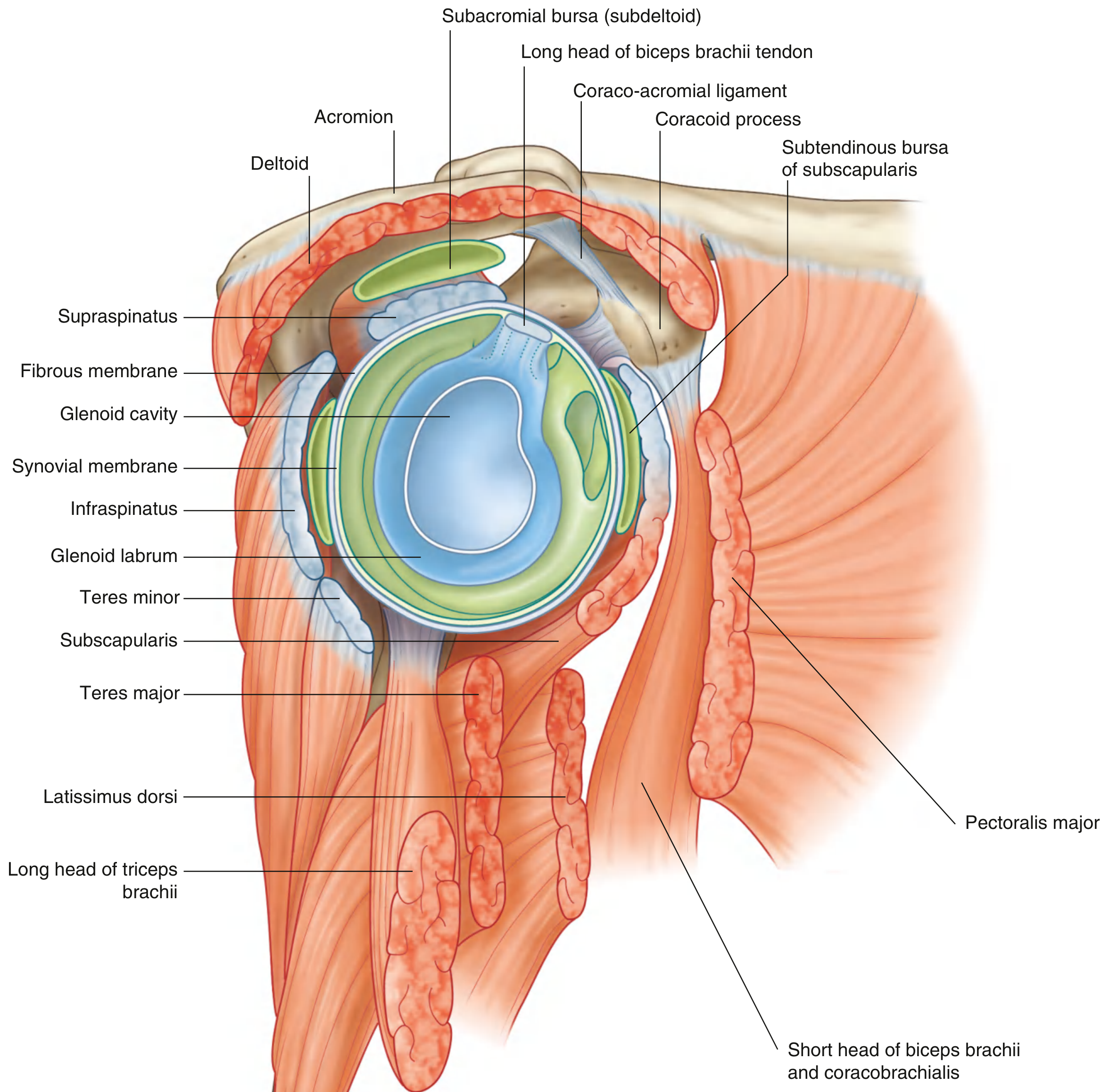
- Glenoid labrum deepens the shallow glenoid cavity
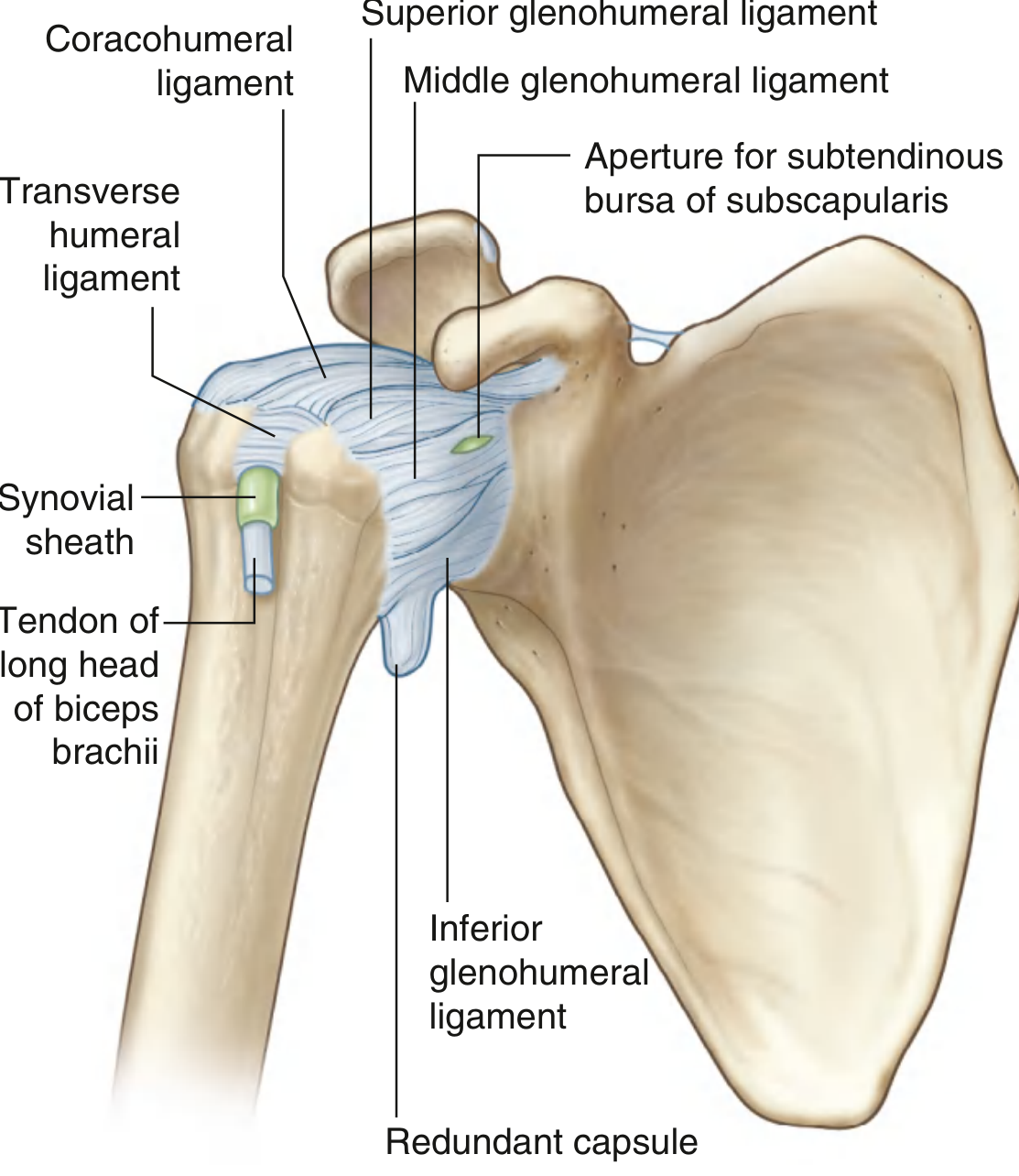
- Capsule is lax, especially inferiorly, to allow wide movement
- Reinforced by:
- superior, middle, and inferior glenohumeral ligaments
- coracohumeral ligament
- transverse humeral ligament
- rotator cuff tendons (supraspinatus, infraspinatus, teres minor, subscapularis)
Movements
- Flexion, extension
- Abduction, adduction
- Medial and lateral rotation
- Circumduction
Clinical note: full abduction needs scapular movement too (scapulohumeral rhythm, about 2:1 glenohumeral:scapular contribution after early abduction).
Stability
Main stabilizers:
- Dynamic: rotator cuff + long head of biceps tendon
- Static: labrum, capsule, ligaments, coracoacromial arch
Because mobility is high and bony congruence is limited, dislocation risk is higher than many other joints (anterior dislocation is most common).
Neurovascular supply
- Arterial: mainly anterior/posterior circumflex humeral and suprascapular branches
- Innervation: suprascapular, axillary, and lateral pectoral contributions
Source: Gray’s Anatomy for Students, p. 826-828; THIEME Atlas of Anatomy (General Anatomy and Musculoskeletal System), p. 295-296.
This is a shared conversation. Sign in to Orris to start your own chat.