Neurotransmitter

Checking Date & Time
Reading File
Asking for Preferences
Finding Sources
Finding Sources
Finding Sources
Finding Sources
Reading File
Reading File
Reading File
Finding Sources
Finding Sources
Reading File
Reading File
Finding Sources
Reading File
Finding Sources
Reading File
Loading Image
Loading Image
I now have comprehensive content. Here is a thorough synthesis on GABA and Glutamate — their roles in disease and pharmacology.

GABA & Glutamate: Role in Disease and Pharmacology

These two amino acid neurotransmitters are the primary brakes and accelerators of the CNS. Glutamate is the major excitatory neurotransmitter; GABA is the major inhibitory neurotransmitter. Their balance governs virtually all brain activity.

GLUTAMATE

Synthesis & Recycling

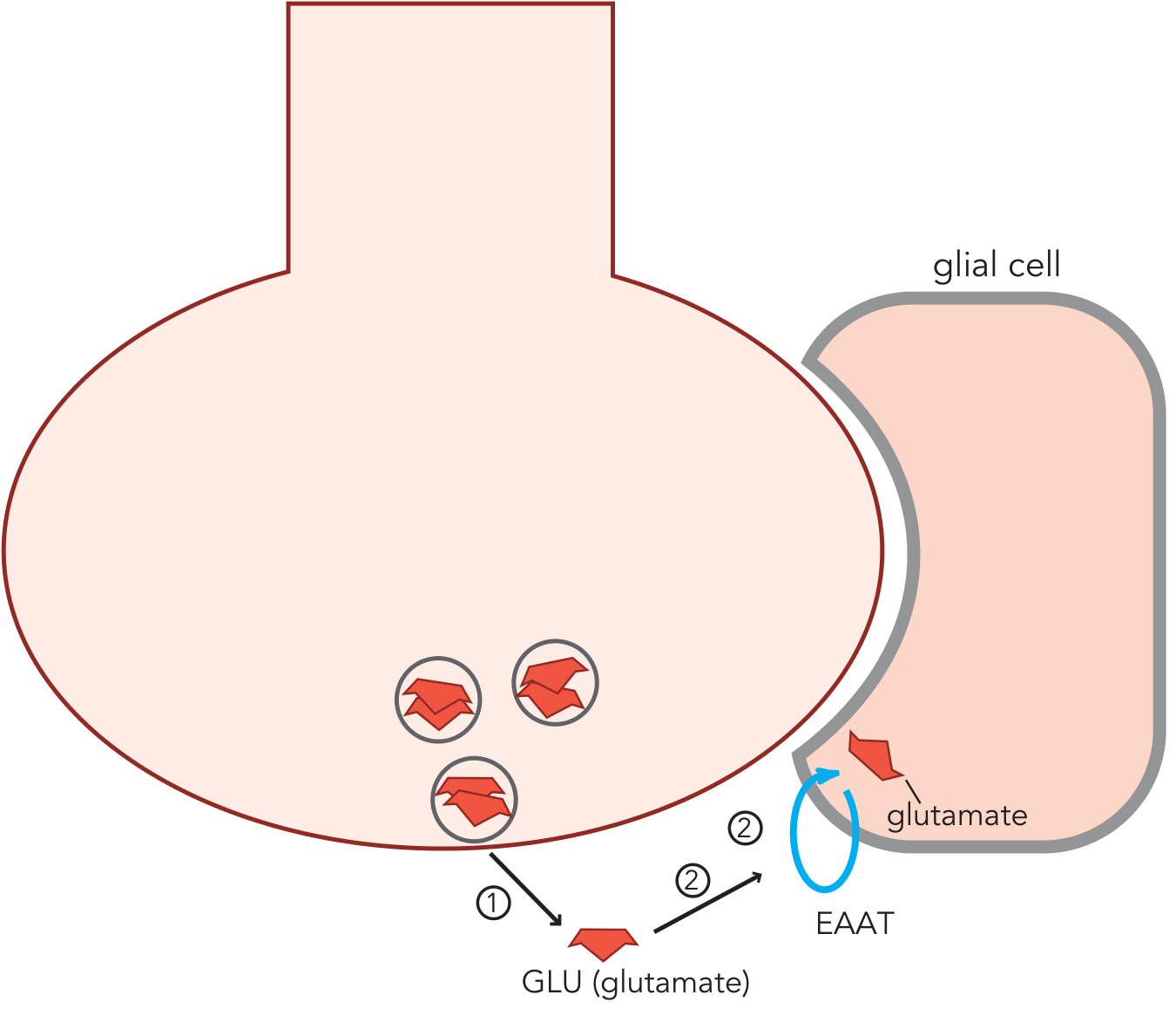
Glutamate is synthesized from glutamine (supplied by glial cells) via the enzyme glutaminase in neuronal mitochondria. After release, it is cleared from the synapse predominantly by excitatory amino acid transporters (EAATs) on glial cells, where it is converted back to glutamine by glutamine synthetase — completing the glutamate–glutamine cycle.
Glutamate release and EAAT-mediated glial uptake
Glutamate released from the presynaptic terminal (1) is taken up into glial cells via EAAT (2) — Stahl's Essential Psychopharmacology

Receptors

Glutamate acts on two major receptor families:
Receptor typeSubtypesIon / MechanismNotes
IonotropicAMPANa⁺, K⁺Fast excitatory transmission
KainateNa⁺, K⁺
NMDANa⁺, K⁺, Ca²⁺Requires both glutamate AND glycine co-agonist; blocked by Mg²⁺ at rest; critical for LTP and memory
MetabotropicmGluR1–8G-protein-coupledModulatory roles; mGluR2/3 implicated in schizophrenia
Ganong's Review of Medical Physiology, Table 7-2

Glutamate in Disease

1. Schizophrenia — NMDA Receptor Hypofunction

The glutamate hypothesis of schizophrenia is grounded in the observation that NMDA receptor antagonists (ketamine, phencyclidine/PCP) produce a syndrome indistinguishable from schizophrenia — including positive, negative, and cognitive symptoms.
"Glutamate is the major excitatory amino acid neurotransmitter in the brain and is sometimes considered the 'master switch' of the brain... glutamate has attained a key theoretical role in the hypothesized pathophysiology of schizophrenia." — Stahl's Essential Psychopharmacology
The mechanism: NMDA receptor hypofunction on GABAergic parvalbumin interneurons in the prefrontal cortex → disinhibition → downstream dopamine dysregulation (hyperdopaminergia in mesolimbic pathways → positive symptoms; hypodopaminergia in mesocortical pathways → negative/cognitive symptoms).
In schizophrenia, postmortem studies consistently show:
  • Decreased hippocampal AMPA receptor subunit expression
  • Downregulated NMDA GluN1 subunit in temporal cortex, hippocampus, and thalamus
  • Decreased mGluR2 and mGluR3 expression

2. Excitotoxicity

Excess glutamate overwhelms EAAT clearance → sustained NMDA receptor activation → Ca²⁺ overload → mitochondrial dysfunction and neuronal death. This is implicated in stroke, traumatic brain injury, ALS, and Alzheimer's disease.

3. Depression

Glutamate dysfunction in the PFC and hippocampus contributes to depression. This is the basis for ketamine's rapid antidepressant effect (NMDA receptor blockade).

Glutamate Pharmacology

DrugMechanismClinical Use
MemantineLow-affinity NMDA antagonistAlzheimer's disease (moderate–severe)
KetamineNMDA antagonistAnesthesia; treatment-resistant depression (esketamine)
RiluzoleInhibits glutamate release (blocks Na⁺ channels)ALS — only disease-modifying drug
PerampanelAMPA receptor antagonistEpilepsy (focal seizures)
LamotrigineInhibits voltage-gated Na⁺ channels → reduces glutamate releaseEpilepsy, bipolar disorder

GABA (γ-Aminobutyric Acid)

Synthesis & Termination

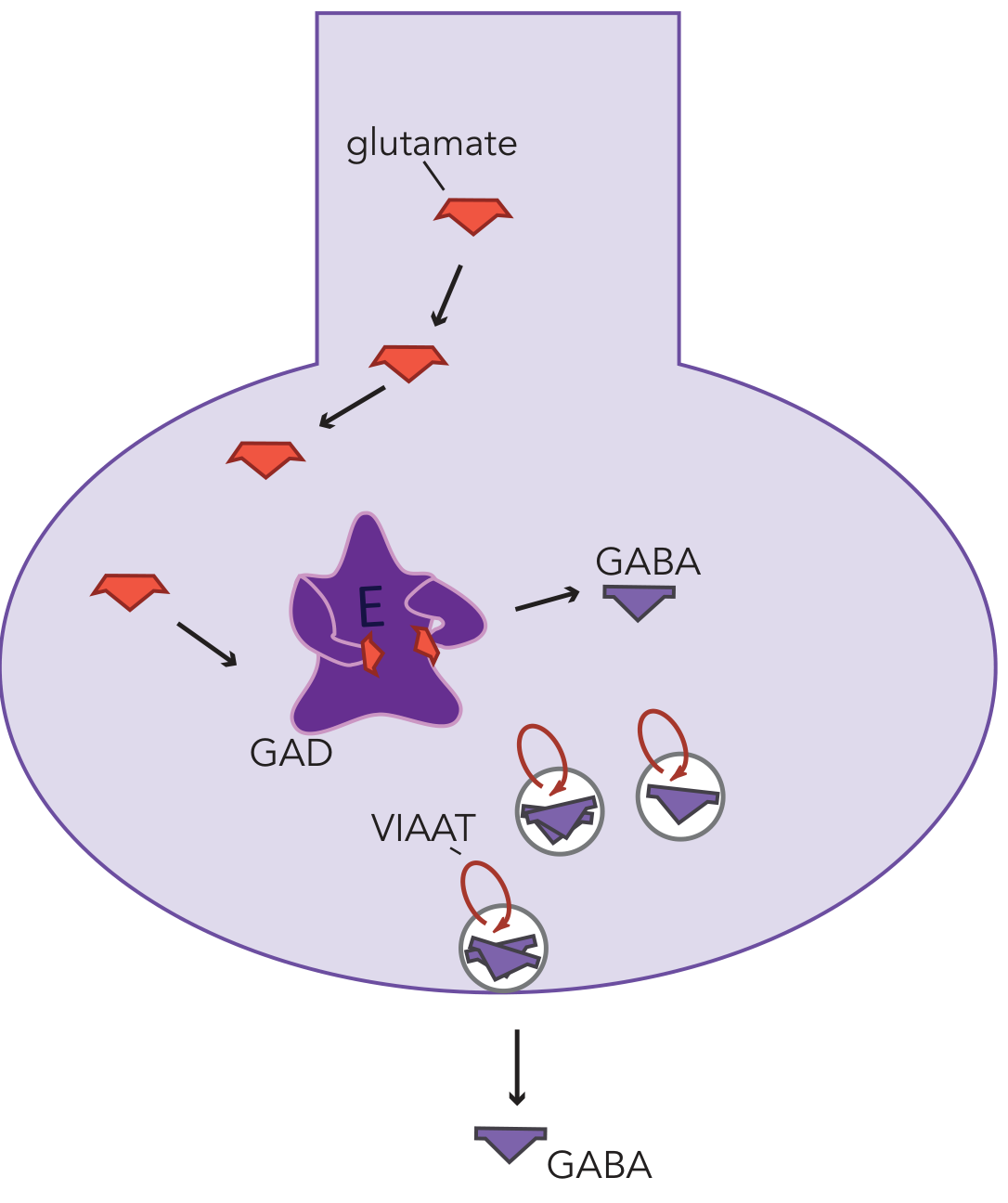
GABA is synthesized from glutamate by the enzyme glutamic acid decarboxylase (GAD) — requiring pyridoxal phosphate (vitamin B6) as cofactor. After synthesis, GABA is packaged into vesicles by vesicular inhibitory amino acid transporters (VIAATs) and released.
GABA action is terminated by:
  1. Reuptake via the GABA transporter (GAT) back into the presynaptic neuron
  2. Enzymatic degradation by GABA-transaminase (GABA-T)
GABA synthesis: glutamate → GABA via GAD, then packaging into vesicles via VIAAT
GABA production: glutamate is converted to GABA by GAD, then stored in vesicles via VIAAT — Stahl's Essential Psychopharmacology

Receptors

ReceptorTypeMechanismKey features
GABA-ALigand-gated Cl⁻ channel↑Cl⁻ influx → hyperpolarizationSite of benzodiazepines, barbiturates, alcohol, propofol, neurosteroids; subunit composition determines sensitivity
GABA-BG-protein-coupledOpens K⁺ channels, closes Ca²⁺ channelsPresynaptic autoreceptor; target of baclofen
GABA-C (ρ)Ligand-gated Cl⁻ channelSimilar to GABA-APredominantly in retina
GABA-A subunit diversity is pharmacologically important: receptors containing γ subunits are synaptic, mediate phasic inhibition, and are benzodiazepine-sensitive; those with δ subunits are extrasynaptic, mediate tonic inhibition, and are benzodiazepine-insensitive. — Stahl's Essential Psychopharmacology

GABA in Disease

1. Epilepsy

Reduced GABAergic inhibition → uncontrolled neuronal firing. This is the central mechanism of most seizure disorders. GAD mutations, GABA-A subunit mutations (GABRG2, GABRA1), and GABA transporter defects all cause epilepsy syndromes.

2. Anxiety Disorders

Reduced tonic GABA-A activity in amygdala, hippocampus, and cortex. "GABA is the most widespread inhibitory neurotransmitter in the brain. GABA-A receptors... mediate fast inhibitory postsynaptic potentials." — Neuroscience: Exploring the Brain

3. Schizophrenia

A consistent finding in postmortem PFC is reduced GAD67 mRNA in parvalbumin-positive interneurons — without loss of neurons themselves. This reduces GABA synthesis in PV+ interneurons, impairing inhibitory gating and contributing to cognitive dysfunction. GABA circuitry is regulated by schizophrenia-risk genes BDNF, DISC1, and NRG1. — Kaplan & Sadock's Comprehensive Textbook of Psychiatry

4. Alcohol Use Disorder

Alcohol potentiates GABA-A receptors and inhibits NMDA receptors. Chronic use leads to compensatory downregulation of GABA-A; abrupt withdrawal reverses this → neuronal hyperexcitability → seizures, delirium tremens.

5. Hepatic Encephalopathy

Ammonia → increased brain glutamine → astrocyte swelling + enhanced GABAergic tone → altered consciousness.

GABA Pharmacology

DrugMechanismClinical Use
Benzodiazepines (diazepam, lorazepam)Positive allosteric modulator at GABA-A (↑frequency of Cl⁻ channel opening)Anxiety, acute seizures, alcohol withdrawal
Barbiturates (phenobarbital, thiopental)Positive allosteric modulator at GABA-A (↑duration of Cl⁻ channel opening); at high doses, directly open channelEpilepsy, anesthesia
PropofolAllosterically ↑ GABA binding to GABA-AIV anesthesia
VigabatrinIrreversible GABA-T inhibitor → ↑GABA levelsInfantile spasms, tuberous sclerosis
TiagabineGAT (GABA reuptake) inhibitorFocal epilepsy
ValproateMultiple: ↑GAD activity, inhibits GABA-T, blocks Na⁺/Ca²⁺ channelsEpilepsy, bipolar disorder, migraine prophylaxis
BaclofenGABA-B agonistMuscle spasticity
Gabapentin/PregabalinBinds α2δ subunit of voltage-gated Ca²⁺ channels → reduces glutamate/substance P release (indirect GABA mimetic)Neuropathic pain, epilepsy, anxiety

The GABA–Glutamate Interplay

These two systems are deeply intertwined:
  • GABA is synthesized from glutamate — the excitatory precursor directly generates the inhibitory neurotransmitter
  • NMDA hypofunction on GABAergic interneurons (as in schizophrenia) causes disinhibition — paradoxically increasing downstream glutamate activity
  • The E/I (excitation/inhibition) ratio is a central concept in epilepsy, schizophrenia, autism spectrum disorder, and anxiety

Sources: Stahl's Essential Psychopharmacology | Ganong's Review of Medical Physiology | Kaplan & Sadock's Comprehensive Textbook of Psychiatry | Neuroscience: Exploring the Brain | Goodman & Gilman's Pharmacological Basis of Therapeutics

Recommended Books (Latest Editions) 1. Rang H. P., Dale M. M., Ritter J. M., Flower R. J., Rang and Dale’s Pharmacology,.Churchil Livingstone Elsevier 2. Katzung B. G., Masters S. B., Trevor A. J., Basic and clinical pharmacology, Tata Mc Graw-Hill 3. Goodman and Gilman’s, The Pharmacological Basis of Therapeutics 4. Marry Anne K. K., Lloyd Yee Y., Brian K. A., Robbin L.C., Joseph G. B., Wayne A. K., Bradley R.W., Applied Therapeutics, The Clinical use of Drugs, The Point Lippincott Williams & Wilkins 5. Mycek M.J, Gelnet S.B and Perper M.M. Lippincott’s Illustrated Reviews- Pharmacology
Checking Date & Time
Searching the Web

Rang and Dale's Pharmacology latest edition 2024 2025

Searching the Web

Katzung Basic and Clinical Pharmacology latest edition 2024 2025

Searching the Web

Goodman Gilman's Pharmacological Basis Therapeutics latest edition 2024 2025

Searching the Web

Lippincott's Illustrated Reviews Pharmacology latest edition 2024 2025

Searching the Web

Applied Therapeutics Clinical Use of Drugs Koda-Kimble latest edition

Here is the updated edition information for all five recommended pharmacology textbooks:

Recommended Pharmacology Textbooks — Latest Editions (2026)


1. Rang & Dale's Pharmacology

Ritter J.M., Flower R.J., Henderson G., Loke Y.K., MacEwan D., Rang H.P.
  • Latest Edition: 10th Edition (2024)
  • Publisher: Elsevier / Churchill Livingstone
  • ISBN: 978-0-323-87395-6
  • Key Updates: Gene therapies, personalised medicines, RNA drugs (siRNA, mRNA), updated clinical sections
  • Best for: Mechanistic understanding, integrated pharmacology for medical students

2. Katzung's Basic and Clinical Pharmacology

Vanderah T.W., Katzung B.G. (eds.)
Note: The current edition has shifted primary editorship to Todd W. Vanderah; Masters S.B. and Trevor A.J. are no longer listed as primary editors.
  • Latest Edition: 16th Edition (2024)
  • Publisher: McGraw-Hill (Lange Medical Books)
  • ISBN: 978-1-260-46330-9
  • Key Updates: New USMLE-style questions, updated drug classes, expanded clinical correlations
  • Best for: USMLE preparation, clinical pharmacology integration

3. Goodman & Gilman's The Pharmacological Basis of Therapeutics

Brunton L.L., Knollmann B.C. (eds.)
  • Latest Edition: 14th Edition (2023)
  • Publisher: McGraw-Hill
  • ISBN: 978-1-264-25807-9
  • Key Updates: 5 new chapters (pharmacovigilance, blood–brain barrier, cannabis, biological therapies, GI pharmacology); 600+ illustrations; 53 new contributors
  • Best for: In-depth reference, mechanisms, therapeutics, research

4. Applied Therapeutics: The Clinical Use of Drugs (Koda-Kimble & Young's)

Alldredge B.K., et al.
Note: The edition in your list (Marry Anne Koda-Kimble as lead) corresponds to the 9th–10th editions. The series continues under updated editorship.
  • Latest Edition: 11th Edition (2023)
  • Publisher: Wolters Kluwer / LWW (The Point)
  • ISBN: 978-1-975-16709-0
  • Key Updates: New chapters, updated clinical scenarios (800+), case-based format; cultivates critical thinking
  • Best for: Clinical pharmacy, therapeutics, case-based learning

5. Lippincott Illustrated Reviews: Pharmacology

Whalen K. (ed.) (formerly Mycek M.J., Gelnet S.B., Perper M.M.)
Note: Authorship has evolved significantly from the original Mycek edition.
  • Latest Edition: 8th Edition (2023)
  • Publisher: Wolters Kluwer / LWW
  • ISBN: 978-1-975-17055-4
  • Key Updates: Full-color illustrations throughout, integrated clinical cases, updated drug content
  • Best for: Board review, visual learners, concise self-study

Quick Comparison

#BookLatest Ed.YearBest Use
1Rang & Dale's Pharmacology10th2024Mechanisms, medical school
2Katzung's Basic & Clinical Pharmacology16th2024USMLE, clinical integration
3Goodman & Gilman's14th2023Reference, research, therapeutics
4Applied Therapeutics (Koda-Kimble)11th2023Clinical pharmacy, case-based
5Lippincott Illustrated Reviews: Pharmacology8th2023Board review, visual study

Recommended Books (Latest Editions) 1. Rang H. P., Dale M. M., Ritter J. M., Flower R. J., Rang and Dale’s Pharmacology,.Churchil Livingstone Elsevier 2. Katzung B. G., Masters S. B., Trevor A. J., Basic and clinical pharmacology, Tata Mc Graw-Hill 3. Goodman and Gilman’s, The Pharmacological Basis of Therapeutics 4. Marry Anne K. K., Lloyd Yee Y., Brian K. A., Robbin L.C., Joseph G. B., Wayne A. K., Bradley R.W., Applied Therapeutics, The Clinical use of Drugs, The Point Lippincott Williams & Wilkins 5. Mycek M.J, Gelnet S.B and Perper M.M. Lippincott’s Illustrated Reviews- Pharmacology

The answer is already in your context from the previous turn — here is the same information presented cleanly:

Recommended Pharmacology Textbooks — Latest Editions


1. Rang & Dale's Pharmacology

Ritter J.M., Flower R.J., Henderson G., Loke Y.K., MacEwan D., Rang H.P.
Latest Edition10th Edition
Year2024
PublisherChurchill Livingstone / Elsevier
ISBN978-0-323-87395-6
What's new: Gene therapies, personalised medicines, RNA drugs (siRNA, mRNA), updated clinical pharmacology sections.

2. Katzung's Basic and Clinical Pharmacology

Vanderah T.W., Katzung B.G. (eds.)
The current edition has shifted primary editorship to Todd W. Vanderah; Masters S.B. and Trevor A.J. are no longer primary editors.
Latest Edition16th Edition
Year2024
PublisherMcGraw-Hill (Lange Medical Books)
ISBN978-1-260-46330-9
What's new: New USMLE-style questions throughout, updated drug classes, expanded clinical correlations. Doody's Core Title 2024.

3. Goodman & Gilman's The Pharmacological Basis of Therapeutics

Brunton L.L., Knollmann B.C. (eds.)
Latest Edition14th Edition
Year2023
PublisherMcGraw-Hill
ISBN978-1-264-25807-9
What's new: 5 new chapters (pharmacovigilance, blood–brain barrier, cannabis, biological therapies, GI pharmacology); 600+ illustrations; 53 new contributors. Doody's Core Title 2023 & 2024.

4. Applied Therapeutics: The Clinical Use of Drugs (Koda-Kimble & Young's)

Alldredge B.K. et al.
The edition you listed (Marry Anne Koda-Kimble as lead author) corresponds to the 9th–10th editions. The series continues under updated editorship.
Latest Edition11th Edition
Year2023
PublisherWolters Kluwer / LWW (The Point)
ISBN978-1-975-16709-0
What's new: New chapters, 800+ updated clinical case scenarios, strengthened critical thinking framework.

5. Lippincott Illustrated Reviews: Pharmacology

Whalen K. (ed.)
Authorship has evolved from the original Mycek, Gelnet & Perper edition.
Latest Edition8th Edition
Year2023
PublisherWolters Kluwer / LWW
ISBN978-1-975-17055-4
What's new: Full-color illustrations throughout, integrated clinical cases, fully updated drug content.

Summary Table

#TextbookLatest EditionYear
1Rang & Dale's Pharmacology10th2024
2Katzung's Basic & Clinical Pharmacology16th2024
3Goodman & Gilman's14th2023
4Applied Therapeutics (Koda-Kimble)11th2023
5Lippincott Illustrated Reviews: Pharmacology8th2023

1. Rang H. P., Dale M. M., Ritter J. M., Flower R. J., Rang and Dale’s Pharmacology,.Churchil Livingstone Elsevier 2. Katzung B. G., Masters S. B., Trevor A. J., Basic and clinical pharmacology, Tata Mc Graw-Hill 3. Goodman and Gilman’s, The Pharmacological Basis of Therapeutics 4. Marry Anne K. K., Lloyd Yee Y., Brian K. A., Robbin L.C., Joseph G. B., Wayne A. K., Bradley R.W., Applied Therapeutics, The Clinical use of Drugs, The Point Lippincott Williams & Wilkins 5. Mycek M.J, Gelnet S.B and Perper M.M. Lippincott’s Illustrated Reviews- Pharmacology

The latest edition information for all five books is already confirmed from our previous search. Here it is, formatted as a clean reference list:

Recommended Pharmacology Books — Latest Editions


1. Rang & Dale's Pharmacology Ritter J.M., Flower R.J., Henderson G., MacEwan D., Rang H.P. 10th Edition, 2024 — Elsevier / Churchill Livingstone ISBN: 978-0-323-87395-6

2. Basic and Clinical Pharmacology Vanderah T.W., Katzung B.G. (eds.) 16th Edition, 2024 — McGraw-Hill (Lange Series) ISBN: 978-1-260-46330-9
Current editorship has shifted; Masters S.B. and Trevor A.J. are no longer primary editors.

3. Goodman & Gilman's The Pharmacological Basis of Therapeutics Brunton L.L., Knollmann B.C. (eds.) 14th Edition, 2023 — McGraw-Hill ISBN: 978-1-264-25807-9

4. Applied Therapeutics: The Clinical Use of Drugs (Koda-Kimble & Young's) Alldredge B.K. et al. 11th Edition, 2023 — Wolters Kluwer / LWW ISBN: 978-1-975-16709-0
The edition you listed (Marry Anne Koda-Kimble as lead) corresponds to the 9th–10th editions.

5. Lippincott Illustrated Reviews: Pharmacology Whalen K. (ed.) 8th Edition, 2023 — Wolters Kluwer / LWW ISBN: 978-1-975-17055-4
Authorship has evolved from the original Mycek, Gelnet & Perper edition.

#BookLatest Ed.Year
1Rang & Dale's Pharmacology10th2024
2Katzung's Basic & Clinical Pharmacology16th2024
3Goodman & Gilman's14th2023
4Applied Therapeutics (Koda-Kimble)11th2023
5Lippincott Illustrated Reviews8th2023
This is a shared conversation. Sign in to Orris to start your own chat.