
Ribbon like loose stool passing from few months, with no other complications, no bleeding, feelings empty after going bathroom, once in a day , person usually overthink or take stress sometimes, past history perianal fissure 3 years ago and did colonoscopy and sigmadoscopy and everything was good.
Reading File
Now let me search the medical library and web simultaneously for this clinical presentation.
Finding Sources
Finding Sources
Searching the Web
ribbon shaped loose stool IBS causes diagnosis management
Finding Sources
Finding Sources
Searching PubMed
irritable bowel syndrome diarrhea narrow stool Rome criteria management
Reading File
Finding Sources
Reading File
Reading File
Reading File
Reading File
I now have comprehensive information to provide a thorough answer. Let me also fetch the IBS diagnostic algorithm image.
Loading Image
Loading Image
I now have everything needed for a thorough, well-referenced answer. Here it is:
Clinical Assessment: Ribbon-Like Loose Stool with Feeling of Incomplete Emptying
Most Likely Diagnosis: IBS-D (Irritable Bowel Syndrome with Predominant Diarrhea)
This clinical picture fits IBS-D very well:
| Feature in this person | IBS-D correlation |
|---|---|
| Ribbon/flat loose stool for months | Altered stool form - characteristic of IBS (Bristol Type 5-6 range, or narrow/flat due to colonic spasm) |
| Feeling of incomplete emptying after defecation | Listed explicitly as a supportive IBS symptom ("feeling of incomplete bowel movement") |
| Once daily bowel movement | Normal frequency, not alarming |
| Overthinking/stress | Stress is a major trigger for IBS flares via the gut-brain axis |
| Past perianal fissure | Suggests prior anorectal tension/spasm, compatible with functional gut tendencies |
| No bleeding, no weight loss, no nocturnal symptoms | Absence of all "red flag" alarm features |
| Normal colonoscopy and sigmoidoscopy 3 years ago | Rules out structural/organic disease (colorectal cancer, IBD, polyps) |
Why Does Stress Cause This?
IBS is a gut-brain interaction disorder. Stress and anxiety dysregulate the autonomic nervous system and activate the HPA axis, which directly alters:
- Intestinal motility (causing spasms that narrow the stool into a ribbon shape)
- Visceral sensation (causing the uncomfortable feeling of incomplete emptying even after passing stool)
- Mucosal immune function and the gut microbiota
This is not "in your head" - the gut has its own enteric nervous system and genuinely responds to psychological stress with physical changes in bowel habit. - Goldman-Cecil Medicine, p. 1416
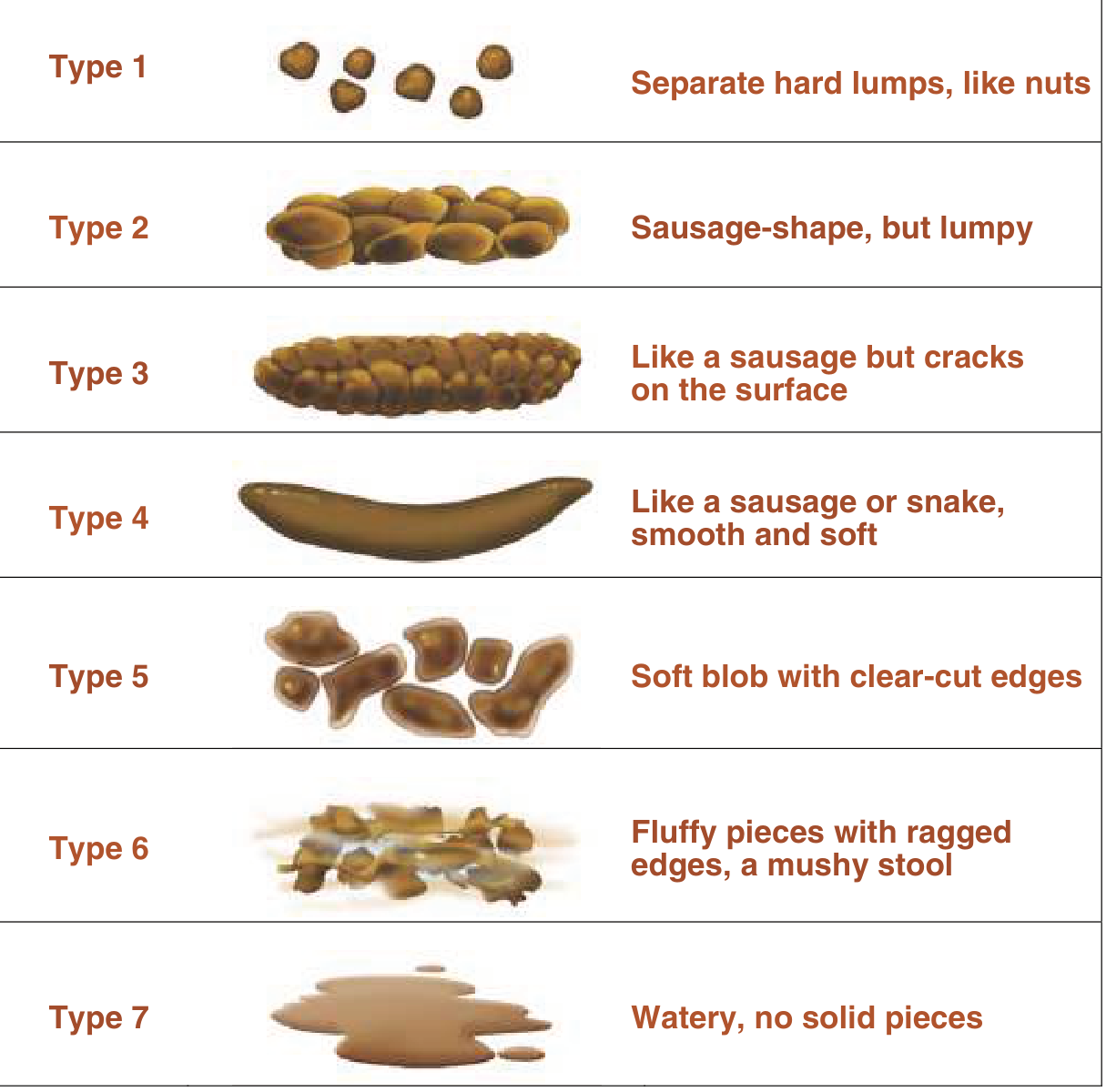
The Bristol Stool Form Scale
Ribbon/flat stool in IBS typically looks like Bristol Type 5 or 6 (mushy, soft blobs, or flat fluffy pieces), sometimes compressed into a flat ribbon shape by colonic spasm:
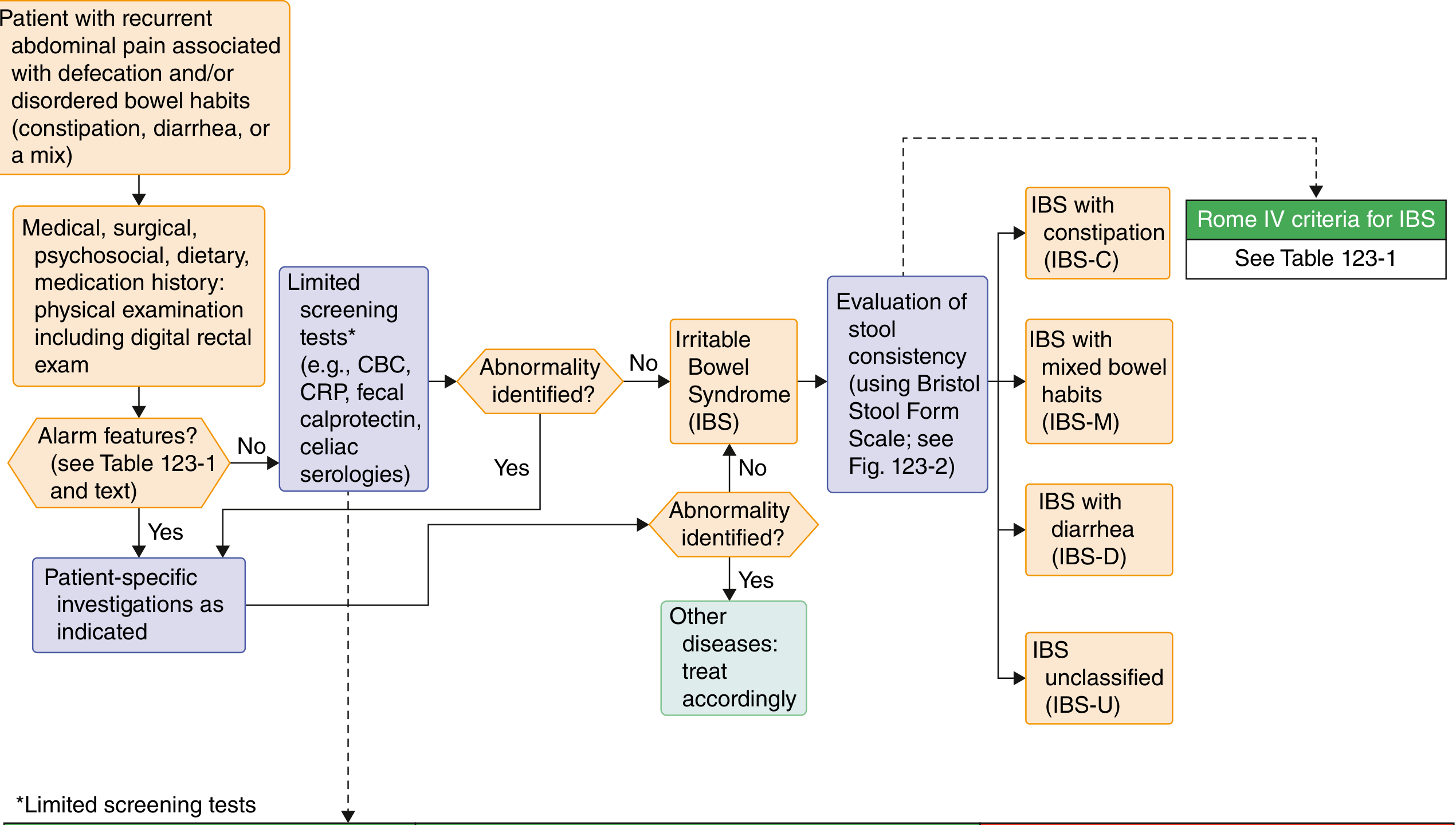
IBS Diagnostic Algorithm (Rome IV)
The standard approach starts with history + limited tests + absence of alarm features - no need for repeat colonoscopy if under 45-50 with no alarm features:
Rome IV Diagnostic Criteria for IBS
Core criterion: Recurrent abdominal pain at least 1 day/week on average in the last 3 months, for at least 6 months, associated with two or more of:
- Related to defecation
- Change in frequency of stool
- Change in form/appearance of stool
Supportive symptoms (which this person has):
- Abnormal stool form (loose/watery or lumpy)
- Feeling of incomplete bowel movement ✓
- Bloating or abdominal distension
Important: Note that the Rome IV criteria also require abdominal pain as part of the formal diagnosis. If this person has minimal or no abdominal pain, the diagnosis may be Functional Diarrhea (a related functional bowel disorder) rather than IBS - Goldman-Cecil Medicine, p. 1417
What Should Be Done Next
Tests that are recommended:
- Complete blood count (CBC) - rule out anemia
- C-reactive protein (CRP) - rule out inflammation
- Fecal calprotectin/lactoferrin - sensitive marker to exclude IBD
- Celiac serologies (IgA anti-tissue transglutaminase + total IgA level) - celiac disease can mimic IBS-D
- Stool Giardia test (antigen or PCR) if in an endemic area
Tests NOT needed (since previous colonoscopy/sigmoidoscopy was normal and no alarm features):
- Repeat colonoscopy (not recommended under age 45-50 without alarm signs)
Treatment Plan
1. Diet (First-Line)
- Try a low-FODMAP diet (low in fermentable carbohydrates: lactose, fructose, fructans, galactans, polyols) - this significantly reduces diarrhea and loose stools in IBS-D
- Keep a 1-2 week food-symptom diary to identify personal trigger foods
- Avoid caffeine, alcohol, and fatty/spicy foods which are common triggers
- Goldman-Cecil Medicine, p. 1418
2. Stress Management (Addresses Root Cause)
- Cognitive Behavioral Therapy (CBT) - strong evidence for IBS symptom reduction
- Gut-directed hypnotherapy
- Mindfulness-based stress reduction (MBSR)
- Regular aerobic exercise (reduces gut transit irregularity and anxiety)
- Since this person tends to overthink and get stressed, this aspect is especially important
3. Medications for IBS-D
| Drug | Dose | Notes |
|---|---|---|
| Peppermint oil | 1-2 capsules three times daily | Antispasmodic, relieves spasm causing ribbon stool |
| Hyoscyamine/Dicyclomine | 0.125 mg / 10 mg as needed | Antispasmodic for acute spasm |
| Loperamide | 2-4 mg as needed | Slows gut transit in diarrhea |
| Low-dose TCA (Amitriptyline) | 10-25 mg at bedtime | Reduces visceral pain AND slows gut transit; also helps anxiety/overthinking; very useful in this person |
| Rifaximin | 550 mg three times daily x 14 days | Non-absorbed antibiotic; addresses small bowel bacterial overgrowth component |
4. Probiotics
- Combination probiotic products reduce global IBS symptoms by ~20%. Most useful if bloating is prominent.
Red Flags to Watch For (Return to Doctor Immediately)
Since the colonoscopy was done 3 years ago and was normal, the current symptoms without alarm features are very reassuring. However, return promptly if any of these develop:
- Blood in or on stool (any amount)
- Unintentional weight loss
- Nocturnal diarrhea (waking from sleep to defecate)
- New onset anemia (fatigue, pallor)
- Abdominal mass
- Symptoms worsening significantly despite treatment
Summary
This person most likely has IBS-D or Functional Diarrhea - a benign, stress-sensitive gut-brain disorder. The ribbon-like stool results from colonic spasms narrowing the lumen during transit, and the feeling of incomplete emptying is a known functional symptom. Normal colonoscopy/sigmoidoscopy + no alarm features + stress connection + history of perianal spasm (fissure) all point firmly in this direction.
The most impactful steps are: low-FODMAP diet trial + stress management techniques + consider low-dose amitriptyline if symptoms significantly affect quality of life.
Sources: Goldman-Cecil Medicine International Edition (2-volume set), pp. 1416-1419; Sleisenger & Fordtran's Gastrointestinal and Liver Disease; Medical News Today - Stringy Stool; WebMD - IBS Symptoms
Disclaimer: This information is for educational purposes only and does not replace a formal medical evaluation. Please consult a gastroenterologist for proper diagnosis and a personalized treatment plan.
Person is 28year old and after bathroom he feels completely emptiness, no fullness after bathroom
This is an important clarification. The person feels complete emptiness after passing stool - meaning they feel fully relieved and empty, NOT the sensation of incomplete evacuation (tenesmus). That changes things meaningfully.
Searching sources...
Finding Sources
Finding Sources
Reading File
Finding Sources
Searching the Web
functional diarrhea vs IBS-D difference no abdominal pain loose stool young adult diagnosis
This clarification is very helpful and actually refines the diagnosis significantly. Here is the updated assessment:
Updated Assessment: 28-Year-Old with Ribbon-Like Loose Stool, Feels Completely Empty After
Key Clarification and Its Significance
The earlier response mentioned "feeling empty after going to bathroom" as a possible sign of incomplete evacuation (tenesmus). You have now confirmed it is the opposite - the person feels completely relieved and empty after passing stool. This is actually a reassuring finding.
| Symptom | Clinical Meaning |
|---|---|
| Feels completely empty after stool | Normal/complete evacuation - no tenesmus, no rectal mass effect |
| No urgency, no multiple trips per day | Low-grade, non-inflammatory |
| Once daily, ribbon/loose stool | Consistent with altered bowel habit, not infective/inflammatory |
| No pain, no bloating mentioned | Steers away from IBS, toward Functional Diarrhea |
| Stress/overthinking | Gut-brain axis involvement |
| 28 years old | Classic age for functional gut disorders |
| Normal colonoscopy/sigmoidoscopy | Organic disease excluded |
Revised Most Likely Diagnosis: Functional Diarrhea (FDr)
This is different from IBS-D, and the distinction matters:
| Feature | Functional Diarrhea (FDr) | IBS-D |
|---|---|---|
| Abdominal pain | Absent or minimal | Required (at least 1 day/week) |
| Loose/watery stool | Yes (>25% of BMs) | Yes |
| Feeling of incomplete emptying | Less common | More common |
| Urgency, fecal urgency | Less prominent | More prominent |
| Stress link | Present | Present |
| Psychological distress | Milder | More severe |
Per Rome IV criteria, Functional Diarrhea is defined as:
Loose or watery stools occurring in >25% of bowel movements, for the last 3 months, without predominant abdominal pain or bothersome bloating, and patients meeting criteria for IBS-D must be excluded.
This patient - 28 years old, ribbon/loose stool for months, once daily, feels completely empty after, stress link, no mention of abdominal pain - fits Functional Diarrhea very well.
Research confirms that patients with functional diarrhea have significantly less incomplete emptying, less urgency, and less bothersome symptoms compared to IBS-D - driven precisely by the absence of visceral hypersensitivity. - PMC study comparing FDr vs IBS-D
Why the Stool Is Ribbon-Shaped
Even without pain, the bowel can produce ribbon or flat stools due to:
- Mild colonic smooth muscle hyperactivity - stress-driven increased gut motility narrows the colonic lumen transiently as stool passes
- Reduced stool bulk - if dietary fiber is low, stool doesn't form a normal round shape
- Pelvic floor/anal sphincter muscle tension - the history of perianal fissure (3 years ago) suggests a tendency toward anal sphincter spasm; even at rest, mildly elevated sphincter tone can compress soft stool into a ribbon as it exits
- Rapid transit - faster transit leaves stool less formed and sometimes flatter
A study in Digestive Diseases and Sciences confirmed that narrow stool caliber alone - without bleeding, weight loss, or pain - is not a sign of colorectal cancer, especially in a 28-year-old with a clean colonoscopy.
What To Do Now
Investigations to consider (limited, targeted):
- CBC + CRP - rule out occult inflammation/anemia
- Fecal calprotectin - highly sensitive to distinguish functional from inflammatory bowel disease; if normal (<50 µg/g), functional etiology confirmed
- Celiac serology (IgA anti-tTG + total IgA) - celiac disease causes chronic loose stools in young adults with no other obvious symptoms; must be excluded
- TSH - hyperthyroidism causes accelerated gut transit and loose stool in young people
- Stool routine/culture + Giardia antigen - rule out chronic low-grade parasitic infection (Giardia lamblia is notorious for causing months of loose, ribbon-like, greasy stool with no pain)
No repeat colonoscopy needed at age 28 with no alarm features and a clean scope 3 years ago.
Treatment
1. Diet - most impactful first step
- Reduce or eliminate: lactose (milk, soft cheese), fructose (apples, honey, high-fructose syrup), sorbitol (sugar-free gum, some fruits), excess caffeine, alcohol, fatty/fried food
- Low-FODMAP diet trial for 4-6 weeks - consistently reduces loose stool frequency in functional diarrhea
- Add soluble fiber (psyllium/Isabgol husk) - bulks up stool, gives it more shape and form; start with 1 teaspoon in water at night, increase gradually
- Stay well hydrated
2. Stress management - addresses the root cause
- The gut-brain axis is directly involved; stress activates the HPA axis and accelerates gut motility
- Practical steps for an overthinker/stress-prone person:
- Regular aerobic exercise (30 min/day - strongest evidence for improving gut motility regulation)
- Diaphragmatic breathing exercises
- Cognitive Behavioral Therapy (CBT) - specifically effective for functional gut disorders
- Sleep hygiene (poor sleep worsens gut motility)
- Mindfulness or meditation - even 10 minutes/day has measurable gut effects
3. Medications (if lifestyle changes insufficient)
| Drug | Role | Notes |
|---|---|---|
| Psyllium (Isabgol) | Bulk-forming, gives stool shape | First choice, safe long-term |
| Loperamide (Imodium) | Slows gut transit, firms stool | Use only on days with worse symptoms; not daily long-term |
| Peppermint oil enteric-coated | Reduces colonic spasm causing ribbon shape | 1-2 capsules before meals |
| Low-dose Amitriptyline 10 mg | Slows gut transit AND addresses stress/overthinking | Consider if stress component is prominent and symptoms persist |
| Rifaximin (prescription) | Non-absorbed antibiotic; treats small intestinal bacterial overgrowth | If bloating or postprandial worsening is present |
Bottom Line
A 28-year-old with months of ribbon/loose stool, feels completely empty after (no tenesmus), once daily, no pain, no bleeding, no weight loss, stress link, and a clean colonoscopy most likely has Functional Diarrhea - a benign functional gut disorder driven primarily by the gut-brain axis response to stress.
This is not cancer (age 28, no alarm features, clean scope), not IBD (no bleeding, no weight loss, no pain), and not infectious (months of stable pattern).
The most useful next steps are:
- Check fecal calprotectin + celiac serology + TSH + Giardia stool antigen
- Trial low-FODMAP diet + psyllium fiber for 6 weeks
- Address stress - this is likely the biggest driver
Note: This is educational guidance only. A gastroenterologist visit is recommended to formally confirm the diagnosis, review the prior colonoscopy findings, and guide treatment.
This is a shared conversation. Sign in to Orris to start your own chat.