
Diagnosis of sepsis
Reading File
Now let me search the library and PubMed in parallel for sepsis diagnosis.
Finding Sources
Searching PubMed
"sepsis" AND "diagnosis" AND "criteria"
Finding Sources
Reading File
Reading File
Good - I need to get the Rosen's full sepsis section and also search for the Sepsis-3 criteria specifically.
Reading File
Finding Sources
Excellent. Now let me pull the key sections from Harrison's (most authoritative), Schwartz's Surgery, and the Rosen's background section.
Reading File
Reading File
Reading File
Now let me get the Harrison's "Recognizing Sepsis" section, which appears to be the most up-to-date (2025 edition).
Reading File
Finding Sources
Reading File
Reading File
I now have comprehensive material. Let me compile a thorough, well-structured answer.
Diagnosis of Sepsis
Definition (Sepsis-3, 2016)
The current standard is the Sepsis-3 definition from the Third International Consensus Definitions Task Force (2016):
Sepsis = life-threatening organ dysfunction caused by a dysregulated host response to infection.
The older SIRS-based model (2+ of: fever/hypothermia, tachycardia, tachypnea, leukocytosis/leukopenia) has been retired as a diagnostic criterion because it is overly sensitive and nonspecific - it occurs in burns, trauma, pancreatitis, and even after routine surgery, and does not convey an increased mortality risk on its own. However, SIRS criteria still have value in alerting clinicians to physiological stress warranting further investigation.
- ROSEN's Emergency Medicine, p. 2755; Schwartz's Principles of Surgery, p. 3265-3267
Sepsis-3 Diagnostic Criteria
Organ Dysfunction: SOFA Score
Organ dysfunction is operationalized by an increase of ≥2 points from baseline in the Sequential Organ Failure Assessment (SOFA) score. A rise of ≥2 points correlates with approximately 10% in-hospital mortality.
| Parameter | Score 0 | Score 1 | Score 2 | Score 3 | Score 4 |
|---|---|---|---|---|---|
| PaO₂/FiO₂ ratio | >400 | 301-400 | <300 | <200 | <100 |
| Platelets (×10³/µL) | >150 | 101-150 | 51-100 | 21-50 | <20 |
| Bilirubin (mg/dL) | <1.2 | 1.2-1.9 | 2.0-5.9 | 6-11.9 | >12 |
| MAP | >70 | <70 | Vasopressors (low dose) | Vasopressors (mod.) | Vasopressors (high) |
| GCS | 15 | 13-14 | 10-12 | 6-9 | <6 |
| Creatinine (mg/dL) | <1.2 | 1.2-1.9 | 2.0-3.4 | 3.5-4.9 | >5 |
- Current Surgical Therapy 14e, p. 1615
Septic Shock Criteria (Sepsis-3)
Septic shock is a subset of sepsis with circulatory and cellular/metabolic derangements sufficient to substantially increase mortality. It is identified by ALL of:
-
Vasopressor requirement to maintain MAP ≥65 mmHg, AND
-
Serum lactate >2 mmol/L (18 mg/dL) despite adequate volume resuscitation
-
In-hospital mortality exceeds 40%
-
Current Surgical Therapy 14e; Schwartz's Principles of Surgery, p. 3271
Bedside Screening: qSOFA
The quick SOFA (qSOFA) was developed as a rapid, non-lab-dependent screening tool for use outside the ICU. Score 1 point for each of:
- Respiratory rate ≥22 breaths/min
- Altered mental status (GCS <15)
- Systolic blood pressure ≤100 mmHg
A qSOFA ≥2 suggests potentially life-threatening sepsis and warrants further evaluation. qSOFA is more specific but less sensitive than SIRS criteria for identifying end-organ dysfunction. It does not require labs or imaging and can be applied at the bedside.
Note: In the ICU, the full SOFA score is preferred over qSOFA. Multiple other screening tools exist (NEWS, MEWS, AI-based TREWS), but none is preferentially endorsed by the 2021 Surviving Sepsis Campaign guidelines over others.
- Harrison's Principles of Internal Medicine 22E (2025), p. 2363; Rosen's Emergency Medicine, p. 2755
Clinical Approach to Diagnosis
No Gold Standard Test
There is no single diagnostic test for sepsis. Diagnosis requires a high index of clinical suspicion combined with evidence of:
- A suspected or confirmed source of infection
- Evidence of organ dysfunction (SOFA ≥2)
Bacteremia is NOT required - only 30-40% of clinically septic patients have positive blood cultures.
History and Physical Examination
Sepsis may present with nonspecific signs: fever, tachycardia, tachypnea, lethargy, myalgias, with or without localizing signs (cough, pyuria, abdominal pain). Signs of end-organ dysfunction - oliguria or altered mental status - are important clues.
Laboratory Evaluation
| Test | Findings and Significance |
|---|---|
| CBC with differential | Leukocytosis or leukopenia; bandemia (≥5-10% bands) suggests infection; thrombocytopenia in severe sepsis/DIC |
| Metabolic panel | Elevated creatinine (renal dysfunction); low bicarbonate/elevated anion gap (lactic acidosis); electrolyte disturbances |
| Serum lactate | >2 mmol/L indicates tissue hypoperfusion; lactate >4 mmol/L carries ~28% mortality. Used to guide resuscitation |
| Liver function tests | Elevated bilirubin (hepatic dysfunction or biliary source); elevated lipase (pancreatitis as cause of SIRS) |
| Coagulation panel | Elevated PT/PTT, low fibrinogen, elevated fibrin split products suggest DIC |
| Urinalysis | Essential in all patients; especially in elderly where urinary source may lack localizing symptoms |
| Blood gases | Classify acid-base disturbance; metabolic acidosis suggests inadequate tissue perfusion |
Biomarkers
-
Lactate: included in septic shock definition; guides resuscitation; mortality correlates with level (0-2.5 mmol/L: ~5% mortality; 2.5-4: ~9%; >4: ~28%)
-
Procalcitonin (PCT): sensitivity ~77%, specificity ~79% for infection in sepsis. Best used for serial measurements and antibiotic stewardship rather than as a single diagnostic test
-
CRP: sensitivity ~75%, specificity ~67% - limited ability to differentiate infectious from non-infectious inflammation
-
Normalization of biomarkers with treatment is associated with improved outcomes; serial measurements guide decisions about antibiotic adequacy and source control
-
Rosen's Emergency Medicine, p. 2757; Current Surgical Therapy 14e, p. 1616
Microbiologic Testing
- Blood cultures x2 (peripheral, ideally before antibiotics) - yield in clinical sepsis is 30-40%
- Targeted cultures: urine, sputum, CSF, wound, as clinically indicated
- Gram stain results available rapidly to guide initial therapy
- Antibiotic initiation should not be significantly delayed while waiting for culture samples
Imaging
- Chest X-ray (pneumonia, effusion)
- CT scan (abdominal source, abscess, perforation)
- Ultrasound (biliary, cardiac - assess for effusion/tamponade)
- Imaging should be targeted to the suspected source of infection
Differential Diagnosis
Sepsis mimics are common - in one ICU study, 25% of patients admitted for sepsis had a mimic on retrospective review.
Non-infectious conditions mimicking sepsis:
- Cardiovascular: heart failure, cardiac arrest, myocardial infarction, pericardial tamponade
- Pulmonary: ARDS, pulmonary embolism
- Metabolic: DKA, adrenal dysfunction, hyperthyroidism
- Neurological: neuroleptic malignant syndrome, hypothalamic injury
- Inflammatory: vasculitis, pancreatitis, connective tissue diseases
- Toxicologic: drug overdose/poisoning
- Environmental: heat stroke, burns
"In patients with suspected sepsis or septic shock in whom infection is not confirmed, continuous reevaluation for alternative diagnoses is imperative." - Harrison's 22E
- Rosen's Emergency Medicine, Box 127.2, p. 2756; Harrison's 22E, p. 2363
Summary: Step-by-Step Diagnostic Approach
- Screen with qSOFA (≥2/3 criteria = high-risk, evaluate further)
- History + physical exam - identify signs of infection and organ dysfunction
- Labs: CBC, BMP, LFTs, coagulation, serum lactate, ± procalcitonin
- Cultures: blood x2 + targeted sites before antibiotics
- Imaging: chest X-ray; CT or ultrasound targeted to suspected source
- SOFA score: calculate to quantify organ dysfunction (≥2 from baseline = sepsis)
- Assess for septic shock: vasopressor need + lactate >2 mmol/L despite fluids
- Consider mimics and maintain clinical suspicion if infection not confirmed
Key References:
- Harrison's Principles of Internal Medicine 22E (2025), Chapter on Sepsis, pp. 2363-2364
- ROSEN's Emergency Medicine, Chapter 127, pp. 2755-2757
- Current Surgical Therapy 14e, pp. 1615-1616
- Schwartz's Principles of Surgery 11e, pp. 3265-3271
- Sepsis-3: Singer et al., JAMA 2016 (Third International Consensus Definitions)
Emergency cases and there management in hospital
Reading File
This is a broad topic. Let me run parallel searches across the major emergency categories simultaneously.
Finding Sources
Finding Sources
Finding Sources
Finding Sources
Finding Sources
Finding Sources
Reading File
Reading File
Reading File
Finding Sources
Finding Sources
Finding Sources
Reading File
Reading File
Reading File
Finding Sources
Reading File
Reading File
Now I have enough material from authoritative sources. Let me compile a thorough, organized response.# Emergency Cases and Their Management in Hospital
General Principles: Initial Assessment (ABCs)
Every emergency begins with the same primary survey - Airway, Breathing, Circulation (ABC) - followed by Disability (neurological status) and Exposure. Simultaneously:
- Establish IV access (large-bore, 16-18G preferred)
- Continuous cardiac monitoring, pulse oximetry, and blood pressure monitoring
- Supplemental oxygen as indicated
- Finger-stick glucose
- IV fluids as clinically indicated
1. Cardiac Arrest
Presentation
Abrupt loss of consciousness due to failure of cardiac pump function. The most common rhythms in out-of-hospital cardiac arrest (OHCA): asystole (~50%), VF/pulseless VT (~20-25%), and PEA (~20-25%). In-hospital cardiac arrest (IHCA) is dominated by respiratory arrest, asystole, and PEA (61%), with VF/VT accounting for only ~33%.
Management - BLS/ACLS
| Rhythm | Immediate Action |
|---|---|
| VF / Pulseless VT | Immediate defibrillation + CPR |
| Asystole / PEA | High-quality CPR + identify reversible causes (Hs and Ts) |
Reversible causes (Hs and Ts):
- Hypoxia, Hypovolemia, Hypo/hyperkalemia, Hypothermia, Hydrogen ion (acidosis)
- Tension pneumothorax, Tamponade, Toxins, Thrombosis (PE or MI)
CPR: 30:2 compressions to ventilations; rate 100-120/min; depth ≥5 cm; minimize interruptions.
Epinephrine 1 mg IV/IO every 3-5 min for non-shockable rhythms; amiodarone 300 mg IV for shock-refractory VF/VT.
Post-ROSC (Return of Spontaneous Circulation): targeted temperature management, treat underlying cause, ICU care.
- Braunwald's Heart Disease, Rosen's Emergency Medicine
2. Acute Coronary Syndrome (ACS)
Types
- STEMI - ST elevation myocardial infarction (full occlusion)
- NSTEMI - Non-ST elevation MI
- Unstable Angina
Presentation
Classic: chest pain radiating to left arm/jaw, diaphoresis, nausea. Atypical (especially elderly, women, diabetics): dyspnea, syncope, epigastric pain, weakness, fatigue, delirium. In patients >85 years, only ~50% present with chest pain.
Management
Immediate (first 10 min):
- MONA: Morphine (if pain uncontrolled), Oxygen (if SpO₂ <90%), Nitrates (sublingual), Aspirin 325 mg (chewed)
- 12-lead ECG within 10 min
- IV access, cardiac monitoring, troponin, CBC, BMP, coagulation
STEMI - Reperfusion:
- Primary PCI preferred if available within 90 min (door-to-balloon time)
- Fibrinolysis (e.g., tenecteplase, alteplase) if PCI unavailable within 120 min of symptom onset and no contraindications; give within 30 min of arrival (door-to-needle)
- Dual antiplatelet therapy: Aspirin + P2Y12 inhibitor (clopidogrel, ticagrelor, or prasugrel)
- Anticoagulation: UFH, LMWH, or bivalirudin
NSTEMI/UA:
-
Early invasive strategy preferred for high-risk patients (AHA guidelines - no absolute age restriction)
-
Anticoagulation + dual antiplatelets + beta-blocker + ACE inhibitor
-
Rosen's Emergency Medicine, p. 4015-4021; Braunwald's Heart Disease
3. Acute Ischemic Stroke
Presentation
Sudden onset of focal neurological deficit: facial droop, arm weakness, speech difficulty (FAST mnemonic - Face, Arms, Speech, Time). A deficit maximal at onset or that remits suggests ischemia; depressed consciousness + high BP suggests hemorrhage.
Management
Immediate:
- ABCs - attend to airway, breathing, circulation
- Finger-stick glucose - treat hypoglycemia or hyperglycemia
- Non-contrast CT head to rule out hemorrhagic stroke (MANDATORY before thrombolysis)
- Time of onset documentation
Thrombolysis - IV tPA (alteplase):
- Dose: 0.9 mg/kg IV (max 90 mg); 10% as bolus, rest over 60 min
- Time window: ≤3 hours (FDA-approved in US); ≤4.5 hours (approved in Europe/Canada; excludes age >80 and prior stroke + diabetes)
- Key contraindications: sustained BP >185/110 mmHg despite treatment, active hemorrhage, recent major surgery (<14 days), GI bleed (<21 days), any prior intracranial hemorrhage, ischemic stroke in prior year
Blood pressure management in ischemic stroke:
- Do NOT lower BP unless >220/120 mmHg (or >185/110 if tPA candidate)
- Avoid aggressive BP lowering - collateral flow to ischemic penumbra may be BP-dependent
- Treat fever aggressively (detrimental to ischemic brain)
- Keep glucose 3.3-10.0 mmol/L (60-180 mg/dL)
Endovascular thrombectomy: for large vessel occlusion within 6-24 h depending on perfusion imaging criteria.
Cerebral edema (5-10% of patients): peaks day 2-3; treat with water restriction + IV mannitol; consider hemicraniectomy for malignant MCA infarction.
- Harrison's Principles of Internal Medicine 22E (2025), pp. 2467-2510
4. Anaphylaxis
Presentation
Rapid-onset multisystem reaction: urticaria, angioedema, bronchospasm, hypotension, tachycardia, stridor. May occur within minutes of exposure to allergen (foods, drugs, insect stings, contrast media).
Management (Steps Taken Simultaneously)
- Remove the triggering agent
- Supine position (or semi-recumbent if respiratory distress)
- Cardiac monitoring, pulse oximetry, BP monitoring
- Large-bore IV access (16 or 18G); supplemental O₂
- Ensure patent airway; be prepared for endotracheal intubation
Drug Treatment:
| Priority | Drug | Adult Dose | Pediatric Dose |
|---|---|---|---|
| 1st Line | Epinephrine IM (anterolateral thigh) | 0.3-0.5 mg IM (1:1000) q5-10 min | 0.01 mg/kg IM (1:1000) q5-10 min |
| 2nd Line | Diphenhydramine | 50 mg IV | 1 mg/kg IV |
| 2nd Line | Famotidine (H2 blocker) | 40 mg IV | 0.5 mg/kg IV |
| Bronchospasm | Albuterol nebulized | 2.5 mg in 3 mL NS | 2.5 mg in 3 mL NS |
| Adjunct | Methylprednisolone (no acute benefit) | 125-250 mg IV | 1-2 mg/kg IV |
Fluid resuscitation: Adults: 1000 mL isotonic saline in first 5 min (several liters may be needed); Pediatrics: 20-30 mL/kg boluses.
Refractory hypotension: Continuous epinephrine IV drip (1 mg in 1000 mL NS = 1 µg/mL), titrated to response.
- Rosen's Emergency Medicine, p. 640-682
5. Pulmonary Embolism (PE)
Risk Stratification
| Risk Category | Definition | Treatment |
|---|---|---|
| Low-risk | Hemodynamically stable, no RV dysfunction | Standard anticoagulation; outpatient possible |
| Intermediate-risk | Stable but RV dysfunction on echo OR elevated troponin | Anticoagulation; monitor closely; consider PERT |
| High-risk (massive) | SBP <90 mmHg sustained ≥15 min, vasopressors needed | Systemic thrombolysis or catheter-directed therapy |
Hemodynamic instability definition: SBP <90 mmHg sustained 15 min (not from dysrhythmia), drop from baseline >40 mmHg, vasopressor requirement, or profound bradycardia (<40 bpm).
Management
Anticoagulation (first-line):
- DOACs: Apixaban or Rivaroxaban are first-line for most patients (no prior heparin bridge needed, oral, rapid onset)
- LMWH (e.g., enoxaparin): preferred in pregnancy, severe PE not yet tested with DOACs, antiphospholipid syndrome
- UFH: for severe renal impairment (CrCl <30 mL/min), hemodynamic instability requiring titration
Thrombolysis (for high-risk PE):
- Alteplase 100 mg IV over 2h (or 0.6 mg/kg over 15 min in cardiac arrest)
- Absolute contraindications: prior intracranial hemorrhage, ischemic stroke <1 year, active intracranial neoplasm, GI bleed <30 days, active hemorrhage, head trauma with LOC <7 days, INR elevated (liver failure)
Pulmonary Embolism Response Team (PERT): multidisciplinary team for intermediate- and high-risk PE to expedite advanced therapies (catheter-directed thrombolysis, surgical embolectomy).
- Rosen's Emergency Medicine, pp. 961-979
6. Hypertensive Emergency
Definition
Markedly elevated BP (typically >180/120 mmHg) WITH end-organ damage:
- Hypertensive encephalopathy, intracranial hemorrhage
- Acute MI or unstable angina
- Acute pulmonary edema / heart failure
- Aortic dissection
- Eclampsia / severe pre-eclampsia
- Acute kidney injury
(Distinguish from hypertensive urgency: elevated BP without acute target organ damage)
Management Principles
- Goal: Reduce BP by no more than 25% within the first hour, then to 160/100-110 mmHg over 2-6 hours; normalize over 24-48 hours
- Do NOT rapidly normalize BP - risks cerebral, coronary, or renal ischemia
- Route: IV agents in ICU/HDU with continuous monitoring
- Avoid sublingual nifedipine (unpredictable, may cause ischemia)
- Assess volume status before diuretics - many patients are volume-depleted (pressure natriuresis)
Drug choices by situation:
| Emergency Type | Preferred Agent(s) |
|---|---|
| Most hypertensive emergencies | Labetalol IV, Nicardipine IV, Clevidipine IV |
| Aortic dissection | Labetalol IV or Esmolol + Nitroprusside |
| Acute MI / ACS | Labetalol, Nitroglycerin |
| Pulmonary edema | Nitroprusside or Nitroglycerin + diuretic |
| Eclampsia | Labetalol, Hydralazine, Magnesium sulfate (seizure prophylaxis) |
| Pheochromocytoma | Phentolamine (alpha-blocker first, then beta-blocker) |
| Ischemic stroke | Only treat if >220/120 mmHg (or >185/110 if tPA candidate) |
- Comprehensive Clinical Nephrology 7th Ed., pp. 606-660
7. Sepsis and Septic Shock
Definition (Sepsis-3)
- Sepsis: life-threatening organ dysfunction (SOFA ≥2) from dysregulated host response to infection
- Septic Shock: sepsis + vasopressors to maintain MAP ≥65 mmHg + lactate >2 mmol/L despite fluids (mortality >40%)
Management (Surviving Sepsis Campaign Bundles)
Within 1 hour ("Hour-1 Bundle"):
- Measure serum lactate (re-measure if >2 mmol/L)
- Blood cultures x2 before antibiotics
- Broad-spectrum antibiotics administered
- IV crystalloid 30 mL/kg for hypotension or lactate ≥4 mmol/L
- Vasopressors (Norepinephrine first-line) for refractory hypotension to target MAP ≥65 mmHg
Ongoing:
- Source control (drain abscess, remove infected catheter, surgical debridement)
- Reassess fluid responsiveness dynamically
- Hydrocortisone IV for septic shock refractory to vasopressors
- Lung-protective ventilation if mechanically ventilated (6 mL/kg tidal volume)
8. Diabetic Ketoacidosis (DKA)
Presentation
Polyuria, polydipsia, vomiting, abdominal pain, Kussmaul breathing, altered consciousness. Labs: hyperglycemia, anion gap metabolic acidosis, ketonemia/ketonuria.
Management
Fluids: Normal saline 1 L/hr initially; switch to 0.45% NaCl when glucose <250 mg/dL; add dextrose to IV fluid when glucose <200 mg/dL to prevent hypoglycemia while continuing insulin.
Insulin: Regular insulin 0.1 units/kg/hr IV infusion (or 0.14 units/kg/hr without bolus). Continue until anion gap closes; transition to subcutaneous insulin when patient eating and pH >7.3.
Potassium replacement: Check K+ before insulin. Hold insulin if K+ <3.3 mEq/L - replace first. Maintain K+ 4.0-5.0 mEq/L.
Bicarbonate: Only if pH <6.9 (controversial).
Monitor glucose hourly, electrolytes every 2-4 hours. Identify and treat precipitating cause (infection, non-compliance, new DM).
9. Upper GI Hemorrhage
Presentation
Hematemesis, melena, hematochezia (massive upper bleed), syncope, hypotension, tachycardia. Risk stratify with Glasgow-Blatchford or Rockall score.
Management
- Resuscitation: Large-bore IV x2; crystalloid/blood products; target Hb >7-8 g/dL (or >9-10 g/dL in ACS)
- PPI: IV pantoprazole/omeprazole bolus 80 mg + 8 mg/hr infusion for suspected peptic ulcer
- Octreotide: 50 mcg IV bolus + 25-50 mcg/hr infusion for suspected variceal bleed
- Endoscopy: within 24 hours for most; within 12 hours for variceal/high-risk bleeding
- Balloon tamponade (Sengstaken-Blakemore tube): temporizing measure for refractory variceal bleeding
- TIPS or surgery if endoscopy fails
10. Status Epilepticus
Definition
Seizure lasting ≥5 min OR ≥2 seizures without return to baseline.
Management (Time-Based Protocol)
| Time | Intervention |
|---|---|
| 0-5 min | ABCs, IV access, fingerstick glucose, O₂, monitors |
| 5-20 min (1st line) | Lorazepam 0.1 mg/kg IV (max 4 mg) OR Midazolam 0.2 mg/kg IM |
| 20-40 min (2nd line) | Fosphenytoin 20 mg PE/kg IV OR Valproate 40 mg/kg IV OR Levetiracetam 60 mg/kg IV |
| >40 min (refractory) | Intubation + Propofol or Midazolam or Pentobarbital infusion; EEG monitoring |
Identify and treat cause: hypoglycemia, electrolyte disturbances, infection, drug toxicity, structural lesion.
Summary Table
| Emergency | Key Immediate Action | Target/Goal |
|---|---|---|
| Cardiac Arrest | CPR + defibrillation (if VF/VT) | ROSC |
| STEMI | Primary PCI | Door-to-balloon <90 min |
| Ischemic Stroke | Non-contrast CT → IV tPA if eligible | Door-to-needle <60 min |
| Anaphylaxis | IM Epinephrine (anterolateral thigh) | Airway, BP stabilization |
| PE (massive) | Systemic thrombolysis | Hemodynamic stabilization |
| Hypertensive Emergency | IV antihypertensive (titrated) | Reduce BP by ≤25% in 1st hour |
| Septic Shock | Fluids + cultures + antibiotics + vasopressors | MAP ≥65 mmHg, lactate clearance |
| DKA | Fluids + insulin + K+ replacement | Close anion gap, normalize glucose |
| Upper GI Bleed | Resuscitate + PPI + endoscopy | Hemostasis |
| Status Epilepticus | Benzodiazepine IV/IM | Seizure cessation <20 min |
Key Sources:
- Harrison's Principles of Internal Medicine 22E (2025)
- Rosen's Emergency Medicine: Concepts and Clinical Practice
- Tintinalli's Emergency Medicine: A Comprehensive Study
- Braunwald's Heart Disease
- Comprehensive Clinical Nephrology 7th Ed.
- Current Surgical Therapy 14e
Bhai icu monitor ki saare rythums bata jo ecg ke hote hai uspar our kab kya karna hai
Reading File
Bhai bilkul! ICU monitor ke ECG rhythms ka poora breakdown deta hoon - textbooks se confirm karke. Pehle parallel search karta hoon.
Searching sources...
Finding Sources
Finding Sources
Finding Sources
Finding Sources
Finding Sources
Reading File
Reading File
Reading File
Loading Image
Finding Sources
Finding Sources
Reading File
Finding Sources
Reading File
Reading File
Ab mere paas kafi material hai. Ek aur important ECG image fetch karta hoon aur phir full answer deta hoon.
Loading Image
Ab poora detailed answer deta hoon - Hinglish mein, simple aur practical tarike se!
ICU Monitor ke ECG Rhythms - Poora Guide
ICU monitor pe jo rhythms aate hain unhe teen categories mein samjho:
- Normal / Benign - sirf monitor karo
- Dangerous - turant treat karo
- Lethal - life-threatening, immediate action
CATEGORY 1: NORMAL RHYTHMS
✅ Normal Sinus Rhythm (NSR)
- Rate: 60-100 bpm
- ECG: P wave har QRS ke pehle, PR interval 0.12-0.20 sec, QRS narrow (<0.12 sec)
- Kya karo: Kuch nahi - yahi normal hai. Sirf monitor karo.
✅ Sinus Tachycardia
- Rate: >100 bpm
- ECG: Normal morphology, har P ke baad QRS, bas rate fast hai
- Kya karo: Cause dhundho - fever, pain, hypovolemia, anxiety, anemia, sepsis. Cause treat karo, rhythm nahi. Kabhi beta-blocker mat do bina cause jaane.
✅ Sinus Bradycardia
- Rate: <60 bpm
- ECG: Normal morphology, bas rate slow
- Kya karo:
- Asymptomatic (BP theek, patient stable) = sirf monitor
- Symptomatic (BP gir raha, dizzy, syncope) = Atropine 1 mg IV (repeat kar sakte ho 3 mg tak), phir transcutaneous pacing consider karo
CATEGORY 2: ATRIAL RHYTHMS (Supraventricular)
⚠️ Atrial Fibrillation (AF)
- ECG: No clear P waves, "irregularly irregular" - koi bhi RR interval equal nahi, fibrillatory baseline (chaotic)
- Rate: Atria 350-600 bpm, ventricles variable
Kya karo - 2 sawaal pehle:
1. Hemodynamically stable hai ya nahi?
- Unstable (BP <90, chest pain, altered consciousness) = Immediate synchronized DC cardioversion (200J biphasic)
- Stable = Medical management:
- Rate control (preferred): Metoprolol IV 2.5-5 mg slow push, ya Diltiazem IV. Target HR <100
- Rhythm control: DC cardioversion ya antiarrhythmic (Amiodarone)
2. Duration <48 hours ya >48 hours?
- <48h: Cardioversion safe (thrombus nahi bana)
-
48h ya unknown: Pehle anticoagulation 3 hafte ya TEE karke thrombus rule out karo
AF mein hamesha stroke risk assess karo (CHA₂DS₂-VASc score)
⚠️ Atrial Flutter
- ECG: "Sawtooth" ya "picket fence" P waves (flutter waves) - 300/min rate, usually 2:1 block = ventricular rate ~150 bpm. Regular rhythm (AF se alag)
- Kya karo: Same as AF - rate control, rhythm control, anticoagulation. Rate control thoda mushkil hota hai AF se zyada.
- Catheter ablation highly effective hai flutter ke liye (curative).
⚠️ SVT (Supraventricular Tachycardia) - AVNRT / AVRT
Yeh ECG image upar (top panel normal sinus, lower panel SVT) jo mila tha usse samjho:
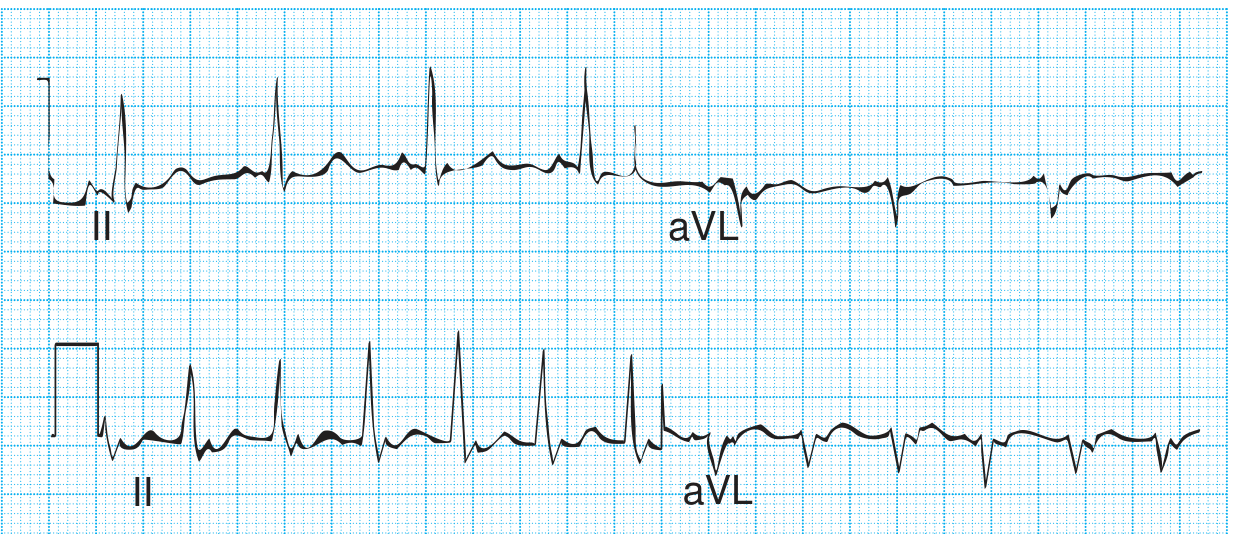
- ECG: Rate 150-250 bpm, narrow QRS (usually), regular rhythm, retrograde P waves QRS ke baad ya andar
- Kya karo (step by step):
- Vagal maneuvers - Valsalva, carotid sinus massage
- Adenosine 6 mg IV rapid push (antecubital vein se, saline flush ke saath). Agar kaam na aaye, 12 mg repeat karo. Adenosine AV node ko momentarily block karta hai.
- Hemodynamically unstable ho gaya = Synchronized cardioversion
- Long-term: Diltiazem ya beta-blocker. Curative: catheter ablation.
Note: Adenosine dene se pehle warn karo patient ko - 15-20 seconds ke liye chest tightness/flush feel hogi.
CATEGORY 3: VENTRICULAR RHYTHMS (DANGEROUS)
🚨 Premature Ventricular Contractions (PVCs)
- ECG: Wide, bizarre QRS (<0.12 sec nahi, usually >0.12 sec), premature beat, compensatory pause
- Kya karo:
- Occasional PVCs = monitor, cause dhundho (hypokalemia, hypomagnesemia, ischemia, stimulants)
- Bigeminy/trigeminy (har doosri ya teesri beat PVC) = electrolytes correct karo, cause treat karo
- Isolated PVCs in normal heart = koi survival benefit nahi antiarrhythmics se. Mat do.
- R-on-T PVC = khatra, VF trigger kar sakta hai - close monitoring
🚨🚨 Ventricular Tachycardia (VT)
ECG: Wide QRS (>0.12 sec), rate >100 bpm (usually 150-250), regular, P waves independent ya absent (AV dissociation), fusion beats
Do types:
| Type | ECG | Cause | Treatment |
|---|---|---|---|
| Monomorphic VT | Uniform wide QRS | Ischemia, cardiomyopathy | ACLS protocol |
| Polymorphic VT / Torsades de Pointes | QRS morphology changing, "twisting around baseline" | QT prolongation, hypoMg, drugs | Magnesium IV |
Kya karo:
Pulse hai ya nahi?
VT WITH PULSE:
- Stable = Amiodarone 150 mg IV over 10 min, phir 1 mg/min infusion
- Unstable (BP gir raha, altered sensorium) = Synchronized cardioversion (100-200J)
- Torsades de Pointes = Magnesium sulfate 2g IV over 5-15 min (STOP karo QT prolonging drugs, correct K+)
VT WITHOUT PULSE (Pulseless VT):
- = Cardiac arrest protocol = CPR + Defibrillation immediately (200J biphasic)
☠️ VENTRICULAR FIBRILLATION (VF) - MOST LETHAL
- ECG: Chaotic, irregular waves - no identifiable P, QRS, or T. Completely disorganized.
- Patient: Pulseless, unconscious
- Kya karo: IMMEDIATE ACTION - NO DELAY
- Shout "Code Blue" - call for help
- CPR start - 30:2, rate 100-120/min, depth 5-6 cm, minimize interruptions
- Defibrillate 200J (biphasic) ASAP - yahi sabse zaroori hai
- CPR 2 min resume
- Epinephrine 1 mg IV every 3-5 min
- Next shock 200J
- Amiodarone 300 mg IV for shock-refractory VF
- Check reversible causes (4 Hs + 4 Ts)
ICU mein surgical patient hai toh post-arrest: coronary angiography (if ACS suspected) + targeted temperature management 33-36°C for 24 hours for neurological protection
☠️ ASYSTOLE - FLATLINE
- ECG: Flat line - koi electrical activity nahi
- Kya karo: CPR + Epinephrine 1 mg IV q3-5 min. Defibrillation kaam nahi karta (shock karne ke liye rhythm chahiye). Reversible causes treat karo.
- Prognosis poor unless reversible cause mila.
☠️ Pulseless Electrical Activity (PEA)
- ECG: Organized electrical activity dikh raha hai, lekin patient ka pulse nahi hai
- Kya karo: CPR + Epinephrine. CAUSE DHUNDHO (treatable causes):
4 Hs:
- Hypoxia
- Hypovolemia
- Hypo/Hyperkalemia + metabolic
- Hypothermia
4 Ts:
- Tension Pneumothorax (needle decompression karo)
- Tamponade (pericardiocentesis karo)
- Toxins (drug reversal - naloxone, flumazenil)
- Thrombosis - PE (thrombolysis) ya MI (PCI)
CATEGORY 4: CONDUCTION BLOCKS (Heart Blocks)
Yeh image se clearly samjho:
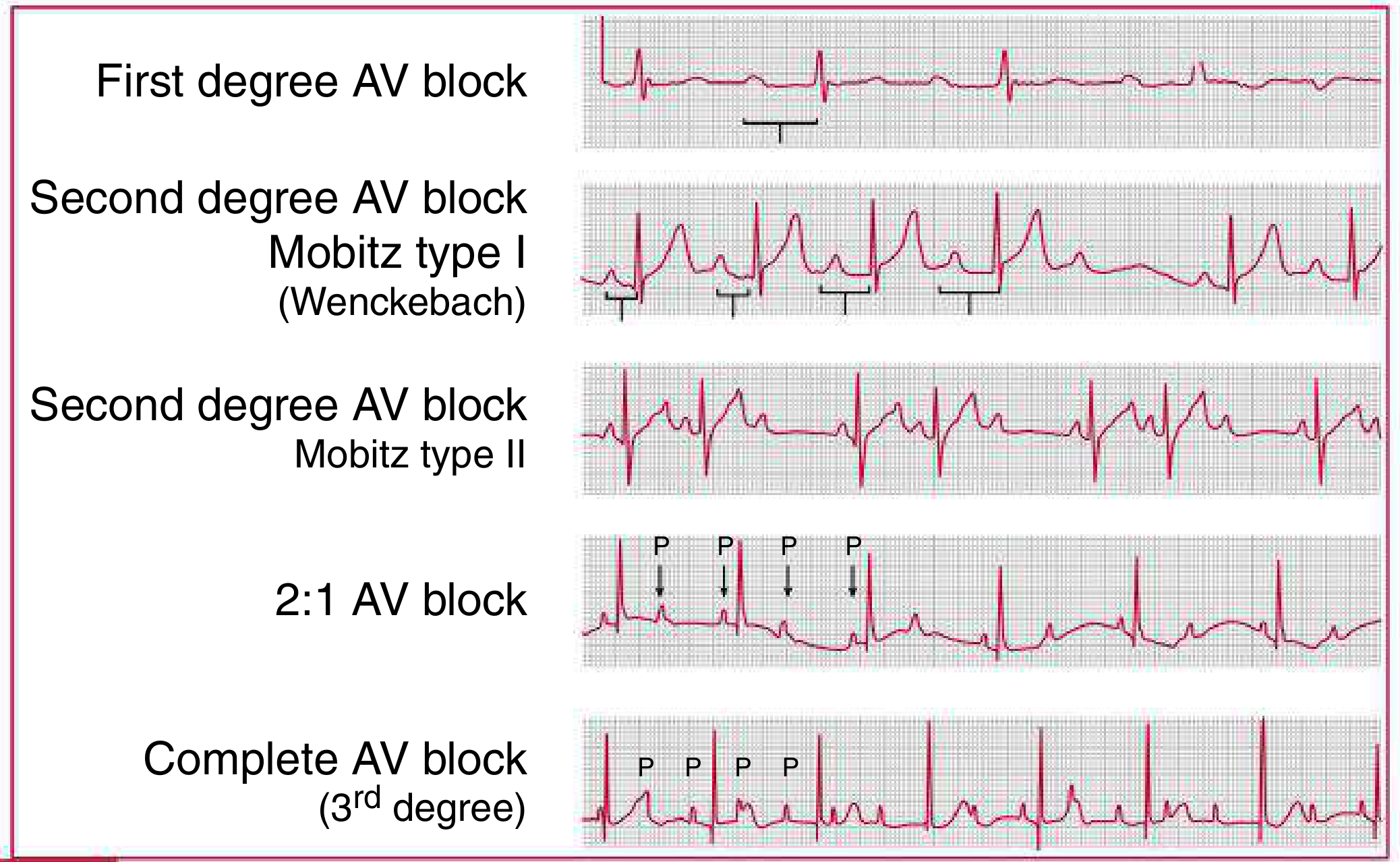
1st Degree AV Block
- ECG: PR interval >0.20 sec (ek bada square = 0.20 sec), har P ke baad QRS
- Kya karo: Kuch nahi. Observe. Cause dhundho (digoxin toxicity, Lyme disease, RHD).
2nd Degree - Mobitz Type I (Wenckebach)
- ECG: PR interval progressively barhta hai until ek QRS drop ho jaata hai. Phir cycle repeat.
- Kya karo: Usually benign, AV node mein hota hai. Cause treat karo. Rarely pacemaker lagta hai.
2nd Degree - Mobitz Type II
- ECG: PR interval constant rahta hai but suddenly ek QRS drop ho jaata hai - without warning
- Kya karo: DANGEROUS - complete heart block mein progress kar sakta hai. Pacemaker consider karo. Temporary pacing ICU mein.
3rd Degree (Complete) Heart Block
- ECG: P waves aur QRS completely independent - atria aur ventricles alag rate pe chal rahe hain. P-P regular, R-R regular, lekin dono ka koi relation nahi.
- Kya karo: Symptomatic (BP gira, syncope, altered sensorium) = emergency
- Atropine 1 mg IV (tab tak kaam karta hai jab tak pacing set ho)
- Transcutaneous pacing (emergency mein) ya transvenous pacing
- Permanent pacemaker (long-term treatment)
QUICK REFERENCE TABLE - ICU ke liye
| Rhythm | Rate | QRS | Pulse | FIRST Action |
|---|---|---|---|---|
| Normal Sinus | 60-100 | Narrow | Yes | Monitor |
| Sinus Tachy | >100 | Narrow | Yes | Find cause |
| Sinus Brady (symptomatic) | <60 | Narrow | Yes | Atropine 1mg IV |
| AF (stable) | Variable | Narrow | Yes | Rate control (Metoprolol) |
| AF (unstable) | Variable | Narrow | Yes | Sync cardioversion |
| SVT | 150-250 | Narrow | Yes | Adenosine 6mg IV |
| VT (stable) | 150-250 | Wide | Yes | Amiodarone 150mg IV |
| VT (unstable) | 150-250 | Wide | Yes | Sync cardioversion |
| Torsades | Variable | Wide, twisting | Yes | MgSO₄ 2g IV |
| VF | Chaotic | No QRS | NO | CPR + Defib 200J |
| Pulseless VT | Fast | Wide | NO | CPR + Defib 200J |
| PEA | Any | Present | NO | CPR + Find cause |
| Asystole | 0 | None | NO | CPR + Epi |
| 1st degree block | Normal | Narrow | Yes | Monitor |
| 3rd degree block | Slow | Wide escape | Yes | Atropine + Pacing |
YAAD RAKHNE WALA GOLDEN RULE
"Pulse check sabse pehle."
- Pulse hai = rhythm dekho phir treat karo
- Pulse nahi hai = CPR immediately, rhythm secondary
"Wide QRS = ventricular rhythm samjho jab tak prove na ho"
"Synchronized shock = pulse hai, rhythm unstable hai" "Unsynchronized (defibrillation) = pulseless VT/VF"
- Goldman-Cecil Medicine; Braunwald's Heart Disease; Harriet Lane Handbook; Mulholland & Greenfield's Surgery; Textbook of Family Medicine
Bhai saari cheeze photo k saath batao ek ek rythum
Bhai, har rhythm ki photo ke saath explain karta hoon! Pehle textbooks se saari ECG images dhundhta hoon.
Searching sources...
Finding Sources
Finding Sources
Bahut saari images mil gayi! Ab sab ek saath fetch karta hoon - parallel mein.
Loading Image
Loading Image
Reading File
Loading Image
Loading Image
Reading File
Reading File
Finding Sources
Loading Image
Reading File
Loading Image
Finding Sources
Finding Sources
Finding Sources
Reading File
Finding Sources
Reading File
Finding Sources
Loading Image
Ab mere paas saari zaroori images hain. Poora answer deta hoon - har rhythm ki real ECG photo ke saath!
📺 ICU Monitor - Har Rhythm Photo ke Saath
Pehle yaad rakh: Har rhythm par pehla sawaal = "Patient ka pulse hai ya nahi?"
🟢 RHYTHM 1: Normal Sinus Rhythm (NSR)
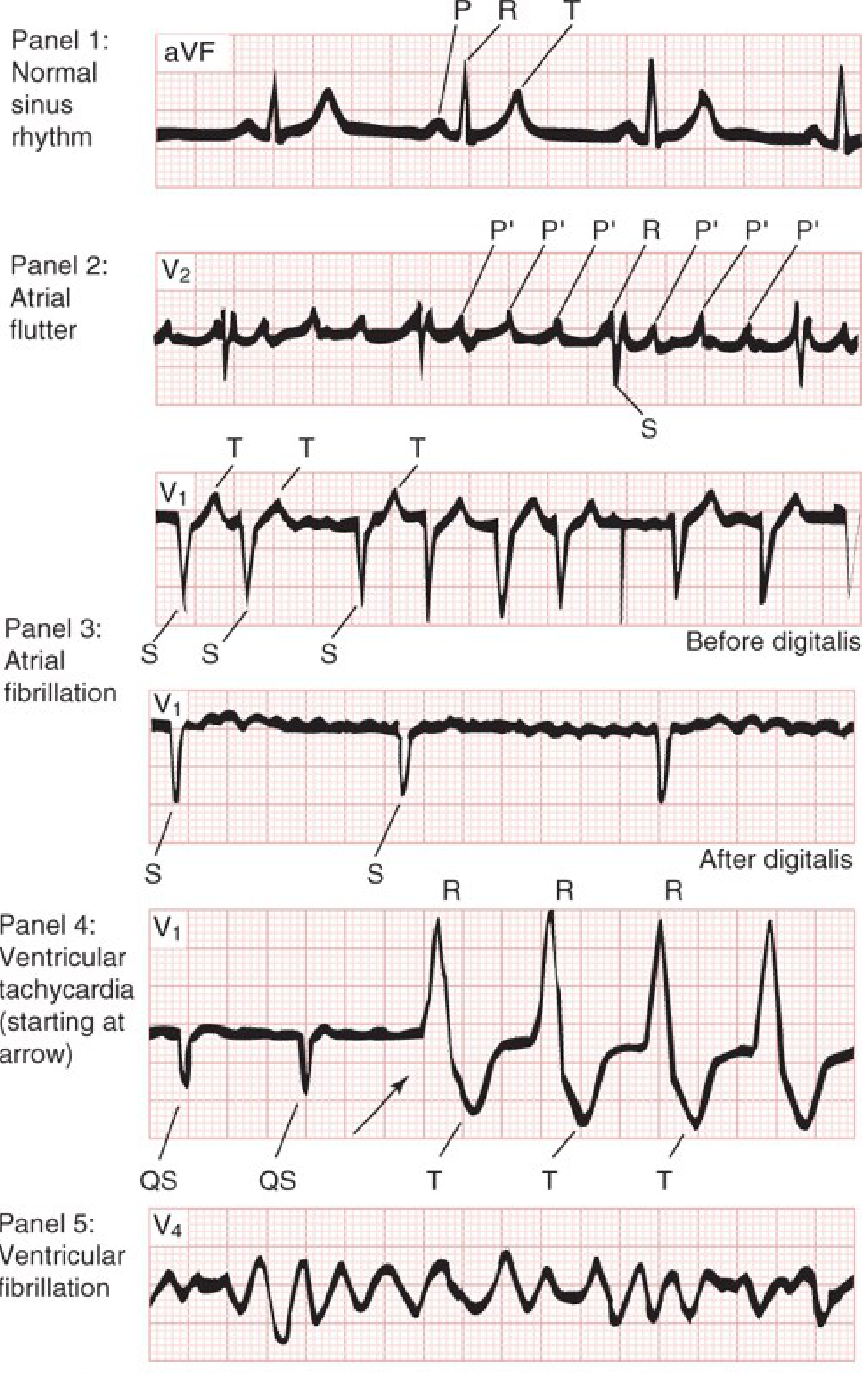
(Upar ki image mein Panel 1 = Normal Sinus Rhythm dekho - clearly P, QRS, T visible)
ECG pe kya dikhega:
- Har QRS ke pehle ek P wave
- PR interval: 0.12-0.20 sec (1 bada square ya 3 chote squares)
- QRS: narrow (<0.12 sec)
- Rate: 60-100 bpm
- Rhythm: regular
Kya karo: Kuch nahi! Patient theek hai. Sirf monitor karo.
🟡 RHYTHM 2: Sinus Tachycardia
ECG pe kya dikhega:
- Bilkul NSR jaisa, bas rate >100 bpm
- P wave + QRS + T sab normal shape mein, sirf speed fast
Kya karo:
- Beta-blocker mat do seedha!
- CAUSE dhundho: fever? pain? hypovolemia? anemia? anxiety? sepsis?
- Cause treat karo - tachycardia khud theek ho jaega
🟡 RHYTHM 3: Sinus Bradycardia
ECG pe kya dikhega:
- Bilkul NSR jaisa, bas rate <60 bpm
- Beats ke beech mein bada gap
Kya karo:
| Situation | Action |
|---|---|
| Asymptomatic, BP normal | Sirf monitor, kuch mat karo |
| Symptomatic (BP gira, dizzy, syncope) | Atropine 1 mg IV - repeat kar sakte ho har 3-5 min, max 3 mg |
| Atropine fail ho | Transcutaneous pacing / Dopamine/Epinephrine drip |
🟡 RHYTHM 4: Atrial Fibrillation (AF)
3 examples ki real ECG:
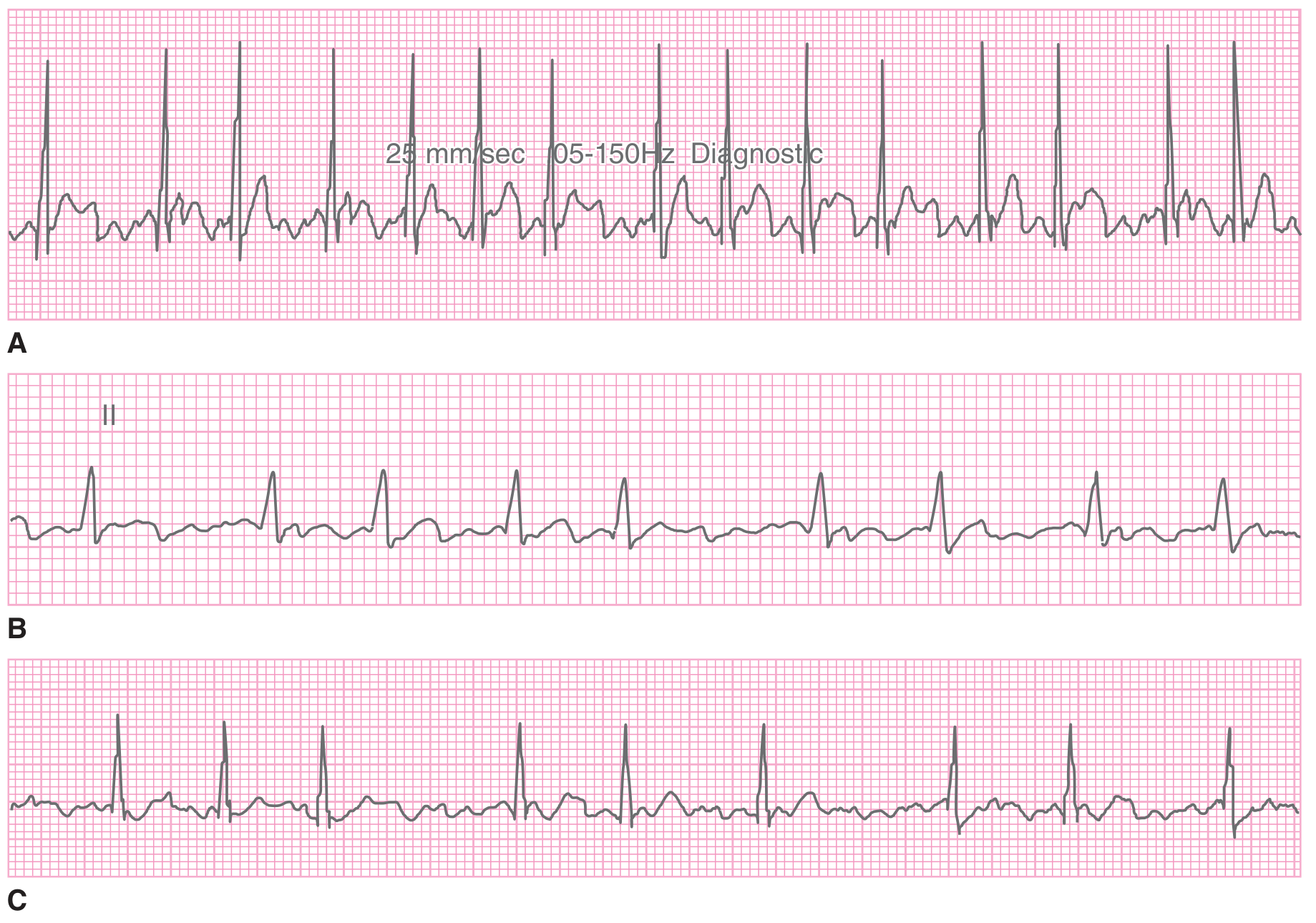
ECG pe kya dikhega:
- Koi P wave nahi - flat ya chaotic baseline
- "Irregularly irregular" - har RR interval alag
- QRS narrow (unless bundle branch block bhi ho)
- Ventricular rate typically 120-170 bpm (if AV node normal)
Kya karo:
Step 1: Hemodynamically stable hai?
├── UNSTABLE (BP <90, chest pain, altered sensorium)
│ → IMMEDIATE Synchronized DC Cardioversion 200J
│
└── STABLE
├── Rate Control (pehla choice):
│ Metoprolol IV 2.5-5 mg slow push
│ Ya Diltiazem IV 0.25 mg/kg
│ Target: HR <100
│
└── Anticoagulation:
AF <48h → cardioversion safe
AF >48h → pehle anticoagulate 3 weeks
ya TEE karke thrombus rule out karo
🟡 RHYTHM 5: Atrial Flutter
Real ECG - Atrial Flutter (3 examples):
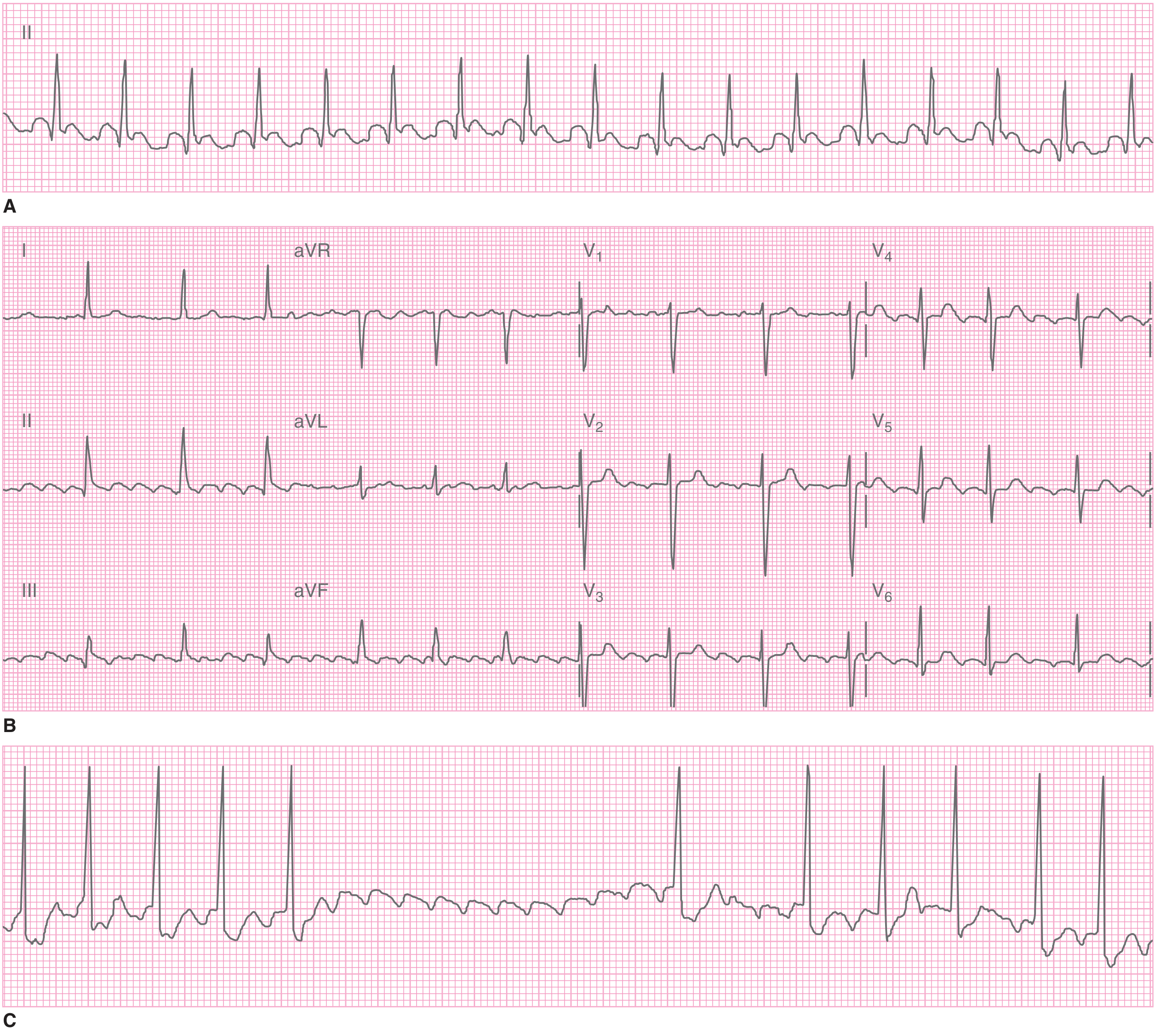
ECG pe kya dikhega:
- "Sawtooth" ya picket fence flutter waves - best lead II, III, aVF mein
- Atrial rate ~300/min
- Ventricular rate ~150/min (2:1 block ke saath) - REGULAR
- QRS narrow
Tip: Regular narrow complex tachycardia ~150 bpm = Atrial Flutter sochna chahiye pehle!
Kya karo: AF jaise hi - rate control, rhythm control, anticoagulation. Catheter ablation isme highly effective (curative) hai.
🟡 RHYTHM 6: SVT (AVNRT/AVRT)
(Image pehle session mein diya tha - lower panel dekhna)
ECG pe kya dikhega:
- Rate 150-250 bpm
- Narrow QRS (usually)
- Regular
- P waves QRS mein ghuse hue ya just baad mein (retrograde)
- Abrupt onset and offset
Kya karo - Step by step:
- Vagal maneuvers - Valsalva (patient strain kare), carotid massage
- Adenosine 6 mg IV - antecubital vein, rapid push + saline flush. Warn patient (15 sec chest tightness aayegi).
- Agar kaam na aaye - Adenosine 12 mg IV repeat
- Unstable = Synchronized cardioversion
- Long-term: Diltiazem, beta-blocker ya ablation
🔴 RHYTHM 7: PVC (Premature Ventricular Contraction)
ECG pe kya dikhega:
- Suddenly ek wide, bizarre QRS aata hai - sequence tod ke
- P wave nahi hoti us beat se pehle
- Baad mein "compensatory pause"
- Baaki beats normal hoti hain
Kya karo:
- Occasional PVC = koi treatment nahi chahiye healthy heart mein
- Cause dhundho: Hypokalemia? HypoMg? Ischemia? Stimulants?
- K+ aur Mg2+ correct karo
- Antiarrhythmics mat do without proper evaluation - CAST study mein PVC treatment se mortality badhi thi
🔴🔴 RHYTHM 8: Ventricular Tachycardia - Monomorphic VT
3 examples ki real ECG - Monomorphic VT:
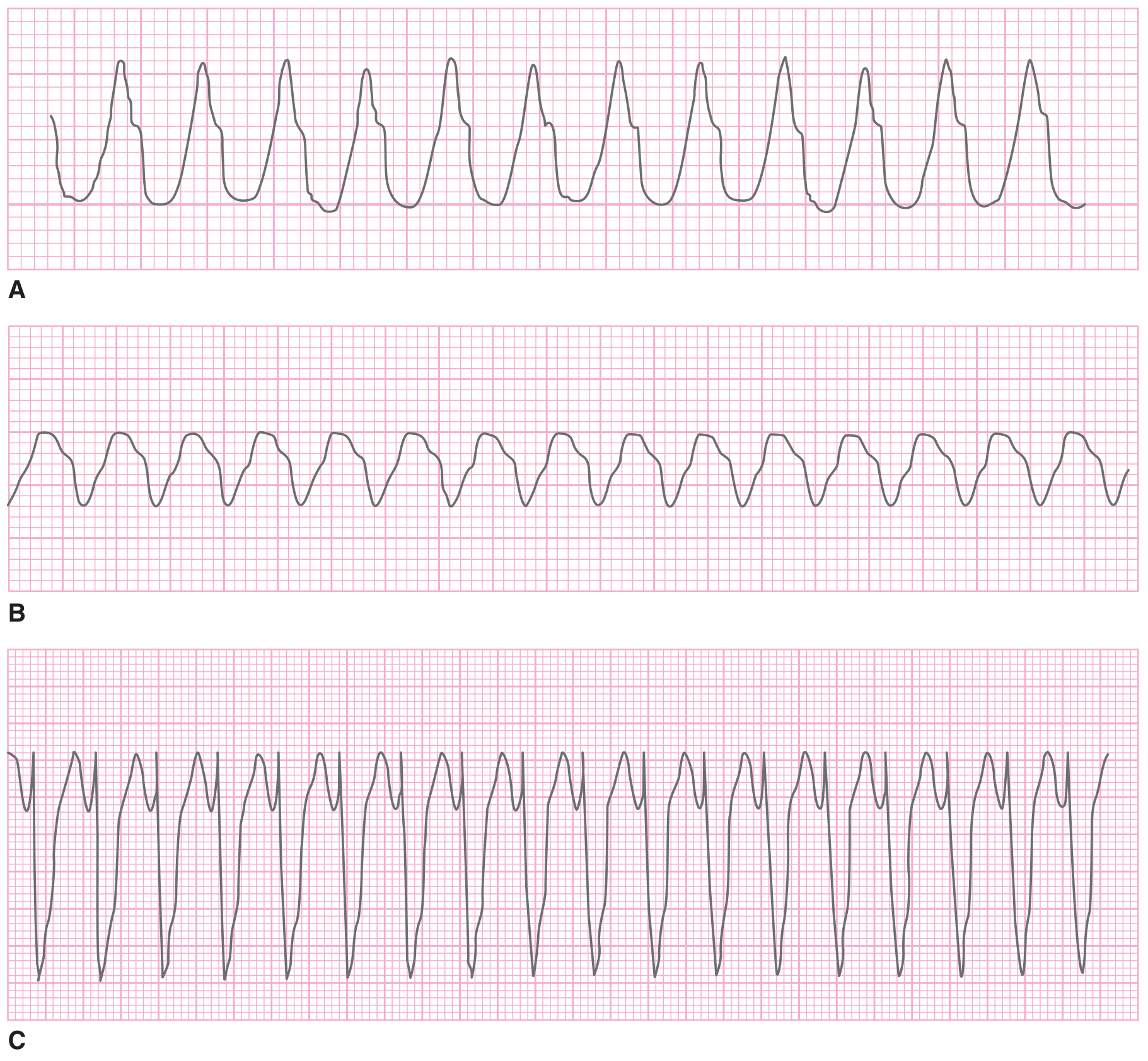
ECG pe kya dikhega:
- Wide QRS (>0.12 sec) - yahi sabse important feature
- Rate 140-300 bpm
- Regular
- No P waves (ya P waves QRS se alag independent chal rahe hain - AV dissociation)
- Uniform QRS shape har beat mein same
Kya karo:
Pulse hai?
├── NO PULSE → CPR + Defibrillate 200J immediately (= cardiac arrest)
│
└── PULSE HAI
├── UNSTABLE (hypotension, chest pain, confusion)
│ → Synchronized Cardioversion 100-200J
│ (sedate karo agar time ho)
│
└── STABLE
→ Amiodarone 150 mg IV over 10 min
then 1 mg/min infusion
Ya Procainamide 20-50 mg/min IV (VT ke liye superior)
Ya Lidocaine 1-1.5 mg/kg IV
🔴🔴 RHYTHM 9: Polymorphic VT aur Torsades de Pointes
Real ECG - A: Polymorphic VT, B: Torsades de Pointes:
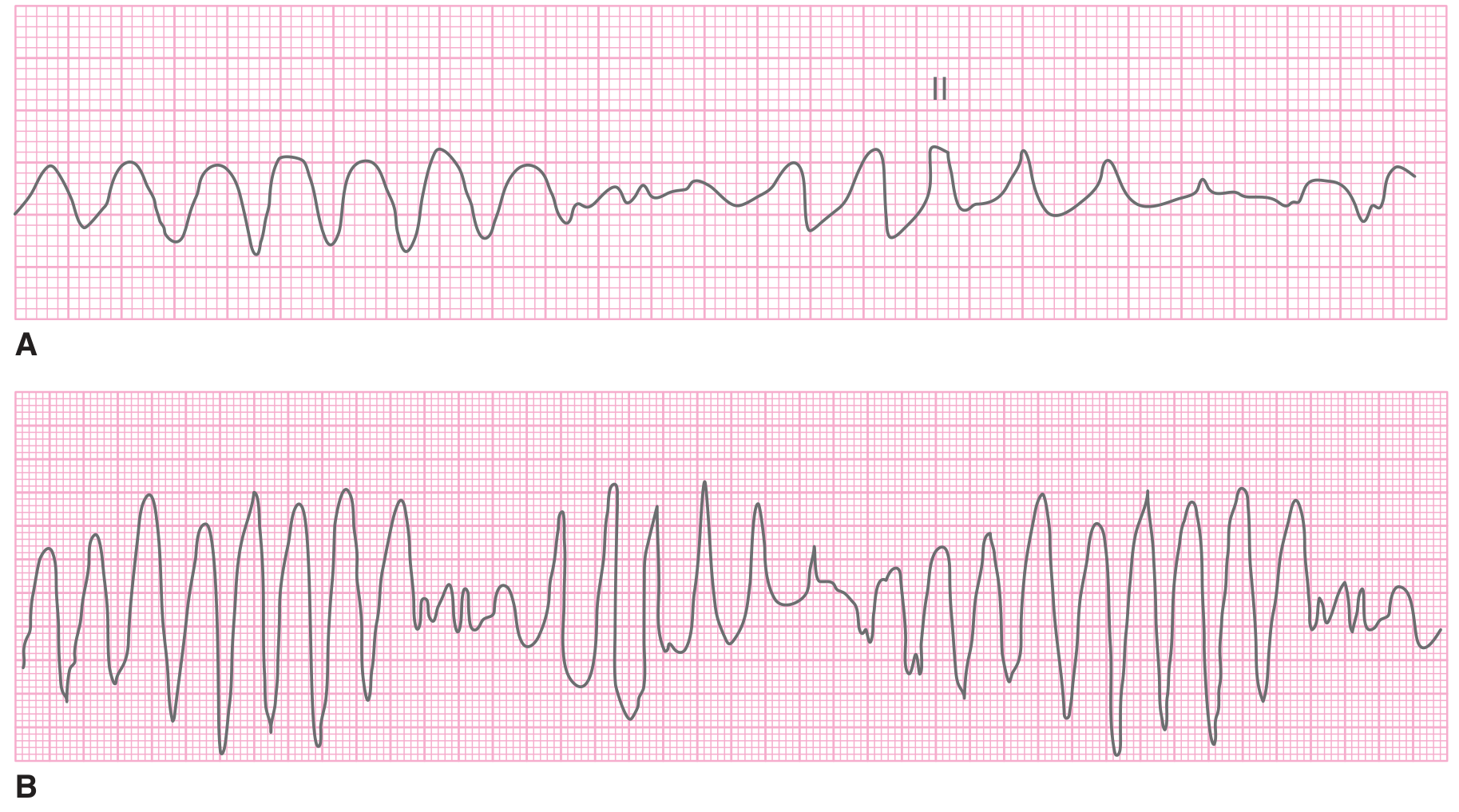
ECG pe kya dikhega:
- Torsades (Panel B): QRS morphology beat-to-beat badal rahi hai - "axis twist" karta hua
- Irregular, rapid
- Prolonged QT in background ECG (sinus mein)
- French mein naam = "twisting of the points"
Kya karo:
- Magnesium Sulfate 2g IV over 5-10 min - FIRST LINE
- QT prolonging drugs BAND KARO (ondansetron, haloperidol, amiodarone, fluoroquinolones)
- K+ aur Mg2+ aggressively replace karo (K+ >4.0 maintain karo)
- Overdrive pacing (100-120 bpm) - QT interval shorten karta hai
- Unstable = Defibrillation
☠️ RHYTHM 10: Ventricular Fibrillation (VF) - MOST DANGEROUS
(Upar ki comparison image mein Panel 5 ya Katzung image ka bottom panel dekho)
ECG pe kya dikhega:
- Completely chaotic - koi P, QRS, T identify nahi ho sakta
- Random irregular waves - koi shape nahi
- Patient: unconscious, pulseless
KARO - ZERO DELAY:
- "Code Blue" call karo
- CPR start - hard, fast, 100-120/min, 5-6 cm depth
- Defibrillate 200J (biphasic) - ASAP ← yahi sabse important hai
- CPR 2 min resume
- Epinephrine 1 mg IV q3-5 min
- Check - agar VF continue = next shock
- Amiodarone 300 mg IV for shock-refractory VF (2nd dose 150mg)
☠️ RHYTHM 11: Idioventricular Rhythm / Asystole ke taraf jaana
Real ECG - Idioventricular Rhythm (~30 bpm):
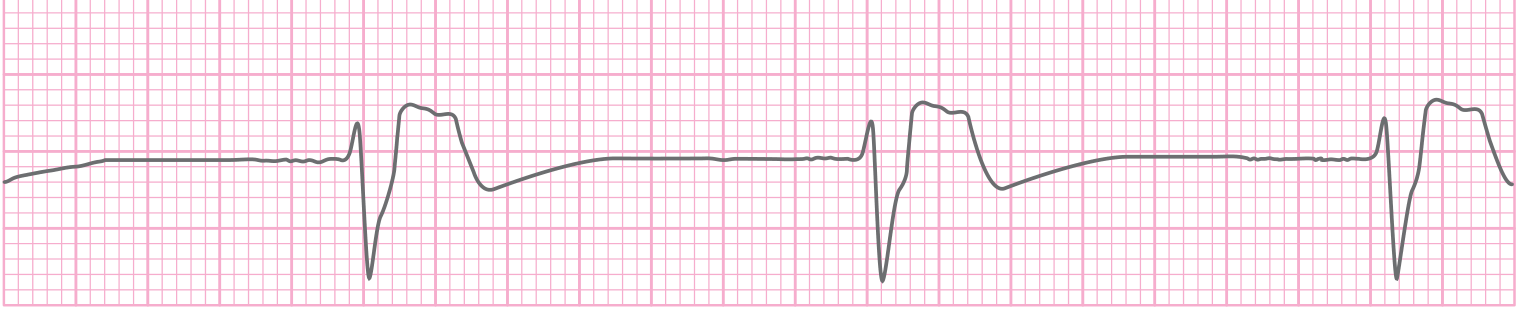
ECG pe kya dikhega:
- Very slow rate (20-40 bpm)
- Wide, bizarre QRS (ventricle ka escape rhythm)
- Long flat lines beads ke beech
- No P waves
Kya karo:
- Symptomatic = Atropine + pacing
- Cause dhundho: severe hypoxia, drug toxicity, hyperkalemia
- Asystole ki taraf ja sakta hai
☠️ RHYTHM 12: Complete (3rd Degree) AV Block
(Heart Block image pehle diya tha - neeche wala panel dekho)
ECG pe kya dikhega (Complete block):
- P waves aur QRS completely independent - koi relation nahi
- P-P interval regular, R-R interval regular
- Lekin dono alag-alag rate pe
- Ventricular rate 30-40 bpm (escape rhythm)
Kya karo:
- Atropine 1 mg IV (temporary, jab tak pacing set ho)
- Transcutaneous pacing turant start karo (emergency)
- Stable ho to Transvenous pacing
- Long-term = Permanent pacemaker
🔑 FINAL CHEATSHEET - ICU ke liye Print karo
| Rhythm | Photo mein kya dikhega | Sabse pehla kaam |
|---|---|---|
| NSR | P-QRS-T normal, 60-100 | Monitor karo |
| Sinus Tachy | NSR fast, >100 | Cause dhundho |
| Sinus Brady | NSR slow, <60 | Atropine 1mg IV (if symptomatic) |
| AF | No P wave, irregular irregular | Rate control / Cardioversion |
| Atrial Flutter | Sawtooth ~150 bpm | Rate control / Cardioversion |
| SVT | Narrow, fast, regular ~180 | Adenosine 6mg IV |
| PVC | Wide bizarre beat, compensatory pause | K+/Mg2+ correct karo |
| Mono VT (pulse) | Wide regular fast | Amiodarone 150mg IV / Cardiovert |
| Torsades | Twisting wide complex | MgSO₄ 2g IV |
| VF | Chaotic - no QRS | CPR + Defib 200J NOW |
| Idioventricular | Wide, very slow ~30 | Atropine + Pacing |
| 3rd Degree Block | P aur QRS independent | Atropine + Emergency Pacing |
Golden Rule bhai:
- Monitor pe kuch bhi aaye - pehle patient dekho, pulse check karo
- Alarm se mat ghabhrao - artifacts bahut common hain ICU mein
- Wide QRS = Ventricular rhythm samjho jab tak prove na ho
Sources: Tintinalli's Emergency Medicine; Katzung Pharmacology; Goldman-Cecil Medicine; Harriet Lane Handbook; Braunwald's Heart Disease
This is a shared conversation. Sign in to Orris to start your own chat.