I now have all the content from pages 43-51. Let me now compile the full detailed notes.Here are your complete, detailed notes from K. Park Pages 43-51 - explained simply, like you're a child learning for the first time!
📗 K. Park PSM - Pages 43 to 51
Natural History of Disease - COMPLETE DETAILED NOTES
PAGE 43-44: AGENT FACTORS
What is a Disease "Agent"?
Think of the agent like the enemy trying to attack your body.
Definition (Park): A disease agent is "a substance, living or non-living, or a force, tangible or intangible, the excessive presence or relative lack of which may initiate or perpetuate a disease process."
Simply put:
- Too much of something = disease (e.g., too much cholesterol = heart disease)
- Too little of something = disease (e.g., too little insulin = diabetes)
- A living organism = disease (e.g., TB bacteria)
Classification of Disease Agents (7 Types) - MUST KNOW!
1. Biological Agents
These are living organisms that cause disease.
Examples: Viruses, Bacteria, Rickettsiae, Fungi, Protozoa, Metazoa (worms)
They have 3 special properties:
| Property | What it means | Simple example |
|---|
| Infectivity | Ability to invade and multiply inside a host | Measles virus infects almost everyone it meets |
| Pathogenicity | Ability to produce clinically visible illness | TB bacteria can infect, but not everyone gets sick |
| Virulence | Proportion of infected people who get severe disease | Rabies = 100% virulent (always fatal if untreated) |
Memory trick: I-P-V = Infectivity, Pathogenicity, Virulence
2. Nutrient Agents
These are proteins, fats, carbohydrates, vitamins, minerals and water.
- Excess or deficiency of nutrients = disease
- Examples:
- Too little protein + energy → PEM (Protein Energy Malnutrition)
- Too little iodine → Goitre
- Too little iron → Anaemia
- Too much food → Obesity
- Vitamin deficiencies → Scurvy (Vit C), Rickets (Vit D), Night blindness (Vit A)
3. Physical Agents
These are non-living physical forces that damage the body.
Examples:
- Heat → Heat stroke, burns
- Cold → Frostbite, hypothermia
- Humidity → Respiratory diseases
- Radiation → Cancer, radiation sickness
- Electricity → Electrocution
- Sound (noise) → Noise-induced deafness
- Pressure → Decompression sickness (in divers)
4. Chemical Agents
Two types:
A. Endogenous (produced INSIDE the body):
The body itself makes toxic chemicals due to deranged function.
| Chemical | Disease caused |
|---|
| Urea | Uraemia (kidney failure) |
| Bilirubin | Jaundice |
| Ketones | Ketosis (in diabetes) |
| Uric acid | Gout |
| Calcium carbonate | Kidney stones |
B. Exogenous (comes from OUTSIDE the body):
- Allergens, metals, fumes, dust, gases, insecticides
- Enter by: inhalation, ingestion, or inoculation
- Examples: Lead poisoning, pesticide poisoning, silicosis (dust)
5. Mechanical Agents
Chronic friction and mechanical forces causing physical damage.
Examples:
- Crushing injuries
- Tearing of tissues
- Sprains and dislocations
- Even death (road accidents, falls)
6. Absence/Insufficiency/Excess of Factors Necessary for Health
This group covers things that are normally needed by the body, but are missing or excessive:
| Type | Examples |
|---|
| Chemical factors | Hormones: insulin (diabetes), oestrogen, enzymes |
| Nutrient factors | (same as #2 above) |
| Lack of structure | Absent thymus → immune deficiency |
| Lack of part of structure | Cardiac defects (hole in heart) |
| Chromosomal factors | Down syndrome (Mongolism), Turner's syndrome |
| Immunological factors | Agammaglobulinaemia (no antibodies) |
7. Social Agents (Modern addition!)
Park says social factors are also agents of disease!
Examples:
- Poverty
- Smoking
- Drug and alcohol abuse
- Unhealthy lifestyles
- Social isolation
- Maternal deprivation (child deprived of mother's care)
Key line from Park: "The modern concept of disease agent is a very broad one - it includes both living and non-living agents."
PAGE 44-45: HOST FACTORS (Intrinsic Factors)
What is the "Host"?
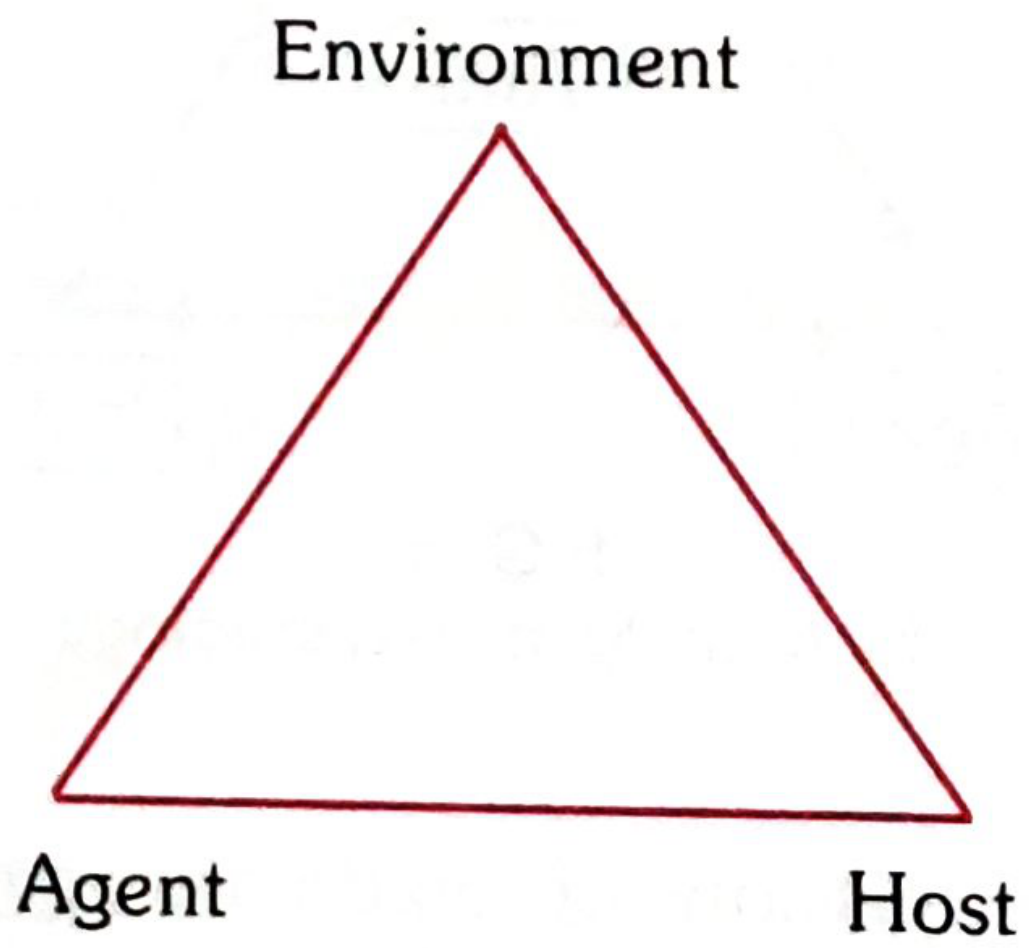
In epidemiology, the host is compared to "soil" and the disease agent to "seed."
- Good soil (weak host) = seed grows = disease occurs
- Bad soil (strong host) = seed cannot grow = no disease
Classification of Host Factors (4 Groups):
1. Demographic Characteristics
- Age - infants and elderly are more susceptible
- Sex - some diseases more common in females (e.g., autoimmune diseases), some in males (e.g., gout)
- Ethnicity/Race
2. Biological Characteristics
- Genetic factors - family history of disease
- Blood cholesterol levels
- Blood groups - Blood group O protects against some infections
- Enzymes - deficiency of enzymes (e.g., G6PD deficiency)
- Immunological factors - immunity (vaccination, natural immunity)
- Physiological functions - blood pressure, lung capacity
3. Social and Economic Characteristics
- Socio-economic status
- Education level
- Occupation (miners get silicosis, doctors get needle-stick injuries)
- Stress
- Marital status
- Housing conditions (overcrowding)
4. Lifestyle Factors
- Personality traits (Type A personality = heart disease risk)
- Nutrition habits
- Physical exercise
- Alcohol, drugs, smoking
- Behavioural patterns
Key line from Park: "The association of a particular disease with a specific set of host factors frequently provides an insight into the cause of disease."
PAGE 45-46: ENVIRONMENTAL FACTORS (Extrinsic Factors)
What is the Environment?
Definition: "All that which is external to the individual human host, living and non-living, and with which he is in constant interaction."
Simply: Everything OUTSIDE your body that affects your health.
The environment is divided into 3 components:
A. Physical Environment (non-living things)
Includes: Air, water, soil, housing, climate, geography, heat, light, noise, debris, radiation.
The quality of physical environment directly determines the health of the population. Pollution, unsafe water, overcrowding - these are all physical environment problems.
- Poor physical environment = more disease
- Examples: Air pollution → respiratory diseases; Contaminated water → cholera, typhoid
B. Biological Environment (living things around us)
The living world that surrounds man includes:
- Viruses, bacteria, other microbial agents
- Insects (mosquitoes, flies)
- Rodents (rats)
- Animals and plants
- These act as disease agents, reservoirs of infection, intermediate hosts and vectors
Key idea: There is normally a harmonious equilibrium between man and the biological environment (peaceful co-existence). When this equilibrium is DISTURBED = illness results.
Example: Deforestation brings humans into contact with animals carrying new viruses = new disease outbreaks (like Ebola, Nipah).
C. Psychosocial Environment
The social, cultural and psychological surroundings of a person.
Includes:
- Cultural values, customs, habits, beliefs, attitudes, morals
- Religion, education, lifestyles
- Community life, health services
- Social and political organization
How psychosocial environment causes disease:
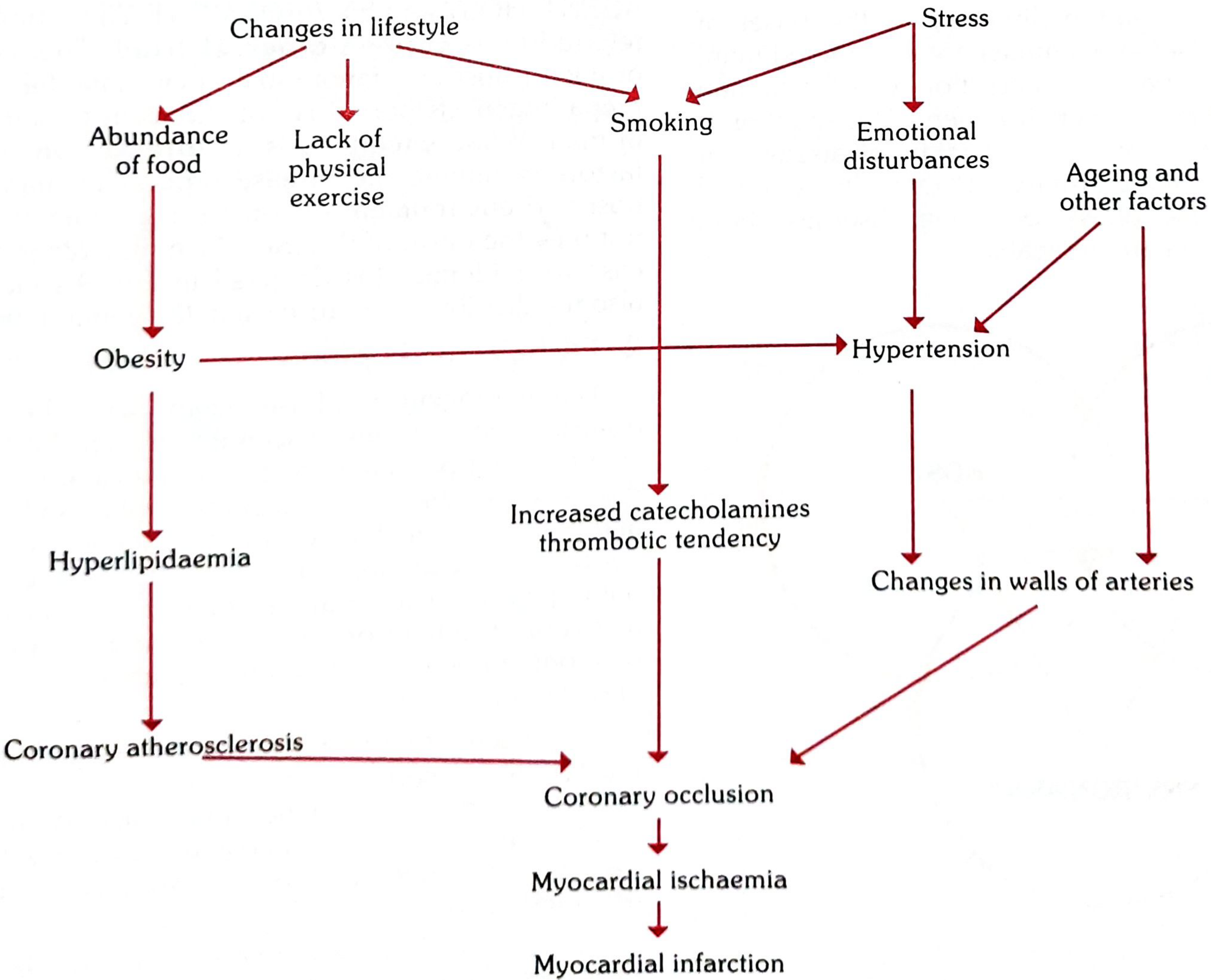
Negative psychosocial factors (poverty, unemployment, bereavement, urbanization, migration, loss of job, birth of handicapped child) → anxiety, depression, anger, frustration → physical symptoms (headache, palpitation) → endocrine + autonomic + motor system changes → psychosomatic disorders:
| Psychosomatic Disease |
|---|
| Duodenal ulcer |
| Bronchial asthma |
| Hypertension |
| Coronary heart disease |
| Mental disorders |
| Socially deviant behaviour (suicide, crime, drug abuse) |
Positive psychosocial environment = improves health, gives fulfilment, adds to quality of life.
Negative psychosocial environment = causes physical + mental disease.
Man in His "Total Environment"
Park says: Man lives in ALL THREE environments simultaneously. Physical + Biological + Psychosocial are all interconnected. You cannot separate them. This is why we talk about "man in his total environment."
PAGE 48-49: RISK FACTORS
What is a Risk Factor?
For many diseases (heart disease, cancer, peptic ulcer, mental illness), no single agent is known. So instead of "agent," we talk about risk factors.
Two meanings of "Risk Factor" (Park):
- An attribute or exposure that is significantly associated with a disease
- A determinant that can be modified by intervention, reducing disease risk
Key Points About Risk Factors:
- A risk factor does NOT guarantee disease will occur (it just increases the chance)
- Risk factors are observable BEFORE the disease occurs (predictive value)
- Multiple risk factors together can be:
- Additive - effects just add up (e.g., smoking + occupational exposure for bladder cancer)
- Synergistic/Multiplicative - effects multiply each other (e.g., smoking + hypertension + high cholesterol for heart disease = FAR more dangerous than each alone)
Types of Risk Factors:
| Type | Examples |
|---|
| Truly causative | Smoking → lung cancer |
| Contributory | Lack of exercise → coronary heart disease |
| Predictive (statistical) | Illiteracy → perinatal mortality |
Modifiable vs Unmodifiable Risk Factors:
| Modifiable (can be changed) | Unmodifiable (cannot change) |
|---|
| Smoking | Age |
| Hypertension | Sex |
| High cholesterol | Race |
| Obesity | Family history |
| Physical inactivity | Genetic factors |
TABLE 8: Prominent Risk Factors (Park) - Exam Ready!
| Disease | Risk Factors |
|---|
| Heart disease | Smoking, high BP, high cholesterol, diabetes, obesity, no exercise, Type A personality |
| Cancer | Smoking, alcohol, radiation, work-site hazards, environmental pollution, medications, infections, dietary factors |
| Stroke | High BP, high cholesterol, smoking |
| Motor vehicle accidents | Alcohol, no seat belt, speed |
| Chronic lung disease | Smoking, air pollution, occupational dust |
PAGE 49-50: SPECTRUM OF DISEASE
What is "Spectrum of Disease"?
Imagine a rainbow. Each colour is different but they blend into each other. Disease is the same - it exists on a spectrum from no disease to death.
At one end: Subclinical infections (you're infected but have no symptoms)
In the middle: Mild to severe illness
At the other end: Fatal illness (death)
These different manifestations reflect different states of immunity and receptivity of individuals.
Best example from Park: LEPROSY - perfectly demonstrates the spectrum concept.
- Some people are totally immune (tuberculoid leprosy with high immunity)
- Some get moderate disease
- Some get severe lepromatous leprosy (low immunity)
In infectious diseases, the spectrum is also called the "Gradient of Infection."
One exception: RABIES - almost no spectrum. Once symptoms appear = nearly always fatal.
PAGE 50-51: ICEBERG OF DISEASE
The Iceberg Phenomenon - Very Simple Explanation!
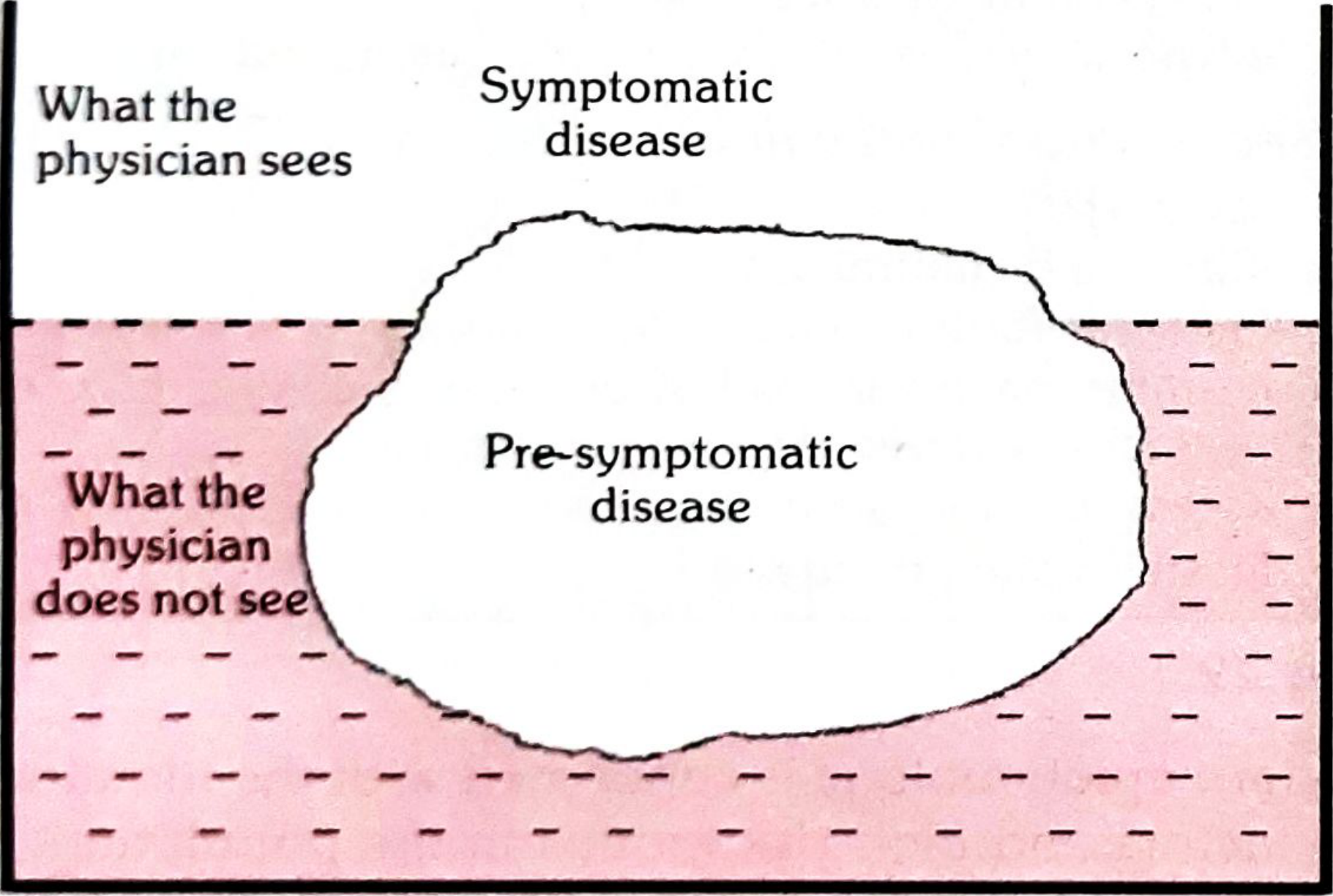
Think of an iceberg floating in the ocean. What you see above water is just the TIP. The huge mass is hidden below water.
| Part of Iceberg | What it represents |
|---|
| Tip above water | Clinical cases - what the physician SEES in the community |
| Hidden part below water | Latent, inapparent, presymptomatic, undiagnosed cases + carriers |
| The waterline | The "clinical horizon" = divides apparent from inapparent disease |
Key Point:
In diseases like hypertension, diabetes, anaemia, malnutrition, mental illness - the HIDDEN part (below waterline) is FAR LARGER than what the doctor sees!
Why is this important?
The hidden part = important reservoir of infection/disease in the community. Detecting and controlling this hidden portion = a major challenge of preventive medicine.
Remember: What the doctor sees in the hospital is just ONE episode in the natural history of disease. The real picture is in the community!
CONCEPTS OF CONTROL (Page 51)
Disease Control
Aims to reduce:
- Incidence of disease
- Duration of disease (and risk of transmission)
- Effects of infection (physical + psychosocial complications)
- Financial burden to the community
In disease control, the agent is allowed to persist at a level where it is no longer a public health problem (state of equilibrium). Disease is not necessarily eradicated.
COMPLETE REVISION SUMMARY TABLE (Exam Writing Guide)
| Topic | Key Points |
|---|
| Disease Agent definition | Living/non-living force; excess/deficiency causes disease |
| 7 types of agents | Biological, Nutrient, Physical, Chemical, Mechanical, Absence of factors, Social |
| Biological agent properties | Infectivity, Pathogenicity, Virulence |
| Host = "soil"; Agent = "seed" | 4 host factor groups: Demographic, Biological, Social/Economic, Lifestyle |
| Environment | 3 types: Physical, Biological, Psychosocial |
| Risk factors | Modifiable vs Unmodifiable; Additive vs Synergistic |
| Spectrum of disease | Subclinical → Mild → Severe → Fatal; Gradient of infection |
| Iceberg phenomenon | Tip = clinical cases; Below = hidden disease; Waterline = clinical horizon |
HOW TO WRITE A 10-MARK ANSWER ON "Natural History of Disease"
Write in this order:
- Introduction - Definition of natural history of disease
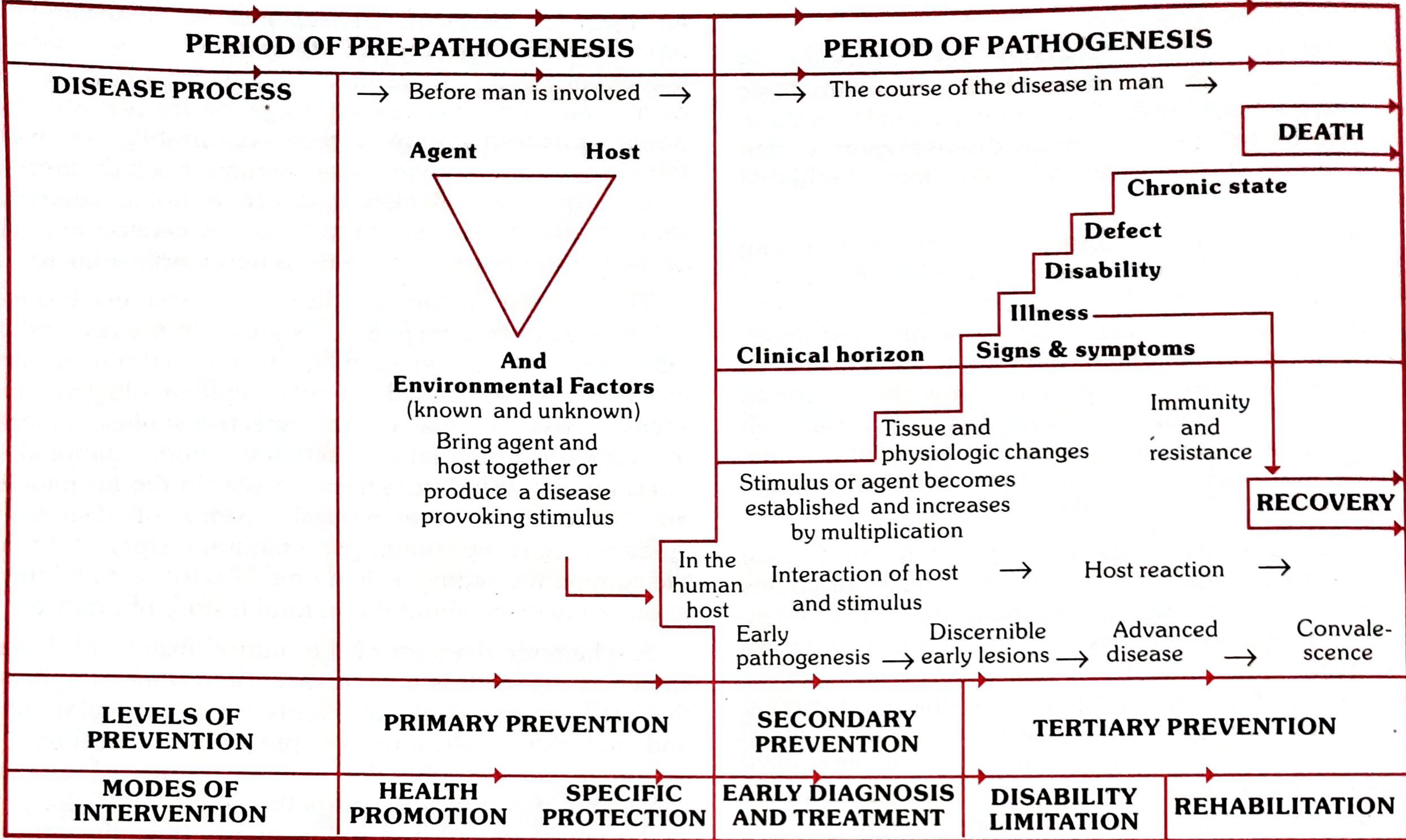
- Two phases - Pre-pathogenesis + Pathogenesis (with diagram reference)
- Pre-pathogenesis - Agent, Host, Environment interaction; no symptoms yet
- Pathogenesis - Early pathogenesis, clinical horizon, advanced disease, outcome
- Agent factors - Definition + 7 types with examples
- Host factors - 4 groups
- Environmental factors - Physical, Biological, Psychosocial
- Risk factors - Definition, types, modifiable vs unmodifiable
- Spectrum of disease - gradient concept, iceberg phenomenon
- Levels of prevention - Primary, Secondary, Tertiary linked to phases
- Conclusion
Source: K. Park's Textbook of Preventive & Social Medicine, Pages 43-51
You now have everything from those pages explained simply. Tell me if you want me to go even deeper on any one section, or quiz you on these topics! 😊