

50 yr female with ear pain, nodule with pus discharge from ear canal
Reading File
Finding Sources
Finding Sources
Reading File
Loading Image
Reading File
Loading Image
Diagnosis: Furunculosis of the External Auditory Canal (EAC)
Clinical Correlation
The image shows a nodular swelling with pus discharge at the entrance of the ear canal in a 50-year-old female — a classic presentation of a furuncle (furunculosis) of the EAC.
What is it?
A furuncle is a walled-off, localized collection of pus arising from hair follicles in the lateral (cartilaginous) ear canal. The causative organism is almost invariably Staphylococcus aureus.
Pathophysiology
- The EAC's lateral third contains hair follicles and sebaceous glands → entry point for S. aureus
- Infection → folliculitis → abscess formation (furuncle)
- Progression: nodular erythema → fluctuance → spontaneous rupture with pus drainage
Clinical Features
| Feature | Detail |
|---|---|
| Pain | Severe, exquisitely tender to pinna manipulation (tragal sign) |
| Swelling | Firm or fluctuant nodule at lateral EAC |
| Discharge | Purulent, once the furuncle ruptures |
| Hearing | May have conductive hearing loss if canal is occluded |
| Fever | Usually absent unless cellulitis develops |
Reference Image from Cummings Otolaryngology
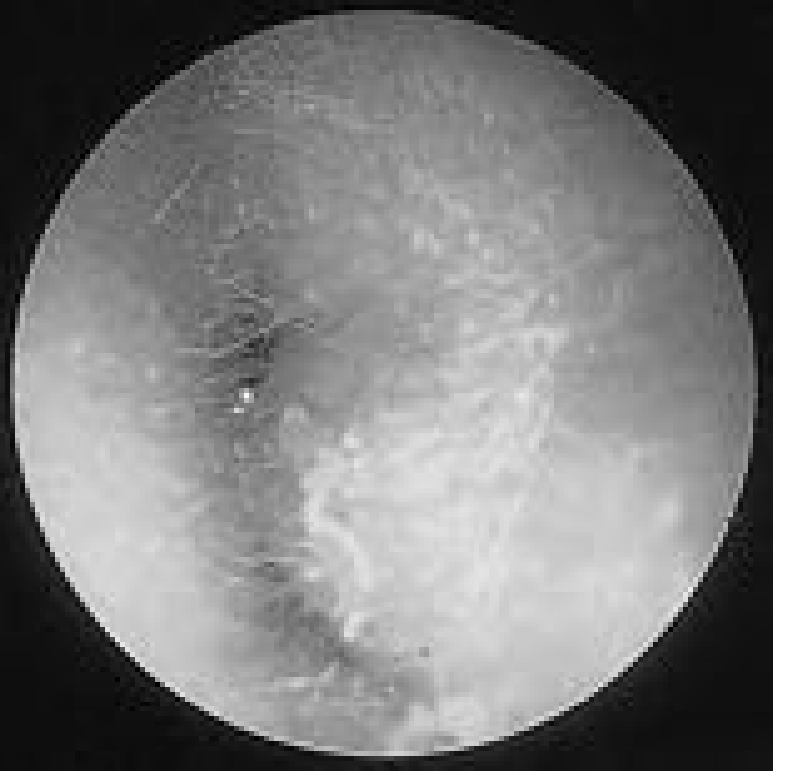
Furuncle of the ear canal — localized swelling at the canal entrance, pointing and beginning to rupture (Cummings Otolaryngology)
Management
- Warm compresses — promotes pointing and drainage
- Topical antibiotic ointment (e.g., mupirocin)
- Oral antistaphylococcal antibiotics:
- First-line: Cloxacillin/Dicloxacillin or Co-amoxiclav
- If MRSA suspected: Trimethoprim-sulfamethoxazole or Doxycycline
- Incision and Drainage (I&D) — indicated for fluctuant lesions, done under local anesthesia
- Analgesics for pain control
Points to Consider in this Patient
- Ear jewellery (visible in the image) and trauma from earrings/manipulation can introduce organisms → risk factor
- Check for diabetes mellitus — recurrent furunculosis in adults warrants blood glucose screening
- Rule out malignant/necrotizing otitis externa in diabetic or immunocompromised patients (aggressive S. aureus or Pseudomonas infection with bone involvement — far more serious)
— Cummings Otolaryngology Head and Neck Surgery, Chapter 138
Will icthymol glycerin ear pack useful
Finding Sources
Finding Sources
Reading File
Finding Sources
Yes — ichthyol glycerin (Ichthammol glycerin) ear pack is a well-established, useful treatment for EAC furunculosis, particularly in the early/pre-fluctuant stage.
How It Works
Ichthammol (Ammonium bituminosulfonate / "black salve") has the following pharmacological properties:
| Property | Mechanism |
|---|---|
| Anti-inflammatory | Inhibits leukotriene B4 lipoxygenase → reduces local inflammation |
| Hygroscopic (osmotic) | Glycerin draws out tissue fluid → reduces oedema in the canal |
| Mild antiseptic | Sulphur-containing compounds have mild antibacterial activity |
| Counter-irritant | Promotes localisation and "pointing" of the abscess |
How the Pack Is Applied
- A ribbon gauze/wick soaked in 10% ichthyol in glycerin is gently inserted into the external auditory canal
- Left in place for 24–48 hours
- Changed every 1–2 days until the furuncle points or resolves
- Acts as a vehicle to maintain contact of the drug with the inflamed canal wall
- The glycerin base keeps the canal moist and helps the ichthyol penetrate
When It Is Most Useful
- Pre-fluctuant stage — when the furuncle is firm and painful but not yet pointing; ichthyol glycerin promotes maturation and pointing
- Helps reduce the intense oedema and canal swelling, which also relieves pain
- Avoids the need for immediate I&D in many cases
When I&D Takes Over
Once the furuncle is clearly fluctuant, incision and drainage under local anaesthesia is required — the pack alone will not adequately drain a tense abscess.
Practical Note
Ichthyol glycerin pack is a time-tested ENT standard treatment for EAC furunculosis, especially popular in South Asian and ENT practice. It is used alongside:
- Oral antistaphylococcal antibiotics (e.g., cloxacillin, co-amoxiclav)
- Analgesics (NSAIDs or paracetamol)
- Warm fomentations
Bottom line: Yes, it is useful and appropriate for this patient, especially if the furuncle has not yet become fluctuant. If the lesion is already pointing/draining (as visible in the image), proceed to I&D + antibiotics while using the pack for residual inflammation and canal management.
This is a shared conversation. Sign in to Orris to start your own chat.